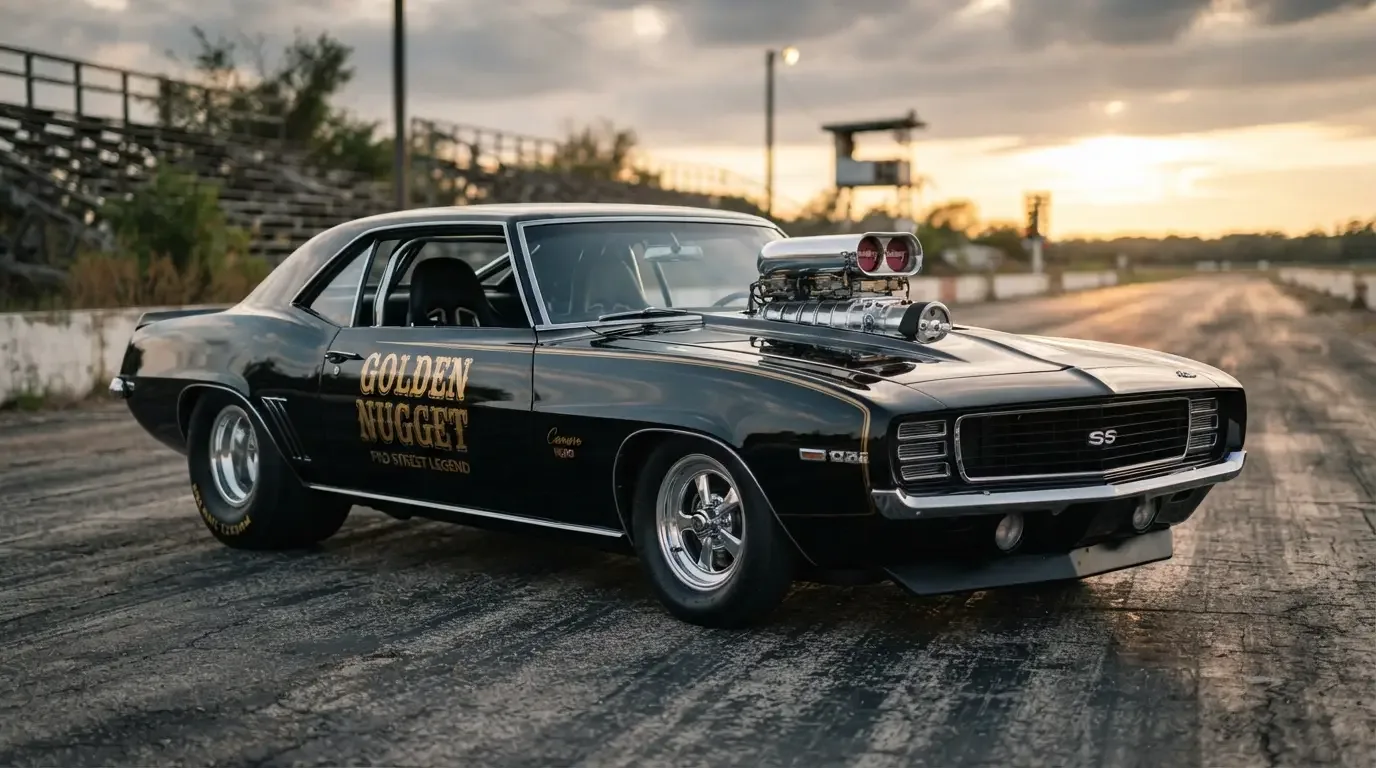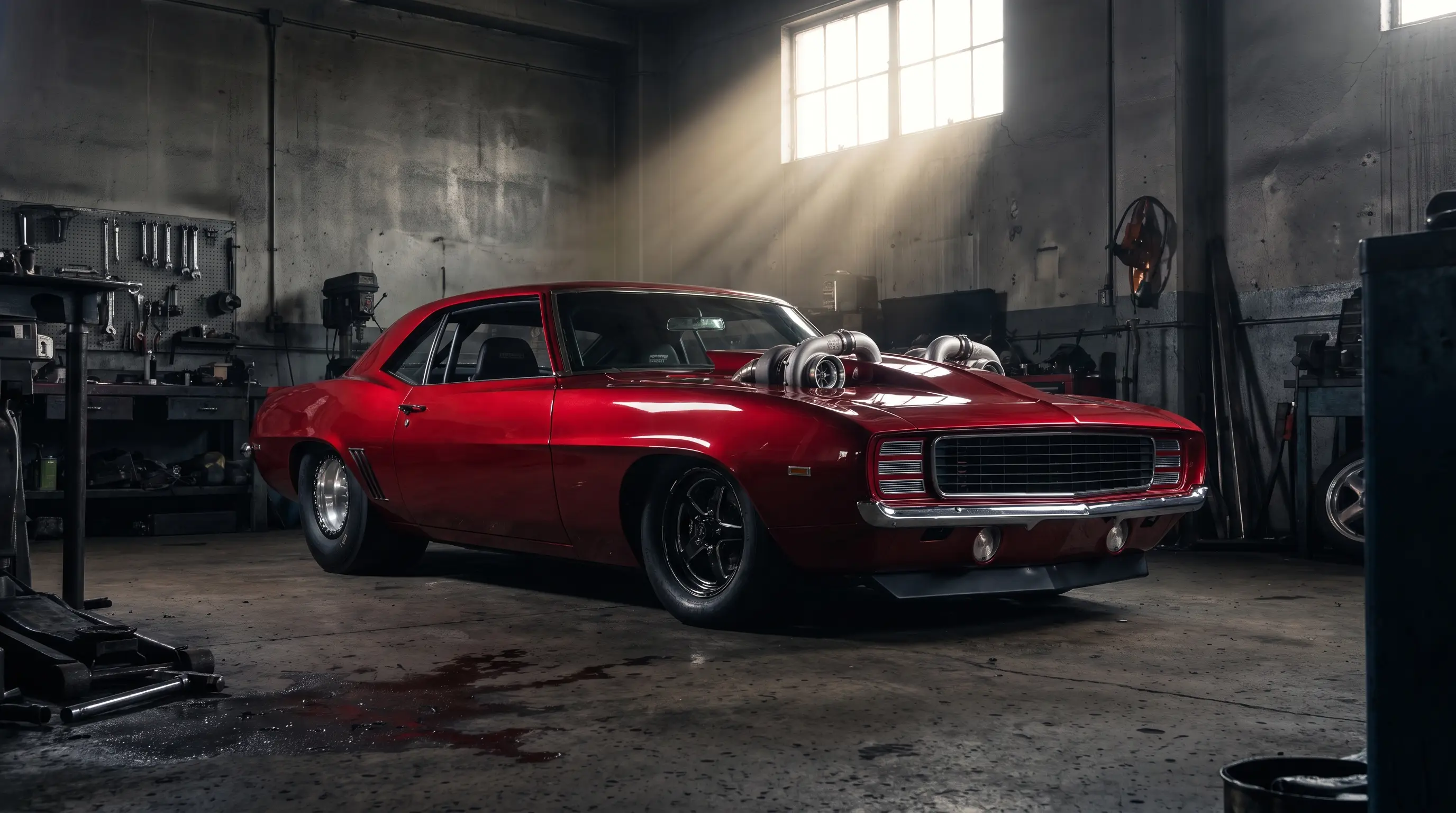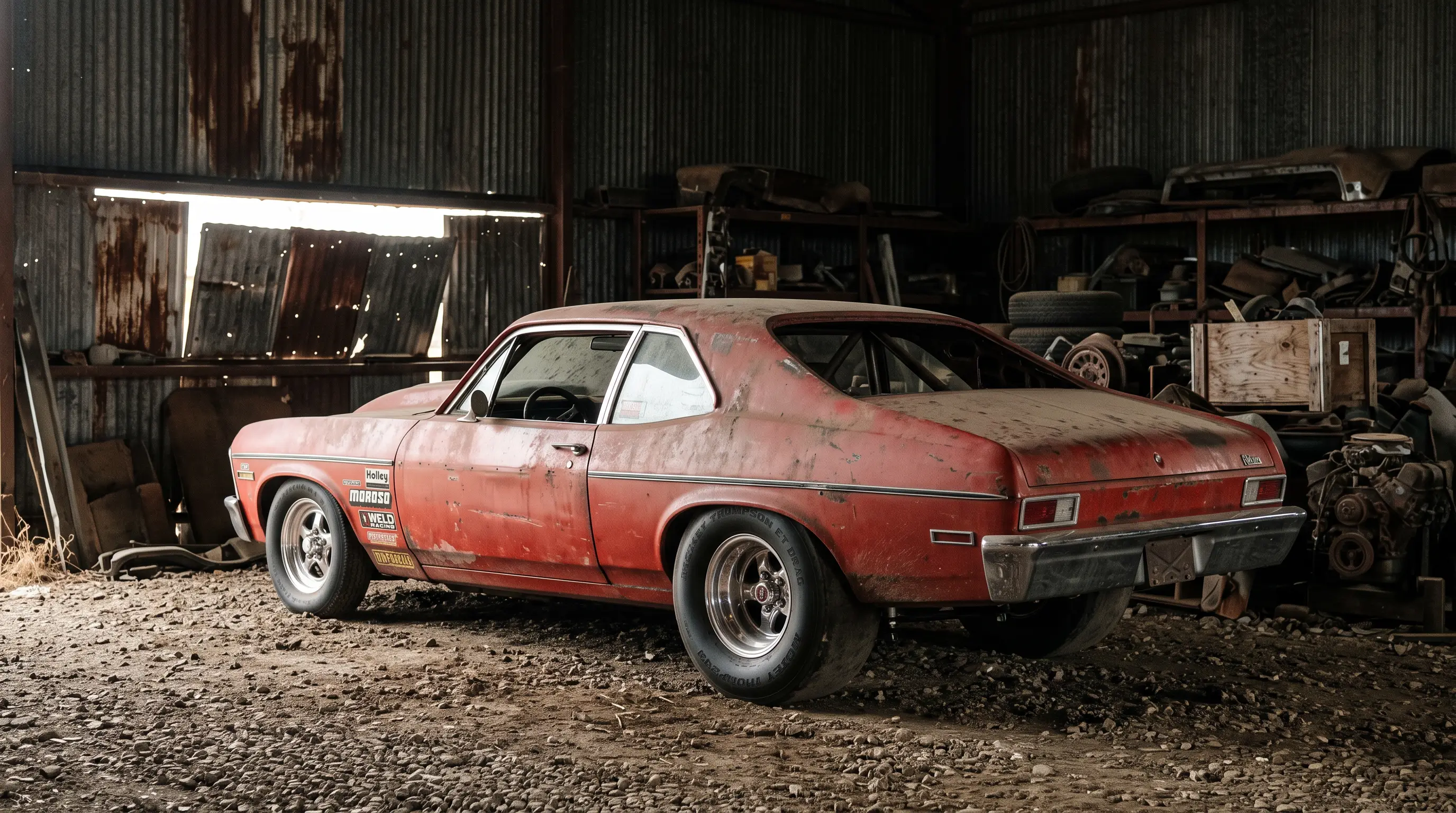
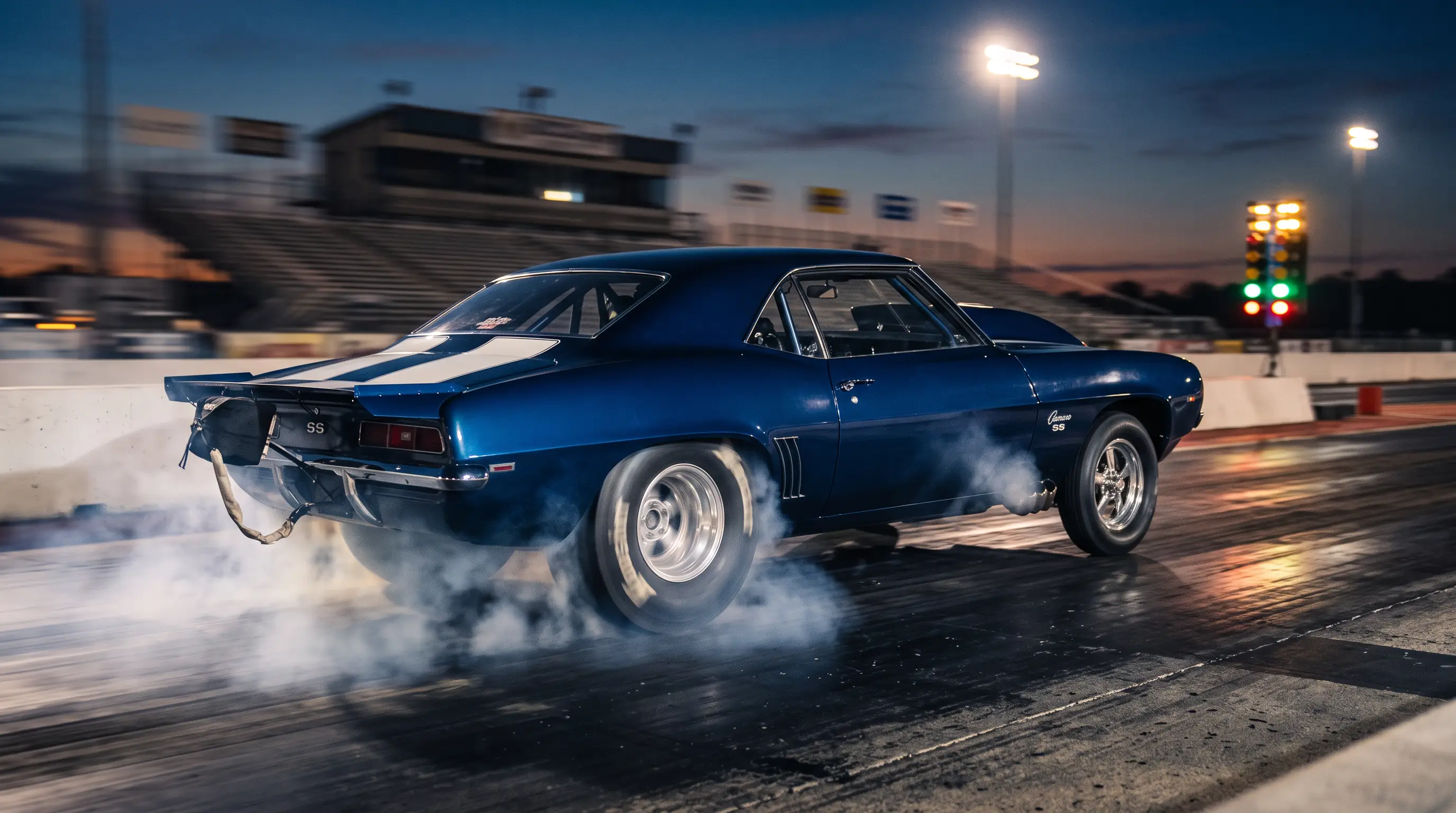
There's a difference between a car built to be fast and a car built to be fast while still doing everything a street car is supposed to do, and the second one is a lot harder to pull off. Street-legal drag cars were the backbone of the Pro Street movement, and the best of them earned legend status not just for the number they ran but for proving they could drive to the track, run the number, and drive home again.
Where the roots of the format actually came from
The idea of a street-legal drag car didn't start with Pro Street. It stretches back through the muscle car era itself, when a factory-built Chevelle or Road Runner could be driven straight from the dealership lot to a Saturday night grudge match at the local strip, no trailer required. What Pro Street did was formalize that instinct into an entire class with its own conventions, at a moment in the late 1970s when the muscle car era's factory performance had largely dried up and enthusiasts had to build the performance themselves rather than order it from a dealer. Street-legal drag cars carried that original spirit forward even as the fabrication involved grew far more elaborate than anything a factory assembly line ever produced.
That lineage matters because it explains why staying street-legal was never treated as an optional detail by the builders who took it seriously. It was the entire point. A tubbed, blown, full-bodied car that could still be driven to the track wasn't just a technical achievement. It was a direct continuation of the muscle car promise that any enthusiast with enough skill and determination could build something formidable in their own garage and drive it on the same roads everyone else used.
What street-legal actually meant in this class
The whole point of Pro Street, going back to its late-1970s roots, was to blur the line between a drag car and a car you could drive on public roads. That meant working headlights, a working horn, glass instead of Lexan, and enough of an interior to pass for a car rather than a cage on wheels. Purpose-built race cars from the same period could chase quicker numbers without any of those constraints, stripped to the bare minimum and trailered everywhere they went. Street-legal Pro Street cars gave up some of that advantage on purpose, because the whole appeal of the class was proving a car could do both jobs at once.
That distinction shaped how these cars were judged within the community, too. A car that showed up on a trailer, even one running an impressive number, drew a different kind of respect than a car that arrived under its own power with a license plate bolted to the back. Old racers still make that distinction today when they talk about which cars from their era actually earned their reputation and which ones simply looked the part for a photograph.
Rod Saboury's twin-turbo 1963 Corvette is the benchmark example of what this discipline could produce at its extreme: a full-interior, DOT-tired street car that still ran 6.75 seconds at 209 mph. Most street-legal Pro Street cars never got anywhere near that number, and they didn't need to. Running consistently in the eight- or nine-second range on a car with a full interior and a license plate was itself a serious achievement for most builders working with a single naturally aspirated or single-supercharged big-block through the 1980s. The honest measure of a great street-legal drag car wasn't just its best pass. It was whether the car showed up looking street-legal, ran the number, and then drove out of the property under its own power instead of getting loaded onto a trailer.
| Requirement | Why it mattered to the class |
|---|---|
| Working lights and horn | Kept the car legally driveable on public roads, not just trailered to the track |
| Full glass | Distinguished a street car from a stripped-out purpose-built race car |
| Functional interior | Preserved the car's identity as something you could actually sit in and drive |
| DOT-legal tires | Kept the traction advantage honest rather than relying on a strip-only slick |
The engineering tradeoffs of staying street-legal
Every concession to street legality cost a builder something at the track. A full interior added weight a stripped race car didn't have to carry. Working glass added more weight still, plus wind resistance a purpose-built car wouldn't bother with. DOT-legal tires, even good ones, never hooked as hard as a purpose-built slick. Builders chasing legend status in this corner of the class had to make up for every one of those disadvantages somewhere else, usually with a harder-hitting engine combination or a more carefully sorted chassis than a comparable stripped-down race car needed.
That's exactly why the cars that succeeded at it earned so much respect. Anybody with enough money could strip a car down and build something quick. Building something quick that still passed for a street car, and driving it there and back, took a different level of commitment and a genuine understanding of where every ounce of weight and every point of drag was coming from.
The insurance and registration headache nobody mentions
Keeping one of these cars legally on the road wasn't just a matter of bolting on a license plate and calling it done. Insurance companies of the era were not exactly enthusiastic about writing policies for a car running a built big-block, a tubbed rear end, and slicks-adjacent street tires, and plenty of owners had to get creative to keep coverage in place, whether that meant working with a specialty insurer familiar with modified cars or simply accepting a higher premium than a comparable stock muscle car would have carried. State inspection requirements varied widely too, and a car that passed inspection easily in one state might have failed outright in a neighboring one over something as simple as exhaust routing or ride height.
None of that bureaucratic friction shows up in the magazine photos from the era, but it was a real part of what separated a genuinely street-legal drag car from one that only looked the part for a photo shoot. The builders and owners who dealt with all of it, year after year, and kept their cars legitimately driveable earned a credibility with the community that a purely trailered show car never could.
The legacy these cars left behind
Street-legal drag cars from this era set the template that a lot of modern street-machine builds still chase, cars that can genuinely be driven daily and still put down a serious number when the opportunity presents itself. That lineage runs directly from the original Pro Street builders through to today's drag radial and street-outlaw scenes, which owe a real debt to the builders who proved the concept decades earlier. Our complete history of the movement's most notable builds covers plenty of these street-legal standouts alongside the more extreme show-only cars that got most of the magazine coverage at the time.
What made these particular cars into legends wasn't a single flashy pass. It was the accumulation of proof, weekend after weekend, that a real street car with real street equipment could hang with purpose-built race machines and still drive home afterward. If that combination of practicality and performance is what draws you to this era, you can browse classic Pro Street car listings to see period builds currently on the market.
"Anybody can build something quick if it never has to drive anywhere. Building something quick that still has to pass inspection and get you home, that separates the guys who understood the assignment from the guys chasing a magazine cover."
- Mike Sullivan