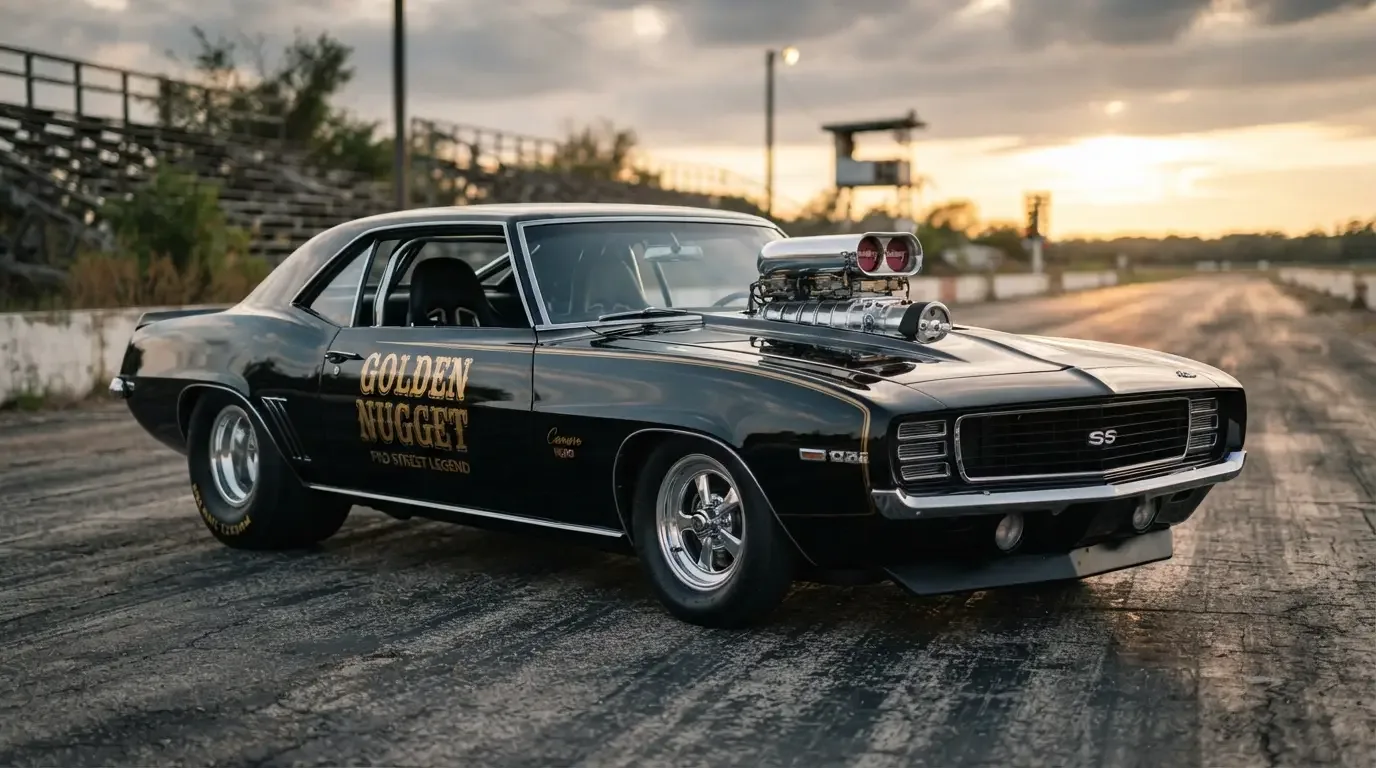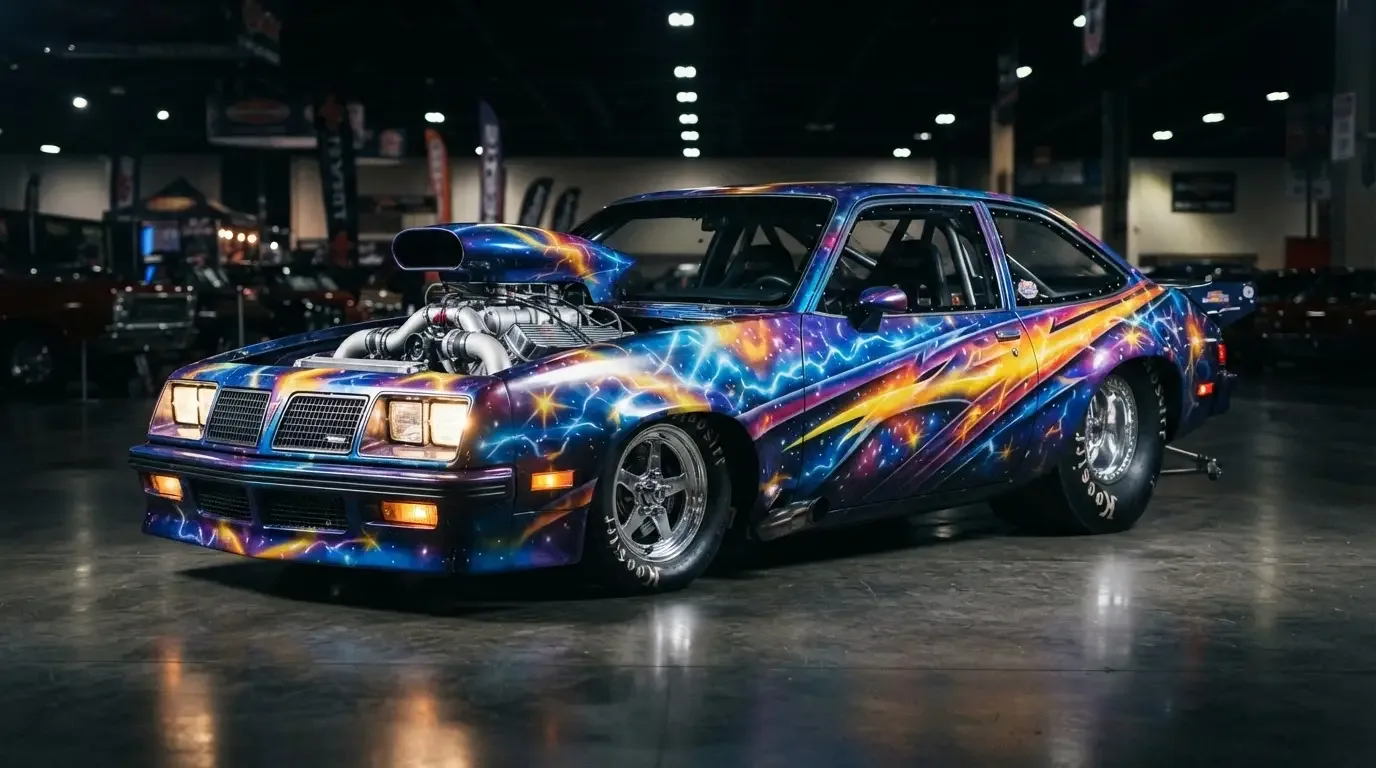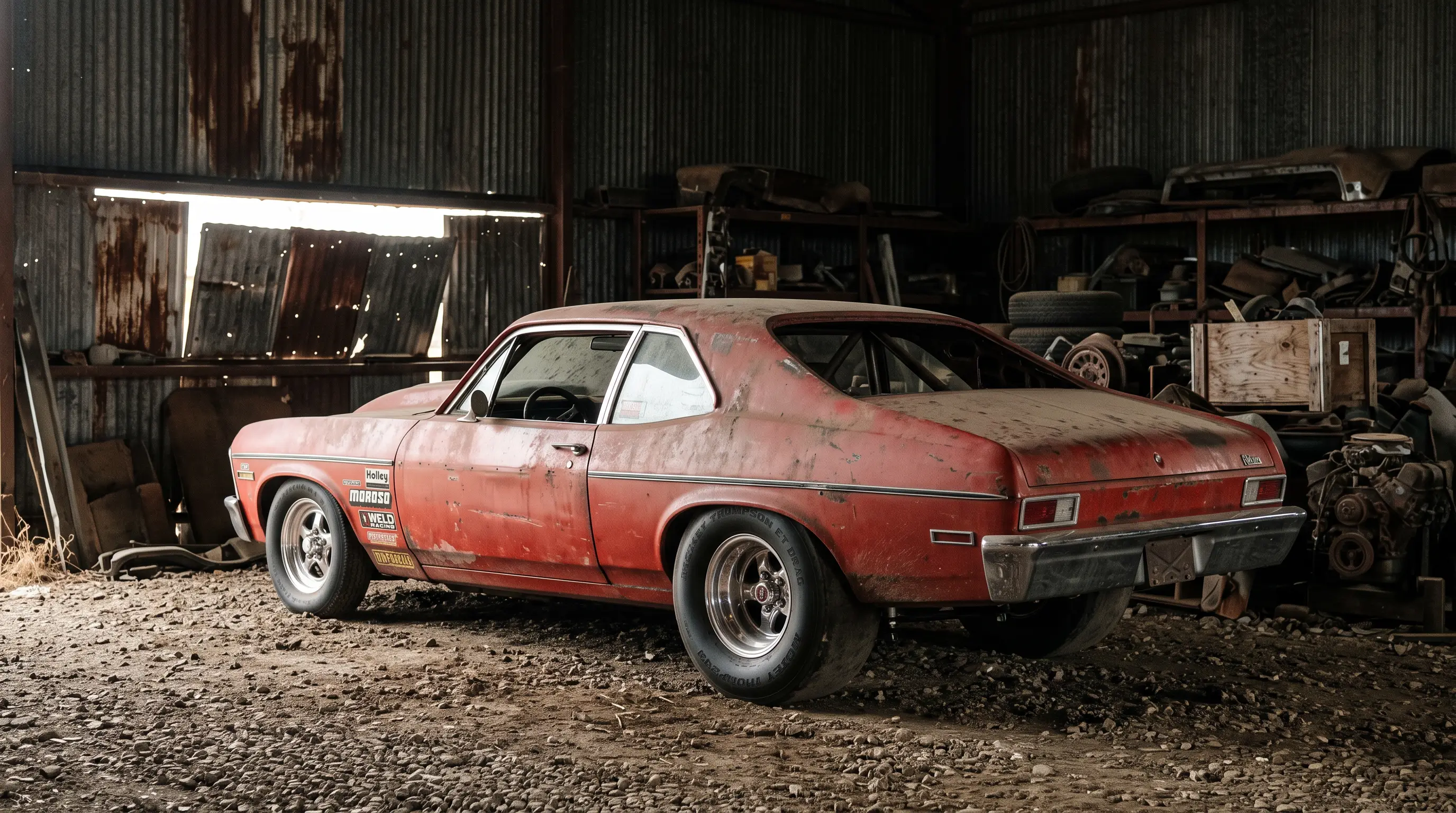
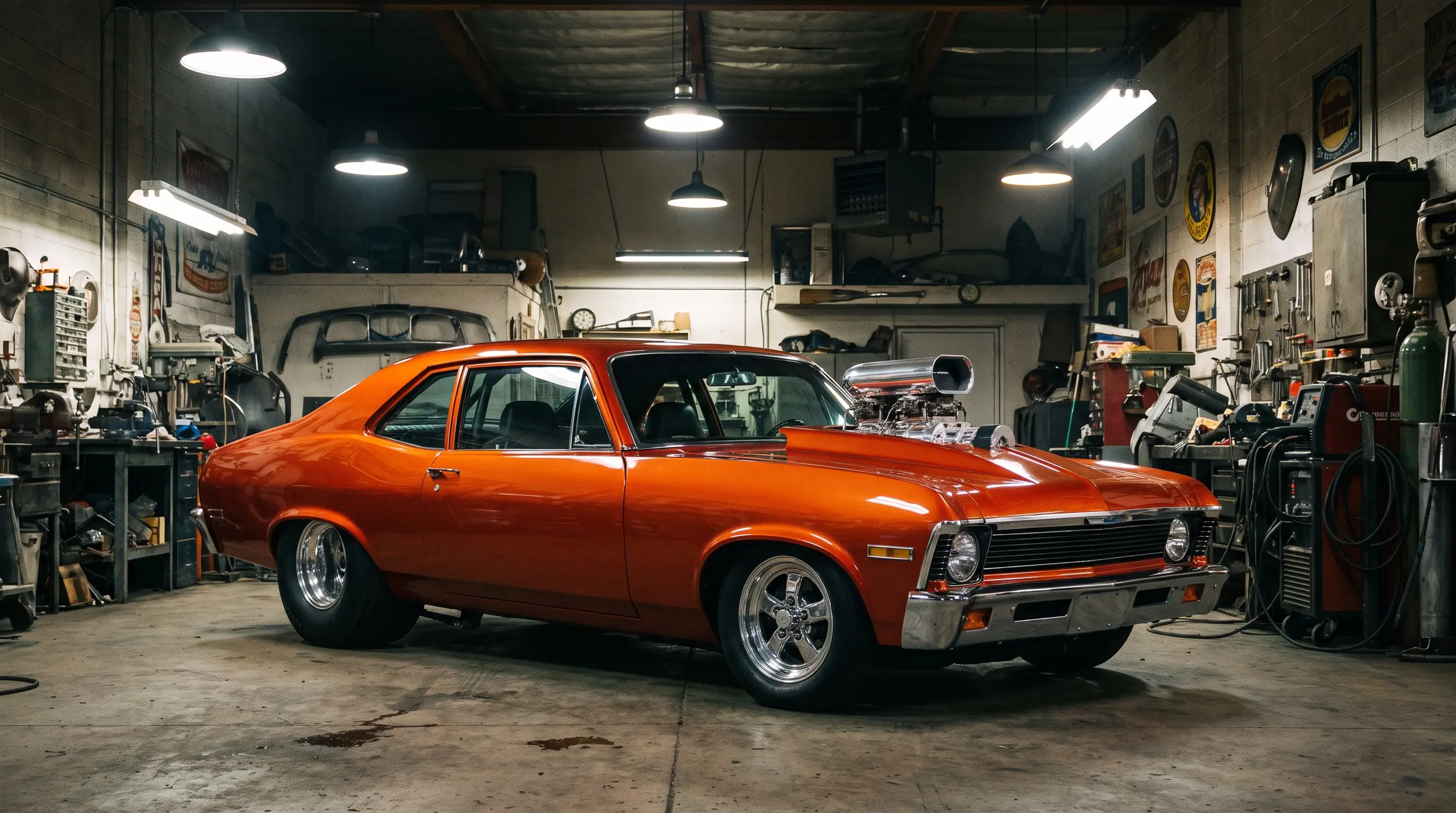
Every Pro Street car that ever rolled onto a fairground had a name behind it somewhere, and if you spent any time at a regional car show in the 1980s you heard the same handful of names over and over. The famous pro street builders were not celebrities in the modern sense. They were guys with a shop, a tube bender, and a waiting list, and their reputations traveled by word of mouth long before any of them had a website.
The shop culture that built the movement
Pro Street did not come out of a design studio. It came out of drag strip pit lanes and small-town body shops where builders were already tubbing cars for grudge racing and then figured out the look was worth keeping even on a car that never saw a track again. A builder earned his name one car at a time, and the good ones got repeat customers because a tubbed rear end and a narrowed nine-inch had to be done right or the car simply would not track straight down a quarter mile.
Word of a clean build spread through NSRA and NHRA event parking lots faster than any magazine ad could manage. A builder with three or four cars sitting in a row at a regional show, all wearing the same recognizable stance, was doing more marketing in an afternoon than most shops did in a year.
Chassis men versus paint men
The builders who defined the era generally split into two camps, and the best cars usually had both talents represented somewhere in the build chain. The chassis men cared about back-half kits, ladder bars, and getting a nine-inch to sit dead center under a tub without fighting the factory floor pan. The paint and body men cared about panel gaps, flare blending, and making a fiberglass hood look like it grew there. A car with a flawless chassis and mediocre bodywork looked like a race car with delusions. A car with show-quality paint and a sloppy back half was, bluntly, a liability the first time it left a stoplight hard.
The builders who lasted were the ones who understood both sides mattered equally, or who partnered with someone who covered whichever half they were weaker at. That division of labor is part of why so many Pro Street cars from this period carry two names in their history, a chassis shop and a paint shop, rather than one.
"You could tell who built a car from thirty feet away just by how the tubs met the quarter panel. That seam was a signature, whether the builder wanted it to be or not."
- Wayne Coburn
Regional reputations, national reach
What made this era unusual is how regional it stayed even as the look went national. A builder in the Midwest might never have shown a car outside a three-state radius, yet his signature stance and paint scheme would show up on cars built by admirers a thousand miles away who had only seen photos in a magazine. Pro Street spread the way folk traditions spread, through imitation and local pride, rather than through any centralized marketing push.
That regional flavor still shows up at reunions and cruise nights today. Owners who bring out a car built in a particular corner of the country in 1986 will often get approached by someone who instantly recognizes the shop's hand in the flare work or the roll cage design, even decades later.
What made a builder's reputation stick
Three things separated the builders whose names still get repeated from the ones who faded. Consistency mattered, meaning a customer could point to five cars from a shop and see the same quality standard across all of them, not just the flagship build that made the magazine cover. Function mattered too, since a car that looked the part but could not actually be driven to the show and back undercut the whole reason Pro Street existed as a street-legal answer to full race cars. And documentation mattered, even if nobody called it that at the time. A build sheet, a photo log, a receipt for the rear end gears, all of it became the difference decades later between a car with a known pedigree and one nobody can vouch for.
That last point connects directly to how these cars are valued and researched today. If you want the whole picture on how specific builds from this era earned their reputations and how collectors trace them back to a shop, the deeper history of individual cars fills in a lot of what a builder profile alone cannot.
Why the builder still matters to a buyer today
A car with a known shop history commands more respect and, often, more money than an unbadged build with the same specs on paper. Buyers researching a Pro Street car should ask who did the chassis work and whether any paperwork survives, because a documented builder pedigree is one of the few things in this hobby that consistently holds its value. It also tells you something about how the car was engineered under the skin, since a recognized shop's back-half work tends to follow a known, provable geometry rather than a mystery weld job from an anonymous garage.
If that kind of documented history matters to you, it is worth looking at what is actually available before you commit to a project car of unknown origin. You can find a classic Pro Street car that already carries a verified build sheet, which saves years of guesswork compared to chasing down a builder's identity after the fact.
The legacy these shops left behind
Most of the shops that defined Pro Street in its golden years are gone now, closed, sold, or quietly folded into general fabrication work once the drag radial and Pro Touring trends pulled attention elsewhere. But the cars remain, and so does the standard those builders set for what a proper tub job and a period-correct stance should look like. Modern builders restoring or continuing a Pro Street project still measure their own work against that older standard, whether they know the original shop's name or not.
That is really the lasting mark these builders left. Not a logo or a franchise, just a bar for quality that anyone tubbing a car for the street still has to clear.
Tracking down a builder's identity today
Researching a shop's history now usually starts with old event photos rather than any surviving paperwork. Regional car club archives, scanned NSRA event programs, and enthusiast forums where old-timers still swap stories are often more useful than any factory record, since these were never factory cars to begin with. A serial number on a back-half kit, a decal residue outline on a firewall, or a distinctive flare cut can point a researcher toward a shop even when the original owner and builder are both long gone.
Owners clubs dedicated to specific platforms, whether Camaro, Nova, or Mustang, tend to keep the best informal records because members cross-reference cars at shows and swap meets over years. If you inherit or buy a Pro Street car with no history attached, that community is usually the fastest way to fill in the gaps a title search never will.