My buddy Ray used to keep a Nova parked outside the union hall every Friday, and new members would walk past it, stop, and ask the same question every single time. What makes this thing a Pro Street car and not just a hot rod with big tires? Ray had the answer down to a routine after a while, walking newcomers around the car piece by piece like a tour guide, starting at the back and working forward. Understanding pro street car anatomy really is that simple once someone walks you through it in order, because every piece exists to serve the same handful of goals, and once you see how they connect the whole build makes sense.
The rear end and tire package
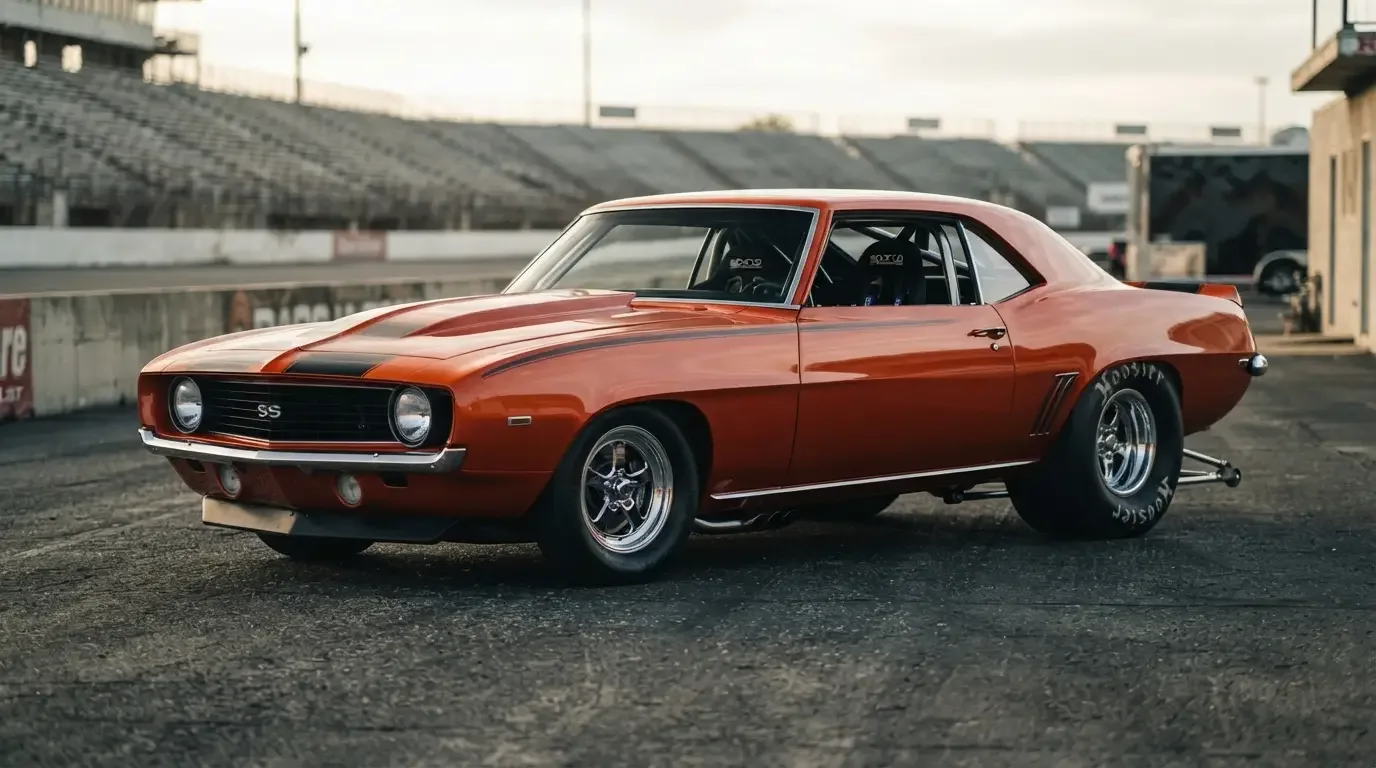
Start where Ray always started, at the back. The signature of any Pro Street car is a massively wide rear tire, tucked tight under reworked quarter panels, sitting on a narrowed rear end built to accept it. This is not a bolt on modification. The frame rails behind the passenger compartment typically get narrowed and relocated, the inner wheelhouses get cut and refabricated, and the whole rear structure is built around the tire rather than the tire being squeezed into existing space. A four link or ladder bar suspension usually replaces the factory leaf springs back here, since the geometry needed to plant a huge tire under hard acceleration is nothing like what a factory leaf spring setup was designed to handle.
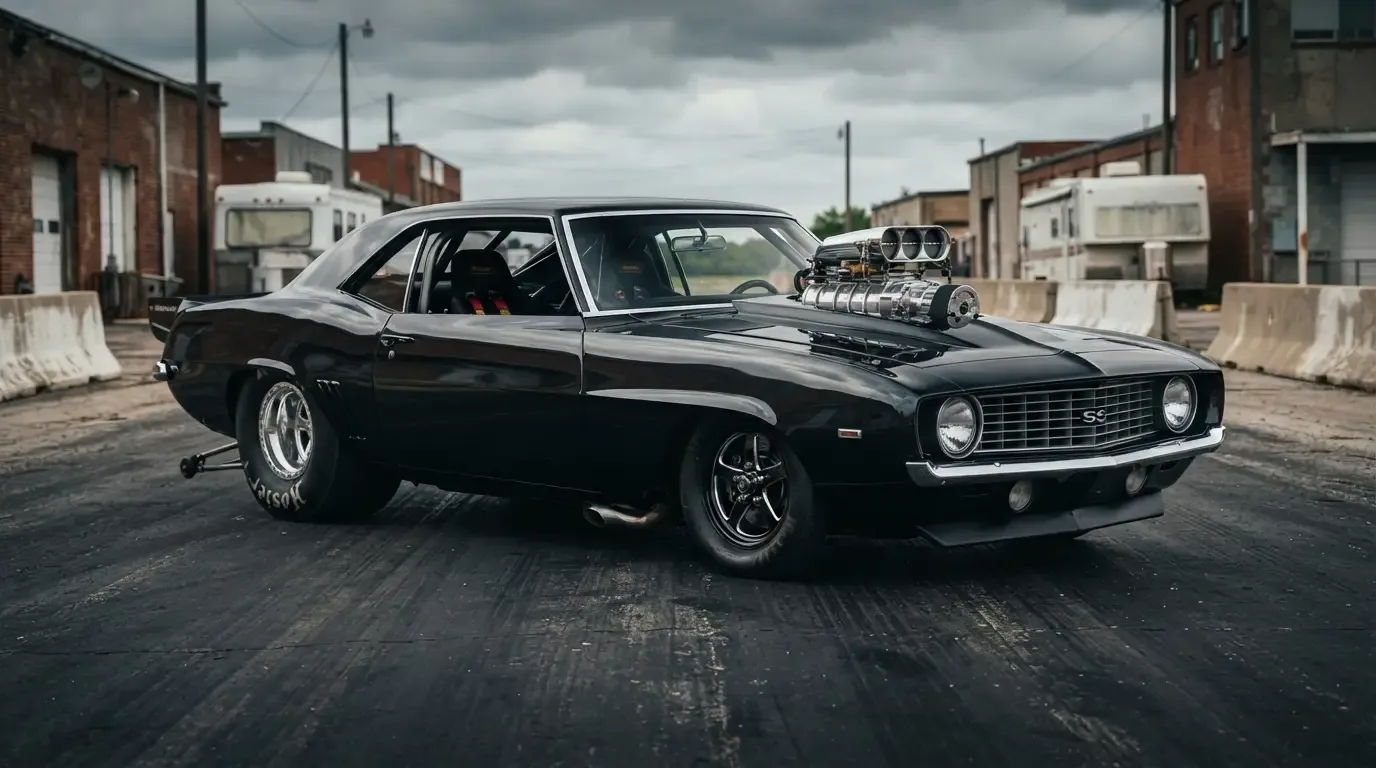
Front to back, the tire size difference is dramatic on purpose. A narrow front tire on a skinny wheel keeps rolling resistance low and steering light, while the huge rear tire does the work of putting power to the pavement. That mismatch, skinny front and massive rear, is the single most recognizable visual signature of the whole movement, and it is usually the first thing anyone notices even before they clock the engine.
The chassis and suspension underneath
None of that rear end work matters if the chassis cannot handle the stress. Serious Pro Street builds reinforce the frame with subframe connectors tying the front and rear structures together, since a unibody or a stock frame was never engineered to survive the torque loads a built big block or a blower motor can generate. Front suspension usually gets a mild drop for stance and improved geometry, sometimes with tubular control arms replacing the stamped steel factory pieces, though the front end rarely sees the dramatic changes the rear does.
Roll cages show up on the more serious builds, partly for safety once a car starts running quicker elapsed times, and partly because certain sanctioning bodies require them past a given performance threshold. A basic four point cage was common on cars still meant to be driven on the street, while dedicated cages appeared on cars built with strip duty as the priority.
| Component | What Changes | Why It Matters |
|---|---|---|
| Rear frame rails | Narrowed, relocated inward | Clears the wide rear tire |
| Rear suspension | Four link or ladder bars | Controls axle wrap under power |
| Subframe connectors | Added front to rear | Stiffens chassis against torque |
| Front tires | Narrow, small diameter wheel | Low rolling resistance, aggressive stance ratio |
| Engine | Big block or blown small block, often exposed through hood | Visual and mechanical centerpiece of the build |
The engine and drivetrain
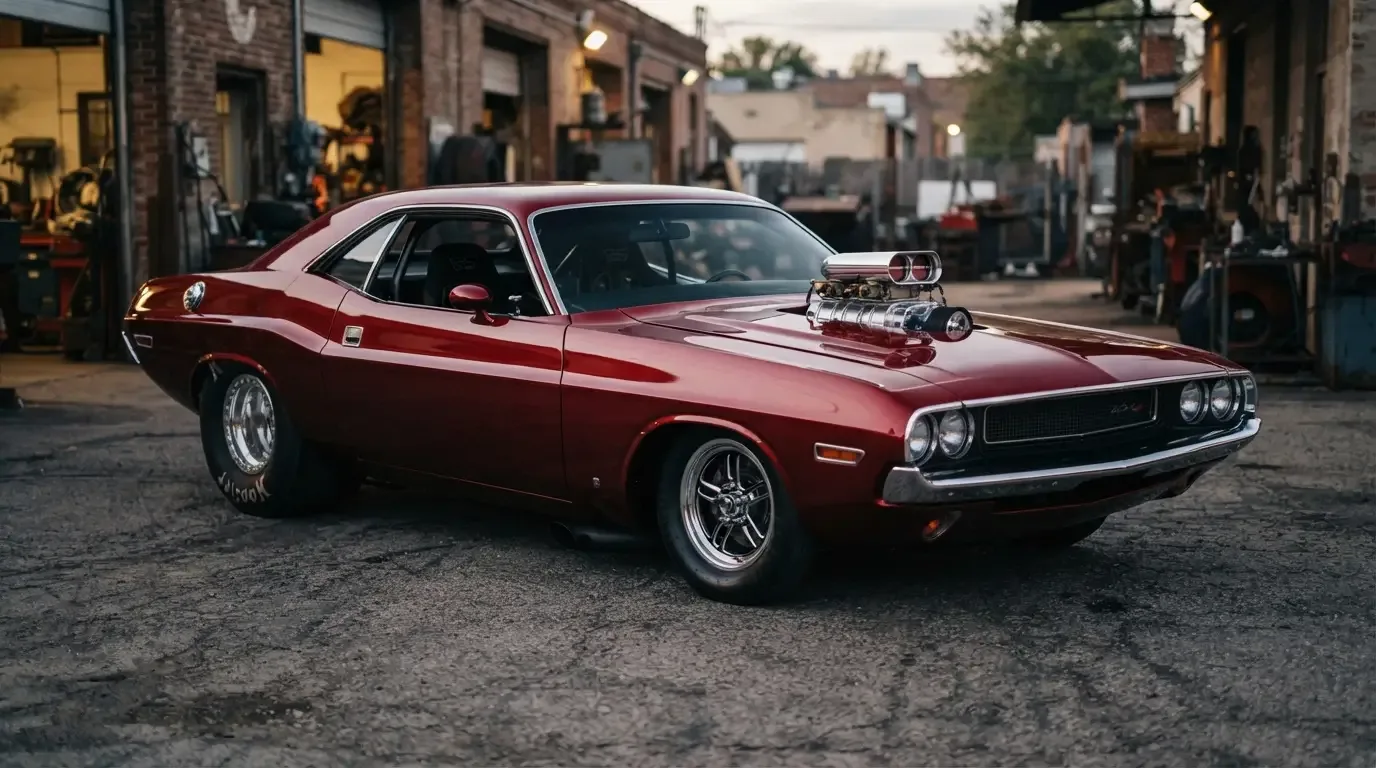
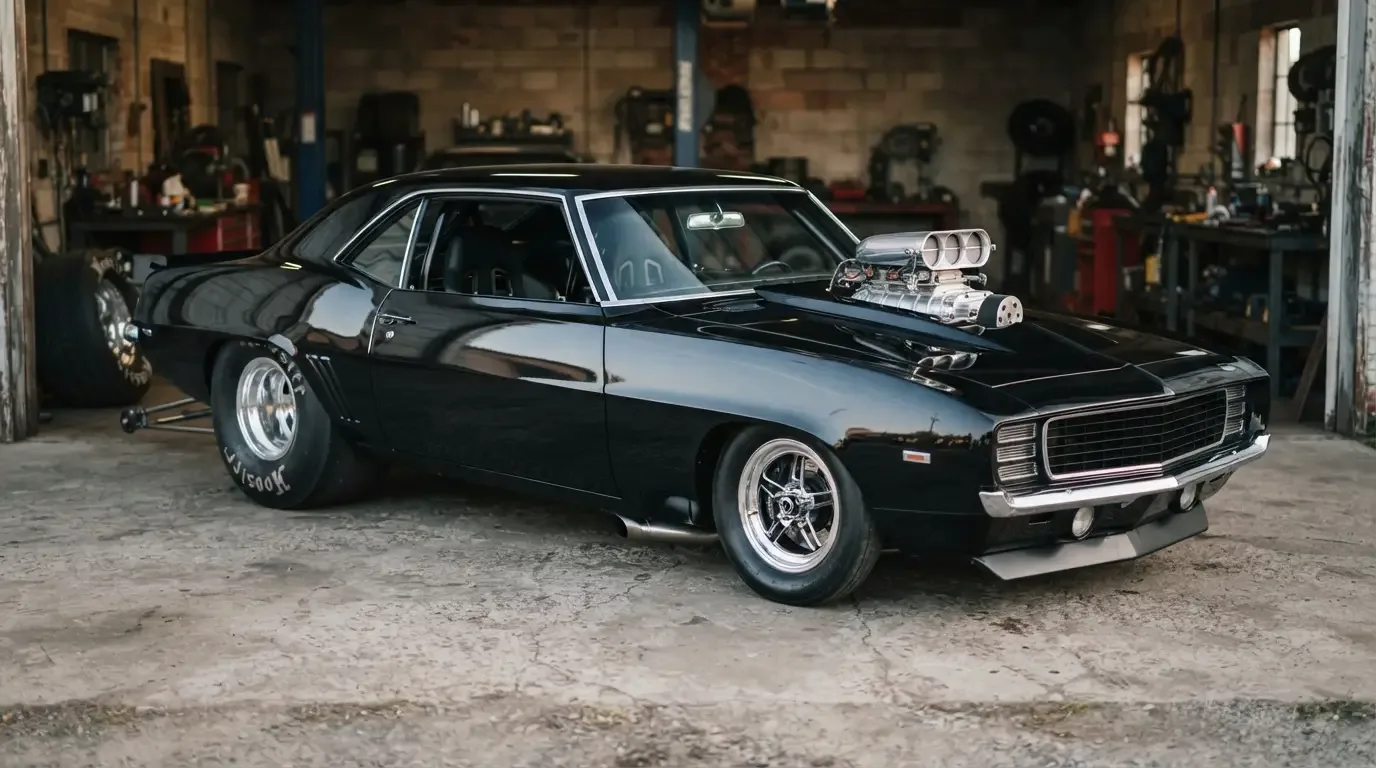
The engine bay is where a Pro Street build makes its loudest statement. Big block power was the default choice for most of the golden era, often paired with a single or dual four barrel carburetor setup, though supercharged small blocks with a blower punching through a scooped hood became just as much of a signature look by the late 1980s. Chrome and polish were not vanity choices alone, an open hood or a hood scoop meant the engine was on display, so builders dressed the top end accordingly, polished valve covers, chromed brackets, and a finish that looked as good sitting still as it sounded running.
Behind the engine, a heavy duty transmission and driveshaft handled the torque, usually paired with a shortened driveshaft to match the narrowed rear end. Traction bars, a transbrake on the more strip focused builds, and aftermarket torque converters rounded out a drivetrain built to survive repeated hard launches, something a stock drivetrain was never designed to endure.
"Ray used to say the engine gets all the attention but the rear end does all the work. He was not wrong. Any fool can drop a big motor in a car. Getting that power to the ground without breaking something took real skill."
- Wayne Coburn
Bodywork and the finishing details
Once the mechanical bones were sorted, bodywork tied the whole package together. Flared or reworked quarter panels, sometimes subtle, sometimes dramatic, made room for the tire without looking like an afterthought. Paint tended toward bold single stage colors, candy finishes, or graphics that echoed the drag racing world the movement borrowed its aesthetic from. Interiors ranged from stripped down and functional, a pair of race seats and a roll bar poking through, to fully trimmed cabins that would not look out of place at a street machine show, depending entirely on how far down the strip focused path a given builder wanted to go.
What ties every one of these pieces together is intent. Every part of a genuine Pro Street car, the tub, the tire, the cage, the engine, exists to reinforce the same message, that this car looks and feels like it belongs at the drag strip even when it is parked outside a union hall on a Friday night. For the origin story behind why builders chased that specific look in the first place, the full story traces it back to where it all started. And if walking through the anatomy of these cars has you wanting to see one in person, plenty of clubs still bring genuine examples out to shows, or you can go looking for a classic Pro Street car for sale and study the details yourself, the way Ray taught half the guys at that union hall to do.
Wheels and the visual proportions that tie it together
Wheel choice matters more to the overall anatomy than a lot of newcomers expect. The rear wheel had to be wide enough to mount that huge tire while still tucking properly under the reworked quarter panel, which meant builders often chose deep dish wheels with a specific offset calculated to clear the narrowed rear end housing. Up front, a smaller diameter, narrower wheel kept the nose light and reinforced the visual mismatch that makes the whole car read correctly at a glance. Get the wheel proportions wrong, even with every other piece of the anatomy present and correct, and the car simply does not look right sitting still, which is why experienced builders spent as much time studying wheel and tire combinations as they did the mechanical work underneath.
Ray always pointed this part out last, after walking newcomers through the rear end, the cage, and the engine, because he said it was the piece people noticed without realizing why. A car with all the right mechanical components but the wrong wheel proportions still looked slightly off, and a car with modest mechanical work but perfectly chosen wheels and tire sizing could look more convincing at a glance than it had any right to. That gap between what a car actually was underneath and what it appeared to be from the sidewalk was, in Ray's telling, the whole reason anatomy mattered as much as substance in this particular corner of car culture.
Sources and notes
- Wikipedia: Pro Street
- Hagerty: Pro Street's Greatest Builds Honored at 2024 Grand National Roadster Show
- Chevy Hardcore: Pro Street, A Look Back At The Bow-Tie Style That Never Gets Old
- Detroit Speed: Engineering Clearance, How Mini-Tubs Maximize Rear Tire Fitment
- In The Garage Media: Defining Muscle Car Terms, Pro Touring, Pro Street, and Street Freak
- Hot Rodders Forum: What Is a Pro Street Car