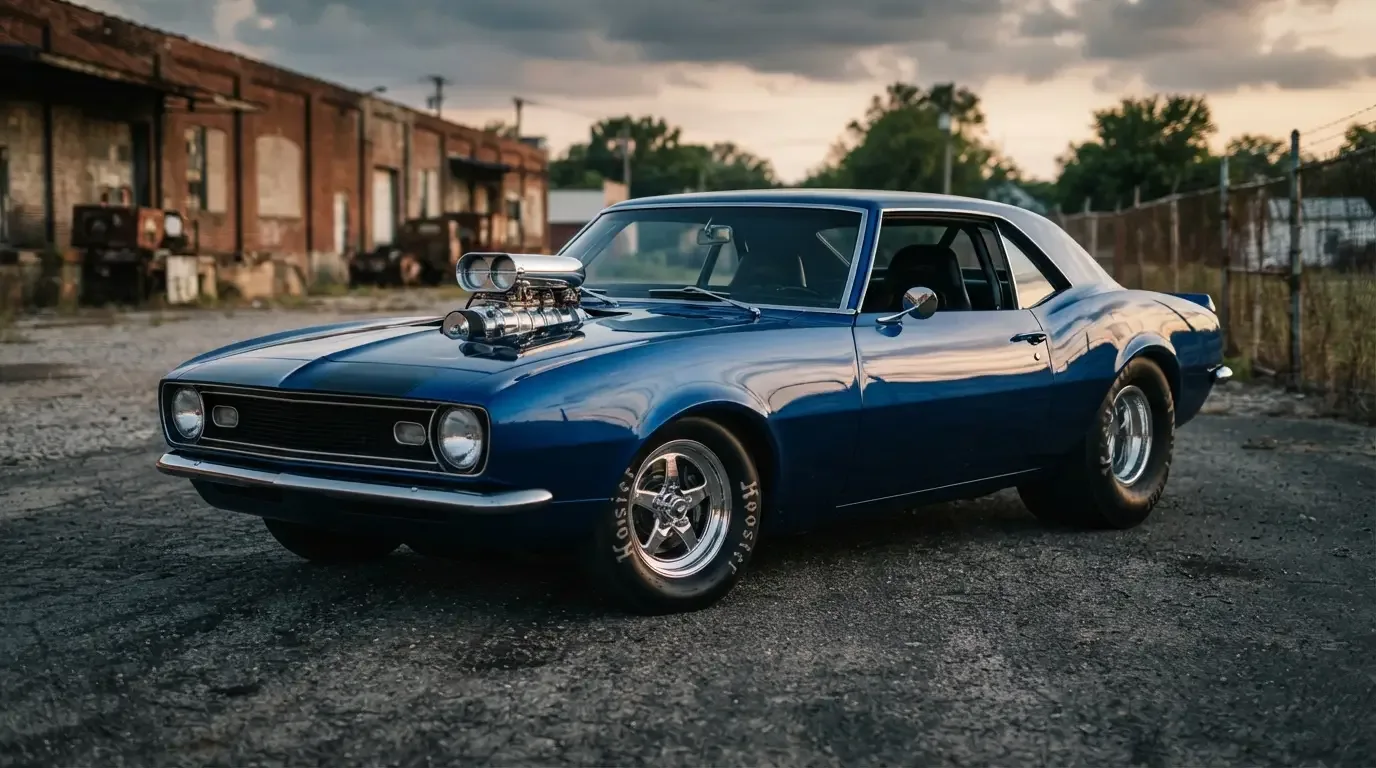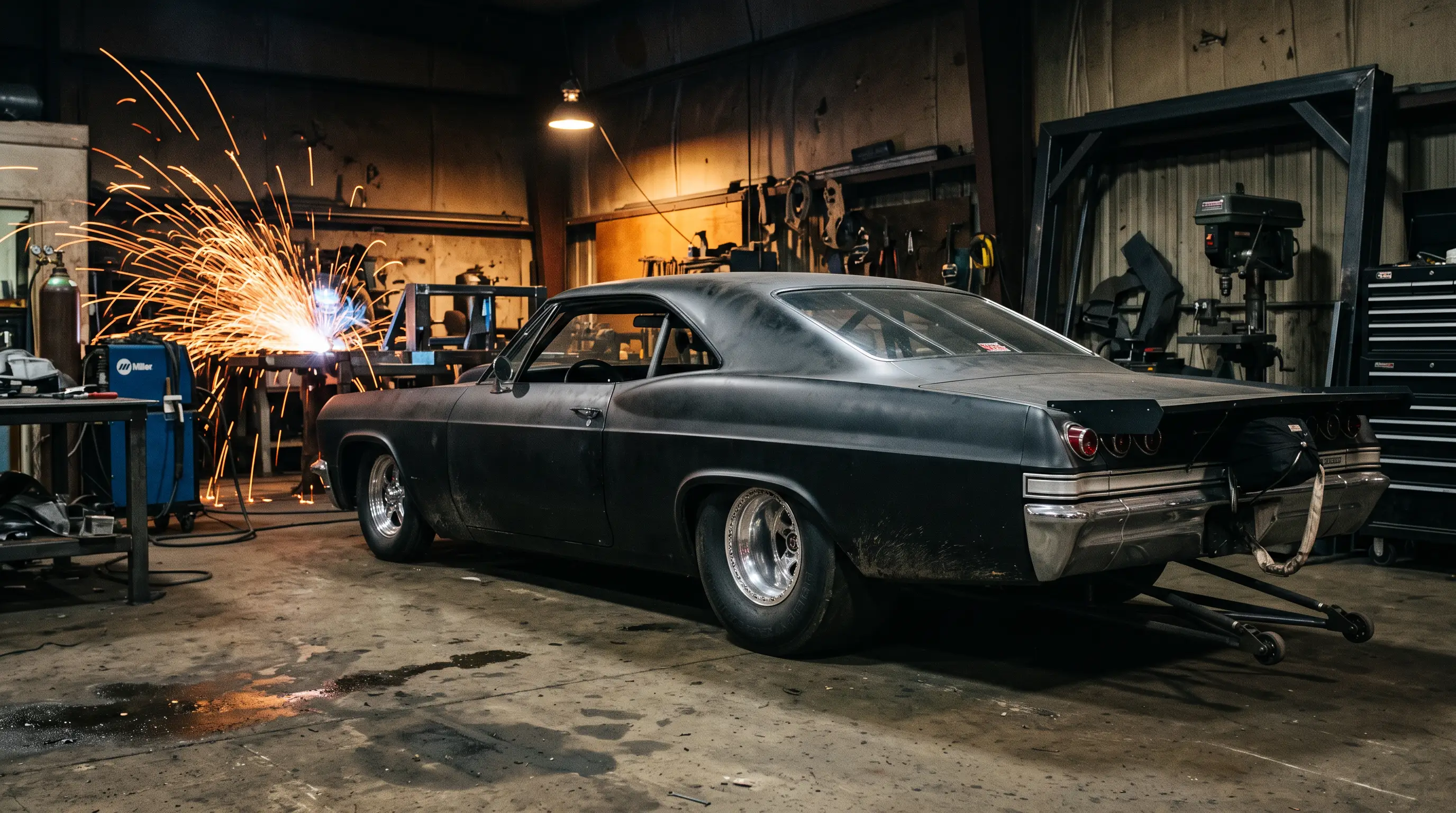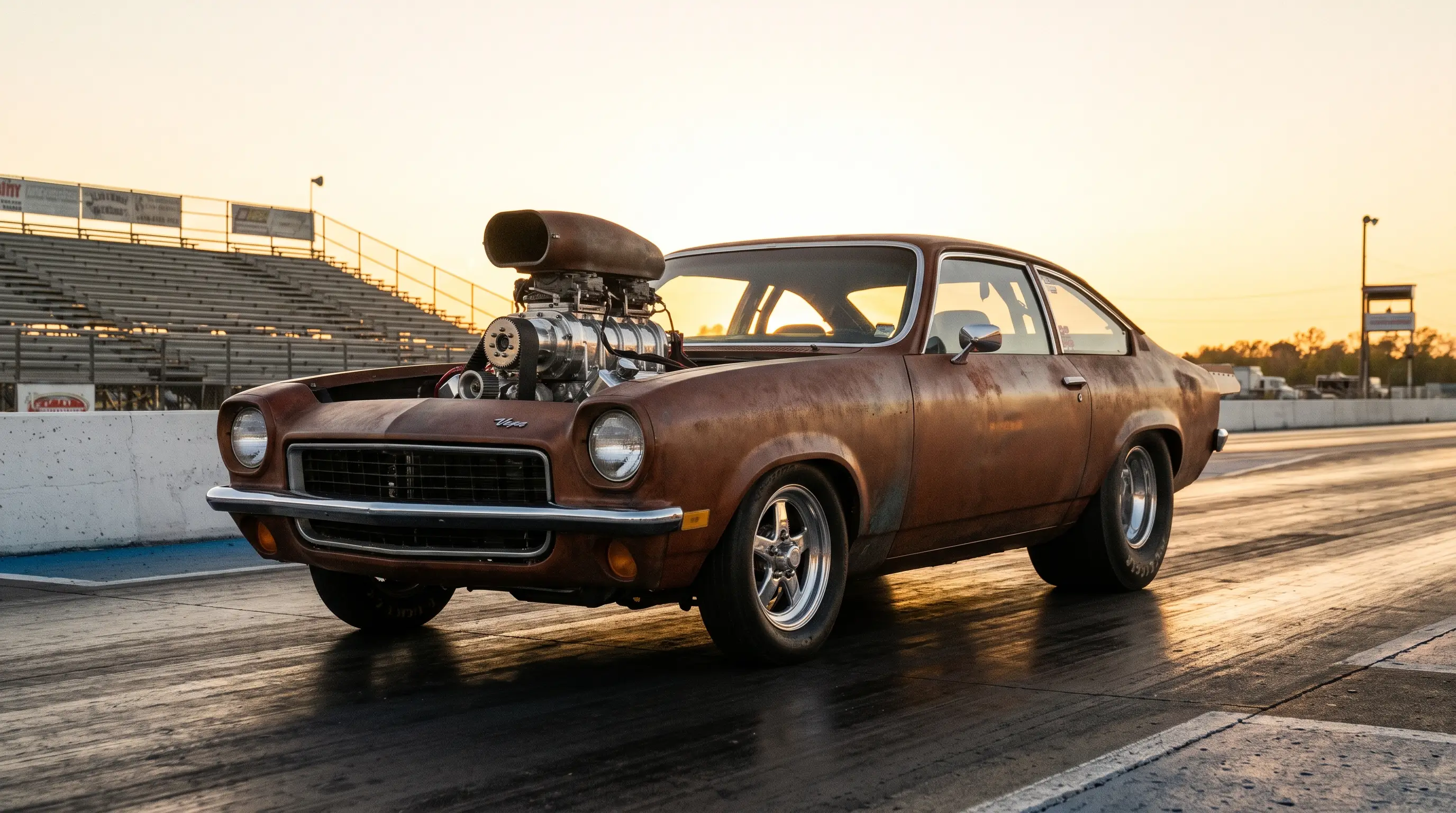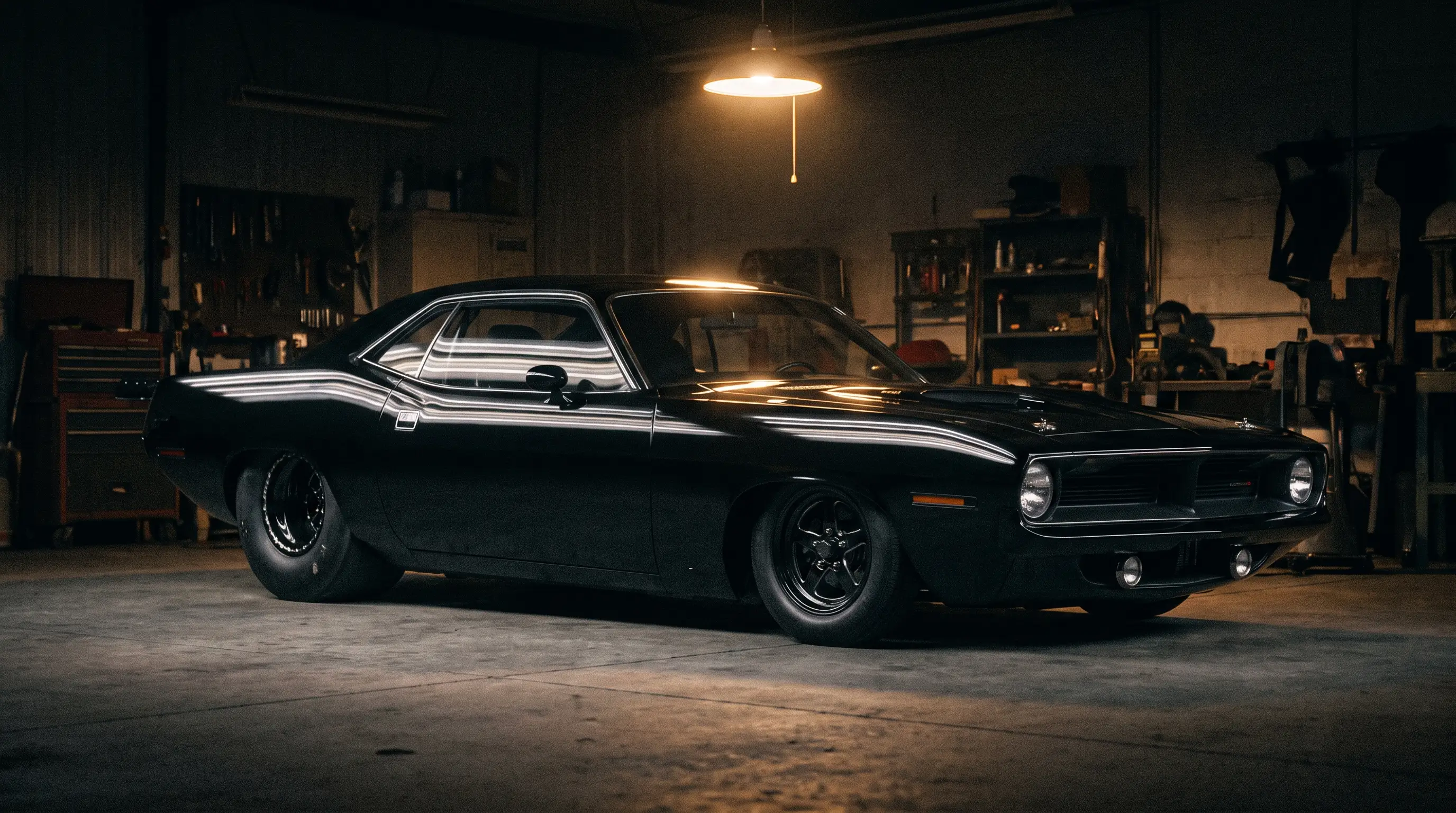
Somewhere in the middle of a swap meet crowd, a man in a faded Mopar shirt was arguing with a stranger about whether a Barracuda even counts as a proper Pro Street car, given how few of them show up compared to the GM crowd. That scarcity is exactly the point of the whole scene. The pro street barracuda is a rarer sight than a Nova or Camaro at most shows, and the ones that exist tend to carry an outsider's pride that GM-based builds rarely need to claim.
A Mopar minority in a Chevy-dominated world
Pro Street culture grew up heavily rooted in GM platforms, since cheap Chevy IIs, Novas, and Camaros flooded junkyards through the late 1970s and gave builders an easy, affordable starting point. Plymouth's Barracuda never had that kind of junkyard abundance, and Mopar performance parts, while excellent, were never quite as universally cheap or plentiful as the small block Chevy aftermarket. Builders who chose a Barracuda for a Pro Street project were making a statement about brand loyalty as much as anything else, choosing the harder-to-source platform because it was their platform, the one their family had always run, the one they refused to abandon just because Chevy parts were easier to find and cheaper to buy at every swap meet in the country.
The E-body shape and why it suited the look
The third-generation Barracuda, built from 1970 through 1974 on Chrysler's E-body platform, brought wide rear haunches and a low, muscular stance that translated naturally into the tub-and-tire treatment. Unlike some platforms that needed heavy visual reshaping to sell the Pro Street look, the E-body Barracuda's factory proportions already leaned aggressive, with rear fenders that seemed built to be filled with wide rubber even before a single cut was made in the sheet metal.
Earlier first and second-generation Barracudas from 1964 through 1969 appeared far less often in Pro Street builds. Their narrower, more upright shape did not carry the same visual drama once tubbed, and builders generally preferred to keep those earlier cars in original or restored condition rather than commit them to the tub-and-tire treatment, reserving that fate almost exclusively for the wider, more visually cooperative E-body cars that came later.
Hemi dreams and small block realities
Every Barracuda build conversation eventually turns to the Hemi. Chrysler's legendary 426 Hemi is the engine every Mopar enthusiast dreams about, and a handful of serious Pro Street Barracuda builds did run genuine or cloned Hemi power for the bragging rights alone. But the Hemi was always rare, heavy, and expensive to build for street use, so most Pro Street Barracudas actually ran Chrysler's small block 340 or 360 engines, or the big block 383 and 440, engines that were more available, more affordable, and still plenty capable of moving a lightened E-body down the strip in a hurry.
That practical engine choice did not diminish the cars in the eyes of the Mopar faithful. A well-built 440 Barracuda earned just as much respect at a show as a Hemi car, since everyone in that crowd already understood how much harder it was to build a competitive Mopar Pro Street car compared to reaching for the nearest small block Chevy.
Sourcing those big block Mopar engines also took more legwork than sourcing a small block Chevy, since the supply of good used 440s and 383s dried up faster than the seemingly endless pool of Chevrolet small blocks that filled every junkyard in the country through the 1980s. Builders who kept a Mopar engine in their Barracuda often ended up rebuilding a single core multiple times over the years rather than simply swapping in a fresh replacement, since finding another one locally was never guaranteed the way it was for a Chevy owner who could practically walk to the nearest salvage yard and pull a running 350 off a shelf.
"Every Mopar guy at a Pro Street show is fighting the same uphill battle, and they know it, and honestly I think they like it that way. Being the underdog is half the personality of the whole scene."
- Patrick Walsh
How the platform connects to the wider movement
Understanding why the Barracuda occupies such a specific niche requires seeing it against the backdrop of the platforms that dominated the era. Pro street muscle cars history lays out how GM's affordability advantage shaped the whole movement's platform choices, which makes the Barracuda's persistence as a minority favorite all the more notable. Builders who went this route were swimming against the current on purpose. If you are curious how another underdog platform carved out its own space in the same era, a related story covers a similarly unlikely choice that earned its own cult following.
Fabrication challenges specific to the E-body
Tubbing an E-body Barracuda presented its own unique headaches compared to the GM platforms most builders were already familiar with. Chrysler's unibody construction on the E-body differed enough from GM's approach that a fabricator experienced with Novas or Camaros could not simply transfer their techniques directly. Frame rail geometry, torsion bar front suspension mounting points, and the E-body's specific floor pan structure all required builders to essentially relearn portions of their craft on a platform with a much smaller support community to lean on for advice.
That knowledge gap meant early Barracuda Pro Street builds sometimes leaned on trial and error more than their GM counterparts, since fewer people had already solved the same fabrication puzzles and written the results down anywhere accessible. Mopar-specific car clubs became essential clearinghouses for this kind of hard-won knowledge, with members sharing measurements and techniques the way GM builders could often just find printed in a magazine article, trading notes at meets that GM-focused publications rarely bothered covering in the same depth.
Where Barracudas stand in today's market
Because genuine E-body Barracudas were already gaining serious collector value by the 1990s, far fewer clean examples remained available for Pro Street conversion compared to earlier decades, which makes surviving tubbed Barracudas from the golden era genuinely scarce today. That scarcity, combined with the platform's cult status among Mopar loyalists, means well-documented examples draw real attention when they surface. Anyone chasing one should expect a longer search than they would for a GM-based equivalent, but for buyers who want something the rest of the show field is not running, checking what is listed among Pro Street cars for sale now is a reasonable place to start looking. The man in the faded Mopar shirt would tell you it is worth the wait, and after watching that swap meet argument go on for a good ten minutes without either side backing down, I am inclined to believe him.