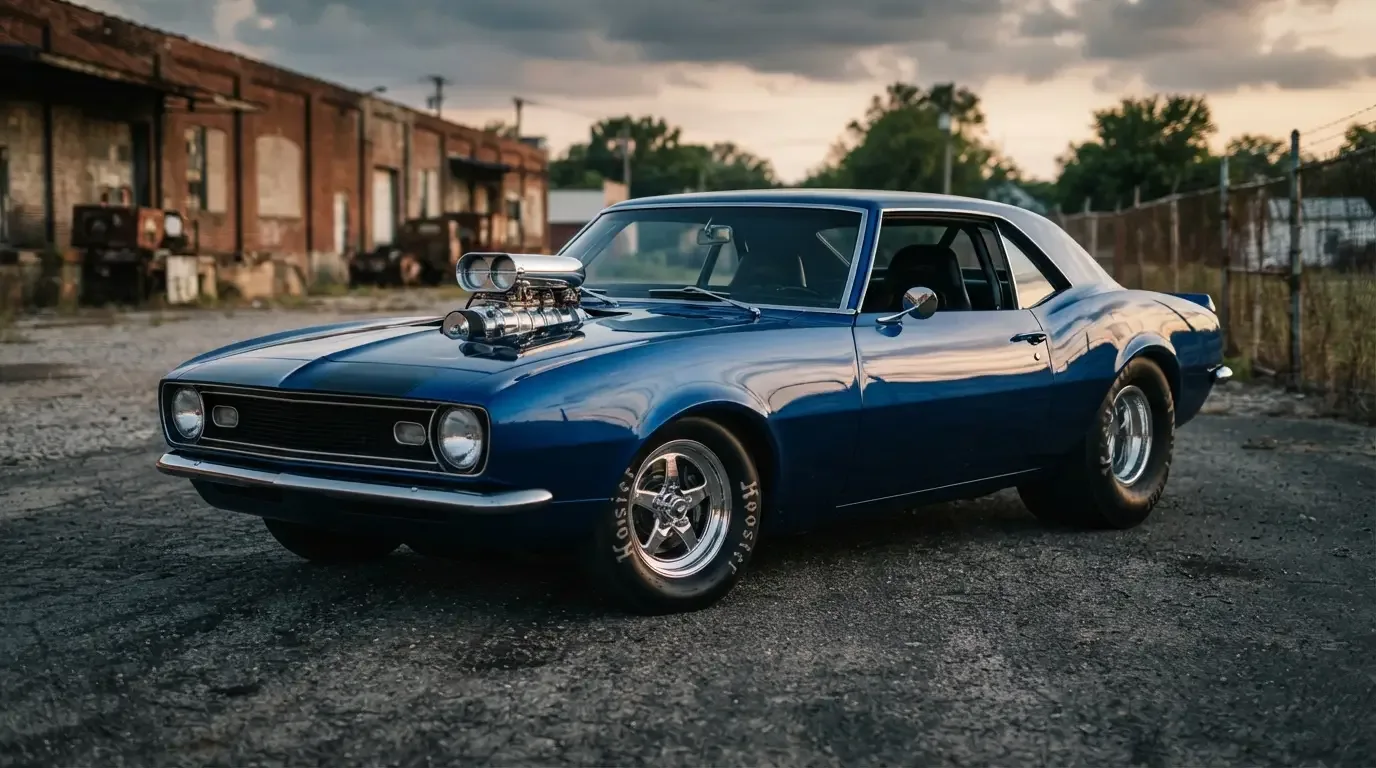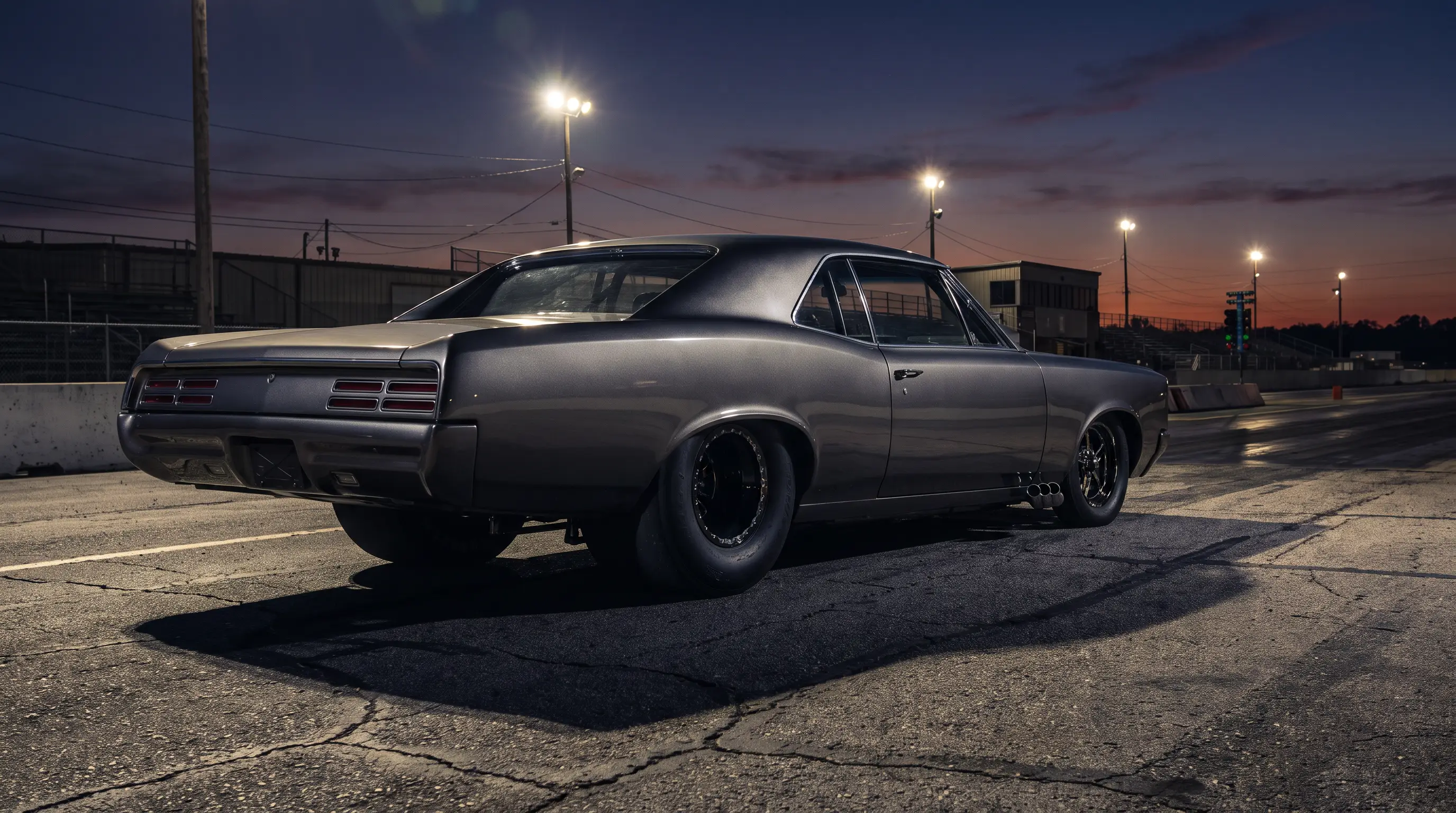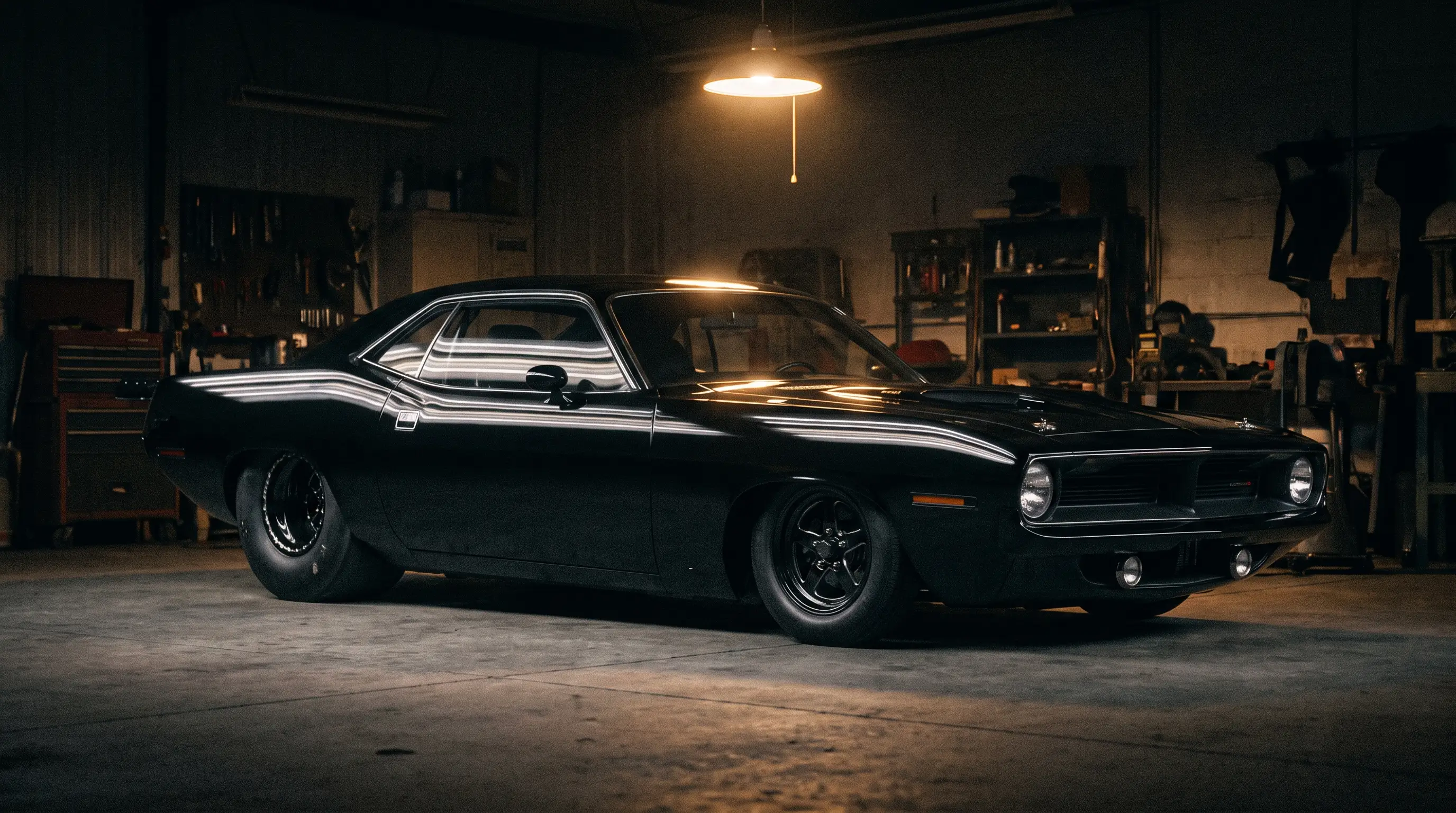
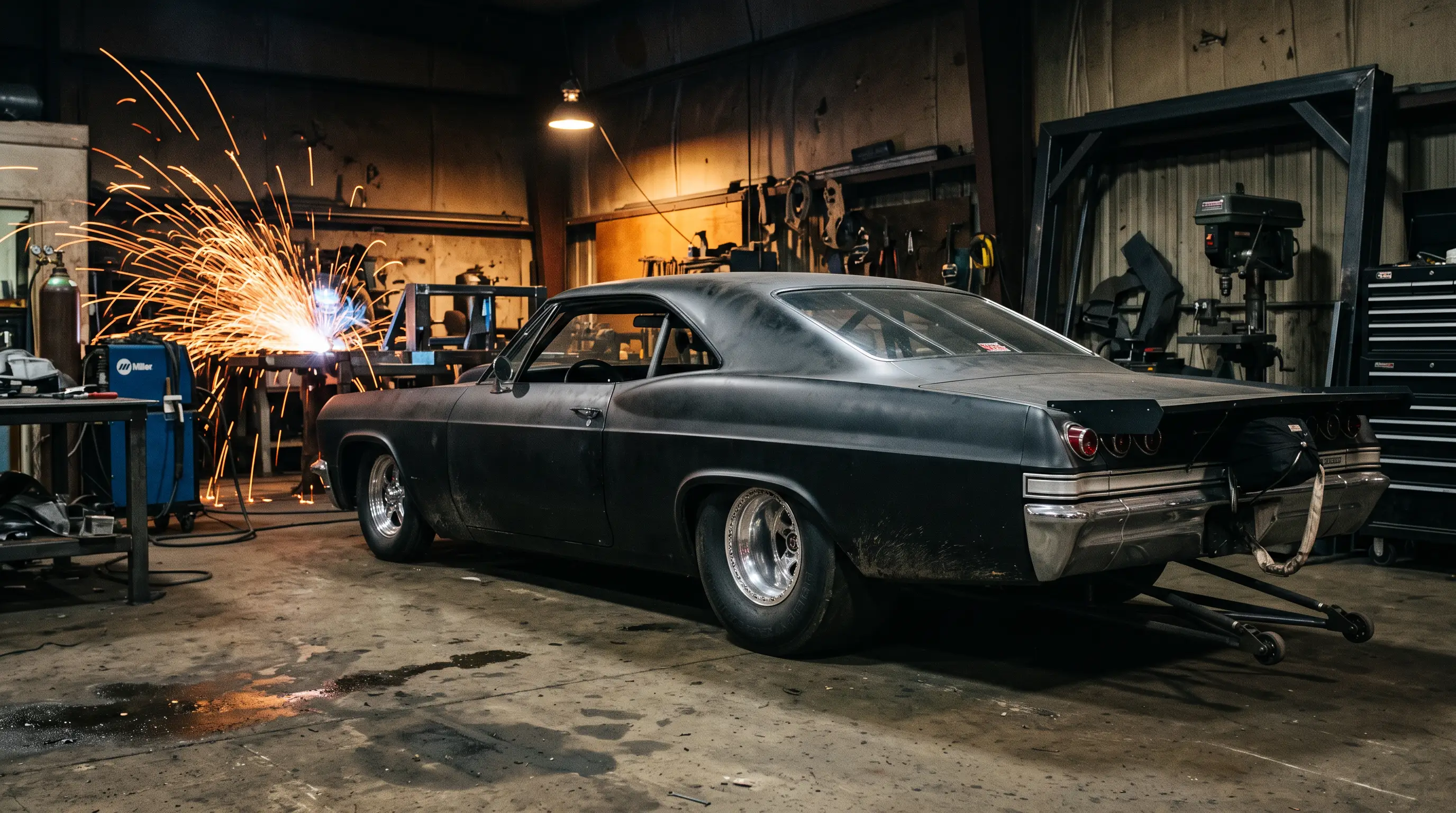
Most Pro Street builds started life as something small and light. The pro street impala broke that rule on purpose. This is a full-size car, nearly two hundred inches of sheet metal, and building one meant fighting physics that a Nova or a Vega builder never had to think about. That is exactly why the Impala crowd earned a certain respect in the hobby. They picked the hard path, one that meant fighting the car's own dimensions at every step of the fabrication process, and made it work anyway.
Weight was the whole problem
A stock full-size Impala from the late 1960s and 1970s weighs considerably more than the compact and mid-size platforms that dominated Pro Street builds. That extra weight is death to a straight-line performance car, so serious Impala builders had to be more aggressive about weight reduction than almost anyone else in the genre. Stripped interiors, thinner window glass, lightweight fiberglass hoods and deck lids, and in some cases acid-dipped body panels were common on Pro Street Impalas in a way they were not on lighter platforms, where a builder could get away with keeping more factory equipment and still hit competitive numbers.
Even after all that work, a finished Pro Street Impala usually carried more weight than a comparable Nova or Chevelle build, which meant the engine combination had to work harder to deliver the same performance. Builders who chose this platform were not chasing the easiest route to a fast car. They were chasing a specific look and a specific kind of credit for pulling it off on a body most people considered too big for the job, and among a certain crowd of hardcore fabricators, that reputation mattered more than raw quarter mile numbers ever could.
Why builders picked it anyway
Part of the appeal was simple math on parts cost. Full-size Impalas were common, cheap, and easy to find through the 1980s, when the Pro Street movement was building momentum, since they had none of the collector cachet that made buyers pay a premium for a Camaro or a GTO. A builder on a budget could pick up a rough Impala for less than a rough compact and put the savings into the drivetrain instead.
The other part of the appeal was visual drama. A full-size car tubbed and tired out to Pro Street proportions creates a genuinely startling silhouette, since there is simply more sheet metal for the eye to register the transformation against. A Nova with a wide rear stance looks aggressive. A full-size Impala with the same treatment looks almost unbelievable, a boat-sized car suddenly squatting like a drag car, and that visual shock value earned plenty of Impala builds serious attention at shows where subtlety was never really the point.
Engine bay and chassis realities
The Impala's engine bay is generous by Pro Street standards, wide and roomy enough that fitting even a large big block rarely required the kind of firewall surgery smaller platforms demanded. That made engine installation more straightforward, but the frame and suspension work told a different story. A full-size perimeter frame needed more extensive notching and boxing to clear the same wide rear tires that a lighter unibody platform accommodated with less drama, and the sheer size of the rear quarter panels meant more sheet metal to cut, fit, and finish during tub work.
Builders who took this on generally had serious fabrication chops already, since a botched tub job is more visible and harder to hide on a body this large. That is part of why surviving Pro Street Impalas from the era tend to represent some of the more accomplished fabrication work in the whole movement, built by people who were not willing to attempt it unless they knew they could do it right the first time, since redoing tub work on a full-size quarter panel is a much bigger job than fixing a mistake on a compact car.
| Consideration | Full-size Impala | Typical compact platform |
|---|---|---|
| Starting curb weight | Significantly heavier | Lighter |
| Engine bay room | Generous | Often tight |
| Tub work scope | More sheet metal to modify | Smaller panels, less material |
| Period purchase cost | Generally cheaper | Varied, often higher for desirable models |
"Anybody can make a light car fast. Making a full-size Impala look like it belongs in the same lineup as a tubbed Nova, that takes a different kind of stubborn. I respect it every time I see one done right."
- Mike Sullivan
Suspension work that separated the serious builds
Getting a full-size car to launch hard and track straight required suspension work well beyond a simple tub-and-tire installation. Builders often relocated rear leaf spring mounts, added traction bars, and reworked front suspension geometry to compensate for the Impala's longer wheelbase and higher factory ride height. None of that work shows up in a photograph the way a wide rear tire does, but it is the difference between a car that looks the part sitting still and one that can actually put its power down without wandering all over the lane at a stoplight launch.
Cars that skipped this step tended to earn a reputation as show queens rather than genuine street machines, trailered to events and never really driven hard. The Impala builds that earned lasting respect in the hobby were almost always the ones whose owners could back up the look with a car that actually performed, since a full-size platform exposes sloppy suspension work faster than a lighter, more forgiving chassis ever would.
Where these cars sit in the hobby today
Pro Street Impalas remain a minority within a minority, since the platform never had the volume of builds that the Nova, Camaro, or Chevelle attracted. That relative rarity works in favor of well-preserved examples today, since a documented full-size Pro Street build with quality fabrication stands out precisely because there are fewer of them to compare against. Our complete history of the platforms that shaped this movement puts the Impala's unusual choice in context against the more common builds that dominated the era.
If you want to see what survives, you can browse classic Pro Street car listings and get a feel for how these full-size builds compare to their lighter counterparts on the market today. They do not come up for sale often, but when they do, the ones with real build quality behind them tend to hold their own against far more common platforms, and buyers who wait for the right one usually end up owning something genuinely distinctive rather than another Nova sitting in a lineup of a hundred nearly identical Novas parked side by side at the same show field.