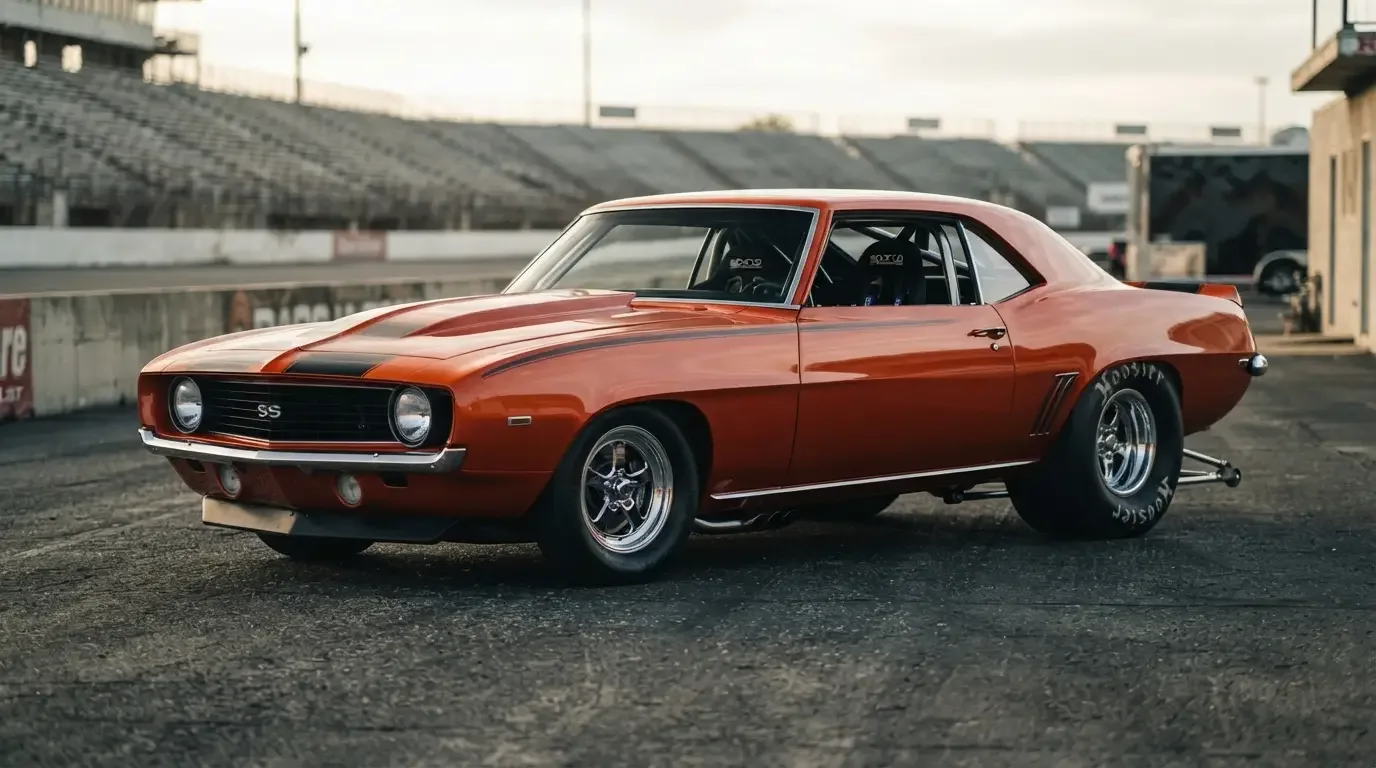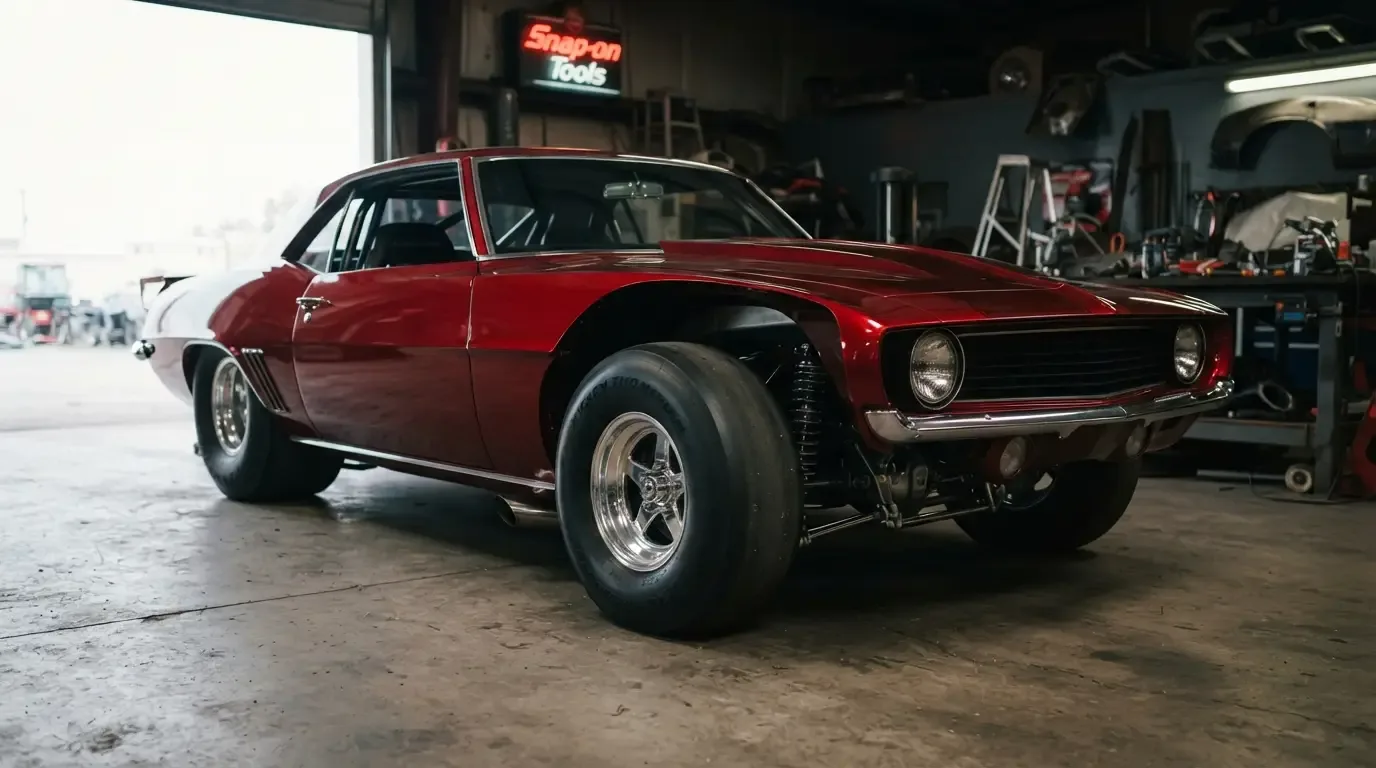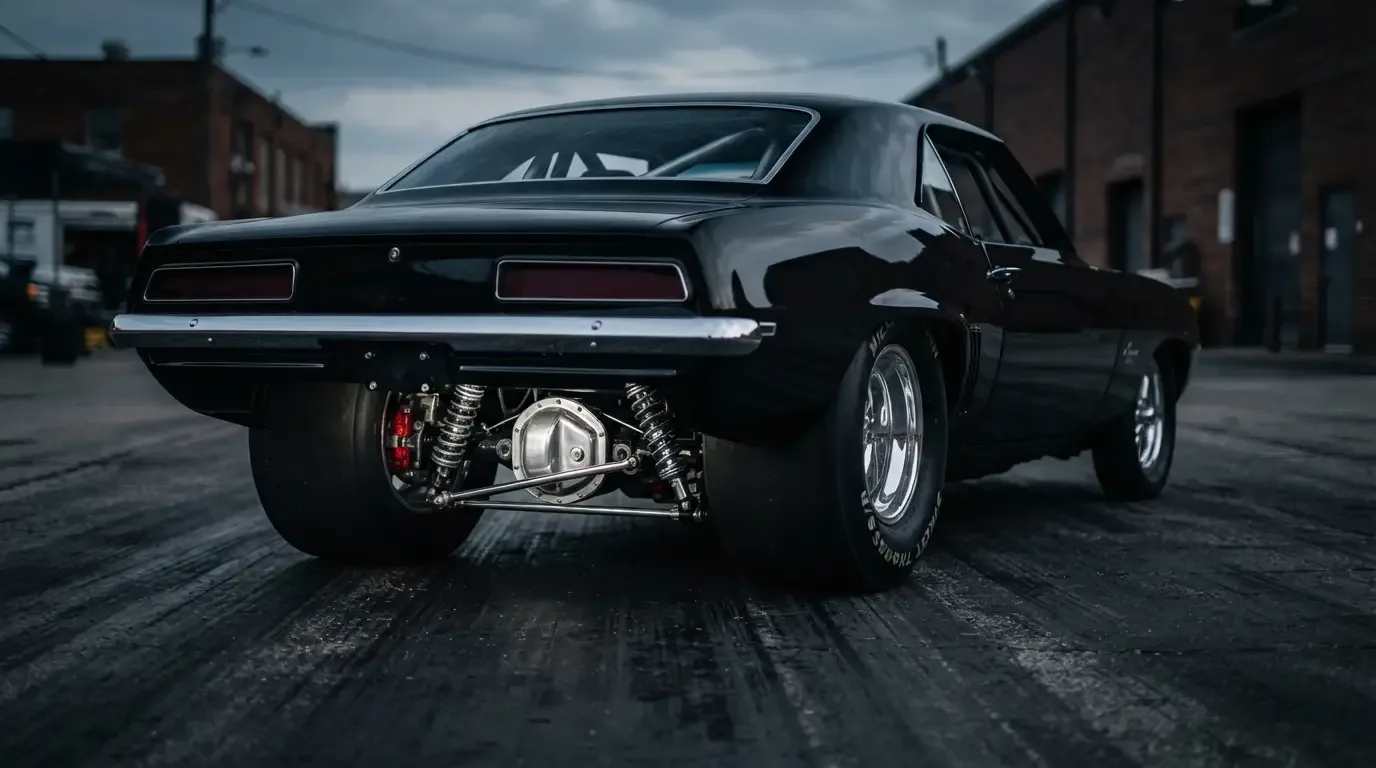
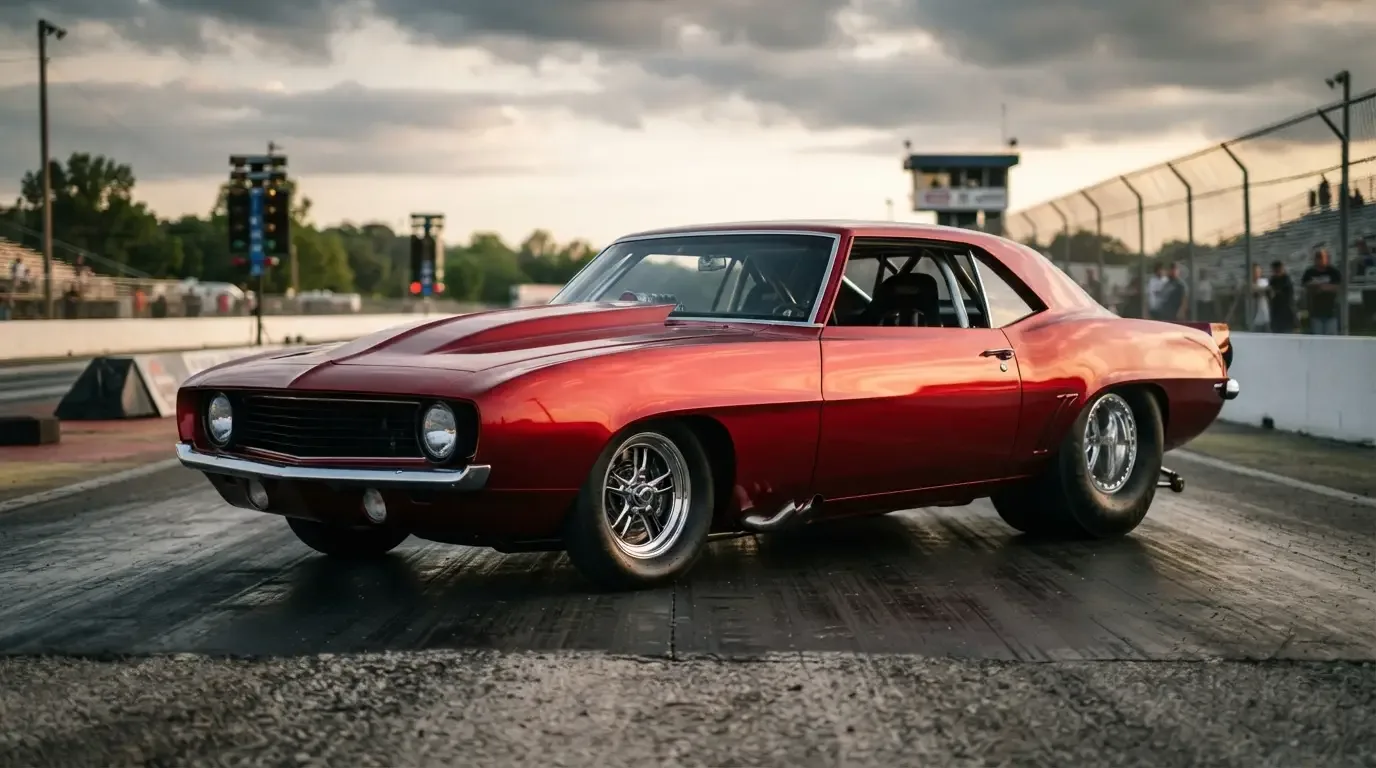
Stand behind a Pro Street car at a cruise night and the first thing you notice is not the paint or the engine note, it is the tire. A slick or a semi-slick rear tire wrapped around a wide wheel, filling out a fender in a way nothing on the factory build sheet ever intended, is the single loudest visual signal this style has. Understanding why Pro Street rear tires got so oversized means understanding a straight line between quarter mile physics and a look that eventually outgrew the racetrack entirely.
Traction was never optional
I have watched enough launches at local strips over the years to know the difference a tire makes is not subtle. Two cars with near identical power can post wildly different times purely because one hooked up off the line and the other spun through first gear losing precious tenths of a second. That gap between raw horsepower and usable horsepower is exactly what pushed builders toward wider and wider rubber, long before anyone was thinking about how a giant tire would look sitting under a fender at a Saturday cruise night.
Every drag racer chasing quicker times runs into the same wall eventually: horsepower means nothing if the tire cannot put it to the pavement. A skinny tire spins under hard acceleration, wasting power in wheel spin instead of forward motion. Wider tires, especially soft-compound drag radials or true slicks, put more rubber in contact with the track and let a car launch harder without breaking traction. That basic physics is the entire reason Pro Street rear tires ballooned in size in the first place. It was never about looking tough for its own sake, it started as a straightforward answer to a straightforward problem.
The full context on how this became the defining trait of the whole movement is covered in more on the what is a pro street car feature, which walks through the earliest drag strip roots.
Once the tire got big, everything else had to change
A drag radial or slick sized for real traction does not fit inside a stock wheel well, not even close. That single fact forced every other modification associated with the style. Builders had to tub the rear quarter panels to make room, which meant back-halving the chassis to support the new tub and suspension geometry, which meant the whole rear structure of the car became a different animal from what left the factory. The tire was the trigger. Nearly everything visually distinctive about a Pro Street car traces back to accommodating that one part.
Function versus fashion, and why both stuck around
By the time the style hit its stride in the 1980s and 1990s, not every car wearing a massive rear tire was actually running quarter mile passes on a regular basis. Some builders chased the tire size purely for the visual statement, understanding that the stance alone communicated something about the car even if it rarely saw a real drag strip. Purists in the hobby have always had opinions about that split, arguing a car should back up its look with real performance. Others counter that the look itself became a legitimate art form, worth pursuing on its own terms regardless of what happened at the track. That tension between function and fashion has followed the whole movement since roughly its earliest days.
| Tire Trait | Why Pro Street Builders Wanted It |
|---|---|
| Extreme width | Maximizes contact patch for launch traction |
| Soft compound | Grips harder under hard acceleration |
| Tall sidewall on some builds | Allows controlled tire growth at speed |
| Visual stance | Fills the tub and defines the aggressive rear look |
"Nobody set out to build a fashion statement. The tire got big because the car needed to hook up, and the look just came along for the ride."
- Patrick Walsh
Where the whole idea began
Tracing the origin of oversized rear rubber on a street car leads back to the same place the whole Pro Street idea began, drag strip bracket racers looking for an edge who eventually wanted to drive their cars home instead of trailering them. That history is worth reading in full at where this started, since the tire question and the movement's origin are really the same story told from different angles.
The compromises that came with the size
A tire that big does not come free of tradeoffs, and honest builders have always admitted as much. Ride quality on the street suffers, since a drag-oriented tire is not engineered for cornering grip or smooth highway manners. Steering feel changes too, particularly on cars where the front end got narrowed to balance out the visual proportion of that oversized rear. Fuel economy takes a hit from the rolling resistance of a wide, heavy tire, though nobody buying a Pro Street car was ever chasing miles per gallon in the first place. These compromises were accepted knowingly, part of the trade a builder made in exchange for the traction and the look both.
Wheel selection mattered just as much as tire choice in pulling the whole look together. A narrow front wheel paired with a dramatically wider rear wheel became almost a signature proportion of the style, reinforcing the visual rake that a lowered nose and raised rear already created. Builders spent real money chasing the right wheel design to set off the tire properly, since a mismatched wheel could undercut an otherwise well-executed build in a way that was obvious to anyone who knew what they were looking at, and a poorly chosen wheel could make even a well-built tub job look like an afterthought.
What the modern revival kept and changed
Builders working in this style today still chase that same oversized rear tire look, though the tire technology underneath has advanced considerably since the movement's earliest years. Modern drag radials grip harder and last longer than the tires available to builders in the 1980s, which means today's Pro Street cars can often back up their stance with genuinely quicker times than their predecessors managed on period-correct rubber. What has not changed one bit, decades on, is the basic appeal. A massive rear tire tucked under a tubbed quarter panel still reads as an instant signal of intent, exactly as it did the first time somebody pulled that trick off in a home garage decades ago, tire smoking and neighbors watching from the driveway next door.
Shoppers curious how this trait shows up across the current market can browse classic Pro Street cars on the market and compare tire and wheel combinations across different builds and eras, from early rough examples to fully sorted modern interpretations of the look.
Sources and notes
- Pro Street - Wikipedia
- Pro Street's Greatest Builds Honored at 2024 Grand National Roadster Show - Hagerty Media
- Defining muscle car terms: pro touring, pro street, and street freak - In The Garage Media
- What type of rear suspension does your Pro Streeter have - Team Camaro Tech
- Car Craft's Street Freaks - Magazine Covers 1976 to 1985
- Street Machine Nationals - Du Quoin, IL