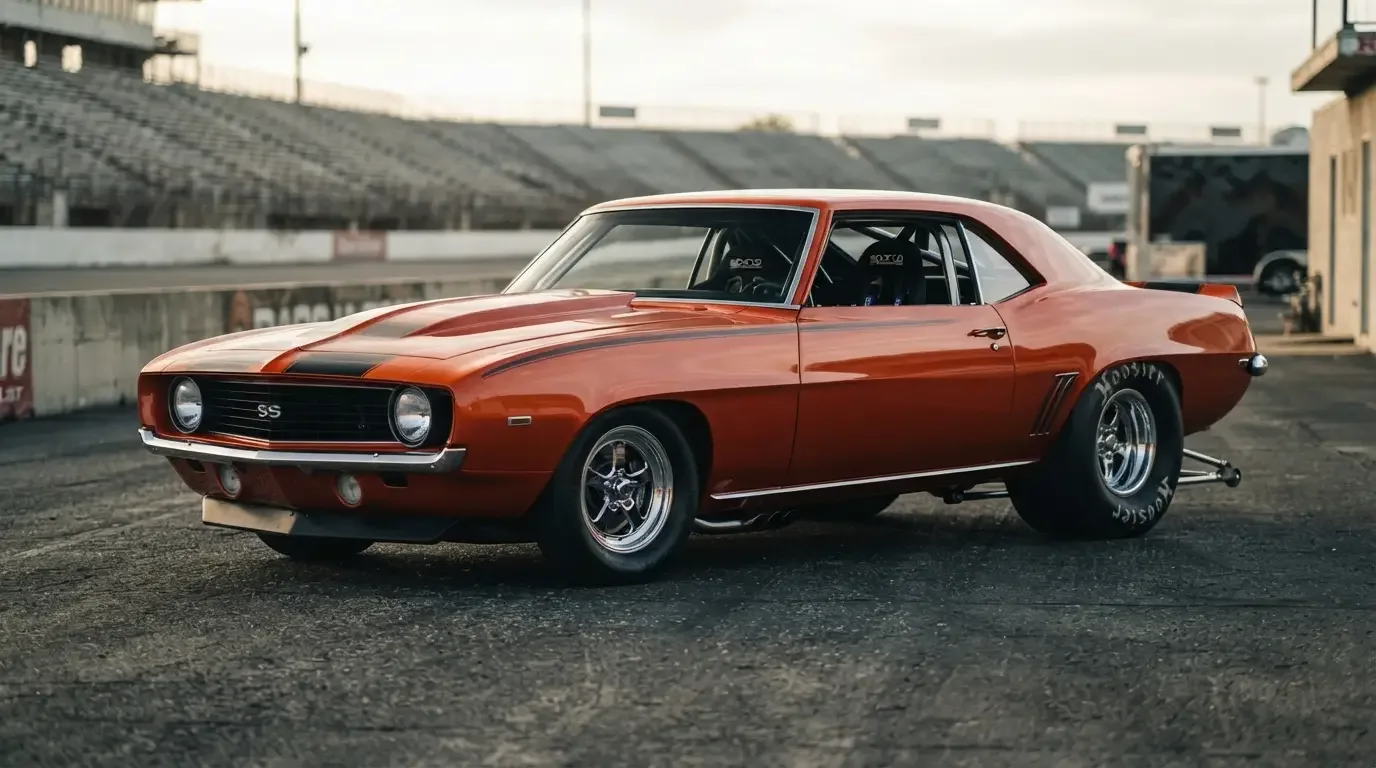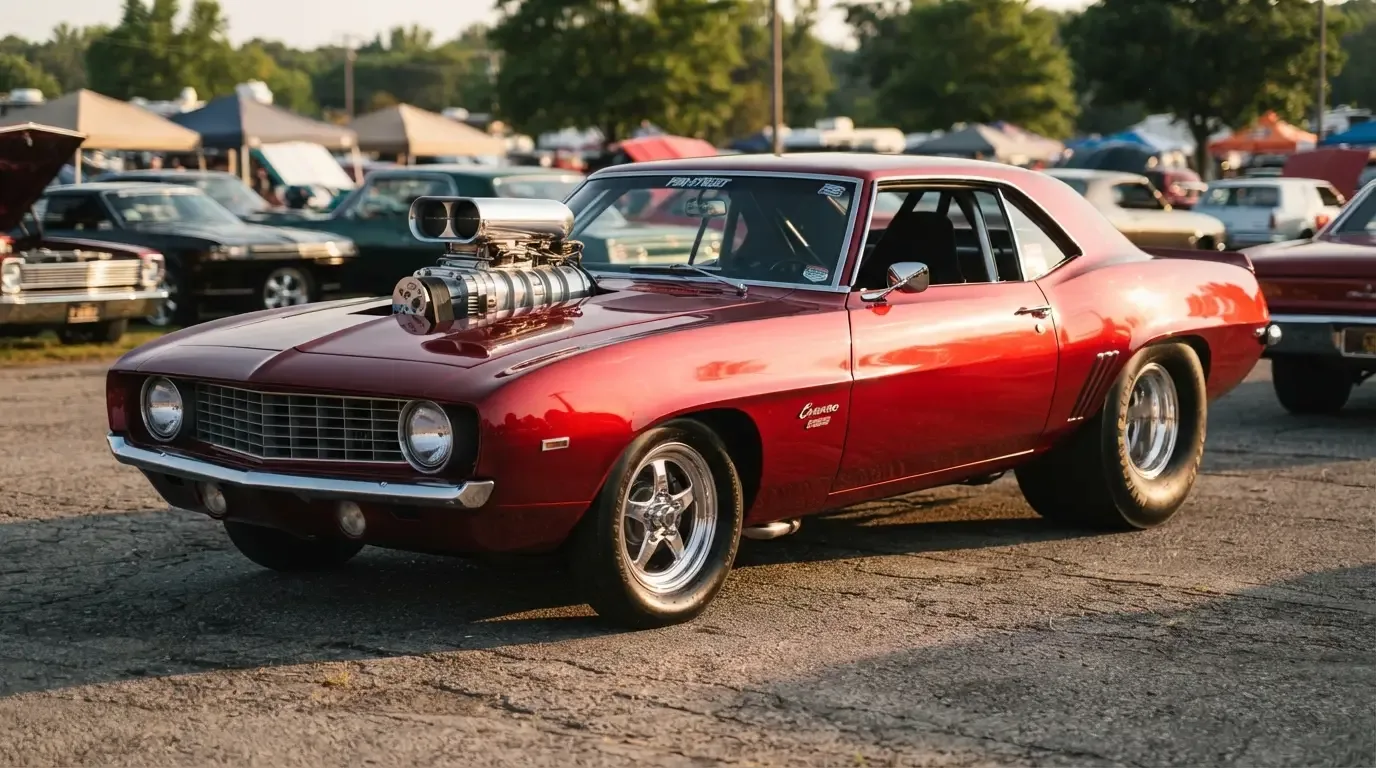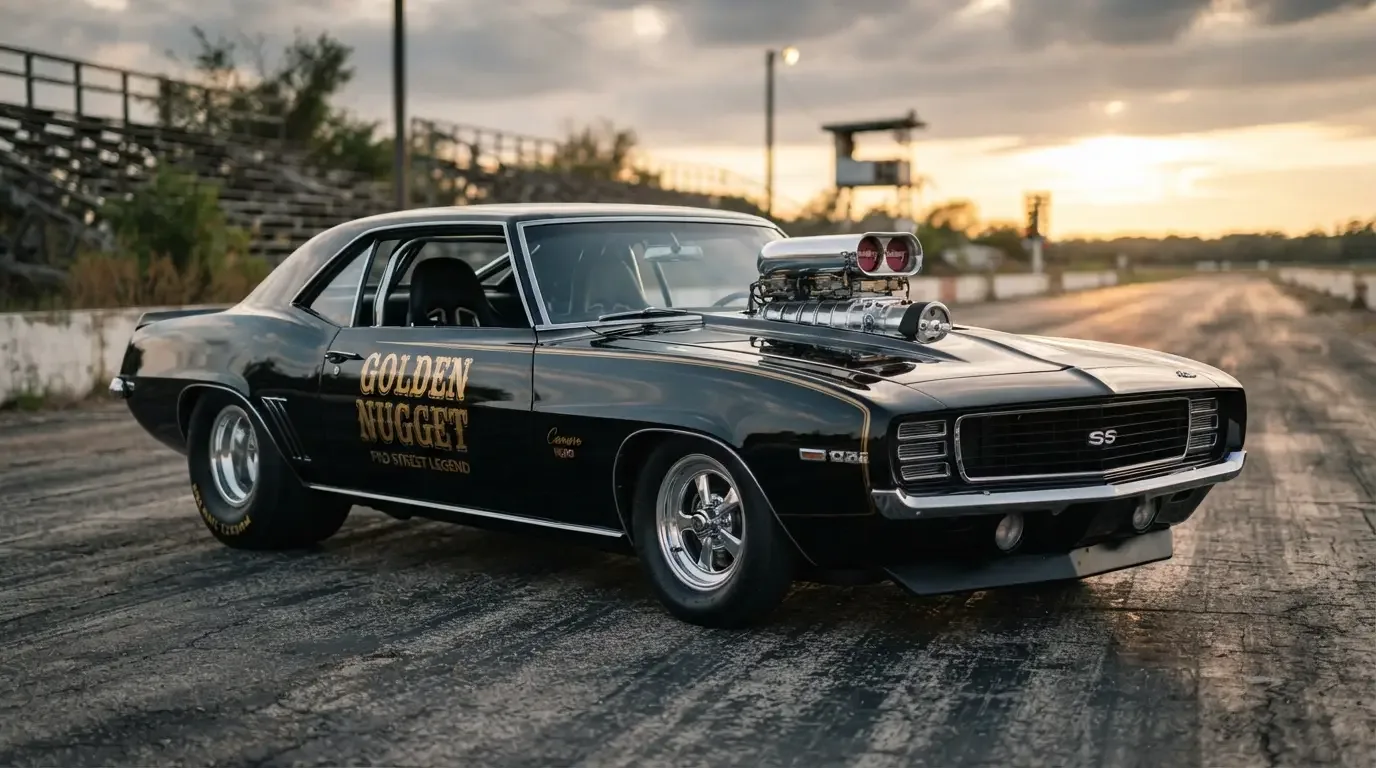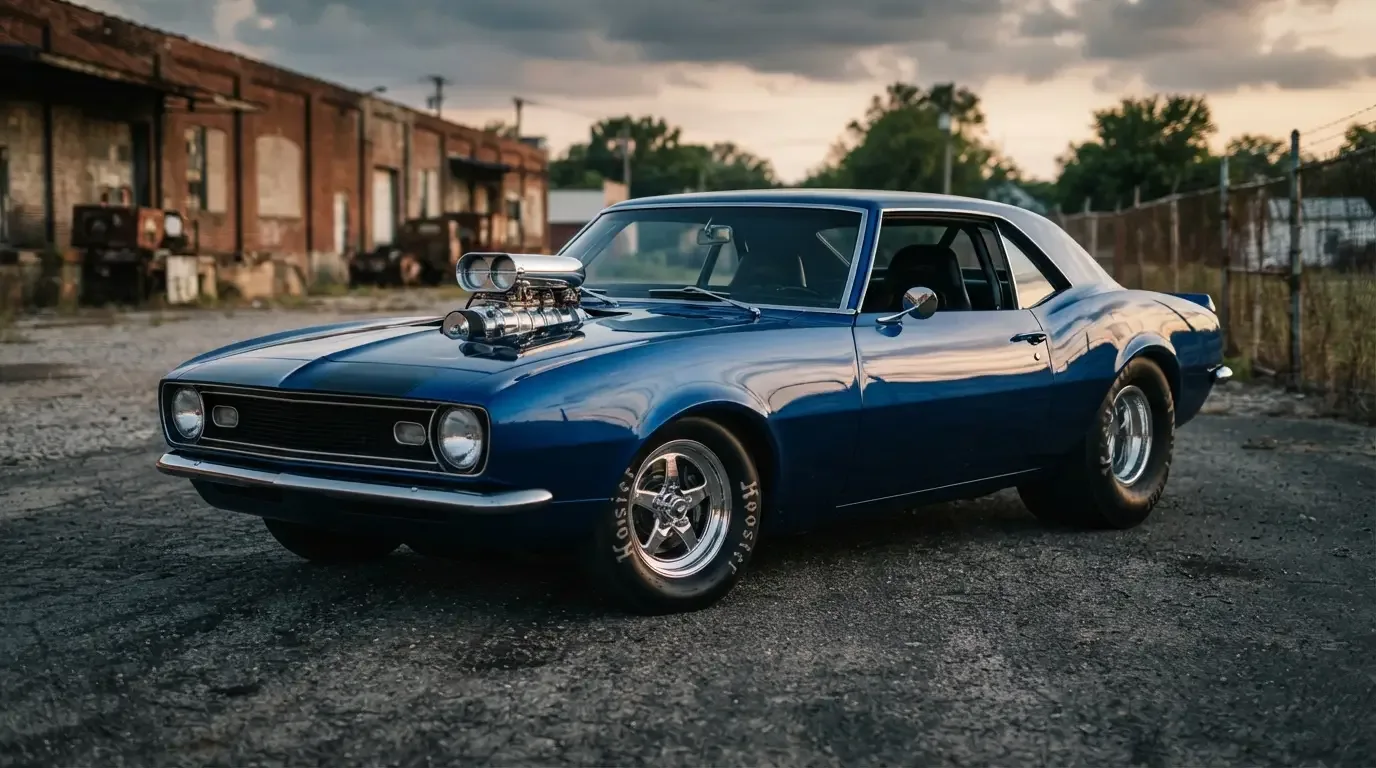
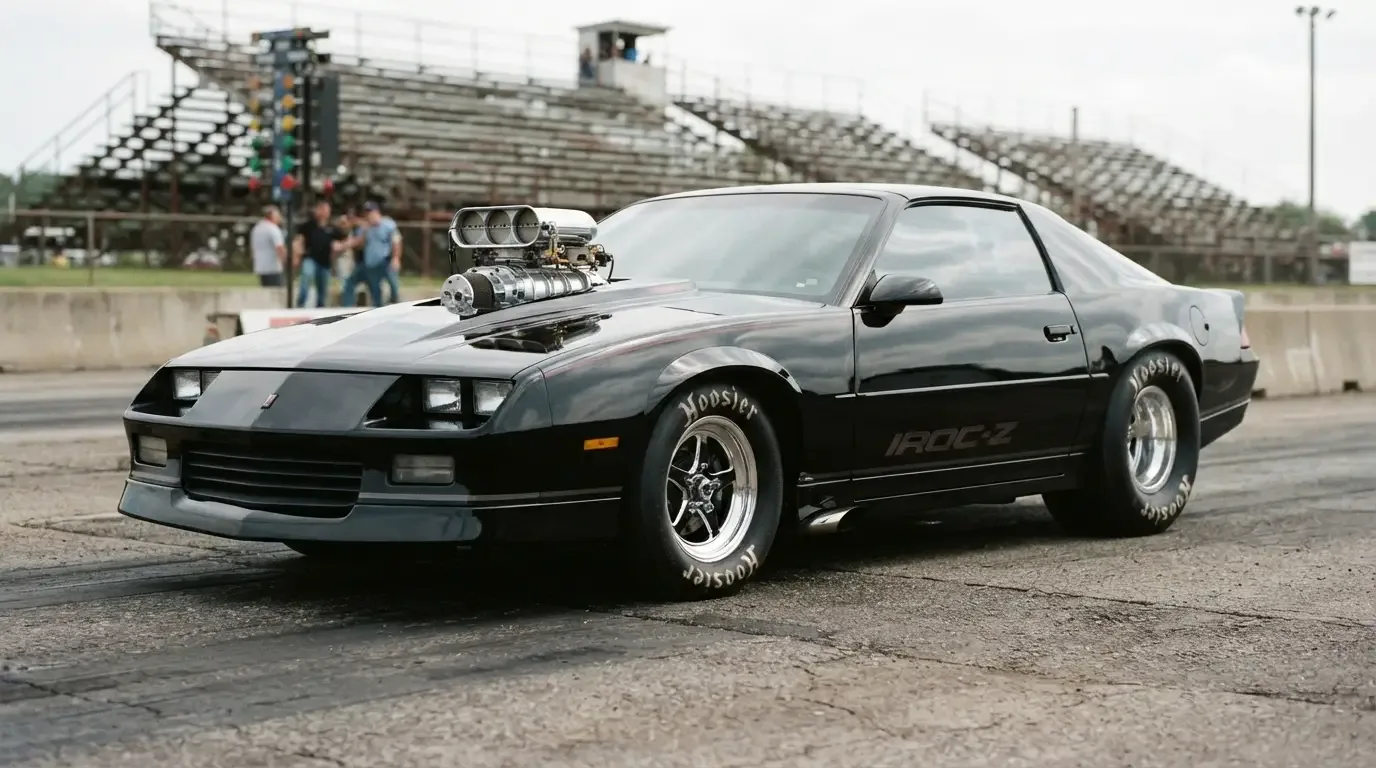
The first time I saw a real Pro Street car, it was parked sideways across three spaces at a suburban cruise night, and nobody parked next to it. Not because they were told to. Because they were afraid to. The thing sat nose-down and tail-high on tires wider than my first apartment's hallway, a blown big-block poking through a hole cut in the hood, and the whole car ticked and pinged as it cooled like it was still deciding whether to let us live. That is the feeling Pro Street cars were built to deliver. Not speed you could use. Menace you could stand next to. These were street machines styled to look like they had just rolled off a drag strip and gotten lost on the way home, and for about fifteen years they were the loudest argument in American car culture.
To understand why they mattered, and why a whole generation of builders still chases the look, you have to go back to a starting line in the late 1970s and a rule change nobody outside the sport noticed at the time.
Where the Pro Street look was born
The style takes its name from Pro Stock, the class of factory-bodied drag cars that ran full-tube chassis under steel that still looked stock from ten feet away. Pro Stock cars had to keep the silhouette of a showroom model while hiding a purpose-built race car underneath. A Camaro that could turn a quarter mile in the 8-second range but still read as a Camaro. That tension, ordinary shape over extraordinary hardware, is the entire aesthetic in one sentence.
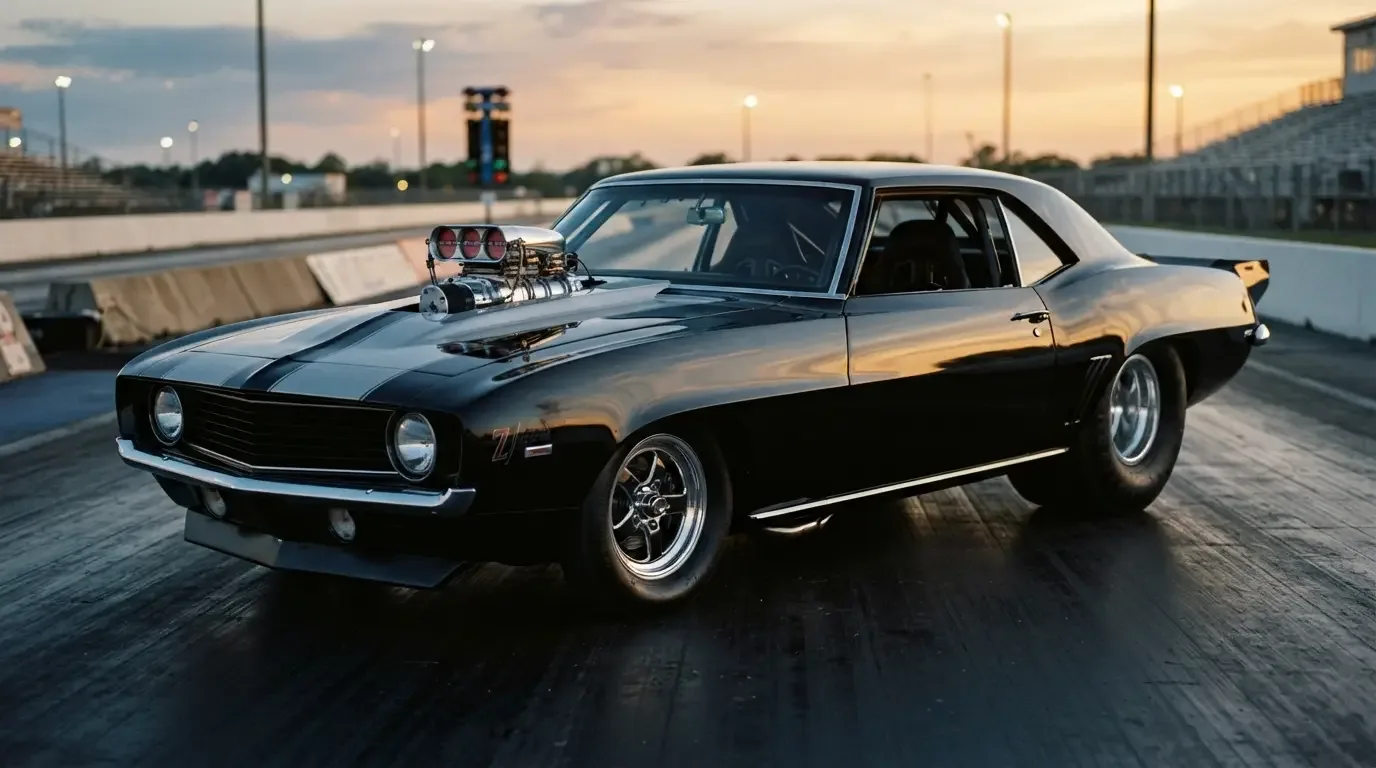
Somewhere around the tail end of the 1970s, builders started asking an obvious question. What if you built a car that looked like a Pro Stock racer, kept it street legal, and drove it to the show instead of trailering it? The answer was the tubbed street car. Guys would cut out the stock rear wheel wells, weld in massive sheet-metal tubs, and stuff drag slicks or the widest street tires they could find under a body that otherwise wore a mirror-shine paint job. The stance came next. Small tires up front, enormous meats out back, nose down, and a rear end that squatted like it was loading up for a launch it would never quite make on a public road.
By the early 1980s the magazines had a name for it, and the name stuck. Pro Street. It described a build philosophy more than any single car. Take a classic muscle body or a traditional hot rod, put a race chassis under it, make it shiny, make it loud, and make absolutely sure it looked like it could not be tamed.
What actually makes a car Pro Street
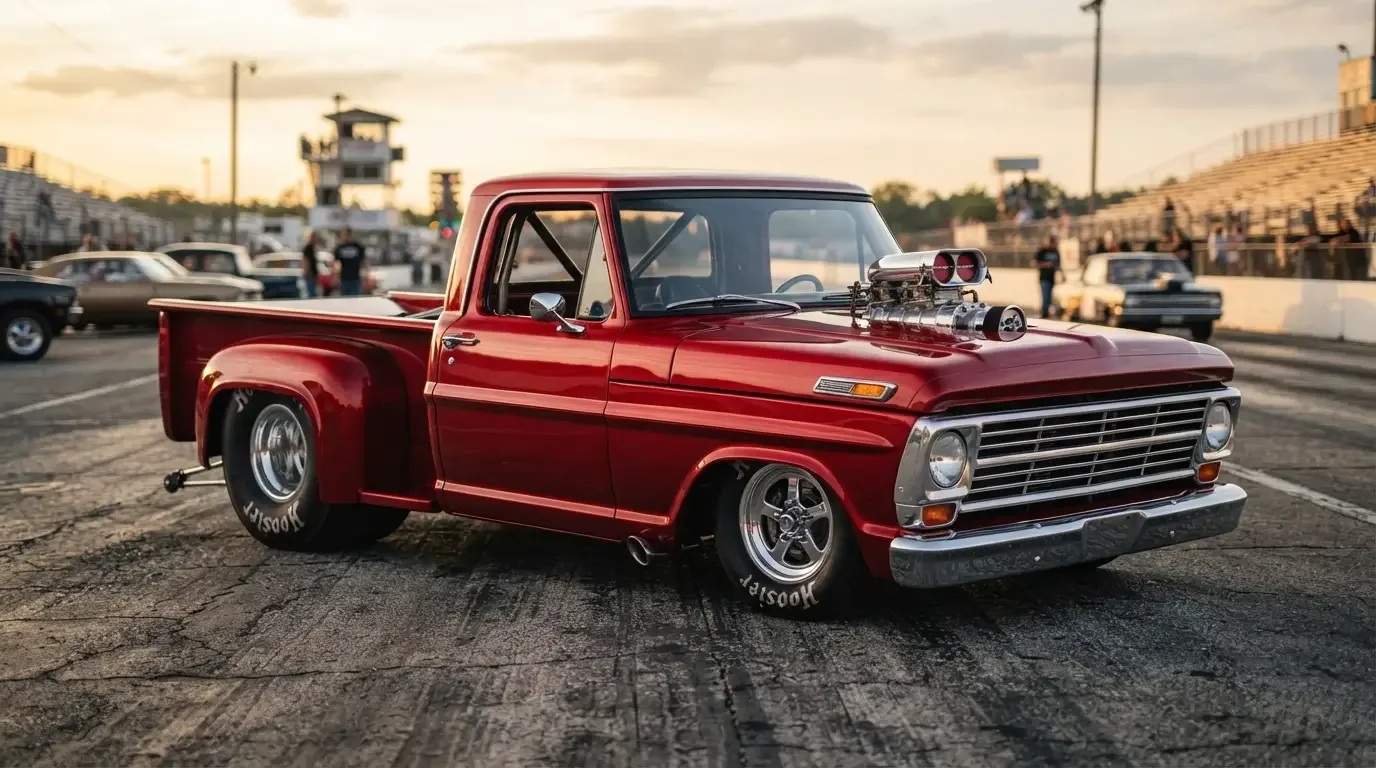
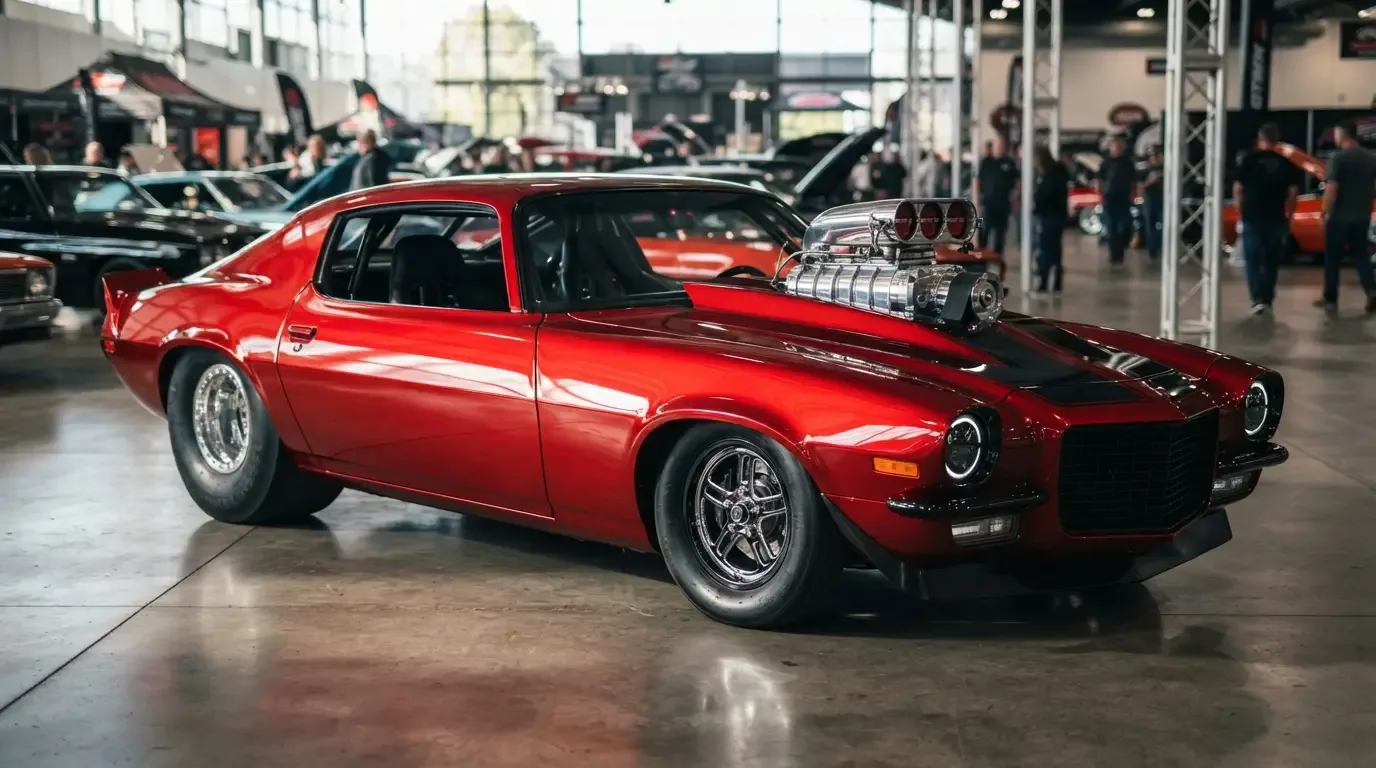
Ask ten builders and you will get ten answers, but there is a core recipe that almost everyone agrees on. The single most important element is the tubs. Mini-tubs or full tubs let a builder fit rear tires that are absurdly wide for a street car, and that fat-tire rear stance is the visual signature you can spot from across a parking lot. Without the big rubber out back, you have a hot rod. With it, you have Pro Street.
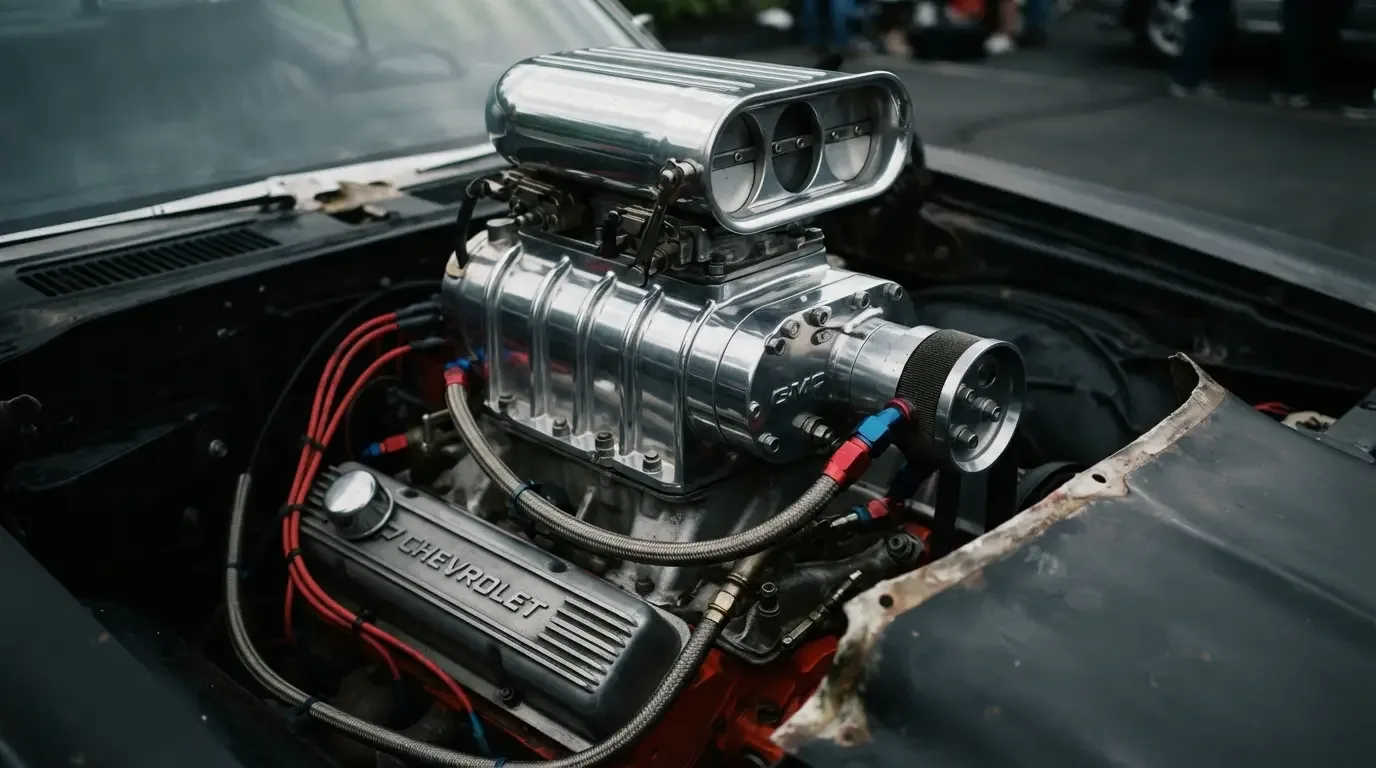
The rest of the formula supports that stance. A narrowed rear axle to make room for the tires. A four-link or ladder-bar setup borrowed straight from drag racing. Often a roll cage, sometimes a full tube chassis, wheelie bars on the wildest examples. Up front, skinny wheels and tires to complete the drag-car proportion. And then the engine, which in the classic Pro Street era meant a big-block making a spectacle of itself. A supercharger blower case standing proud of the hood was the ultimate flex, though plenty of clean builds ran a tunnel-ram intake with a pair of carburetors sticking up into the air instead.
Here is the part that surprises people who did not live through it. A lot of these cars barely drove. The wide rear tires and race suspension made them nervous on the highway, the interiors were often stripped, and many owners cheerfully admitted the car spent more time being looked at than being driven. That was not a flaw in the concept. It was the concept. Pro Street was rolling sculpture that happened to have a license plate.
| Element | Pro Street signature |
|---|---|
| Rear tires | Extremely wide, tubbed to fit under stock-look bodywork |
| Front tires | Skinny, drag-car proportion |
| Stance | Nose down, tail up, squatting rear |
| Chassis | Four-link or ladder bar, often a roll cage or full tube frame |
| Engine | Big-block, frequently blown or tunnel-rammed, exposed through the hood |
| Body | Classic muscle or hot-rod shell, mirror paint, mostly stock silhouette |
| Purpose | Show presence first, street use a distant second |
The golden era, when Pro Street ruled the shows
The middle and late 1980s were the peak. Walk into any major indoor car show between roughly 1985 and 1991 and the biggest crowds gathered around the wildest tubbed machines. Chevy did most of the heavy lifting here. Second-generation Camaros, Novas, and Chevelles were everywhere because they were cheap, plentiful, and had the kind of straight body lines that looked right sitting on fat tires. Fox-body Mustangs joined in, and traditional 1932 Ford hot rods got the Pro Street treatment too, which felt almost heretical to purists and completely correct to everyone else.
What made the era feel like a movement was that ordinary people could join in. You did not need a factory-backed race program. You needed a welder, a set of tubs, a big-block you could afford to feed, and enough patience to make the whole thing shine. Home builders turned out cars that could stand next to professional shop builds, and the democratic energy of it is a big part of why the look burned so bright. Everybody wanted in.
The magazines fed the fire. Feature spreads, how-it-was-built stories, and glossy photos of blowers gleaming under show lights taught a generation exactly what the recipe was. If you came up in that period, the sound and the sight are burned in permanently. A tunnel-ram idling lumpy in a hot show hall, the whole car shaking, is a memory a lot of people my age carry around for free.
"I have always thought the genius of Pro Street was that it made the impossible look casual. You were supposed to believe someone drove that blown monster to the show, parked it, and would drive it home again. Nobody did. Everybody pretended. That shared fiction was half the fun."
- Patrick Walsh
Why the movement cooled off
Nothing that intense stays at a boil forever. By the mid-1990s the Pro Street look had started to feel dated to some, and a couple of forces pulled builders in other directions. One was practicality. A car you cannot comfortably drive gets old, and a new wave of enthusiasts wanted machines that could actually be enjoyed on a back road, not just admired under a tent.
That desire helped push the rise of Pro Touring, the movement that took the muscle-car body and built it to handle corners and stop and cruise all day, rather than just launch in a straight line. Where Pro Street was about drag-strip menace, Pro Touring was about road-course competence. The two philosophies could not be more different in intent, and for a while it looked like the wide-tire show car had been retired for good.
There was also a saturation problem. When every show has forty tubbed Camaros, the shock wears off. The whole appeal of that first car I saw at the cruise night was that it was rare and a little dangerous. Once the look was everywhere, it stopped being a statement and started being a checkbox. Trends work that way. The thing that makes a style electric is the same thing that eventually makes it common.
The revival, and why the look never really died
Here is the thing about a style that strong. It does not disappear. It waits. In the 2000s and picking up real steam in the 2010s, a new generation of builders rediscovered Pro Street, and they came at it with fresh eyes and a lot of nostalgia. Some of them had grown up staring at those magazine spreads. Some were old enough to have built the originals and wanted to do it again, better. The result is a revival that is still going strong today.
Modern Pro Street builds keep the sacred parts, the tubs, the fat rear tires, the aggressive stance, the exposed induction, but they often bring current technology along for the ride. Fuel injection instead of carbs on some cars, better chassis engineering, and paint and interiors finished to a standard the 1980s could only dream about. The purists debate whether a modern build with an LS engine and electronic controls counts as true Pro Street, and that argument will outlive all of us. My take is simple. If it has the tubs and the stance and the attitude, it earns the name.
There is also a growing appreciation for surviving originals. A period-correct 1980s Pro Street car, built with the parts and techniques of its day and still wearing its original blower and paint, has become a genuine collectible. Enthusiasts hunting for the real thing keep an eye on auctions and specialist listings, and there is a steady market of classic Pro Street Cars for sale for anyone who wants to own a piece of the movement rather than build one from scratch. The best surviving examples carry a history that a fresh build simply cannot fake.
"The revival taught me something I did not expect. The people rebuilding these cars are not just copying the 1980s. They are finishing an argument the era started. Can a car be pure spectacle and still be worth taking seriously? Every clean modern tubbed build says yes, and says it louder than the last."
- Patrick Walsh
Pro Street in the wider culture
You cannot separate Pro Street from where it lived, which was the American car show and the pages of the buff magazines. This was a movement that happened in public, on display, under lights. It was competitive in a social way. Whose blower was taller, whose paint was deeper, whose tires were wider. The cars were conversation pieces engineered to win the conversation before anybody said a word.
It also had a look that translated instantly to anyone, gearhead or not. You did not need to know a four-link from a leaf spring to understand that a car sitting like that, sounding like that, was serious business. That accessibility is why the imagery kept showing up in video games, in die-cast toys, on posters and T-shirts long after the show-floor peak had passed. The silhouette of a nose-down muscle car on impossibly fat tires is shorthand for American excess in the best possible way, and it reads clearly across languages and generations.
And there is an honesty to it that I have come to respect more with age. Pro Street never pretended to be sensible. It never claimed to be the smart choice or the practical build. It was pure want, made of steel and fiberglass and a frankly irresponsible amount of horsepower. In a hobby that sometimes takes itself too seriously, a movement built entirely around the joy of too much is a healthy thing to have around.
The bodies that carried the movement
Not every classic shape works under a Pro Street treatment, and the cars that became the movement's icons earned it through geometry as much as availability. The second-generation Camaro was the workhorse of the era, and for good reason. Its long, flat flanks and squared shoulders gave the fat-tire stance somewhere to live, and there were enough of them in wrecking yards to keep prices sane for home builders. The Chevy Nova was the other everyman favorite, compact and boxy in a way that made the rear tubs look enormous even when they were merely large.
Then there were the statement bodies. A 1955 to 1957 Chevy, tri-five in the shorthand of the hobby, sitting nose-down on drag rubber was a showstopper because the contrast between the wholesome 1950s shape and the drag-strip hardware underneath was so extreme. The 1932 Ford, the deuce, got the Pro Street treatment too, and traditional hot-rodders had opinions about that which they were happy to share at volume. Mustangs came to the party through the Fox-body years, giving Ford loyalists a way in. What united all of them was that steel silhouette staying recognizable while everything under it turned radical. The body was the costume. The chassis was the truth.
Part of what makes originals collectible now is exactly this pairing of a beloved classic shell with period race engineering. A survivor keeps both stories intact, the muscle car it started as and the show monster it became, and that double history is hard to reproduce and easy to appreciate.
How to read a Pro Street car today
If you are new to this world and want to tell a serious Pro Street build from a half-hearted one, there are a few things worth training your eye on. The proportions have to be right. A car that is merely lowered on wide wheels is not Pro Street. The rear tires need to be genuinely huge, filling those tubs, and the front needs to be skinny enough to sell the drag-car stance. Get the proportion wrong and the whole illusion collapses.
Look at the quality of the metalwork too. The tubs, the cage, the way the chassis is finished tell you whether this was built by someone who understood the craft or someone chasing a look on a budget. The engine bay is where builders show off, so a clean, well-detailed induction setup is a good sign the rest of the car got the same care. And provenance matters more every year. A documented period build with known history is a different animal from a recent recreation, both to enjoy and to value.
Why Pro Street still matters
Movements in car culture usually get remembered as either a peak or a punchline. Pro Street is one of the rare ones that gets to be both, and it wears the contradiction well. Yes, the cars were impractical. Yes, the scene got oversaturated. And yes, a lot of blown big-blocks made a spectacle of engineering that barely turned a wheel in anger. None of that has stopped the look from outliving its critics, because Pro Street understood something true about why people love cars in the first place. Sometimes you do not want sensible. Sometimes you want to walk up to a machine and feel your pulse pick up.
That is what my sideways-parked monster at the cruise night was really doing. It was reminding a lot of tired adults that a car could still be a thrill you felt in your chest before you understood a single thing about it. The Pro Street movement bottled that thrill, put it on fat tires, and dared anyone to park next to it. Nearly half a century after the first tubbed street machines started showing up at the strip, people are still building them, still buying them, and still refusing to park too close. I count that as a win for the whole hobby.
For enthusiasts ready to move from reading to owning, the market for these machines is active. You can browse classic Pro Street cars for sale and see how the style holds up in the metal.
Sources and notes
- Pro Street - Wikipedia
- Pro Street: A Look Back At The Bow-Tie Style That Never Gets Old - Street Muscle
- Defining Muscle Car Terms: Pro Touring, Pro Street and Street Freak - In The Garage Media
- Pro Stock: The Complete Guide to Drag Racing's Factory Hot Rod Class - Competition Plus
- Bob Glidden - Wikipedia
- A Pro Street Throwback Build - Dragzine