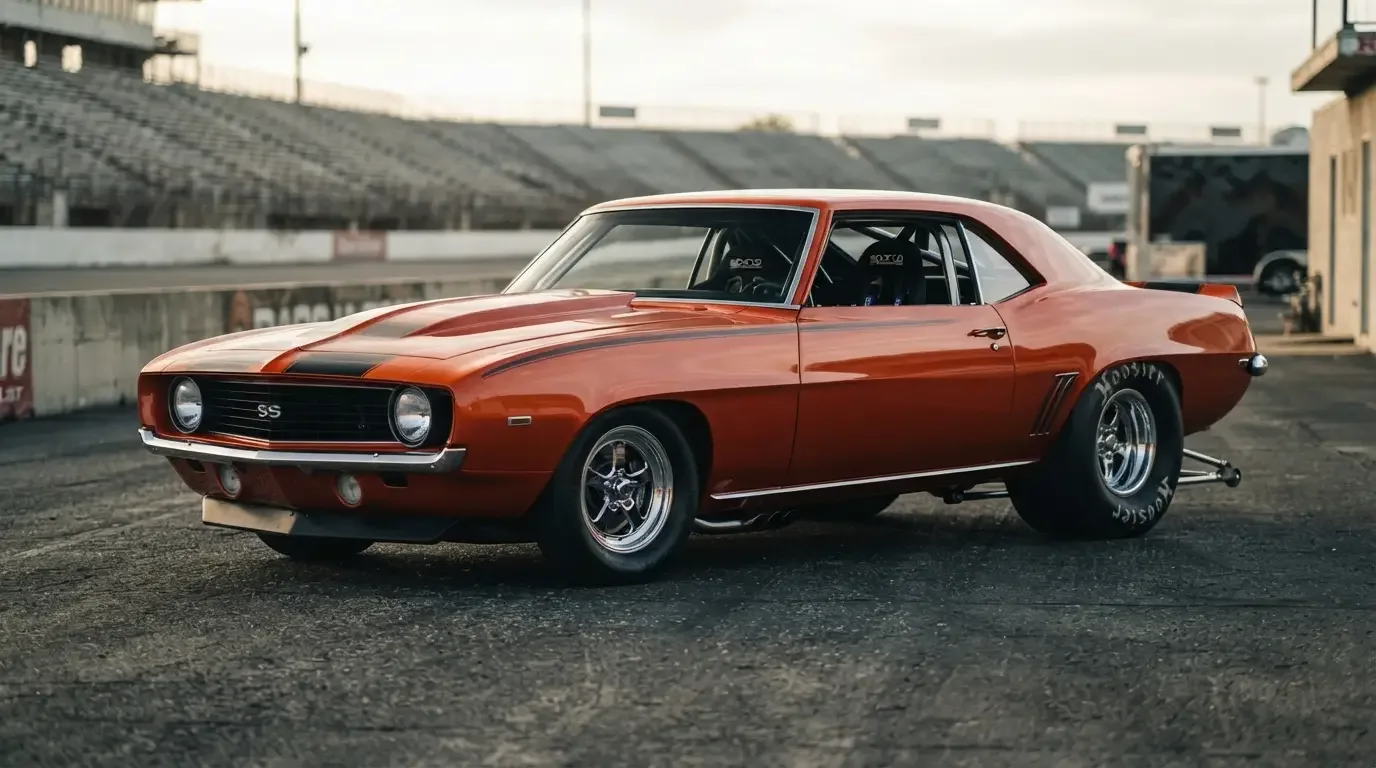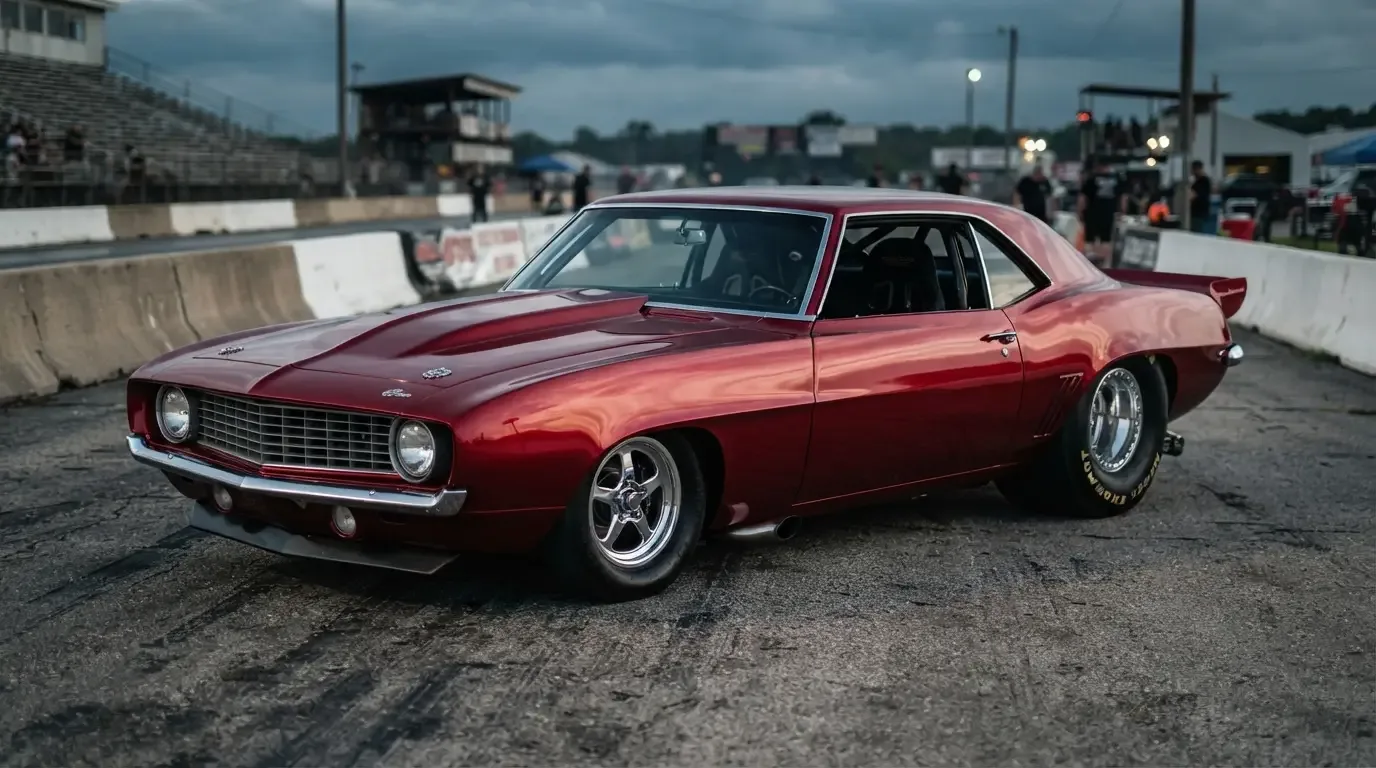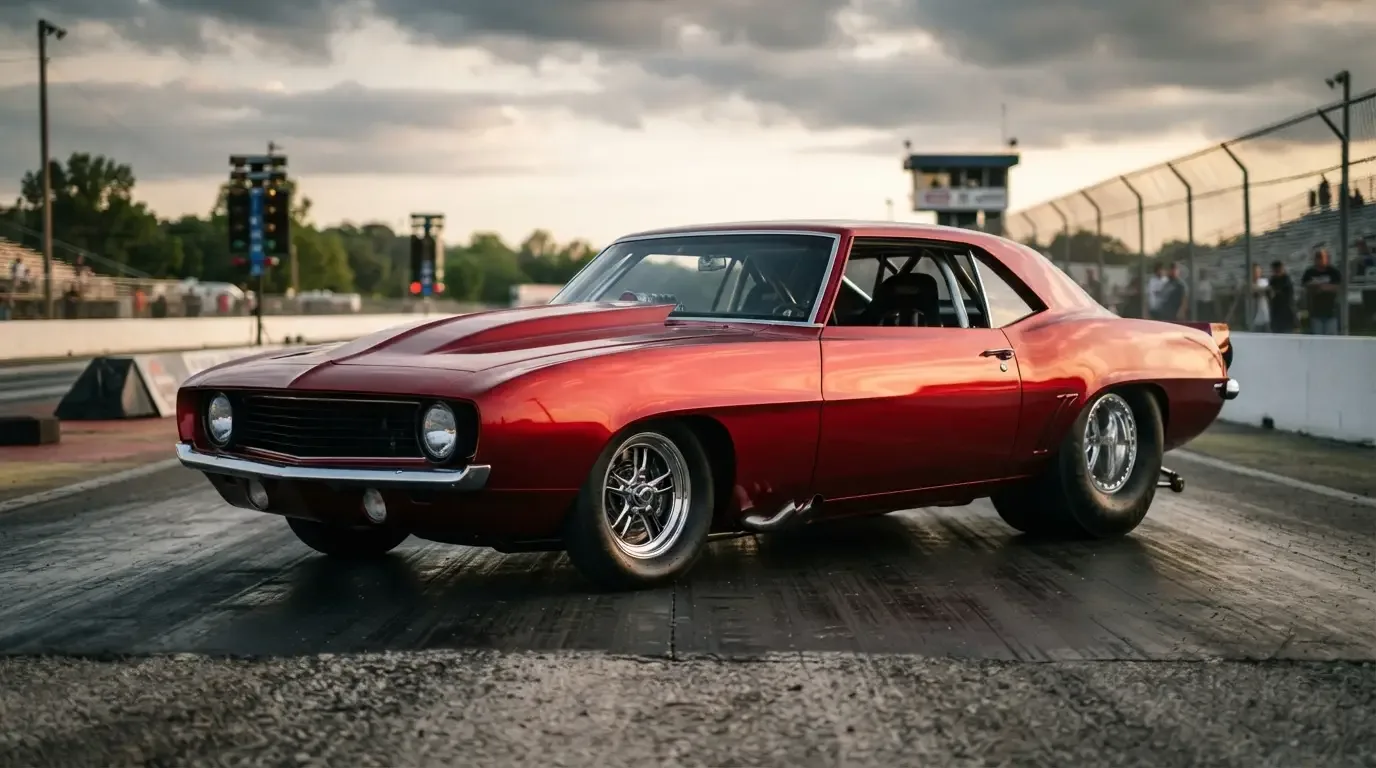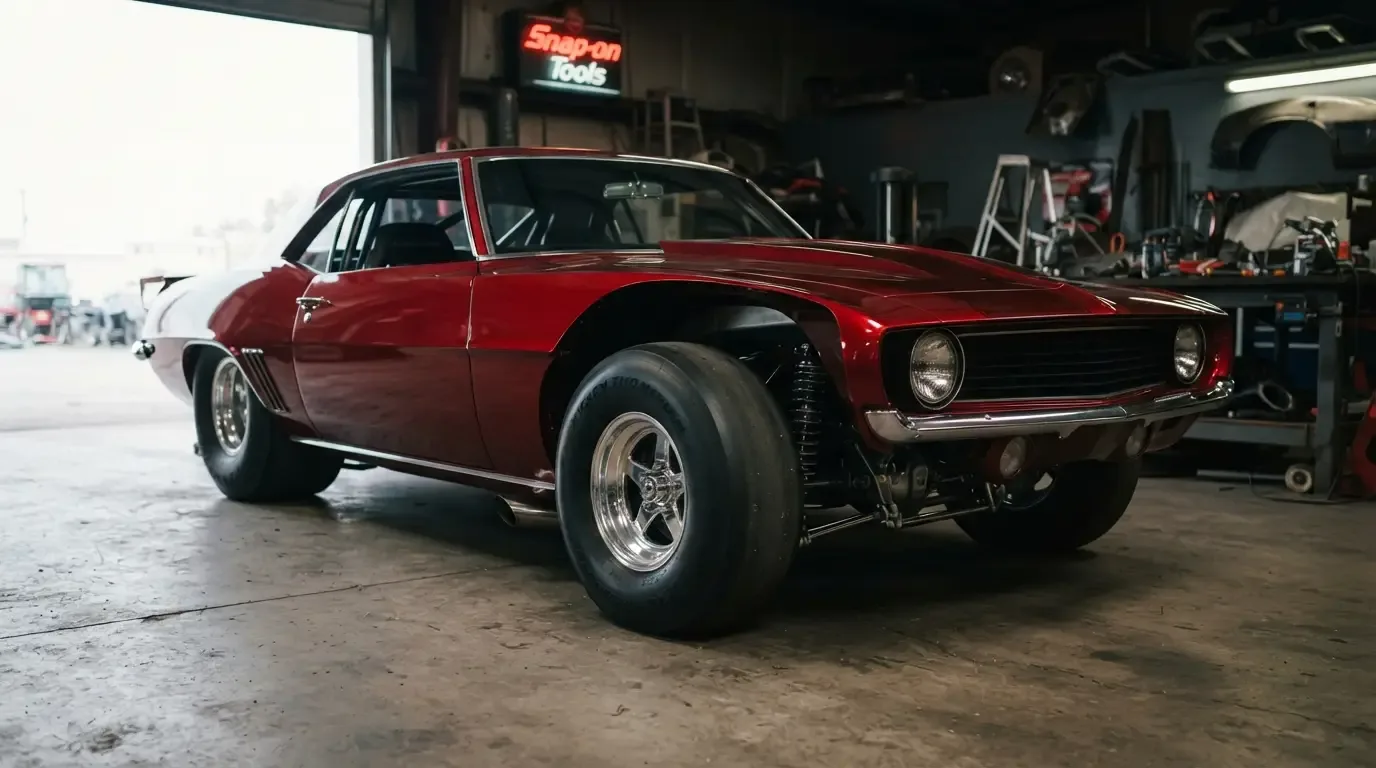
I have had guys ask me what a back half conversion actually is like it is some kind of secret handshake. It is not complicated to explain, even if it is plenty complicated to build. A pro street back half conversion means cutting the factory frame off behind the doors and replacing it with a purpose-built chassis designed to handle drag strip loads and a massive rear tire. That is the short version. The longer version is a story about why the factory frame was never going to cut it in the first place, and why builders decided cutting it off entirely was worth the risk.
Why the stock frame gave up
I have spent enough hours under these cars to know the frustration builders were dealing with before back half conversions became common practice. You would fix a cracked frame rail one weekend, only to have the same section fail again a few passes later once the power went up or the tire got stickier. That cycle of patch and fail is what finally convinced people that reinforcing the stock structure was a losing game, and that starting over with something purpose-built was the only real fix.
Factory frame rails on a muscle car were engineered for a street car's loads, not for a car launching hard off the line with slick tires and big horsepower. Once builders started pushing power and traction well past what the factory ever planned for, the stock rails would twist, crack, or simply flex in ways that made the car unpredictable at speed. A back half conversion solves that by replacing the rear structure with something purpose-built, usually a ladder frame or a full tube chassis, engineered around the tire size and the power the car is actually going to see.
Anyone new to the whole movement should read the background first, since the reasons builders started doing this trace straight back to the earliest Pro Street cars.
What actually changes back there
A back half conversion is not one part, it is a whole rear section. The stock unibody or frame rails get removed behind a set point, usually somewhere around the door jambs, and a new structure gets built in that ties into the remaining front clip. That new structure carries the rear suspension, usually a ladder bar or four-link setup, along with the tubs needed for the tire. It is a package deal. You cannot really do a proper back half without also addressing the tub work, because the two are built to work together, not bolted on separately.
The tradeoffs nobody advertises
A back-halved car is stiffer and stronger where it counts, but it gives something up too. Ride quality changes, sometimes drastically, since a chassis built for straight-line traction is not tuned for comfortable street manners. Trunk space usually shrinks. And a car with a documented back half conversion needs a buyer who understands what they are looking at, because a sloppy one can hide real structural problems under fresh paint. That is not a reason to avoid these cars, it is a reason to know what questions to ask before handing over money.
| Factor | Effect of a Back Half Conversion |
|---|---|
| Rear structure | Replaced with purpose-built ladder or tube frame |
| Suspension | Usually ladder bar or four-link geometry |
| Ride comfort | Often reduced compared to stock |
| Trunk space | Reduced by tub and chassis structure |
| Value factor | Quality and documentation of the work matters heavily |
"A back half job is either done right or it is a problem waiting to introduce itself at speed. There is not much room in between."
- Mike Sullivan
Why builders kept doing it anyway
Given all that, you would think back half conversions would have stayed a niche, race-only thing. They did not. Through the 1980s and into the 1990s, builders kept doing them because the payoff, a chassis that could actually handle the power and tire combination without falling apart, was worth the tradeoffs to people serious about the Pro Street look. It also became a mark of commitment in the hobby. A car with a real back half conversion told everyone at the show that the owner had gone past bolt-on parts and into genuine fabrication, which carried weight in a community that respected the work as much as the finished product.
That structural work goes hand in hand with the tire fitment question, and the story on why these cars run such worth a look too covers that side of the equation, since the frame swap and the tire choice were never really separate decisions on a real build.
How to spot a job worth trusting
You learn to read a back half job the same way you learn to read anything mechanical, by looking at the small stuff first. Weld quality along the new frame rails tells you more than the paint ever will, and a five minute look with a flashlight beats trusting a seller's description every time. Consistent bead spacing, clean penetration, no globs hiding pinholes, that is what a builder who knew what they were doing leaves behind. Sloppy patchwork welds covered by seam sealer and fresh undercoating are the classic way somebody hides a rushed job, and I have crawled under enough of these cars to know the difference on sight.
Paperwork helps too, though it is not everything. A build sheet from a known chassis shop, photos from the actual fabrication process, even old event tech inspection stickers, all of it adds up to a picture of whether the back half work was done by somebody who understood the loads involved or somebody guessing. Cars that show up at a swap meet with none of that history attached are not automatically bad, but they are a bigger question mark, and pricing should reflect that until somebody with the right eye has a look underneath.
What it means for the modern revival
Today's builders working in this style still reach for back half conversions when they want a car that can genuinely back up its looks, though modern chassis kits have made the process more predictable than the trial and error approach of the early years. The core idea has not changed even if the execution has gotten cleaner. A back half conversion is still the difference between a car dressed for the part and a car actually built for it, and that difference shows up the first time either one gets pushed hard.
Buyers looking to see how this shows up on real examples in the market can shop classic Pro Street car listings and compare chassis documentation across different builds before deciding which one is worth the drive to go look at in person.
Sources and notes
- Pro Street - Wikipedia
- Difference in back-halved vs tubbed out - Team Camaro Tech
- Calling all Pro Street back-half frame experts - Hot Rod Forum
- Pro Street's Greatest Builds Honored at 2024 Grand National Roadster Show - Hagerty Media
- Defining muscle car terms: pro touring, pro street, and street freak - In The Garage Media
- Street Machine Nationals - Du Quoin, IL