Put a Hemi in a Pro Street car and you get attention before the engine even fires. The Chrysler Hemi carried a reputation from the drag strip into the street scene, and Pro Street builders who chose one were making a statement about intent. This is the pro street hemi story, and it starts with a simple fact: the Hemi was never the easy or the cheap option. It was the one builders picked when they wanted the biggest name in the game under the hood.
The Hemi's head start
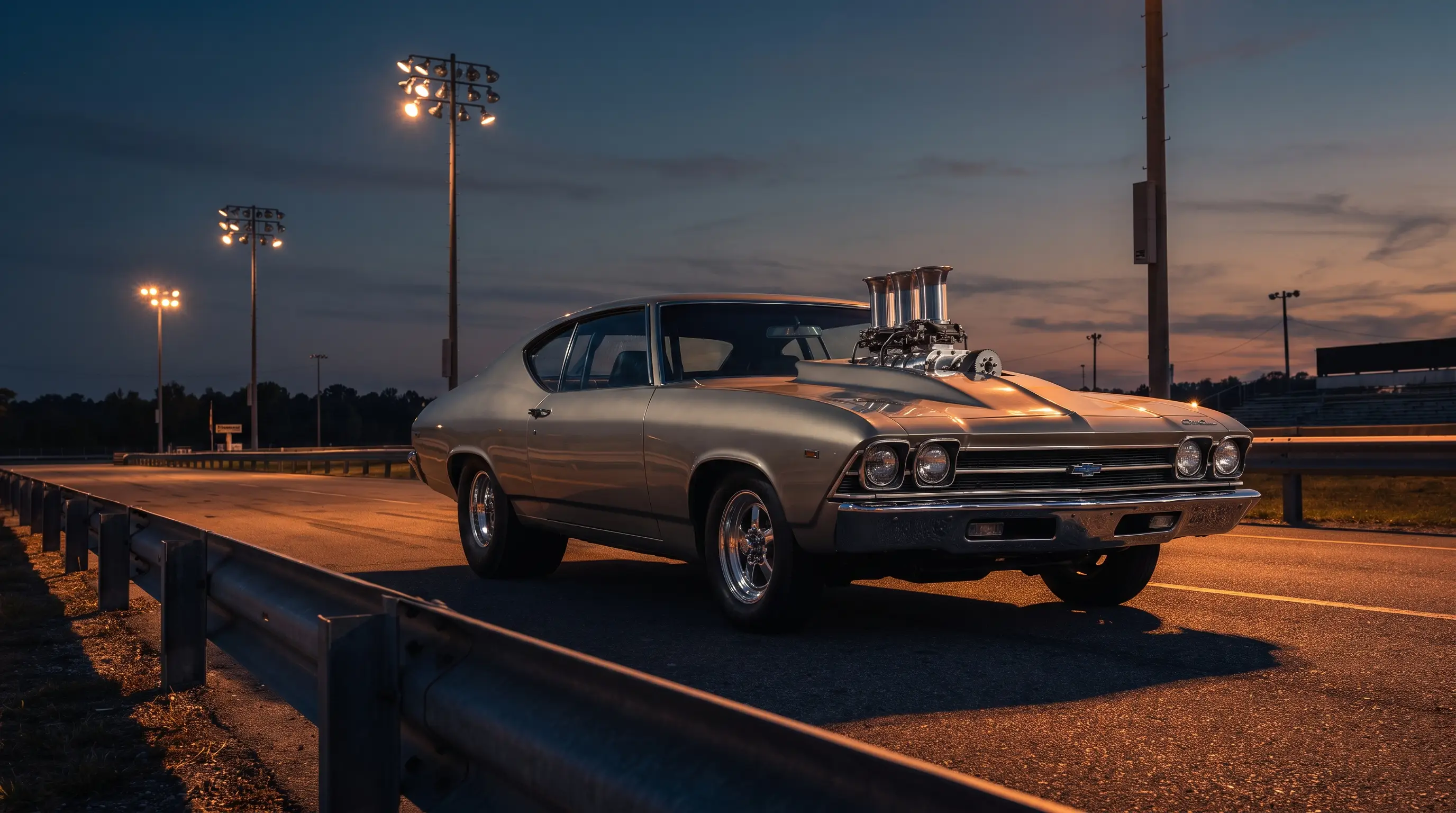
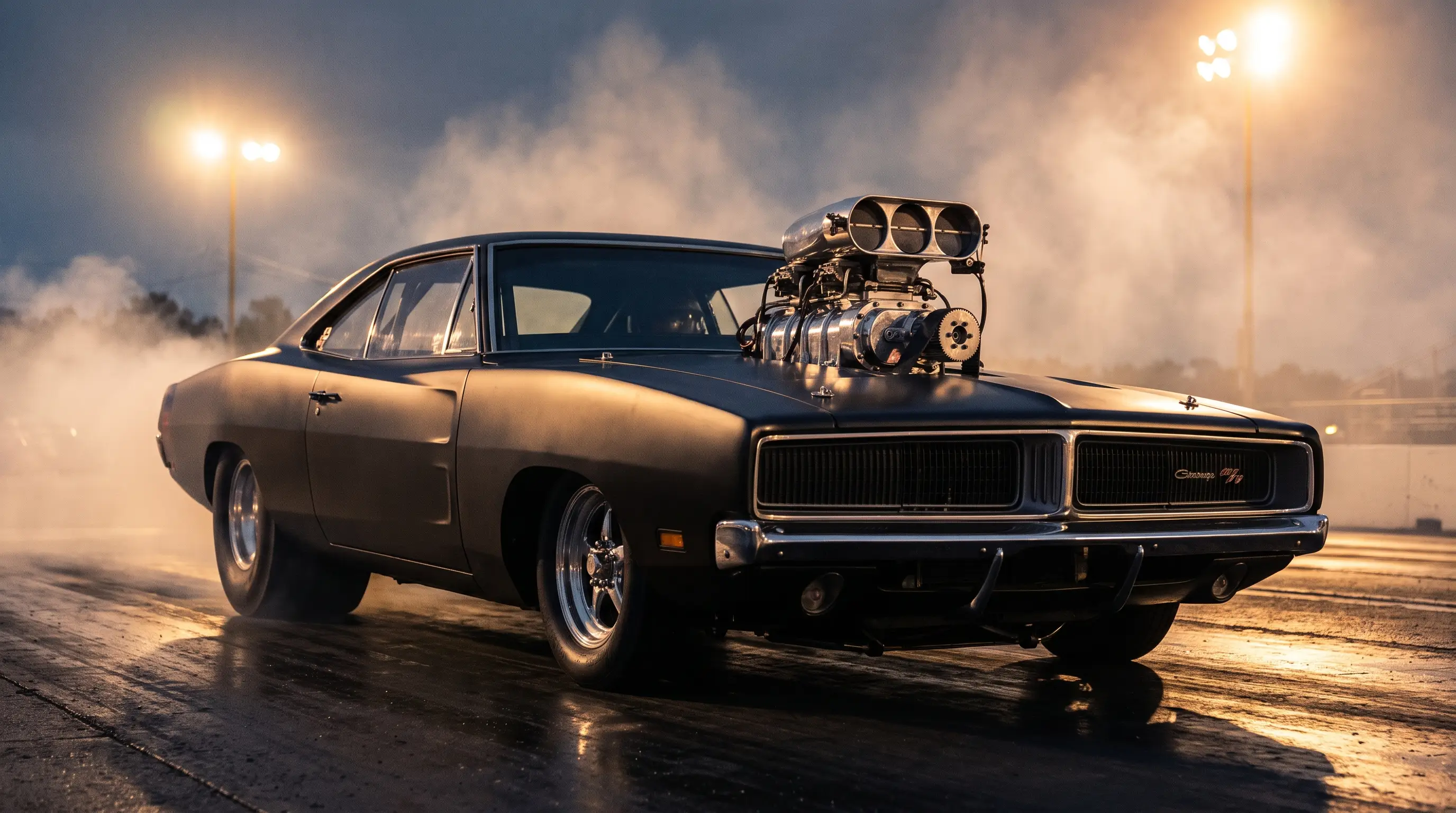
Chrysler's 426 Hemi earned its nickname from the hemispherical combustion chamber, a design that allowed bigger valves and better airflow than a wedge-head engine of the same displacement. That advantage was already proven on drag strips through the 1960s. By the time Pro Street builders were tubbing rear ends and hanging superchargers off intake manifolds in the late 1970s and 1980s, the 426 Hemi already carried two decades of race-winning credibility. A builder putting a Hemi in a Pro Street Barracuda, Charger or Challenger was tapping into that history directly.
The catch was cost and weight. A real 426 Hemi core was expensive even used, and the aftermarket for Hemi-specific parts was thinner than the small block Chevy world. Builders who went this route usually had a reason beyond raw output. Brand loyalty, a family car that started life with a Hemi, or a simple refusal to run anything else under the hood of a Mopar.
Numbers that mattered
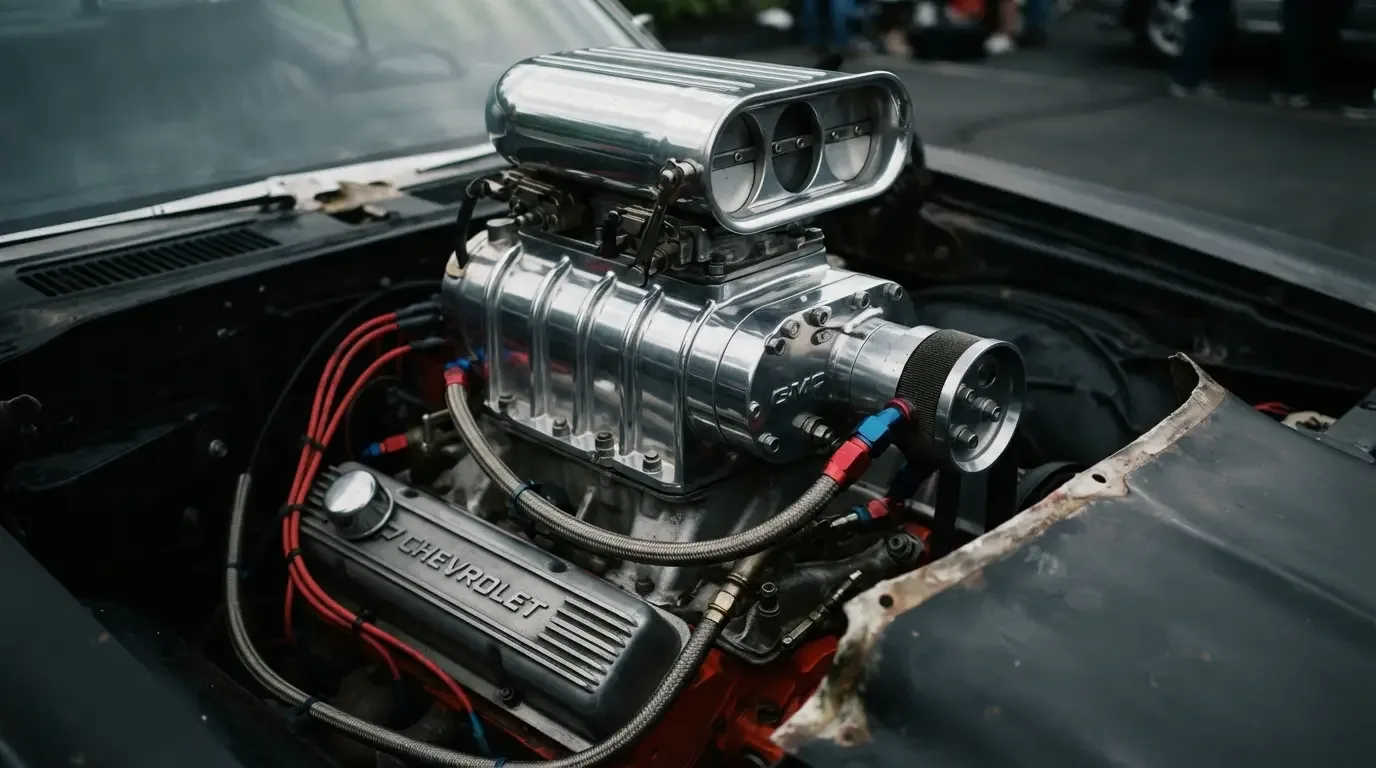
A blown street Hemi in a Pro Street car could push well past what a small block Chevy delivered at similar boost, largely because the Hemi started with more displacement and more airflow capacity per cylinder. Figures well north of 600 horsepower get cited for aggressive blown street Hemi combinations, though real numbers swung wide depending on blower size, fuel system and how far the builder pushed compression. What is not in dispute is that a Hemi carried weight over the front axle that a small block never did, and that weight changed how the whole car behaved.
| Factor | Hemi vs small block Chevy in a Pro Street build |
|---|---|
| Displacement | 426 cubic inches stock, often stroked further |
| Weight | Noticeably heavier than a small block, shifts front weight bias |
| Parts cost | Higher than small block Chevy, thinner aftermarket |
| Blower fitment | Requires Hemi-specific intake and manifold hardware |
| Reputation | Carries drag racing pedigree from the 1960s forward |
Living with the weight
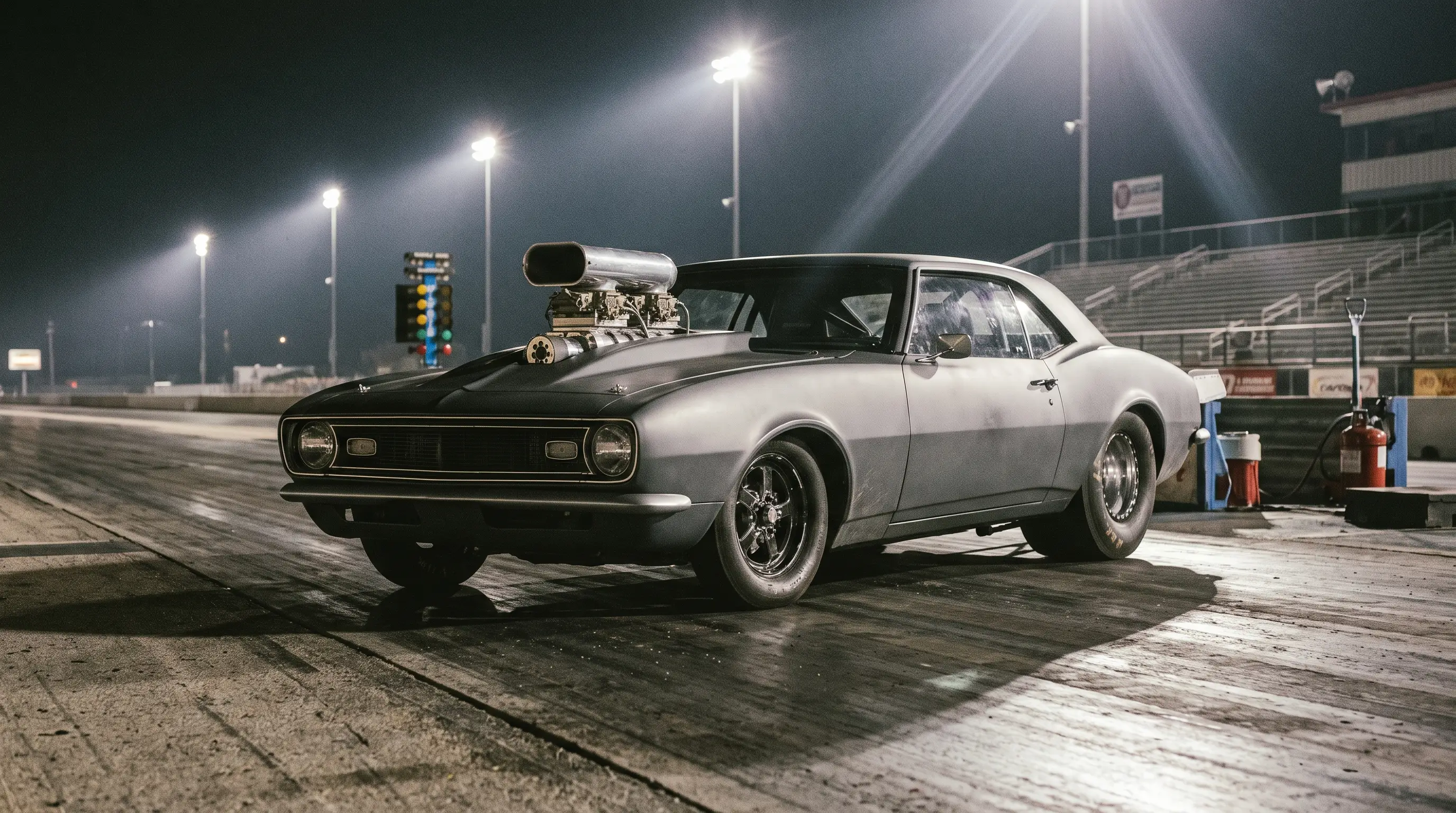
Front weight bias is not a small detail on a Pro Street car. These builds already put most of the mass over a narrowed, tubbed rear end with drag radials or slicks, and a front end that is light by design helps launch traction. A heavy Hemi up front worked against that setup, so builders who ran one had to compensate elsewhere, often with a lighter front clip, fiberglass hood and fenders, or a moved battery. None of that was a secret fix. It was a trade a builder accepted because the Hemi delivered something a lighter engine could not: the sound and the story that came with the name.
Fuel system decisions followed the same logic as any blown Pro Street combination. Blow-through carburetion was common, mechanical injection showed up on more serious builds, and ignition timing had to respect the Hemi's compression and boost combination or risk expensive damage. The engine rewarded careful tuning and punished anyone who treated it like a bolt-together kit.
Where the Hemi fits in the broader Pro Street story
The Hemi was never the volume choice in Pro Street. Small block Chevy engines outnumbered it by a wide margin because they were cheaper and easier to source. But volume was not the point for Hemi builders. A blown street Hemi told anyone who heard it coming that the owner had chosen the harder, pricier path on purpose. That reputation still holds. Readers who want the whole picture on how superchargers became standard equipment across the Pro Street movement will find the Hemi sitting at the expensive end of that spectrum, next to small block and big block Chevy builds that took the cheaper route to the same visual formula.
Buyers today who want a Hemi-powered Pro Street car pay for that scarcity. Original or period-correct Hemi builds are harder to find than small block Chevy equivalents, and prices reflect it. Anyone ready to look should shop classic Pro Street car listings and expect Hemi cars to move fast when they come up, because there were fewer of them built in the first place.
"A Hemi under a blower is not the smart choice on paper. It is the loud one. Builders who picked it knew exactly what they were buying and did not care what it cost."
- Dan Reeves
Why so few builders chose this path
Beyond cost and weight, the Hemi presented a practical problem that small block builders rarely faced: a much smaller universe of people who actually understood how to tune one under boost. Small block Chevy tuning knowledge was everywhere by the 1980s, passed between friends, published in magazines, and taught informally at every cruise night. Hemi tuning knowledge stayed concentrated among a smaller group of specialists, often connected to drag racing circles that predated the Pro Street movement itself. A builder without access to that knowledge took on real risk trying to dial in a blown Hemi combination without guidance, since mistakes with ignition timing or fuel delivery on a high-compression Hemi under boost could destroy an expensive engine quickly.
That knowledge gap only widened the divide between Hemi builds and small block builds. A Hemi owner was more likely to belong to a Mopar-specific club or maintain contact with a small circle of specialists who had built similar combinations before. That network became part of the value of owning one of these cars, since the community around blown street Hemis was smaller, tighter, and generally more knowledgeable about the specific quirks of the engine than the broader Pro Street scene at large.
The bottom line
A Hemi in a Pro Street car costs more, weighs more and demands more attention than a small block. It also carries a name that no other engine in the movement can claim. That trade defined which builders went Hemi and which ones stuck with a cheaper, lighter option, and it still shapes what a Hemi-powered Pro Street car is worth on the market today.