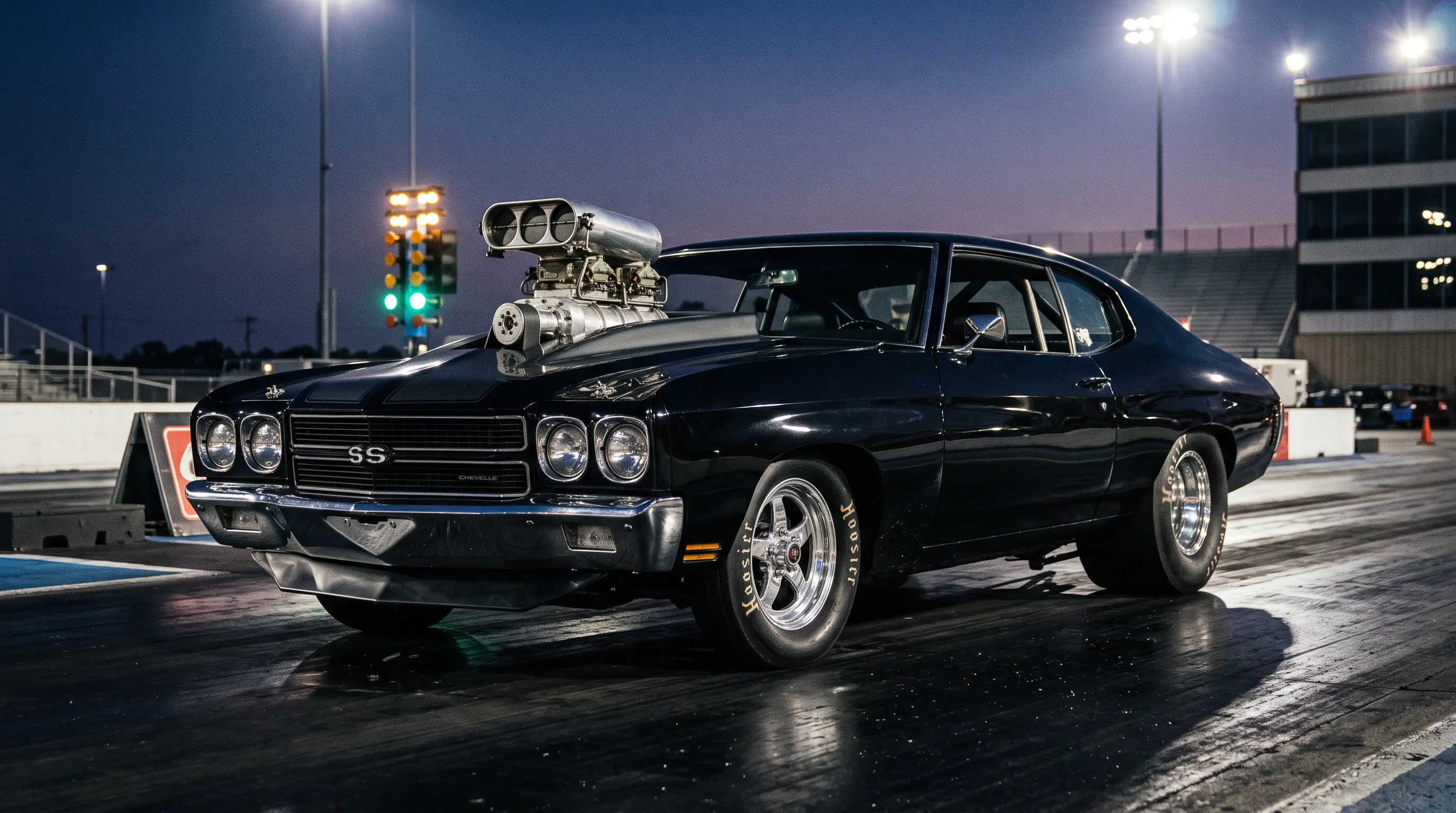
Blown engine sound is not just an exhaust note. It is a whine layered on top of a cam lope, produced by a mechanical process that has nothing to do with the muffler and everything to do with a set of meshing rotors spinning inside the supercharger case. Anyone who has stood next to a Pro Street car at idle knows the sound the moment they hear it, even if they could not explain the mechanism behind it. This is what actually produces that sound, and why it became such a defining part of the movement's identity.
Where the whine actually comes from
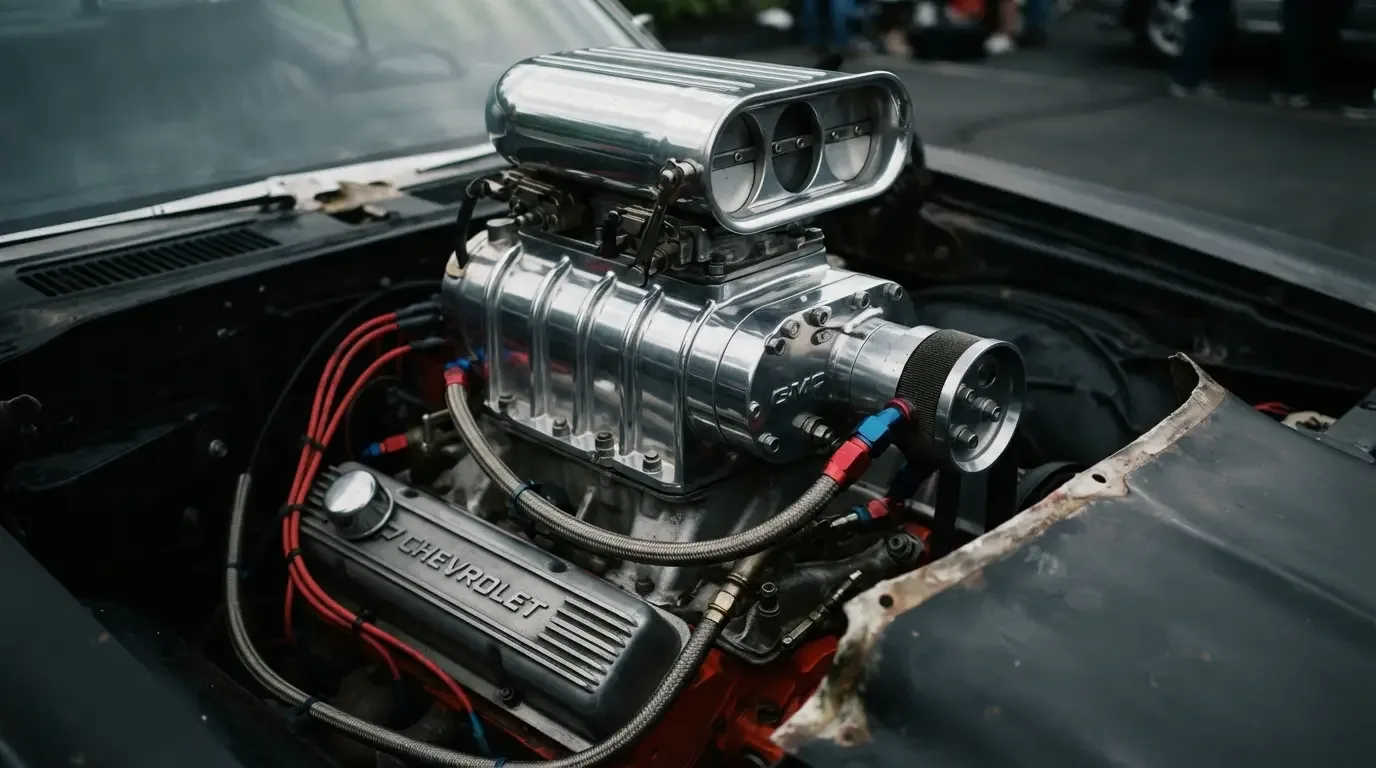
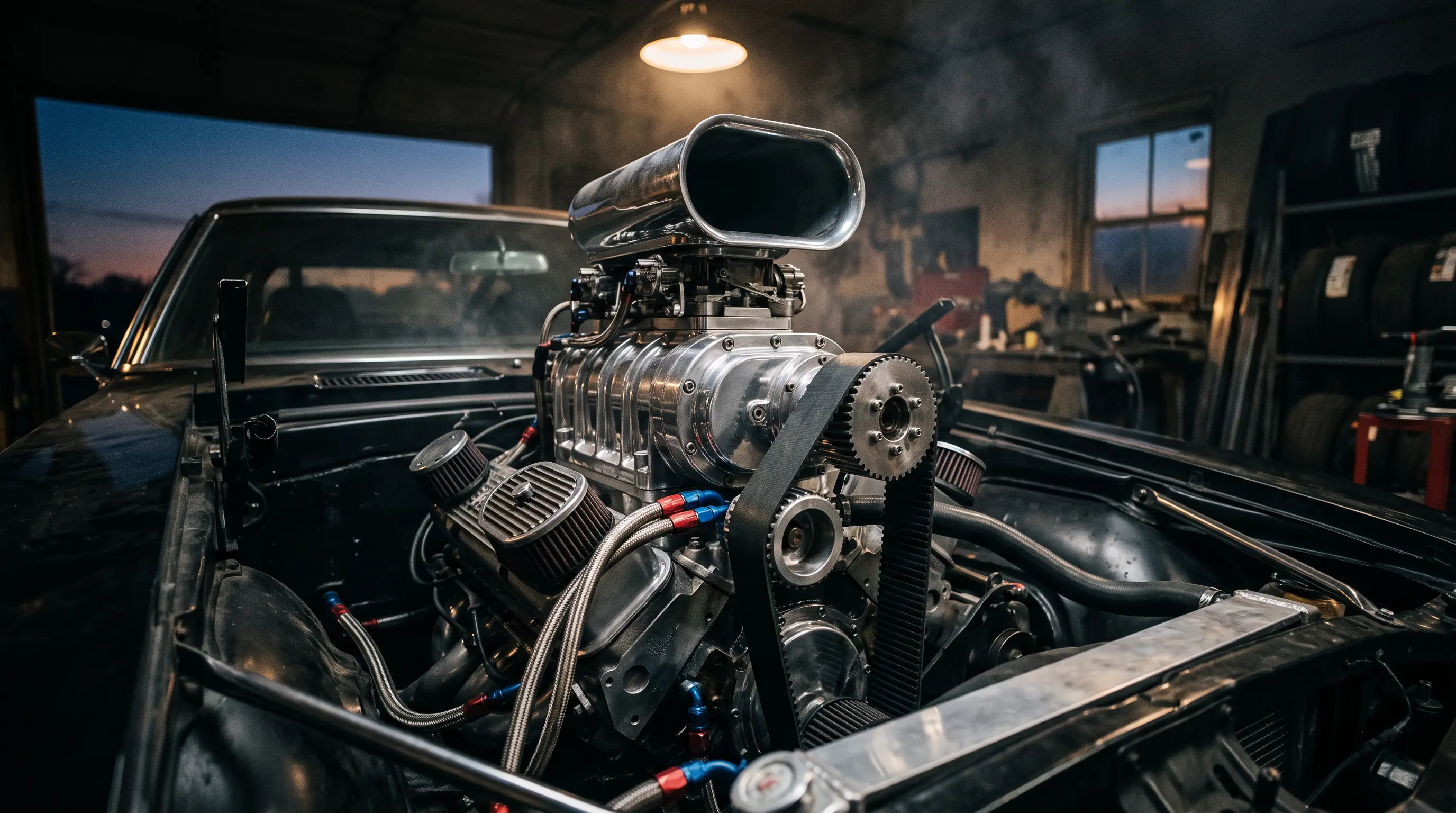
A Roots-style supercharger, the kind most Pro Street builders bolted onto a small block or big block, works using two lobed rotors that spin in opposite directions inside a close-tolerance case. As those rotors turn, they trap pockets of air and push them from the intake side to the discharge side of the case. The whine that people associate with a blower comes primarily from the gear drive that keeps the two rotors synchronized, along with air being compressed and released in rapid pulses as the rotor lobes pass the discharge port. Higher blower speeds, driven by a smaller pulley on the crank relative to the blower pulley, raise the pitch of that whine, which is why some blown cars sound noticeably higher and sharper than others even running similar engines.
Underneath the blower whine sits the engine's own voice, shaped mostly by camshaft profile. Pro Street builds commonly ran aggressive solid lifter or roller cams with long duration and significant overlap, the kind of specification that produces the choppy, uneven idle enthusiasts call a lope. Combine that lope with the mechanical whine on top and you get a sound that is instantly recognizable even from a distance, well before the car comes into view.
Why builders cared about the sound as much as the numbers
Horsepower figures matter on paper, but at a car show or a cruise night, sound is the thing that actually reaches the crowd. A blown Pro Street car announces itself the moment it starts, and that immediate, visceral impression became part of what builders were chasing as much as raw output. Some owners went so far as to choose blower pulley ratios based partly on how the resulting whine sounded rather than purely on the boost figure it produced, trading a small amount of potential power for a pitch they liked better.
| Source | What it contributes to the sound |
|---|---|
| Blower rotor gear drive | The characteristic mechanical whine |
| Blower pulley ratio | Pitch of the whine, higher ratio raises it |
| Camshaft profile | The choppy, uneven idle lope underneath |
| Exhaust system | Overall volume and tone, secondary to the whine |
Comparing the sound to other Pro Street setups
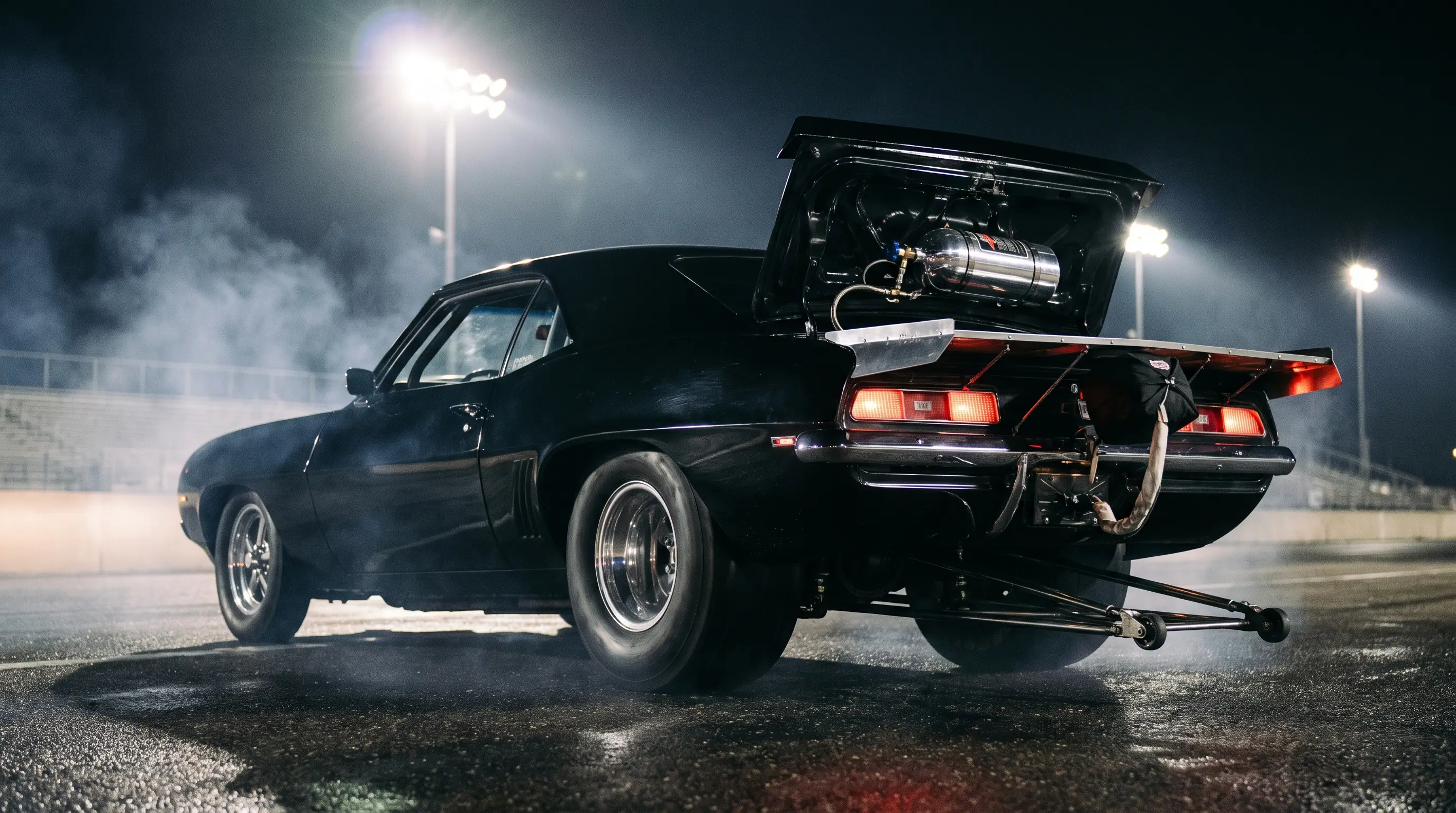
Not every Pro Street car ran a blower, and the alternatives sounded noticeably different. A tunnel ram car with dual carburetors made a burbling, uneven idle sound driven mostly by carburetor tuning rather than mechanical whine, while a nitrous-equipped car sounded like a fairly normal street engine until the driver hit the button. The blower's whine was unique in that it was present constantly, at idle, cruising and under power, which made it the sound most associated with the movement as a whole even though it represented one engineering choice among several. Readers curious about the mechanical side of that choice can find our complete history of how superchargers became standard equipment across Pro Street builds during the 1980s.
Boost level changed the character of the sound too. A mildly boosted blown 350 running 6 psi whined at a noticeably lower intensity than an aggressive big block running 12 psi or more, and enthusiasts at shows could often estimate a car's boost level by ear before ever seeing a gauge. That kind of informal expertise became part of the culture, with regulars at any given cruise night able to identify a car's rough combination just from the sound of it idling in the parking lot.
"You can measure boost with a gauge, but everybody at a car show measures it by ear first. The whine tells you almost everything before you ever look under the hood."
- Emily Chen
How drivers learned to read the sound
Experienced Pro Street owners developed an informal fluency in reading their own engine by ear that went well beyond simply enjoying the noise. A change in whine pitch under load could signal a slipping belt before it became a serious problem. A new rattle underneath the whine sometimes meant a loose blower case bolt or a failing bearing. Owners who drove their cars regularly, rather than trailering them to shows, tended to develop this kind of ear for their engine out of necessity, since catching a developing problem by sound often meant the difference between a simple fix and an expensive rebuild.
That auditory fluency extended to how owners talked about their cars within the hobby. Describing an engine's sound in detail, the pitch of the whine, the depth of the lope, the crackle on deceleration, became its own form of technical communication at cruise nights, almost a shorthand that let one owner understand another owner's combination before ever seeing a spec sheet. It is a skill that still holds value today, and buyers new to blown Pro Street cars are well served by spending time around experienced owners simply listening and learning what a healthy engine is supposed to sound like before making a purchase decision.
What this means for buyers today
For a buyer evaluating a blown Pro Street car, the sound at idle is a legitimate diagnostic tool, not just an aesthetic detail. A blower drive that whines unevenly or grinds rather than whines cleanly can point to worn gears or bearings inside the case, both of which are expensive to repair. A healthy blower should produce a consistent, even whine at idle that rises smoothly with RPM. Anyone shopping should listen carefully before buying, and those ready to start looking can browse classic Pro Street car listings and, where possible, hear a car run in person before committing, since photos and even video cannot fully substitute for standing next to a running blower.