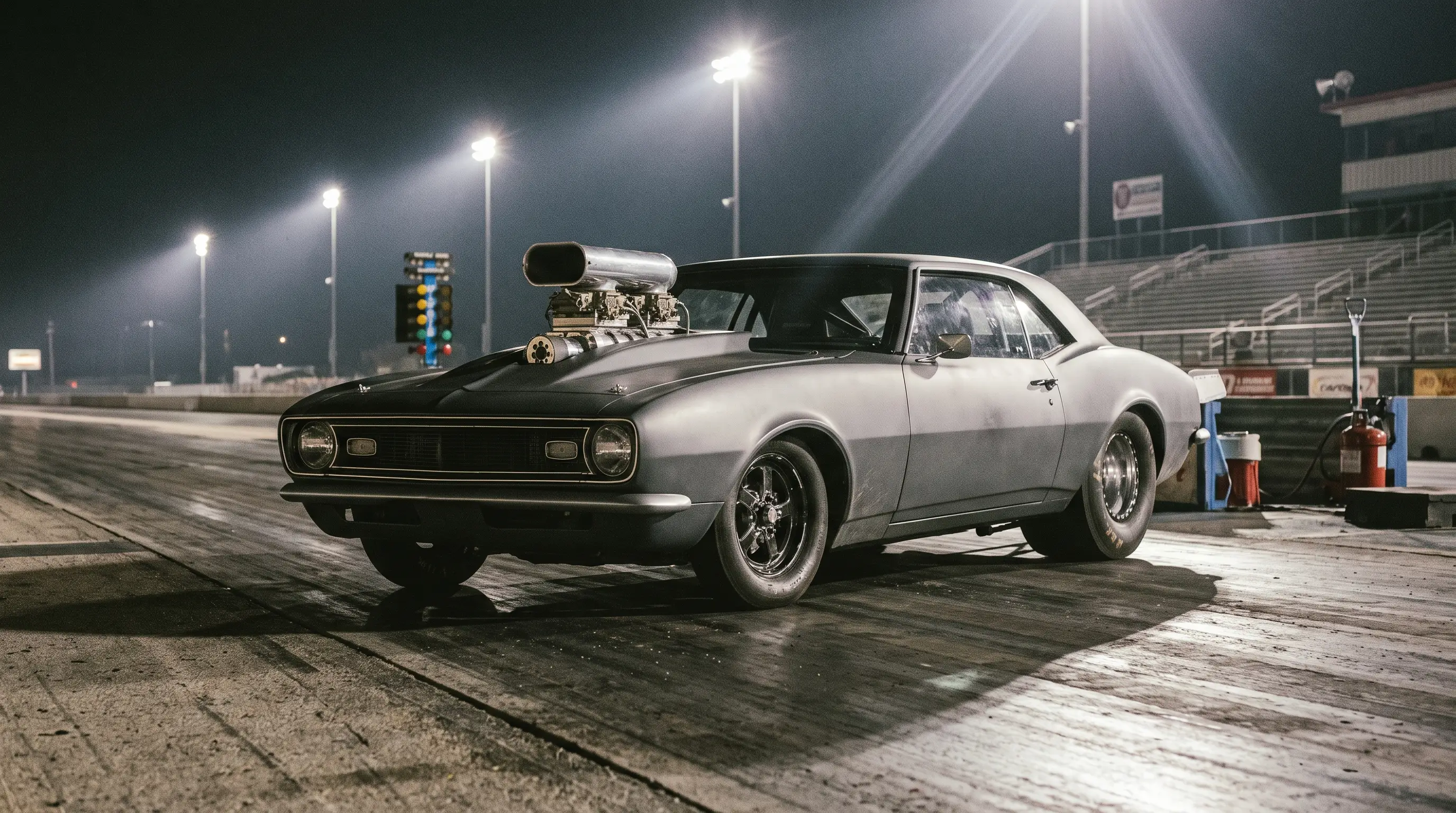
At every cruise night I ever attended back in the day, there was a guy with a nitrous bottle mounted in the trunk who swore up and down his setup beat the blower cars on power per dollar, and there was always a blower guy ready to argue back. Nitrous pro street combinations never got the same magazine covers as a supercharger poking through a hood scoop, but plenty of club members ran nitrous instead, and the argument over which was smarter never really settled.
Two ways to add power, two different personalities
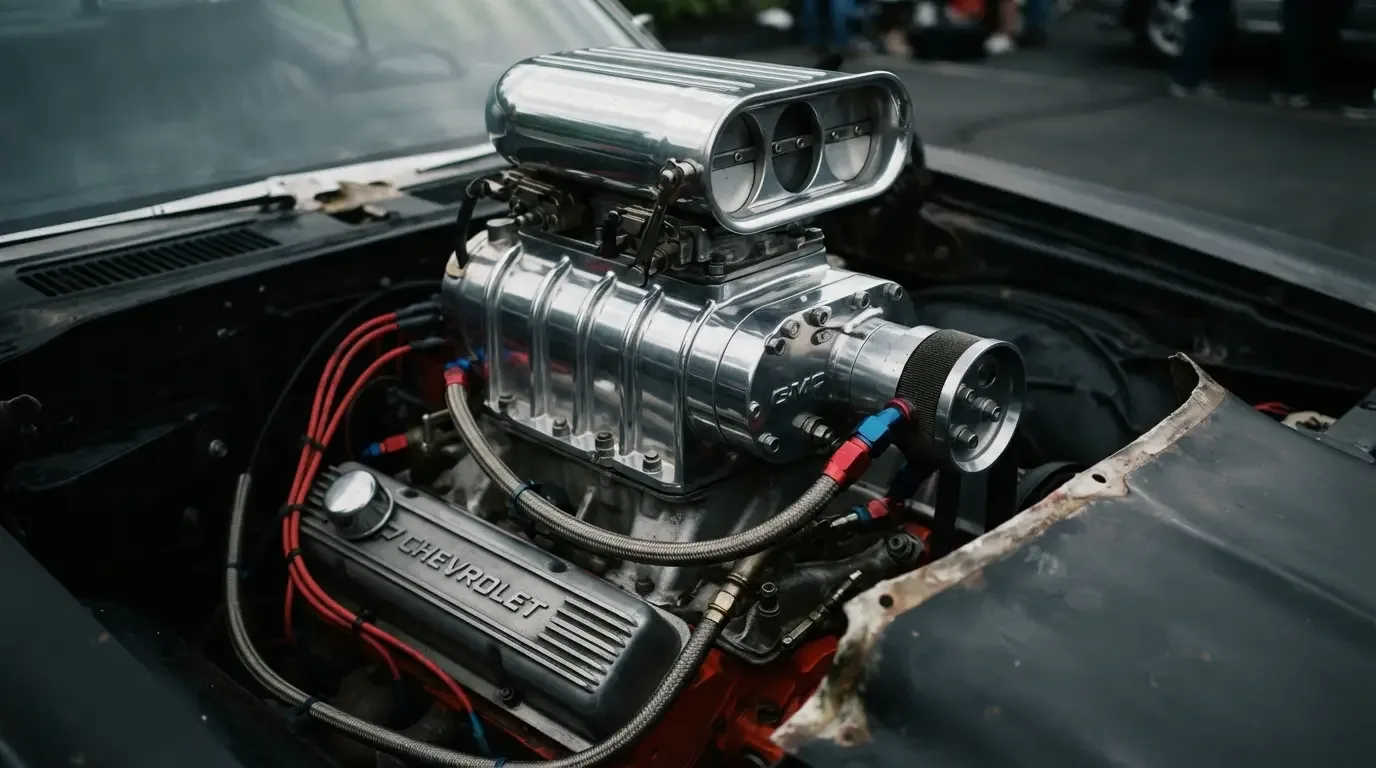
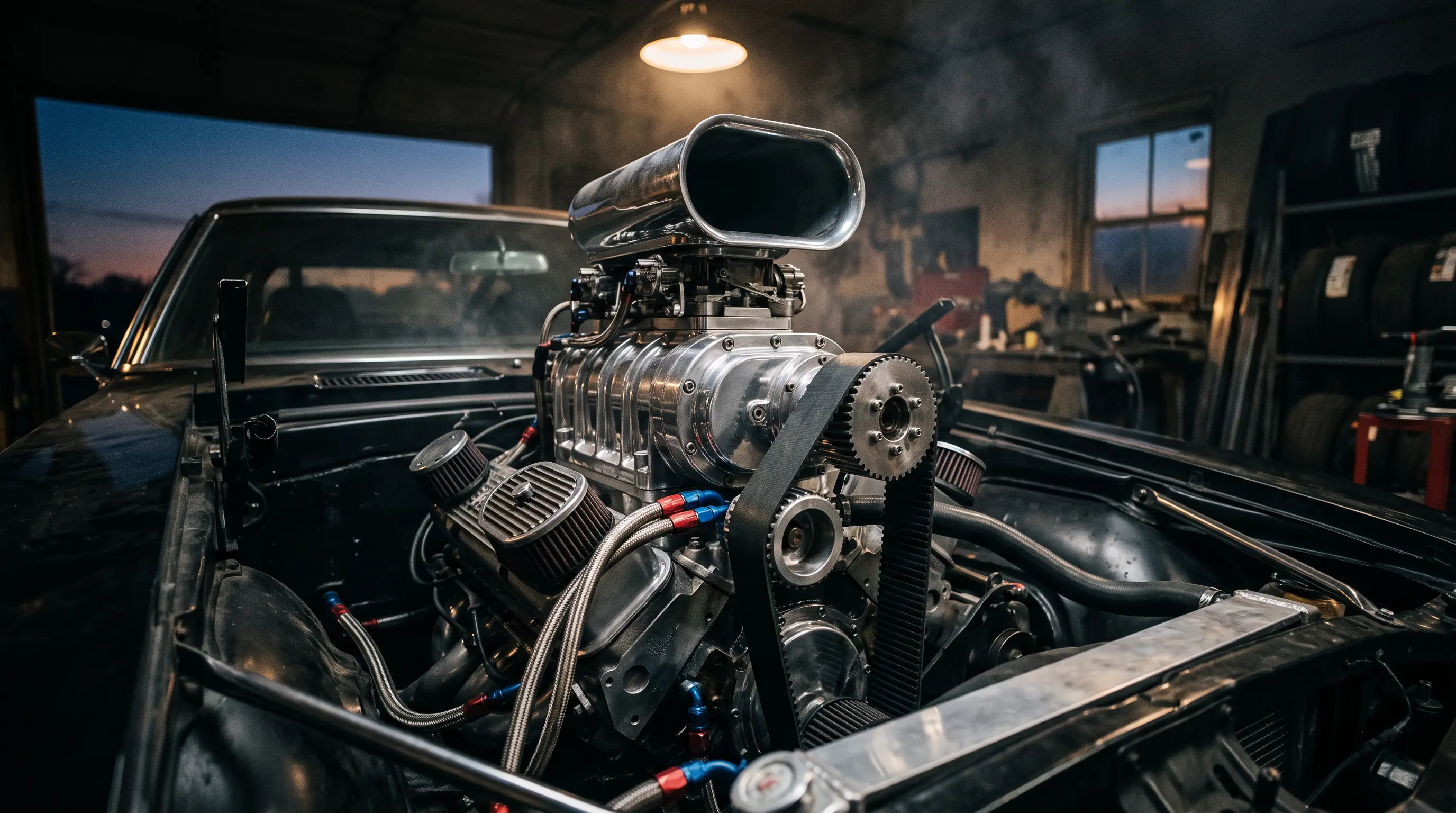
A supercharger adds power all the time, every time the engine is running, by forcing extra air into the cylinders continuously. Nitrous oxide works differently. It sits inert in a pressurized bottle until the driver hits a button or the throttle reaches a certain point, at which time the system releases nitrous and extra fuel together, and the engine makes a burst of extra power for as long as the bottle keeps flowing. That difference in character shaped which builders picked which system. A blower guy wanted his car to feel dramatic from idle onward. A nitrous guy wanted a normal-driving car that turned into something else entirely at the push of a button.
Cost was the other half of the decision, and it usually decided things for club members without a big budget. A blower, drive kit and matching fuel system cost real money and took real fabrication work to install correctly. A nitrous kit, by comparison, bolted on for a fraction of the price and could be pulled off just as easily if a member changed his mind. That flexibility made nitrous the entry point for plenty of guys who wanted to say they had a Pro Street car without committing to a full blower build.
What the numbers looked like
A small shot of nitrous, in the range clubs commonly discussed as around 100 to 150 horsepower worth of extra output, could turn a mild street engine into a genuine quarter mile threat without touching the internals. Bigger shots pushed further, though club members who ran the aggressive setups also talked about broken parts more often than the guys running mild combinations. Figures around 250 horsepower get mentioned for the larger nitrous kits some builders ran, since period big-shot kits commonly offered jetting up to that range, though real numbers depended heavily on jetting, fuel pressure and how well the tune matched the shot size.
| Comparison point | Nitrous | Supercharger |
|---|---|---|
| Power delivery | On demand, temporary burst | Continuous, all the time |
| Install cost | Lower, simpler kit | Higher, more fabrication |
| Everyday drivability | Normal until activated | Changed idle and manners full time |
| Reversibility | Easy to remove | Harder to undo once installed |
The club argument that never ended
I heard the same debate at more than one cruise night over the years. Blower guys said nitrous was a cheat, a bottle that ran dry after a run or two and left the driver back where he started. Nitrous guys said a blower was overkill for street driving, dead weight and complexity a car did not need for a normal night out. Both sides had a point, and both setups earned their place in the Pro Street scene because they solved the same problem, wanting a stock-bodied classic to make serious power, in different ways that suited different budgets and different driving habits.
Some members ran both at different points in a car's life. A young guy might start with nitrous because it was affordable, then save up for a blower kit once the bug really bit. Others went the opposite direction, pulling a blower off a car that had gotten too much to maintain and running a simple nitrous plate instead so they could actually enjoy driving it again. Anyone who wants the full story on why superchargers became the more famous half of that argument will find the blower side of Pro Street history covered in depth, but the nitrous crowd deserves equal credit for keeping plenty of budget builds on the road.
"Half our club ran nitrous because they wanted to drive their car every weekend, not just show it. A blower is a full time commitment. A bottle you can leave in the trunk until you need it."
- Wayne Coburn
How the systems actually got installed in a home garage
A typical club-level nitrous install in the 1980s and 1990s centered on a plate system mounted between the carburetor and the intake manifold, spraying nitrous and fuel directly into the airstream heading toward the cylinders. Wet nitrous kits, which supplied fuel along with the nitrous, were more forgiving of tuning mistakes than dry kits that relied on the carburetor alone to supply extra fuel. Most club members who installed their own systems leaned toward wet kits for exactly that reason, since a mistake with a dry kit could lean out the mixture and damage an engine quickly, while a wet kit built in a safety margin by design.
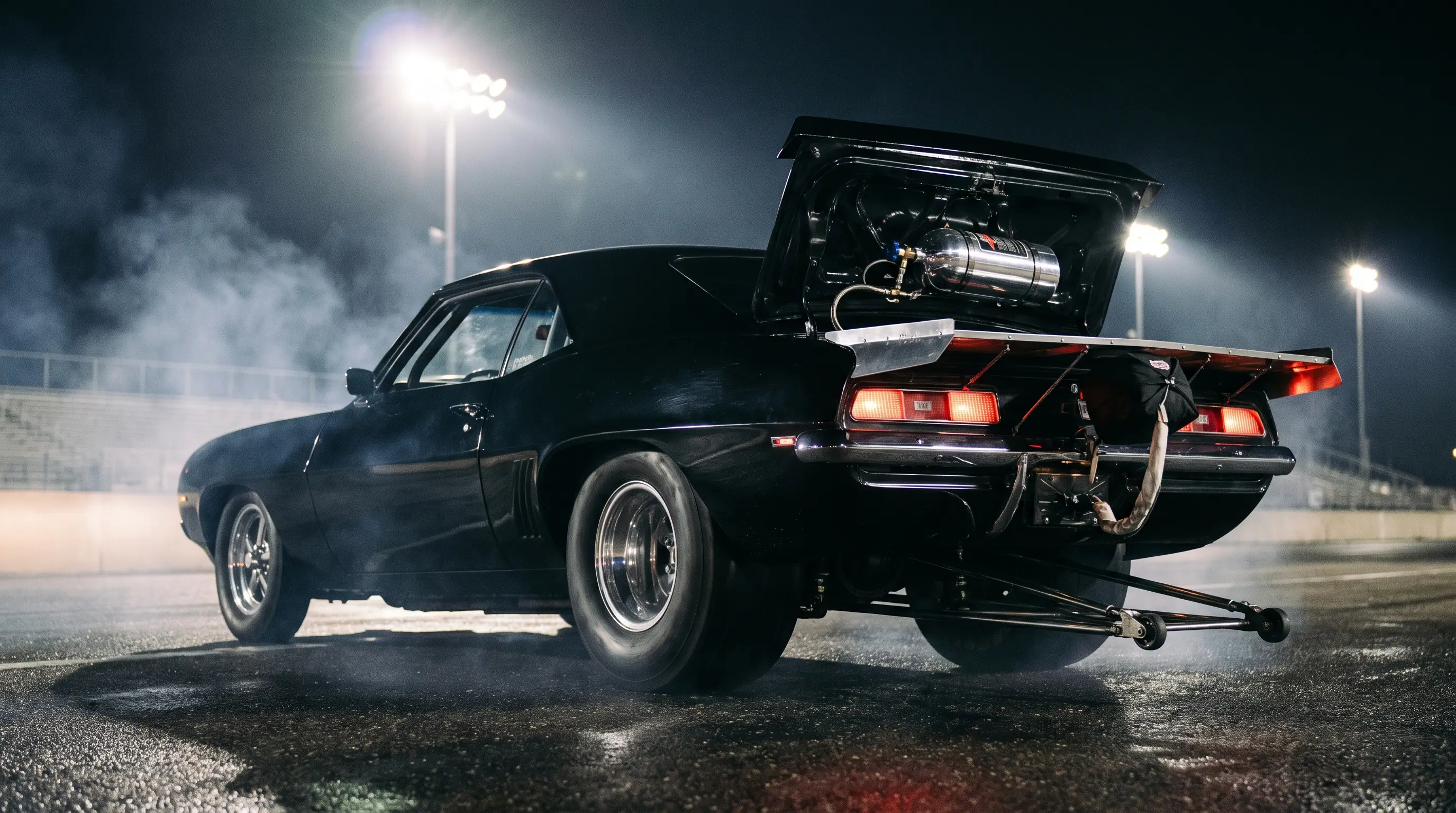
Bottle placement mattered too, both for weight distribution and for practicality. Some builders mounted the bottle in the trunk, which kept it out of sight but added weight over the rear axle, useful on a car that already needed rear weight for traction. Others mounted it inside the car, visible through the back glass, partly for weight reasons and partly because a visible bottle became a talking point at shows. Either way, proper mounting hardware and a pressure relief setup were not optional, since a poorly secured bottle under pressure represented a real safety risk that experienced club members took seriously even when younger members wanted to cut corners on the install.
What buyers should know today
Original nitrous-era Pro Street cars still show up for sale, and they tend to be more approachable for a new owner than a blown car, since the base engine underneath usually ran fine without the nitrous system engaged. That makes them a reasonable entry point for someone new to the hobby who wants a genuine period build without taking on the maintenance load of a full-time supercharged combination. Buyers hunting for one should check listings of a classic Pro Street car for sale and ask specifically whether the nitrous system is functional, since plenty of cars have had the bottle and solenoids removed over the years even though the mounting hardware remains.