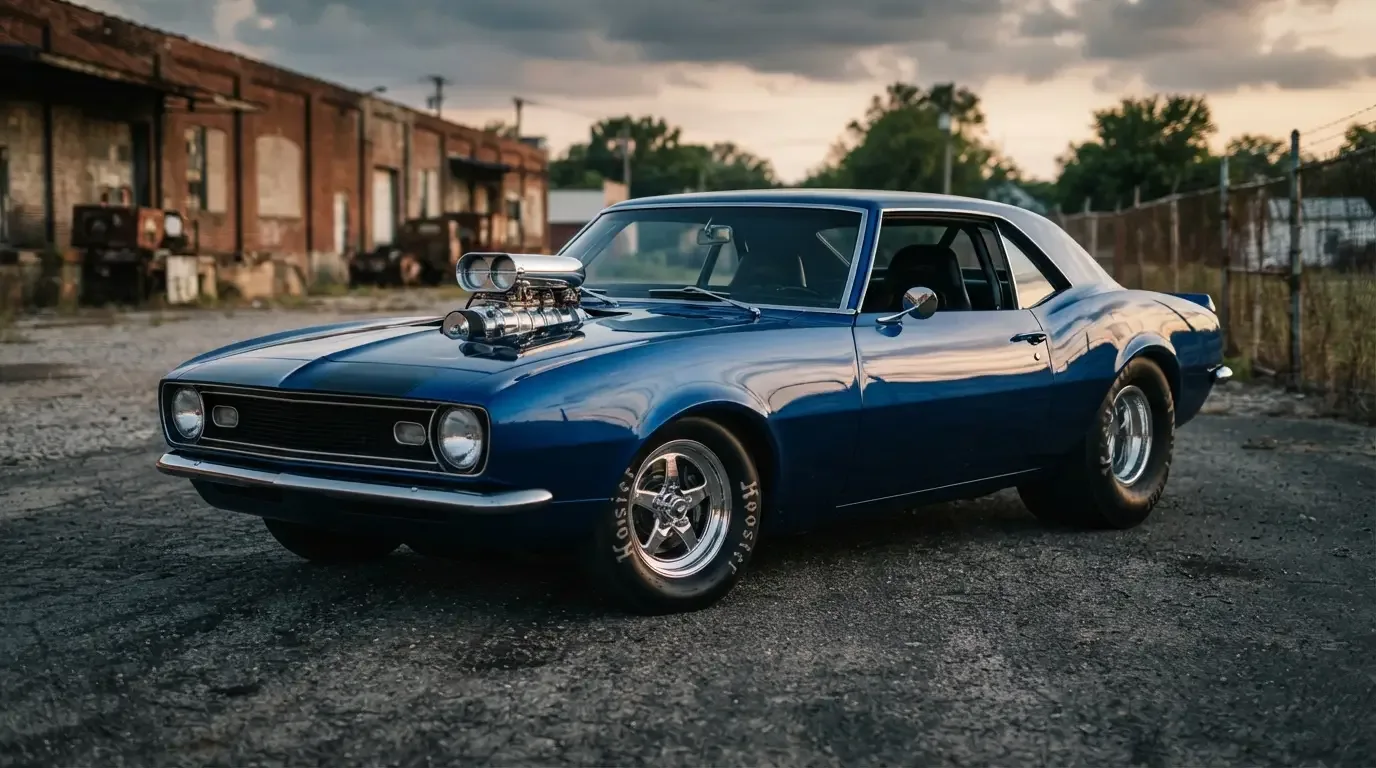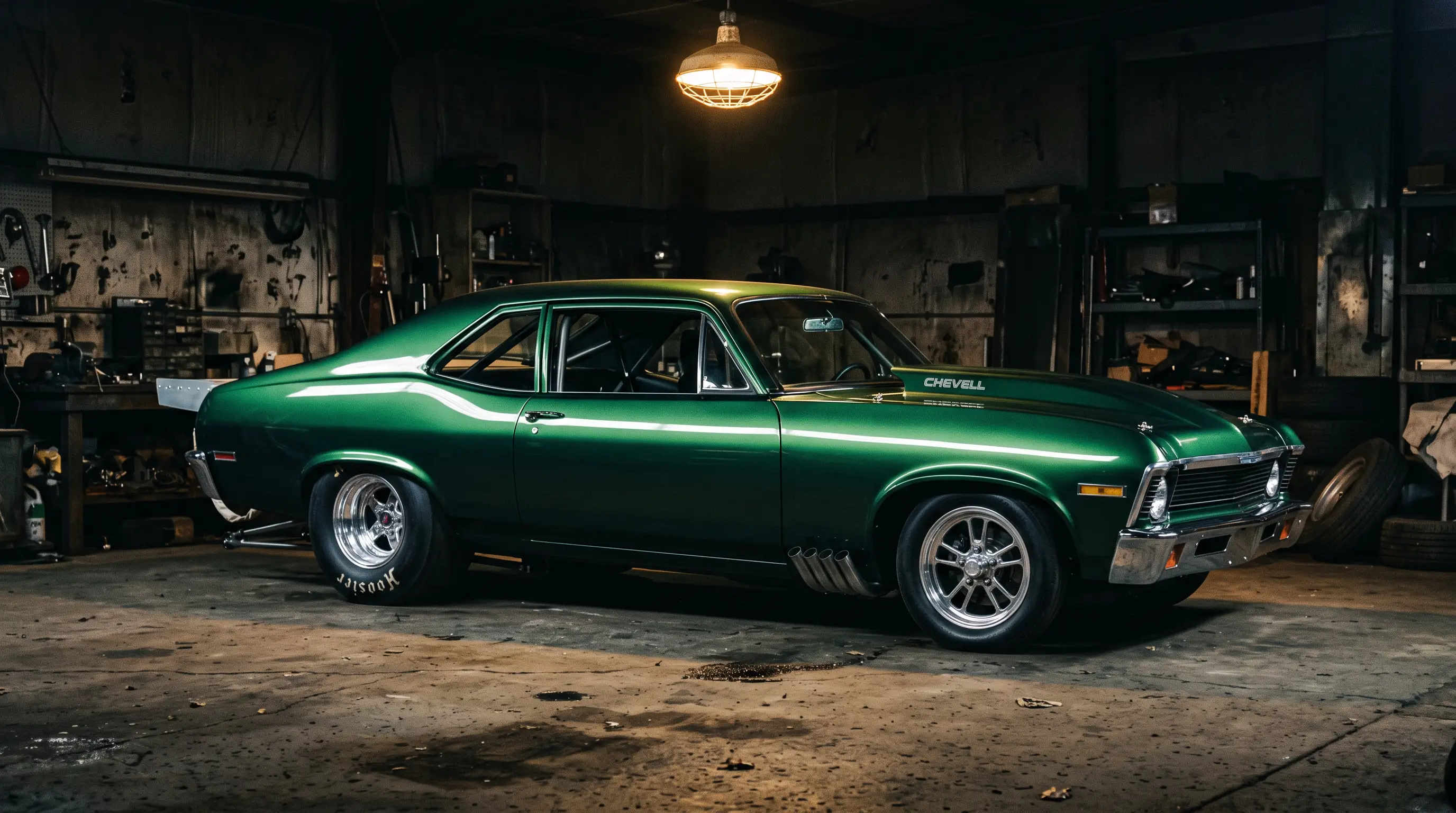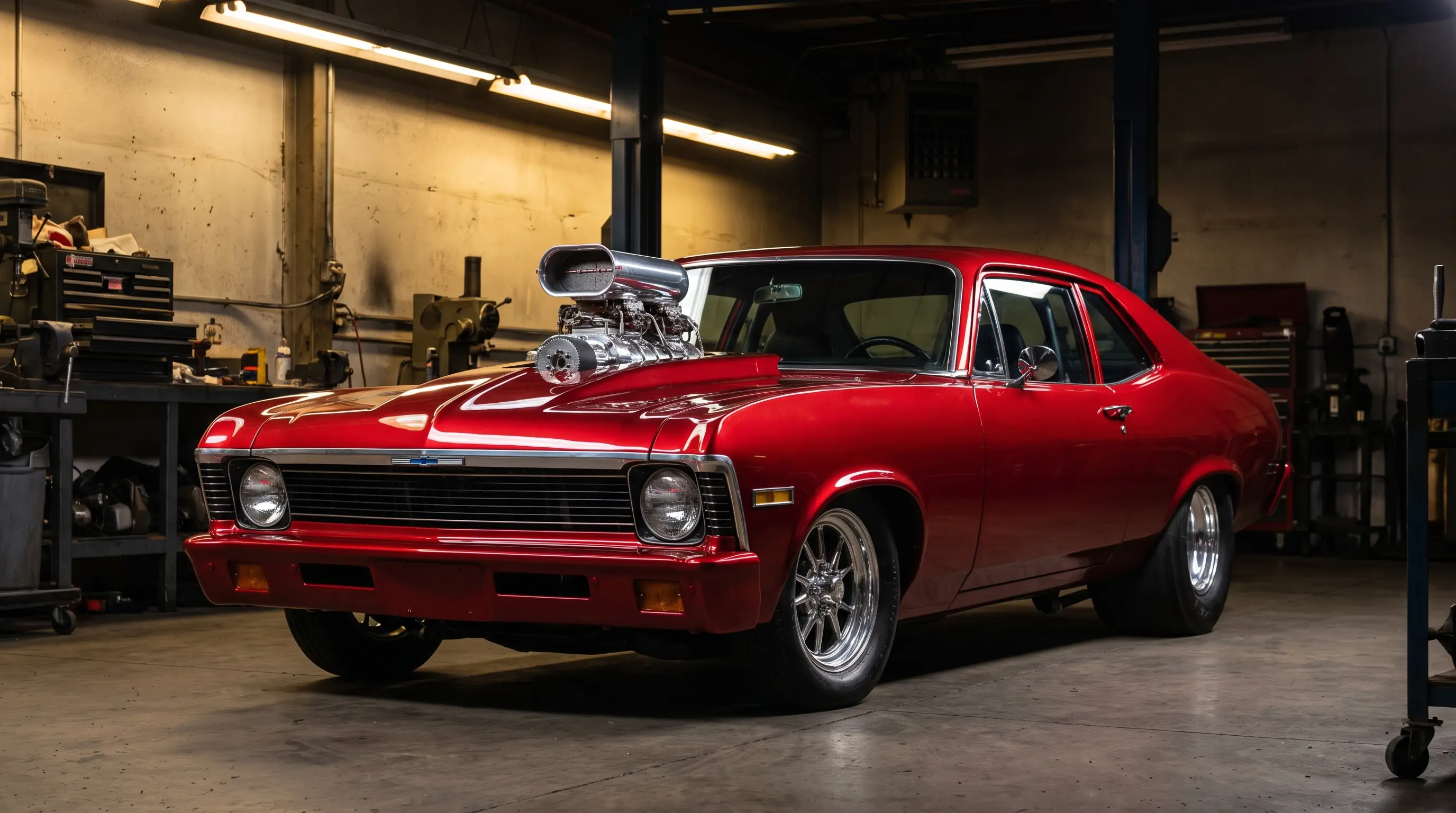
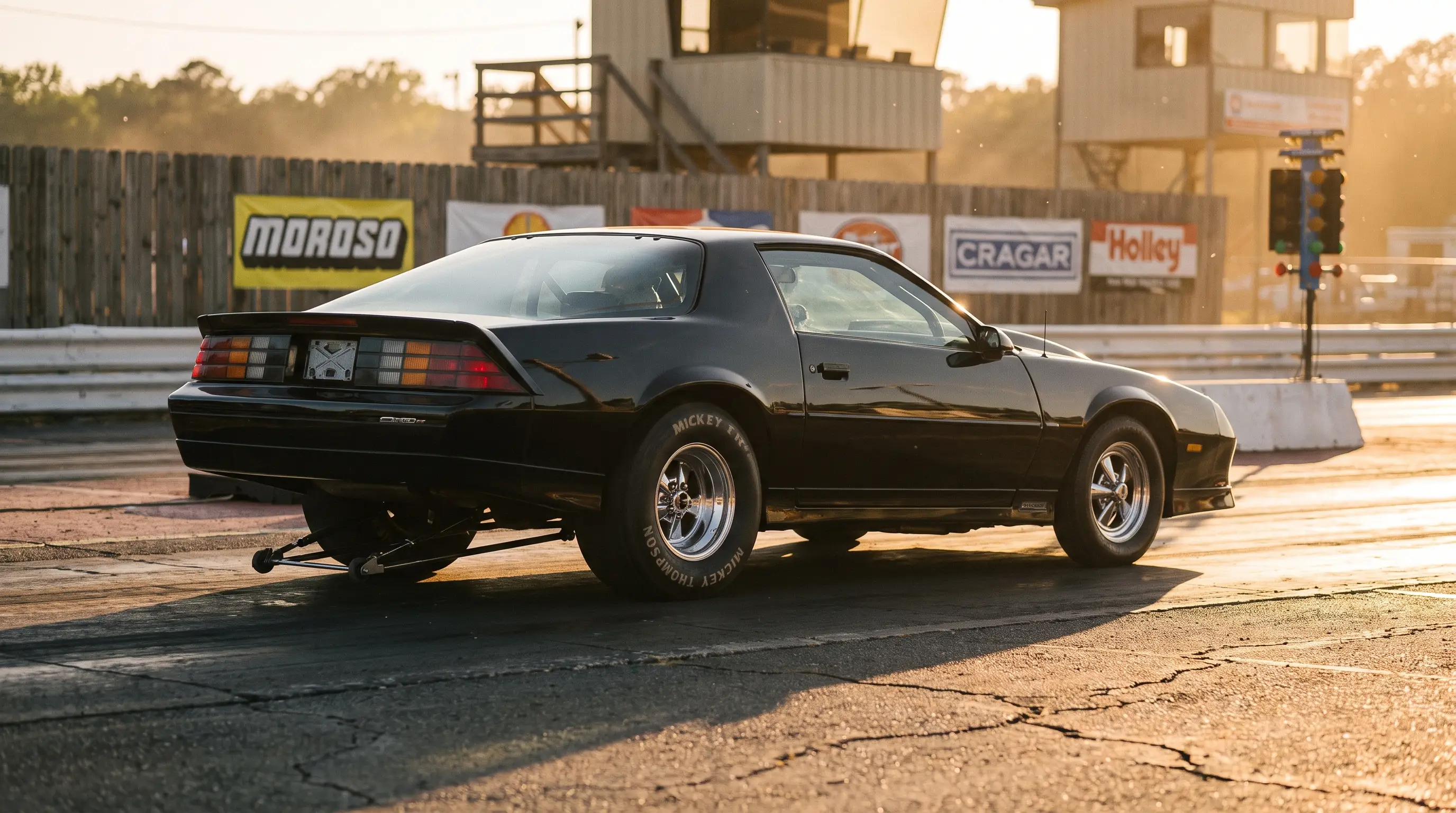
Walk any Pro Street reunion and count the Camaros. You will lose track before you reach the second row of parking. The pro street camaro became the default canvas for the whole movement so thoroughly that for a lot of people outside the hobby, a tubbed rear end and a cowl-induction hood scream "Camaro" even when the actual car underneath is a Nova or a Chevelle wearing a similar stance.
Why the second-gen became the standard bearer
The 1970 through 1981 Camaro, the second generation, offered builders something the first-gen and other muscle platforms could not match in the same combination: a wide, low body that already looked aggressive stock, cheap and plentiful donor cars by the mid-1980s, and a huge aftermarket that grew up specifically to serve Chevy small-block and big-block swaps. When a builder needed a back-half kit, sheet metal, or a fiberglass hood, the Camaro market had it first and had it cheapest, because so many other builders were asking for the exact same parts.
That created a feedback loop. More Camaro builds meant more parts development, which meant Camaros stayed the easiest and most affordable platform to tub, which meant even more builders chose one. By the late 1980s a shop advertising Pro Street back-half kits without a Camaro-specific option was leaving money on the table.
The look that defined a decade
A well-built Pro Street Camaro from the mid-1980s follows a recognizable formula. Massive rear tires filling flared quarter panels, a narrowed nine-inch rear end, a straight front axle or a tubbed but narrower front stance, and a hood scoop or cowl induction bulge announcing whatever big-inch small-block or big-block sat underneath. Paint tended toward bold single-stage colors, candy reds and blues, sometimes flake, because Pro Street cars were built to be seen up close in a show line as much as they were built to launch hard off a starting line.
Interiors got less attention relative to the drivetrain and chassis, which tells you something about where the priorities sat. A builder would spend weeks getting the tub geometry right and then bolt in a basic aftermarket bucket seat and call the cabin finished. That imbalance was normal for the era and is part of what collectors look for now when trying to date a build as period-correct rather than a modern tribute.
"You'd hear a Pro Street Camaro before you saw it, and then you'd see it and understand why everyone else at the show was trying to build the same thing."
- Patrick Walsh
Small-block loyalty and big-block bragging rights
Most Pro Street Camaros ran a built small-block, often a 350 or 383 stroker, because the parts were cheap, plentiful, and forgiving of a street-driven build with a mild cam and a single four-barrel. But the cars that got remembered, the ones that made it into magazine features and won trophies, more often ran big-block power, a 454 or a 468 stroker with a tunnel ram and dual carbs poking through a fiberglass hood. That combination was louder, thirstier, and harder to keep street legal in some states, but it delivered the kind of visual and audible presence that separated a showpiece from just another tubbed car in the swap meet parking lot.
The platform's broader story does not start or end with the Camaro alone, and understanding how the Camaro fits into the wider movement means looking at the other GM and Ford platforms builders were tubbing at the same time. For pro street muscle cars history, the Camaro is really one chapter in a much longer competition between platforms for builder loyalty.
Camaro versus its closest GM cousin
Chevy loyalists often built a Nova alongside or instead of a Camaro, drawn by an even lighter body and a lower price of entry on donor cars through the 1980s. The two platforms shared engine families and a lot of suspension logic, which meant a builder skilled with one could usually turn around and tub the other without relearning much. If you want to see how that sibling platform developed its own identity within the same movement, a related story covers the Nova's particular path through the Pro Street years.
The rivalry between Camaro and Nova builders was mostly friendly, fought out in show line conversations and magazine letter pages rather than anything more serious, but it pushed both platforms toward more refined execution as each camp tried to outdo the other's latest build.
Where the Camaro stands with collectors now
Original, well-documented Pro Street Camaros from the golden era now draw real interest at specialty auctions, particularly cars with a known builder pedigree and period photographs proving the build dates to the 1980s rather than a modern recreation. The market rewards originality of the era's specific look, meaning a car with the correct-period tire sizes, paint style, and interior treatment sells for more than a technically nicer car built recently in a vaguely similar style.
For anyone chasing one of these cars today, patience matters more than speed, since genuine period builds surface unpredictably through estate sales and long-term owner collections rather than on a predictable schedule. Checking current listings regularly is still the most reliable approach, and you can see Pro Street cars for sale now to get a feel for what is actually on the market before committing to a search for one specific era-correct build.
Why the Camaro still gets the first look
Ask a dozen builders today which platform they would tub first if starting a Pro Street project from scratch and most will still say Camaro, not because it is the fastest or the rarest, but because the parts support and the visual formula are proven. That is the quiet legacy of the second-gen Camaro's Pro Street years. It became the platform other builds get measured against, whether the car in question is a Camaro or not.
Spotting a genuine period build
Telling a true 1980s Pro Street Camaro from a modern tribute build takes a closer look than most casual show-goers bother with. Original tub jobs from the era tend to show welding techniques and materials specific to their decade, along with wheel and tire combinations that match what was actually available at the time rather than modern reproductions sized to look similar. Paint codes and pinstriping styles offer another clue, since certain color combinations and graphic treatments were fashionable in narrow windows and fell out of favor quickly as trends shifted through the late 1980s and into the 1990s.
| Era clue | What to check |
|---|---|
| Rear tire size | Period cars typically ran narrower meats than modern equivalents suggest |
| Hood style | Fiberglass cowl or tunnel-ram bulge cut for period carb setups |
| Interior | Basic aftermarket buckets, minimal sound deadening, functional gauges |
| Paint | Single-stage or early basecoat colors, period graphics and pinstripe styles |
A builder's paperwork, when it survives, settles the question faster than any visual inspection. But for cars without documentation, these small details usually tell an experienced eye everything needed to date a build within a few years, which matters enormously to collectors weighing whether a car is a genuine piece of Pro Street history or a well-executed recreation built decades later in the same spirit.