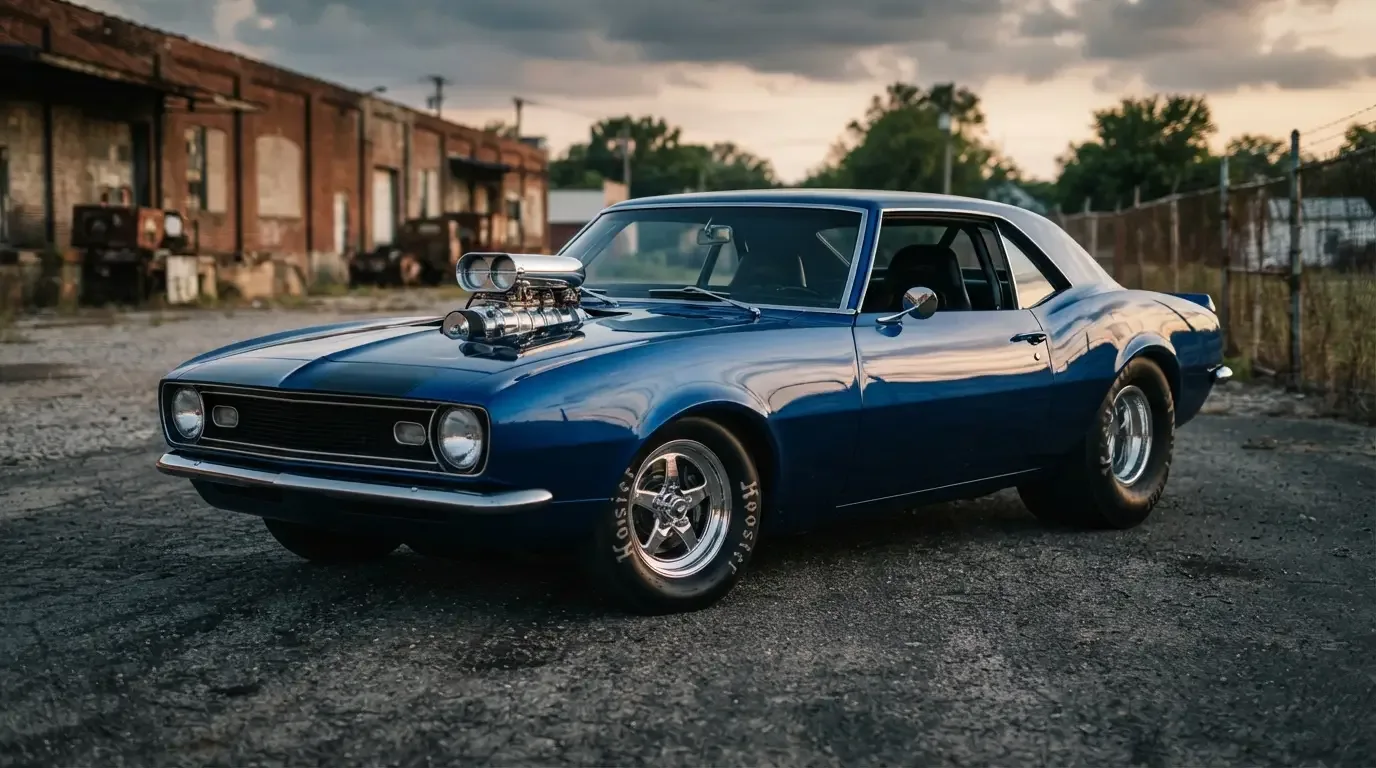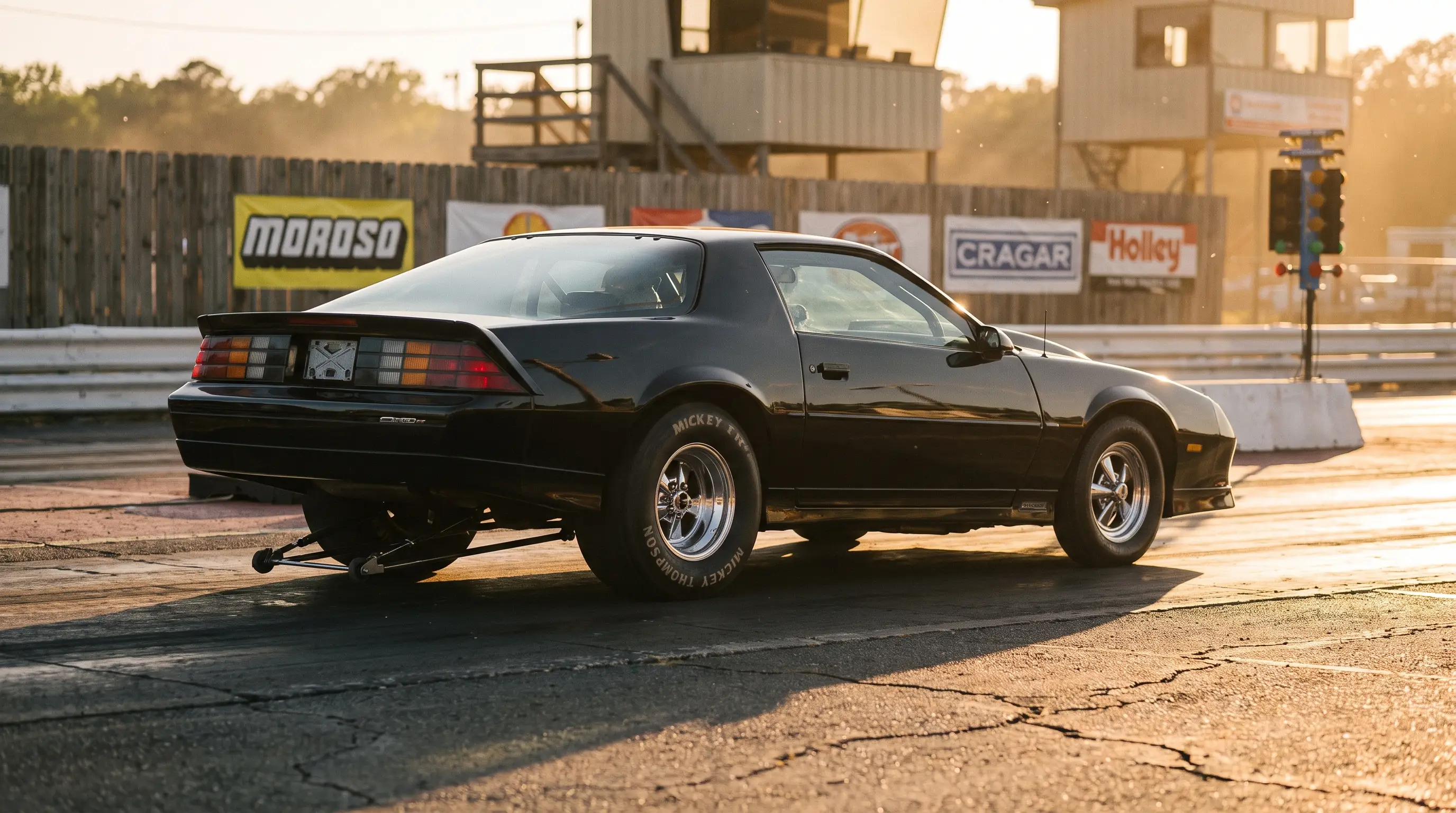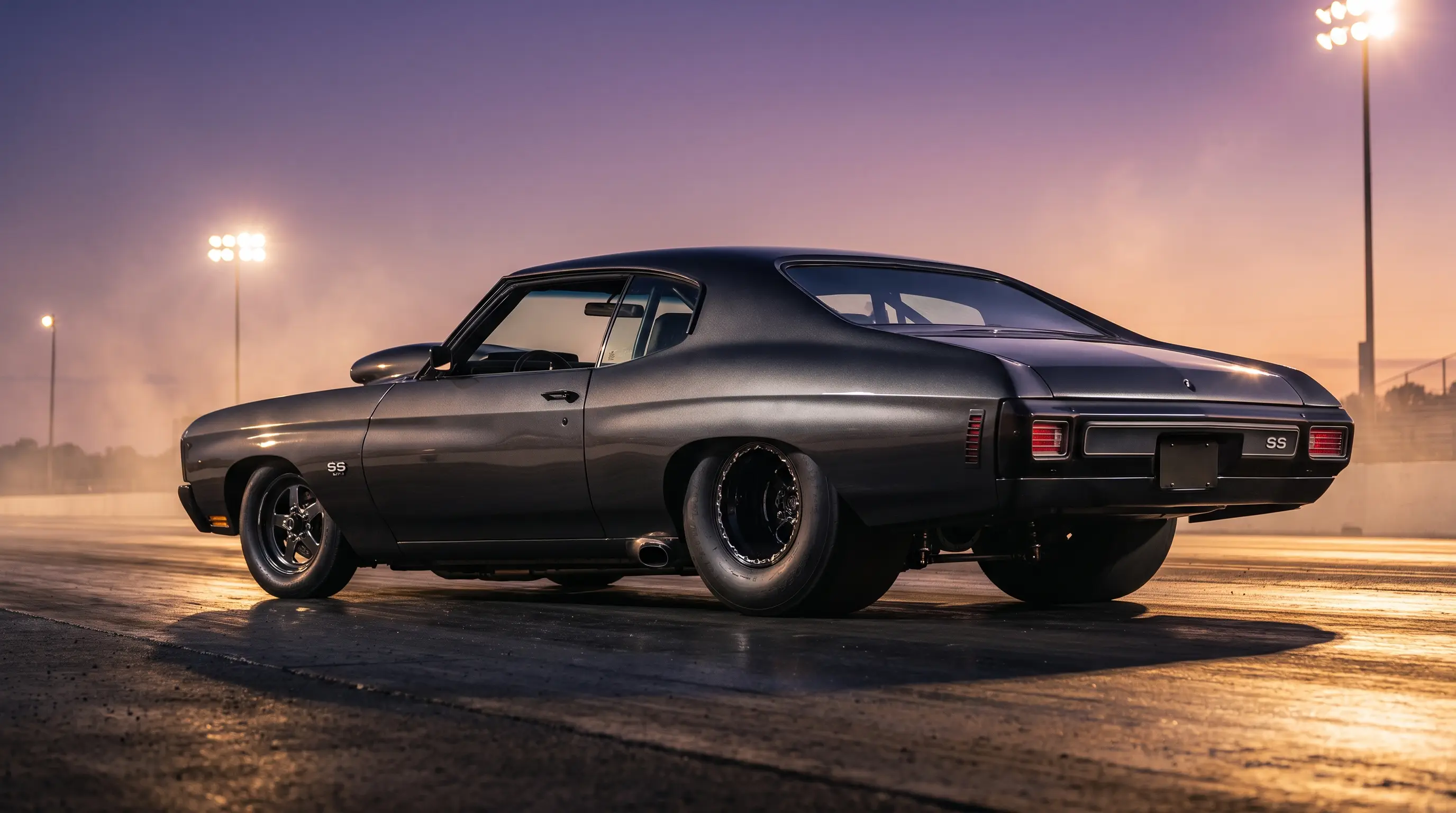
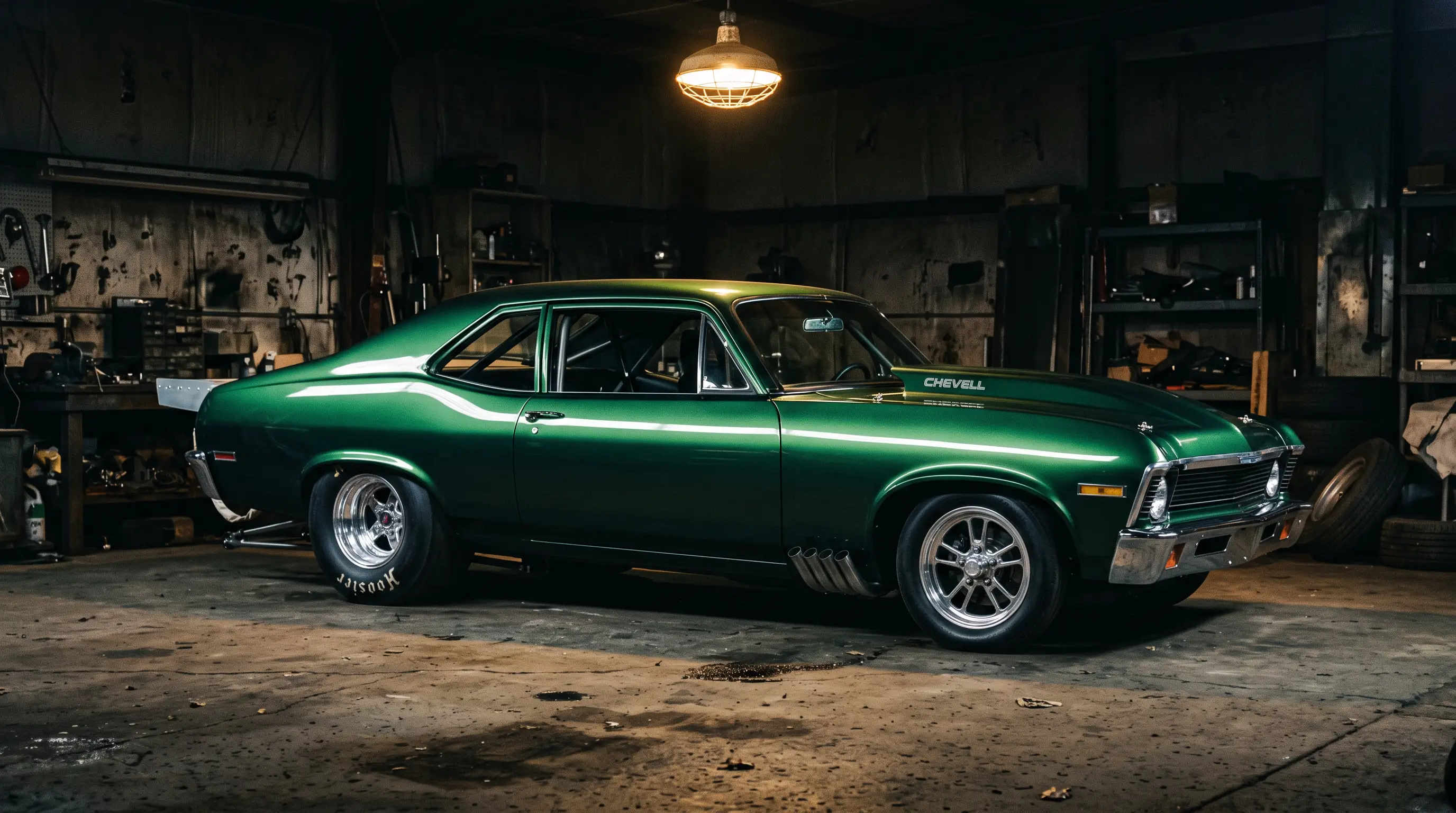
Ask around at any old-school car show and somebody will tell you the pro street nova was the working man's answer to the Camaro. Lighter, cheaper to find in a junkyard, and just as willing to swallow a big-block once a builder got the back half sorted, the Nova earned a loyal following among people who wanted the look without paying Camaro prices for a donor car.
A body built for tubbing
The 1968 through 1974 Nova shared its X-body architecture with lighter GM compacts, which meant it came into a build already carrying less structural weight than a comparable Camaro or Chevelle. For a builder trying to squeeze a big tire under the rear quarters and keep the car reasonably drivable, that weight advantage translated directly into better traction and a less nose-heavy stance once the back half went in. Novas were also everywhere through the 1970s and into the 1980s, sold in huge numbers and often abandoned in fields or driveways once they aged out of daily-driver duty, which made them cheap and plentiful exactly when Pro Street builders needed a starting point.
That combination, light unibody structure and low acquisition cost, made the Nova a favorite among builders who were funding a project out of pocket rather than working with a deep-pocketed client. A lot of the era's most respected home-built Pro Street cars, the ones built in a one-car garage over a couple of winters, started life as a rusty Nova somebody dragged home for a few hundred dollars.
What a proper Pro Street Nova looked like
A well-executed Nova build from the era followed the same visual grammar as its Camaro cousins, tubbed rear quarters stuffed with slicks or big street radials, a narrowed rear end, and a hood scoop signaling serious cubic inches underneath. But Novas tended to wear a slightly leaner, more aggressive stance than a Camaro build simply because the body itself was smaller and tighter to begin with. Where a Camaro build could look wide and planted, a Nova build often looked coiled, almost too much car crammed into too little sheet metal, which a lot of enthusiasts found more exciting to look at than the smoother Camaro silhouette.
Small-block Chevys dominated Nova builds for the same reasons they dominated most GM Pro Street projects: cheap, proven, and endlessly supported by the aftermarket. But the Nova's lighter overall weight meant a modestly built 350 could deliver performance that would have required a much bigger and more expensive engine in a heavier car.
"A Nova never had the presence of a big Camaro sitting still, but light the tires up and suddenly nobody in the lot was looking at anything else."
- Wayne Coburn
The Nova's place in the wider platform wars
Chevy loyalists split their attention between Novas and Camaros throughout the Pro Street years, and the two platforms fed off each other's popularity even as builders debated which one made the better base. Understanding where the Nova fits requires looking at the full spread of platforms builders were choosing from across the whole movement, Ford and Mopar included, since the competition between makes shaped how far builders pushed each individual platform's engineering. For our complete history of how these rival platforms developed side by side, the Nova's story only makes full sense next to its competitors.
Regional pockets of the country developed particularly strong Nova followings, often centered around a specific shop or club that championed the platform locally even as national magazine coverage leaned more heavily toward Camaro and Chevelle features. That local loyalty kept quality Nova builds coming out of certain areas well after the platform's broader popularity had cooled elsewhere.
Nova values and what collectors look for now
Surviving period Nova builds are scarcer than their Camaro counterparts today, partly because fewer were built relative to Camaros and partly because the platform's lower original value meant more of them were parted out or scrapped once trends moved on in the 1990s. That relative scarcity has started working in the Nova's favor with collectors who want something a little less common than yet another Pro Street Camaro at a show.
A documented Nova build with period-correct tub work and original paint now draws serious interest specifically because it represents a rarer survivor than a comparable Camaro. Buyers hunting for one should expect the search to take longer and the asking price on a genuinely correct example to reflect that scarcity rather than assuming Nova pricing automatically undercuts Camaro pricing across the board.
If a Nova is what you are after, patience and persistence beat impulse buying every time. Checking current inventory regularly gives you the best shot at catching a good one before somebody else does, and you can always find a classic Pro Street car to compare what is actually available against what a proper period Nova build should look like before you commit.
A platform that earned its loyalty
The Nova never got the magazine cover treatment the Camaro enjoyed, but among the builders who actually lived with these cars day to day, it earned a reputation as the smarter, scrappier choice. That reputation still holds among enthusiasts who know the platform's history, and it is a big part of why a clean Pro Street Nova still turns heads at a show full of Camaros.
Year by year, what changed under the skin
Not every Nova model year suited Pro Street tubbing equally well, and builders developed clear preferences over time. Early second-generation cars, the 1968 and 1969 models, carried a slightly different rear frame kickup than the facelifted 1970 through 1972 versions, which meant a back-half kit designed for one year sometimes needed modification to fit the other cleanly. The 1973 and 1974 cars, heavier and carrying larger bumpers to meet new federal impact standards, were less popular starting points precisely because that extra weight worked against the platform's core advantage.
| Nova years | Builder notes |
|---|---|
| 1968 to 1969 | Lighter early frame, favored by builders chasing the lowest overall weight |
| 1970 to 1972 | Most common donor years, best aftermarket back-half kit support |
| 1973 to 1974 | Heavier bumpers and structure, less favored despite similar body lines |
Most builders gravitated toward the 1970 through 1972 window as the sweet spot, since donor cars were plentiful, the body style read as unmistakably Nova, and the aftermarket had settled on that generation as the standard for back-half kit fitment. A builder starting a project today looking for the most period-correct experience would do well to start with the same years the original shops favored.
Engine bay dimensions shifted slightly across those model years too, which mattered once builders started stuffing big-block Chevys under Nova hoods. The narrower early engine bays sometimes needed more clearance work for headers and accessory drives than a Camaro's roomier bay required, a detail that separated a Nova specialist shop from a general Pro Street builder taking on a Nova as a side project without fully accounting for the tighter quarters.