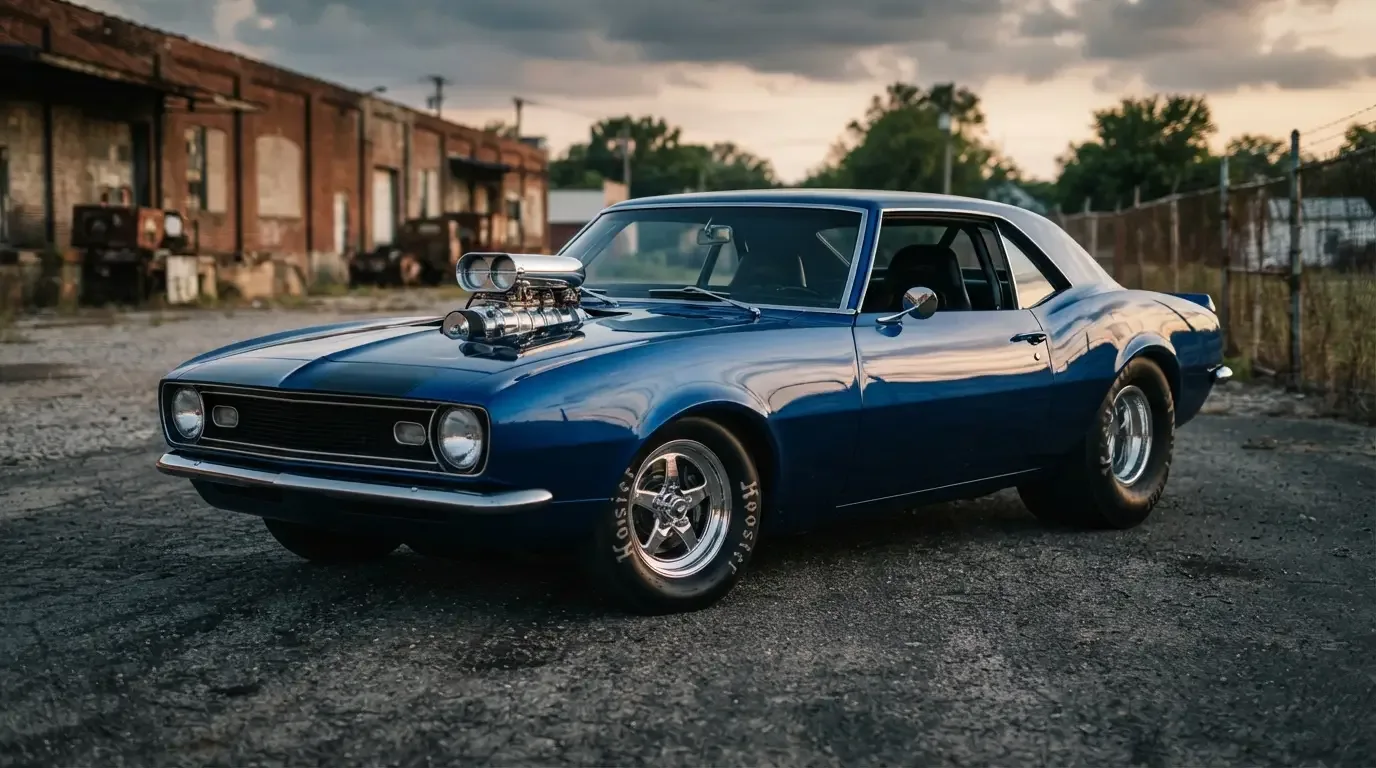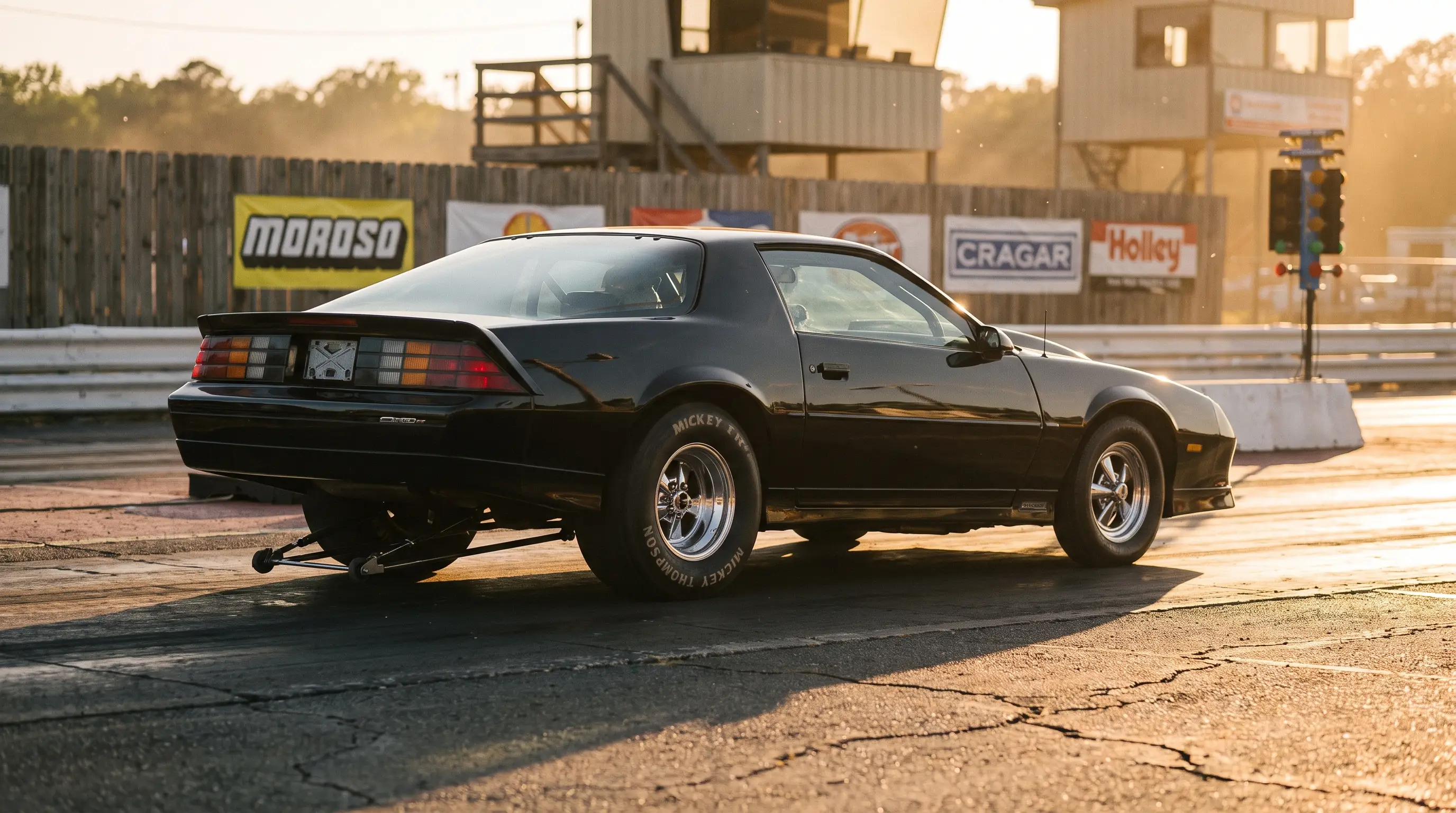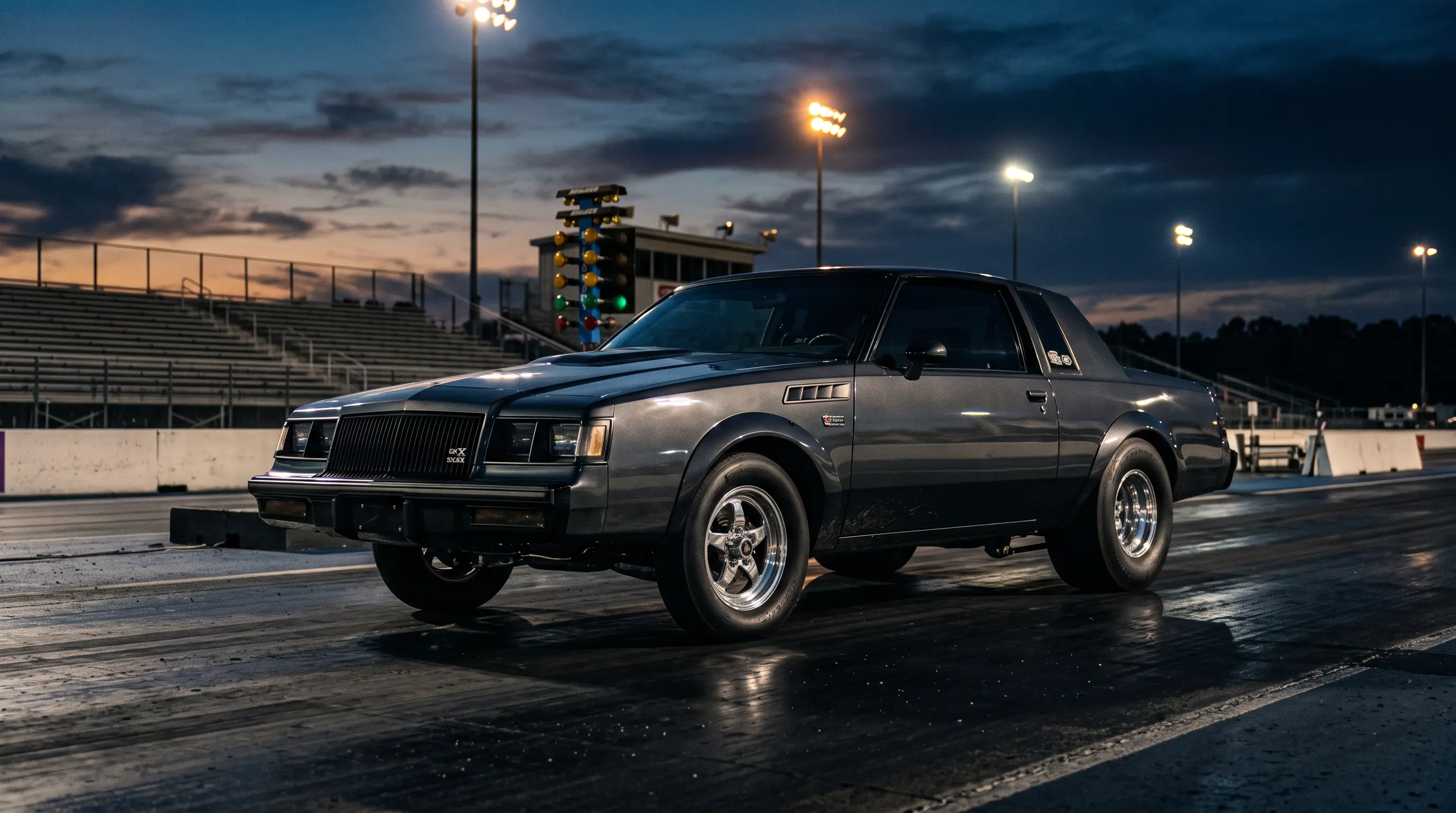
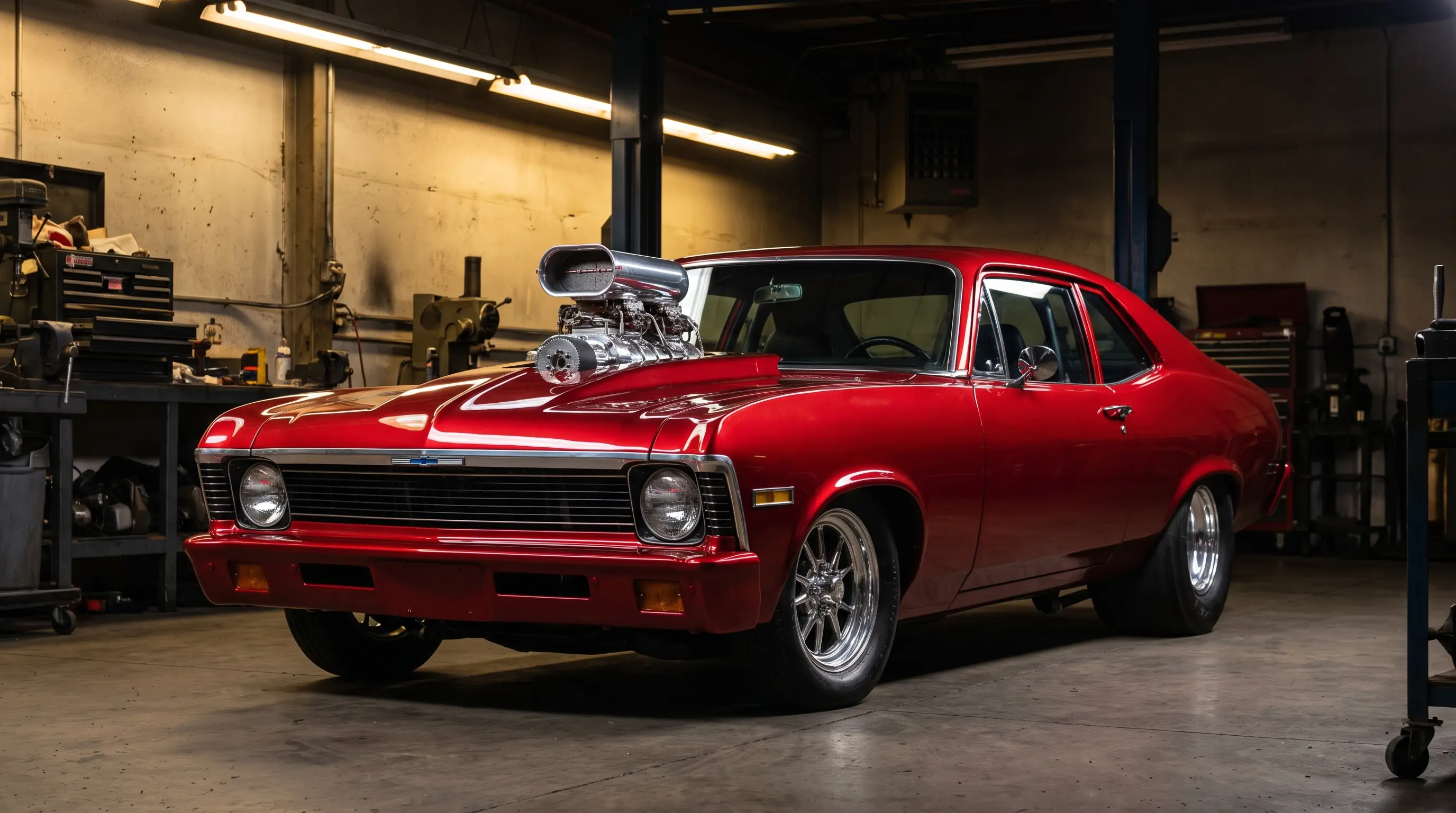
The most powerful Pro Street cars were never quiet about it. A tubbed Nova with an 8-71 blower jutting through a shaved hood is not a subtle car, and it was never meant to be one. Pro Street built its reputation on big power numbers wrapped in a street-legal body, and by the mid-1980s the movement had produced some genuinely wild machines that blurred the line between magazine feature and drag strip weapon.
Why Pro Street chased horsepower the way it did
Pro Street grew out of the drag racing pits of the late 1970s, when builders started taking full-tube chassis and tunnel-ram intakes out of purpose-built race cars and stuffing them into cars that still had license plates. The goal was simple: build something that looked like it belonged at the track but could still drive to the grocery store. Horsepower was the currency that made the whole thing believable. A car with skinny front tires and huge rear slicks needed an engine that justified the stance, otherwise it was just a costume.
That pressure pushed builders toward big-block Chevys, Mopar wedge motors, and Ford FEs, often fitted with 6-71 or 8-71 GMC blowers pulled straight from diesel truck applications. Readers who want the mechanical backstory on how those blowers ended up on street cars should check more on the pro street muscle cars that carried them, since the platform choice and the engine choice were never separate decisions.
The cars that set the horsepower bar
A handful of builds became the benchmark that everyone else measured against. Rick Dobbertin's twin-turbo, twin-blown Pontiac J-2000, with its all-alloy small-block running dual Roto-Master turbos, dual Magnuson superchargers, and a nitrous system on top, became the poster child for how far a Pro Street build could be pushed, running quarter-mile times in the 9-second range and influencing an entire generation of builders chasing outrageous numbers in a street-legal body. On the more attainable end, countless amateur-built Novas, Camaros, and Mopar A-bodies ran blown big-blocks putting out somewhere in the 600-900 horsepower range on gasoline, numbers that would have been unthinkable in a driveway car a decade earlier.
Nitrous played a role too. Builders who could not justify a full blower setup, or who wanted a cleaner engine bay for magazine photos, often ran big-block or small-block combinations with multi-stage nitrous systems that could add several hundred horsepower on demand. It was cheaper than a blower and easier to hide, though it lacked the visual drama that made Pro Street famous in the first place.
Weight, gearing, and the honest limits of the numbers
Raw horsepower figures from the era deserve some skepticism. Dyno culture in the 1980s was inconsistent, and builders often quoted crank horsepower estimates rather than measured rear-wheel numbers. A blown 454 claimed at 750 horsepower might have made closer to 600 at the tires once drivetrain loss was accounted for. That does not make the cars any less impressive, but it explains why two builders with seemingly identical combinations sometimes reported very different outputs.
What mattered more on the street was the combination of power and weight. A tubbed Chevelle stripped of its interior, sound deadening, and glass could shed several hundred pounds compared to a stock car, which meant even a moderately built blown big-block felt far quicker than the horsepower number alone suggested. That power-to-weight math is part of why Pro Street cars could run mid-10s or quicker in the quarter mile while still technically qualifying as street cars.
"Nobody was building these cars to win a dyno contest. They were building them to be the loudest thing in the parking lot and still make it home under their own power."
- Patrick Walsh
How the power race shaped the look of Pro Street
The chase for horsepower is the reason Pro Street cars look the way they do. Tubbed rear wheel wells exist because slicks wide enough to hook up 700-plus horsepower will not fit under a stock quarter panel. Altered wheelbases and narrowed rear ends exist for the same reason. Even the cosmetic choices, like acid-dipped hoods with a blower scoop cut into them, trace back to a practical need: you cannot run an 8-71 blower under a stock hood line, so the hood had to go.
For readers who want the full arc of how the movement developed from strip to street, our complete history covers the era in more depth, including the shift from pure race cars to the show-and-go builds that defined Pro Street's golden years in the 1980s and 1990s.
Reading old horsepower claims with the right skepticism
Anyone digging through old magazine features from the 1980s will notice how often the horsepower figure changes depending on the source. A builder interviewed at a car show might quote one number, the same car's dyno sheet from a few years later might show something quite different, and neither figure is necessarily dishonest. Dyno technology, correction factors, and even atmospheric conditions on the day of the pull could all shift a reading by a meaningful margin. Add in the fact that many builders never dynoed their cars at all and instead estimated output based on published specs for similar combinations, and it becomes clear why chasing a precise, verified number for a specific 1980s Pro Street car is often harder than it sounds.
That is not a reason to dismiss the era's reputation for big power. It is a reason to treat any specific figure attached to a specific car with a bit of caution unless there is documentation to back it up. A period dyno sheet, a receipt from an engine builder describing the exact combination, or consistent quarter-mile times that support the claimed output all carry more weight than a number repeated secondhand in a magazine caption decades later.
Comparing the era's power race to what came before it
It helps to remember what these builders were working against. Factory muscle cars of the late 1960s rarely exceeded 450 horsepower even in their most aggressive factory tune, and emissions regulations through the 1970s gutted even those numbers before Pro Street existed as a movement at all. Against that backdrop, a home-built car making 700 or 800 horsepower on the street, whatever the exact verified figure, represented an enormous leap forward that factory engineering simply was not offering at the time. That gap between what Detroit was selling and what a determined builder could assemble in a garage is a big part of why Pro Street captured so much attention when it emerged, and why the horsepower race stayed central to the movement's identity for as long as it did.
Where the most powerful builds stand today
Modern builders working on classic bodies also benefit from far better data than their predecessors had. Wideband oxygen sensors, standalone engine management, and consistent chassis dyno testing mean a contemporary Pro Street build can verify its output with a precision that simply was not available to a garage builder relying on a borrowed dyno session or an educated guess. That transparency has, in some ways, made the modern numbers more trustworthy even as they have grown larger than anything from the original era.
The modern revival has, if anything, pushed the numbers higher. Builders working today have access to aftermarket EFI systems, forged rotating assemblies, and blower packages that were simply not available to a garage builder in 1985. A contemporary Pro Street build on a classic body can realistically make over 1,000 horsepower with far better reliability and driveability than anything from the original era managed. That said, the cars that carry real weight with collectors are still the period-correct originals, the ones with documented history and a build sheet from the actual golden era rather than a modern recreation.
Anyone chasing that history in person rather than in a magazine feature should look at classic Pro Street cars on the market, where surviving examples occasionally surface with their original blower setups and documentation intact. Those cars are getting harder to find every year, and the ones with a verifiable horsepower history from period dyno sheets or race records command a real premium over unverified claims.
Sources and notes
- Pro Street: A Look Back At The Bow-Tie Style That Never Gets Old - Chevy Hardcore
- 1985 Pontiac J-2000 - Dobbertin Performance
- Interview: Rick Dobbertin on his Pontiac J2000 pro streeter - Street Machine
- WTF Friday: Rick Dobbertin's Pontiac J-2000 - Stance Is Everything
- Wally Elder's Outrageous '69 Daytona Is A "Pro Street" Throwback - Dragzine