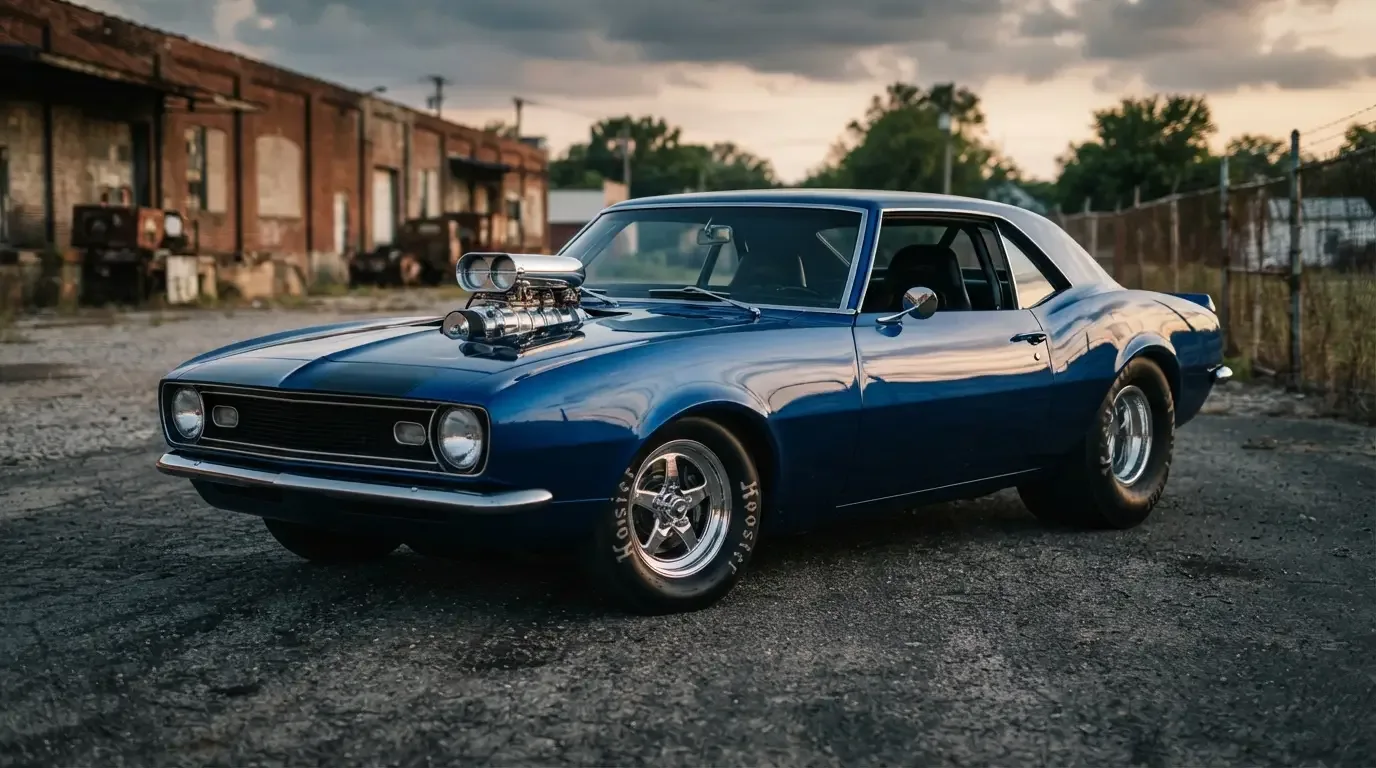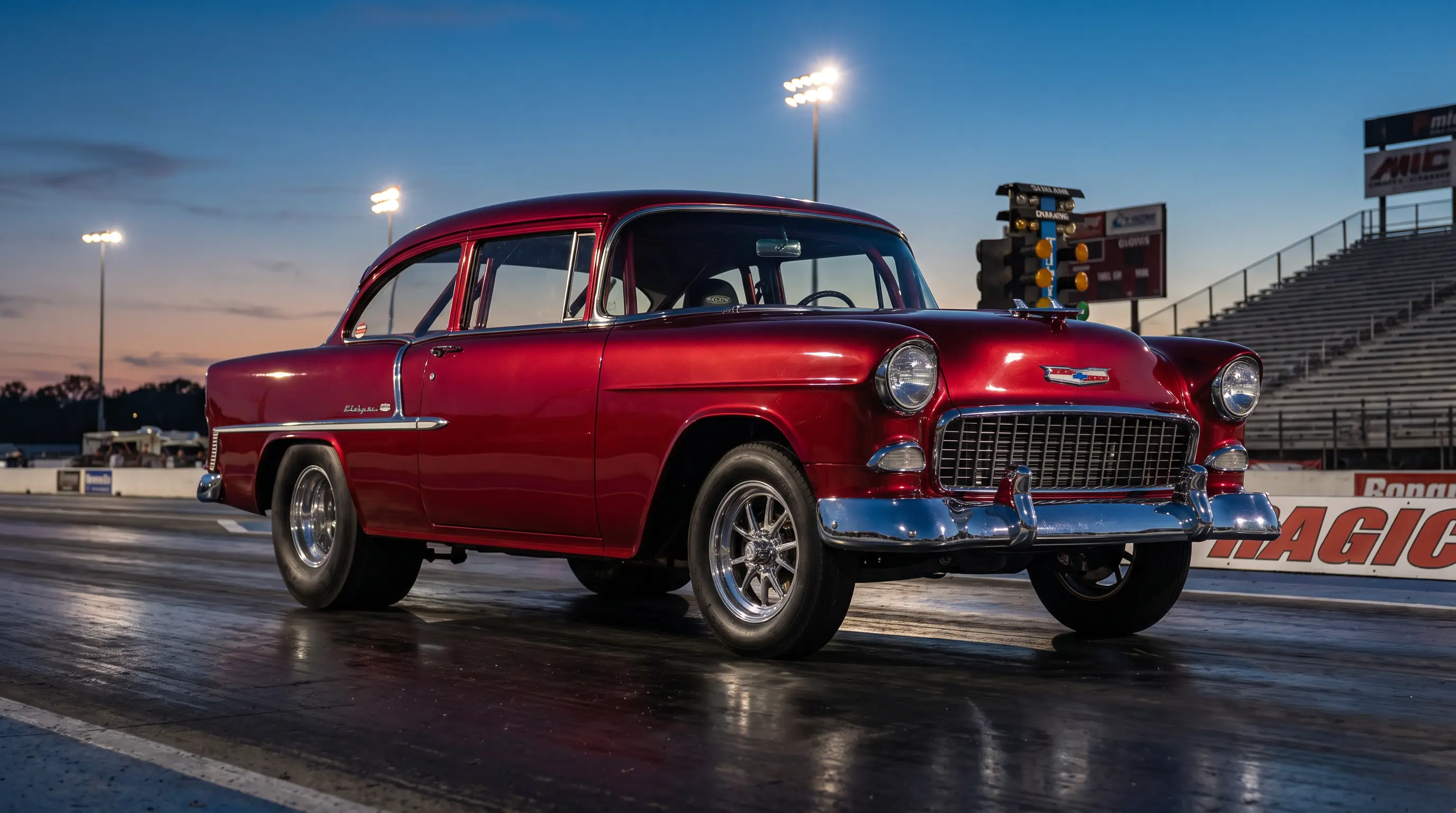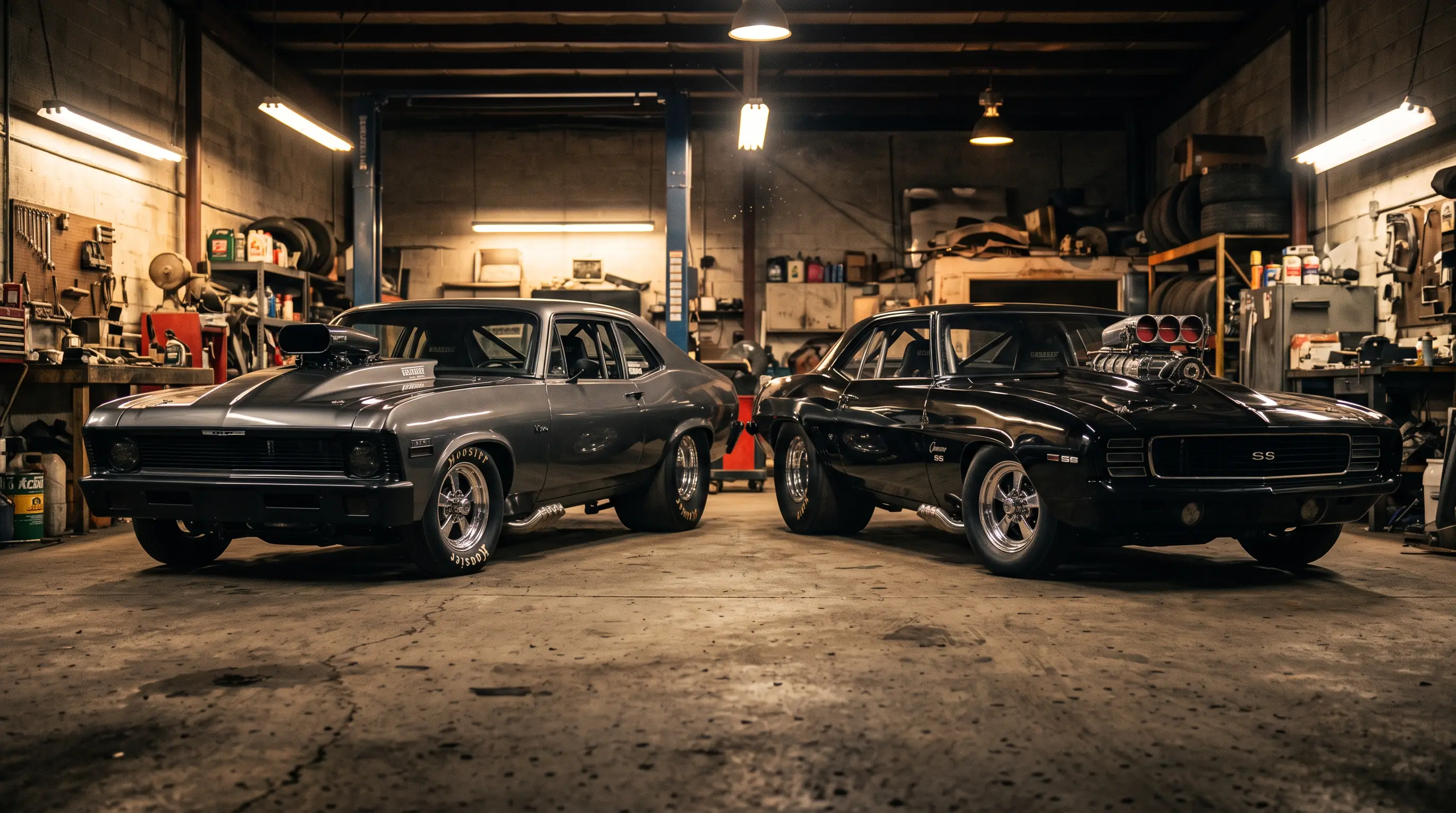
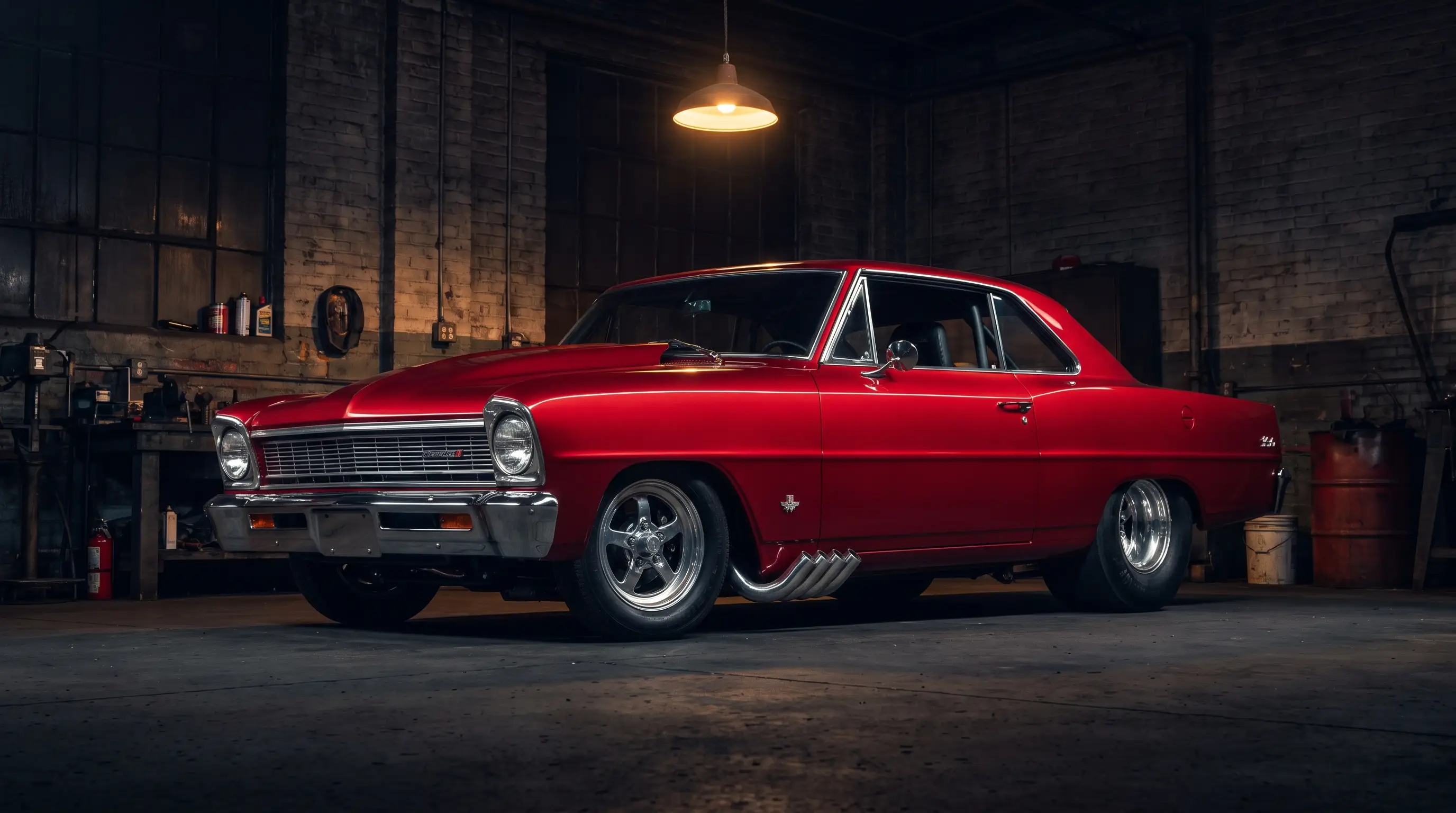
The first time I saw a Pro Street Chevy II up close, it was parked crooked across two spaces at a Saturday cruise-in outside Dayton, tires so wide the rear quarters had been cut and boxed to swallow them. The owner, a retired machinist named Gene, was leaning against the fender telling anyone who'd listen that his car started life as a $400 rust bucket. That is the Chevy II story in miniature. It was never the car anyone expected to become a Pro Street icon, and that is exactly why it did.
A compact nobody wanted twice
Chevrolet built the Chevy II from 1962 through 1979, and for most of that run it was appliance-grade transportation, a Nova-badged commuter car bought by people who needed cheap wheels and did not care about image. That reputation is precisely what made it valuable to drag racers in the late 1970s. A car nobody wanted was a car nobody had inflated the price on. Junkyards were full of them, parts cars sold for lunch money, and the unibody was light enough that stuffing a big block up front actually made sense on paper.
Pro Street builders who came up through NHRA gasser and Super Stock classes already knew the Chevy II platform from a decade of straight-line competition. When the street-driven big-tire look took hold in the early 1980s, those same builders reached for the car they already understood, and the pro street chevy ii became a fixture at every regional car show instead of just the strip.
Why the body worked for the tub-and-tire look
The Chevy II's narrow stock rear quarters were both a problem and an opportunity. Builders had to notch the frame rails, box the rear wheel tubs, and often relocate the rear axle centerline just to clear a set of ten or twelve-inch-wide slicks. Because the factory sheet metal was thin and the trunk floor was simple, that surgery was more straightforward than on a heavier GM A-body. A skilled fabricator could tub a Nova in a weekend that would take two on a Chevelle.
The front end told the opposite story. Pro Street cars kept a stock-width front track for the visual rake, so a tubbed Chevy II sat with its skinny front tires tucked under stock fenders and its rear end filled to the wheel lips, an exaggerated stance that became the genre's visual shorthand. Read the background on how that same wide-front, narrow-rear proportion shaped the whole movement across GM's muscle car lineup.
Engines that defined the build
Small block Chevy power was the default, and for good reason. A 350 or a stroked 383 fit the Chevy II's engine bay with room to spare, and the aftermarket already supported it better than almost any other American V8. But the cars that got magazine covers usually went further. Big block 454s, tunnel-ram 396s topped with dual four-barrels, and later on, blown or nitrous-fed small blocks pushing well past 600 horsepower were common on the show circuit. The lightweight unibody meant that even a moderately built engine produced eye-opening performance once the car dropped forty percent of its curb weight in sheet metal and glass.
Builders also leaned on the Chevy II's simple front subframe to run tube axles or narrowed factory spindles up front, shedding more weight exactly where a nose-up stance needed it shed. The combination of a light chassis, a huge engine, and a stripped interior made a well-built Chevy II one of the quickest street-driven Pro Street cars of its era, even against cars with twice the displacement advantage on paper.
The Nova name and the identity question
Chevrolet renamed the car Nova as the primary badge starting in the mid-1970s, and builders and magazines have used Chevy II and Nova almost interchangeably ever since, which causes genuine confusion at shows. Purists point out that the earliest and most sought-after Pro Street builds are based on the 1962 through 1967 X-body, the true Chevy II generation, before the Nova name took over. Later Nova-badged cars from 1968 through 1974 are just as common in the Pro Street world and just as capable, but they carry a slightly different silhouette that changes how the tubbed rear end reads visually.
That naming overlap is not a marketing footnote. It shapes what collectors look for at auction, since an early Chevy II with documented drag history commands more attention than a later Nova with an unclear past, even when the mechanical build is nearly identical.
"Every Chevy II guy I know has the same origin story. Somebody's uncle had one rotting behind a barn, and it turned into the fastest thing at the cruise-in because nobody respected it enough to leave it alone."
- Wayne Coburn
Club culture kept the platform alive
Regional Chevy II and Nova clubs did more to preserve this corner of Pro Street history than any single collector could have. Through the 1990s, when interest in tubbed street cars dipped as pro touring style handling builds took over magazine covers, it was local car club members trading parts, sharing build notes, and keeping cars running rather than parting them out that kept the Pro Street Chevy II from disappearing. I have sat in more than one clubhouse meeting where the argument was not about horsepower but about whether a particular tub job used the correct year tail lamp housings, which tells you how seriously this small community takes documentation.
That club-driven preservation matters now more than ever, because the builders who did this work by hand in their home garages are aging out of the hobby. The next generation of owners increasingly relies on the photographs, magazine clippings, and word-of-mouth records those clubs kept, since factory paperwork on a car that was cut apart and reassembled decades ago rarely survives on its own.
Where the cars stand today
Original, unmolested Pro Street Chevy IIs from the genre's 1980s and 1990s heyday are becoming scarcer, since many were later untubbed and returned to stock configuration once resale values on unmodified muscle cars climbed. The ones that survive with their original tub work, period-correct wheels, and documented build history draw real interest from collectors who grew up watching these cars at NSRA and Goodguys events. If you are chasing that history yourself, you can find a classic Pro Street car from this era without much trouble, since the platform's affordability decades ago means plenty of survivors are still floating through the hobbyist market rather than locked in permanent collections.
Talk to enough club members and you hear the same refrain Gene gave me that Saturday morning: the Chevy II earned its reputation the hard way, on cars nobody expected much from. That underdog story is still the reason people build them.