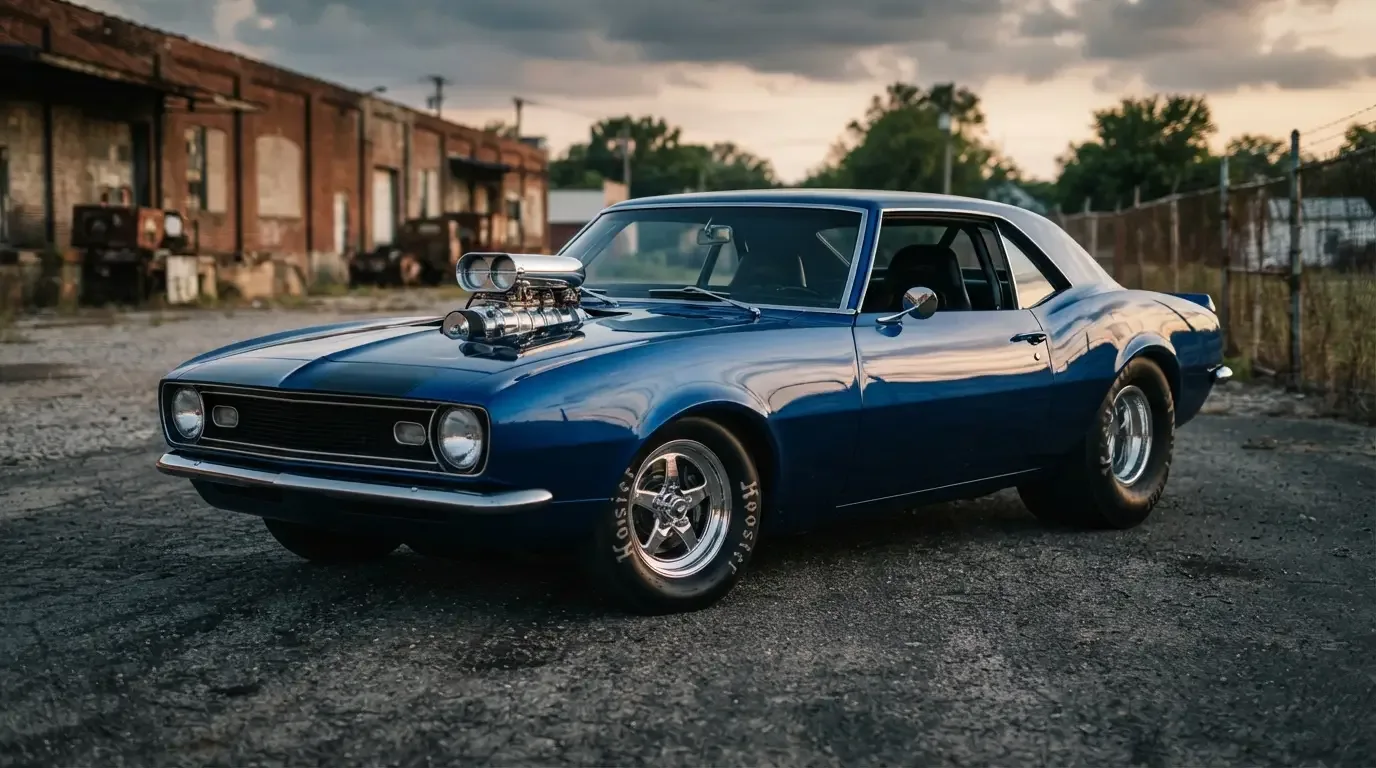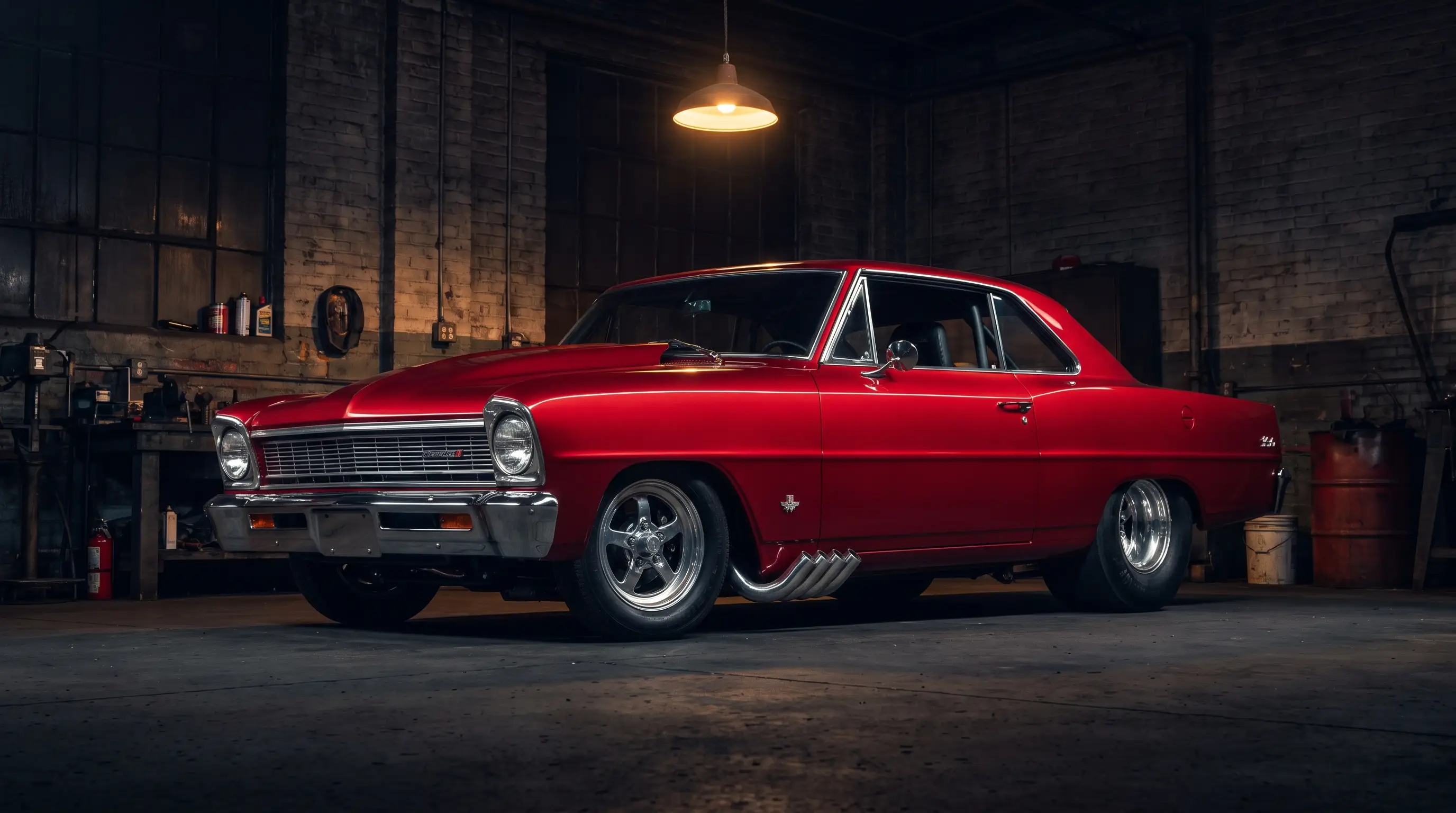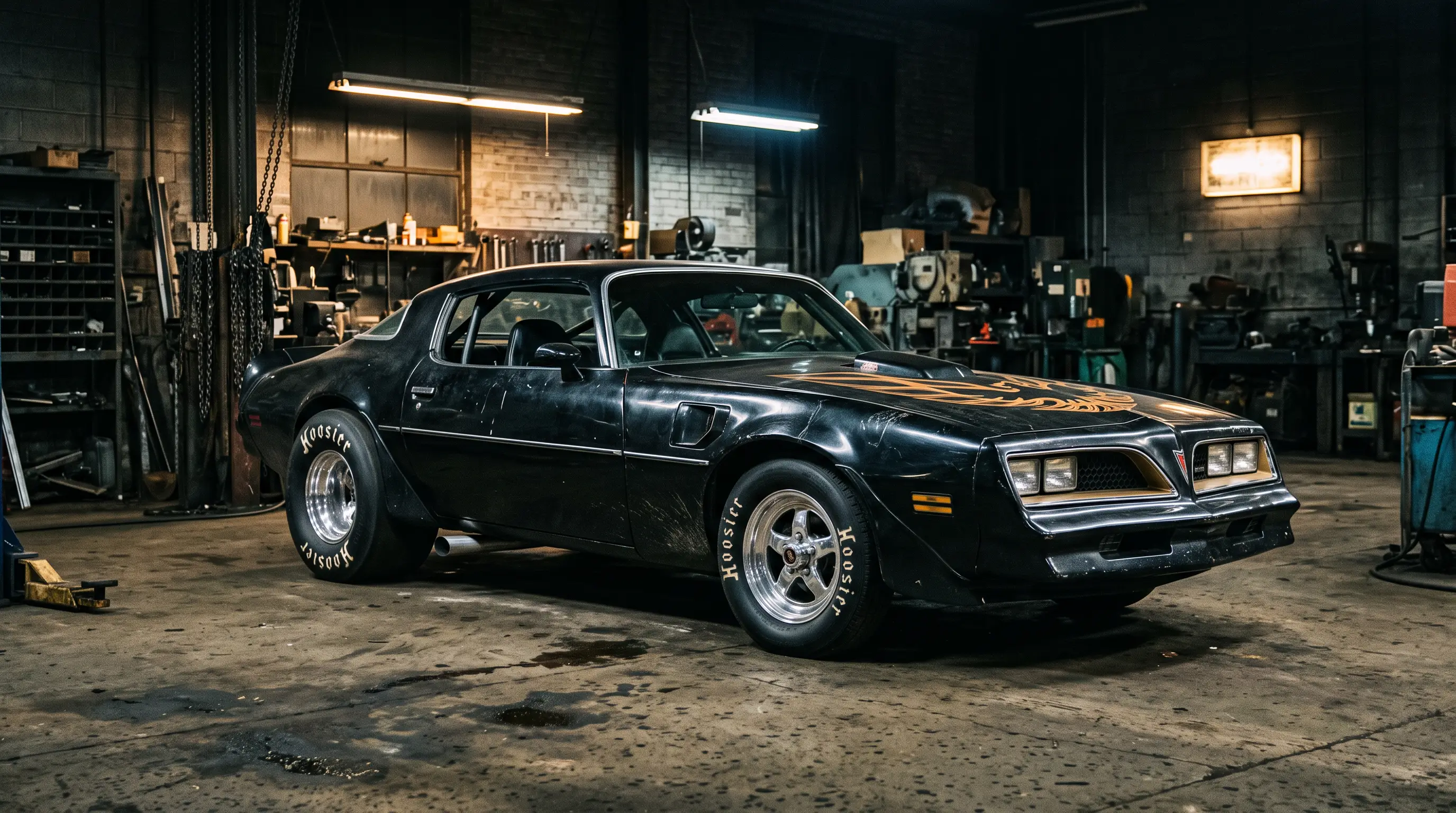
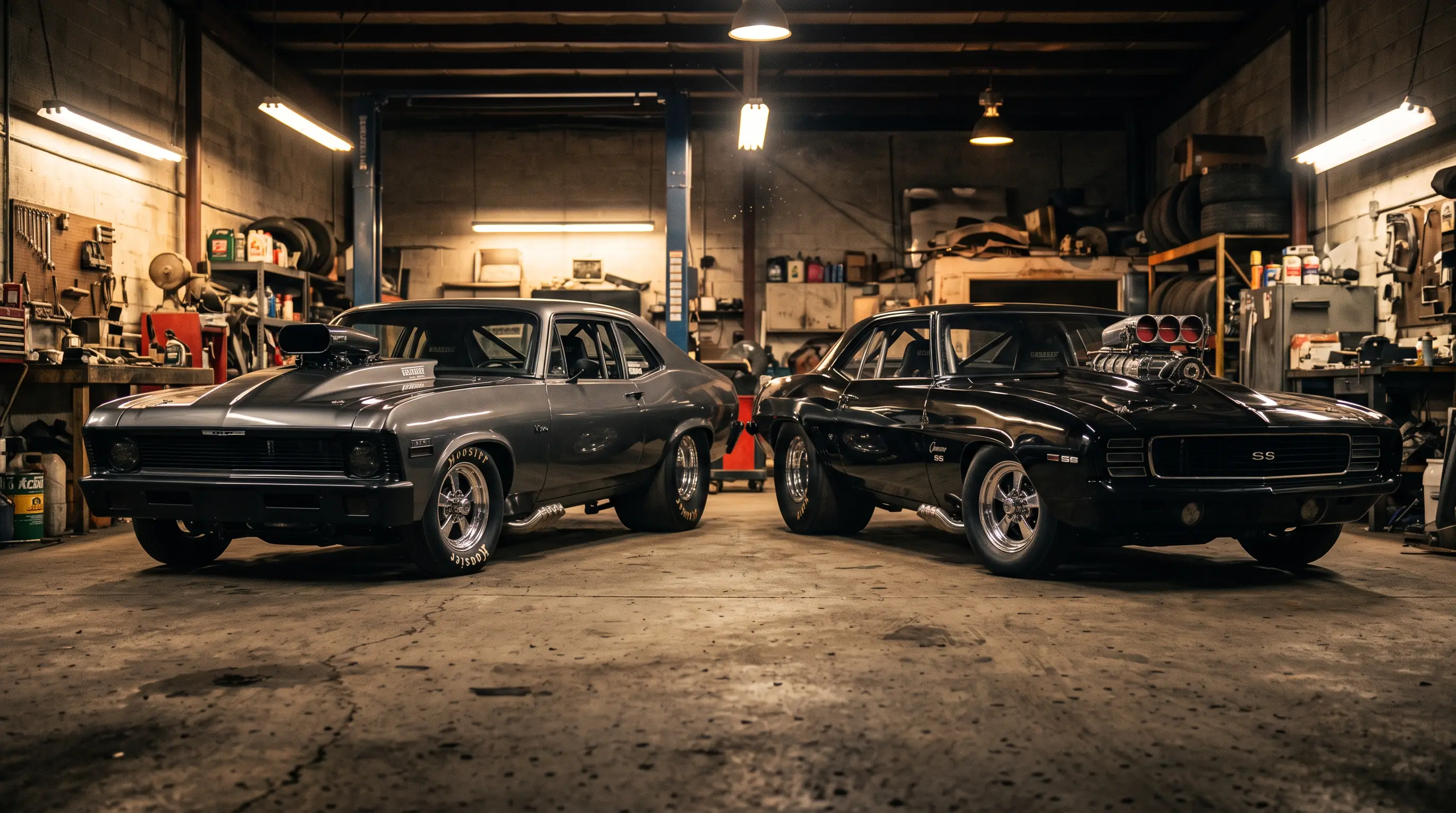
Ask ten guys at a Pro Street show whether a Nova or a Camaro makes the better build, and you will get eleven answers, half of them shouted. The pro street nova vs camaro argument has been going on in Chevy garages since the early 1980s, and it is not really about which car is faster. It is about which platform a builder trusts, and trust in this hobby is earned one weld at a time.
Weight is where the argument starts
The Nova, built on GM's compact X-body, is lighter than a first or second generation Camaro out of the box. Strip both down to a bare shell and the Nova usually gives up less curb weight to begin with, which matters on a Pro Street build where the whole point is stuffing a huge engine into a light car. A lighter starting point means the finished car needs less horsepower to hit the same numbers, and less horsepower means less stress on the driveline every time you leave the line hard.
That said, weight on paper does not always match weight in the driveway. Camaros came with more sound deadening and trim in some trims, but they also had a stiffer unibody in key areas, which matters once you start cutting floor pans and boxing frame rails for tub work. A Nova shell can get flexy fast if the notch and tub work is not braced correctly. A Camaro tolerates sloppy fabrication a little better. Neither fact should make your decision for you, but both are worth knowing before you buy a project car sight unseen.
Sheet metal availability and what it costs you
Here is the honest, unglamorous truth: Camaro reproduction sheet metal has been better supported by the aftermarket for longer, especially for first-generation 1967 through 1969 cars. Fenders, quarter panels, floor pans, you name it, and there is a decent chance somebody stamps a reproduction version. Nova sheet metal support has caught up quite a bit over the last fifteen years, but for certain trim pieces and some of the less common body styles, you are still hunting swap meets and online forums instead of just ordering from a catalog.
That difference shows up in build cost more than build quality. A rust-compromised Nova project can turn into a parts-hunting expedition that eats months. A rust-compromised Camaro project is usually just a matter of writing a bigger check to a supplier and waiting for the mail.
How each car wears the wide-tire stance
Visually, these two cars carry the classic Pro Street proportions differently. The Camaro's longer hood and more aggressive factory rake already look like they are leaning into a launch, so a tubbed rear end and a set of slicks reads as an extension of the factory design language rather than a departure from it. The Nova's boxier, more upright greenhouse gives the tub-and-tire look a scrappier, more industrial character, less muscle car glamour and more hot rod attitude. The whole picture of how GM's platforms shaped the Pro Street look is worth understanding before you settle on either body style.
Neither look is objectively better. It comes down to what you want people to feel when they see the car sitting in the staging lanes.
Engine bay realities nobody tells you upfront
A big block fits either engine bay with modification, but the Camaro's slightly longer nose gives you a hair more room for headers and accessory clearance, which matters once you are wrenching on the car at midnight trying to get it street legal before a show. The Nova's tighter bay rewards builders who plan header routing before the engine goes in rather than after, because there is less room to improvise once things are bolted down.
Cooling is another quiet difference. The Camaro's radiator support geometry generally allows for a larger core without major surgery. Nova builders often end up custom-fabricating a radiator mount or running an electric fan setup earlier in the build than they planned, just to keep a big block from cooking itself at a stoplight on a summer cruise.
| Factor | Nova | Camaro (first-gen) |
|---|---|---|
| Base curb weight | Generally lighter | Slightly heavier |
| Reproduction sheet metal | Improving, still spotty in places | Broadly well supported |
| Engine bay room | Tighter, rewards planning | Slightly more forgiving |
| Visual stance with tub-and-tire | Scrappy, hot rod character | Muscle car glamour |
"I've built both. The Nova rewards a builder who measures twice. The Camaro forgives you when you don't. Neither one is the wrong answer, but know which builder you are before you pick."
- Mike Sullivan
Resale and the collector's math
Money talks louder than nostalgia at auction, and the numbers on these two platforms tell their own story. A first-generation Camaro with a well-documented Pro Street build history generally commands a stronger price than an equivalent Nova, simply because the Camaro name carries more recognition outside the hardcore GM crowd. That is not a knock on the Nova. It is a reflection of how much broader the Camaro's fan base has always been, stretching well past drag racing and street machine circles into the general muscle car collector world.
For a buyer chasing value rather than prestige, that gap can work in your favor. A Nova build with equally serious fabrication and a strong engine combination often sells for less than a comparable Camaro, which means the platform that gives up a little name recognition can give you more car for the same budget. Builders who know this have quietly been buying up well-documented Pro Street Novas for years, betting that the gap narrows as the cars themselves age into genuine collector status rather than just used project cars.
What it means for buyers today
If you are shopping rather than building, the practical differences narrow considerably, since most finished Pro Street cars on the market today already have their sheet metal issues sorted out by a previous owner. What you are really buying at that point is documentation, build quality, and how well the fabrication has held up over the years. Whichever platform you lean toward, it pays to shop classic Pro Street car listings with an eye on the welds and the paperwork rather than just the paint. A pretty car with sloppy tub work is a bigger headache than an honest, plain one with documented history.
The Nova versus Camaro debate will keep going at every show for as long as both platforms exist, and that is fine. Arguments like that are half the reason people show up early with coffee in the first place, and honestly, the other half is just wanting an excuse to walk the rows before the crowds show up and start blocking your view of the cars you actually came to see.