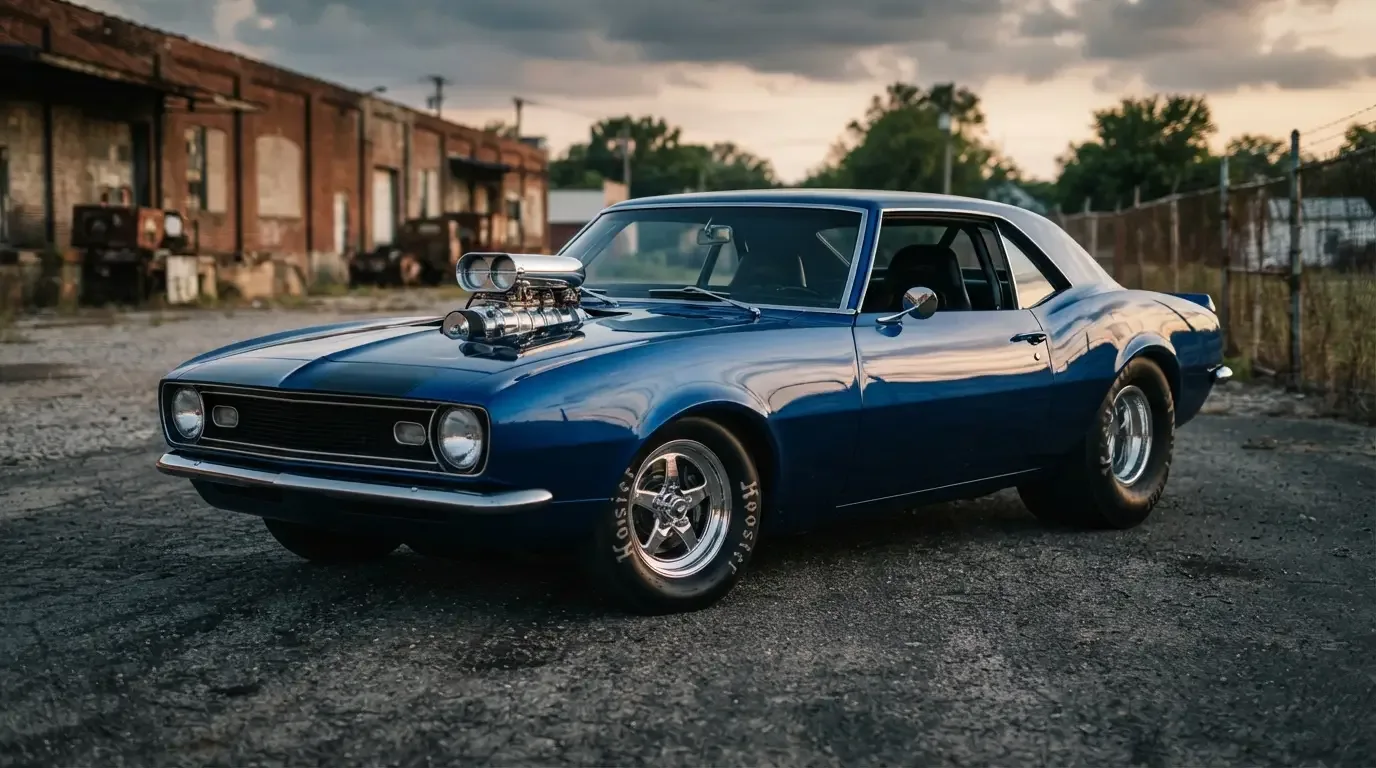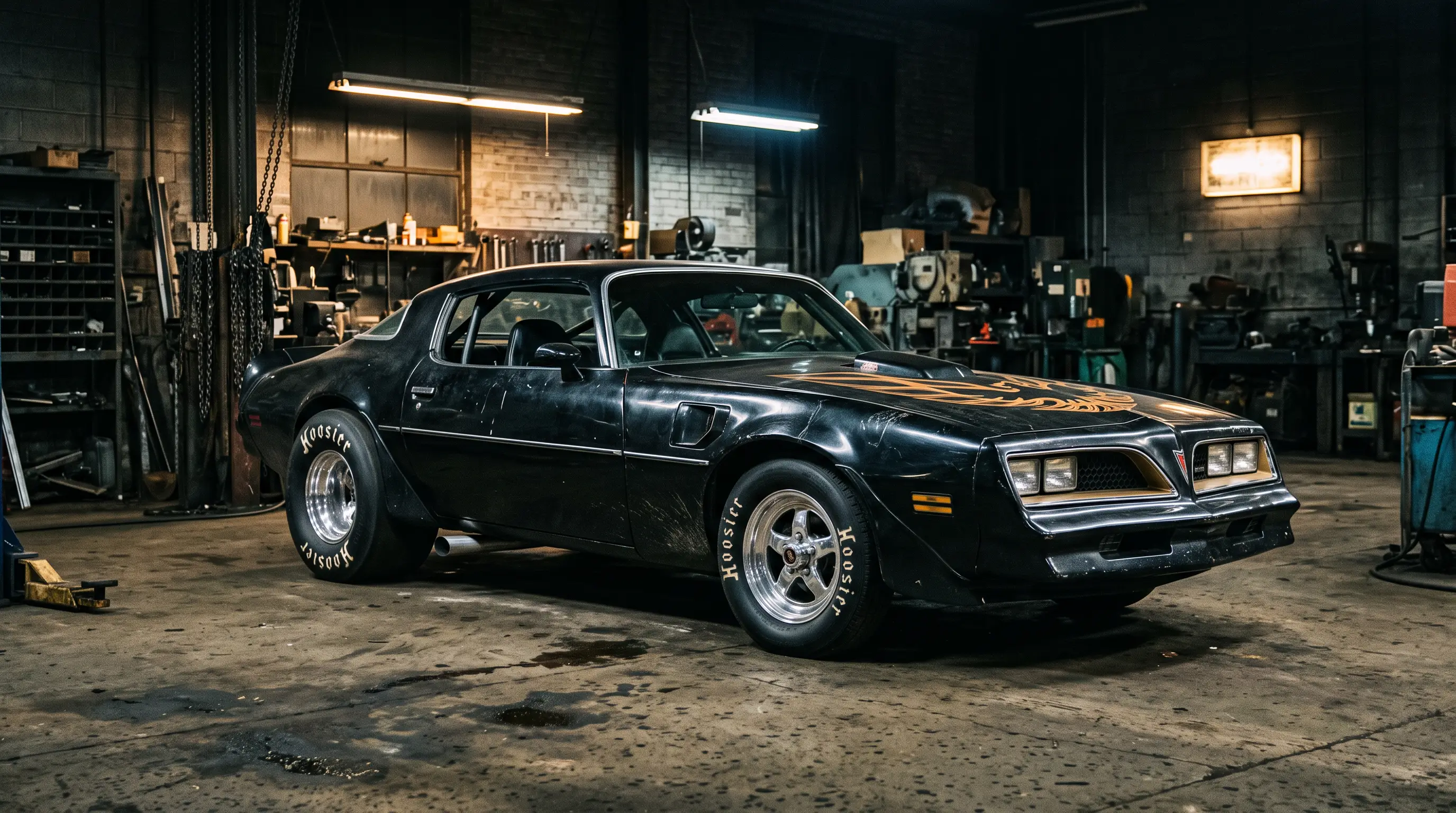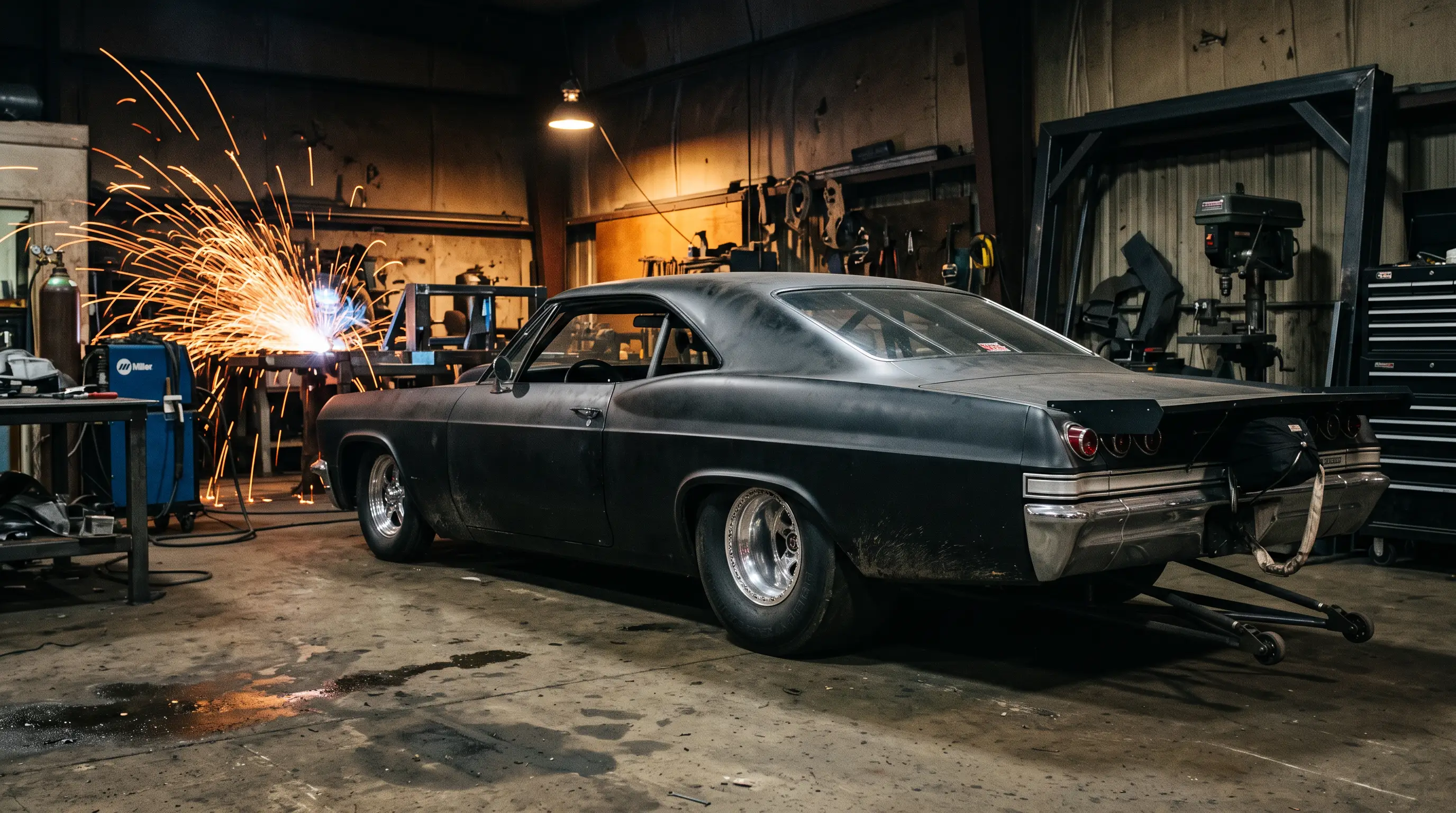
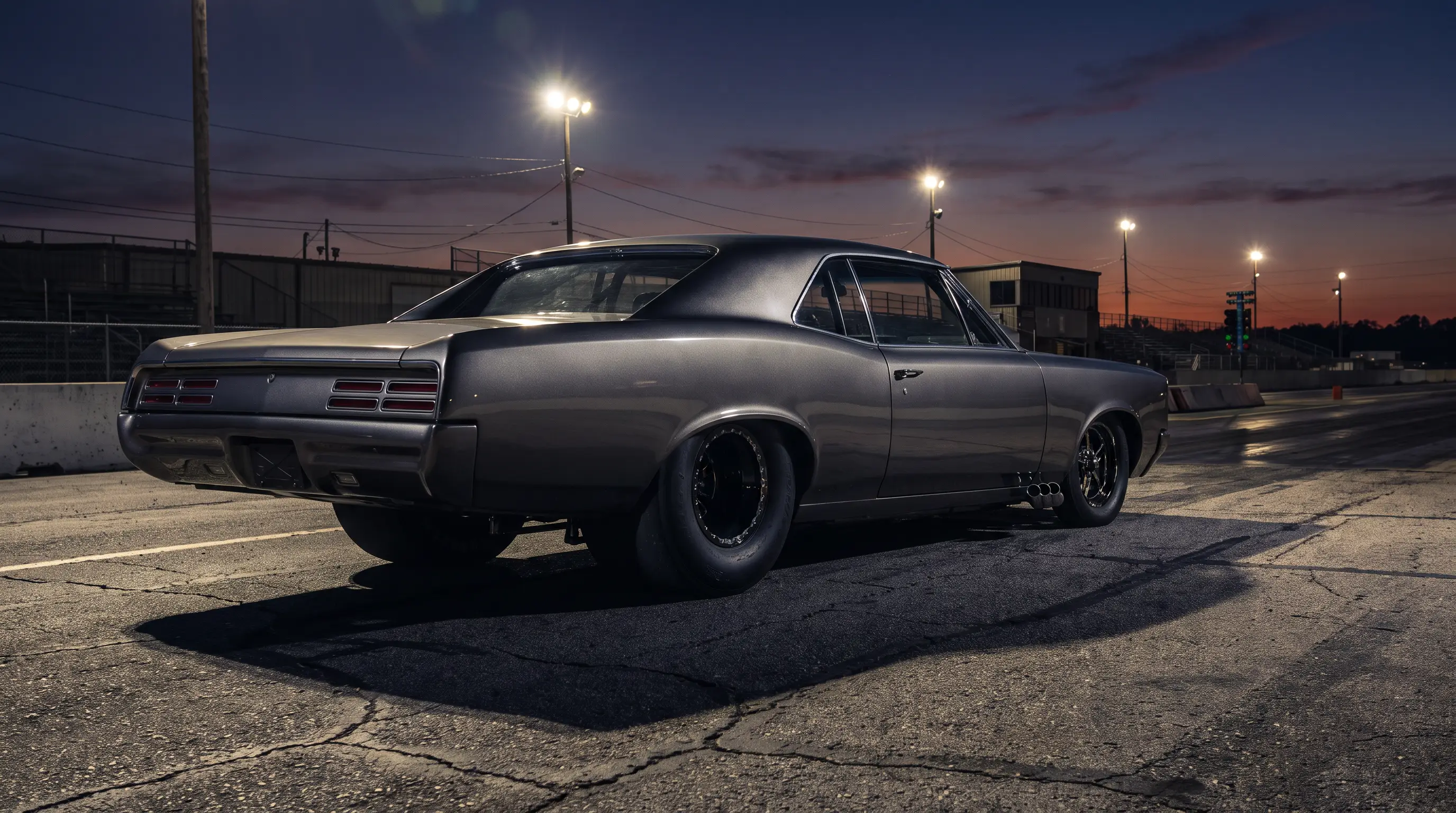
There is a fellow in our club, Ray, who still tells the story of the first time he saw a Pro Street GTO in the flesh, tucked between two trailers at an early 1980s Pontiac meet, its rear tires bulging out past the quarter panels like it had swallowed a tractor tire whole. He says half the crowd loved it and half thought somebody had ruined a good car. That split reaction is basically the whole history of the pro street gto in one afternoon.
A car with too much prestige to cut apart
The GTO was not some forgotten economy model languishing in junkyards the way other Pro Street donor cars often were. It was Pontiac's flagship muscle car, the one that arguably started the whole muscle car era back in 1964 when Pontiac dropped a big engine into a mid-size body and changed the industry, and by the time Pro Street culture took hold in the early 1980s, GTOs already carried real collector value and real sentiment. Cutting the rear frame rails and tubbing the quarters on a GTO was a bigger decision than doing the same to a base-trim Tempest or a plain Chevy II, and plenty of builders who loved the model simply would not do it, choosing instead to keep their GTOs stock and pour that same energy into a less precious project car sitting in the same garage.
The ones who did tended to be builders with a specific point to make, that a GTO could be more than a garage queen, that the car that helped invent the muscle car category deserved to keep proving itself on the street rather than sitting still under a car cover.
Which generation builders actually chose
Most Pro Street GTO builds started with 1968 or 1969 cars, the second-generation body with the split-bumper Endura front end, since that era combined strong factory performance credentials with a shape that suited the wide-tire stance. The earlier 1964 through 1967 GTOs, being closer to the original and often more valuable in stock form, were less commonly sacrificed for tub work. The later 1970 through 1974 GTOs, built during a period when Pontiac's performance reputation was already fading under emissions regulations, were sometimes chosen specifically because they carried less collector weight and less guilt attached to modifying them.
Engine choices and the Pontiac loyalty question
Like other Pontiac-based Pro Street builds, the GTO put its builders in a bind between factory-correct Pontiac power and the cheaper, better-supported Chevrolet small block and big block aftermarket. Pontiac's 400 and 455 cubic inch engines had real muscle and real history, including tie-ins to the GTO's Ram Air performance packages, but rebuilding one to Pro Street power levels cost more and took longer than sourcing an equally powerful Chevy engine. Builders who kept Pontiac power in their GTOs generally did it as a point of pride, and those cars tend to carry more weight with serious collectors today specifically because staying true to the drivetrain was the harder, more expensive road.
Builders who swapped in Chevy power were not wrong either. A Pro Street car exists to be driven hard and shown often, and a reliable, well-supported engine combination kept more of these cars on the road through decades of ownership changes than a rare, harder-to-source Pontiac mill would have.
"Ray always says the GTO guys who kept Pontiac power under the hood were making a statement every single time they popped that hood at a show. The rest of us were just trying to make it home without breaking down."
- Wayne Coburn
How the GTO's status shaped its Pro Street reputation
Because the GTO already carried muscle car royalty status before Pro Street builders ever touched one, the finished cars occupy an interesting place in the hobby. They tend to draw more scrutiny from purists at shows, more questions about what was original and what was modified, and more debate about whether the tub work was worth what it cost the car in factory-correct value. That tension has actually helped keep documentation standards higher among GTO builders than in some other corners of the Pro Street world, since owners knew from the start that people would ask hard questions about their choices. The full story of how these debates played out across GM's whole muscle car lineup gives useful context for why the GTO's case felt so much more loaded than most.
Ray's mixed-reaction crowd from that early 1980s meet never really went away. Every Pro Street GTO at a show today still splits opinion the same way, which honestly seems fitting for a car that was controversial from the moment it hit showrooms with an engine too big for its class rules.
Body style choices within the GTO family
The GTO came as a hardtop, a coupe, and a convertible across its production years, and Pro Street builders overwhelmingly favored the hardtop and coupe for practical reasons. Convertibles lose structural rigidity without their roof, and a car already having its floor pans cut and its frame notched for tub work needs whatever stock structural strength it can keep. Cutting into a convertible chassis for Pro Street modifications meant fighting flex problems that hardtop and coupe builders never had to deal with, and the extra bracing required to compensate added weight right back onto a car whose entire purpose was staying light.
That practical reality meant GTO convertibles largely stayed out of the Pro Street scene and kept their value as unmodified collector cars instead, while hardtops and coupes, being more plentiful and less individually precious in the eyes of collectors at the time, absorbed most of the tub-and-tire treatment. It is part of why surviving Pro Street GTO convertibles are almost unheard of today, and why the ones that do exist draw serious attention whenever they surface at a show.
Finding one today
Surviving Pro Street GTOs with real build history and documentation are not common, and when a genuine one turns up it tends to move fast among collectors who know what they are looking at. If you want to see what is currently out there, browsing a classic Pro Street car for sale listing is a reasonable way to get a feel for current asking prices and condition, even if you end up walking away to keep looking for the right one. Patience tends to pay off more than urgency in this corner of the hobby, and Ray would tell you the same thing over coffee at any club meeting, that the right GTO is worth waiting for even if it means walking past three tempting ones first.
Sources and notes
- Pontiac GTO - Wikipedia
- Pontiac Ram Air GTOs through the years - Hagerty Media
- 15 GTO facts you might not know about America's original muscle car - Hagerty Media
- The First Muscle Car: Pontiac GTO Through the Years - DrivingLine
- Pontiac GTO Year-by-Year: History, Engines, Production - Muscle Car Club