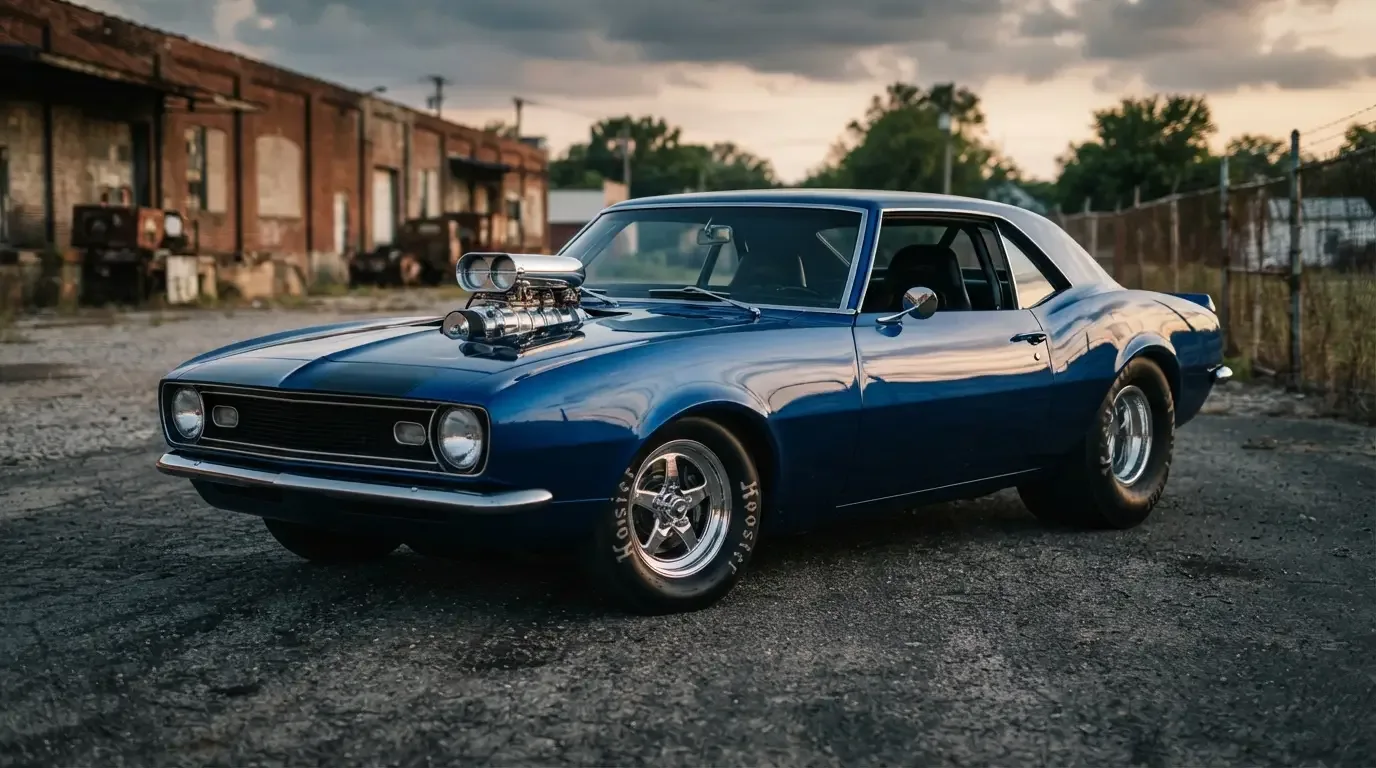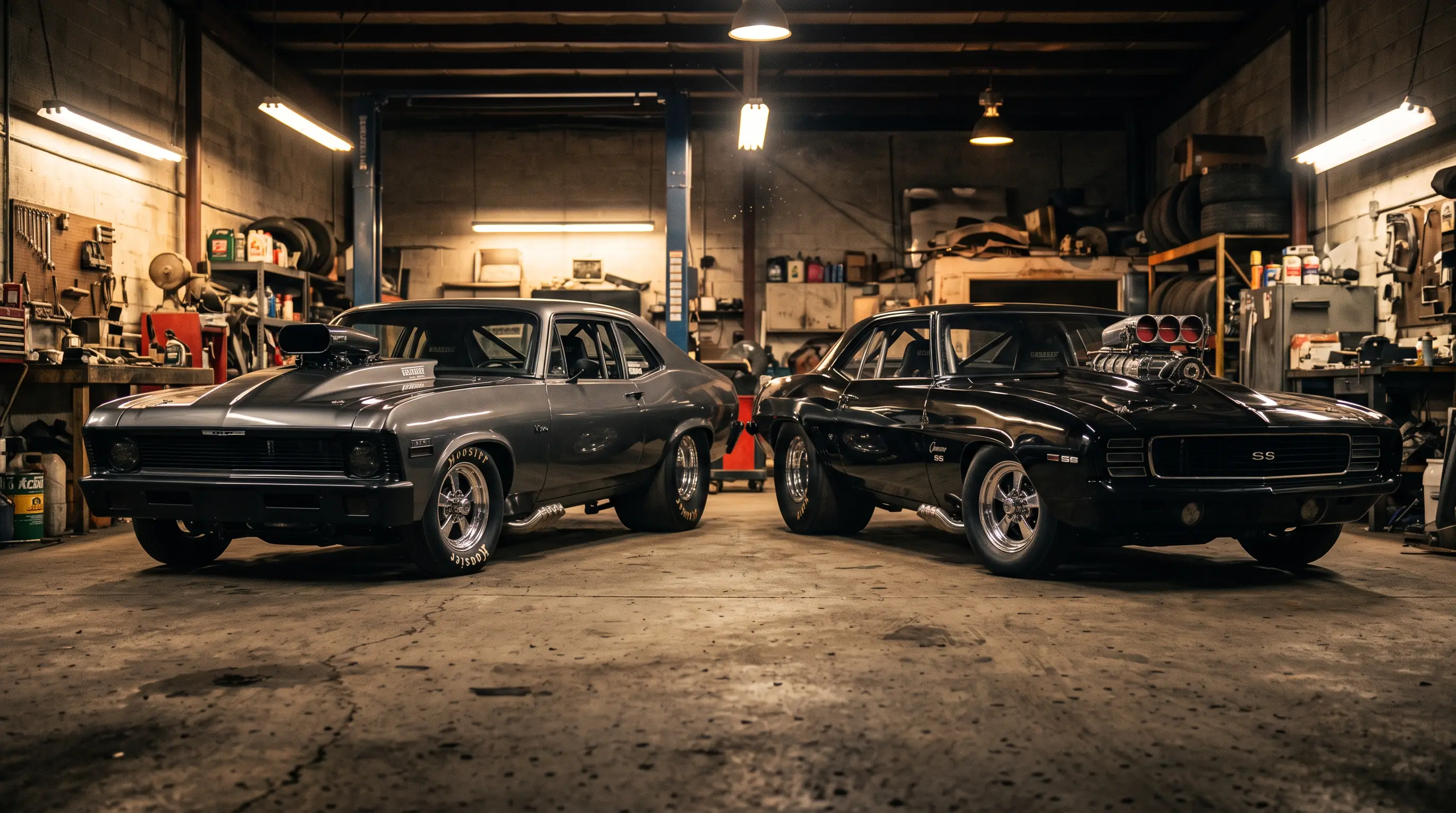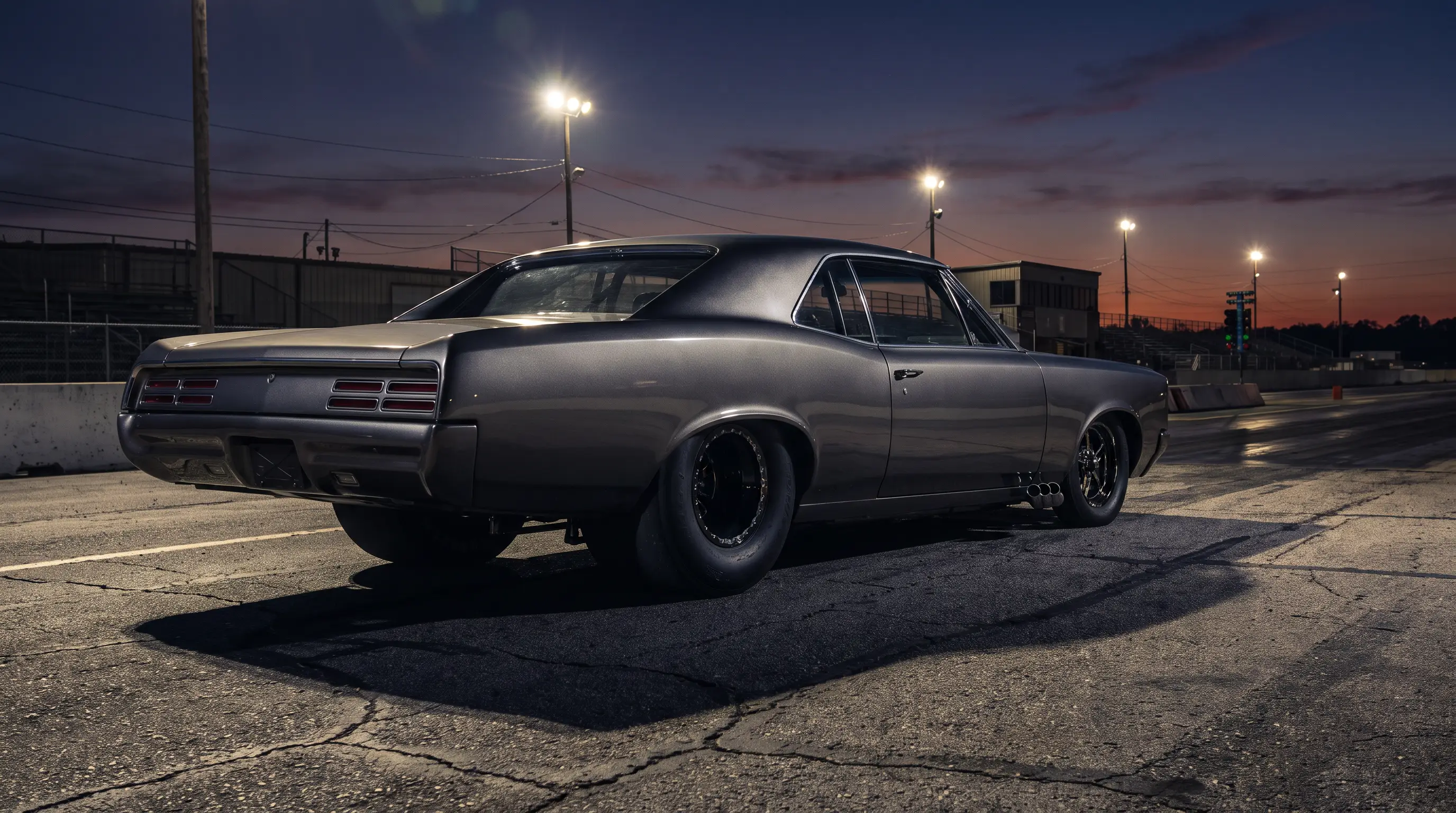
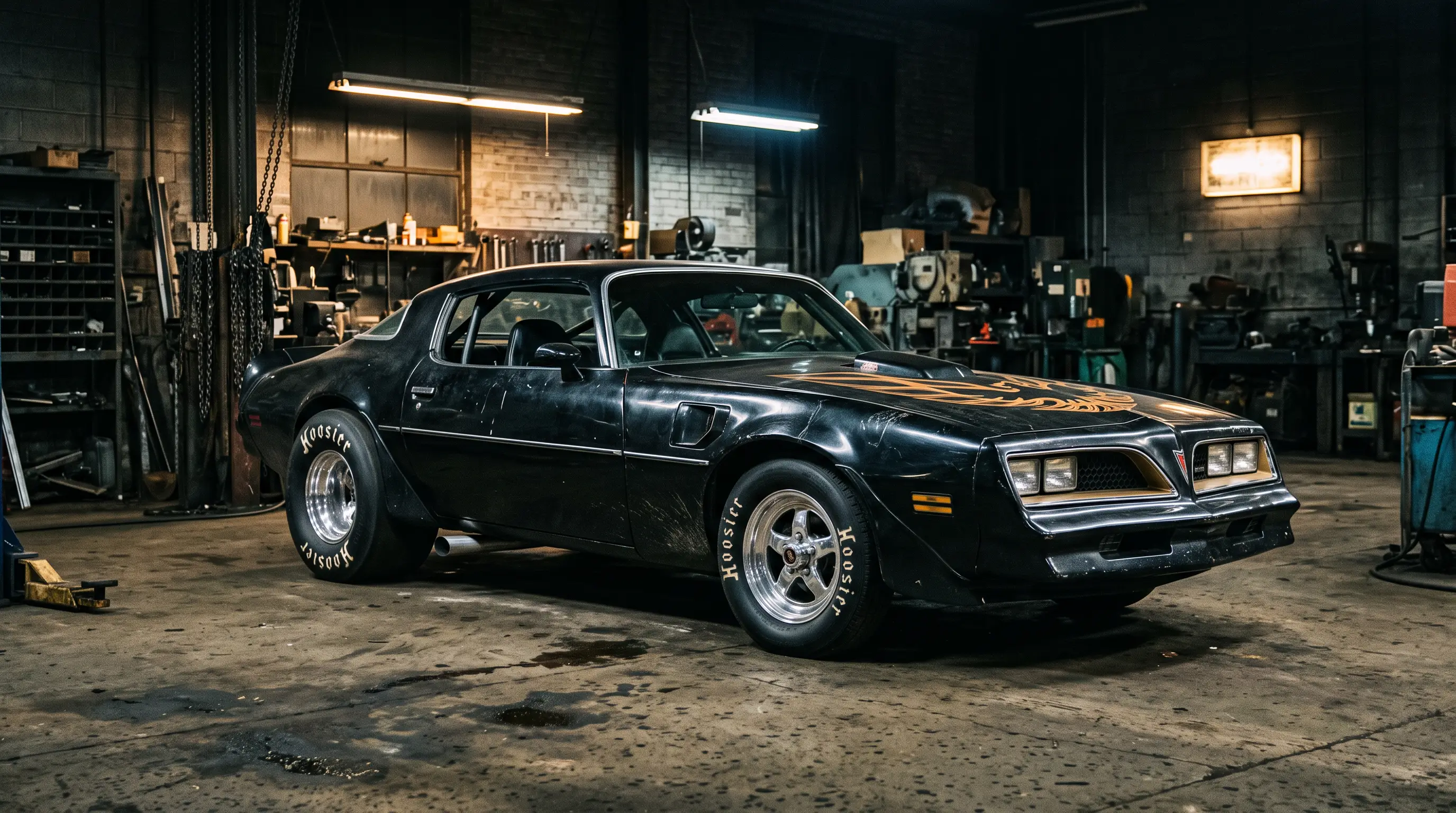
The photo that started it for a lot of people was a Trans Am parked under a strip of fluorescent light in some 1988 magazine spread, front end tucked low, rear tires so wide they looked borrowed from a tractor. The caption barely mattered. What mattered was the shape, a Firebird stretched and squatted into something that looked ready to leave the ground. The pro street firebird became one of the defining silhouettes of the whole Pro Street era, and it earned that spot the same way most cult icons do, by being weird enough to remember.
A muscle car built for a different fight
Pontiac's Firebird and its Trans Am sibling were never engineered with Pro Street in mind. They came out of the 1967 pony car wars, chasing the Mustang and the Camaro with sharp styling and, eventually, some genuinely potent factory performance packages. By the time the second-generation body arrived in 1970, the Firebird had a long, low hood and an aggressive stance that builders a decade later would recognize as a head start on the Pro Street look before Pro Street existed as a category.
That head start is part of why the Firebird translated so well into the tub-and-tire treatment. Where some platforms needed radical reshaping to look right with a stuffed rear end and a raked stance, the Firebird's factory proportions already leaned that direction. Builders were not fighting the car's design language, they were amplifying it.
Trans Am versus base Firebird as a build starting point
Purists will tell you the Trans Am is the only Firebird worth building, and there is a case for that. The Trans Am came with better factory structural bracing in certain years and the shaker hood, ducktail spoiler, and screaming chicken graphics that made the car a pop culture fixture on their own. But plenty of serious Pro Street builders deliberately chose base Firebirds and lower trims instead, precisely because they were cheaper to buy and did not carry the guilt of cutting up a numbers-matching Trans Am for tub work. A stripped Esprit or base coupe with rust in the floors was fair game in a way a documented Trans Am never quite was, even to builders who did not consider themselves collectors.
Second-gen versus third-gen as Pro Street canvases
The second-generation Firebird, built from 1970 through 1981, dominates the Pro Street world, and for good reason. Its heavier, more traditional body-on-frame-adjacent construction and generous engine bay made big block swaps and tub work relatively straightforward, and its shape simply photographed better with a wide rear stance. The third-generation Firebird that followed in 1982 moved to a more modern unibody platform that some builders found less cooperative for the extreme frame and floor modifications Pro Street demanded, which is part of why you see far fewer third-gen cars in the genre's photo archives, even though the model sold in huge numbers through the 1980s.
That generational split matters for anyone trying to understand the movement's history. The pro street muscle cars story covers how different GM platforms fared under this kind of transformation, and the Firebird's split reputation between generations is one of the clearer examples of a body style that worked brilliantly in one form and awkwardly in another.
What made the drivetrain choice interesting
Pontiac loyalists building Firebirds faced a real dilemma that Chevy builders never had to think about. Pontiac's own V8 engines, while historically significant and full of character, were heavier and less supported by the performance aftermarket than the ubiquitous small block and big block Chevrolet engines. A lot of Pro Street Firebirds ended up running Chevy power under Pontiac sheet metal, a swap that horrified brand purists but made practical sense to builders chasing horsepower per dollar. Others held the line on Pontiac power specifically because doing it the harder way was part of the point, proof that the build reflected real dedication rather than the path of least resistance, even when it meant sourcing rare cylinder heads at swap meets instead of pulling a common part off a shelf.
"You could always spot the guy who kept his Pontiac engine in a Pro Street Firebird. He'd tell you about it before you even asked, because he knew exactly how much harder he'd made his own life, and he wanted credit for it."
- Patrick Walsh
Shows, magazines, and a shape that photographed itself
Part of the reason the Firebird looms so large in Pro Street memory is simply that photographers loved shooting it. Its long hood and sloped nose created a natural vanishing point in a three-quarter shot that made the rear tire bulge look even more dramatic than it did in person, and magazine editors in the 1980s and 1990s knew it. A well-lit Trans Am on a feature spread could sell issues in a way a flatter-fendered platform sometimes struggled to match, and that visual advantage fed back into the culture. Builders chasing magazine coverage gravitated toward the Firebird partly because they knew a good photographer could make an average build look sensational, while a mediocre photo of a genuinely excellent build on a less photogenic platform might get passed over entirely.
That feedback loop between the car's shape and its media coverage helped cement the Firebird's reputation well beyond what its raw build numbers alone would suggest, and it is a big part of why the model still anchors so many Pro Street retrospectives decades later.
The Firebird's place in the collector market now
Well-documented Pro Street Firebirds and Trans Ams from the genre's golden years now draw serious attention at specialty auctions, particularly cars with magazine feature history or a known builder's name attached. That provenance matters more here than on more common platforms, since so many Firebirds were built and rebuilt multiple times over four decades that a clean paper trail is genuinely rare. Anyone curious what survives from that era can browse classic Pro Street cars on the market and see how much of the visual language from those 1980s magazine spreads is still out there, still turning heads the same way it did under that fluorescent light all those years ago. If the full arc of the movement interests you beyond just one platform, the full story traces where it all began.
The Firebird earned its spot in Pro Street history by being a shape people could not stop photographing, and four decades later, that has not changed much at all. Walk any large show today and the crowd still gathers thickest around the cars with that long hood and low, hungry stance, cameras out, exactly the way it was on that fluorescent-lit magazine floor back in 1988.