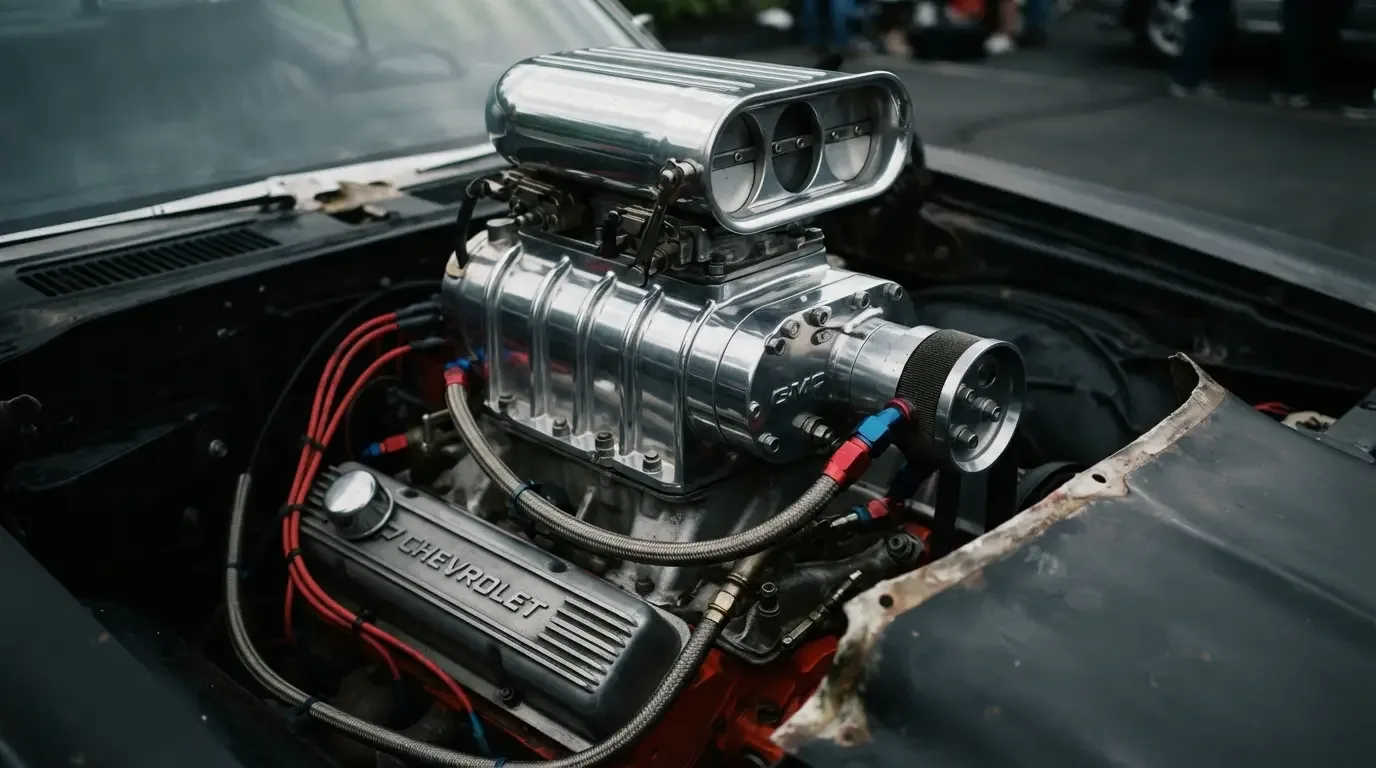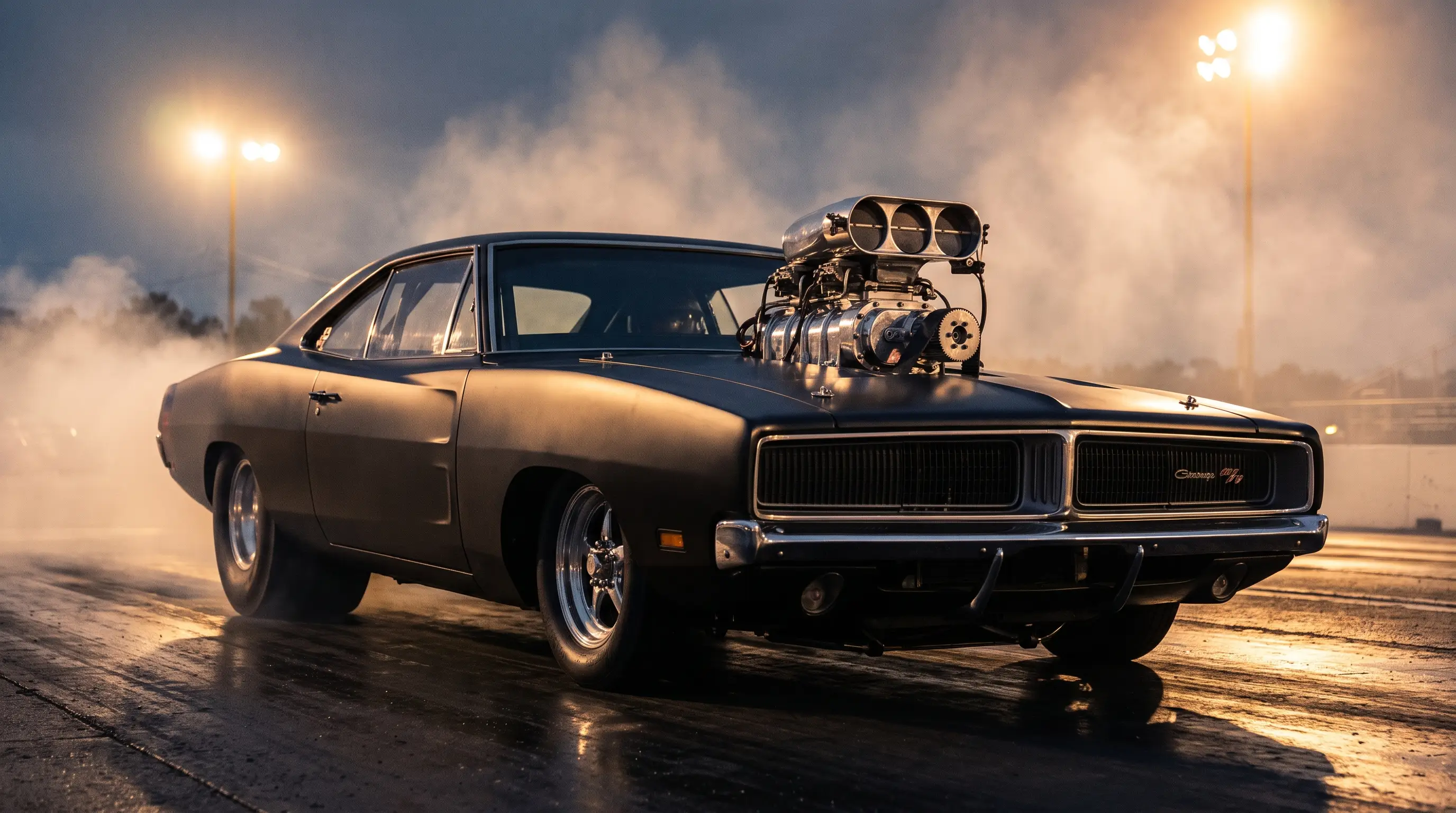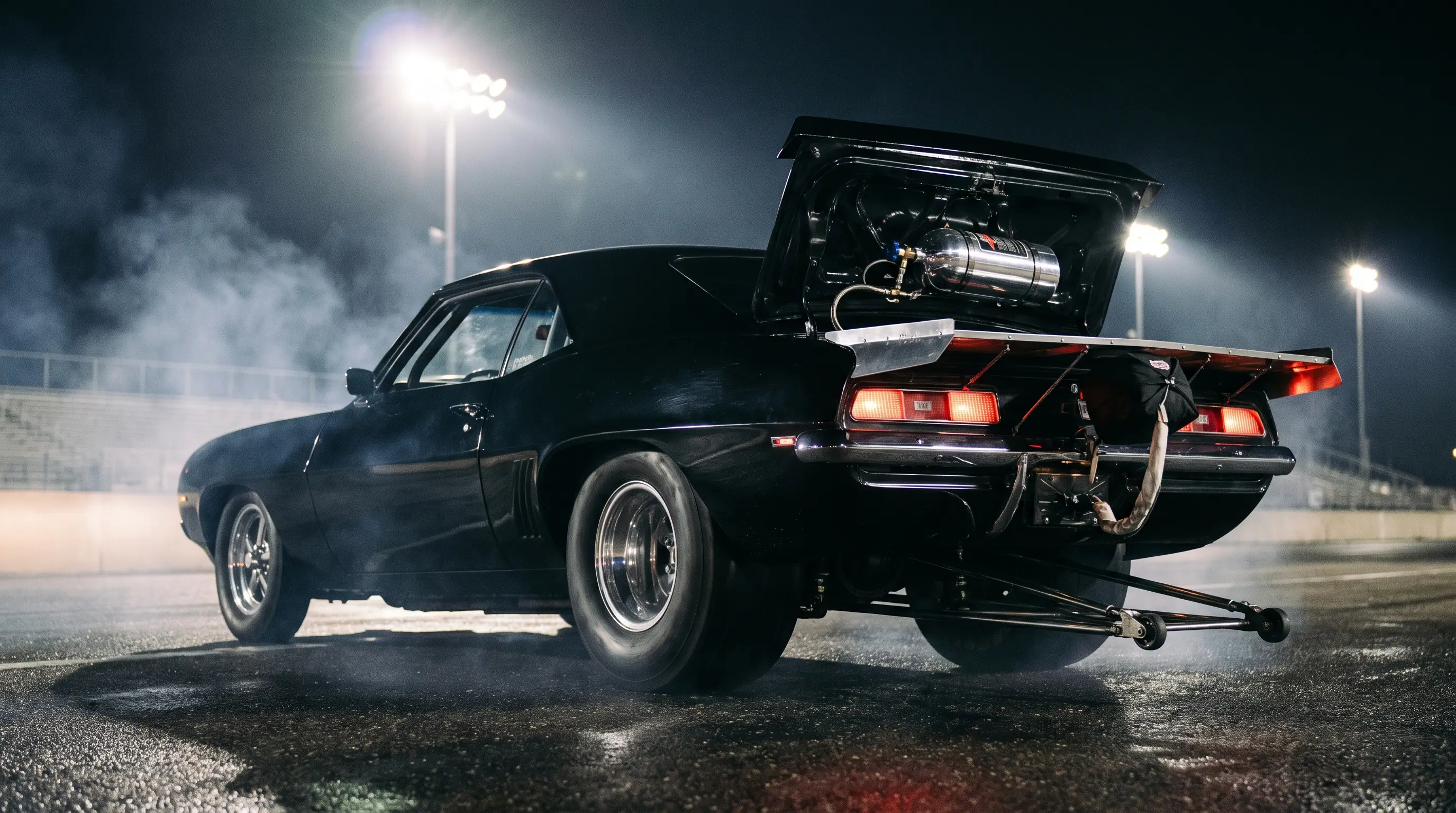
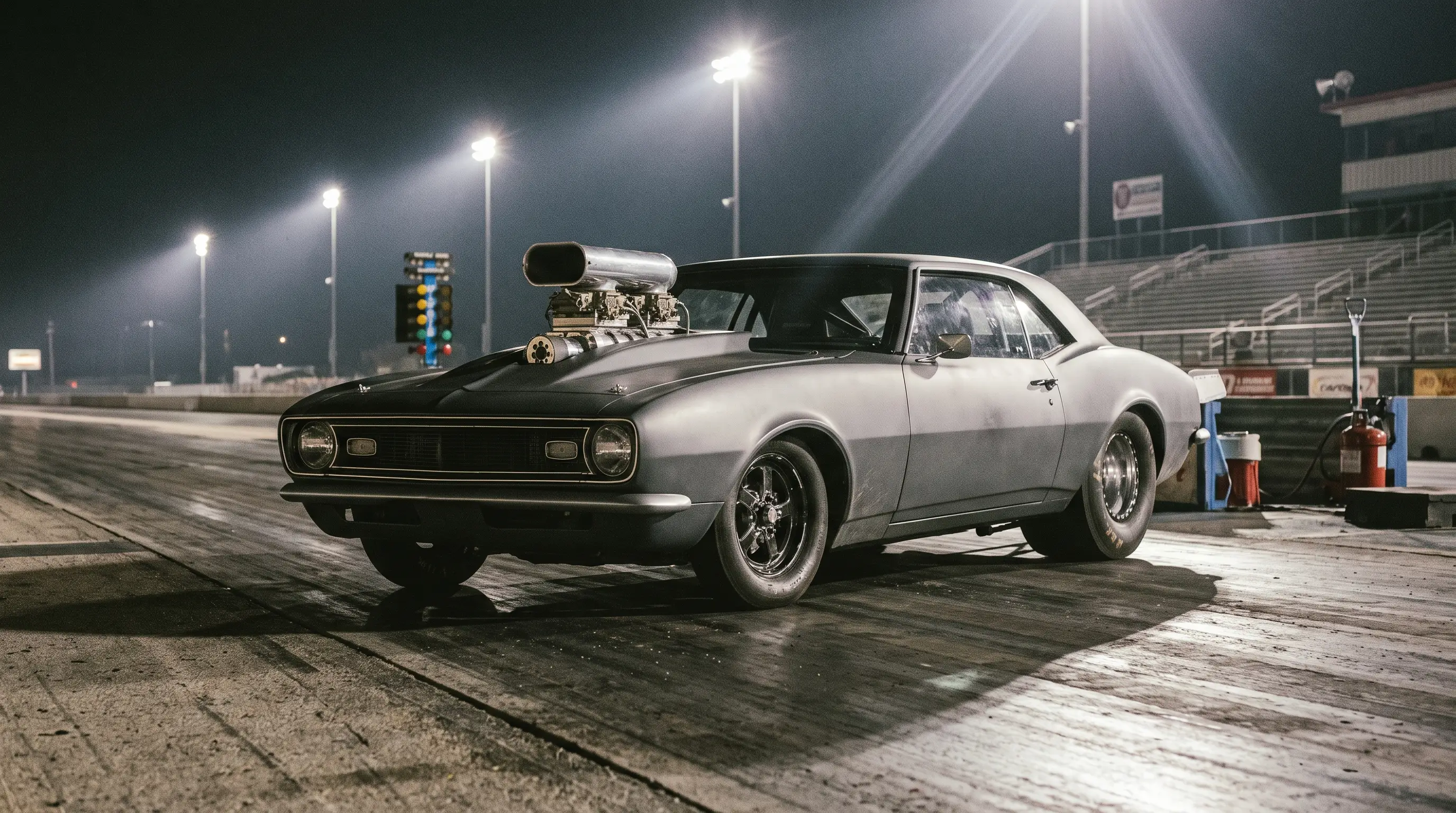
Walk down a row of Pro Street cars at any gathering and the hood scoops tell two different stories. One belongs to the supercharged cars, tall and boxy over a blower case. The other belongs to a tunnel ram intake, lower and wider, with a pair of four barrel carburetors sitting side by side like they are racing each other before the engine even starts. The tunnel ram intake was the naturally aspirated answer to the blower crowd, and for a segment of Pro Street builders it was the only setup worth having.
What a tunnel ram actually does
A tunnel ram is an intake manifold designed with long, straight runners that feed each cylinder from carburetors mounted high above the engine, often two four barrel carbs sitting in a row rather than one carburetor centered low on the intake. The long runners build velocity that favors high RPM power, which made the tunnel ram a natural fit for drag racing engines built to make their peak output near redline rather than off idle. Dual quads on top gave the engine more total airflow capacity than a single carburetor could deliver, at the cost of smooth idle and everyday drivability.
None of that mattered much to a Pro Street builder chasing looks and top end power. A tunnel ram poking through a hood scoop with two chrome air cleaners visible was as much a signature as a blower case, and it said the builder had gone the carburetor route rather than fuel injection or a supercharger. Some cars ran a tunnel ram purely for show with a mild engine underneath. Others ran the real thing on a serious big block or stroked small block built to use every bit of airflow the dual quads could supply.
Tunnel ram versus blower: two philosophies
Builders who chose a tunnel ram over a supercharger were making a different bet on where their power would come from. A blower forces air in under pressure and can make strong torque across a wide RPM range, including down low, which is part of why it feels so dramatic off idle. A tunnel ram relies on airflow velocity and generally comes alive higher in the RPM range, more like a race engine than a street cruiser. That difference showed up in how the two types of cars felt to drive. A blown car pulled hard from a stoplight. A tunnel ram car wanted to be revved out before it showed its best numbers.
| Setup | Power delivery | Street manners |
|---|---|---|
| Tunnel ram, dual quad | Strong at high RPM, needs to be revved | Rougher idle, more carb tuning required |
| Roots supercharger | Strong across a wide RPM band, including low end | Dramatic idle, sensitive to fuel and timing |
Cost played a role too. A tunnel ram and a pair of four barrel carburetors were generally cheaper than a supercharger, a blower drive kit and the fuel system upgrades a blown engine demanded. For a builder on a budget, dual quads on a tunnel ram delivered a lot of the visual drama of a Pro Street car without the expense of forced induction. Anyone curious how the blower side of that comparison played out can find the pro street blower story covers the supercharged half of the same debate in detail.
Tuning two carburetors instead of one
Running dual quads meant a builder had to keep two carburetors synchronized, which added a layer of maintenance that a single carb setup never required. Progressive linkage was common, where the rear carburetor stayed closed at idle and only opened once the front carburetor reached a certain throttle position, giving the engine a smoother transition than two carbs opening together from a dead stop. Getting that linkage adjusted correctly took patience, and plenty of tunnel ram cars at Pro Street events idled rough simply because the owner had not taken the time to dial it in.
That rough idle became part of the character. A tunnel ram car sitting at a stoplight with two carburetors burbling unevenly had a personality that a smooth-idling blown car did not share, and plenty of builders preferred it that way. The setup rewarded an owner who understood carburetor tuning and punished anyone who treated it as a bolt-on upgrade.
"You could always tell a real tunnel ram car from a show piece by how it idled. The real ones sounded like they were arguing with themselves at a red light, and that was the whole point."
- Patrick Walsh
Why some builders preferred the mechanical honesty of carburetors
Part of the appeal of a tunnel ram setup came down to something less measurable than horsepower figures: a preference among certain builders for mechanical systems they could see, adjust and understand without an electronic tuning laptop involved. A carburetor responds to a screwdriver and a wrench. A builder could richen a jet, adjust an accelerator pump, or change a spring in the progressive linkage and immediately feel the difference on the next test drive. That direct, hands-on relationship between adjustment and result appealed to a certain kind of enthusiast who wanted to understand every part of how the engine worked, not just bolt on a system and trust a computer to sort out the details.
This mechanical directness also meant a tunnel ram engine could be diagnosed and repaired almost anywhere, using tools most home garages already had. A blower drive belt failure or a fuel injection sensor problem might strand a driver waiting on a specific part, while a carburetor issue could often be talked through and fixed on the spot with basic hand tools. For builders who valued that kind of self-sufficiency, the tunnel ram and dual quad setup was not a compromise, it was the preferred approach on its own merits, independent of any cost savings compared to a blower.
Where tunnel rams fit in the Pro Street timeline
Tunnel ram intakes predate the Pro Street movement by years, coming out of drag racing in the 1960s before street builders adopted the look for cars that never saw a real track. By the peak years of Pro Street in the 1980s, a tunnel ram with dual quads under a hood scoop was as recognizable a silhouette as a blower case, and the two setups often competed for attention at the same shows. Readers who want the full story on how the movement itself came together will find tunnel rams and blowers described as parallel paths to the same visual goal, both aimed at telling onlookers this car meant business before it ever left the curb.
Original tunnel ram Pro Street builds still turn up in the collector market, and buyers who want one should expect the dual carburetor setup to need more sympathetic tuning than a fuel injected modern build. For anyone shopping, listings of classic Pro Street cars on the market regularly include tunnel ram cars alongside blown ones, and the choice between them usually comes down to whether a buyer wants low end punch or top end drama.