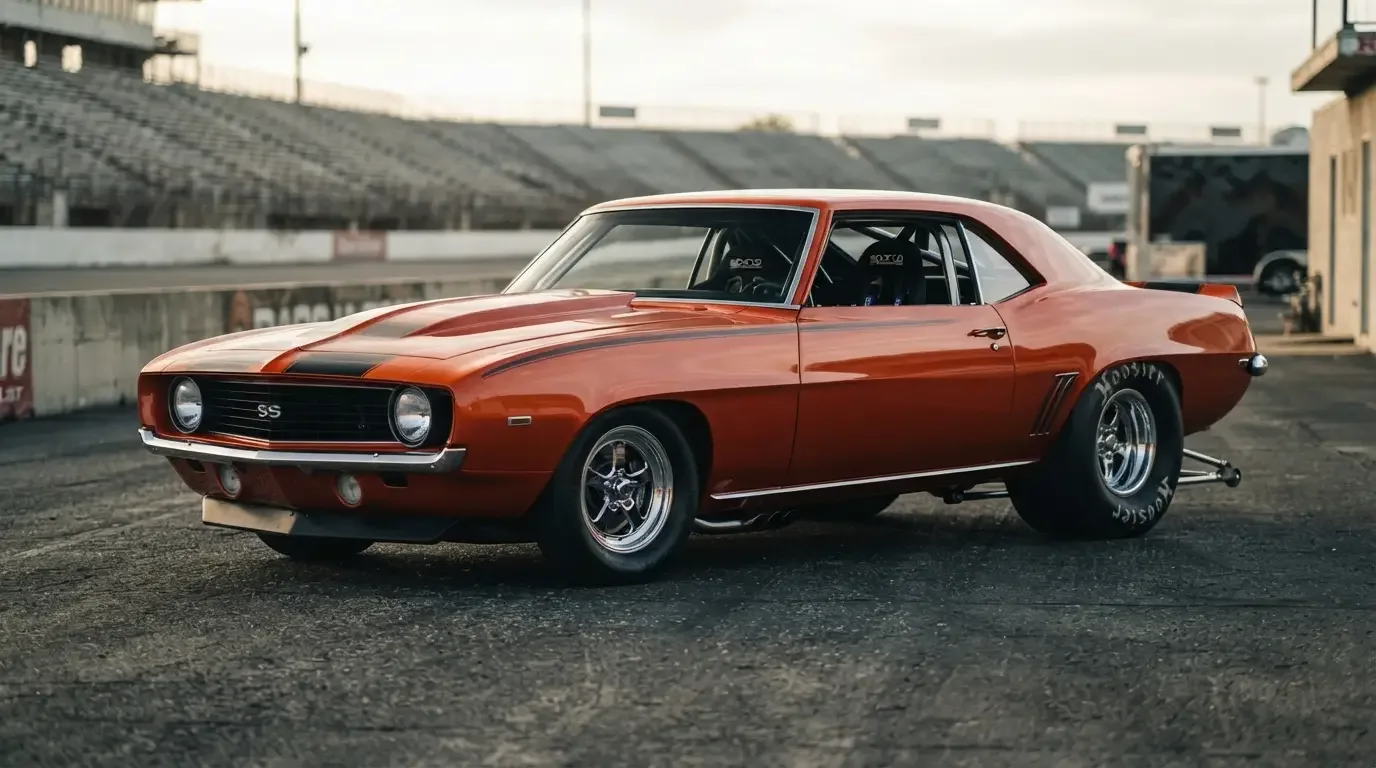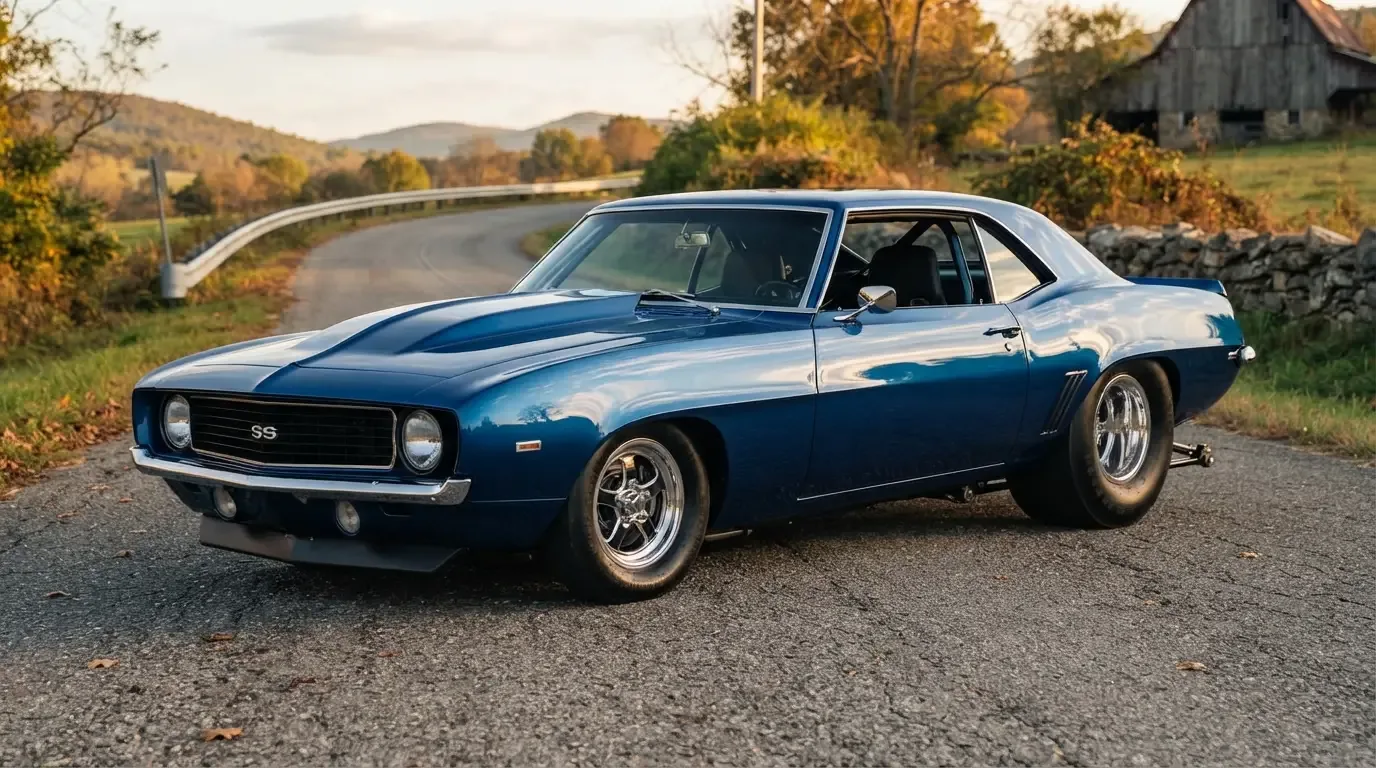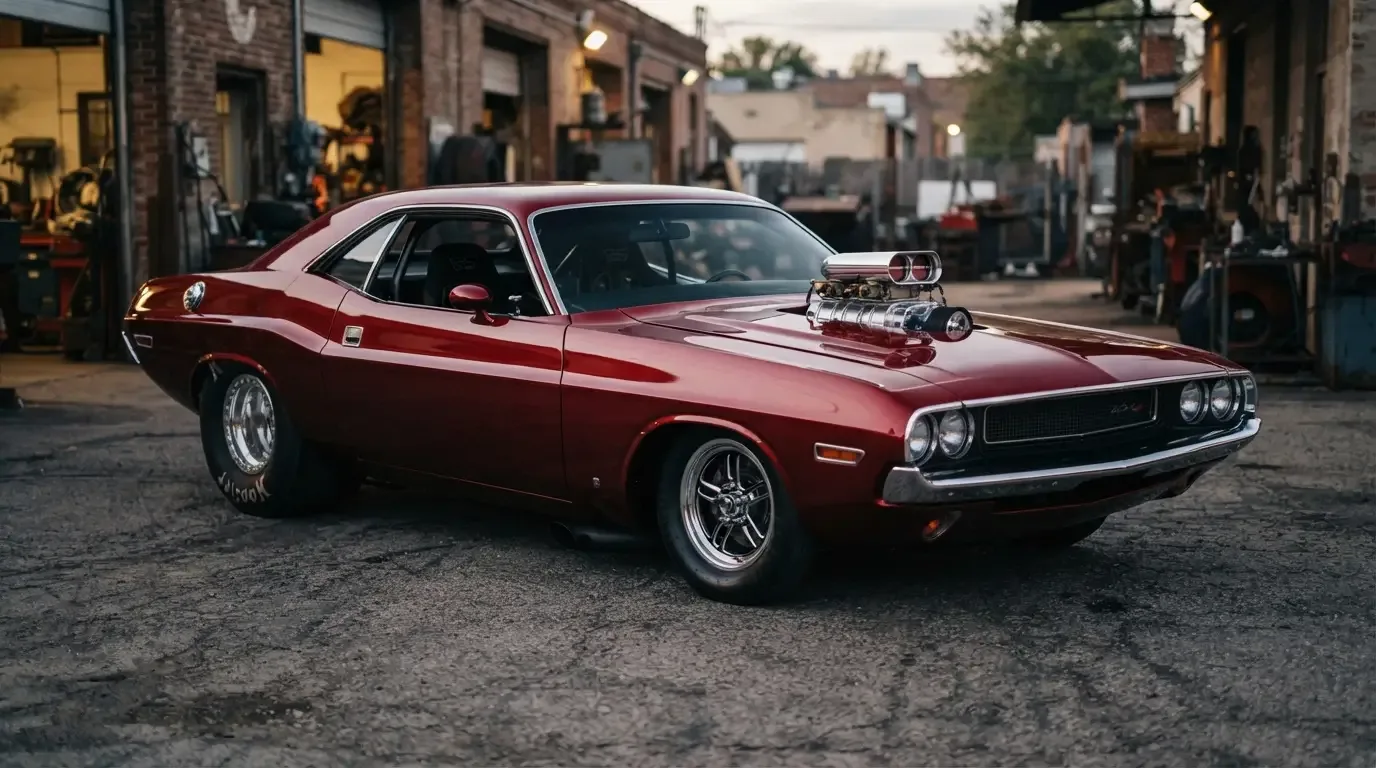
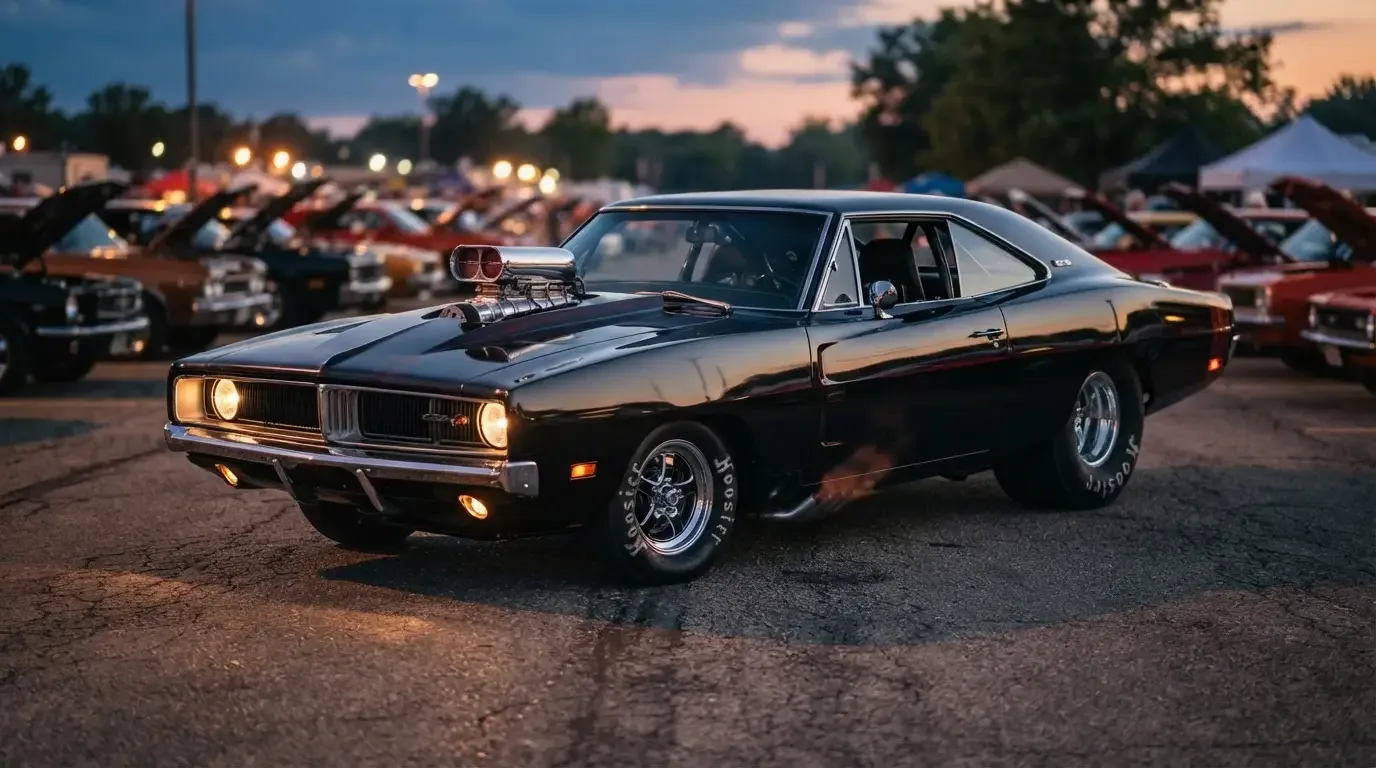
You hear a Pro Street car before you see it, and that is not an exaggeration or a nostalgic embellishment, it is the whole point of the build. The pro street idle sound, that rolling, uneven lope with each cylinder firing distinct enough to count, has become as much a signature of the movement as the tubbed rear tires themselves. Walk through any cruise night parking lot from Bakersfield to Bristol and you can pick out the genuine Pro Street builds with your eyes closed, just by listening for that particular rhythm idling somewhere in the crowd.
Where that lope actually comes from
The sound is a byproduct of choices builders made for performance reasons that happened to produce a distinctive side effect. Aggressive camshafts with long duration and significant overlap, the kind chosen to maximize high RPM power in a big block or a blown small block, do not idle smoothly the way a factory cam does. Instead of a steady, even hum, the engine settles into that choppy, rolling cadence because the valve overlap lets some exhaust and intake charge mix in ways a mild street cam never would. Builders were not chasing the sound directly, they were chasing horsepower, but the idle that came along with it turned into a cultural signature nobody wanted to tune away.
By the mid 1980s, that lopey idle had become so associated with serious performance that some builders reportedly chose cam specs partly for the sound as much as the numbers on a dyno sheet. It became a kind of shorthand at car shows and cruise nights, a way of announcing a car meant business before anyone popped the hood to check.
The sound as social currency
Anyone who spent time at cruise nights in the golden era remembers how the sound worked as a kind of currency in the crowd. A car that idled smooth and quiet, no matter how nice it looked, did not command the same attention as one that shook the ground with an uneven, aggressive lope even sitting still in park. It was a signal, intentional or not, that told everyone nearby the car underneath the paint was built for real performance rather than dressed up for show alone.
That reputation cut both ways. Builders who wanted their cars taken seriously sometimes leaned into cam choices that maximized the idle character even when a milder setup would have made for a more livable daily driver. The tradeoff, rougher idle quality and less low speed drivability, was treated as a badge of honor rather than a compromise, which tells you something about what the community valued at the time. For the full background on how these priorities took shape across the movement, what is a pro street car history traces the roots of that culture back to its beginning.
| Idle Character | Common Cause | Cultural Read at the Time |
|---|---|---|
| Smooth, even idle | Mild or factory style camshaft | Read as understated or unfinished |
| Moderate lope | Performance cam with moderate overlap | Balanced, respected among daily driven builds |
| Heavy, choppy lope | Aggressive high overlap racing cam | Highly sought after signature sound |
| Erratic, stalling idle | Cam too aggressive for the rest of the combination | Sign of a poorly matched build |
Not every lopey idle meant the same thing
It is worth saying plainly that a rough idle by itself never guaranteed a car actually performed the way it sounded. Some builders chased the aesthetic of the sound with cam choices that did not match the rest of the combination, resulting in a lot of theatrical noise without the power to back it up. Old timers at shows learned to distinguish between an idle that reflected a genuinely well matched performance combination and one that was closer to costume jewelry, sound without substance underneath.
The tell was usually in how the car behaved once it left idle. A properly built combination with an aggressive cam would clean up and pull hard once the RPMs climbed past the rough patch. A car chasing the sound alone often struggled to translate that dramatic idle into anything resembling real acceleration, which separated the builders who understood the whole package from those chasing a single sensory detail.
"You could stand in a parking lot with fifty cars and pick out which three actually had something under the hood, just by the way they idled. The sound did not lie, even when the paint job tried to."
- Patrick Walsh
Why the sound still matters to collectors
Decades later, that particular idle still carries weight among people who lived through the era or grew up chasing the same aesthetic secondhand. It shows up in how current owners talk about their cars, in how judges at some cruise nights still linger near a car with a distinctive idle, and in how younger builders working on tribute projects go out of their way to replicate the sound as faithfully as the tubbed rear end or the period correct paint colors. The idle is not just noise, it is a piece of cultural memory attached to a specific stretch of automotive history. If you want to understand how this detail connects to the broader story of what made these builds distinctive, a related story is worth a look. And if that unmistakable sound has you hunting for the real thing, there are always Pro Street cars for sale now worth listening to in person before you decide.
How the sound has changed since the golden era
Modern camshaft grinding technology has actually made it easier to get a dramatic idle without sacrificing as much drivability as builders in the 1980s had to accept. Computer designed cam profiles can produce a lot of the same rolling, choppy character at idle while still behaving reasonably once the engine gets up into a usable RPM range for street driving. This has changed the calculation for builders working on tribute cars today, since they can chase a faithful reproduction of that classic sound without necessarily inheriting all of the compromises that came bundled with it originally.
Purists sometimes grumble that a modern cam chasing the sound artificially, rather than arriving at it as an honest byproduct of chasing horsepower, misses the point entirely. There is something to that argument, since the original idle character was never engineered for its own sake, it was a side effect that the community happened to fall in love with. Still, plenty of enthusiasts building period tribute cars today are happy to take the improved drivability modern components offer while keeping the sound that made the whole style recognizable in the first place, treating the idle as a signature worth preserving even if the engineering path to get there has changed.
Sources and notes
- JEGS: How Camshaft Overlap Affects Idle, Vacuum, and Power
- EngineLabs: What Makes a Cam Chop, Lobe Separation Vs. Overlap
- Wikipedia: Pro Street
- Chevy Hardcore: Pro Street, A Look Back At The Bow-Tie Style That Never Gets Old
- Hagerty: Pro Street's Greatest Builds Honored at 2024 Grand National Roadster Show