Walk a car show aisle in any midsize American city and you will hear the phrase thrown around loosely: "that's a Pro Street car." Sometimes it fits. Often it does not. A show truck with a lowered stance and some flared fenders is not automatically Pro Street, and neither is a straight axle drag car with a full interior. Understanding what makes a Pro Street car is less about one modification and more about a specific combination that has to work together, all at once, on the same chassis.
The tub is not optional
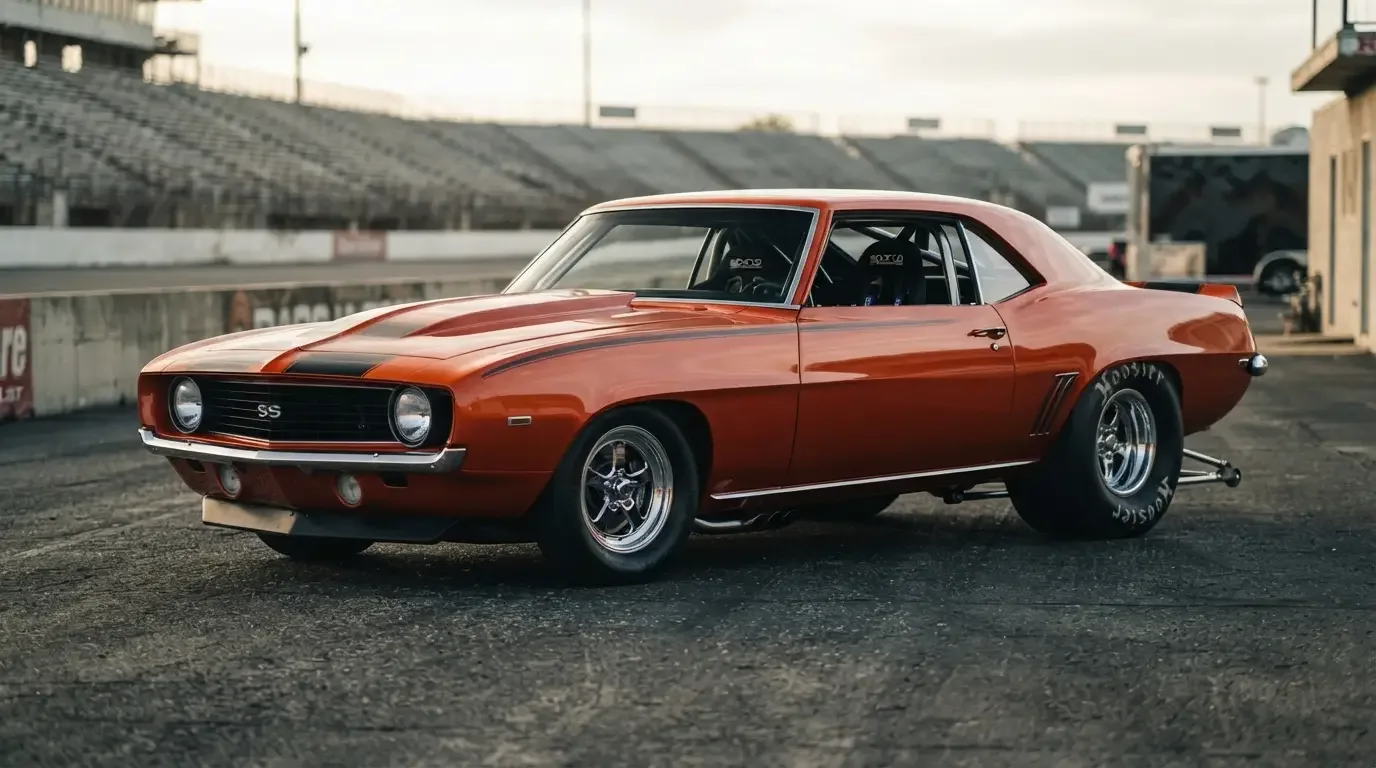
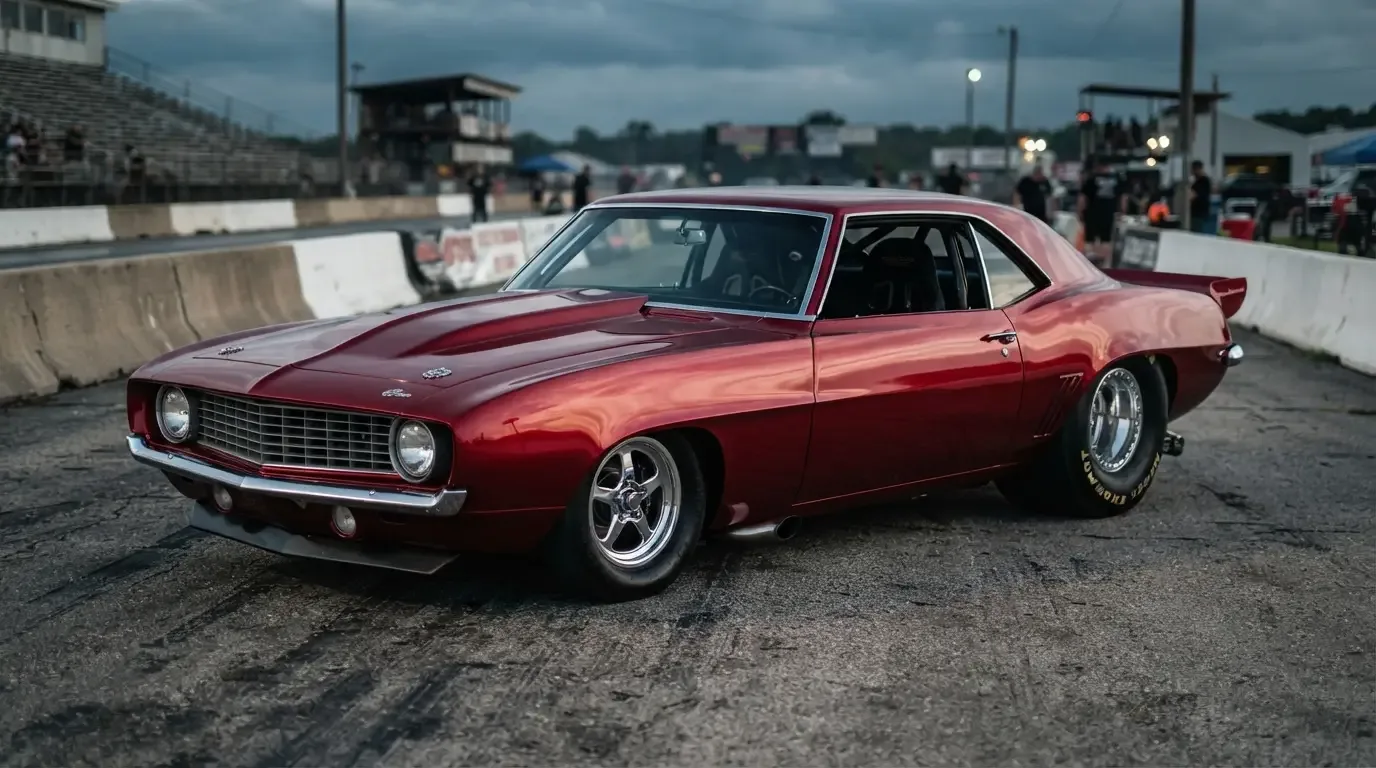
If there is one line that separates a Pro Street build from every other street machine at the show, it is the tubbed rear end. The stock wheel wells get cut out and replaced with wider steel tubs so the frame can swallow a rear tire that would never fit factory sheet metal. Without that surgery, a car is just wearing wide tires on the outside of the fenders, which is a different look entirely and usually a cheaper one. Real builders will tell you the tub work is where the money and the skill both go first, because get it wrong and nothing else about the car reads correctly.
Readers who want the full timeline of how this idea got started should check out what is a pro street car history, which traces the movement back to its drag strip roots.
The stance has to look aggressive at rest
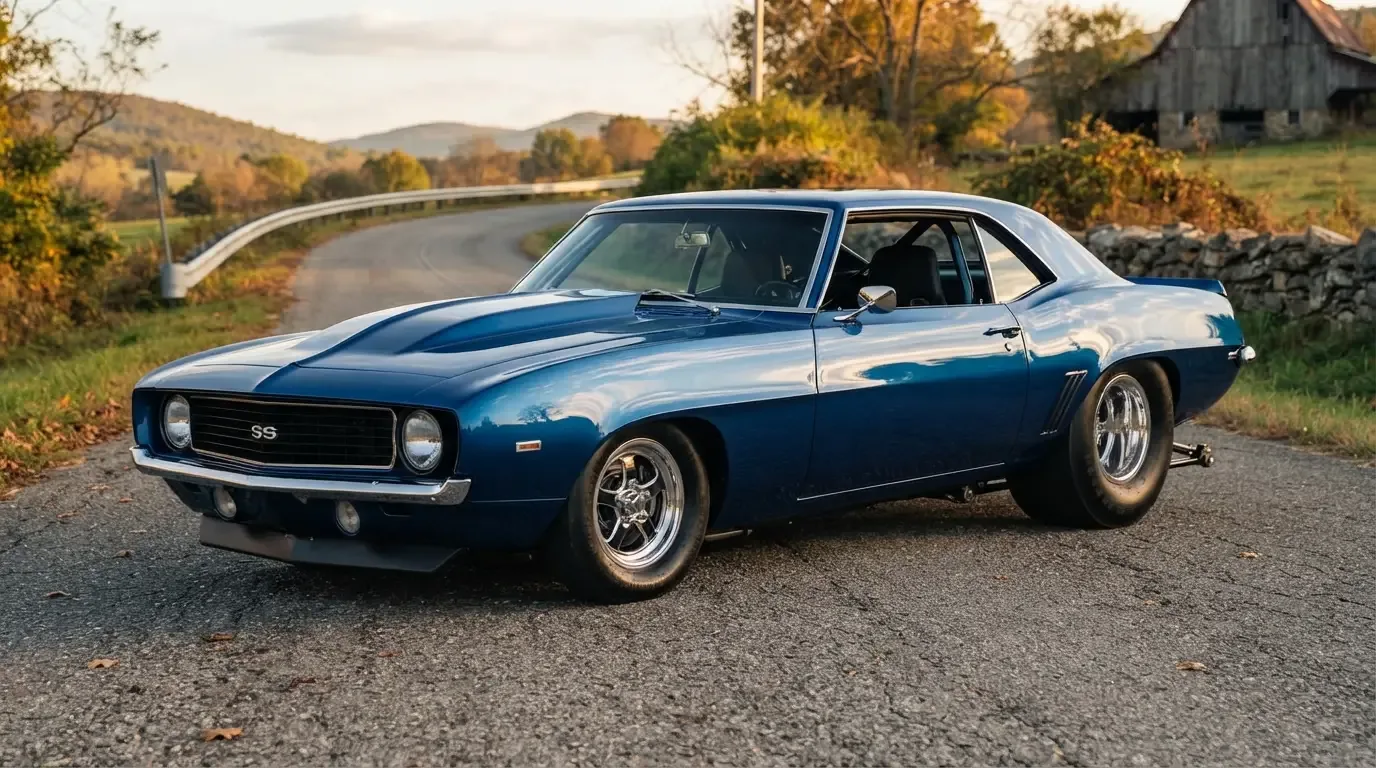
A parked Pro Street car should look like it wants to launch even sitting still in a parking lot. That means a nose that sits low, a rear end that sits noticeably higher because of the massive tire and suspension underneath it, and a rake that draws the eye from front to back. Builders chase this with a mix of narrowed front suspension, altered ride height, and sometimes a full back-half conversion that replaces the stock frame rails behind the doors with a ladder-style chassis built for drag strip loads. It is a purpose-built look, not an accident of parts falling into place.
Power that matches the promise
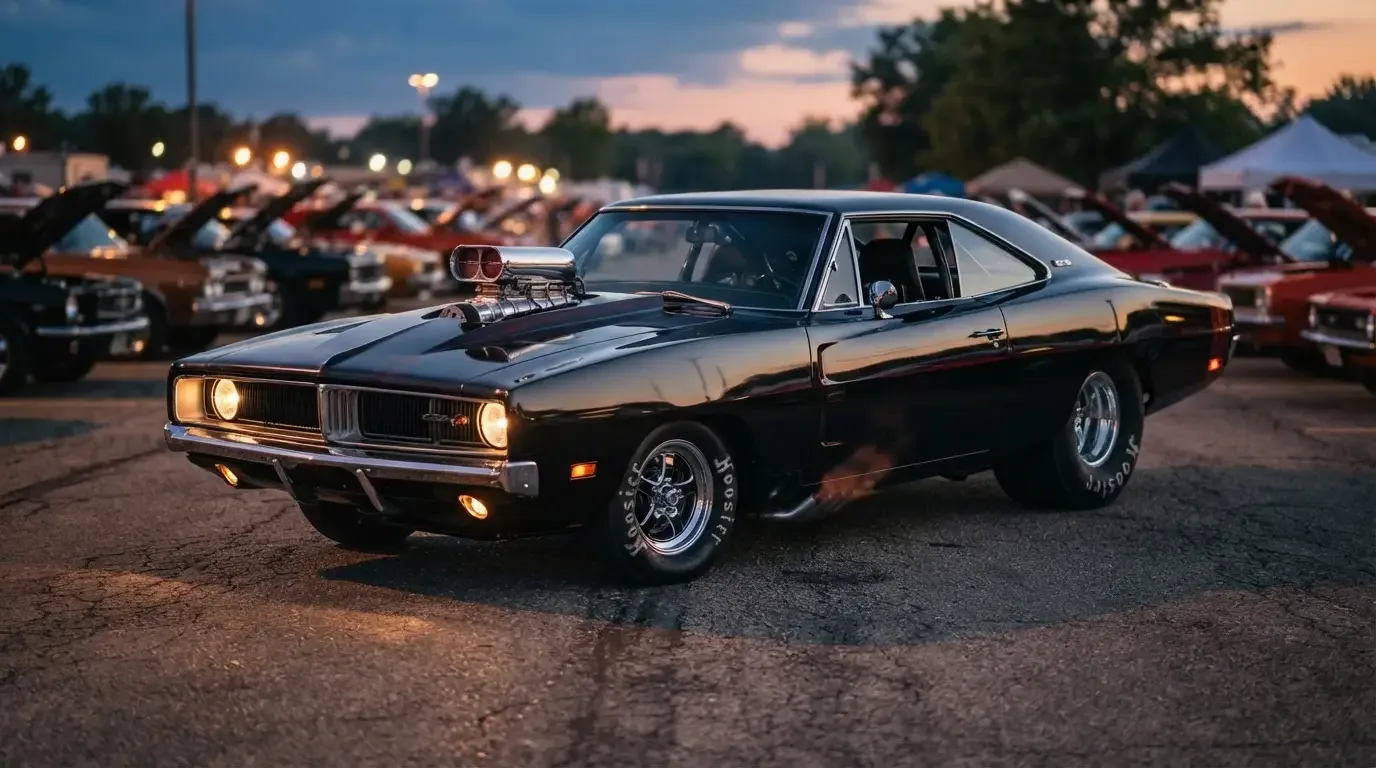
A car dressed like it is ready to run twelve-second quarter miles needs an engine that can back that claim up. Big-block power under a scooped hood, aggressive carburetion or an early fuel injection setup, and headers that dump into a loud exhaust are all part of the formula. This is where the culture split from pure show cars. A Pro Street build is judged as much by what happens when the driver mashes the throttle as by how the paint looks under the lights. Cars that look the part but cannot back it up get called out fast in this hobby, and that reputation sticks.
The suspension and axle work tie directly into a related story about how builders manage that rear tire fitment once the tubs are in.
Interior and details still matter
It would be easy to assume a car built around a full tube chassis and a huge tire has no room for finish work, but the opposite is often true. Roll cages get painted to match, gauges get relocated for a cleaner dash, and upholstery gets stitched to complement the exterior color. The best examples in the hobby balance brute functional changes with genuine craftsmanship, and that balance is part of what separates a respected build from a car that just looks aggressive but was thrown together in a weekend.
| Element | Typical Pro Street Trait |
|---|---|
| Rear wheel tubs | Cut and widened to fit oversized rear tires |
| Chassis | Often back-halved with a ladder-bar or four-link setup |
| Stance | Nose down, rear up, aggressive rake |
| Powertrain | Big-block or high-output engine with visible induction |
| Interior | Roll cage plus finished upholstery and gauges |
"The cars that fooled nobody were the ones with the tire but none of the chassis work behind it. The tub was the entry fee, everything else was how you spent the rest of your budget."
- Patrick Walsh
How the look evolved from the late 1970s onward
The earliest cars chasing this style in the late 1970s were rougher around the edges than what people picture today. Builders were figuring out tub geometry and back-half fabrication on the fly, often learning from failed attempts as much as successful ones. By the 1980s the formula had tightened considerably. Magazine features and major show circuits gave the style a name and a set of expectations, and that pushed builders to refine panel gaps, paint quality, and engine presentation instead of treating the mechanical work as the whole project. The 1990s brought even more polish, with builders blending Pro Street proportions into cars that could also hold their own at a concours-style judging table, something nobody would have predicted a decade earlier.
That evolution matters when judging what makes a car a true Pro Street build today, because the modern revival draws from all three periods at once. Some builders chase the raw, unpolished look of the earliest cars on purpose, treating the rough edges as authenticity rather than a flaw. Others lean into the show-quality fit and finish that defined the later golden era. Both approaches can produce a legitimate Pro Street car, as long as the core formula, that tubbed rear end paired with real power and an aggressive stance, is actually present under the paint.
Why the formula still holds up
Trends in the hot rod and muscle car world come and go fast. Pro Street has stuck around for decades because the formula solves a real problem: how do you build a car that looks like a race car but can still be driven to a burger stand on a Friday night. That tension between form and function is why the style keeps attracting new builders even now, decades after the first cars rolled out of home garages with tubs cut into the quarter panels and a big-block wedged under the hood.
A movement, not a single formula
What makes a car a true Pro Street build has never been one rigid checklist. Different builders in different decades leaned harder on different elements, some chasing outright quarter mile numbers and others chasing a specific visual stance for the show circuit. What stayed consistent across the era was that combination of tubbed rear, aggressive stance, and real power under the hood, built on a genuine muscle car or hot rod platform rather than something built from scratch. That mix is still the test today when someone rolls a car into a show and claims the title.
Anyone shopping for one of these builds themselves can browse Pro Street cars for sale now to see how current examples stack up against the traits described here.
Sources and notes
- Pro Street - Wikipedia
- Pro Street's Greatest Builds Honored at 2024 Grand National Roadster Show - Hagerty Media
- Defining muscle car terms: pro touring, pro street, and street freak - In The Garage Media
- The Du Quoin Street Machine Nationals history - Holley Motor Life
- Car Craft's Street Freaks - Magazine Covers 1976 to 1985
- Street Machine Nationals - Du Quoin, IL