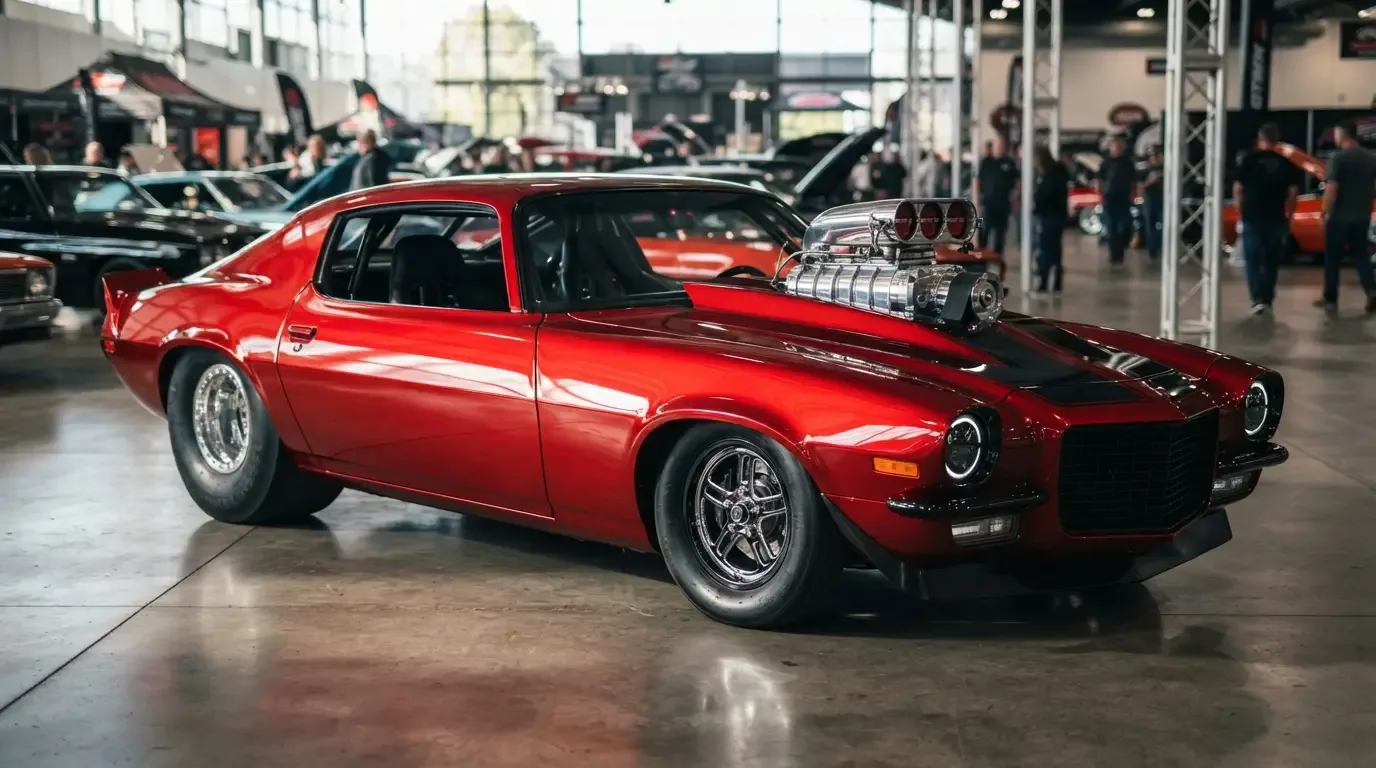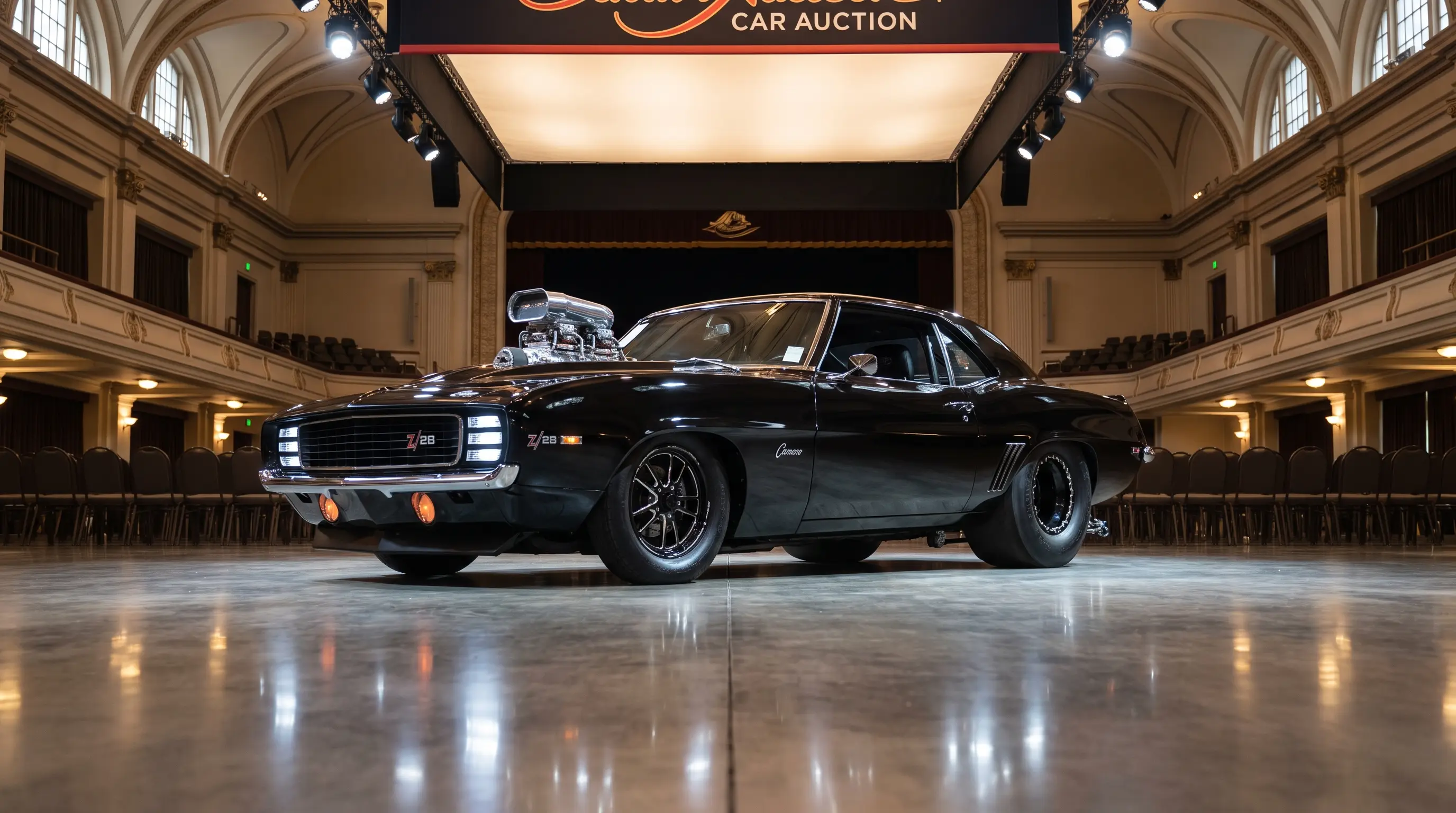
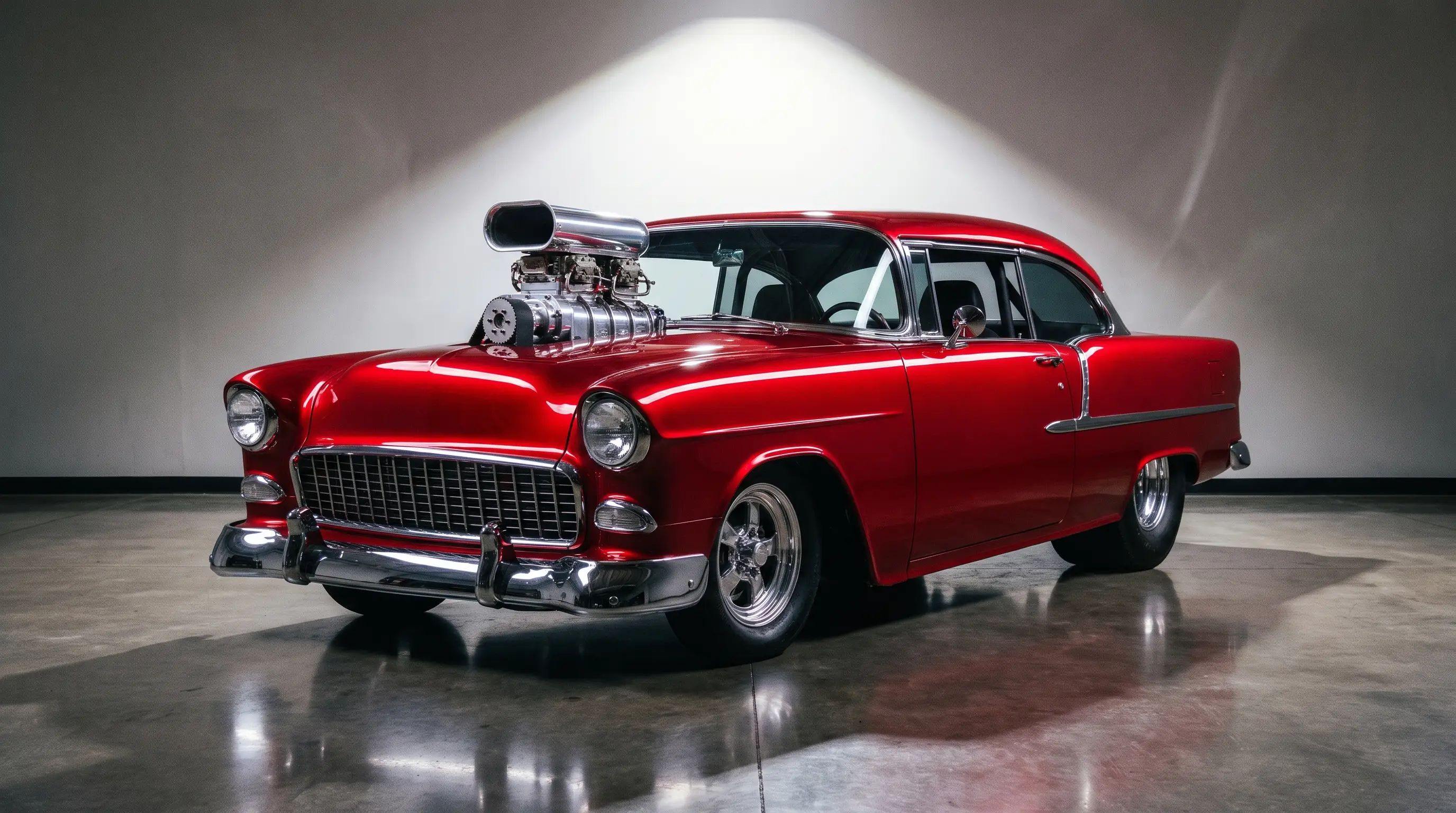
Talk of the most expensive Pro Street cars ever sold tends to overshadow how most of the market actually behaves. Most Pro Street cars trade in the mid five figures, plenty in the low five figures, and the honest ceiling for a good one has historically sat well below what a numbers-matching muscle car brings at the same auction. That makes the handful of Pro Street cars that have broken six figures worth examining closely, because the reasons they sold high tell you more about this market than a dozen average sales ever could.
What actually moves a Pro Street car past six figures
Provenance is the first lever, and it is the one buyers underweight most often. A Pro Street car built by a nationally known shop, or one that appeared on magazine covers during the movement's peak years in the 1980s and early 1990s, carries a documented history that a garage-built clone simply cannot replicate. The build itself might be technically similar, tubbed rear end, big small block, similar tire sizes, but the paper trail is what separates a $40,000 car from a $150,000 one.
Celebrity or shop pedigree is the second lever. Cars associated with well-known builders or featured prominently in period media tend to draw bidders who are paying for the story as much as the metalwork. That premium is real, but it is also narrow. It applies to a small number of cars with genuine documentation, not to every build that claims a connection without paperwork to back it up.
The high-water marks
The handful of Pro Street cars that have crossed the six-figure line at major auctions share a common thread: each one combined an exceptional build with a traceable history and, in most cases, low mileage since completion. These sales remain rare and are not consistently tracked the way muscle car records are, but a well-documented tubbed Camaro or Chevelle from a recognized builder, sold with build sheets, period photography, and a clean chain of ownership, is the profile that consistently outperforms.
What these top sales do not have in common is raw horsepower. A car claiming 1,200 horsepower on a build sheet with no dyno documentation sells for less than a modestly built car with verified numbers and a clean paper trail. Buyers at this level are not gambling on unverified claims.
| Value driver | Typical price impact | Why it matters |
|---|---|---|
| Documented shop build | Significant premium | Removes uncertainty about fabrication quality |
| Magazine feature history | Moderate to significant premium | Establishes the car existed in its claimed form at a known date |
| Verified dyno sheet | Moderate premium | Confirms power claims instead of relying on seller statements |
| Unverified modifications since build | Discount | Breaks the chain of documentation buyers rely on |
| Incomplete ownership history | Discount | Raises questions about condition and originality |
Why documentation matters more here than almost anywhere else
Pro Street is a modified-car category by definition, which means the usual appraisal tools, VIN decoding, factory build sheets, matching numbers, do not apply the way they would to a stock muscle car. Value has to be established through a different kind of evidence: who built it, when, what it cost to build, and whether the car has been maintained to that standard since.
"With a Pro Street car, I am not appraising a factory product. I am appraising a story, and the only thing that makes a story worth paying for is proof. No paperwork, no premium, no matter how good the paint looks in photos."
- Marcus Feld
That is why two visually similar Pro Street cars can sell for wildly different amounts. One arrives with a folder of receipts, period photographs, and a signed letter from the original builder. The other arrives with a seller's word and nothing else. Auction houses that specialize in this category have learned to price accordingly, and serious buyers should too.
What this means for the rest of the market
The record sales at the top of the Pro Street market do not represent what a typical buyer should expect to pay, and they should not be used as a benchmark for an average build. They do, however, signal something useful about where the market is headed. As interest in the broader Pro Street revival grows, documented, high-quality builds are pulling further away from average examples in price, widening the gap between the top and the middle of the market rather than lifting everything equally.
Readers interested in how this movement went from a niche 1980s subculture to a category with genuine six-figure sales can find the full story of that trajectory, which explains a lot about why documentation has become so central to value at the top end today.
For buyers working with a more realistic budget, the good news is that the broader market has not followed the top sales upward in lockstep. Solid, well-built examples remain accessible, and shoppers can find a classic Pro Street car for sale without competing against the documentation-driven premiums that define the six-figure end of the hobby.
Reading a listing like an appraiser
Before treating any asking price as a benchmark, it helps to break down what is actually being sold. A tubbed body and a big motor are common enough that they add little to a valuation on their own. What separates a fairly priced car from an overpriced one is whether the seller can answer basic questions with paper, not just conversation. Who did the chassis work. When was the motor built, and by whom. Has the car been driven regularly or sitting for years. Each answer either supports the asking price or should knock it down.
I have seen sellers lean on a magazine appearance from decades ago to justify a price that ignores everything that happened to the car since. A feature car from 1989 that has changed hands four times with no documentation of what work was done along the way is not the same car it was when the photographer showed up. Buyers who treat an old magazine clipping as a blank check for value are usually the ones who overpay.
The safest approach mirrors how any appraiser handles a modified car: separate the story from the evidence, price the evidence, and treat the story as a bonus rather than a foundation. That discipline is what keeps the six-figure sales rare instead of common, and it is what protects buyers at every price point below that ceiling, from a modest weekend cruiser all the way up to a documented shop build with a real shot at six figures down the road.