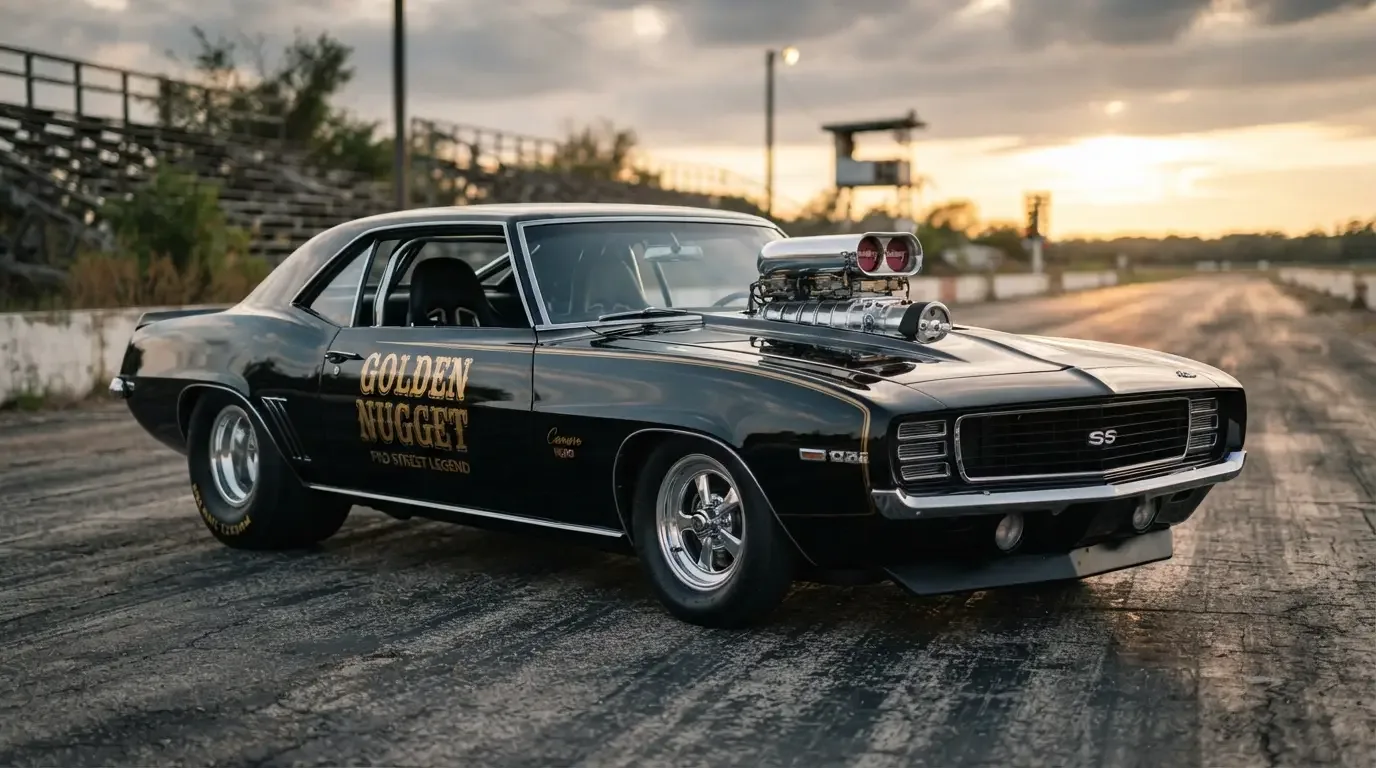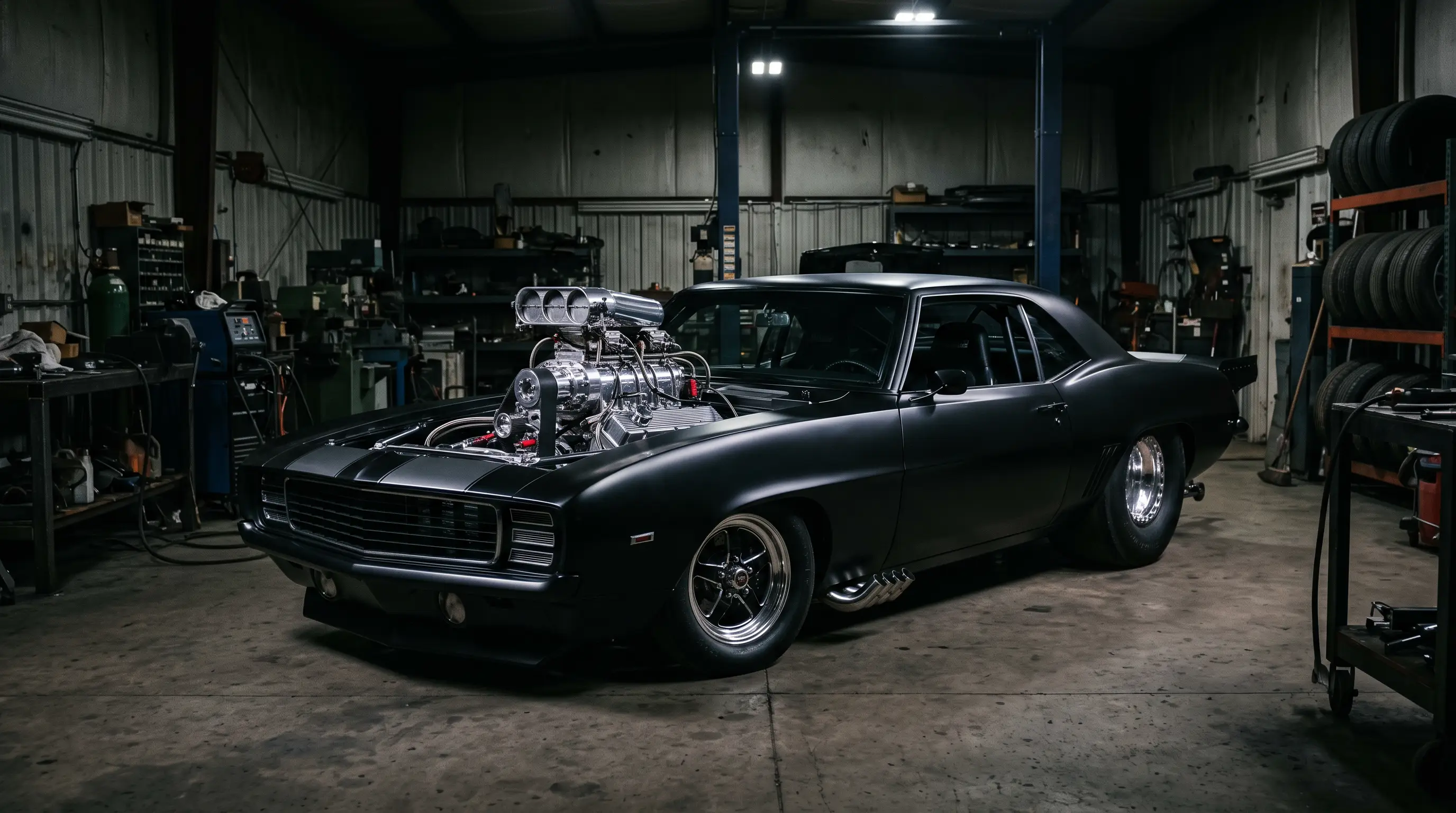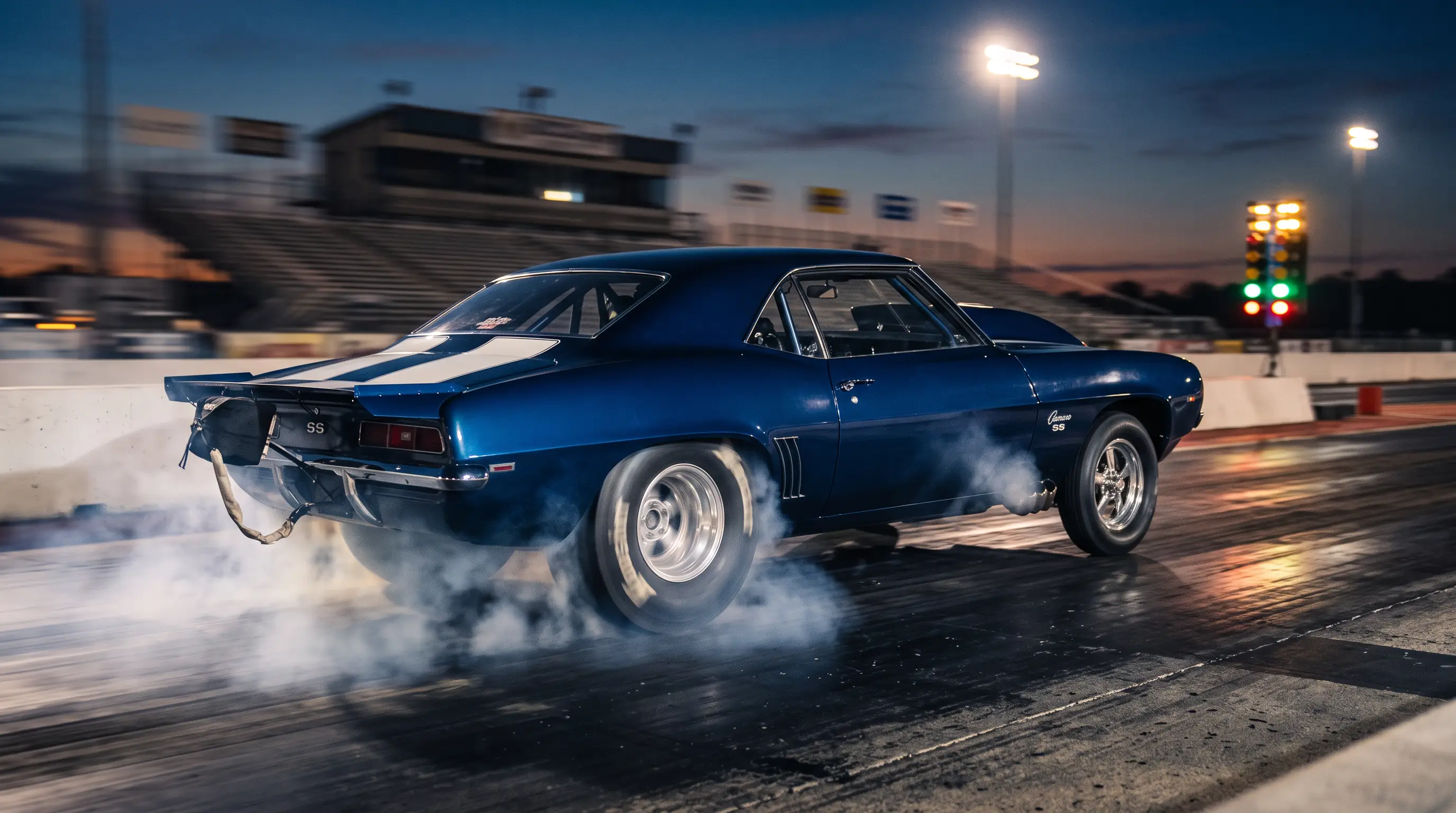
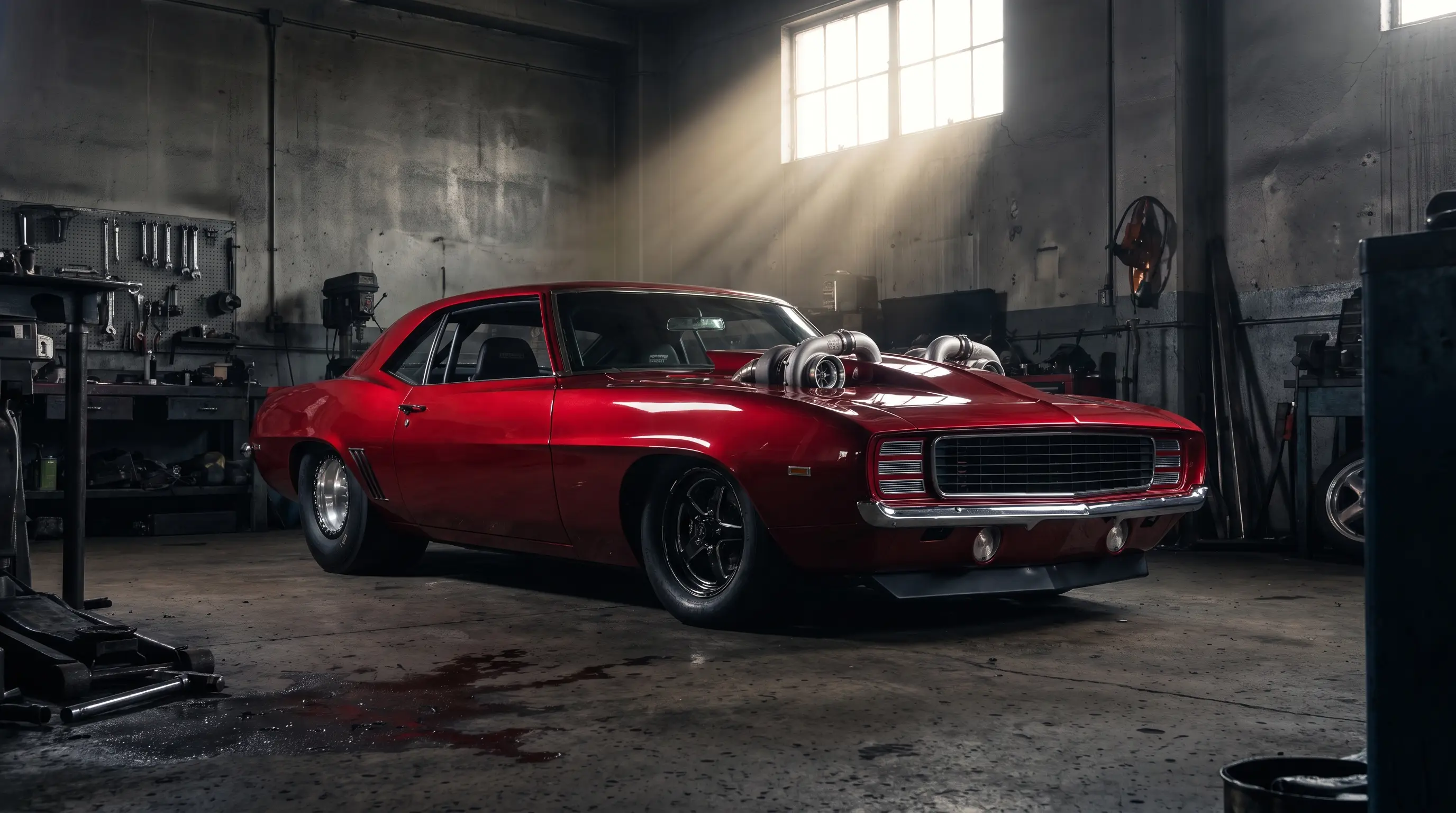
Every scene has its cars that made the rest of the field look conservative by comparison, and Pro Street had a whole subset of them. I've had old racers tell me about builds they saw once at a show and never forgot, cars so far past what the rest of the field was running that they didn't feel like they belonged in the same class anymore. Those are the ones we're talking about here, the radical pro street builds that pushed the format somewhere the rulebook never quite anticipated.
What counted as radical in a class already built on excess
Pro Street was never a subtle format. The entire premise, a tubbed rear end and an enormous tire under a full-bodied muscle car, was already a departure from anything a factory ever intended. So when people talk about the truly radical builds within that world, they mean cars that went further still, past the point where the rest of the class was comfortable. That could mean forced induction stacked on forced induction, drivetrain layouts nobody else was running, or fabrication work so extensive that the finished car barely resembled the body it started as underneath the skin.
Rick Dobbertin's 1985 Pontiac J-2000 is usually the first car that comes up in this conversation, and for good reason. Its aluminum 350 small-block ran dual Magnuson superchargers and dual Roto-Master turbochargers stacked on the same engine, a 20-port nitrous system, and a pneumatically lifted flip-front body on a polished stainless-steel tube frame. It won Hot Rod magazine's Hot Rod of the Year in 1986 and is still regularly cited as one of the most famous Pro Street cars ever built. Scott Sullivan's Cheez Whiz, a hand-fabricated 1955 Chevy built in the mid-1980s known for brush-finished stainless bodywork, belongs in the same conversation, not for stacked forced induction but for fabrication taken further than almost anyone else attempted, and Sullivan proved it wasn't just a show piece by driving it from Ohio to Los Angeles and running a 10-second pass once he got there. What tied these builds together wasn't a single formula. It was a willingness to keep pushing past the point where a sane cost-benefit calculation would have said stop.
The categories radical builds tended to fall into
Talk to enough people who followed the scene closely and a few patterns show up repeatedly. Some builds went radical on power, running combinations that dwarfed what the rest of the field could field on a given weekend. Some went radical on fabrication, with chassis and body modifications so extensive that the car functioned more like a purpose-built race machine wearing a familiar silhouette than a modified street car. And a smaller number went radical on concept entirely, chasing an idea nobody else had attempted rather than simply scaling up a familiar formula.
| Category | What made it radical |
|---|---|
| Power-focused | Combinations well beyond what a typical Pro Street car of the same era ran |
| Fabrication-focused | Extensive custom chassis and body work exceeding a standard tub-and-tire build |
| Concept-focused | Unconventional layouts, such as twin-engine or twin-forced-induction combinations |
| Show-focused | Paint, interior, and detail work carried to a level well past what a driven car typically received |
Why builders kept pushing even without a competitive payoff
A lot of the most radical builds never won a single sanctioned event, and the people behind them frequently knew that outcome was likely before they ever started fabricating. What they were chasing instead was recognition of a different kind, the sort that comes from other builders and racers acknowledging that a car had done something nobody else had attempted, regardless of where it finished in a bracket. That distinction between competitive success and reputation within the community explains a lot about why certain builders kept escalating their projects even after it became clear the return on investment, measured strictly in trophies, would never justify the expense.
There's a version of craftsmanship that only makes sense once you accept that not every project is built to win. Some are built to prove a point, to answer a question nobody else had bothered asking, or simply to see whether an idea that sounded impossible in theory could actually be made to run under its own power. The most radical Pro Street builds fall squarely into that category, and that's precisely why they still get discussed with a kind of reverence that purely competitive cars, however successful, rarely earn on their own.
The cost of chasing radical
Every one of these cars represented a tradeoff most builders weren't willing to make. Pushing a combination past what was reasonable meant a car that was harder to keep running reliably, harder to insure, harder to trailer safely, and often harder to actually drive on the street the way Pro Street's original spirit intended. A car built to be the most radical thing at a given show wasn't necessarily built to be practical, and a lot of owners of these cars accepted that tradeoff with open eyes. They weren't building a daily driver. They were building a statement.
That distinction matters for understanding why these particular cars still get talked about while plenty of quicker, more practical builds from the same era have faded into obscurity. A radical car photographs well, sticks in memory, and gives people something to argue about decades later. A merely quick car, however well engineered, rarely earns the same staying power in conversation.
The regional angle nobody talks about enough
Radical builds tended to cluster around specific regions rather than appearing evenly across the country, largely because a builder chasing the outer edge of the format needed access to a shop, a community of fabricators, and a network of parts suppliers willing to support genuinely unconventional projects. A handful of metro areas with strong drag racing cultures and enough serious fabrication shops in close proximity became informal hubs for this kind of extreme build, and competitors in those regions pushed each other further than a builder working in relative isolation ever could have managed alone. Rivalry between neighboring shops, each trying to one-up whatever the other had rolled out at the last show, drove a lot of the escalation that produced the most memorable radical cars of the era.
That regional clustering also explains why certain radical builds became famous locally for years before word ever spread nationally through the magazines. A car could dominate the conversation at every regional show for a full season before a photographer from a national publication finally caught up with it, and by then the builder was often already three steps further down the road toward the next, even more radical project.
How these builds fit into the wider Pro Street story
The radical end of the class didn't exist in a vacuum. It grew directly out of the same competitive pressure that shaped every other corner of Pro Street, the constant push to build something that made the last impressive car at the show look ordinary by comparison. The full story of the movement's best-known builds traces how that escalation played out across different builders, different regions, and different decades, and the radical outliers covered here were very much a product of that same pressure taken to its logical extreme.
If the idea of a genuinely over-the-top period build appeals to you, the surviving examples from this end of the scene are rare and often well documented precisely because they were show cars first. Browse the current classic Pro Street car for sale listings to see what's actually available from this era, radical builds and more conventional ones alike.
"Some of these cars weren't really built to win anything. They were built so that everyone else at the show had to stop and admit theirs wasn't the wildest thing in the lot anymore. That's its own kind of victory."
- Wayne Coburn