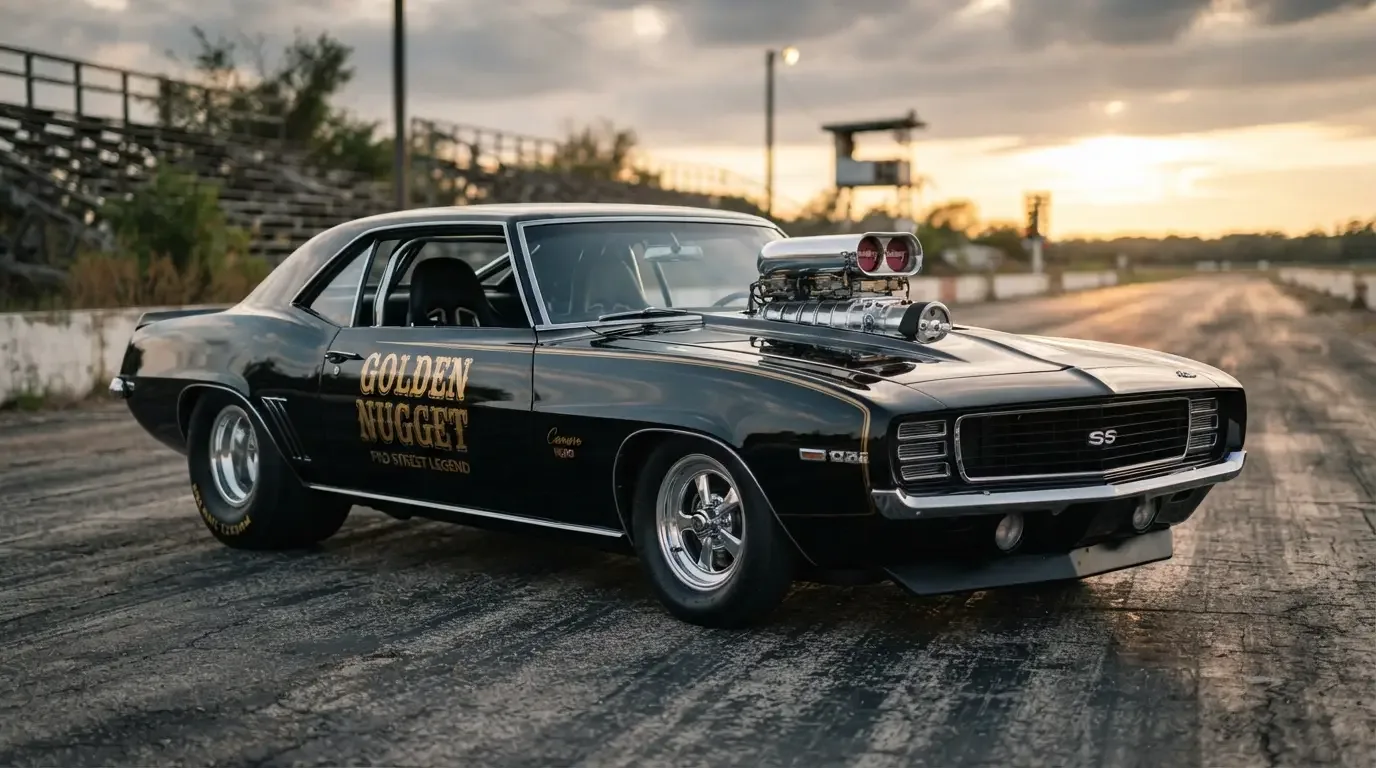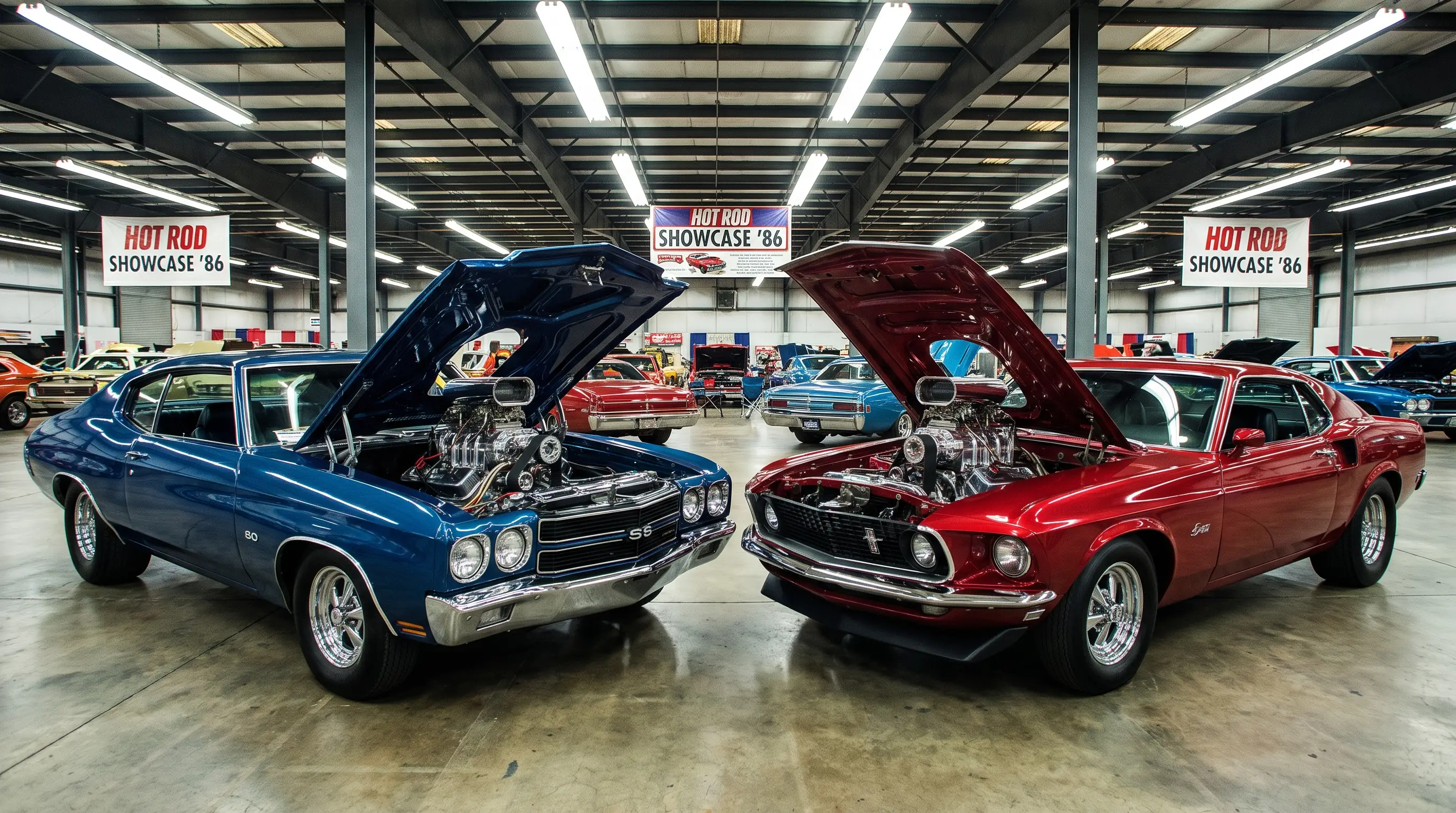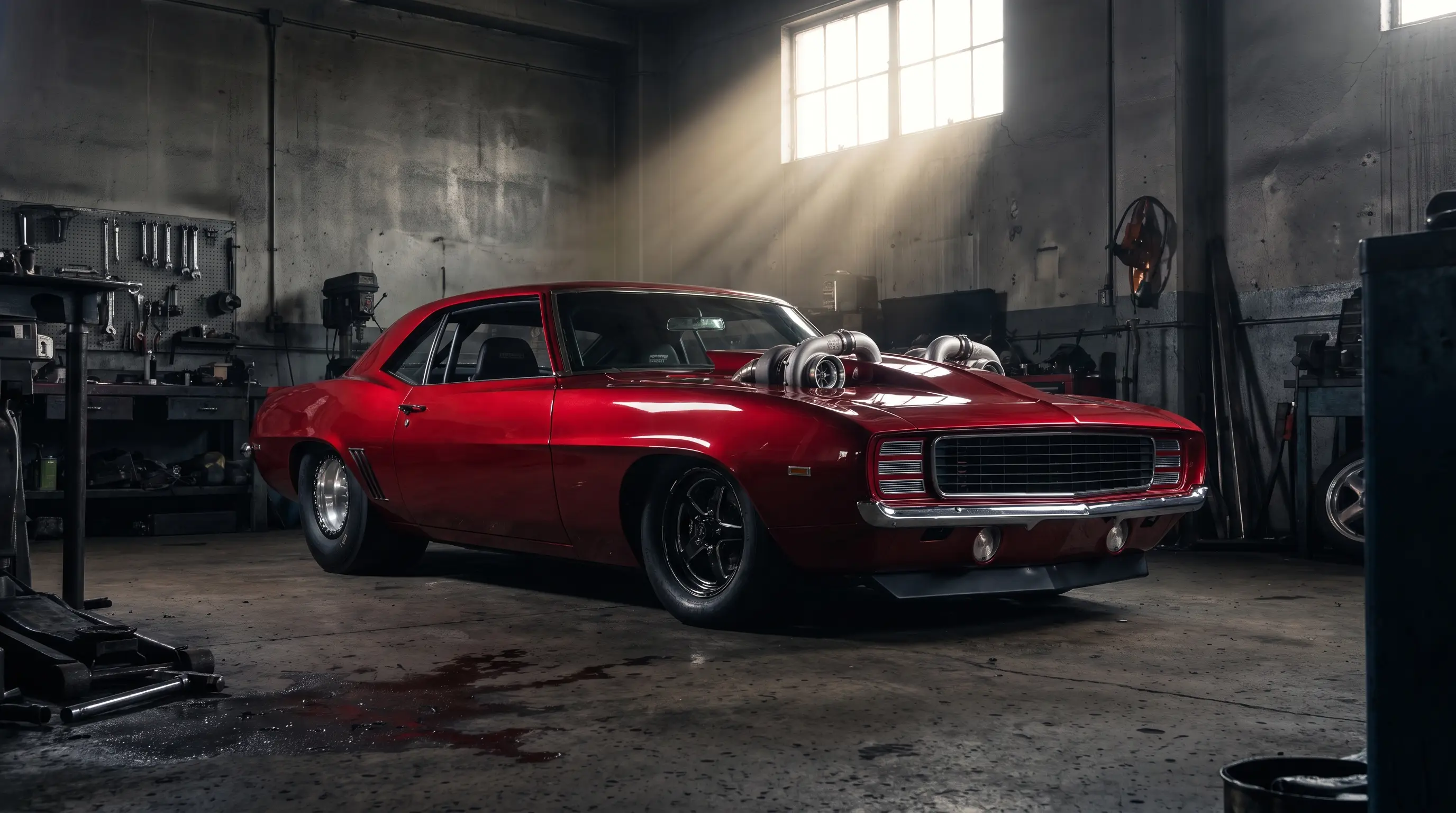
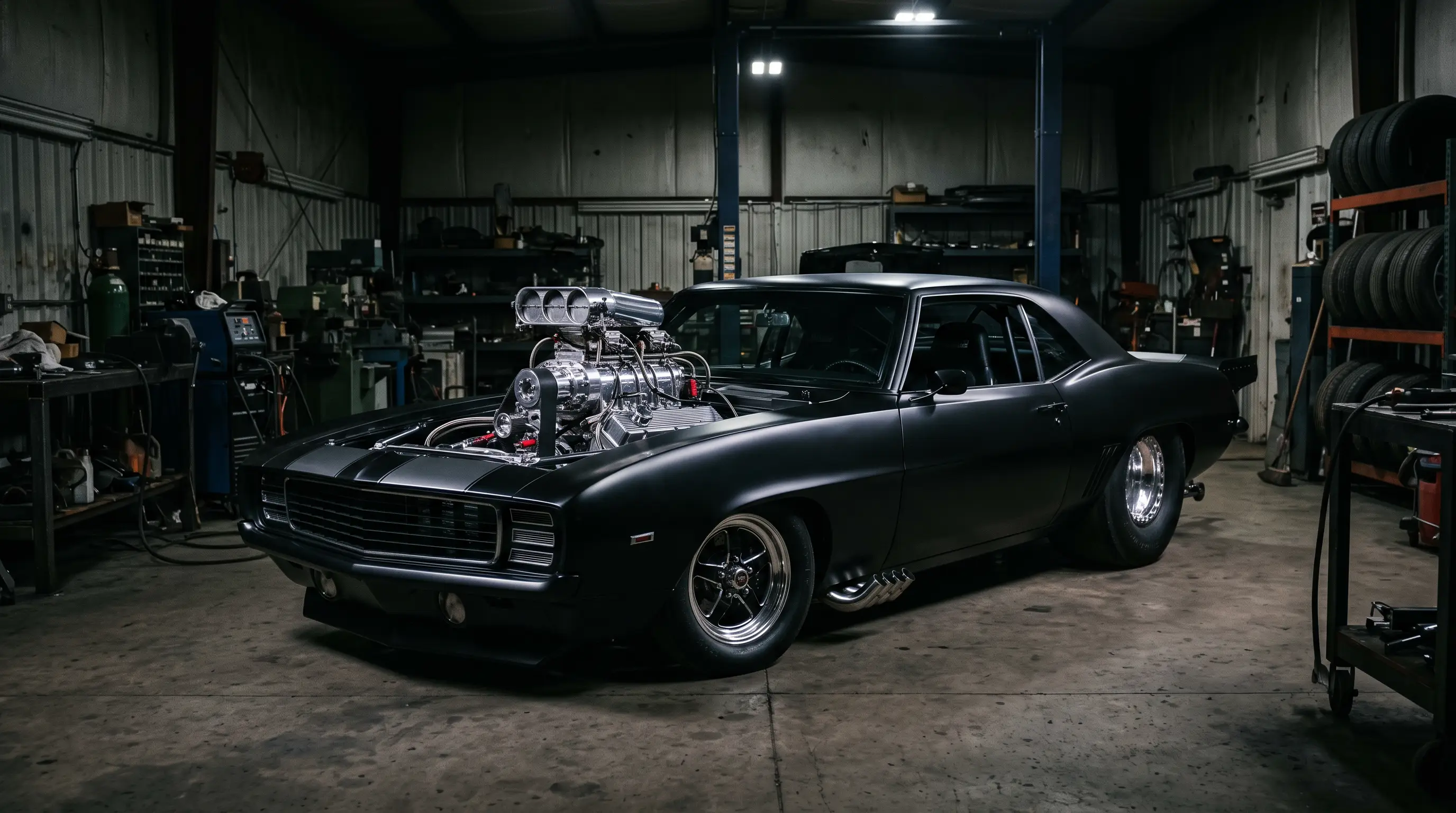
By the time the 1990s rolled around, a single supercharger on a Pro Street build barely turned heads anymore. The class had absorbed forced induction into its baseline expectations, and builders looking to stand out had to find the next lever to pull. For a small group of them, the answer was straightforward on paper and brutal in practice: run two superchargers instead of one.
How the class got here
Pro Street in its earlier years leaned heavily on displacement and compression to make its numbers. Big cubic inches, aggressive cams, and careful tuning got a naturally aspirated combination well past 700 horsepower by the mid-1980s, which was enough to put a car deep into the eight-second range with the right chassis underneath it. Forced induction changed that math. A single blower could add several hundred horsepower to an otherwise conventional combination without requiring the kind of exotic internal parts that pure displacement gains demanded, and by the early 1990s a healthy percentage of serious Pro Street builds were running some form of supercharging as a matter of course.
Once forced induction became common rather than exceptional, the builders chasing the biggest number in the parking lot needed a new differentiator. Twin superchargers, mounted in tandem or in a compound arrangement, were the answer for a handful of shops willing to take on the plumbing and packaging headache that came with it.
The engineering problem, honestly stated
Well-documented, named examples of genuinely functional twin-supercharged Pro Street cars from this period are scarce. Most of the stacked-blower setups that turn up in period photographs, commonly a pair of GMC 6-71 or 8-71 Roots units mounted one atop the other, were built more for visual impact at a show than for a real, sorted quarter-mile combination, and enthusiast forums that track supercharger history generally agree that a properly engineered dual-blower setup with real intercooling between stages was the exception rather than the rule. Running a single blower on a Pro Street engine is already a packaging exercise, fitting the unit, the drive system, and the intercooling into an engine bay that was never designed for any of it. Doubling that hardware compounds every one of those problems at once. Belt routing has to account for two drive systems pulling load off the crank rather than one. Boost has to be managed and balanced so that neither unit is fighting the other or overwhelming the intake tract downstream. And heat, already the enemy of any boosted combination, becomes a bigger problem when there are two units generating it under the same hood.
None of that is an engineering problem with an obvious factory-adjacent solution. Every twin-supercharged Pro Street build from this era was, functionally, a custom fabrication project from the mounting brackets up, worked out by hand in a shop rather than pulled from a parts catalog.
| System | Twin-supercharged complication |
|---|---|
| Drive system | Dual belt or gear-drive routing to power two blowers off one crank pulley |
| Boost control | Balancing output between two units feeding a single intake tract |
| Cooling | Intercooling capacity sized for combined boost output, not a single-unit baseline |
| Packaging | Fitting two supercharger housings and their plumbing into an engine bay built for one carburetor |
The fuel system nobody wanted to talk about
Feeding two supercharged combinations through a single fuel system created its own quiet crisis for a lot of builders who underestimated the problem going in. A fuel system sized correctly for a single blower's demands would run lean under the combined load of two units at full boost, and a lean condition under boost is exactly the scenario that destroys pistons and rod bearings in a matter of seconds rather than miles. The builders who got twin-supercharged combinations to survive a full season understood this before they ever bolted the second unit on, sizing pumps, lines, and injectors for the combined demand rather than assuming the existing single-blower system would simply scale up without complaint.
That kind of foresight separated the builds that actually raced from the ones that made one dramatic pass, suffered a catastrophic failure, and quietly disappeared from the circuit afterward. The parts catalog never warned anyone about this particular failure mode. Only experience, usually earned the hard way, taught builders what a genuinely reliable twin-supercharged fuel system needed to look like.
What separated the real builds from the parking-lot bragging
Plenty of cars in this era wore twin-supercharger setups that looked impressive sitting still and never delivered a number that justified the complexity. The builds worth remembering were the ones where the combination actually worked as intended, where the car left the line clean instead of shredding tires under a boost spike it couldn't manage, and where the driver could run the car more than once a night without something in the plumbing letting go. That distinction, a car that ran the number reliably versus a car that ran it once and needed a week in the shop afterward, is the same divide that separated the respected builds of the whole Pro Street era from the ones that faded from memory.
The tuning knowledge these builds demanded
Getting a single supercharged combination to run cleanly required a working understanding of boost, fuel curves, and ignition timing that took most tuners years to develop by the standards of the early 1990s. Twin-supercharged combinations demanded a version of that same knowledge doubled and layered, since the interaction between two boost sources feeding one engine created failure modes that a single-blower tuner simply never had to think about. A boost spike on one unit could load the intake tract unevenly, and a tuner who didn't understand exactly how the two systems interacted could end up chasing a detonation problem for weeks without realizing the actual cause was an imbalance between the pair rather than a fault in either supercharger individually.
Shops that got good at this kind of dual-boost tuning tended to specialize in it, because the knowledge didn't transfer cleanly from a standard single-supercharger background. That specialization is part of why so few genuinely successful twin-supercharged Pro Street builds exist relative to the number of builders who attempted the layout. The idea was straightforward. Making it work reliably was a much narrower skill set than the parts catalog made it look.
Where twin-supercharged builds fit in the bigger story
These cars represented the late-stage escalation of an arms race that had been running since Pro Street's earliest days. The class started with builders tubbing a rear end and stuffing the biggest tire they could find under it, and by the 1990s the same competitive instinct had pushed a handful of builders into forced-induction combinations that would have been unrecognizable to the class's founders a decade earlier. That escalation is part of what makes the famous pro street cars story worth reading in full, since it traces how the format evolved rather than staying frozen at its early-1980s baseline. The broader question of what actually defined the class across its run is covered in the full story as well.
If this era of forced-induction escalation is what draws you to Pro Street in the first place, you can browse classic Pro Street cars on the market and see what survives from a period when builders were still finding new ways to push a familiar formula further than anyone expected it to go.
"A second supercharger doesn't just double your boost problems, it multiplies them, because now you're balancing two systems against each other instead of tuning one. The builds that actually worked earned every bit of the attention they got."
- Emily Chen