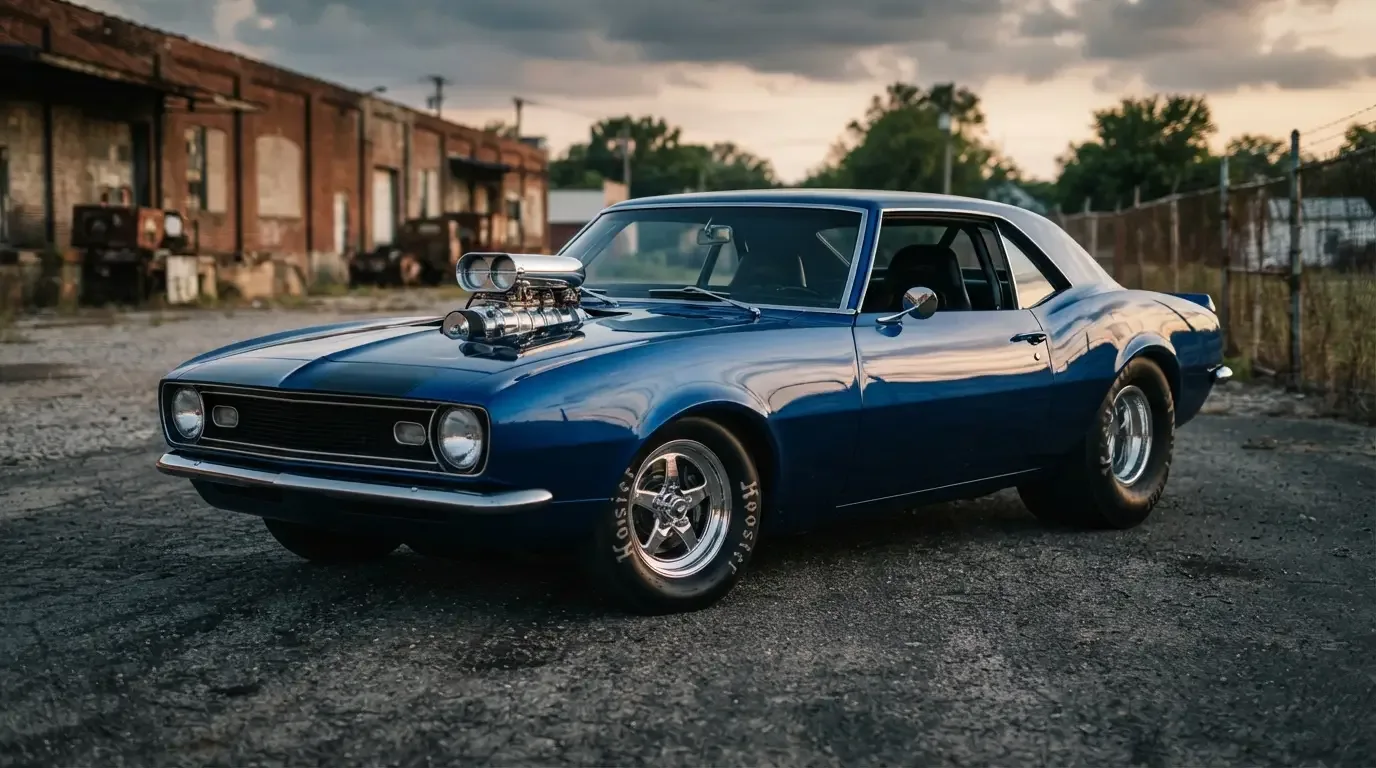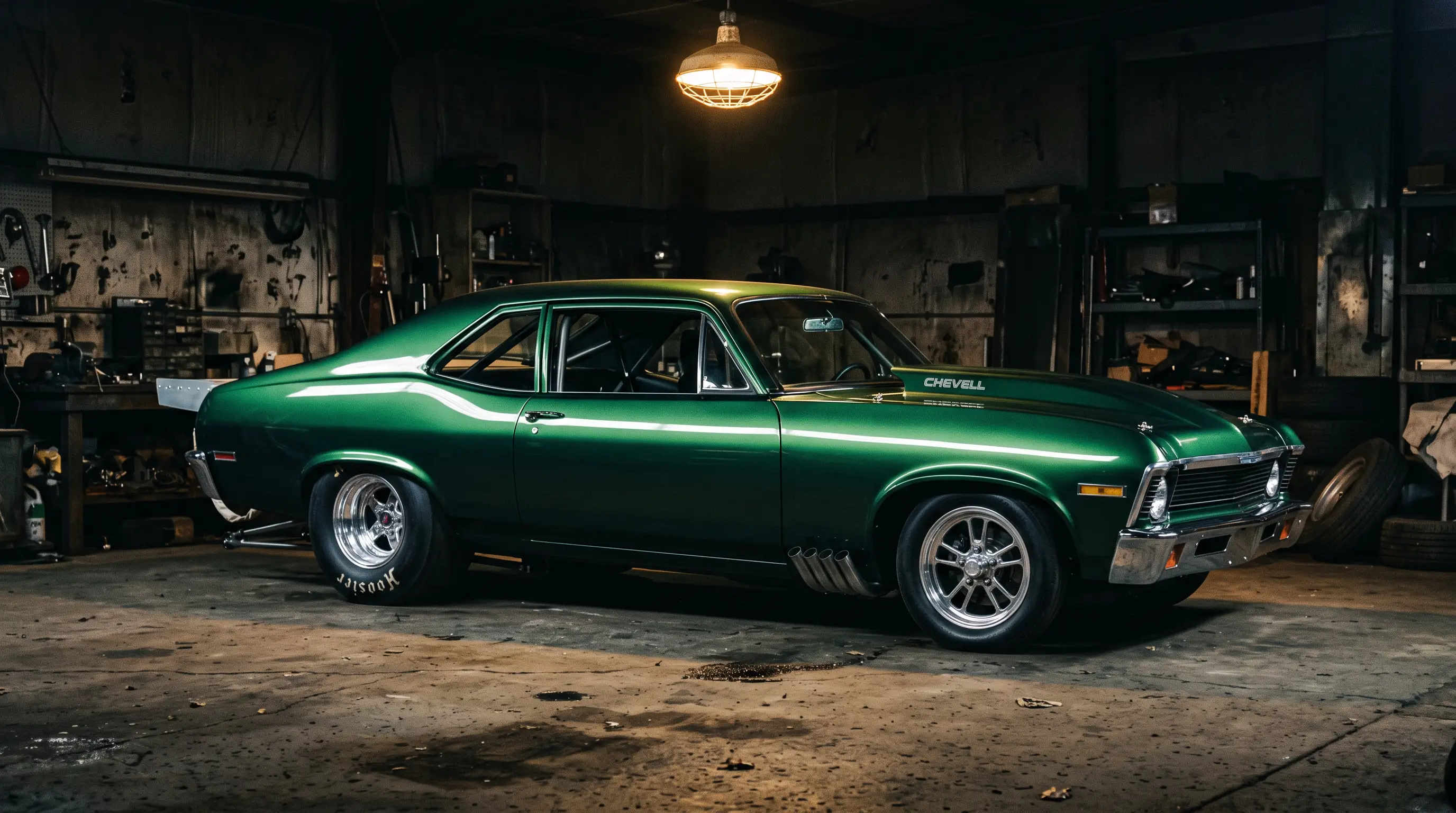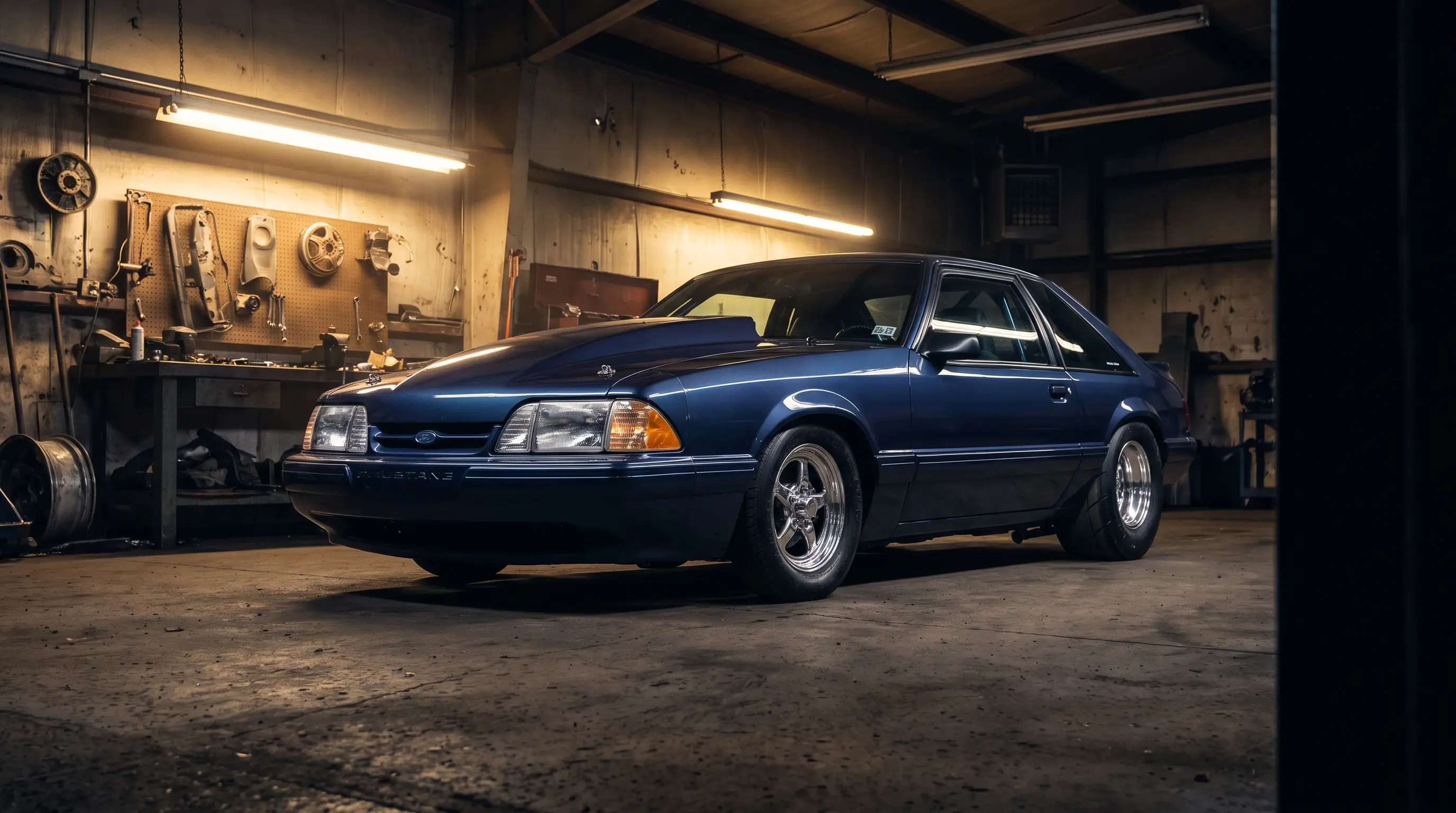
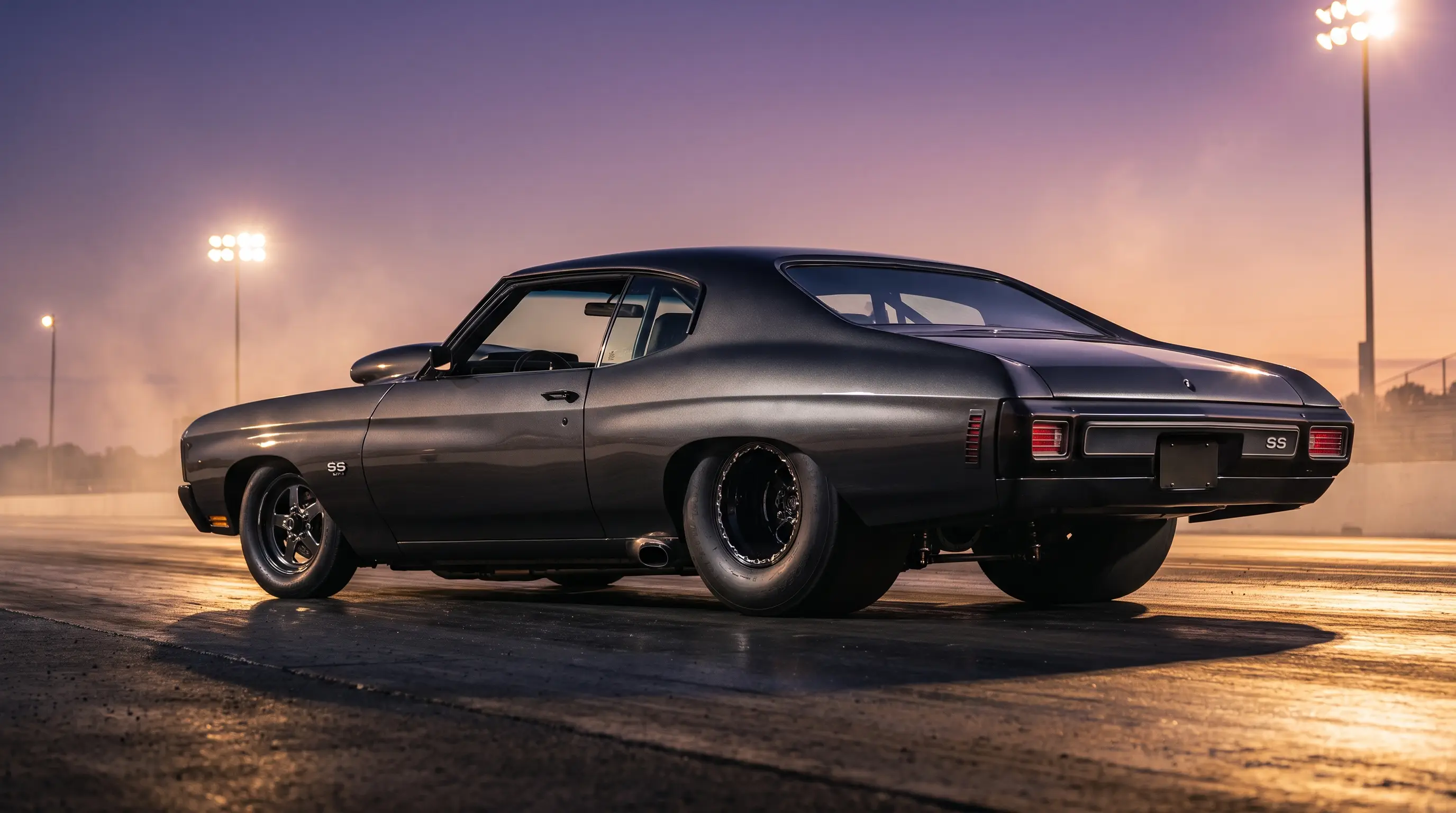
A pro street chevelle is a heavier proposition than a Camaro or a Nova, and anybody who has actually wrenched on one will tell you that straight out. More metal, a full frame instead of a unibody, and a wider stance to begin with. That extra mass changed how builders approached the platform, and it is why Chevelle builds from the era tend to look and drive a little different from their lighter GM cousins.
Working with a full-frame car
The Chevelle's body-on-frame construction meant a builder could not lean on the same unibody tricks that made Nova work relatively fast. You had a real frame to modify, real crossmembers to relocate or notch, and a lot more structure between the front clip and the rear tub. That sounds like extra work, and it was, but it also meant the finished car was inherently stiffer once the back-half kit went in. A Chevelle tub job that was done right did not flex or shift under hard launches the way a poorly reinforced unibody car sometimes did.
The tradeoff was weight. A Chevelle came into a build carrying more pounds than a Nova or even a Camaro, which meant a builder chasing quarter-mile numbers had to either compensate with a bigger engine or accept the car would never be quite as light on its feet as the smaller platforms. Most builders picked the first option, since a full-frame car had no trouble handling a big-block up front.
Big-block by default, not by choice
Where Camaro and Nova builders often ran a small-block and called it good, Chevelle builders leaned toward big-block power more consistently, and the reason was simple math. A 454 or a stroked big-block gave a heavier car the torque it needed to actually move the extra weight off the line, and the Chevelle's engine bay had the room to fit one without the clearance fights smaller platforms sometimes required. A Chevelle with a mild small-block just felt underpowered compared to the same combination in a lighter car, so builders skipped the debate and went straight to the bigger engine option most of the time.
That big-block bias gave Pro Street Chevelles a particular sound and presence at shows, deeper and louder than the small-block cars sitting next to them, which suited a platform that already looked wide and imposing before the engine ever fired.
"You don't build a Chevelle expecting it to feel like a go-kart. You build it expecting to hear it before you see it, and that's exactly what you get."
- Mike Sullivan
Chassis work specific to the platform
Back-half kits for a Chevelle required more welding and more careful attention to how the new tub structure tied into the existing frame rails compared to a unibody Nova, where the whole rear structure was effectively being replaced anyway. A shop that only knew unibody work sometimes struggled the first time they took on a Chevelle, and that learning curve is part of why certain builders became known specifically as Chevelle specialists while others stuck to Camaros and Novas.
Front suspension work also tended to run a little differently on a Chevelle, since the car's wider stock track width gave builders more room to work with when deciding how far to narrow the front end for visual effect without compromising the geometry.
How the Chevelle fits the bigger platform picture
The Chevelle never dethroned the Camaro as the most common Pro Street build, but it carved out a real following among builders who wanted something with more road presence and were willing to accept the weight penalty for it. Seeing how the Chevelle stacks up against its GM stablemates and the Ford and Mopar competition takes a wider view of the whole era. You can read the background on how these rival platforms developed side by side through the movement's golden years.
Ford loyalists were fighting a similar weight-versus-presence battle with their own platform choices at the same time, and that comparison is genuinely useful if you are trying to decide between builds. The Mustang crowd tackled it differently, and that story is worth a look too if you want to see how a lighter Ford platform solved the same problem the Chevelle solved with brute displacement.
Chevelle values and what to check before buying
A genuine period Pro Street Chevelle with documented big-block power and correct-era tub work commands solid money today, particularly from buyers who want the platform's road presence over the smaller cars' nimbleness. Inspect the frame connections where the back half meets the original structure carefully, since that joint is where a poorly executed build shows its weaknesses first, usually as cracking or flex that a casual walk-around inspection will not catch.
If a Chevelle is on your list, do not rush the search. Take time comparing what is actually out there before settling on one, and you can shop classic Pro Street car listings to see current inventory and get a feel for realistic asking prices on a properly built example.
The straightforward appeal of a heavier build
A Pro Street Chevelle was never going to be the lightest or the cheapest platform choice, and nobody who built one was under any illusion about that. What it offered instead was presence, room for a serious engine, and a frame that could handle the abuse without complaint. That straightforward trade is exactly why the platform still has its loyalists decades later.
Model year differences that matter to a build
Not all Chevelle years suited Pro Street tubbing equally. The 1968 through 1972 cars are the most sought-after starting points, offering the classic body lines and a wide donor pool from years when GM sold Chevelles in huge numbers. The 1973 to 1977 colonnade-era cars, heavier and styled differently, saw less Pro Street attention, though a handful of builders took them on specifically because the scarcity of tubbed examples from those years made a finished build stand out at shows dominated by earlier-body Chevelles.
| Chevelle era | Builder relevance |
|---|---|
| 1968 to 1972 | Most common Pro Street donor, widest aftermarket back-half support |
| 1973 to 1977 | Heavier colonnade body, rarer to see tubbed, stands out at shows |
A builder working within a fixed budget usually gravitates to the earlier years for the simple reason that parts availability makes the whole project cheaper and faster to finish, which matters when a project stretches across a couple of winters in a home garage rather than a paid shop schedule.
Engine bay width shifted slightly between generations too, and a builder swapping a big-block into an early Chevelle generally found more room to work than someone tackling the same swap in a tighter GM compact. That extra clearance is one more reason the platform leaned so heavily toward big-inch power rather than fighting for space the way a Nova build sometimes had to.