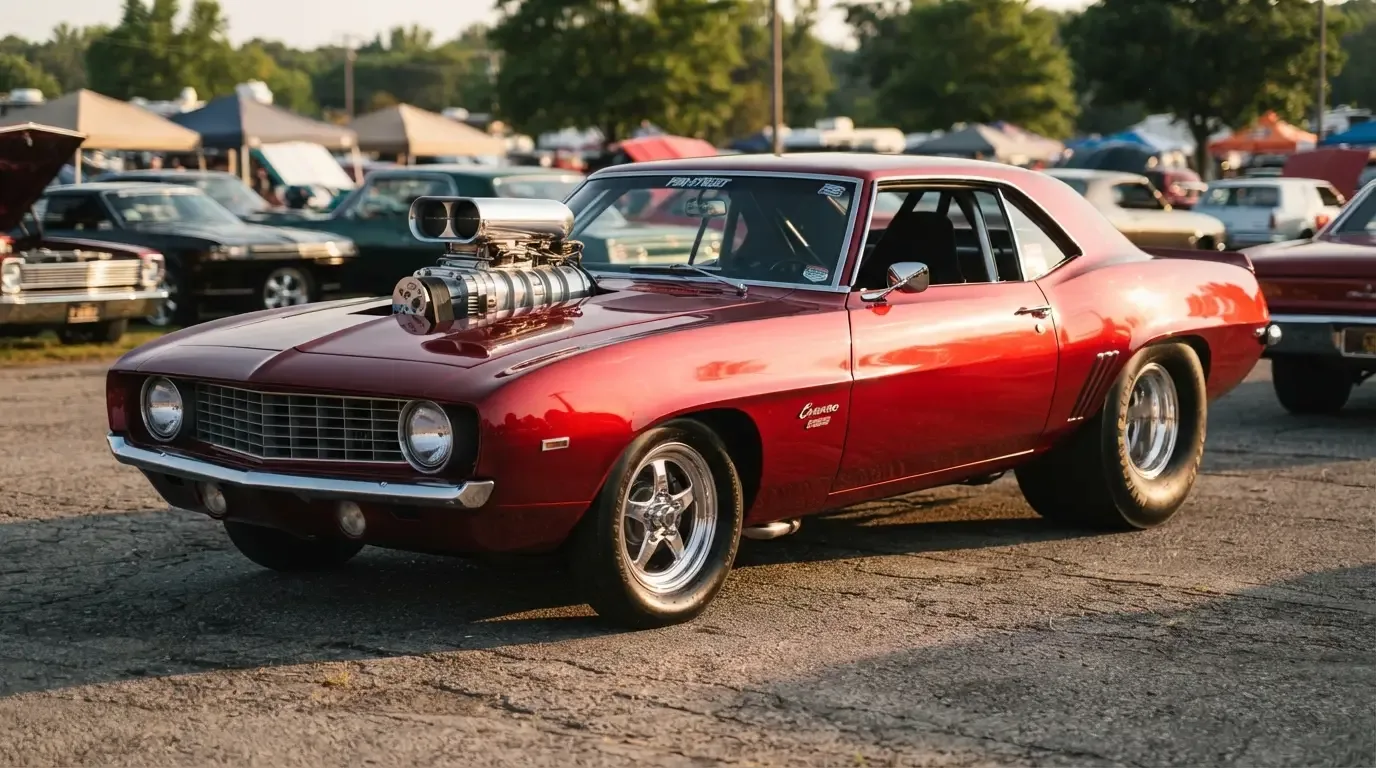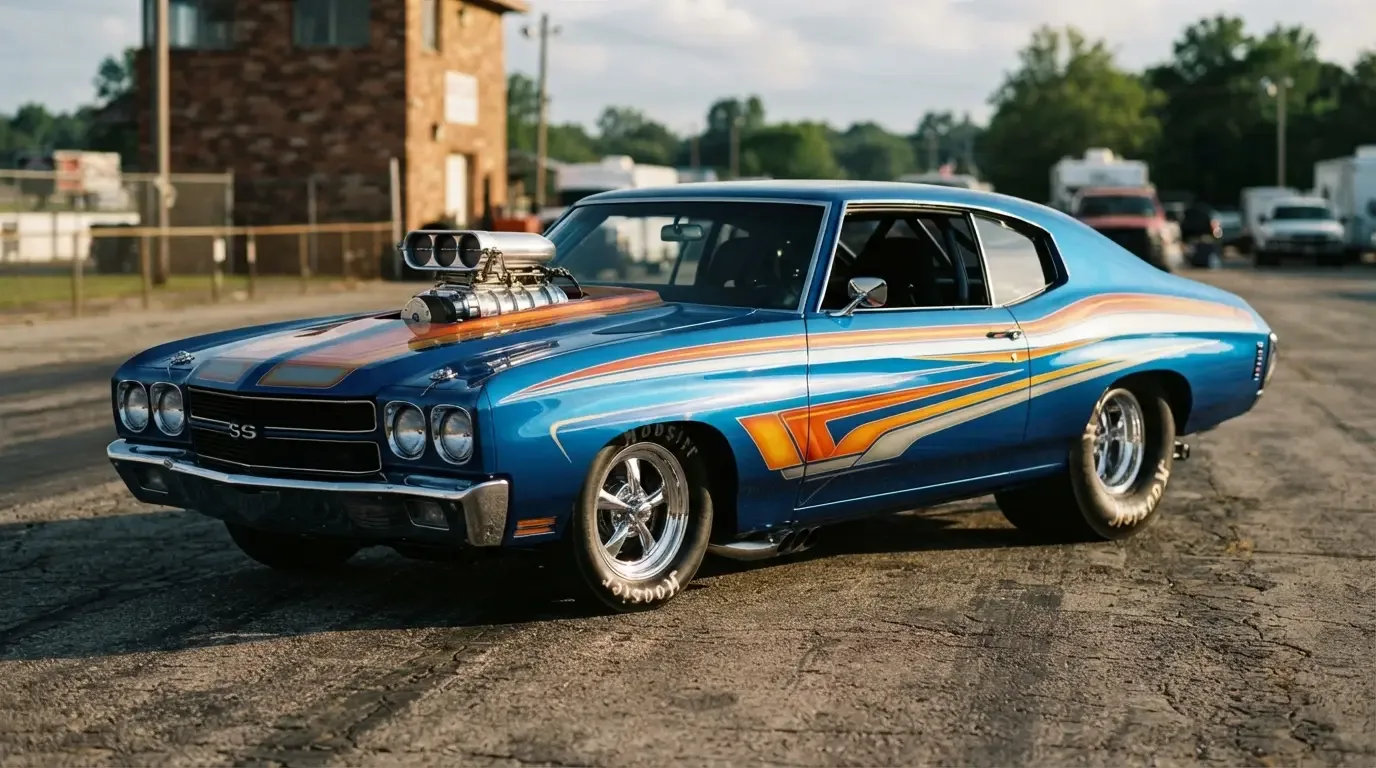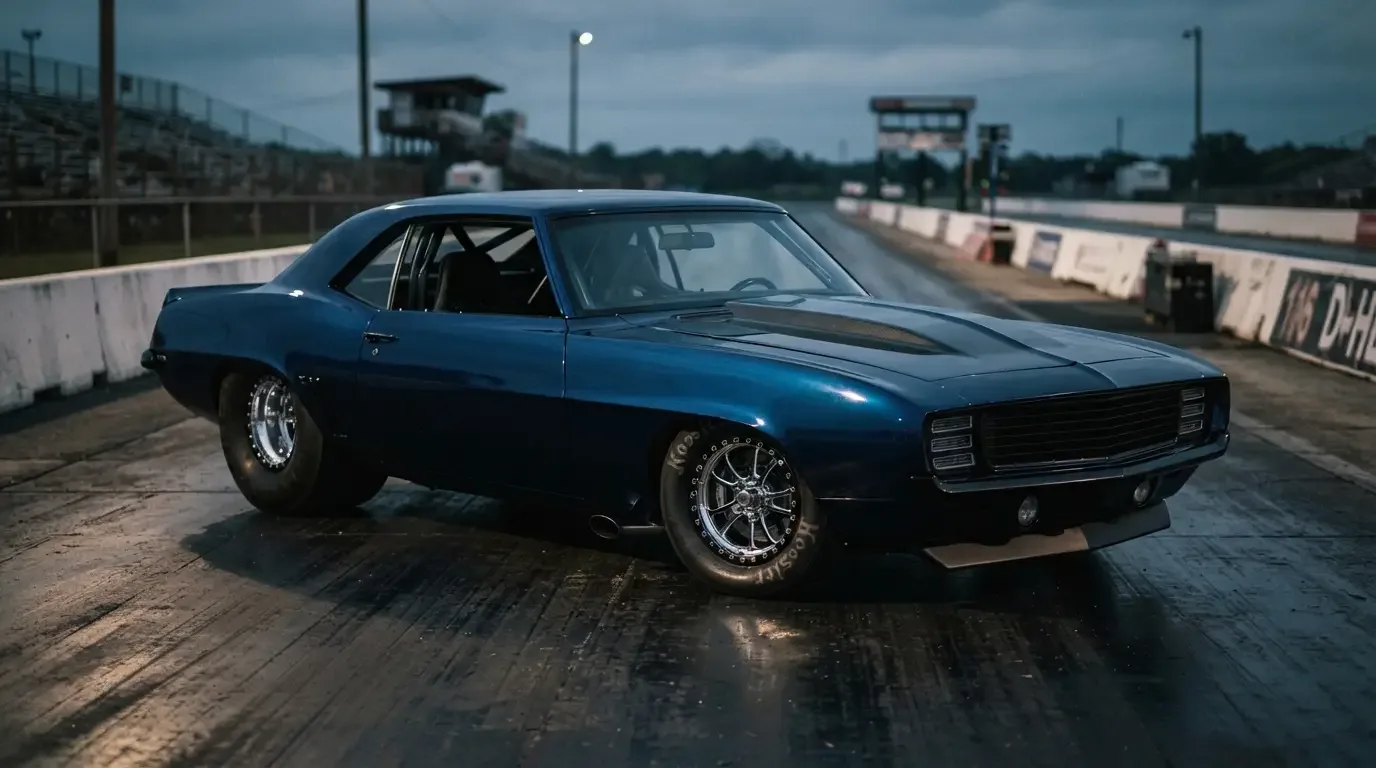
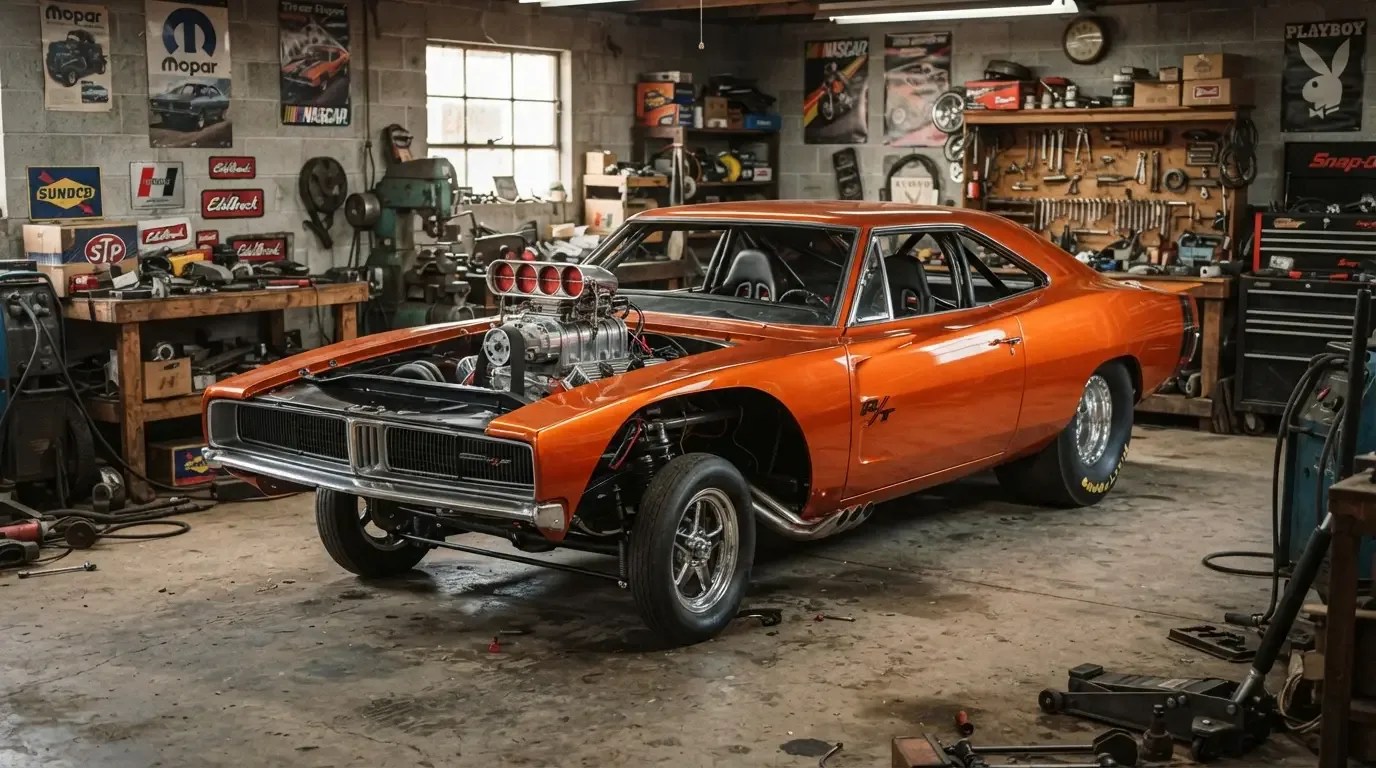
Every movement has a moment before it has a name, and the pro street origins story sits squarely in the mid to late 1970s, years before anyone at a magazine coined the term that would define an entire decade of car culture. It started at drag strips, not car shows, with racers who wanted their door slammer cars to look as menacing sitting in the staging lanes as they ran down the track. Nobody set out to build a new movement. They were just trying to go faster and look meaner doing it, and the aesthetic that resulted eventually walked off the track and onto the street.
The door slammer connection
Pro Stock and door slammer drag racing in the early to mid 1970s pioneered a lot of the visual language that Pro Street would later borrow wholesale. Narrowed rear ends, huge slicks tucked under tubbed quarter panels, altered wheelbases, and big engines poking through hood scoops were all standard equipment at the strip years before anyone drove a car built that way to a drive in restaurant. Racers built these cars purely for elapsed times, with no thought given to street legality or daily usability, but the look they created was undeniably striking, and it caught the attention of hot rodders who spent their weekends at the track watching.
The jump from race car to street car did not happen overnight, but it did not take long either. By the late 1970s, a handful of builders started asking a simple question, what would it take to bring that drag strip look to a car you could actually drive on the street, plates and all. The answer involved compromise, since a true race car chassis was not built with things like a working exhaust system or a passenger seat in mind, but the core visual formula, wide tire out back, narrow tire up front, tubbed rear end, big engine on display, translated surprisingly well to street driven builds.
Why the timing mattered
The late 1970s were not an obvious moment for a horsepower focused movement to take root. Emissions regulations, fuel prices, and insurance concerns had gutted a lot of factory muscle car performance earlier in the decade, and plenty of the original muscle era had already faded by the time Pro Street started forming as its own identity. That context actually helped the movement rather than hurt it. Builders who wanted real performance and real presence had fewer factory options to choose from, so they turned to older muscle car and hot rod platforms and built the performance themselves, outside of what Detroit was currently offering.
Older bodies, Novas, Camaros, Mustangs, and full size muscle cars from the 1960s, became the canvas of choice, partly because they were affordable and plentiful at the time, and partly because their proportions suited the aggressive tub and tire treatment better than newer, more aerodynamically softened bodies coming out of Detroit by the late 1970s and early 1980s.
| Era | What Was Happening | Influence on Pro Street |
|---|---|---|
| Early 1970s | Pro Stock and door slammer drag racing peaks | Established the tubbed, wide tire visual template |
| Mid 1970s | Muscle car performance declines industry wide | Pushed enthusiasts toward building their own performance |
| Late 1970s | First street driven builds borrow drag racing looks | Direct birth of the Pro Street aesthetic |
| Early 1980s | Magazine coverage begins in earnest | Gave the movement a name and a national audience |
The people who pushed it forward
No single builder invented Pro Street, but a scattered network of shops and individual builders across the country kept pushing the formula further through the late 1970s, trading ideas at the strip and at regional shows long before the internet made that kind of sharing instant. Fabrication techniques for narrowing rear ends and tubbing wheel wells spread through word of mouth and hands on demonstration rather than any published how to guide, which meant the early builds carried a lot of individual personality even while converging on the same general look.
What tied these early builders together was less a shared blueprint than a shared instinct, that a street car could look as serious as a race car without giving up its ability to drive to the corner store, even if that drive occasionally required a bit more patience than a stock car would have demanded. For a fuller account of how this early period connects to everything that came after, history of pro street cars history picks up the story in more depth.
"Nobody at the strip in 1975 thought they were starting a movement. They just wanted their car to look like it meant business sitting in the staging lanes. Everything else grew out from that."
- Patrick Walsh
From regional trend to national movement
What kept these scattered origins from staying a purely regional phenomenon was media coverage. As the look spread through car shows and local publications in the late 1970s, national magazines took notice, and by the early 1980s features dedicated to the emerging style started appearing regularly, giving builders across the country a shared reference point and a name for what they were already doing instinctively. That coverage accelerated everything, turning a scattered set of drag strip influenced builds into a recognizable national movement with its own rules, its own heroes, and eventually its own golden era through the 1980s. If you want to see where that momentum led once the movement hit its stride, a related story covers that chapter directly.
Understanding these origins changes how you look at any genuine build from the era, since the choices that define the look, the tub, the tire mismatch, the exposed engine, were never arbitrary style decisions. They were inherited directly from a drag strip aesthetic that predates the term Pro Street by nearly a decade. If that history has you interested in the real thing, there are always Pro Street cars for sale now carrying that lineage forward.
What the origins reveal about the parts choices
Looking back at the door slammer roots explains a lot of decisions that might otherwise seem arbitrary to someone encountering a genuine period build for the first time. The narrowed rear ends builders sourced in the late 1970s and early 1980s were often the exact same components, or close cousins of them, used by professional drag teams a few years earlier, simply trickling down into the hands of street builders as racing technology moved on to newer solutions at the top level. That lineage means a lot of the hardware underneath an early Pro Street car has a direct, traceable connection to serious competition equipment rather than being purpose built from scratch for street use, which is part of why these components performed so well once installed under a car meant to be driven on public roads.
This connection to genuine racing hardware also explains why some of the earliest street built examples feel almost more legitimate, mechanically speaking, than later builds that leaned harder into show quality presentation. The first generation of builders were not primarily concerned with paint or polish, they were adapting proven race technology to a new purpose, and that priority shows in how those early cars were engineered even when the finish work looked comparatively rough next to what came later in the decade.
Sources and notes
- Wikipedia: Pro Street
- Chevy Hardcore: Pro Street, A Look Back At The Bow-Tie Style That Never Gets Old
- In The Garage Media: Defining Muscle Car Terms, Pro Touring, Pro Street, and Street Freak
- Hagerty: Pro Street's Greatest Builds Honored at 2024 Grand National Roadster Show
- Fuel Curve: Street Machines, Pro Street to Pro Touring, Part 1