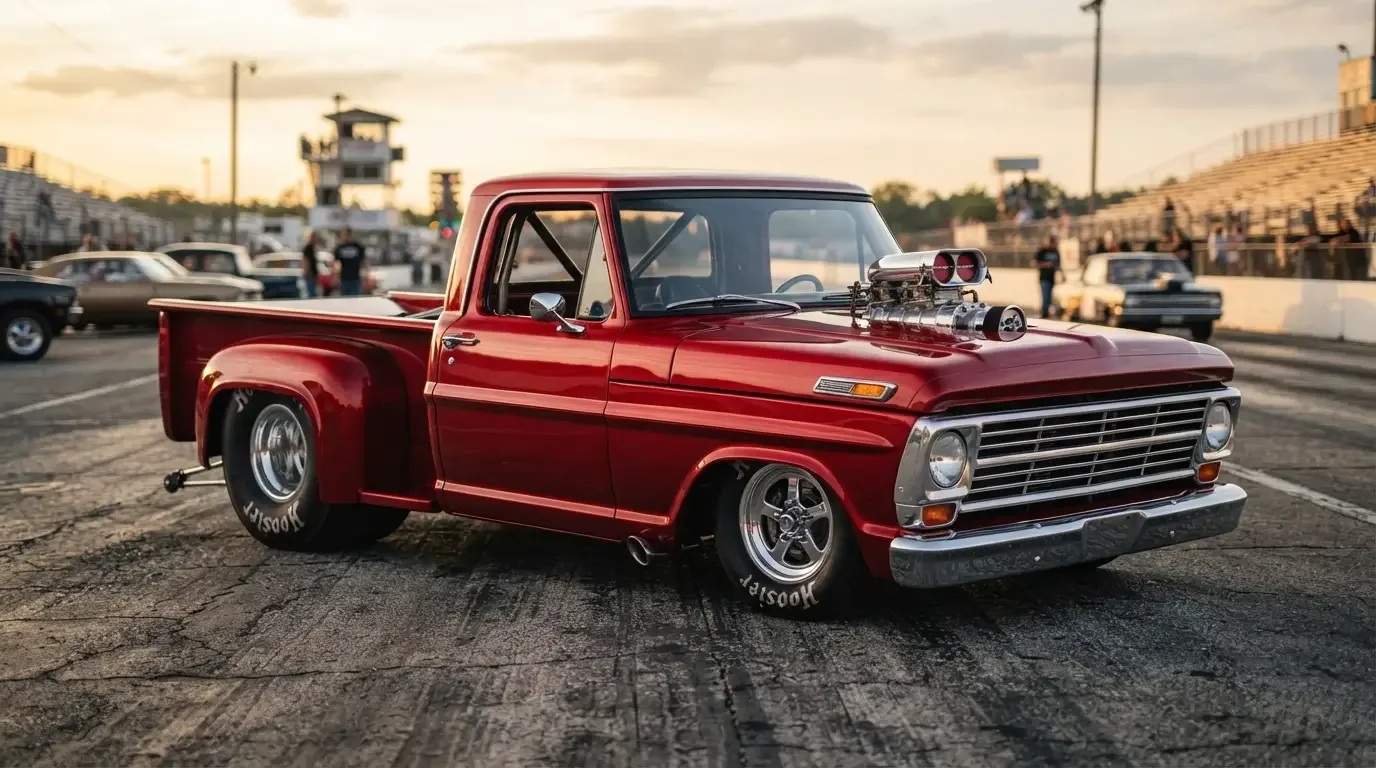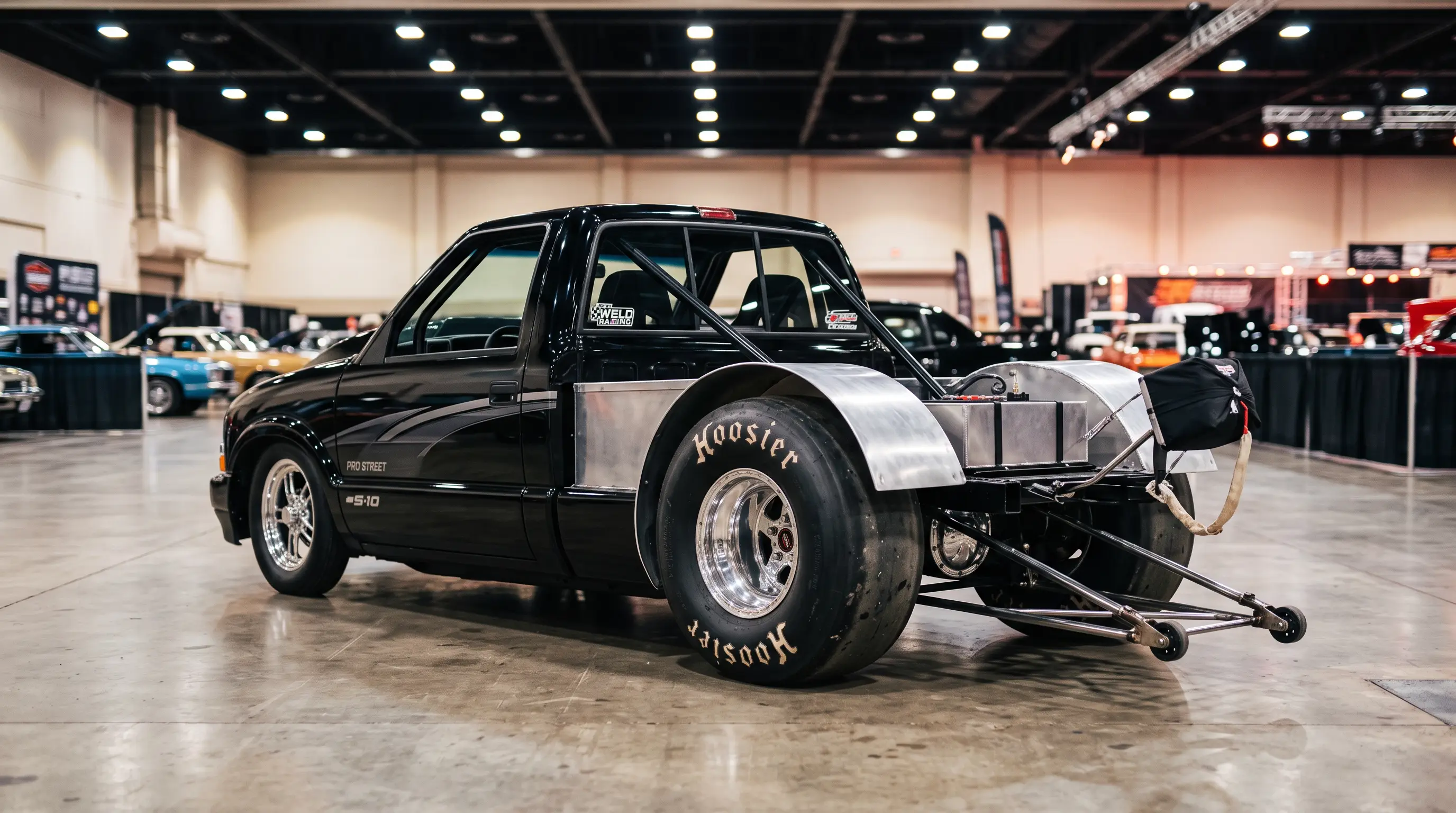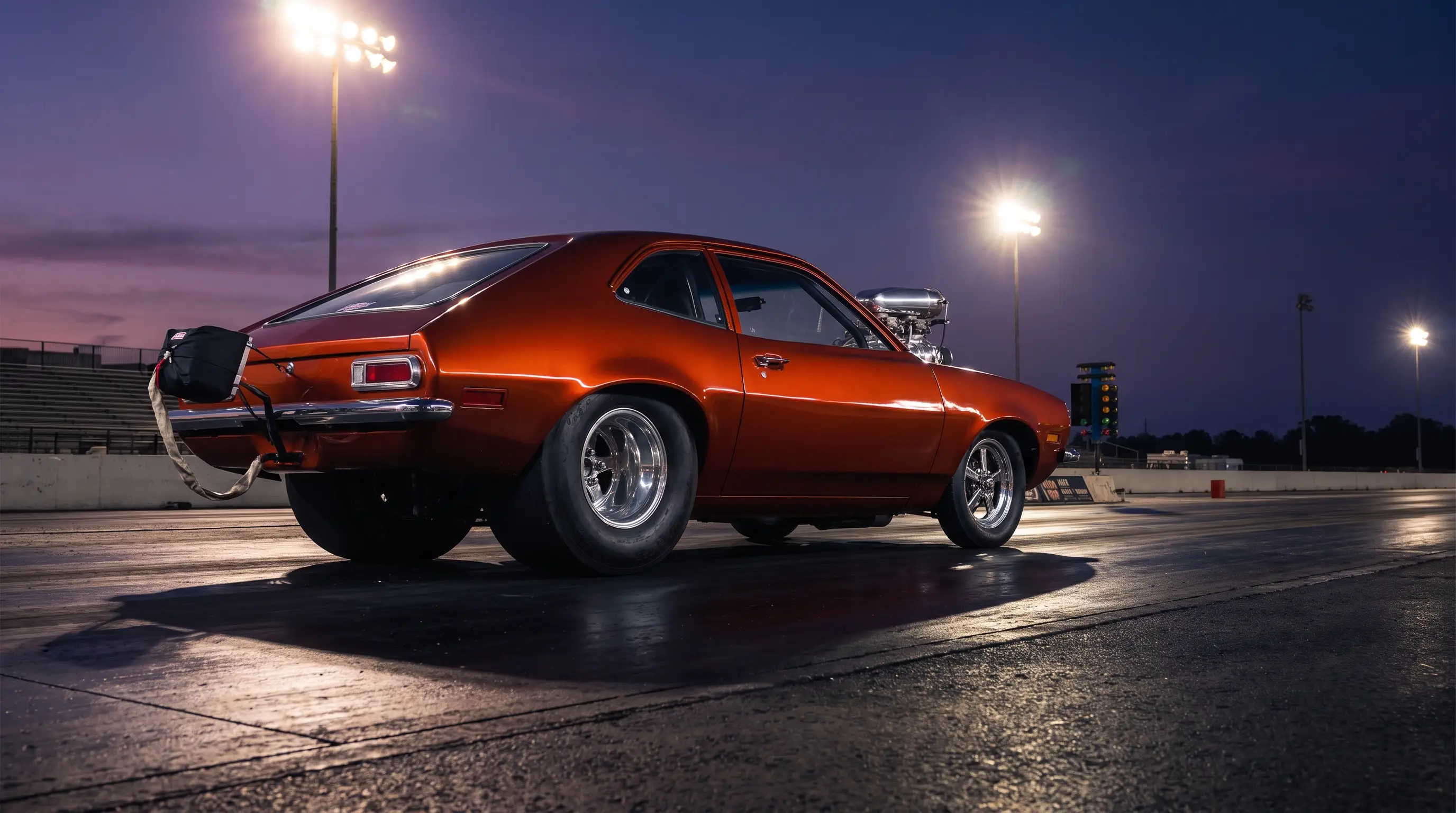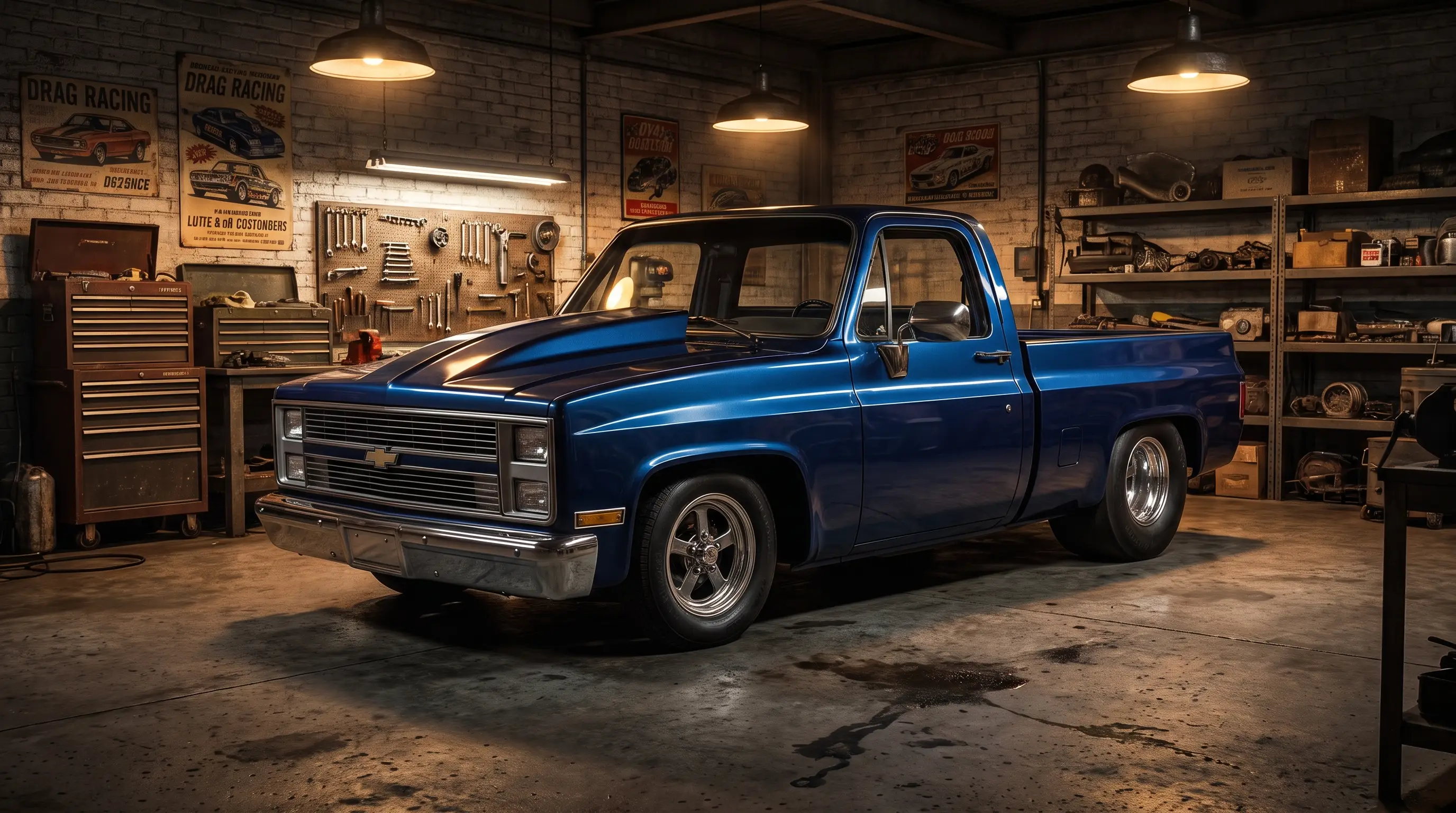
Trucks were never supposed to be part of this story, not at first. Pro Street trucks build culture arrived a step behind the cars, once builders who had already tubbed every muscle car in their driveway started looking around the shop for the next canvas. A pickup bed turned out to have plenty of room for a tub job, and a truck's boxy proportions turned out to exaggerate a wide rear tire even more dramatically than a sedan or coupe body ever could. What started as builders running out of car projects became its own distinct branch of the style, and it has stuck around ever since.
Why a pickup bed works so well for a tub
A car's quarter panels have to hide the tub work behind sheet metal shaped for aerodynamics and passenger space. A pickup bed is a much simpler shape, essentially a box, which gives a builder more room to work and fewer compound curves to fight. Once the bed floor and wheel tubs are modified to clear a massive rear tire, the rest of the bed can often be finished relatively cleanly compared to the fabrication headaches involved in tubbing a full unibody car. That relative simplicity is part of why so many builders gravitated toward trucks once they had already proven the concept on a car.
Which trucks became the go-to platforms
Squarebody Chevy and GMC pickups from the late 1970s and 1980s became a favorite base almost immediately, thanks to affordable, plentiful donor trucks and a boxy shape that suited the tubbed look. Ford's F-100 and F-150 of the same era saw plenty of builds too, along with smaller trucks once compact pickups became common in the following decade. Each platform brought a slightly different proportion to work with. A full-size truck offered more room in the bed for a dramatic tub job, while a compact pickup produced an even more exaggerated visual contrast between a narrow front end and a wide rear stance, simply because the whole truck started out smaller.
The engineering challenges unique to trucks
A truck frame is built differently than a car's unibody or perimeter frame, generally with a separate ladder frame designed to carry cargo weight rather than corner hard or launch off a drag strip. Builders working on Pro Street trucks had to account for that difference, often reinforcing the frame around the tub area and paying close attention to how the modified rear suspension interacted with a frame that was never engineered with a fourteen-inch-wide tire in mind. Ride height and weight distribution also behave differently on a truck than a car, since a pickup's factory weight bias sits differently front to rear compared to a muscle car coupe. Builders who understood these differences produced trucks that drove predictably. Builders who ignored them produced trucks that looked spectacular in the driveway and handled poorly the moment they left it.
"A truck chassis fights you in different places than a car does. Get the rear suspension geometry wrong on a tubbed truck and you'll know about it the first time you get on the throttle hard."
- Patrick Walsh
How trucks changed the visual formula
Where a Pro Street car relies on the contrast between a slim body and a wide rear tire, a truck adds the bed itself as a third visual element. A well-proportioned Pro Street truck balances the cab, the narrowed front stance, and the tubbed bed all together, and getting that three-way balance right is genuinely harder than balancing a two-part car silhouette. Some builders leaned into the imbalance on purpose, letting the bed look almost comically oversized relative to the cab to push the aggression even further. Others kept things closer to factory proportions and let the tire width alone carry the visual weight. Both approaches have their fans within the truck-focused corner of the scene.
Trucks within the wider Pro Street world
Pro Street trucks never outnumbered the cars, but they carved out a genuinely dedicated following, partly because a truck offered practicality that a two-door muscle car never could. A Pro Street truck could still haul a load in a pinch, even if nobody who owned one actually wanted to put anything heavier than a cooler in that beautifully finished tubbed bed. pro street trucks history covers the broader story of how these builds fit into the movement's timeline, including some of the stranger platform choices builders experimented with along the way. If a specific compact truck platform interests you more than the full-size squarebodies, a related story looks at how one popular compact pickup got the Pro Street treatment.
Finding one today
Pro Street trucks come up for sale less often than cars from the same era, simply because fewer were built in the first place, and that relative scarcity has kept prices for well-documented examples steady even as broader interest in the style has ebbed and flowed. Anyone hunting for one should expect a longer search than shopping for a Pro Street car, and should budget time to verify the quality of the frame and suspension work carefully, given the extra engineering demands trucks carry compared to cars. You can look at Pro Street cars for sale now to get a sense of current market activity, including whatever truck-based builds happen to be listed at the time.
The community that formed around truck builds
Truck-focused Pro Street owners tend to know each other by name within their regions, since the smaller pool of builds means the same trucks show up repeatedly at the same regional cruise nights and truck-specific gatherings over the years. A well-known Pro Street truck often carries a reputation that follows it through multiple owners, with each new buyer inheriting not just the hardware but the story attached to it. Patrick has talked to more than one owner who bought a truck specifically because they remembered seeing it at a show a decade earlier and never forgot the stance. That kind of long memory is common in the truck corner of the hobby in a way that feels a little different from the broader car scene, where sheer numbers make individual builds harder to track over such long stretches of time.
What surprises first-time truck shoppers
Buyers coming from the car side of Pro Street collecting are often surprised by how much the bed condition factors into a truck's overall value, since a tub job that looks clean from outside the truck can hide corrosion or sloppy fabrication once you actually climb up and inspect the bed floor and tailgate area closely. Sellers who have done the work properly are usually happy to show that area off, while a seller who gets cagey about letting a buyer look inside the bed is sending a signal worth paying attention to. Getting underneath the truck matters just as much, since the frame modifications around the tub area are where corners get cut most often on a rushed build.
Sources and notes
- Pro Street - Wikipedia
- A History Of The 1973-1987 Chevrolet Square Body Pickup - DrivingLine
- Square Body Trucks: A Brief History of the 1973-1987 Chevy & GMC C/K Pickup Trucks - Quantum Fuel Systems
- Ford F-Series - Wikipedia
- Pro Street: A Look Back At The Bow-Tie Style That Never Gets Old - Chevy Hardcore