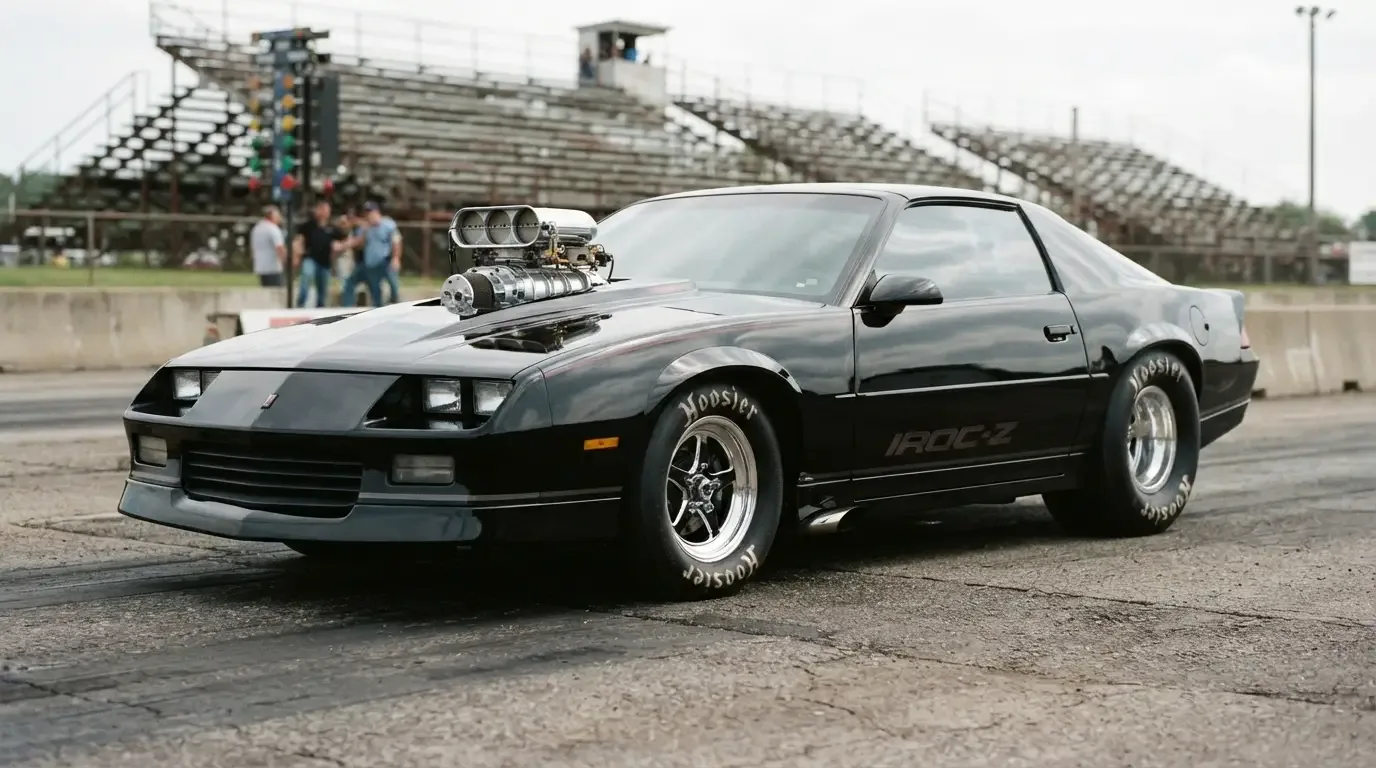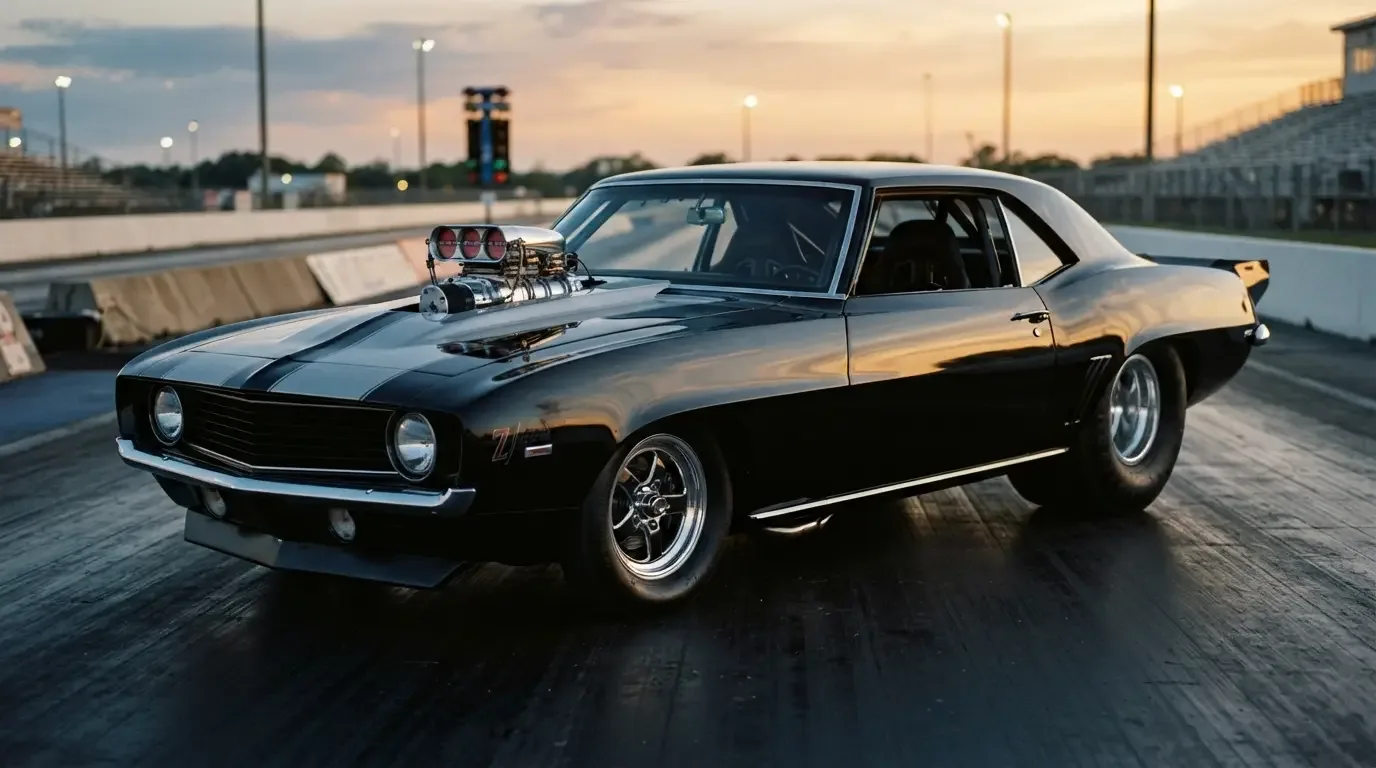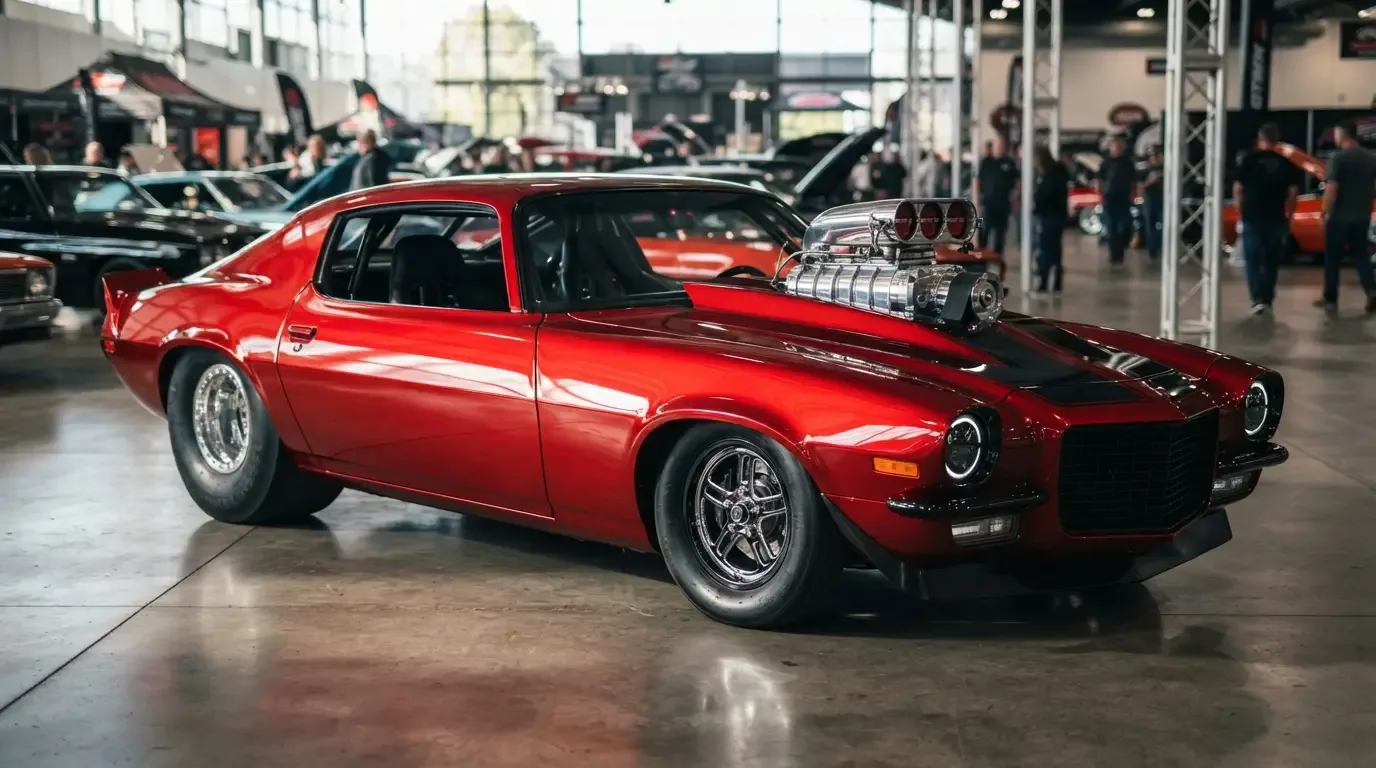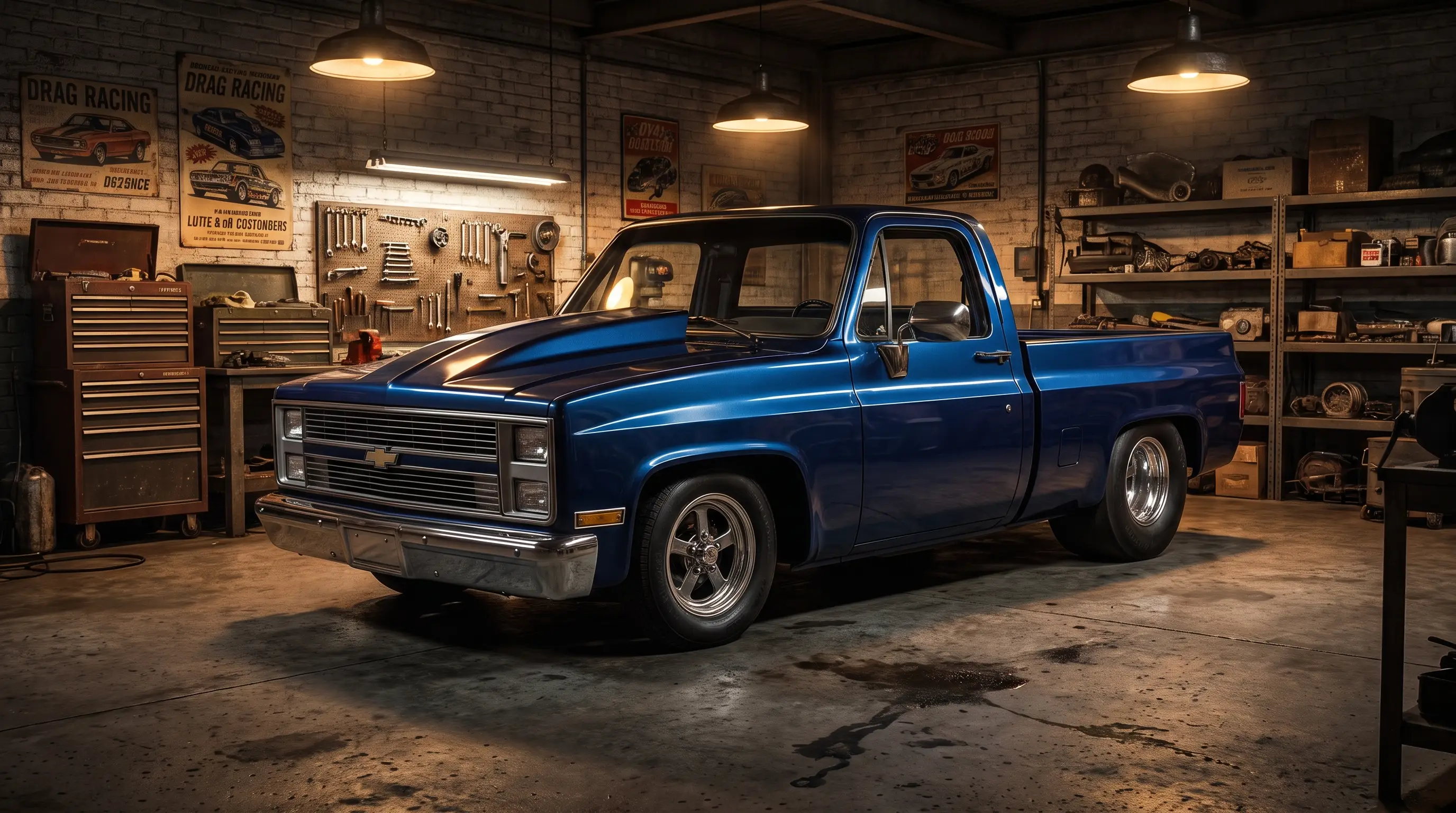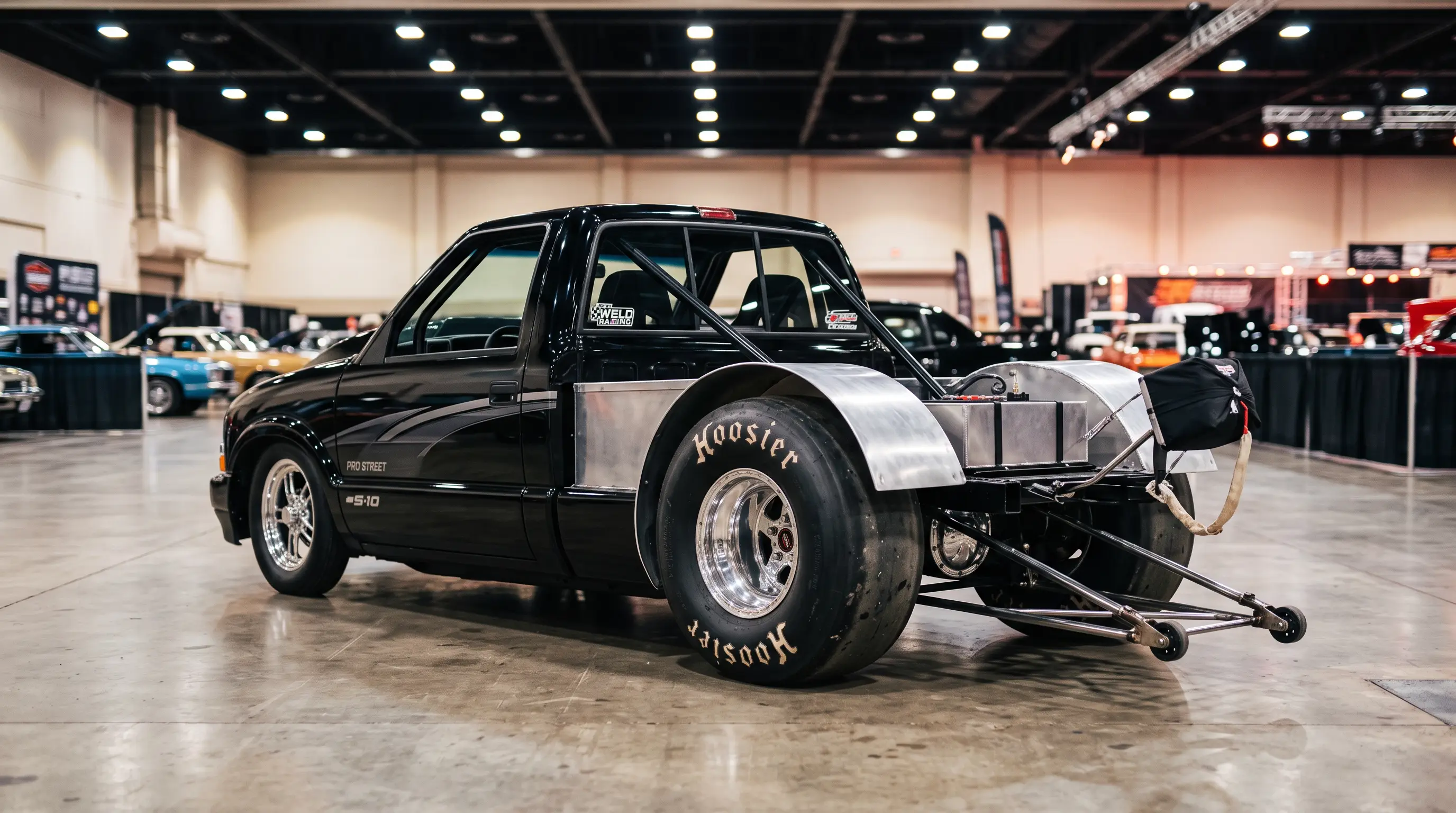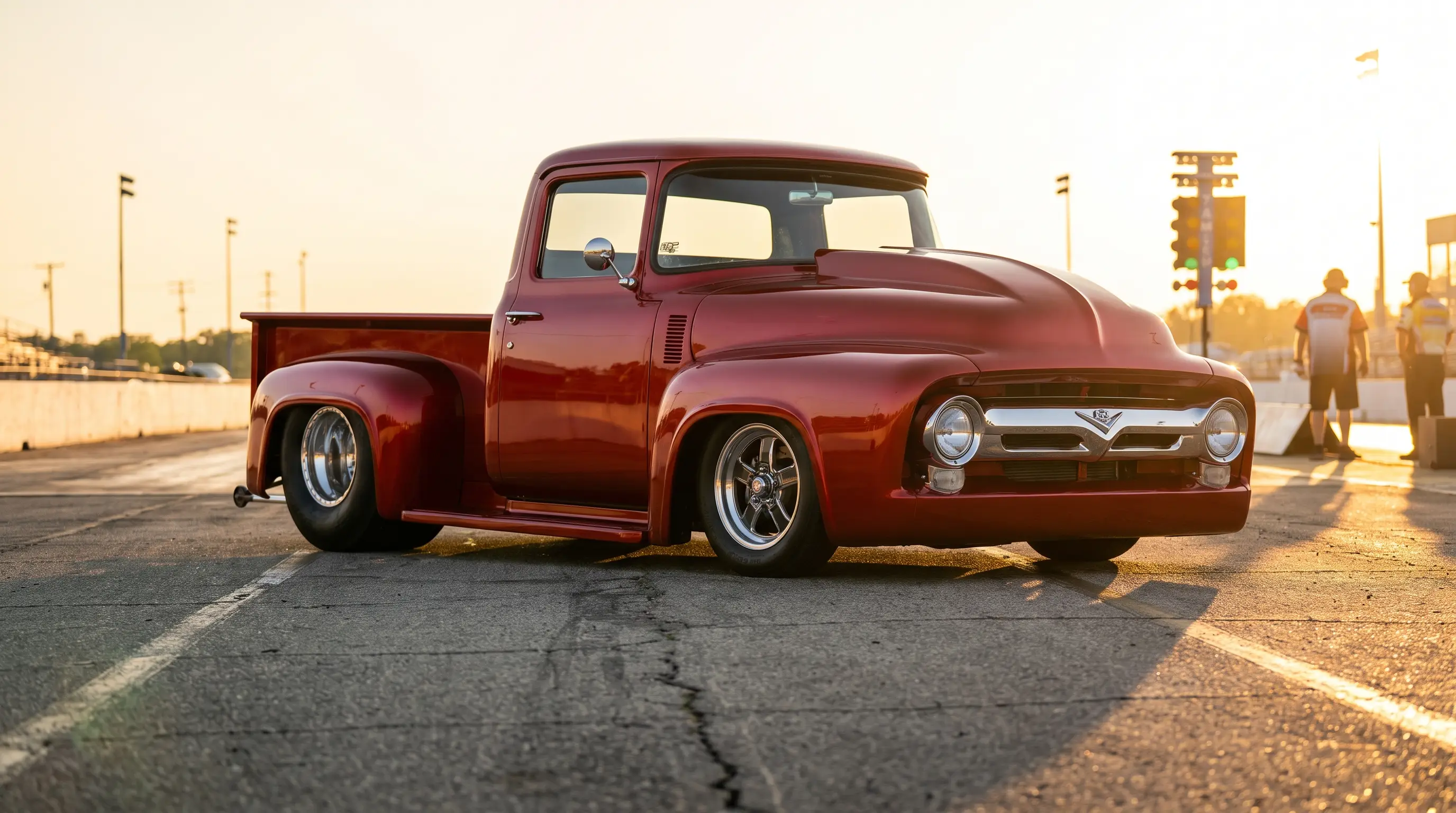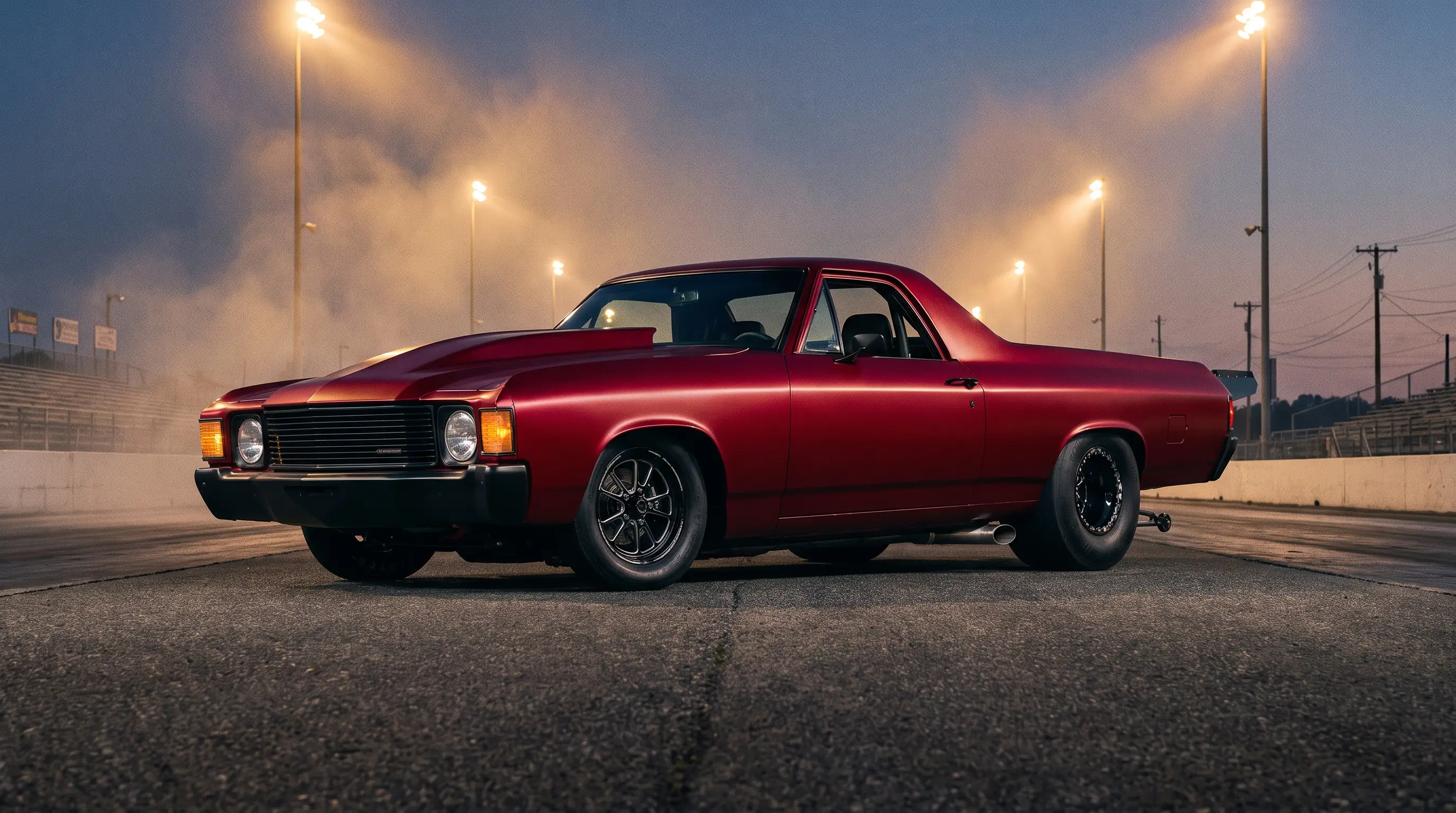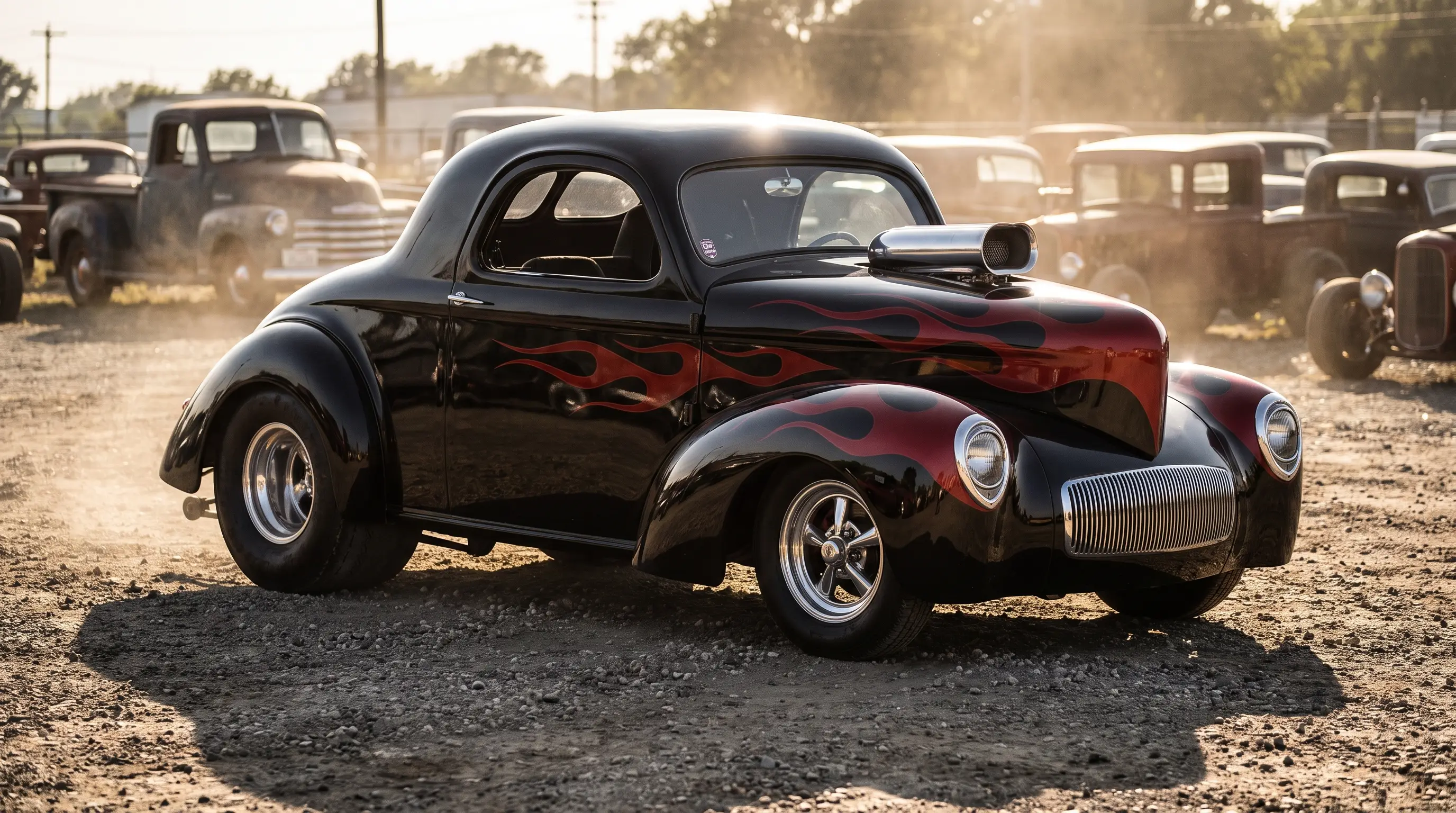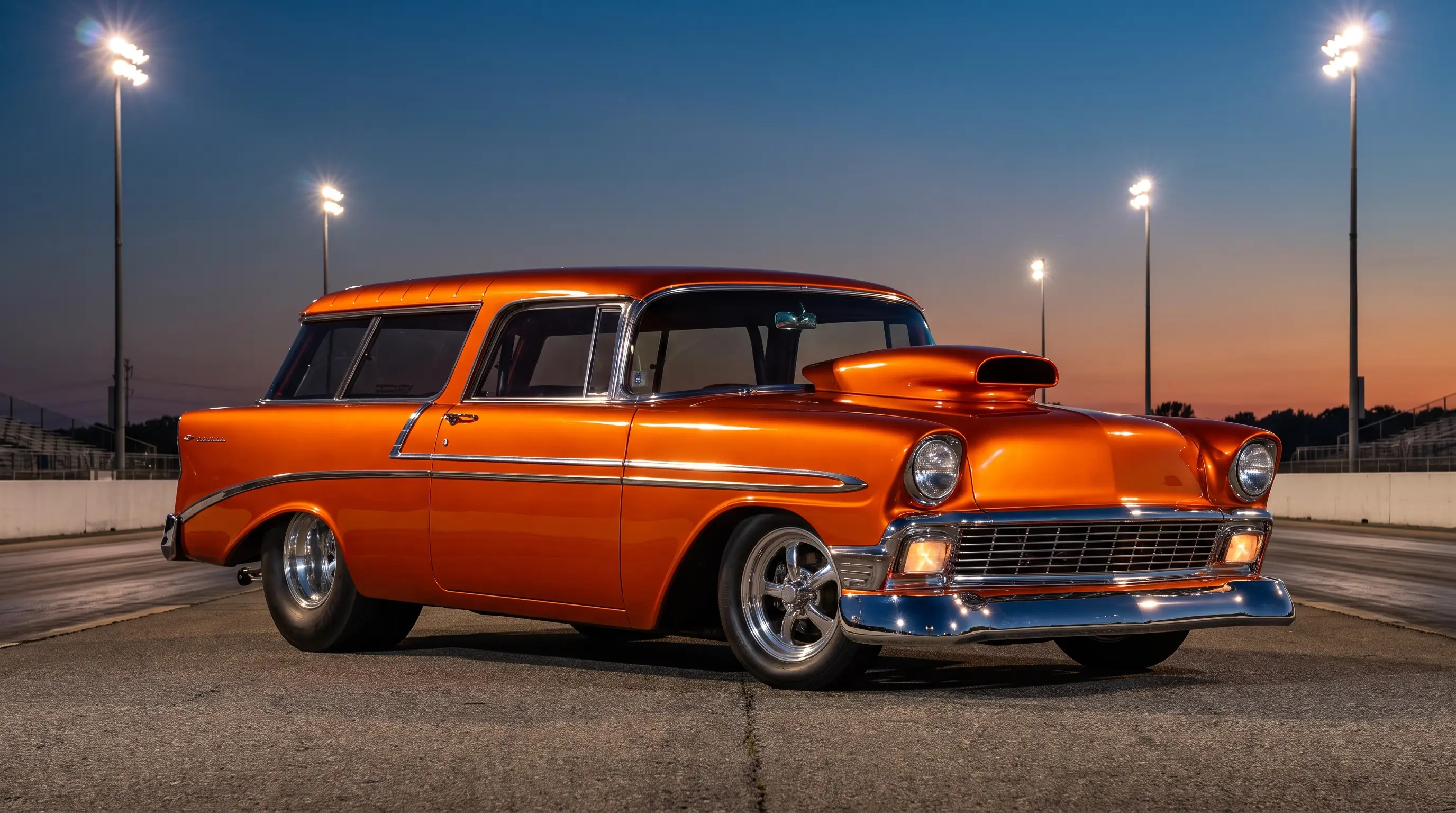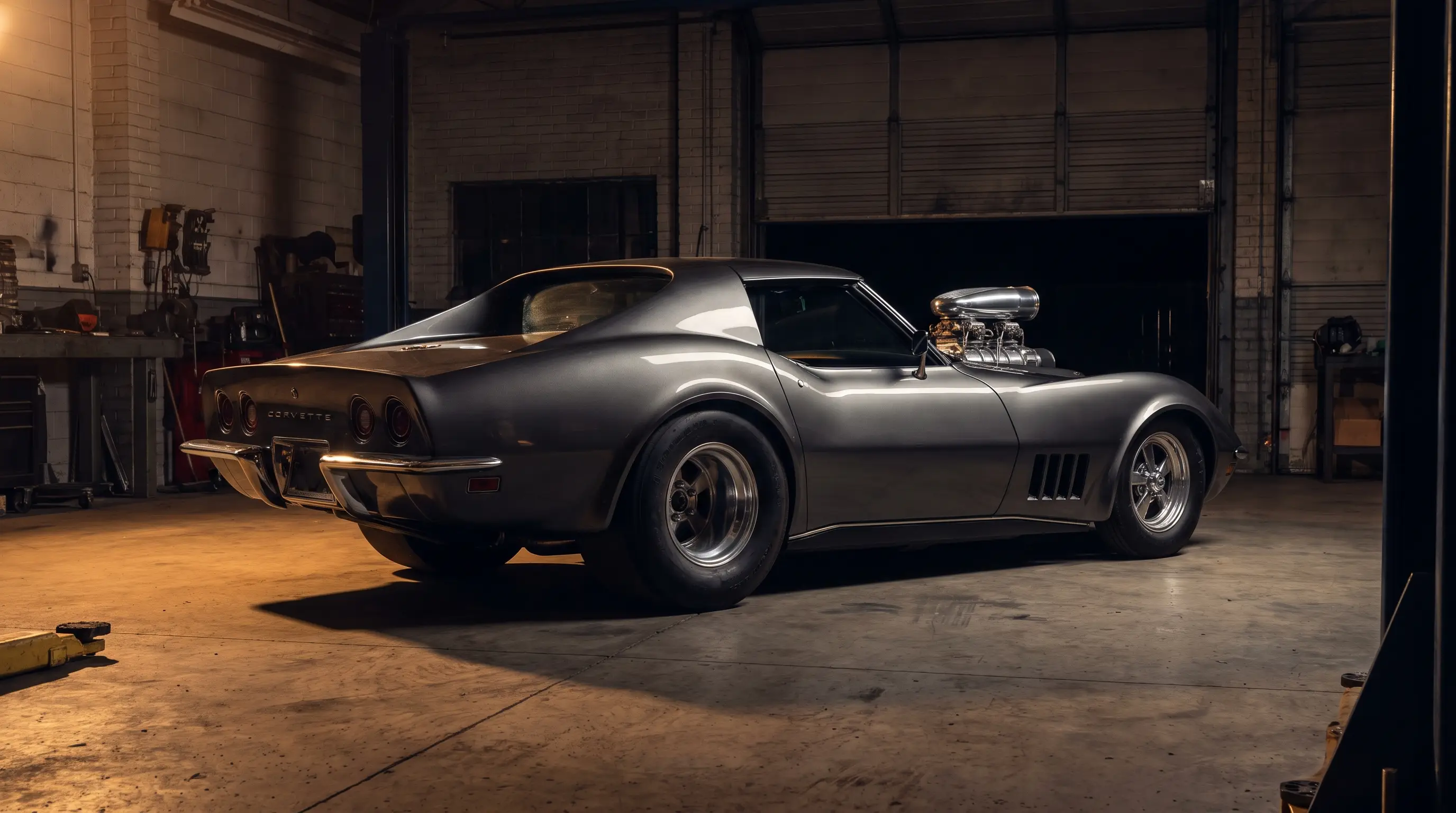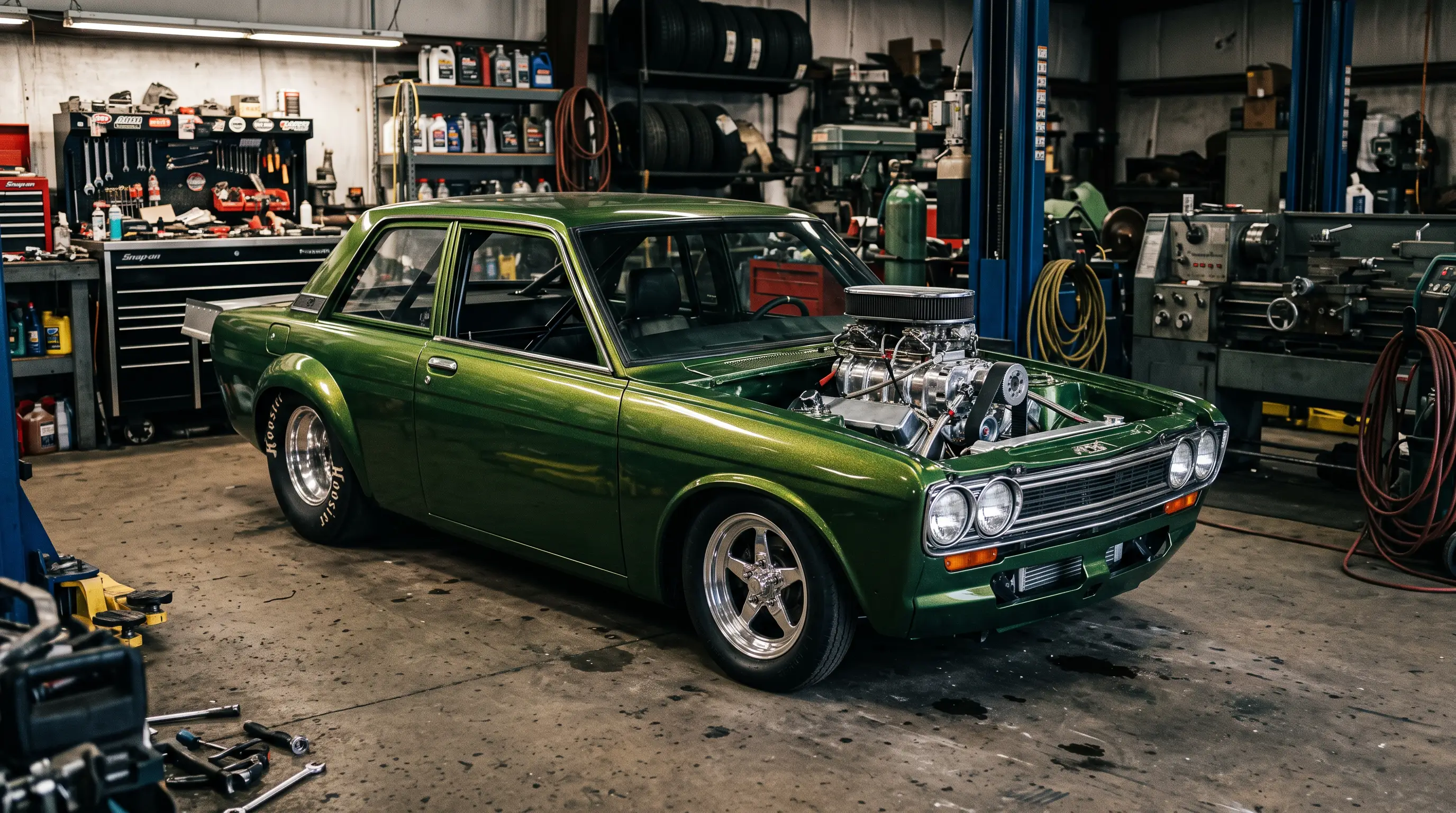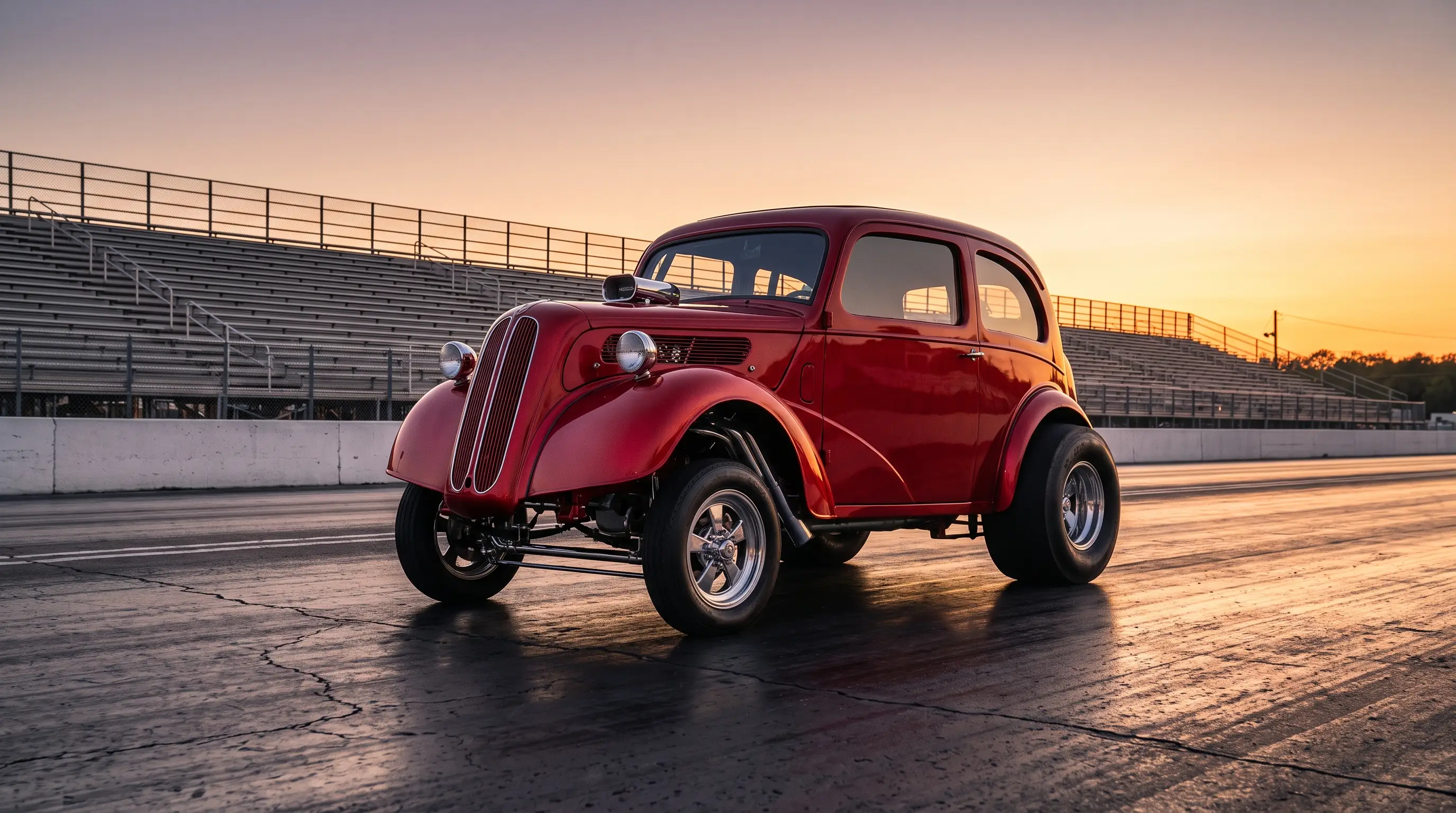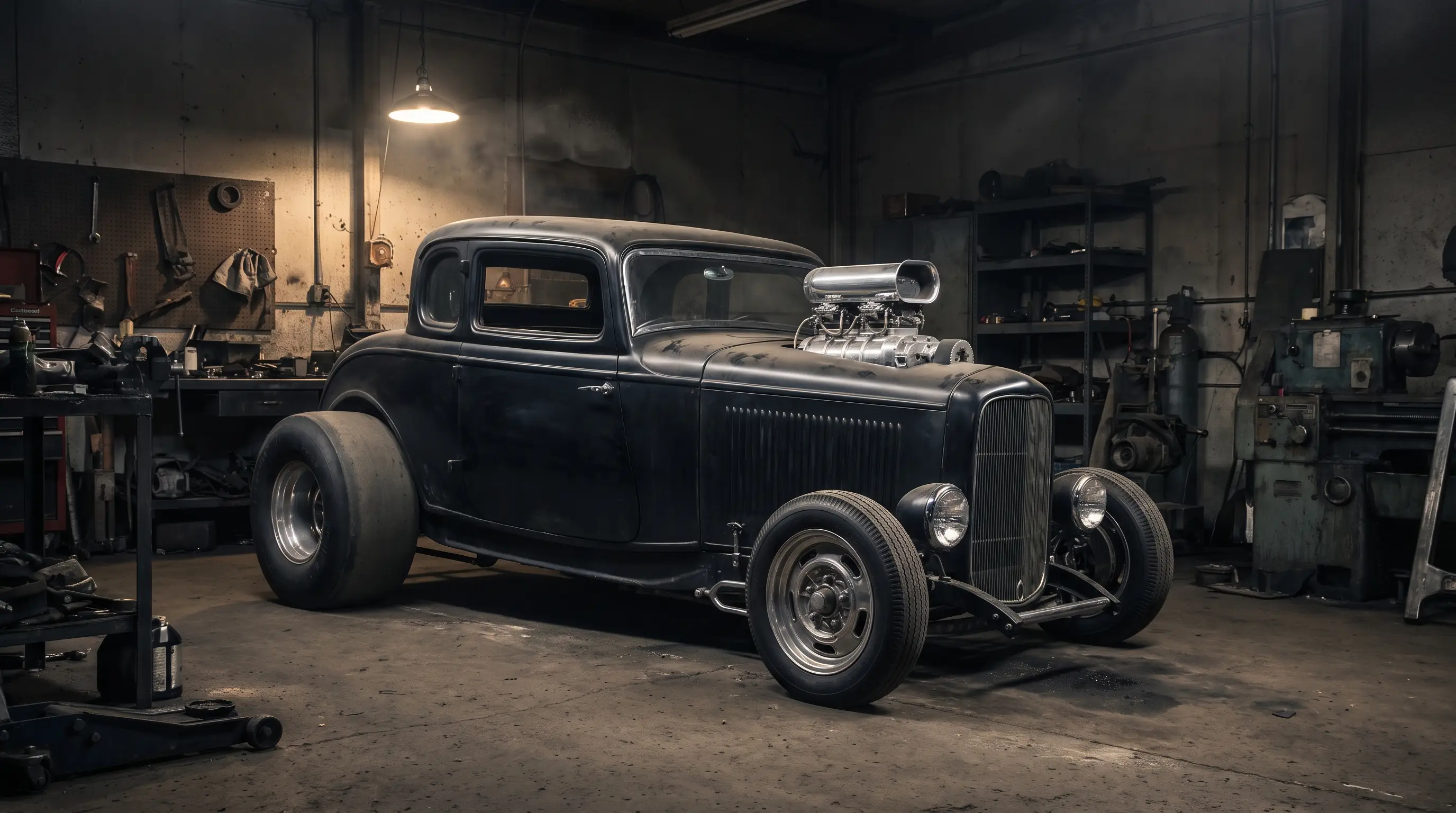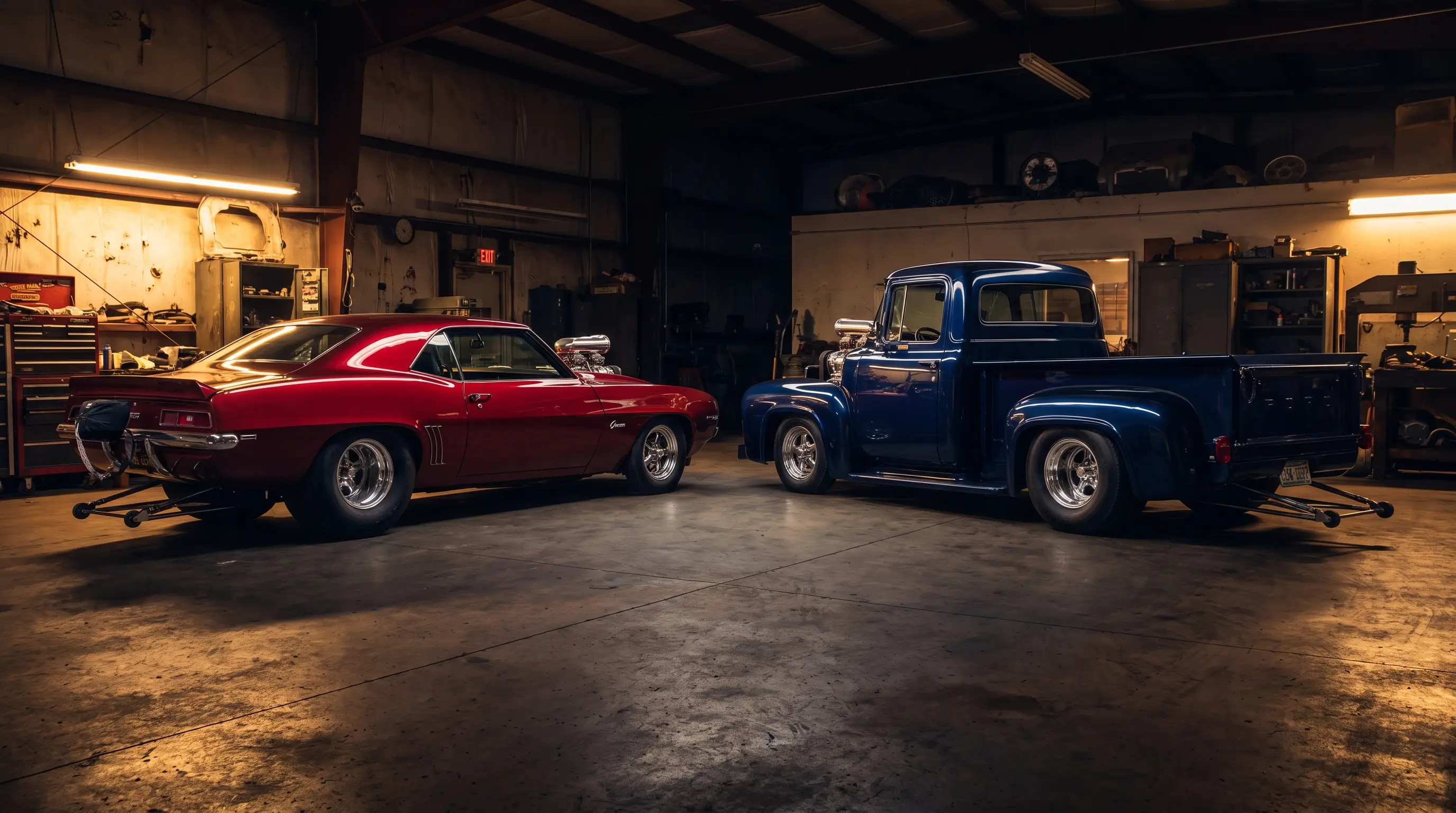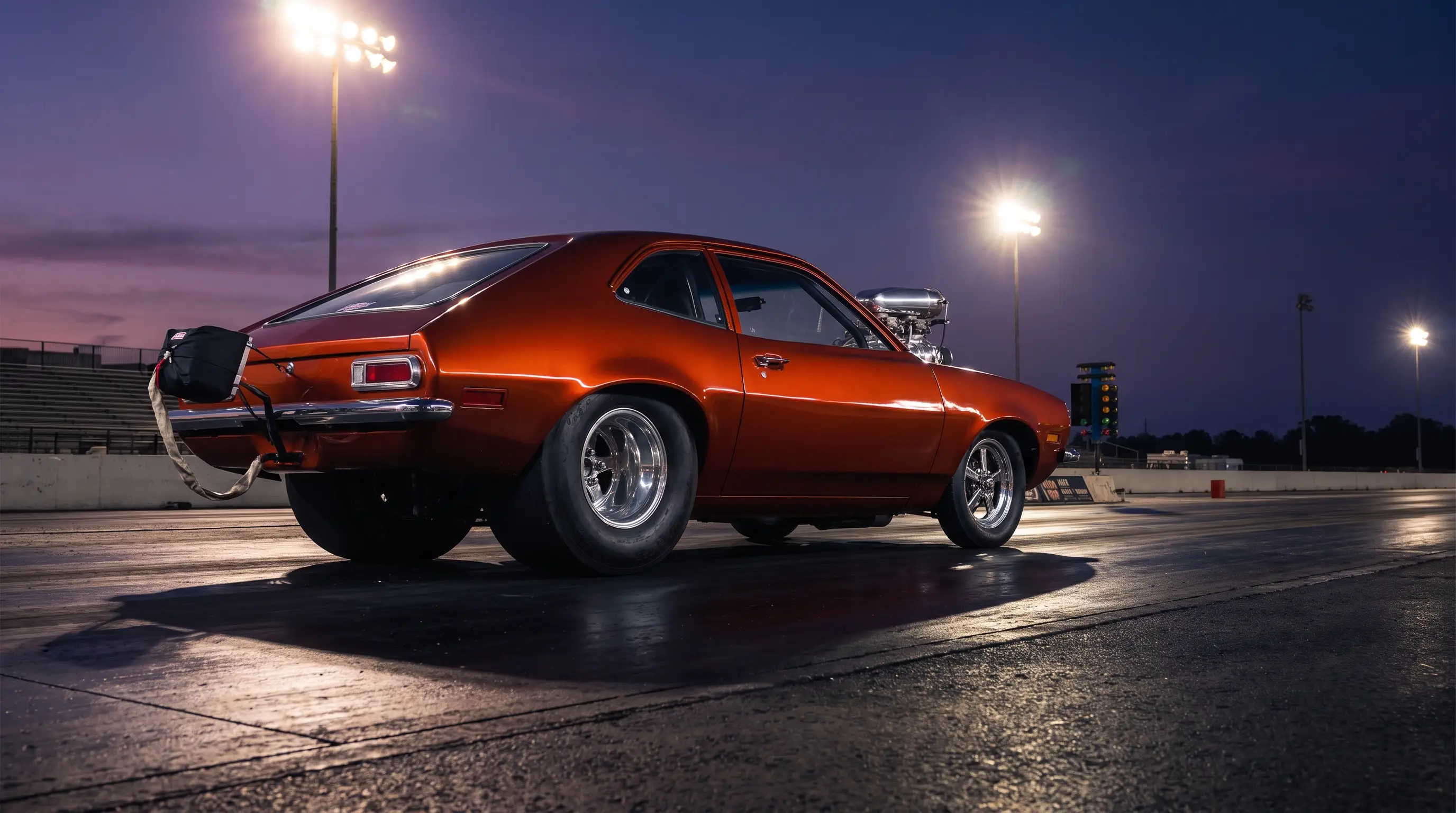
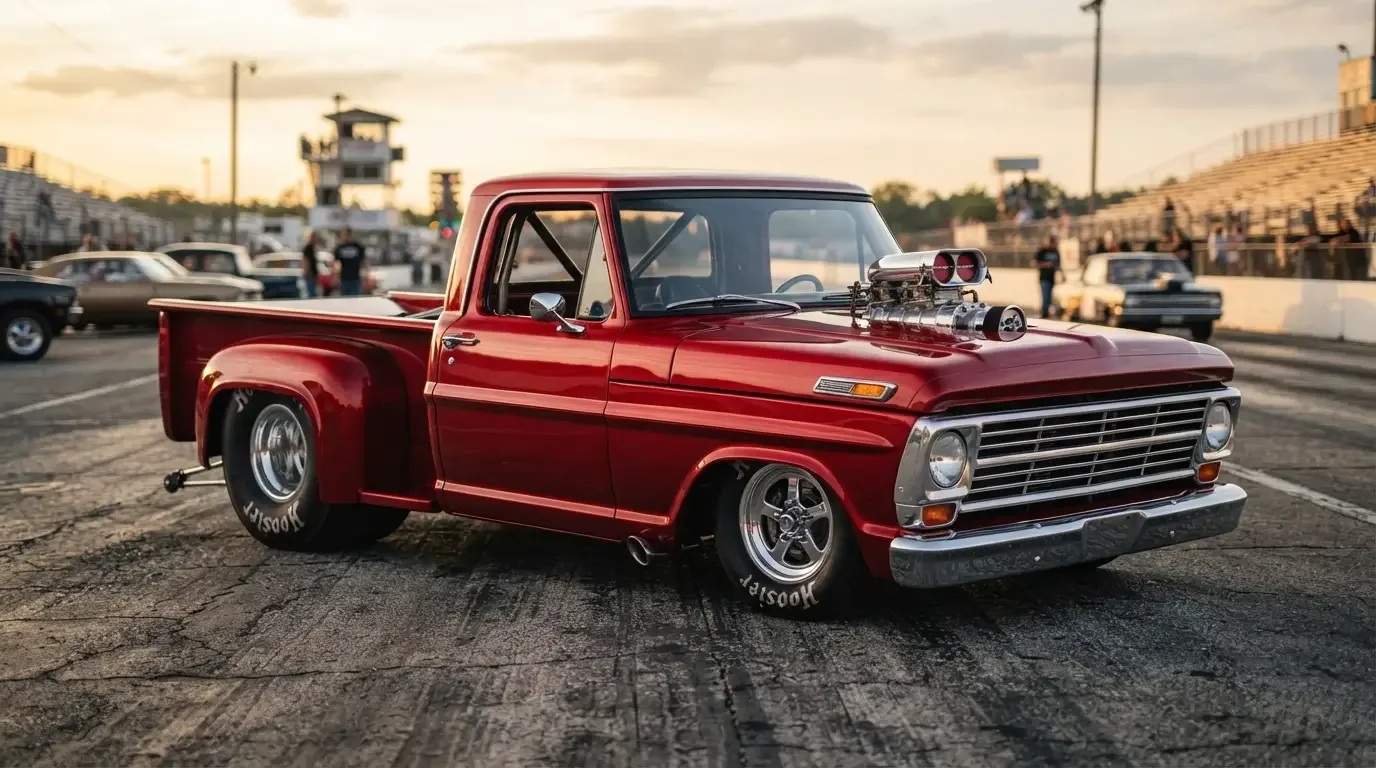
Everybody remembers the Pro Street Camaros and the tubbed Novas, but the movement never stayed inside the muscle-car lane. Some of the best builds I have seen came out of the truck world and the oddball corner of the hobby, the stuff nobody expected to get the treatment. Pro Street trucks are their own thing, and once you have laid your hands on a properly tubbed pickup bed you understand why they became a movement inside a movement. The formula translated to a truck almost too well.
Think about what a Pro Street build actually needs. A big flat rear section to hide the tubs and the fat tires. Room for a tall engine. A body with enough presence to carry a jacked-up stance. A truck gives you all of that and then some. A pickup bed is basically a blank canvas for tubs. The cab sits tall enough that a blown big-block looks proportional instead of cartoonish. From a builder's chair, a truck was easier to make look right than a lot of the cars were.
Why the pickup made sense
I have tubbed both cars and trucks, and the truck is more forgiving. On a car you are fighting the trunk floor, the quarter panels, the wheel houses, all of it packed into a tight space. You cut into structure that the body depends on, and you have to add it back carefully or the whole thing flexes. A pickup bed is a bolt-on box sitting on a frame. You have room to work. You can build the tubs, box the frame, and set up the rear the way you want without butchering the passenger compartment.
The classic Pro Street truck platforms were the ones already loved by the hobby. The 1967 to 1972 Chevy C10, the square-body that followed it, the Ford F-100 of the same rough era, and the Dodge trucks for the guys who wanted something different. These were shortbed fleetside trucks almost always, because the shortbed proportion looked right and the fleetside gave you that smooth slab of bedside to work with. A longbed steppside Pro Street truck exists, but it was never the look people chased. If you want the full arc of where this whole thing came from, our pro street cars retrospective covers the roots the trucks grew out of.
The bed was the whole point
Here is where the truck builds got clever. On a Pro Street car, the tubs live inside the trunk and you never really see the work. On a truck, builders turned the tubs into a feature. A lot of the best Pro Street trucks ran a smoothed, sometimes tilting bed with the tubs and the rear suspension on display, polished and painted like jewelry. The bed became a showcase instead of a hiding place.
That changed the build priorities. When the underside of your bed is going to be photographed, you do the chassis work to a different standard. Chromed four-links, polished rear ends, painted frame rails, the works. From a bodywork standpoint the tilt bed was a headache, because now every panel gap and every surface under there had to be finished. But it separated the serious builds from the poseurs fast. A truck with a beautiful painted body and a crude, rattle-can underside was telling on itself. The good ones were finished everywhere.
Paint and bodywork carried these trucks
I come at everything from the paint and bodywork side, and the Pro Street trucks were where the wild finishes really lived. Cars got plenty of graphics, but the trucks had more surface to play with. Long smooth bedsides, big hoods, tall cab panels. That real estate got filled with the loud stuff the era loved: candy colors, pearls, flames, ghost graphics, panel fades that took a skilled hand to lay down clean.
A shaved, smoothed truck body with a mile-deep candy paint job over straight panels is one of the harder things to pull off in this hobby, and Pro Street trucks demanded it. You cannot hide waves under candy. The color makes every flaw jump out. When you see one of these trucks done right, with the body arrow-straight and the paint laid down without a single ripple, you are looking at real craft, not just a checkbook. That is the difference between a build and an assembly.
"Anybody can bolt tubs into a truck bed. Laying candy over a smoothed bedside without a single wave in it, that is the part that separates the builders from the guys who wrote a check. The paint never lies."
- Jim Vasquez
The oddballs beyond the trucks
Trucks were the biggest branch off the main trunk, but they were not the only one. Once the Pro Street formula proved it could go on anything with a big enough rear, builders started applying it to the strangest platforms they could find. That is where the movement got genuinely fun.
| Oddball platform | Why it worked | The challenge |
|---|---|---|
| Pickup trucks | Bed made tubbing easy | Finishing the exposed underside |
| Panel deliveries and sedan deliveries | Slab sides carried graphics | Heavy body over the driveline |
| Full-size wagons | Long roof, huge presence | Weight and packaging the tubs |
| Compact economy cars | Shock value, light body | Making a big engine fit |
| El Caminos and Rancheros | Car-truck hybrid, best of both | Nothing, they were naturals |
The compacts were the ones that made people laugh and then look twice. A Pro Street Pinto, Vega, or Maverick with a blown big-block hanging out of a body that came from the factory with a four-cylinder is peak oddball, and the builders who did them knew exactly how absurd it was. That was the joke and the flex at the same time. Cramming a tall big-block and a tubbed rear into a tiny economy car took more fabrication than doing it in a full-size body. The small ones were harder, not easier.
The El Camino answered the whole question
If the trucks and the oddballs proved anything, it was that the El Camino and the Ranchero were the perfect Pro Street platforms all along. They were car-trucks from the factory, which meant they had the car front end and interior everyone wanted with the open bed that made tubbing simple. A Pro Street El Camino got you the whole formula with none of the compromises. Real car comfort up front, a bed to build in back.
From my side of the shop, the El Camino was the easy sell. You started with a body the hobby already respected, you had the bed to work in, and the proportions were correct out of the box. A lot of the cleanest Pro Street builds I have been around were El Caminos for exactly that reason. They looked deliberate instead of forced, and the paint and body work went on a shape that was designed to be handsome in the first place.
The interior nobody talks about
Everybody looks at the paint and the tubs, but the inside of a Pro Street truck told you just as much about who built it. A truck cab is a small space, and in a serious build it got the same attention as the outside. Custom rolled and pleated upholstery, a cage that tied into the chassis, gauges to watch a boosted big-block, and a shifter for whatever transmission was behind that engine. On the best ones the interior color tied into the exterior paint, so the candy on the outside carried through to the stitching inside.
This is where a lot of trucks fell down, and where I look hard when I evaluate one. It is easy to spend the whole budget on the body and the driveline and then throw a cheap seat and a parts-store steering wheel at the cab because the money ran out. A finished Pro Street truck has an interior that matches the ambition of the exterior. When the inside is an afterthought, the truck is telling you the build ran out of steam before it was done. A truck that was finished properly, inside and out, is a different animal, and it is worth holding out for.
What to watch for if you want one
Pro Street trucks and oddballs are getting their due now, and prices on the good ones have moved. But this is a corner of the hobby where the gap between a real build and a dressed-up mess is wide, so you have to look closely. I always tell people to inspect a Pro Street truck from underneath first, before the paint seduces them.
The trucks and oddballs are, to me, the most honest part of the Pro Street story, because nobody built one by accident. You did not stumble into a tubbed C10 or a blown Vega. Somebody wanted it badly enough to do the extra fabrication, and that intent shows in the finished truck. When you find a good one with the body straight, the paint deep, and the chassis finished underneath, you are looking at a builder's statement. If you are ready to see what is out there, plenty of these turn up as a classic Pro Street car for sale once you start looking past the obvious muscle cars.
The formula went everywhere, and the trucks proved it traveled better than anyone guessed. If you want to see where the whole thing landed in the modern era, keep exploring and watch how the revival picked up the oddball spirit and ran with it.
Sources and notes
- Pro Street Chevy C10 Is a Love or Hate Proposition (Chevrolet Forum)
- Bradley Gray's Wild 1965 Pro Street C10 (Street Muscle)
- C10 Fall Revival Top 10 Trucks (Street Trucks Magazine)
- Chevrolet C/K trucks, 1967-1972 generation (Wikipedia)
- Defining Muscle Car Terms: Pro Street and the Street Freak Era (In The Garage Media)