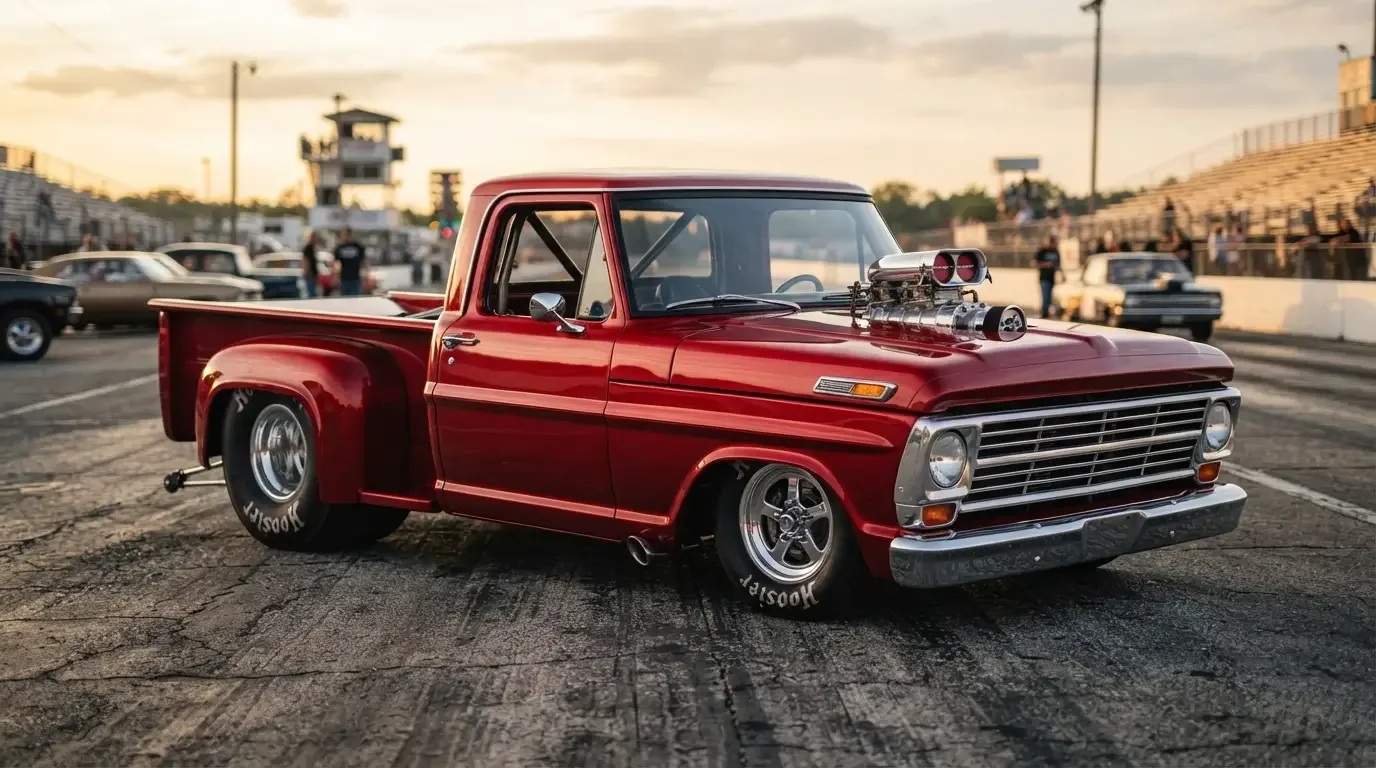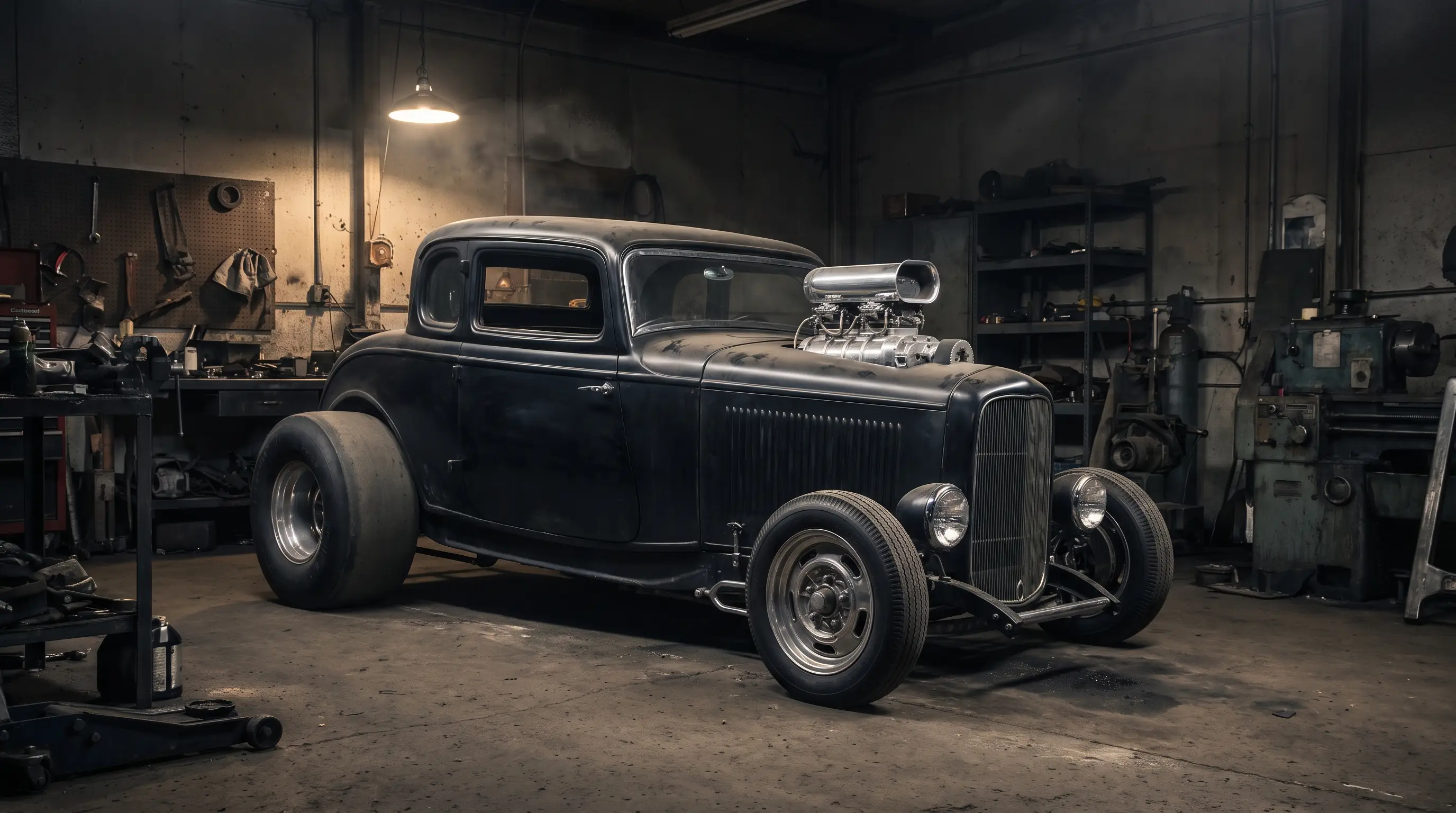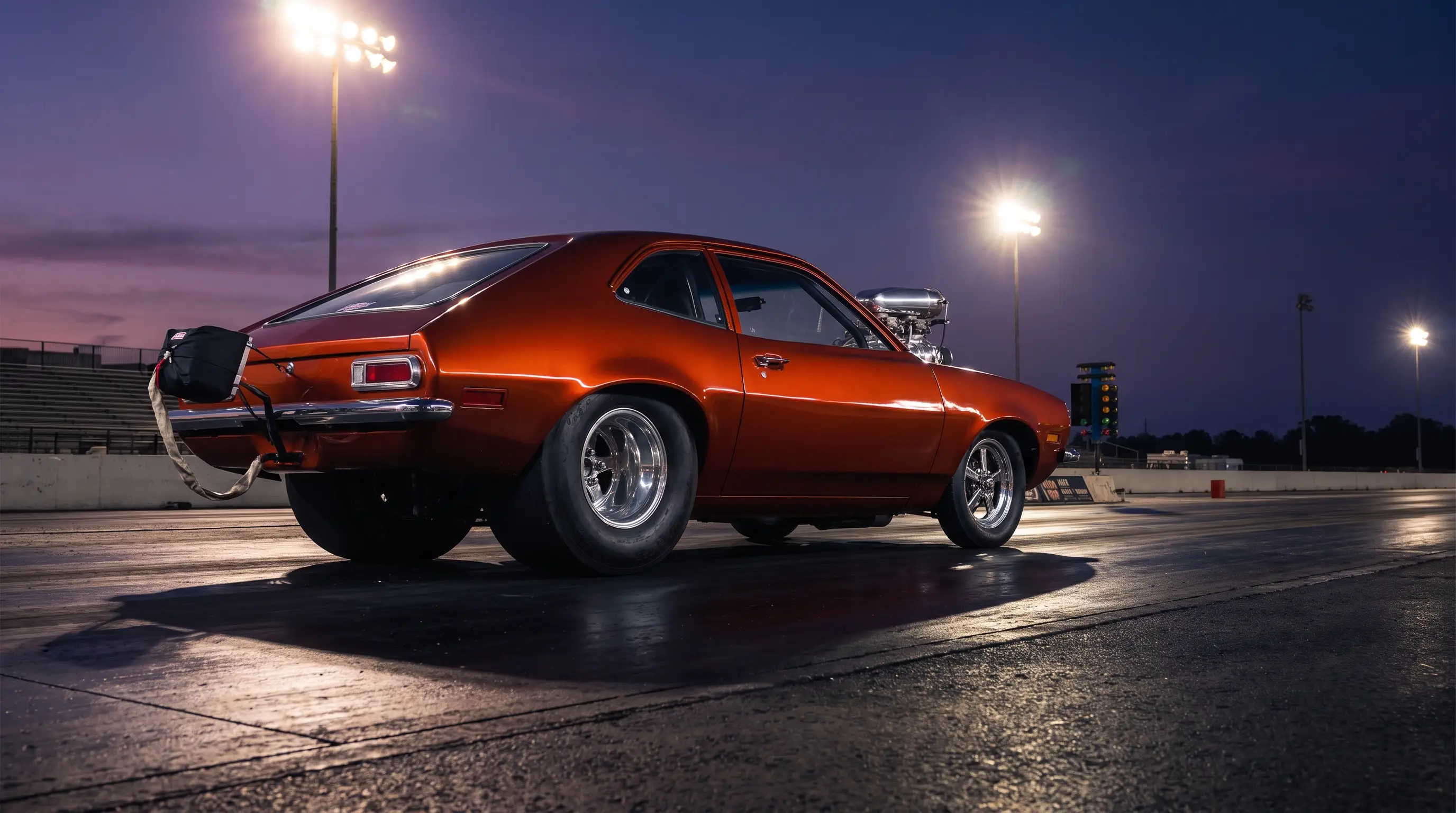
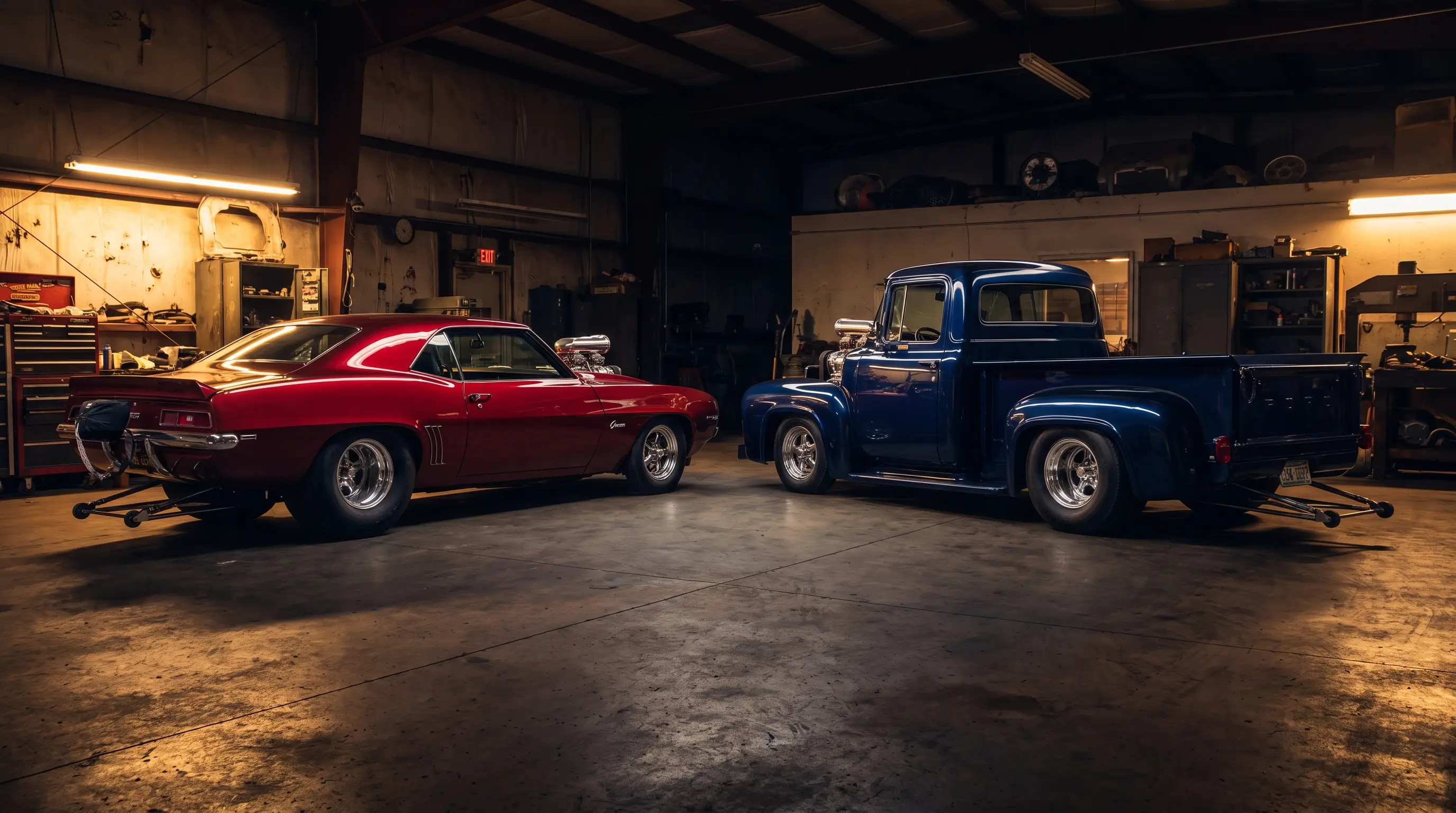
I have sat through this argument more times than I can count at club meetings, usually starting around the second beer. One side says a truck can never be a real Pro Street build because the whole movement started with muscle cars. The other side points at a tubbed S-10 running mid tens and asks what more proof anyone needs. The pro street trucks vs cars debate has been going on almost as long as the movement itself, and honestly, I think both sides are half right, which is exactly why the argument never really ends.
Where the disagreement actually comes from
Pro Street as a recognizable style took shape in the late 1970s built almost entirely around cars, Novas, Camaros, Chevelles, and Mustangs that already had the right proportions for a dramatic tub job. Trucks came into the picture later and more gradually, as builders realized the same formula, tubbed rear fenders, huge tires, aggressive engines, could work on a pickup bed just as well as a trunk. Some traditionalists never fully accepted trucks into the fold, treating them as a related but separate offshoot rather than the real thing. Others, myself included, think that distinction matters less with every passing year.
The mechanical case for trucks is actually pretty strong. A pickup bed offers a different but genuinely workable canvas for a rear tub job, and the longer wheelbase on many trucks changes the visual proportions in a way some builders find more dramatic, not less.
What actually differs mechanically
Cars and trucks built to Pro Street specs share the same basic recipe, narrowed and tubbed rear ends, aggressive engines, and a front end that often looks conservative compared to the wild rear. But the underlying chassis work differs quite a bit. A truck frame is generally a separate body on frame design, similar in principle to how a Chevelle rides on its own full perimeter frame, while a Nova, Camaro, or Mustang uses unibody construction with a bolt-on or welded front subframe rather than a full frame running the length of the car. That mix of construction types across the car side of the hobby changes how builders approach reinforcement and tub integration from platform to platform. Truck beds also present unique challenges since the wheel tubs have to work around the bed floor and side rails rather than a trunk's simpler cavity.
| Detail | Pro Street cars | Pro Street trucks |
|---|---|---|
| Typical base platform | Nova, Camaro, Chevelle, Mustang | S-10, C10, Ranger, El Camino |
| Chassis construction | Mostly unibody with a front subframe, except the Chevelle's full frame | Body on frame |
| Tub job location | Trunk area | Pickup bed and rear wheel wells |
| Era of adoption | Late 1970s onward | Mostly 1980s onward |
Why the community never fully settled it
Car clubs have always been full of opinions, and Pro Street clubs are no exception. I have watched the trucks vs cars conversation flare up at nearly every regional show I have judged, usually kicked off by someone comparing a truck's quarter mile time against a car's and drawing conclusions that annoy somebody on the other side. The truth is both camps built genuinely impressive machines, and the debate says more about tribal loyalty within the hobby than it does about which platform is objectively better.
If you want the full story on how trucks and other unconventional platforms carved out their own space in Pro Street history, that piece digs into the specific builds and personalities that pushed truck culture forward within a scene that started out car focused.
How the two camps show off differently
Walk a car show lineup and you can often tell the truck and car camps apart before you even read a plaque. Car builders tend to favor a lower, sleeker overall stance, chasing the classic Pro Street silhouette of a nose down, tail up profile that shows off the huge rear tires against a comparatively small greenhouse. Truck builders work with a longer wheelbase and a taller factory ride height to begin with, so many lean into that difference rather than fighting it, building a stance that reads as more aggressive and truck like rather than trying to mimic a car's proportions. Neither approach is wrong, they are simply different answers to the same basic design problem.
Bed treatments on truck builds also became their own point of pride, separate from anything a car builder has to think about. Some owners kept a full bed floor and used it for tool storage or spare parts hauling to shows, treating the truck as genuinely functional despite its drag strip capability. Others tubbed the bed as dramatically as the cab, filling it with fuel cells, battery boxes, or simply leaving it open to show off the massive rear tires from above, turning what used to be cargo space into part of the visual spectacle itself.
What matters more than the platform
After years of watching both sides argue, I have landed on a simple conclusion. Build quality, documentation, and how well a car or truck executes the Pro Street formula matter more than which body style it started life as. A sloppy tub job on a Camaro is worse than a clean one on an S-10, full stop.
"I have judged shows where the best built machine on the field was a truck, and I have judged shows where it was a car. The platform never decided that. The builder did, and after enough years of watching both sides argue, that is the only conclusion that has ever really held up."
- Wayne Coburn
A rivalry that keeps the hobby interesting
I have come to think the trucks vs cars argument is actually good for the hobby rather than a problem to be solved. It keeps builders on both sides pushing harder, since nobody wants to be the one who lets the other camp claim bragging rights at a regional show. New builders entering the scene today often pick a side almost by accident, based on whatever project happened to be available and affordable when they started, and then find themselves defending that choice at every event for years afterward simply out of loyalty to the machine they poured their own time into.
Whichever side of the debate you land on, there is no shortage of options to consider. Browsing a classic Pro Street car for sale listing usually turns up both cars and trucks side by side, which is honestly the best way to form your own opinion rather than taking my word, or anyone else's, for it. Spend a few hours looking at both types in person, talk to a few owners from each camp, and you will probably walk away understanding why this argument has managed to stay friendly for as long as it has.