Every club has that one older member who insists gassers were the real thing and everything after them was just an imitation with more money spent. I have heard that argument at more cruise nights than I can count, and there is a real point buried in it. Pro street vs gasser is not just a style comparison, it is a comparison between two generations of the same idea, decades apart, built for the same basic reason: making a stock-bodied car go fast in a straight line.
The gasser came first
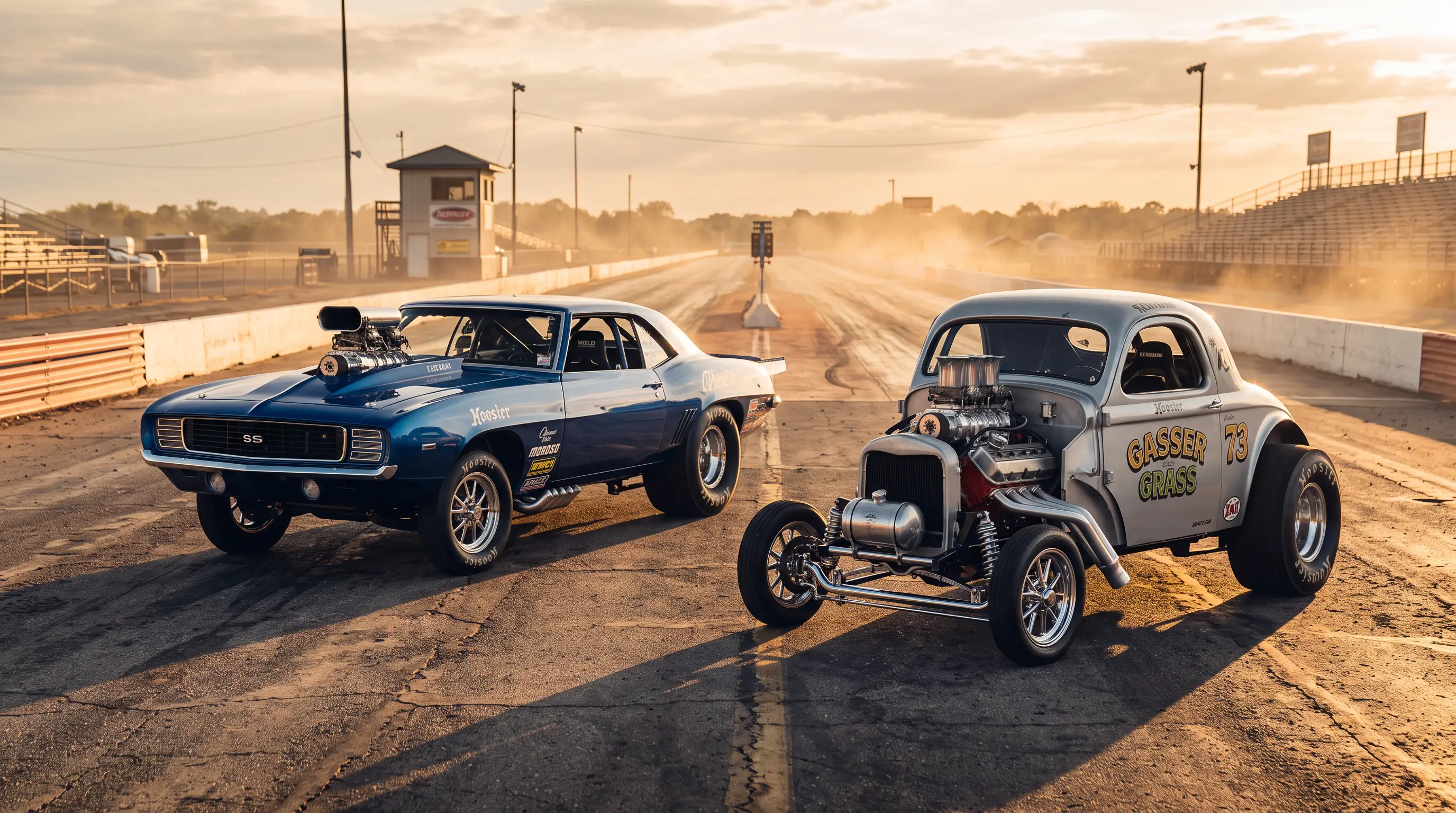
Gassers ruled drag strips through the late 1950s and into the 1960s, built around a straightforward drag racing class rule set that rewarded a raised front end for weight transfer off the line. That raised stance, straight front axle on plenty of serious builds, and a big engine crammed under the hood became the visual signature of the gasser era. These were purpose-built race cars first, and the look followed function rather than the other way around. A gasser sat high in front because that geometry actually helped it launch, not because anyone thought it looked good sitting in a driveway.
Gasser culture faded as drag racing rules changed and altered-wheelbase cars, then purpose-built dragsters, took over the front-runner spots at the strip. But the look never disappeared from car culture. It stuck around in memory and eventually came back as a retro style choice for builders who wanted to recreate that era's attitude on a street-driven classic.
Pro Street took the opposite geometry approach
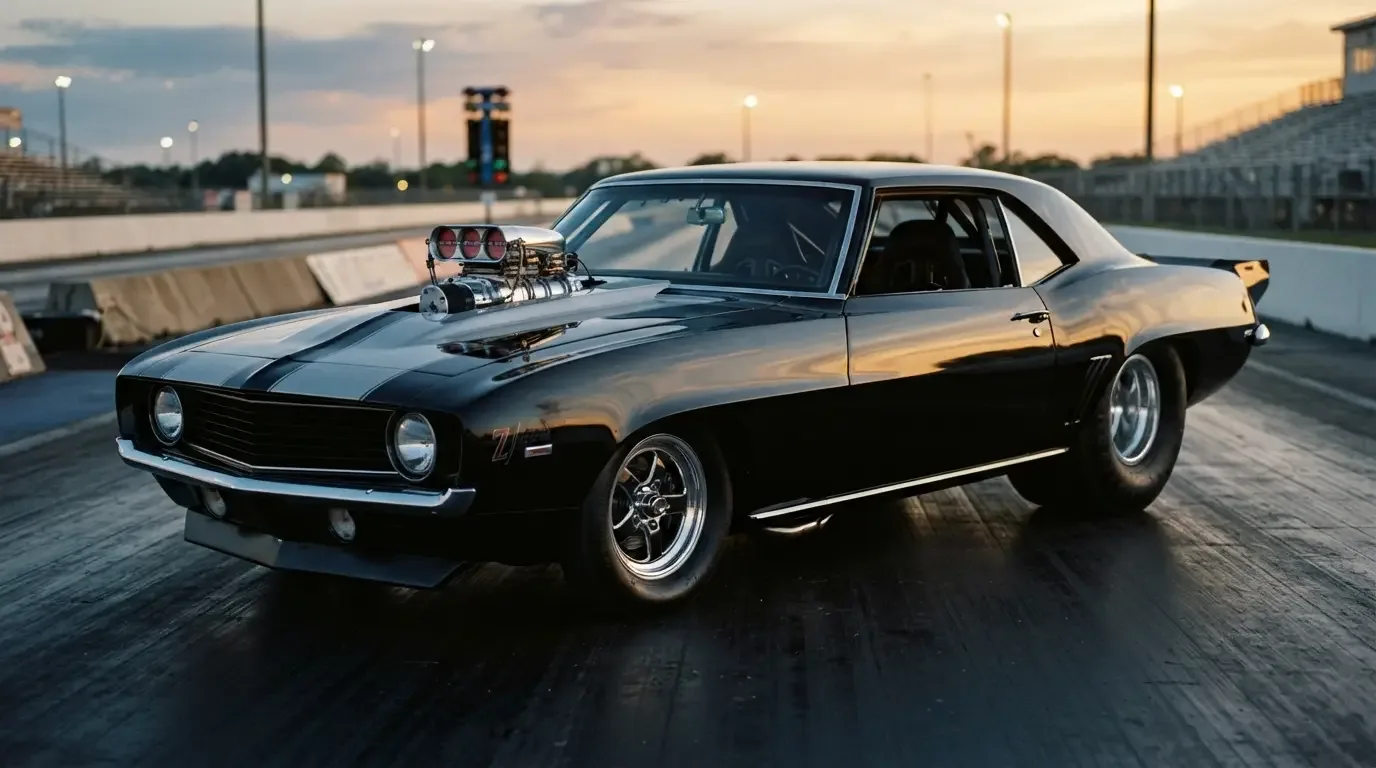
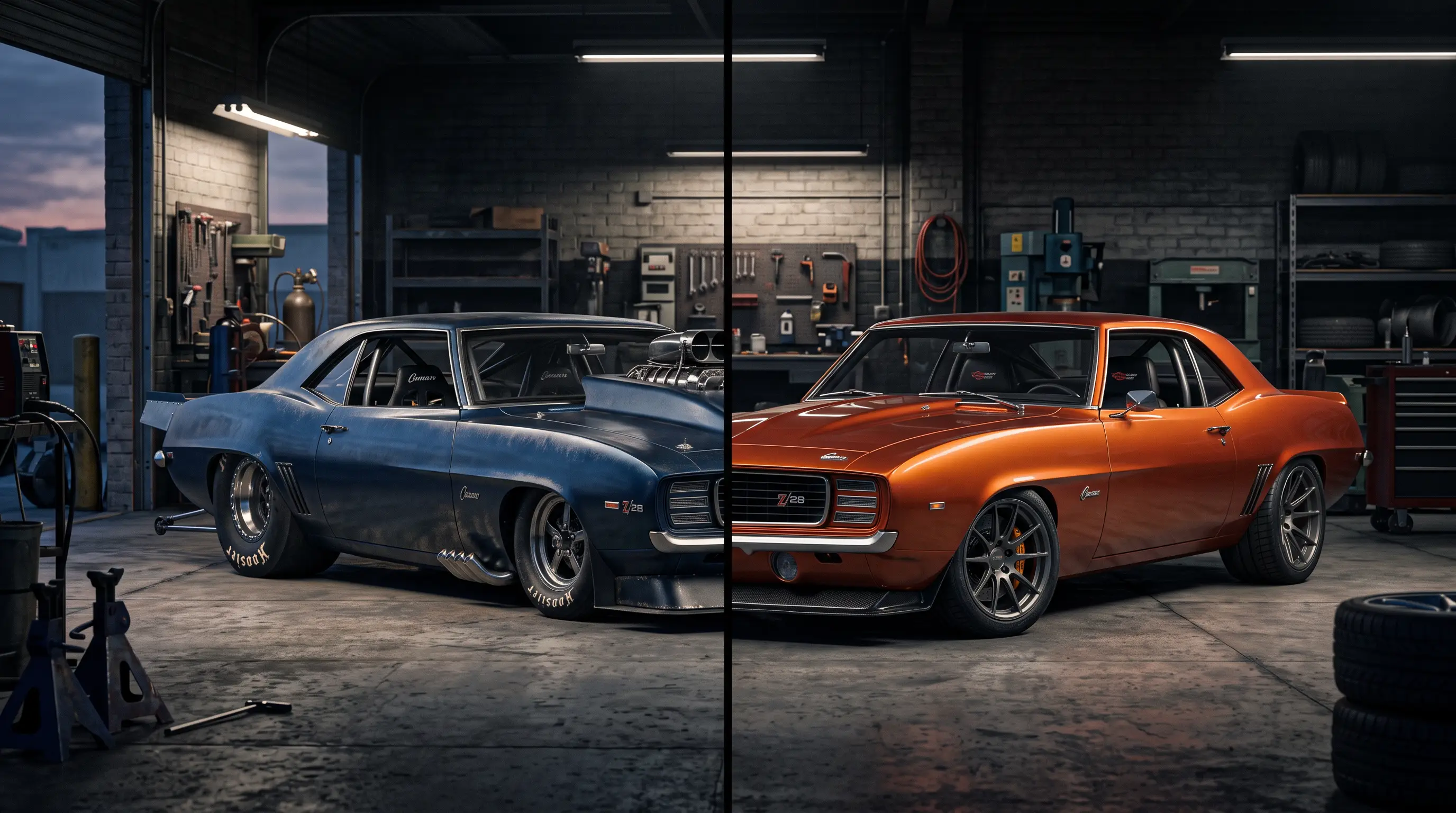
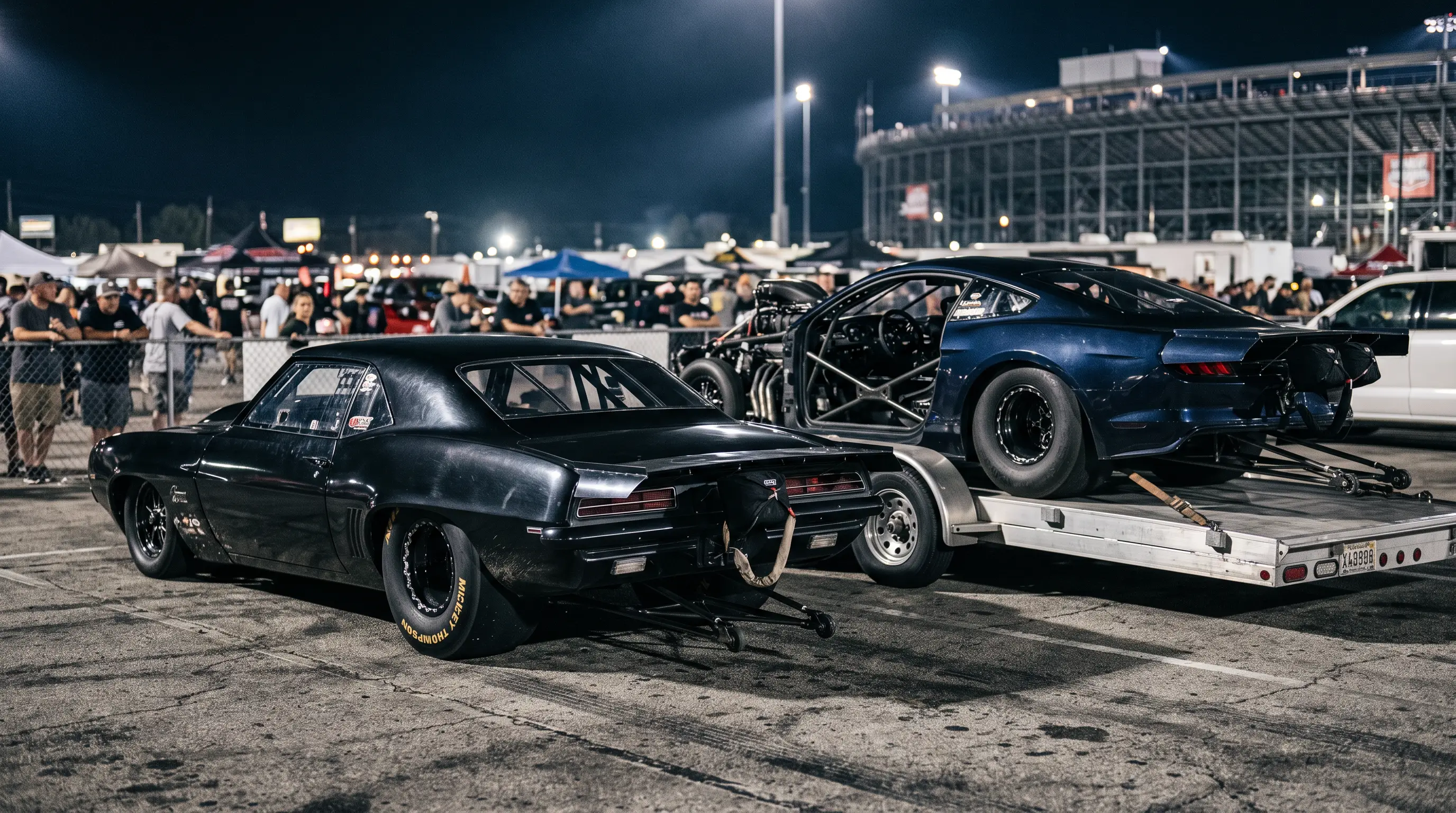
When Pro Street emerged in the late 1970s and grew through the 1980s, it borrowed the general idea of a stock-bodied car built for straight-line performance, but it flipped the visual formula. Instead of a raised front end, Pro Street cars sat low and aggressive up front with a narrow track, and instead of understated rear tires, they ran massive rear rubber under a tubbed body. Where a gasser's stance came from actual drag racing weight transfer physics, a Pro Street car's stance was more about visual drama, since most of these cars never ran a real quarter mile pass in their lives.
| Element | Gasser | Pro Street |
|---|---|---|
| Era of origin | Late 1950s through 1960s | Late 1970s through 1990s |
| Front stance | Raised, straight axle common | Low, narrow track |
| Rear tires | Modest by later standards | Massive, tubbed body required |
| Origin purpose | Purpose-built drag racing class rules | Street car built to echo drag racing looks |
Two answers to the same underlying question
Strip away the different decades and the different silhouettes, and gassers and Pro Street cars were chasing the same basic goal: take a mass-produced body and make it look and feel like it belonged at a drag strip. Gassers did it through actual racing rules that shaped their stance out of necessity. Pro Street did it through a builder's personal statement, since the rules that shaped the original gasser look no longer applied by the time Pro Street came around. Both movements produced cars that turned heads for the same fundamental reason, an unmistakable, purposeful stance that told anyone looking that this car was not built for a quiet errand run.
Some builders have blended the two looks over the years, adding a slightly raised front end reminiscent of a gasser to a car that otherwise reads as classic Pro Street, tubbed rear and all. Purists in both camps tend to frown on the mashup, but plenty of club members appreciate seeing the two eras acknowledge each other on the same car. Anyone who wants the fuller history connecting these two movements should check our complete history covering how each style developed out of its own decade and its own set of drag racing rules.
"A gasser had to sit high because the rules made it fast that way. A Pro Street car sits low and wide because the builder wanted it to look fast. Different decades, same instinct."
- Wayne Coburn
How each look reads to a modern audience
Younger enthusiasts who did not live through either era often approach gassers and Pro Street cars as equally historical, two vintage looks from roughly the same broad period of car culture, without necessarily grasping the decades and the different motivations that separate them. That flattening of history bothers some of the old timers in my club, who remember gassers as living, breathing race cars from their childhood and Pro Street as the flashier, later movement that came after. Explaining the difference, the raised front axle that actually did something at the strip versus the low, wide stance built mainly to turn heads at a show, tends to be the fastest way to help a newer enthusiast understand why the two looks feel so different once you know what to look for.
That said, both movements share something worth respecting regardless of era: a commitment to building a car that looked exactly as aggressive as it performed, or at least aimed to. Whether that aggression came from actual drag strip physics in the gasser's case or from a builder's personal vision in Pro Street's case, both produced some of the most recognizable silhouettes in American car culture, and both still draw a crowd at any show where they show up parked side by side.
What this means for today's buyers
Genuine period gassers are rare and expensive, since so few survived their racing years unmodified, while Pro Street cars from the 1980s and 1990s are comparatively more available to a buyer entering the hobby today. That gap in availability shapes the market for both styles, and a buyer chasing the gasser look often ends up building a tribute car from a modern donor rather than finding an original. Buyers who prefer the Pro Street approach have an easier road, and those ready to look can check find a classic Pro Street car to see what is currently available, keeping in mind that a genuine period build will always carry more history than a modern recreation of either look.
Documentation separates a serious purchase from a costly guess in either category. A seller who can produce build sheets, period photographs, or club records tying a car back to its actual history in the 1980s or 1990s is offering something meaningfully different from a recently assembled tribute wearing the same look. That distinction rarely shows up clearly in a set of sale photos, which is exactly why a buyer should ask questions before falling for the stance alone, whether it leans toward the raised gasser nose or the low, wide Pro Street posture.