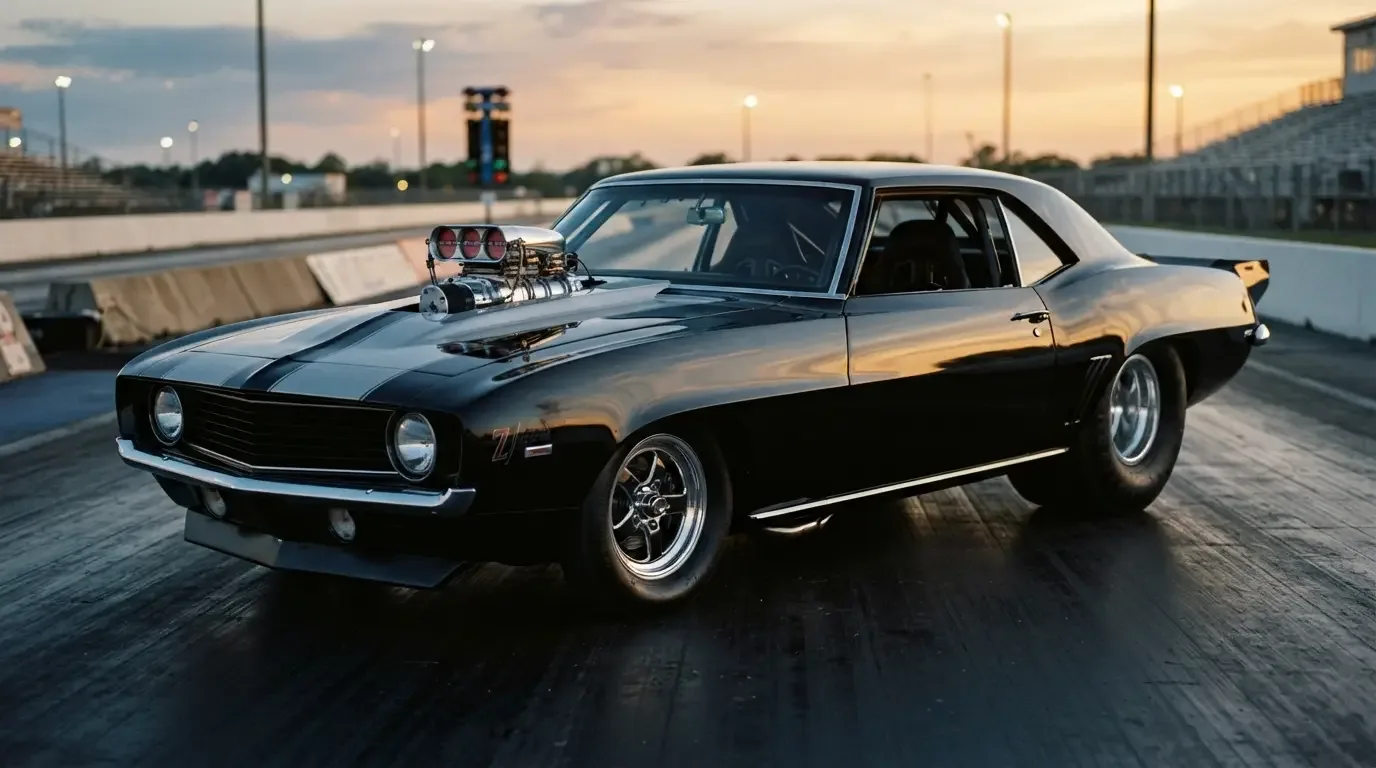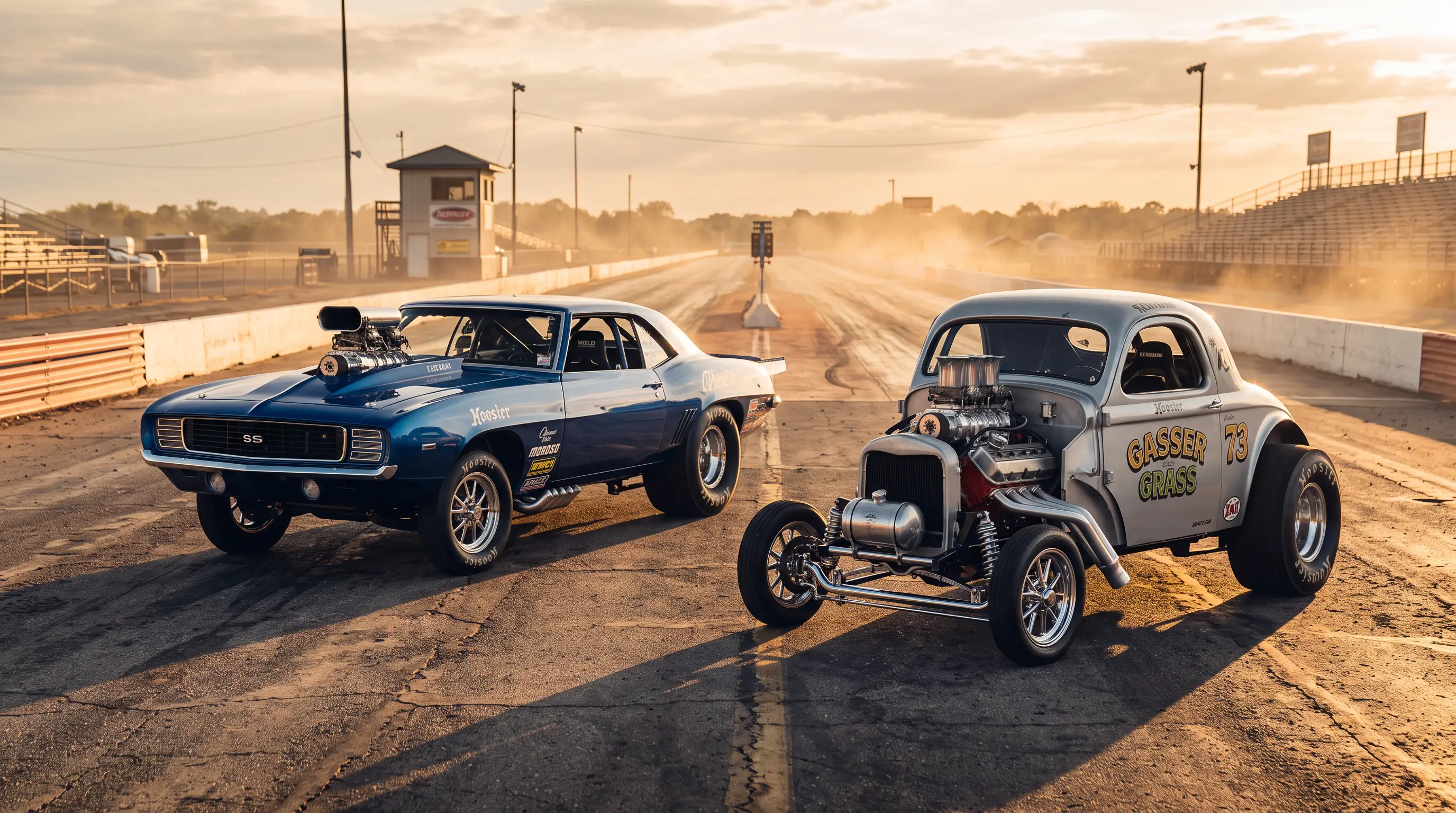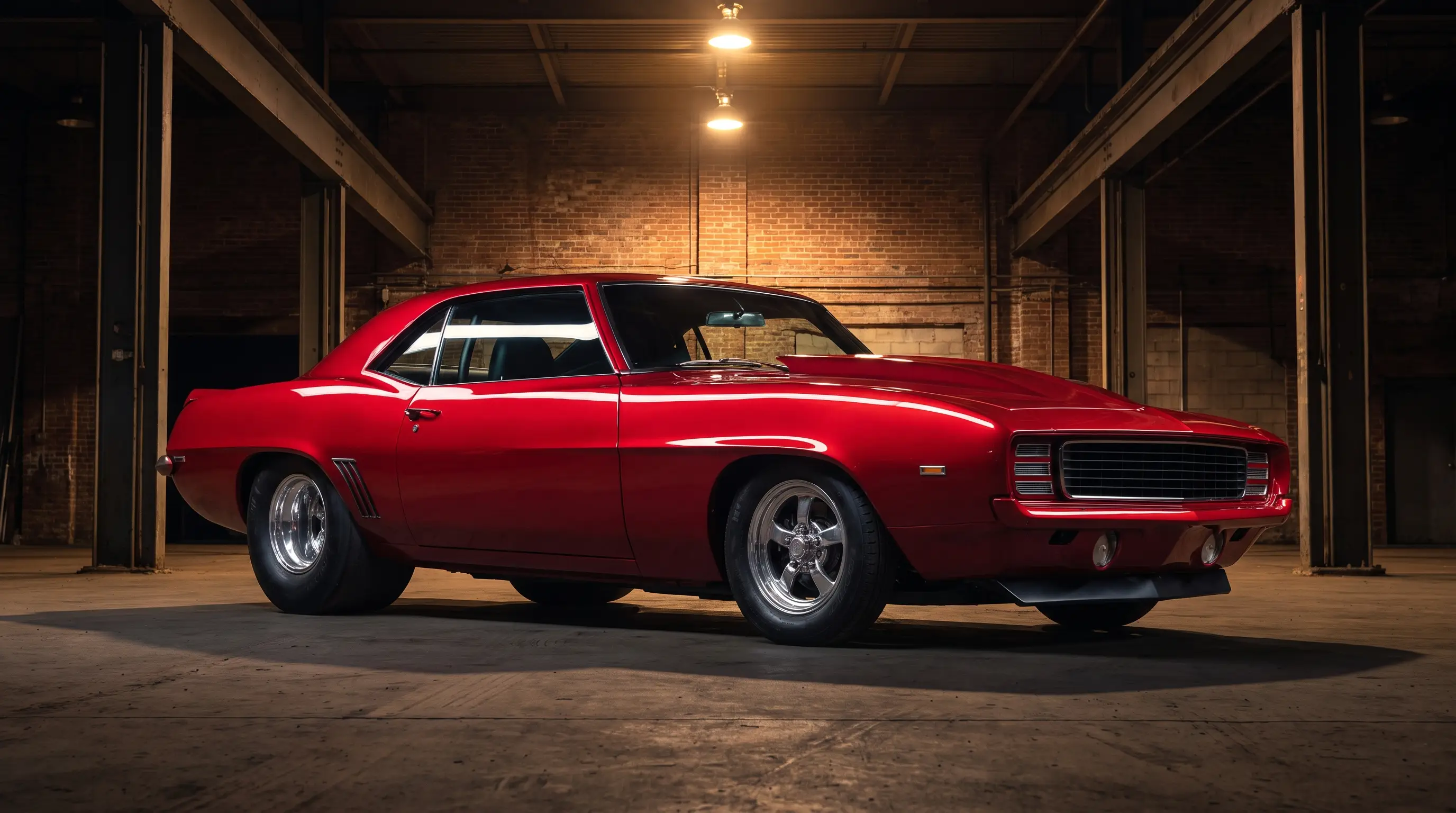
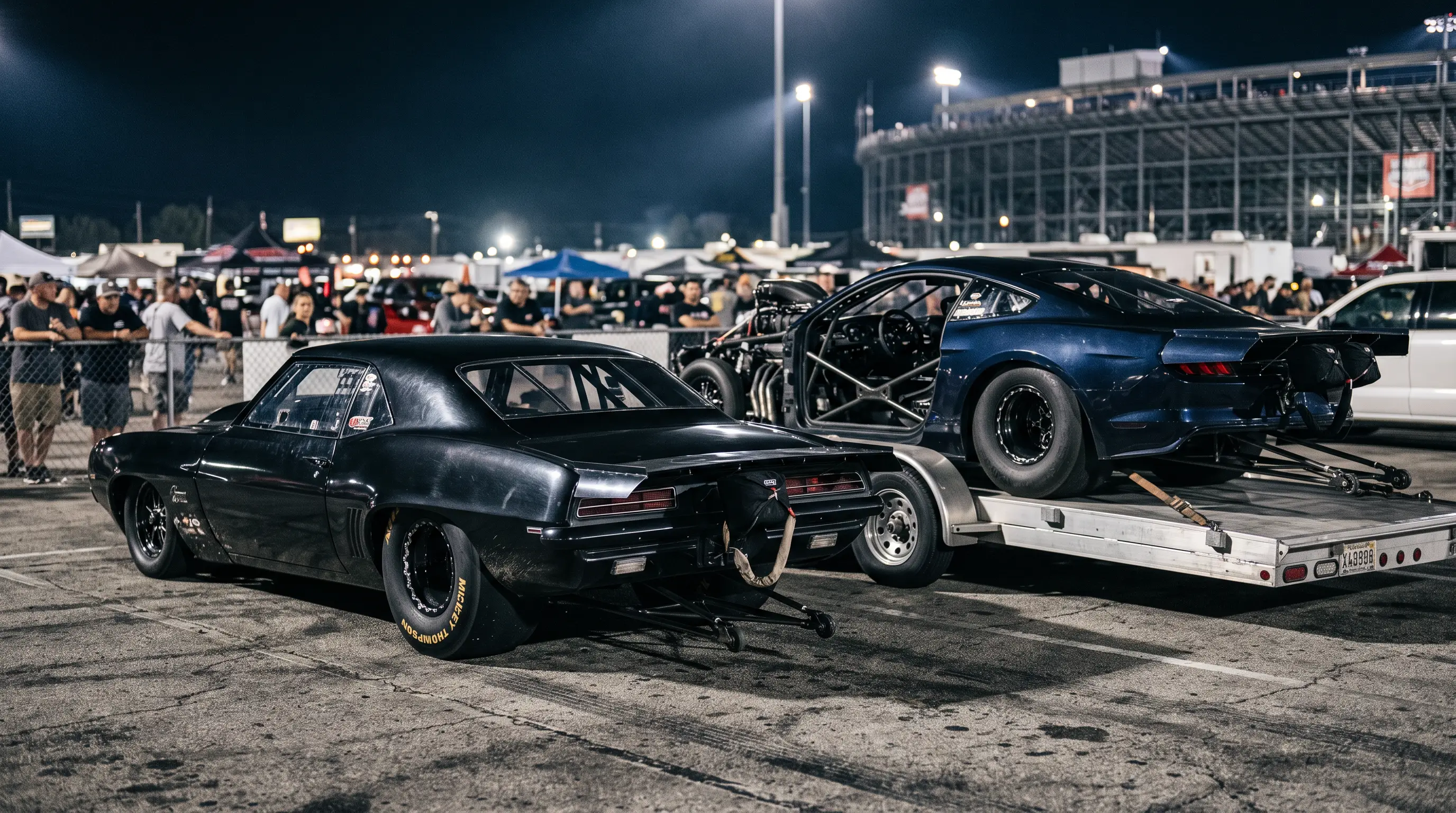
Pro Street and Pro Mod get mixed up constantly, and I get why. Both categories put a huge back tire under a muscle-car body and both make a spectacle out of it. But if you park a real Pro Street car next to a Pro Mod door-slammer, the differences show up fast once you know where to look. One is a street car built to look like a race car. The other is a race car built to look, loosely, like a street car. That distinction is the whole story.
Pro Street vs Pro Mod, the short version
Pro Street grew out of drag racing culture in the late 1970s, when street guys started copying the look of Pro Stock cars, tubbed rear wheel wells, straight axles or narrowed rear ends, big slicks, and a hood that barely clears the carb. The goal was a car that could be driven to the track, run a quick pass, and driven home. It never had to be legal in the technical sense that a race-only car does. It had to look brutal parked at a cruise night and back that look up on the strip once in a while. If you want the full rundown on how the style came together, read the background on where Pro Street splits from its closest cousin, Pro Touring.
Pro Mod is a different animal entirely
Pro Mod, short for Professional Modified, is a purpose-built drag racing class. These cars run tube chassis under fiberglass or carbon-fiber bodies shaped like a Camaro or a Corvette, but underneath there is almost nothing factory left. Superchargers, turbos, or nitrous depending on the combination, six-second quarter-mile passes, and a purpose-built cage that would never pass a street inspection. A Pro Mod car does not get driven to the grocery store. It gets trailered to the track, unloaded, and run by a crew that knows exactly what they are doing. Compare that to a Pro Street build, which even at its wildest usually still has a working interior, a title, and plates.
| Category | Pro Street | Pro Mod |
|---|---|---|
| Origin | Late 1970s street and cruise culture | Organized drag racing class, formalized 1990s |
| Body | Steel, tubbed rear | Fiberglass or carbon, tube chassis |
| Street legal | Usually, with plates and a title | No, trailer-only race car |
| Interior | Stripped but functional | Cage, single seat, no creature comforts |
| Typical use | Cruise nights, occasional test-and-tune | Sanctioned Pro Mod events only |
Why the two get confused
Blame the silhouette. Both categories favor big rear tires stuffed under a tubbed body, both lean on GM A-bodies and Fords from the muscle car era for their shape, and both grew up alongside each other on the same quarter-mile culture through the 1980s and 90s. A guy at a show who does not know the difference sees a huge slick and a narrowed rear end and calls it Pro Mod because that is the term he has heard on television drag broadcasts. Meanwhile the guy who actually owns the Pro Street car built it in his garage over three winters and drove it there himself. That gap, race-only versus street-driven, is the one that actually matters.
"You can tell a Pro Street car from a Pro Mod car in about four seconds. Ask the owner where he parked it. If the answer is a trailer, it's not Pro Street."
- Mike Sullivan
Money and access are the other split
A Pro Mod program with a supercharged big block and a certified chassis is a six-figure operation before you count the trailer and the tow rig. Most owners are running it as a team sport with sponsors and a crew chief. Pro Street sits at a completely different price point. A guy with a MIG welder, a tubbing kit, and a weekend can build a convincing Pro Street look on a budget that would not cover a Pro Mod engine rebuild. That accessibility is part of why Pro Street never died even after the magazines stopped putting it on the cover. Regular guys could actually own one.
Insurance and registration follow the same split. A Pro Street car, even a wild one, can usually carry a street title and a normal policy because it has lights, brakes, and a functioning exhaust system. A Pro Mod car cannot be registered at all in most states because it was never built to comply with anything on public roads. That single fact shapes everything else about ownership. One car sits in your garage and gets driven when you feel like it. The other lives on a trailer and only comes out when a race is scheduled.
What the engine bays actually look like
Open the hood on a solid Pro Street build from the 1980s or 90s and you will usually find a big block Chevy or a Ford FE with a single four-barrel or a mild tunnel ram, built to make good power on pump gas and survive repeated street use. It has to idle in traffic and start on a cold morning. A Pro Mod engine bay is a different world. Superchargers standing a foot above the hood line, dedicated fuel systems, and a tune that only makes sense at wide open throttle for a few seconds at a time. That engine is rebuilt on a schedule measured in runs, not miles, because it is never asked to just cruise around.
Which one is actually for you
If you want to drive your car, park it at a diner, and still turn heads with a menacing stance and a big back tire, Pro Street is the answer. If you want a purpose-built race machine that never sees the street and exists to run consistent numbers at sanctioned events, that is Pro Mod territory, and it is a much deeper commitment in money, crew, and specialized knowledge. Outlaw street car builders sit somewhere in the gap between the two, and that comparison is worth a look too if you are trying to figure out exactly where your project should land.
For most guys shopping in this space, the practical move is a real, driveable Pro Street car with documented history and a title in hand. If that is the direction you're leaning, shop classic Pro Street car listings and see what is actually available before you commit to a build from scratch.