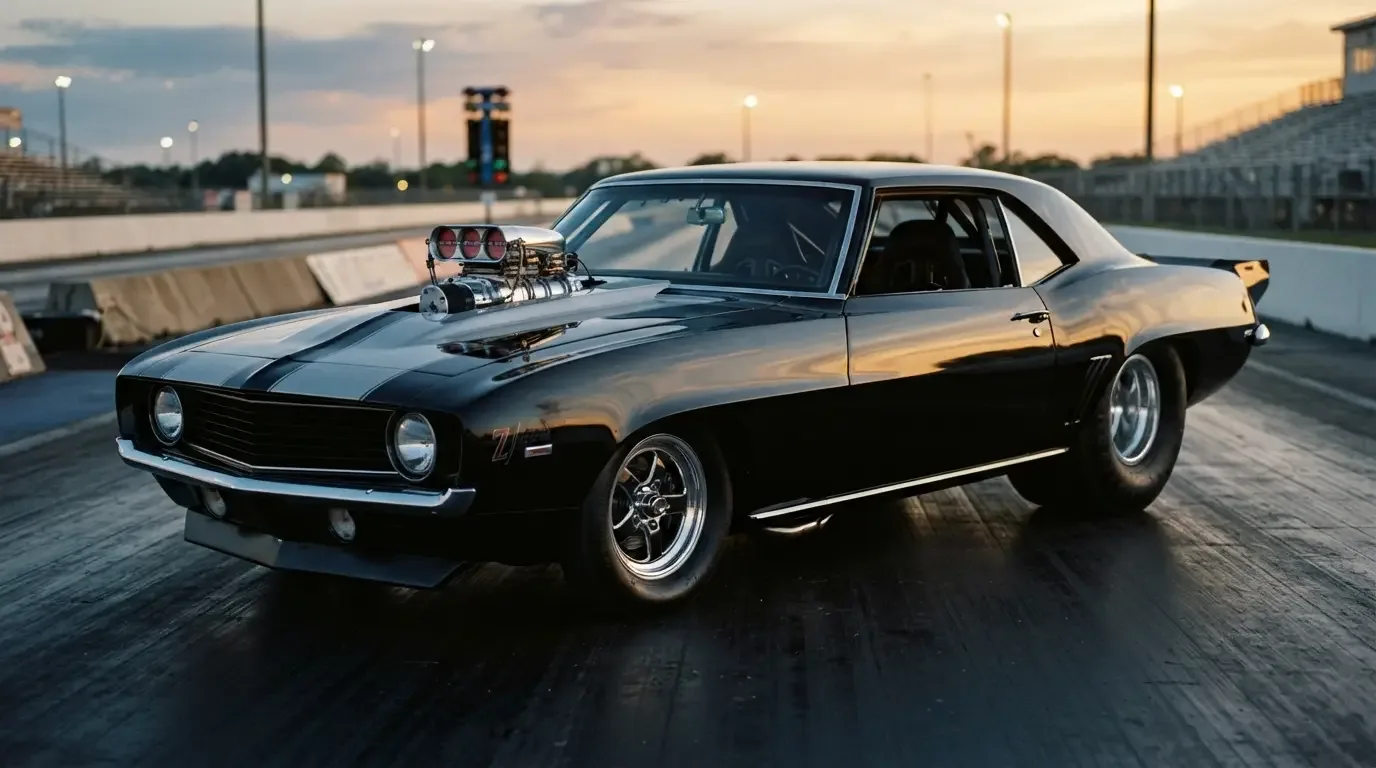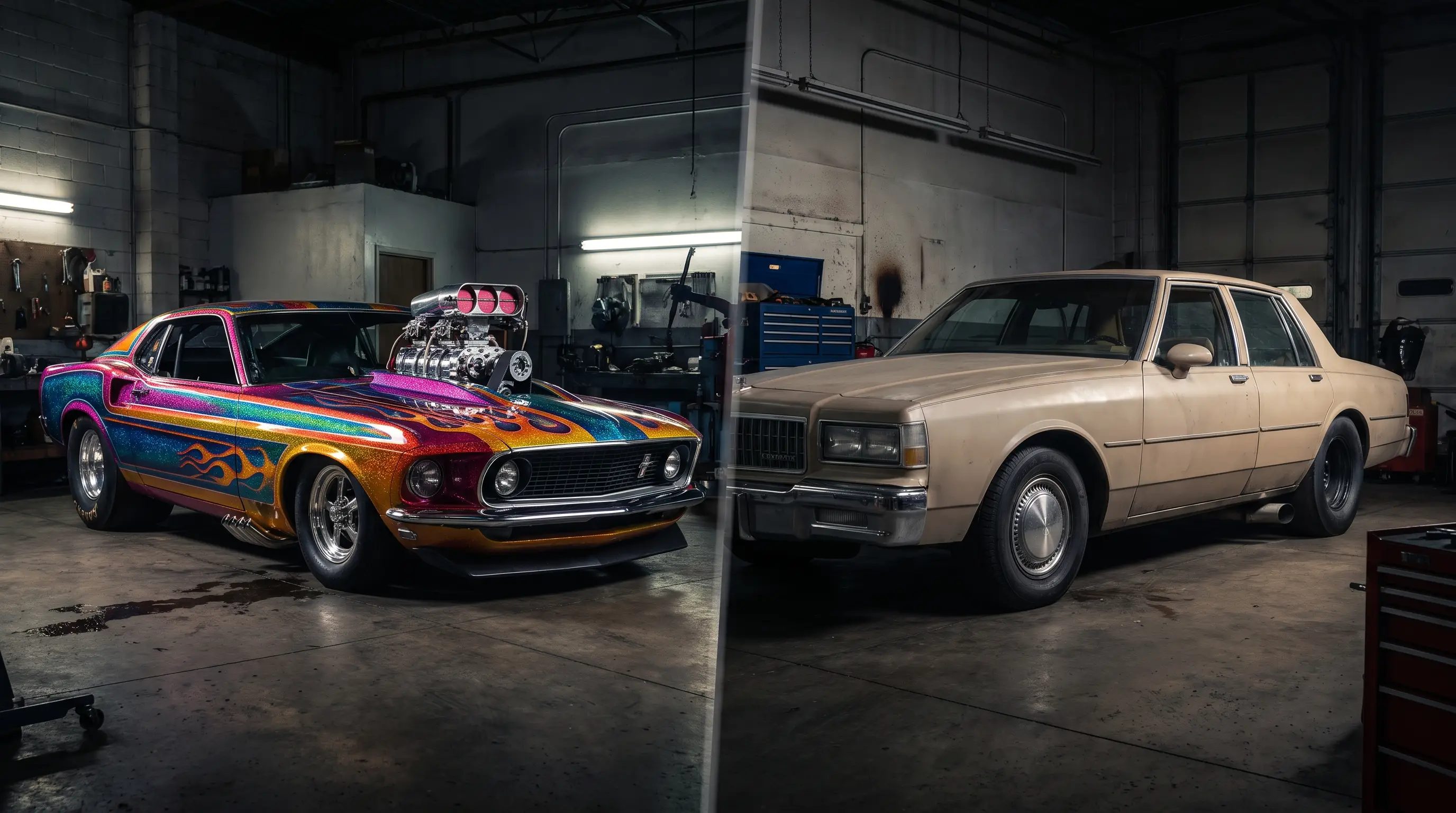
Two men grew up three states apart in the 1980s, both spending their teenage weekends in a garage with a car up on jack stands, both convinced they were building something that mattered. One tubbed the rear of his Nova until it could swallow a tire wider than a bowling ball. The other lowered his Impala until the frame nearly kissed the pavement, hydraulics coiled underneath like something waiting to strike. Pro Street and lowrider culture rarely share a headline, but they share a decade, a devotion, and a stubborn belief that a car could say something about the person who built it.
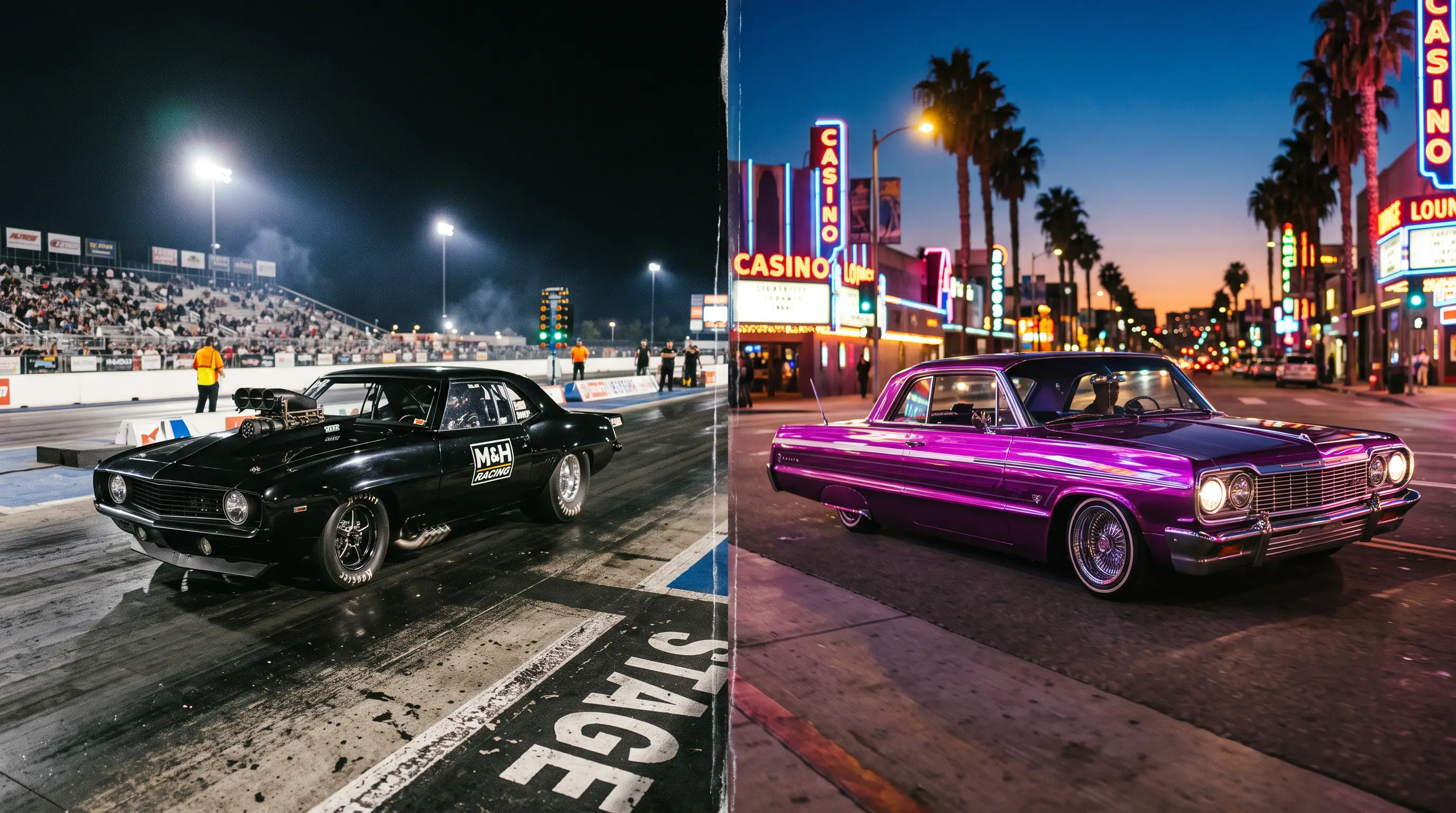
Pro street vs lowrider: two American answers
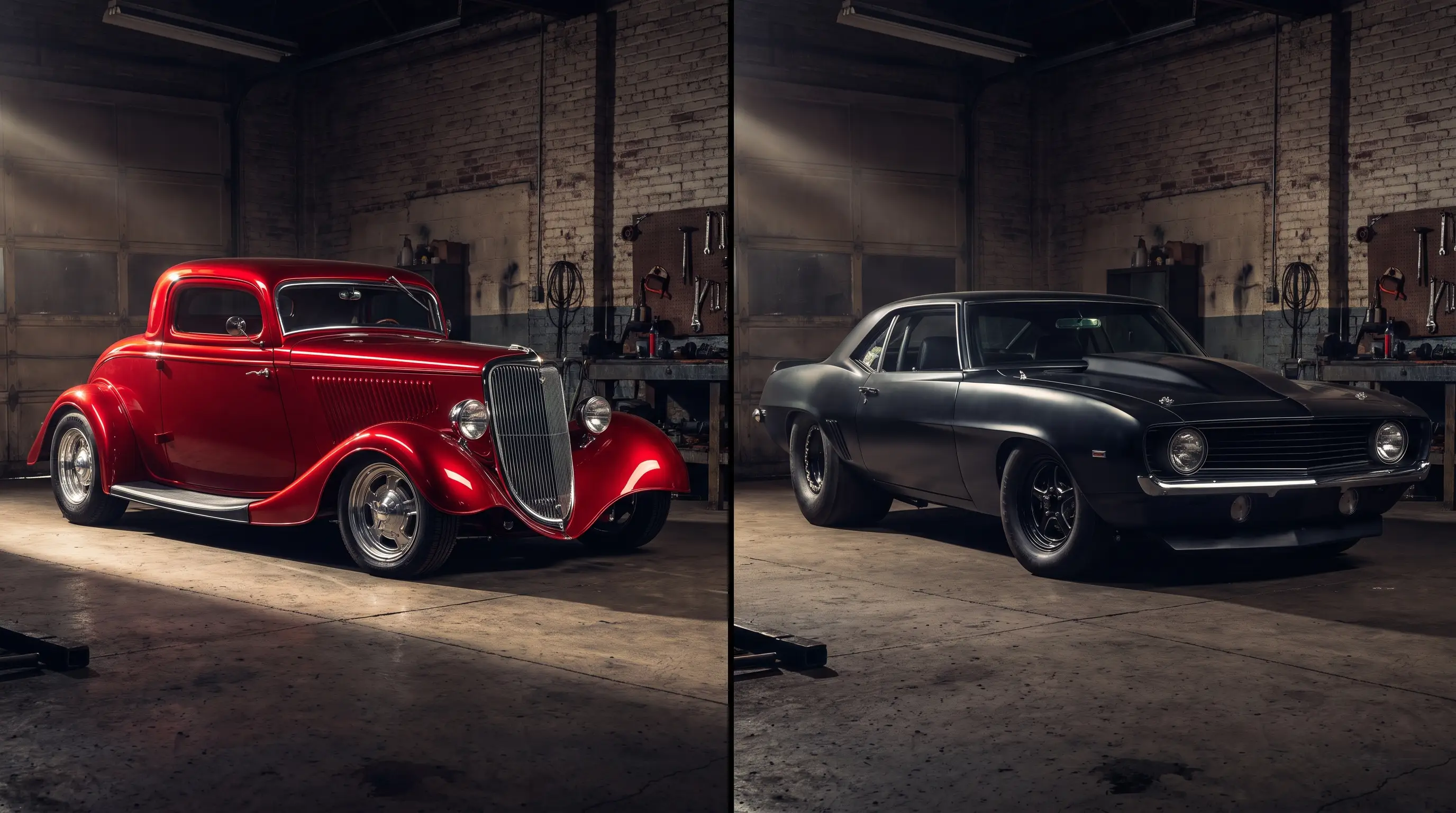
The Pro Street movement took its cues from the drag strip, copying the tubbed rear ends and massive tires of Pro Stock race cars and bringing that look onto public roads starting in the late 1970s. It ran through its golden years across the 1980s and into the 90s, cars like tubbed Camaros and Chevelles built to be driven to a cruise night, admired, and then run down the quarter mile before the sun went down. Everything about the build pointed forward and down, toward traction, toward the finish line. For the full context on where that particular style sits next to its road-course cousin, our pro street vs pro touring retrospective traces the split in detail.
Lowrider culture grew from a different soil entirely
Lowriding took root in Mexican-American communities in Southern California starting in the late 1940s and 50s, and by the 1970s and 80s it had become its own deeply layered art form, hydraulics replacing suspension springs, candy paint layered coat after coat until it looked wet under streetlight, interiors upholstered like a living room. Where Pro Street chased quarter-mile glory, lowriding was built for the slow roll, for cruising a boulevard at a pace that let the car and its owner both be seen, admired, and recognized by name. The car was never separate from the community around it. It was a rolling piece of that community's identity.
| Element | Pro Street | Lowrider |
|---|---|---|
| Ride height | Raised or level, built for traction | Lowered, hydraulics for adjustable height |
| Signature feature | Tubbed rear, oversized rear tire | Hydraulic suspension, candy paint, murals |
| Cultural home | Drag strips and cruise nights nationwide | Southern California boulevards, community car clubs |
| Pace | Built for the quarter mile | Built for the slow cruise |
Both cultures turned a factory car into a canvas
What connects them, underneath everything that separates them, is the refusal to leave a car the way it left the factory. A Pro Street builder saw a stock Nova and pictured a tire that shouldn't fit, a stance that shouldn't work, and made it happen anyway. A lowrider builder saw a stock Impala and pictured a frame that could kiss the ground on command, paint deep enough to hold a reflection like still water. Neither vision came from a factory brochure. Both came from a garage, a community, and years of trial and error passed down from someone older who had done it first.
"A Pro Street car wants to prove something in twelve seconds. A lowrider wants to prove something over a lifetime of Sunday afternoons. I've never been able to decide which one takes more patience."
- Nora Beckett
The soundtrack of each scene tells its own story
Close your eyes at each event and you could tell them apart without looking. A Pro Street cruise night hums with big-block idle, the occasional bark of a burnout, engines that were tuned to be heard from a block away. A lowrider gathering carries a different kind of sound, oldies and soul drifting from open windows, the hydraulic thump and hiss of a car hopping in a parking lot ring, conversation carried on in two languages sometimes in the same sentence. Neither soundtrack is louder than the other exactly. They just fill the air with a completely different kind of pride.
What each build asks of its owner
A Pro Street car asks for mechanical patience, a willingness to fight for traction and reliability out of a combination that was never meant to be street legal in the first place. A lowrider asks for a different kind of patience, layers of paint that take weeks to cure properly, hydraulics that need constant tuning, a body that has to be babied over speed bumps that would barely register in a normal car. Both owners spend more time in the garage than most people spend on any hobby, and both would tell you, if you asked, that the hours were never really the cost. They were the point. Ask either one what they would change looking back and most say nothing at all, not the sore knuckles, not the paint that took three tries, not the years it took to earn respect from older builders who had watched a hundred kids come through the garage door with big talk and no follow-through before they finally proved themselves.
A quiet story runs underneath both of them too, one that rarely makes it into the specs. Somewhere in most build histories there's a related story about an earlier generation of builder, a street rod guy from decades before either movement existed, whose garage habits and stubbornness got passed down without anyone quite meaning to teach it.
The shows tell you everything about what each culture values
Stand at a Pro Street event and the judging, informal as it usually is, rewards raw drama. Tire width, how low that hood scoop sits, how mean the stance looks from the front three-quarter angle. Stand at a lowrider show and the judging goes deeper and slower. Paint depth measured in the number of coats and the clarity of the reflection. Upholstery stitched by hand, sometimes by the same family shop for two generations running. Hydraulics judged on how high a car can hop and how smoothly it can lay flat again a second later. One culture rewards the loudest possible first impression. The other rewards craftsmanship that only reveals itself the longer you look.
Where the roads still cross
Drive through certain neighborhoods on a warm evening and you'll still catch both worlds at once, a tubbed muscle car idling at one light and a lowrider bouncing gently at the next, two completely different answers to the same question a teenager asked himself decades ago in a cold garage: what can I make this car say about me. If either story pulls at you enough to want the real thing, Pro Street cars for sale now is a fair place to start looking at what has survived from that era, tires and all.