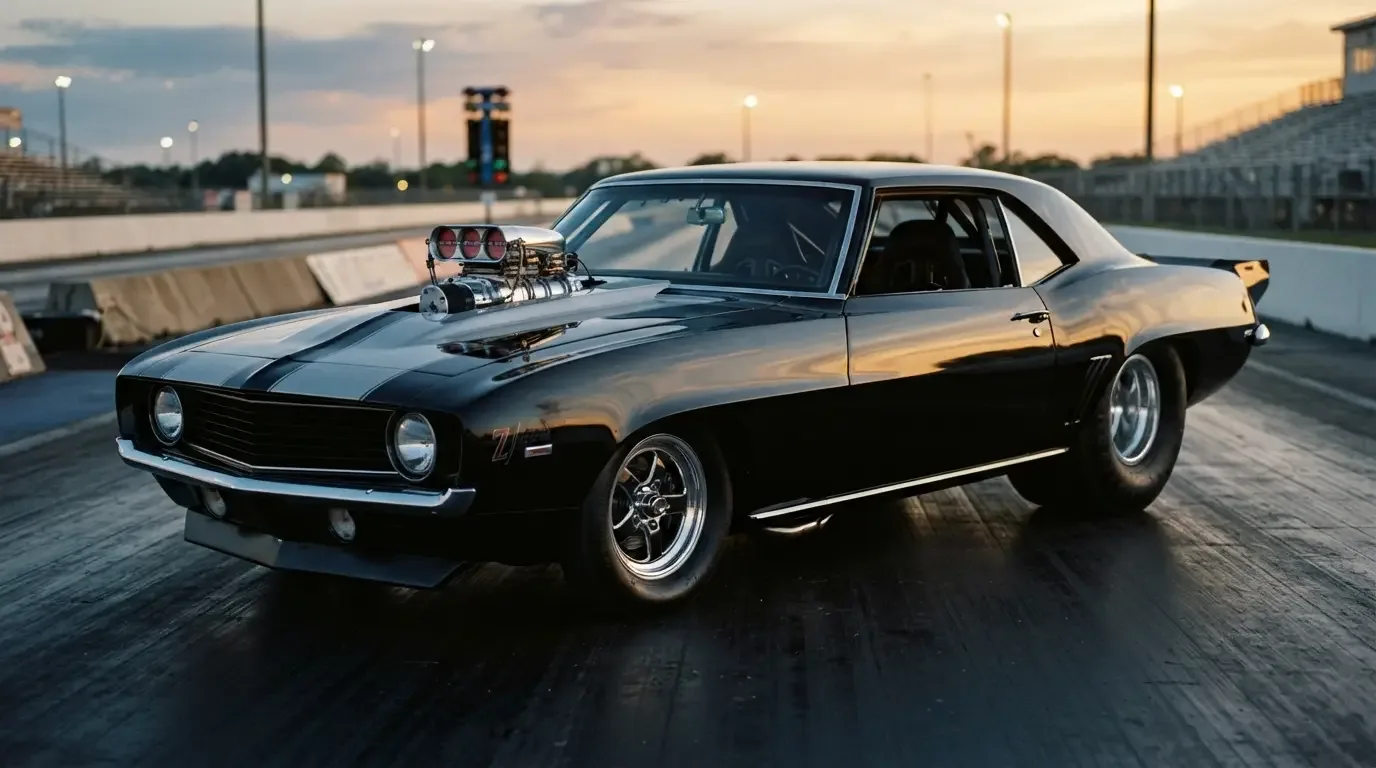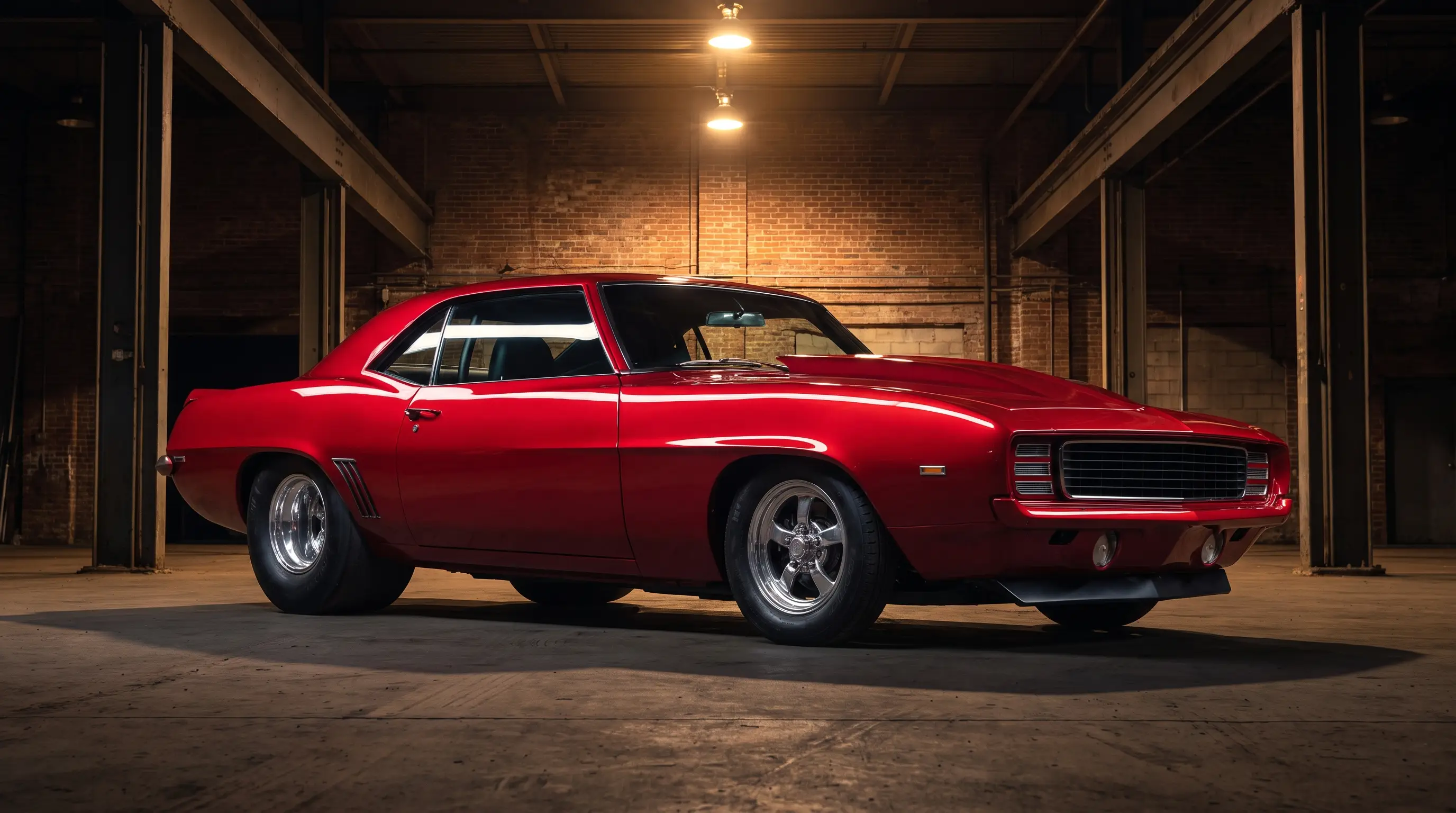
Our club had a guy, everybody just called him Big Ron, who showed up one summer with a tubbed 1968 Chevelle riding on skinny front tires and a massive slick out back, idling loud enough to rattle the coffee cups at the diner where we met every Saturday. Two years later he rolled in with a completely different car, a 1970 Chevelle with subtle wheels, a leather interior, and a modern fuel-injected small block hiding under a stock-looking hood. Same guy, same era of car, two completely different philosophies. That is the cleanest way I know to explain Pro Street versus restomod without a single spec sheet.
Pro Street vs restomod, the way I explain it to newcomers
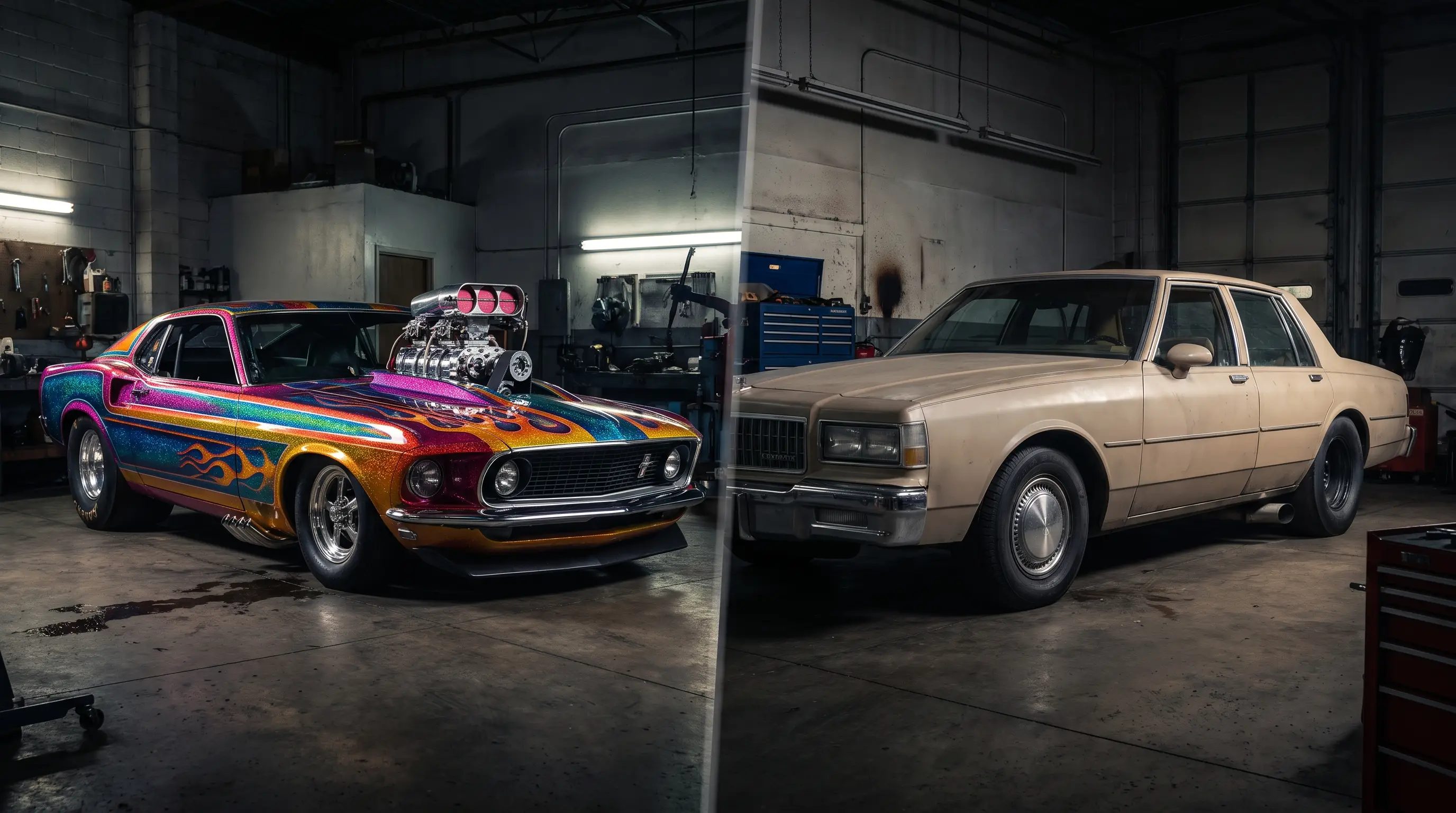
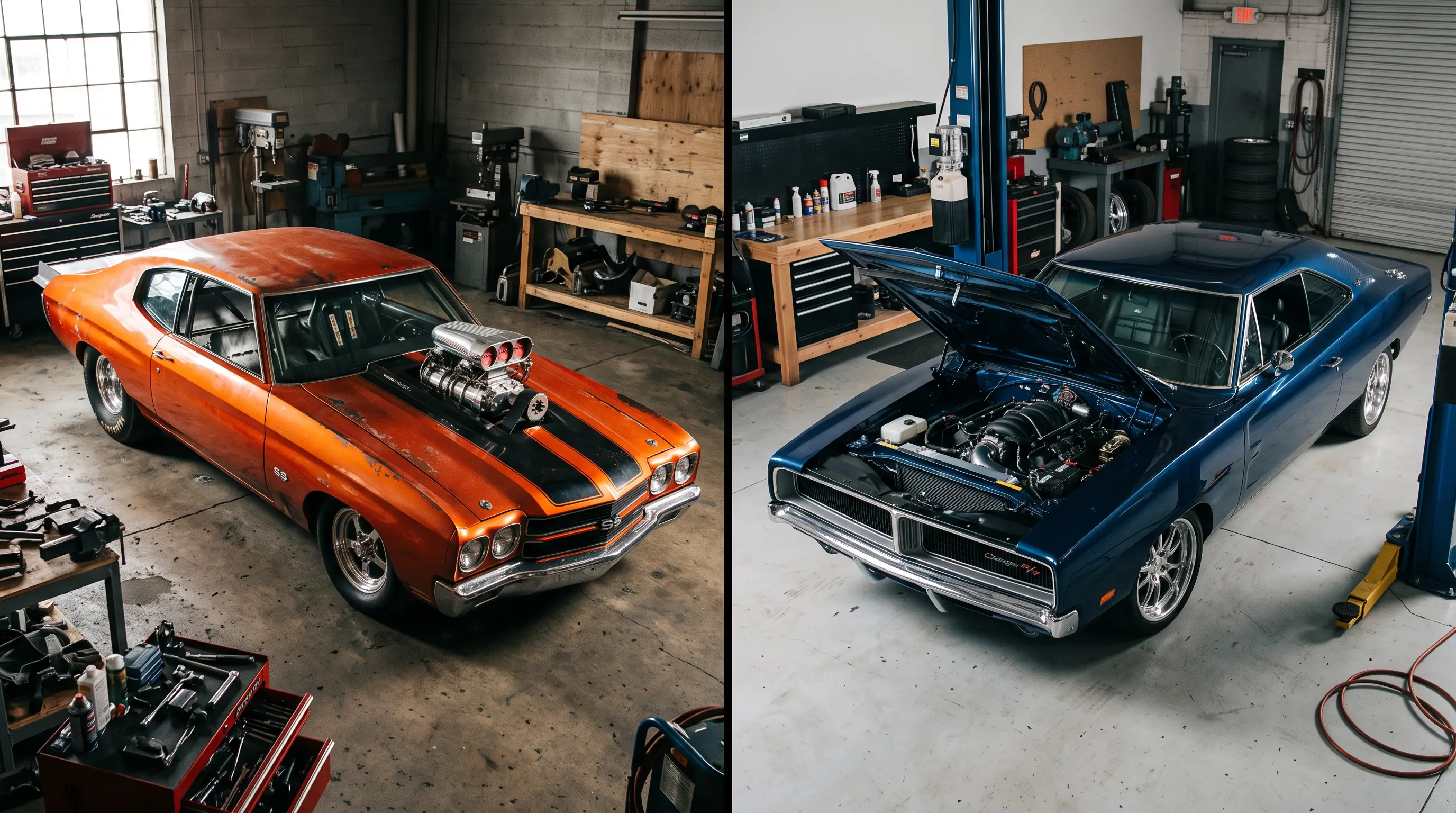
Pro Street came out of the drag strip in the late 1970s and ran hard through the 1980s and 90s, and the whole idea was announcing intent. Tubbed rear wheel wells, a huge back tire, a narrowed rear end, sometimes a straight axle up front, all of it visible and proud. A Pro Street car parked next to a stock muscle car looked like a bodybuilder standing next to a regular guy. You were supposed to notice. For the roots of that whole movement, where this started lays out how the look came together in the first place.
Restomod took the opposite approach
Restomod builds took off later, really picking up steam in the 1990s and 2000s, and the goal there is almost the reverse of Pro Street's loud statement. A good restomod looks stock, or close to it, from ten feet away. Factory-style stance, correct-looking paint, trim in the right places. Then you get in and find modern air conditioning, fuel injection, a five or six speed where a three-speed used to live, and disc brakes that will actually stop the car in traffic. The whole build is about hiding the modern engineering inside a body that reads as original.
| Detail | Pro Street | Restomod |
|---|---|---|
| Stance | Aggressive, tubbed rear, huge tire | Close to stock factory proportions |
| Interior | Stripped, functional, drag-oriented | Upgraded comfort, often better than factory |
| Goal at a glance | Announce that it's a hot rod | Look period correct until you drive it |
| Typical use | Cruise nights, occasional strip runs | Long-distance driving, daily comfort |
The club has both kinds of guys, and both are welcome
What I have noticed over three decades of Saturday morning coffee is that the Pro Street guys and the restomod guys respect each other more than either group respects a trailer queen that never turns a wheel. A Pro Street builder admires the restraint it takes to make a modern drivetrain disappear under stock sheet metal. A restomod builder admires the nerve it takes to cut a perfectly good rear frame rail and stuff a tire under it that barely clears the fender. Both took a factory car and made a decision about what mattered to them, and neither decision was wrong.
"Big Ron's Pro Street car got him noticed at every light. His restomod gets him invited to dinner afterward. He says he built the first one to be seen and the second one to actually live with."
- Wayne Coburn
What the shop bill actually looks like
Neither build is cheap, but the money goes to different places. A Pro Street project spends heavily on chassis work, tubbing the rear frame rails, narrowing an axle, fabricating a driveshaft loop and a functional cage if the car sees the strip at all. A restomod spends heavily on systems that need to disappear, wiring harnesses for modern fuel injection routed so nobody sees them, air conditioning lines snaked through factory-shaped ductwork, brake upgrades tucked behind reproduction wheels so the stance never looks modern. Big Ron told me once that his restomod actually cost more in the end, because hiding good engineering behind a stock-looking shell takes more hours than just letting the hardware show.
What each one costs you in daily life
Owning a Pro Street car means accepting some real compromises. That huge rear tire and narrowed rear end usually come with a stiff ride, limited trunk space, and a car that draws attention every single time you stop for gas, which some owners love and others eventually get tired of explaining. A restomod trades some of that spectacle for comfort you can actually live with, air conditioning on a hot day, a radio that plays music instead of static, brakes that inspire confidence in modern traffic. Neither club member I know regrets their choice, but both will tell you honestly what they gave up to get what they wanted.
Resale tells a story too
Around the club we have watched values move in both directions over the years. A well-documented Pro Street car from a known builder, with period photos and a magazine feature to its name, holds real value with the right buyer, even if that buyer pool is narrower than it used to be. A quality restomod tends to have a broader audience because more people can picture themselves driving one every weekend without the compromises a tubbed rear end demands. Neither is automatically the smarter investment. It depends entirely on who is likely to buy the car from you someday, and around here that conversation happens over coffee just as often as the build talk does.
New members sometimes ask which style will be worth more in ten years, and the honest answer is that it depends less on the build style than on how well the work was documented along the way. A Pro Street car with receipts, dated photos of the chassis work, and a name attached to the fabrication holds its story even as tastes shift. A restomod with a clear parts list and a paper trail for every system swapped in earns the same trust from a buyer who wants to know exactly what they are getting into. The cars that lose value fastest in our circle are the ones nobody can explain, regardless of which philosophy built them.
Deciding which direction fits you
If the goal is presence and a direct connection to drag racing's golden years, a documented Pro Street build from the era is still the more honest path, and there are fewer of them left every year as owners either restore them back to stock or let them go. If the goal is a classic you can actually drive across three states in comfort, restomod thinking makes more sense from the first day of the project. Either way, if you're browsing rather than building, a good classic Pro Street car for sale search will show you what survives from both camps, sitting right next to each other the way they always have at our Saturday coffee meetups.