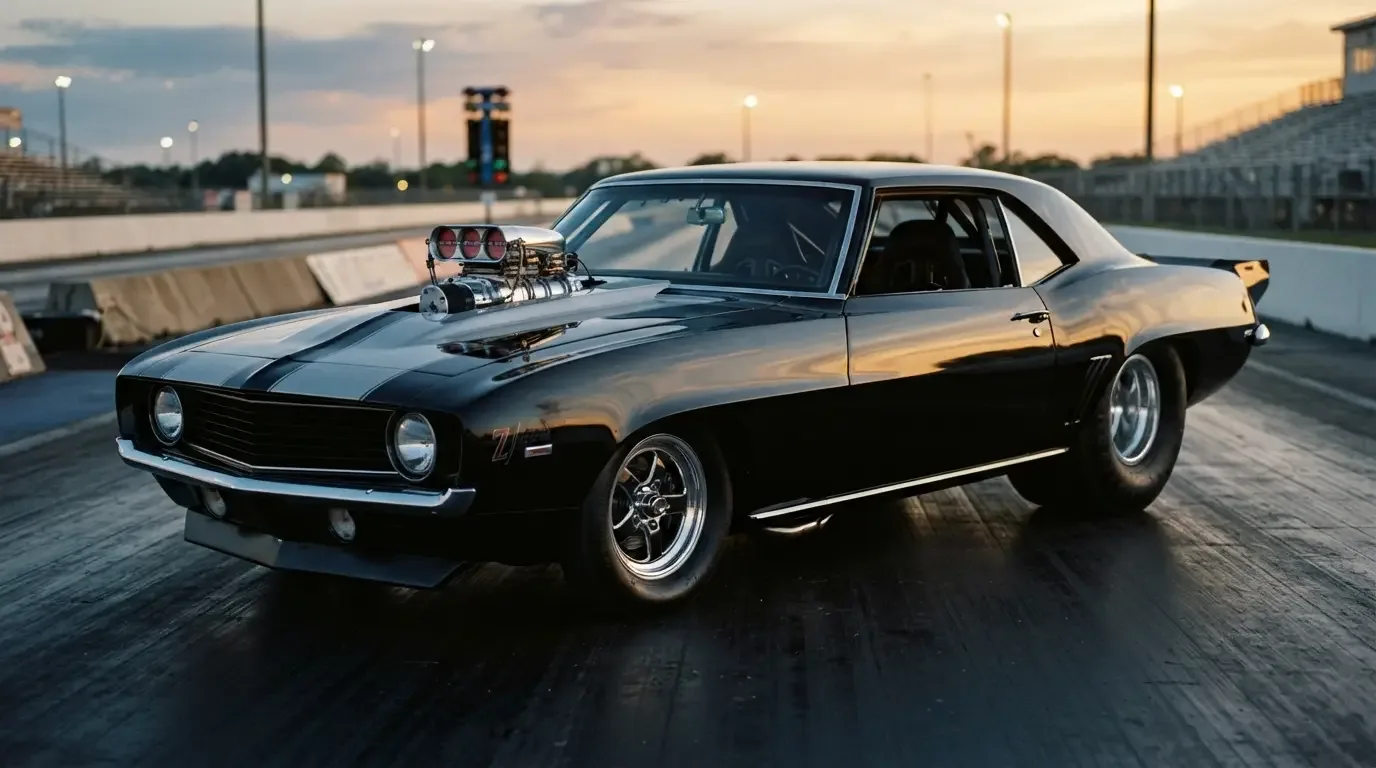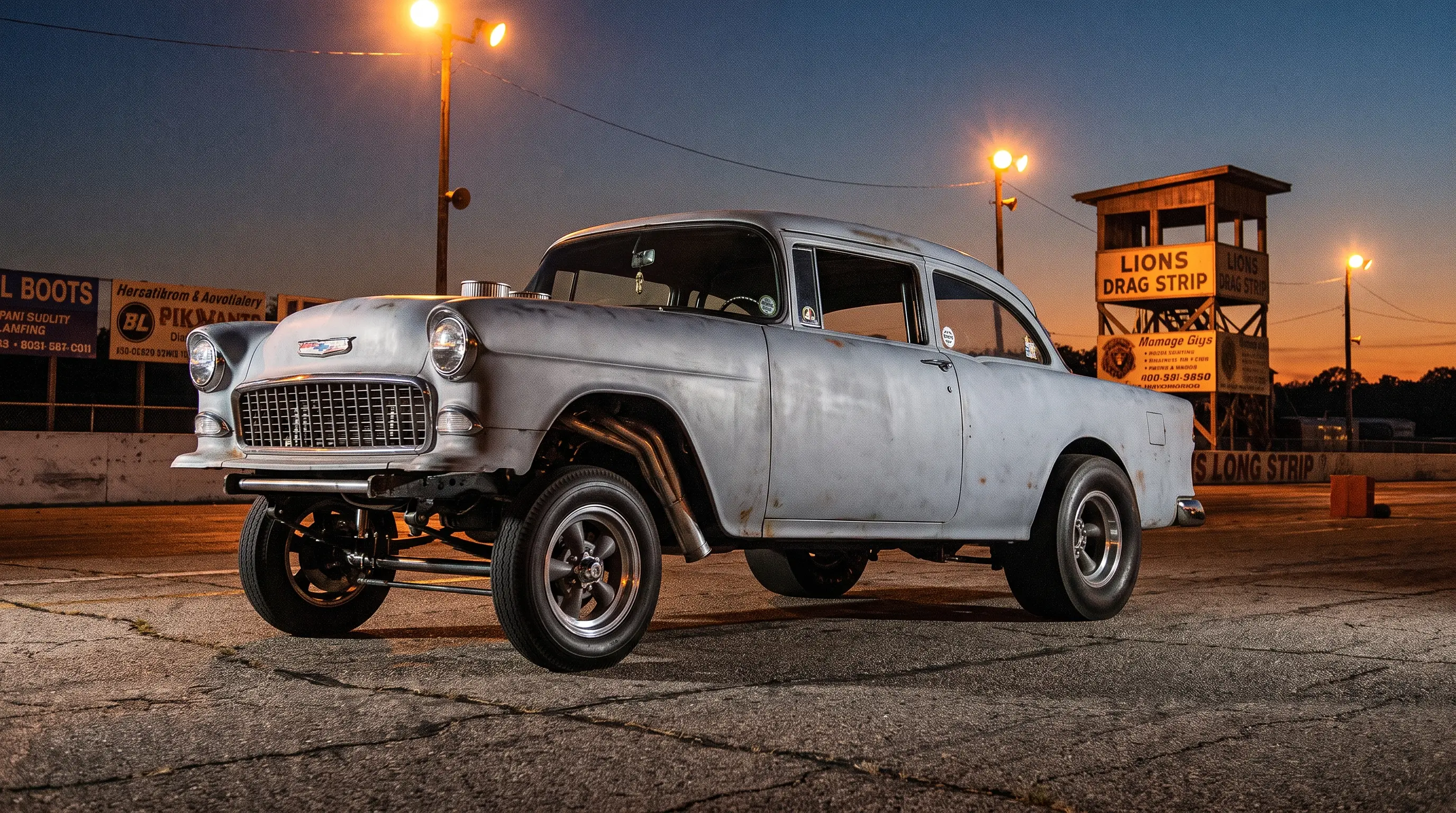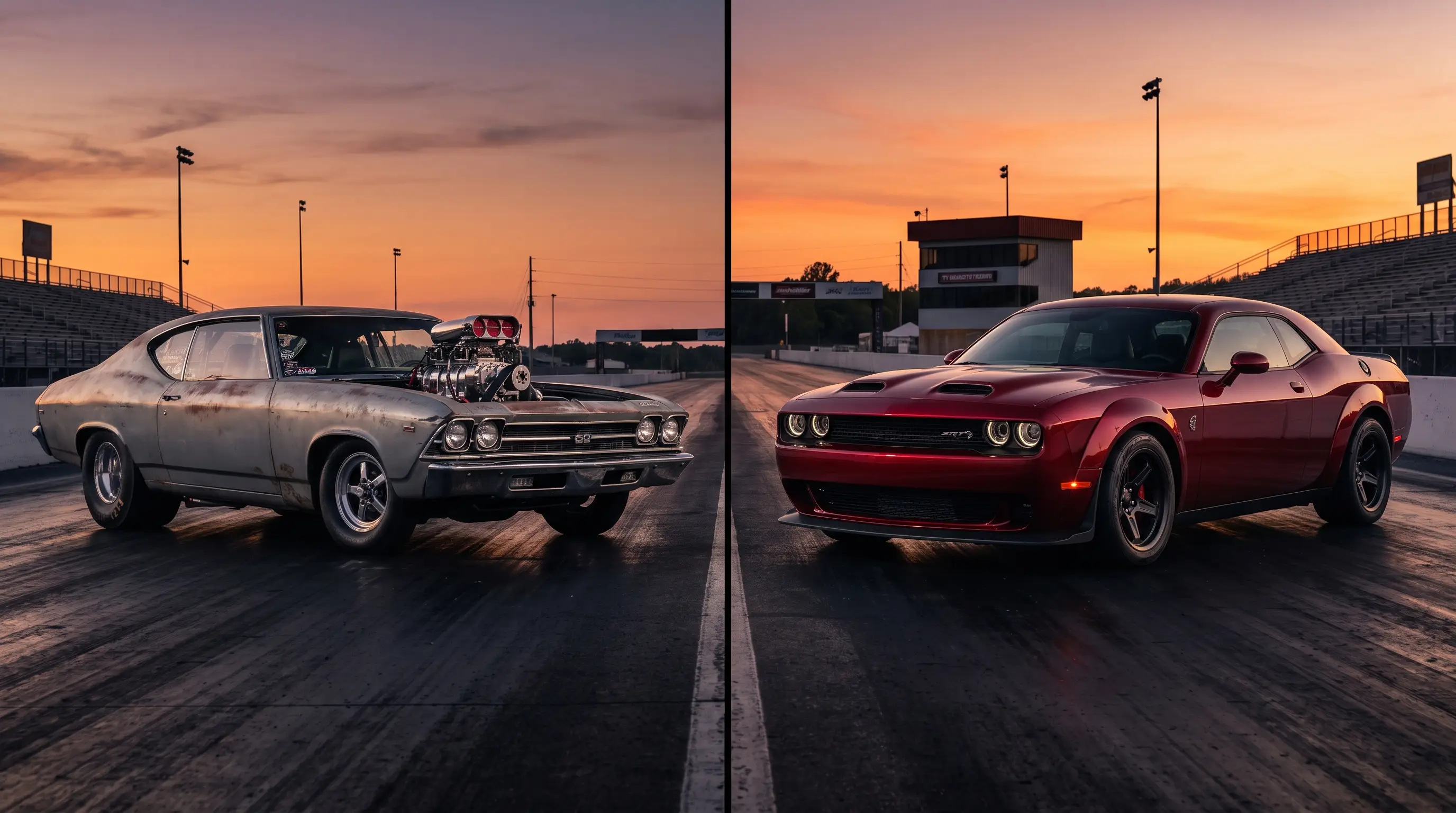
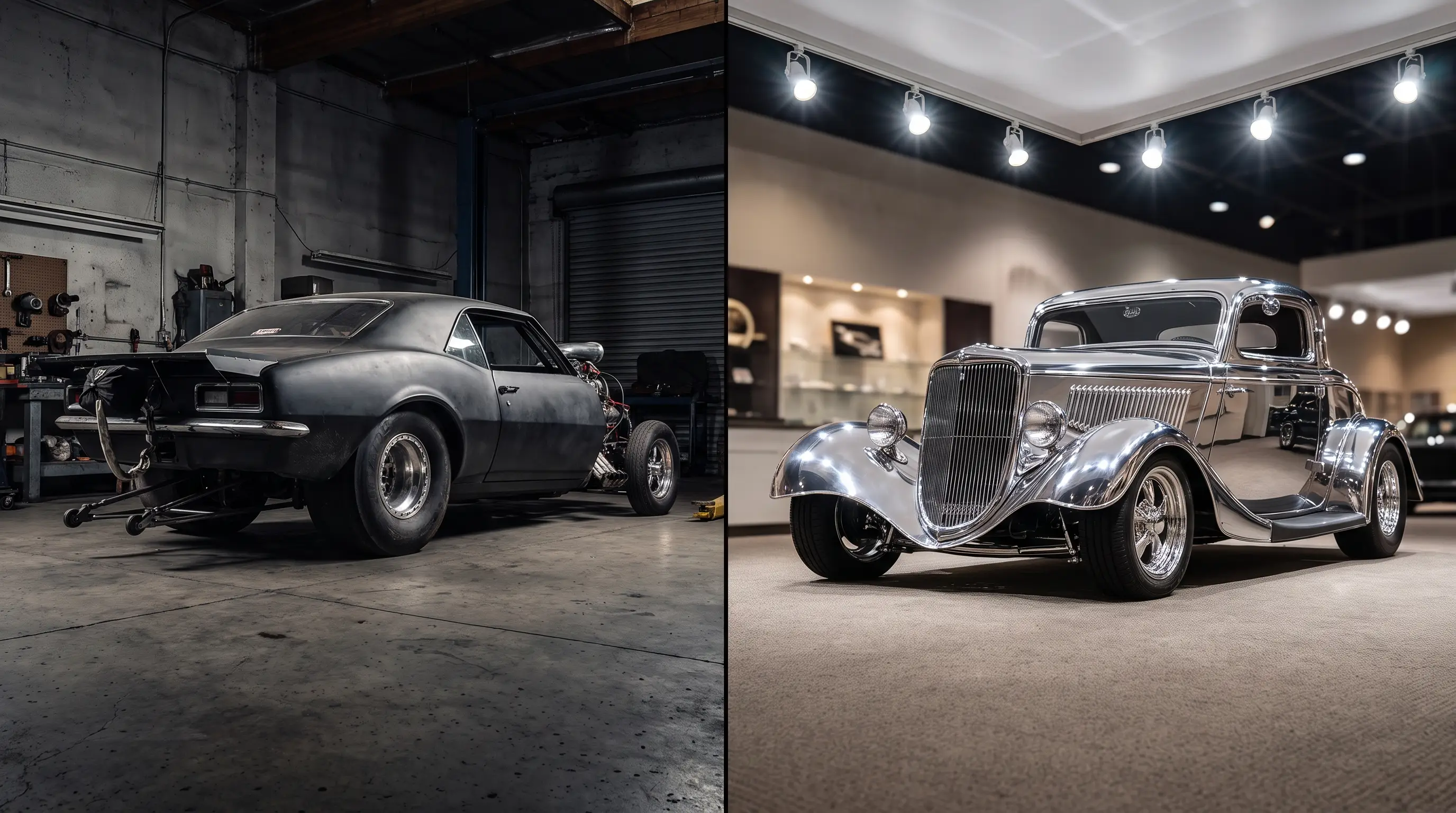
The first time I stood between a Pro Street car and a full show car at the same event, a guy behind me said something that stuck. He said one of these cars is trying to win a fight and the other is trying to win a beauty pageant, and neither one wants to be judged the other way. That is the cleanest summary of pro street vs show car I have ever heard, and it holds up. Both categories can share a starting point, sometimes the exact same body style from the exact same factory year, but they diverge so completely in intent that comparing them side by side almost misses the point of either one.
Two different definitions of finished
A show car chases perfection under the hood, in the trunk, and underneath the frame rails, because judges are going to look at all three. Undercoating gets detailed. Wiring gets loomed and color matched. Chrome gets polished on parts most owners will never see once the car leaves the trailer. A Pro Street car chases a different kind of finished. The build is done when the tubs clear the tire, when the driveline handles the power, and when the stance reads right from thirty feet away. Underneath, a Pro Street car can be raw steel and visible welds, and nobody at a Pro Street gathering is going to dock points for it, because that is not what the style is judging.
What each style is actually built to do
Show cars are built to be looked at. That sounds obvious, but it shapes every decision, from paint depth to how often the car actually gets driven. Many show-quality builds see a trailer more than a highway, because miles introduce risk to a finish that took months of color sanding to achieve. Pro Street cars, even the wildest ones, are built around the idea that the car should be able to move under its own power and put that huge rear tire to use. A Pro Street build that never leaves the garage is missing the entire point of the exercise. The tubs and the tire width exist because the car is supposed to launch hard, not just sit still looking capable of it.
Judging criteria that never overlap
Concours and show judging rewards accuracy, cleanliness, and consistency. A judge walks a checklist. Panel gaps, fastener types, paint gloss, engine bay correctness against factory specification if the car claims to be original or period correct. Pro Street events, where they exist as judged categories at all, reward something closer to presence. How wide is the rear tire relative to the body. How aggressive is the stance. How well does the build execute the tub job, the back-half modification, and the overall proportion between front and rear. A car can win big at a Pro Street gathering with a rattle-can engine bay if the stance and the tire fitment are dead right, and that same car would score poorly at a concours event for exactly the same reasons.
"I have watched a car with a perfect paint job get completely ignored at a Pro Street show because the rear tire wasn't wide enough, and I have watched a rough, unfinished tub job get a crowd because the stance was exactly right. The two worlds are judging different things entirely."
- Patrick Walsh
Can a car be both
Occasionally, yes, and those crossover builds tend to become the most talked about cars at any event they attend. A Pro Street car finished to show-car detail standards, with a fully tubbed rear end, enormous tires, and a concours-quality engine bay and paint job underneath it all, represents the top of both mountains at once. These builds take enormous money and time because they are essentially two full projects layered on top of each other, and most builders choose to specialize in one direction rather than chase both. Read our complete history of how Pro Street separated from the broader custom and show car scenes if you want to understand why so few builders try to do both at a high level.
Why the distinction still matters to buyers
Anyone shopping for a car in either category needs to know which one they are actually looking at, because the value drivers are completely different. A show car's value rises with documentation, originality, and finish quality that can be verified against factory specifications. A Pro Street car's value rises with build quality of the modifications themselves, the reputation of the shop or builder who did the work, and how well the car executes the look the buyer is chasing. Buyers who confuse the two categories end up disappointed, either paying show-car money for a car that was never meant to hold a factory-correct finish, or dismissing a genuinely excellent Pro Street build because it does not have concours-level detail in places that were never supposed to matter for that style. If you want to compare real examples side by side, you can browse classic Pro Street car listings and see how differently these builds get described and priced compared to a straight show car.
The bottom line for anyone new to either scene
Neither style is more legitimate than the other, and the rivalry between the two crowds is mostly good natured at this point, decades removed from when Pro Street was the upstart challenging a more established show car tradition. What matters is understanding what each build is trying to accomplish before you judge it by the wrong standard. A Pro Street car is not a failed show car, and a show car is not a Pro Street build that chickened out on the tubs. They are two answers to the same original question of what makes a modified classic worth building in the first place, and both answers still have plenty of believers.
How owners talk about their own cars
Spend enough time at either kind of event and you notice how differently owners describe their own builds. A show car owner tends to talk in terms of correctness, referencing date codes, original paint numbers, and how closely a given detail matches what left the factory floor. A Pro Street owner talks in terms of the build itself, who did the tub work, what the rear end is running, how the car reacts under hard acceleration. Those are two entirely different vocabularies for two entirely different kinds of pride. Neither owner is likely to be impressed by the other's bragging points, which is part of why the two crowds, while friendly, rarely mix their judging categories at combined events without some grumbling from at least one side.
Where the money actually goes
A show car budget tends to concentrate on paint, chrome, and reproduction parts sourced to match factory originality as closely as possible, since a single incorrect fastener can cost points with a strict judge. A Pro Street budget concentrates on fabrication labor, driveline components, and the structural work needed to make a tubbed rear end both look right and hold up under real power. Both paths can consume similar total dollars by the time a build is finished, but they get spent in almost opposite places. Understanding that difference helps explain why a rough-looking Pro Street car can represent just as much invested time and money as a glossy show car sitting a few spots away at the same event, even though the two builds look nothing alike at first glance.
Sources and notes
- Pro Street - Wikipedia
- Pro Street: A Look Back At The Bow-Tie Style That Never Gets Old - Chevy Hardcore
- How Classic Cars Are Usually Judged (or How They Should Be)
- Secrets revealed: an insider look at the concours judging process - Classic Motorsports
- What Does a Car's Condition Really Look Like? - Hagerty UK