Somebody asked me at a cruise night last summer what does Pro Street mean, and I realized I had never given a straight answer in one sitting. I usually just point at a tubbed Nova with slicks poking out the back and say "that." But that is not really an answer, so let me try to give you the whole thing, the way I heard it explained to me thirty years ago by a guy who built one of the first cars in our club to wear the label.
The short version
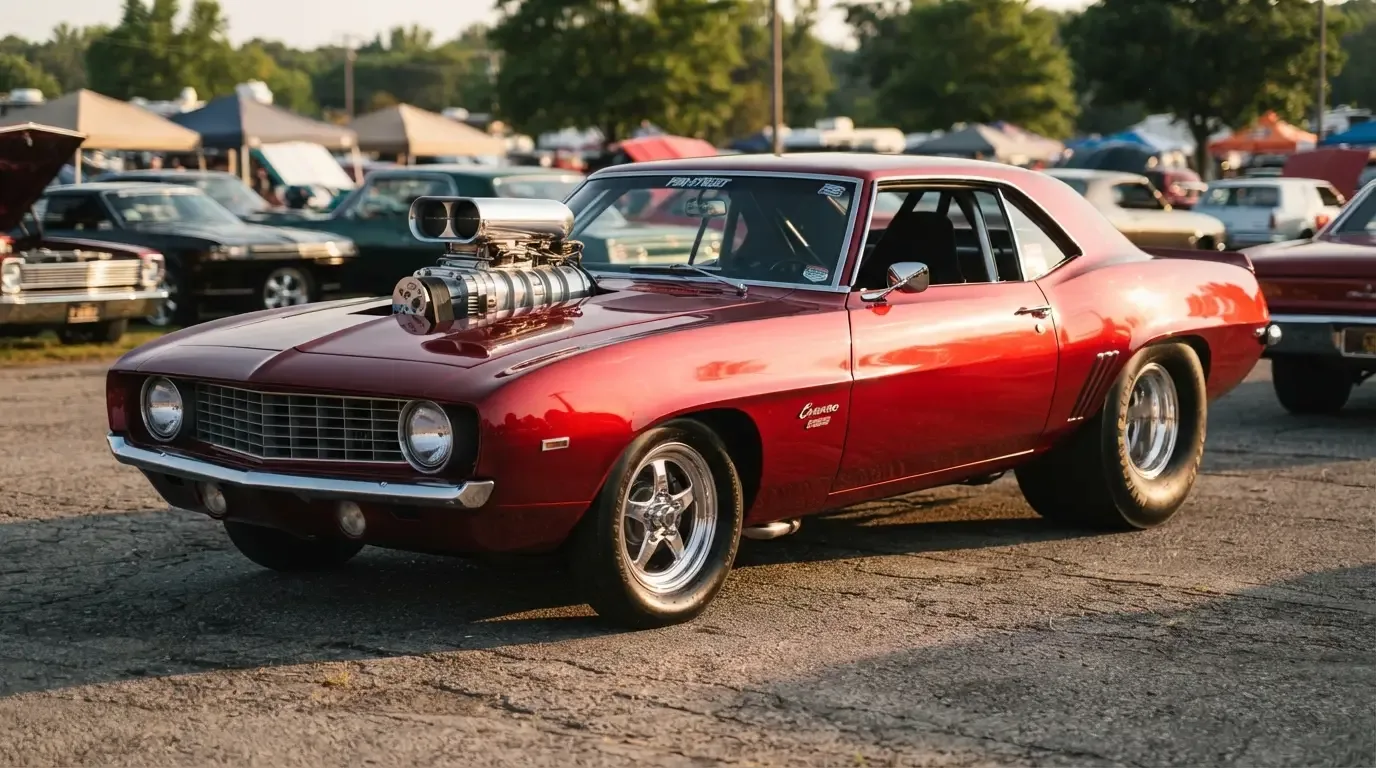
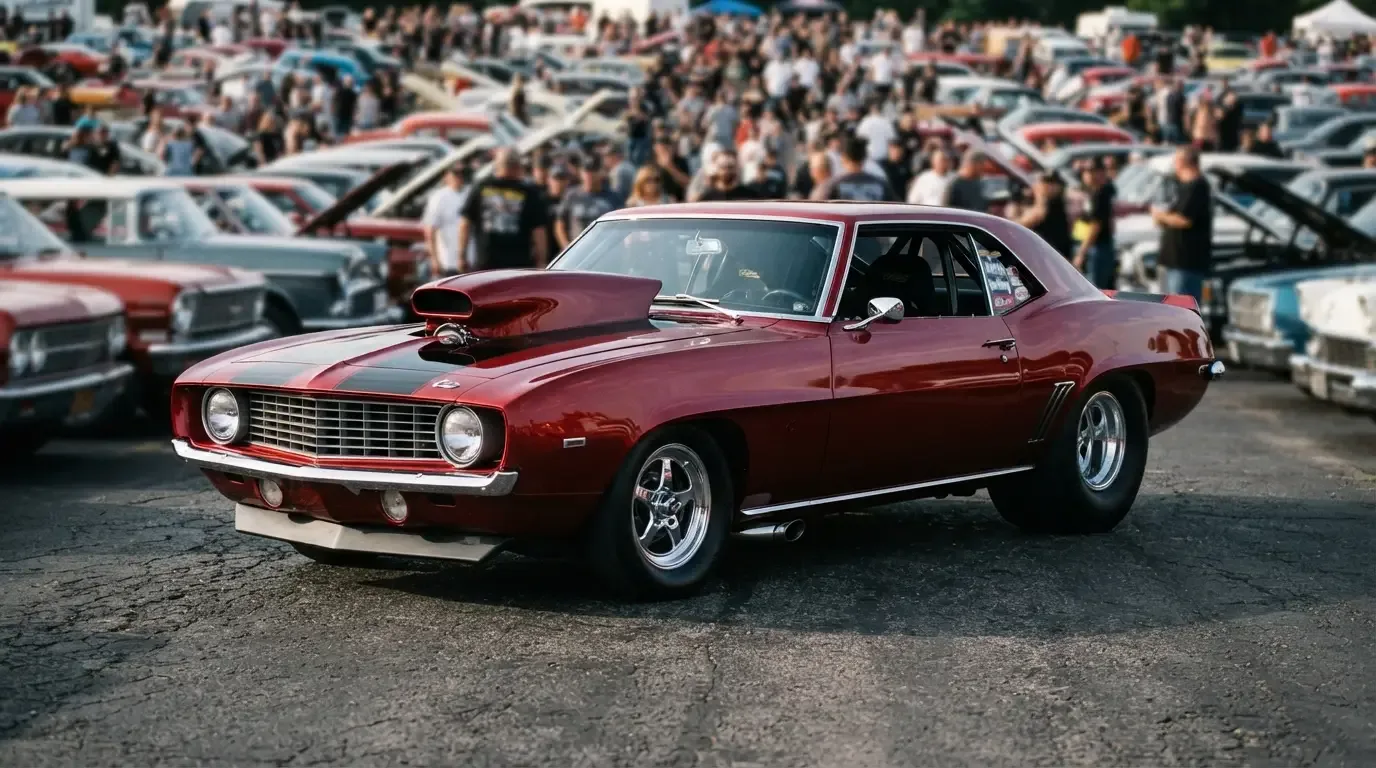
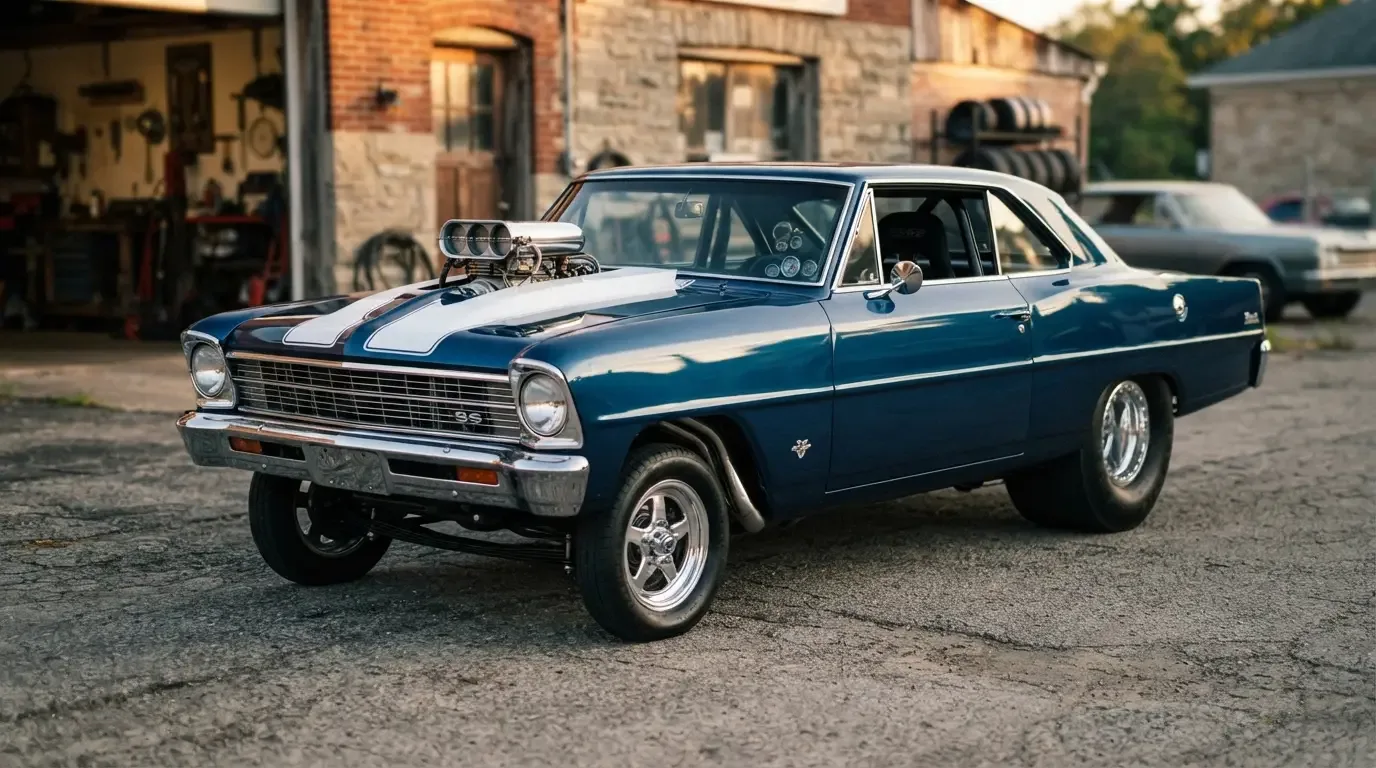
Pro Street means a street-legal car built to look and perform like a Pro Stock drag racer, without actually being a full-time race car. That means a narrowed and tubbed rear frame section to fit huge rear tires, a big engine often fed by a blower or injection stack, a stripped-down or lightened interior, and enough plates, lights, and mufflers to legally drive it home from the track. It is a hybrid, and that hybrid quality is the whole point.
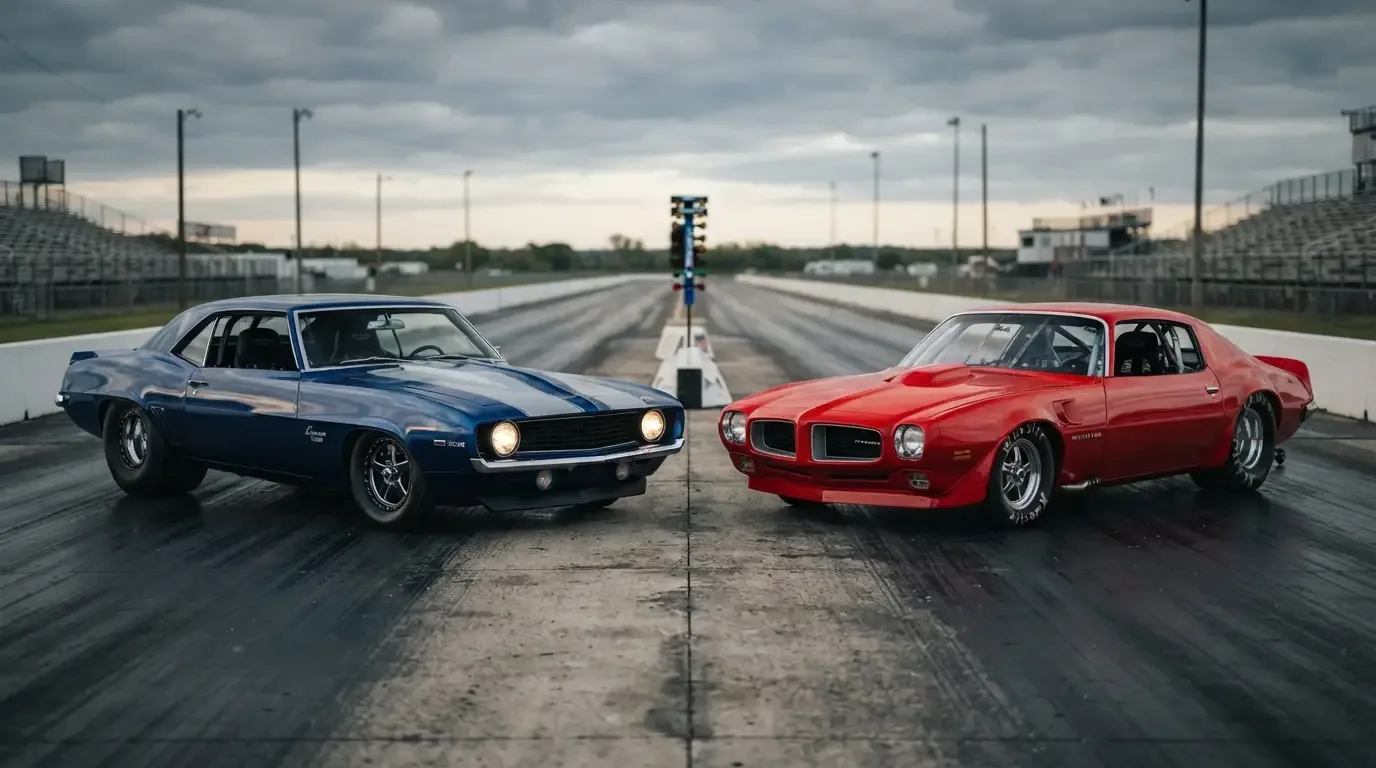
The name itself came from the "Pro Stock" class in drag racing, the pinnacle of factory-bodied competition cars in the 1970s and 1980s. Builders who could not afford or did not want a full-time race car started copying the look and the stance on cars they still drove on the street. The name stuck because it described exactly what people were doing: taking Pro Stock style and putting it on the street.
I have heard people argue the term was born in a magazine office and others swear it came up organically among racers trading stories in the pits. Honestly it was probably both at once. A trend does not spread because one writer coins a phrase in a vacuum. It spreads because the phrase describes something a lot of people are already doing, and the writers who covered it just gave that thing a name that stuck. Once the term showed up in print, it became shorthand at every cruise night and swap meet in the country.
What separates a real Pro Street car from a look-alike
Around our club there is always somebody with strong opinions on this, and honestly they are right to have them. A car with wide rear tires and a fresh paint job is not automatically Pro Street. The tub work has to be real, meaning the rear wheel tubs have been cut, widened, and welded to clear tires that would never fit stock sheet metal. The stance has to come from an actual narrowed rearend or a mini-tub setup, not just aggressive tire sizing that clears by luck.
The engine side matters too. A Pro Street car is expected to run a serious powerplant, something with real cubic inches and a induction setup that looks the part, whether that is a blower through the hood or a set of injector stacks. A show car with a mild small block and a fake scoop does not qualify no matter how good the tub job looks. The whole idea is that the car could go run a quarter mile respectably if you swapped the street tires for slicks in the parking lot.
Why the definition gets argued about
Every generation of the hobby seems to have its own opinion on where the line sits, and that is normal for any style that spans decades. Purists from the golden era insist a real Pro Street car has to be built on a body from the muscle car or hot rod era, with a big-inch domestic engine and a manual or heavy-duty automatic transmission behind it. Newer builders sometimes stretch the label to cover cars with modern drivetrains and aftermarket chassis work that would have been unrecognizable to the guys building these cars in a home garage in 1985.
Both camps have a point. The style evolved because builders kept pushing what was possible with better tires, better fabrication, and better engine technology. But there is also something worth preserving in the original formula, the idea that this was a car built by hand in somebody's garage, funded a paycheck at a time, and driven on the street between trips to the strip. For where this started, that garage-built, budget-driven origin story is essential context, not a footnote.
"Ask ten guys what makes a car Pro Street and you will get ten answers, but they will all agree on one thing when they see it in person. You know it when the tires are that wide and the car still has a license plate."
- Wayne Coburn
Why the term still matters
Understanding what Pro Street actually means helps explain why the cars from this era hold up so well today. They were never meant to be trailer queens. They were built to be driven, raced occasionally, and shown off at local events, which means the good ones were engineered with real functionality in mind, not just appearance. A tub job that looks right but was not structurally sound would fail the first time somebody launched the car hard, so the builders who wanted their cars to last had to actually know what they were doing.
That functional history is part of why collectors and buyers care so much about documentation and build quality when they are looking at a Pro Street car today. A car with a known build history, especially one that ran at local events back in the day, carries more weight than a recent tribute build with the same basic look. If you are in the market and want to see what that distinction looks like in practice, browse a classic Pro Street car for sale and pay attention to how sellers describe the tub work, the drivetrain, and the history behind the build. That is where the real answer to what Pro Street means shows up, in the details of an actual car rather than in a one-line definition.
At the end of the day the definition matters less than the intent behind it. Somebody took a street car, cut it apart, made room for tires that had no business fitting under stock sheet metal, and stuffed in an engine that could embarrass a lot of dedicated race cars, then still drove it to work on Monday. That combination of ambition and practicality is what people are really talking about when they ask what does Pro Street mean, and no single sentence captures it as well as seeing one of these cars fire up in a parking lot.