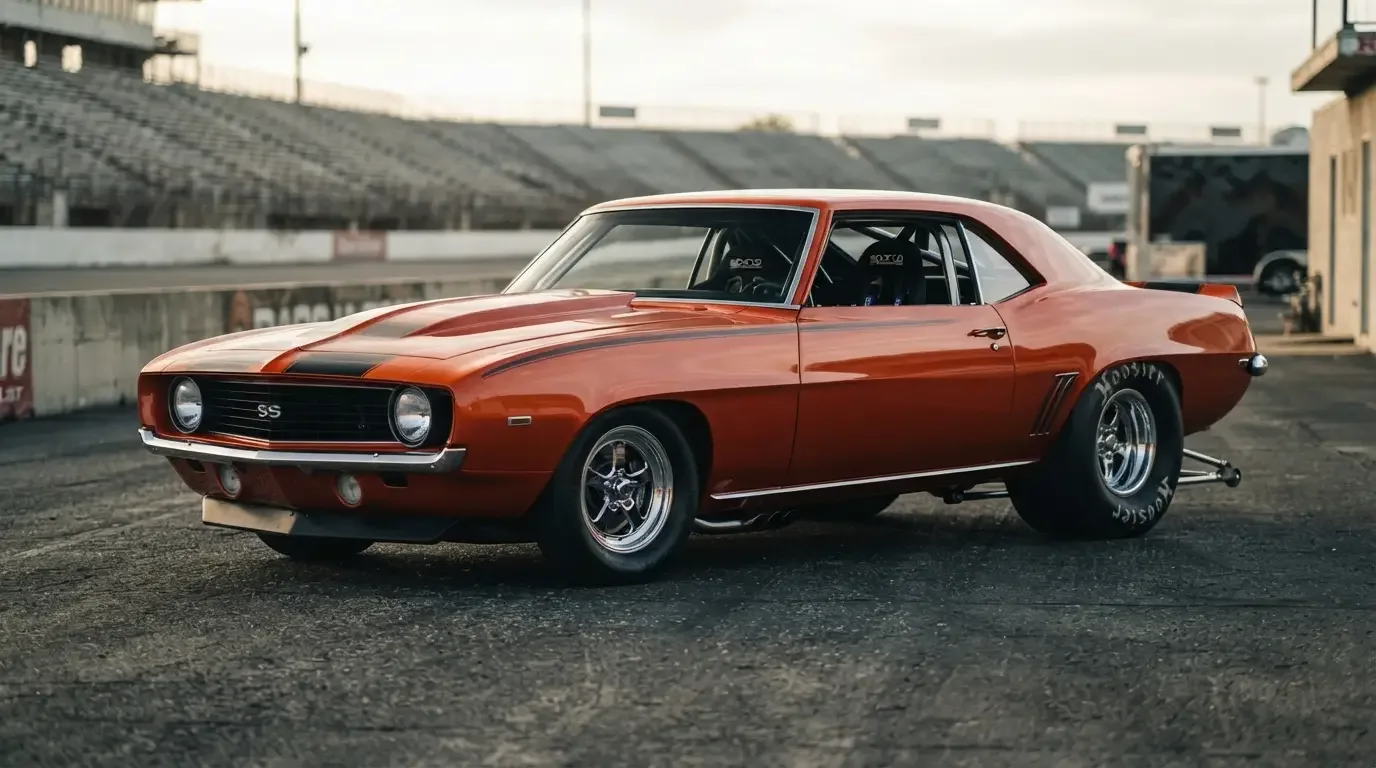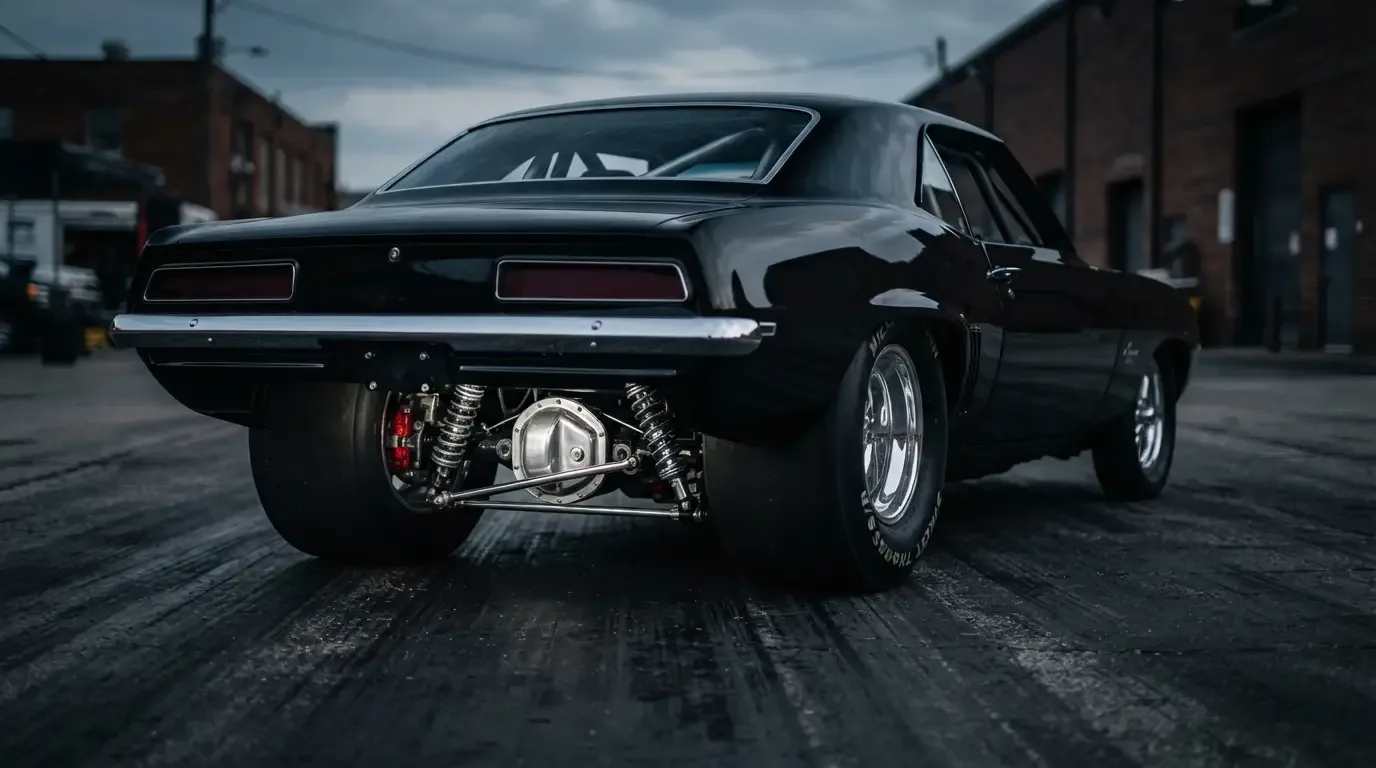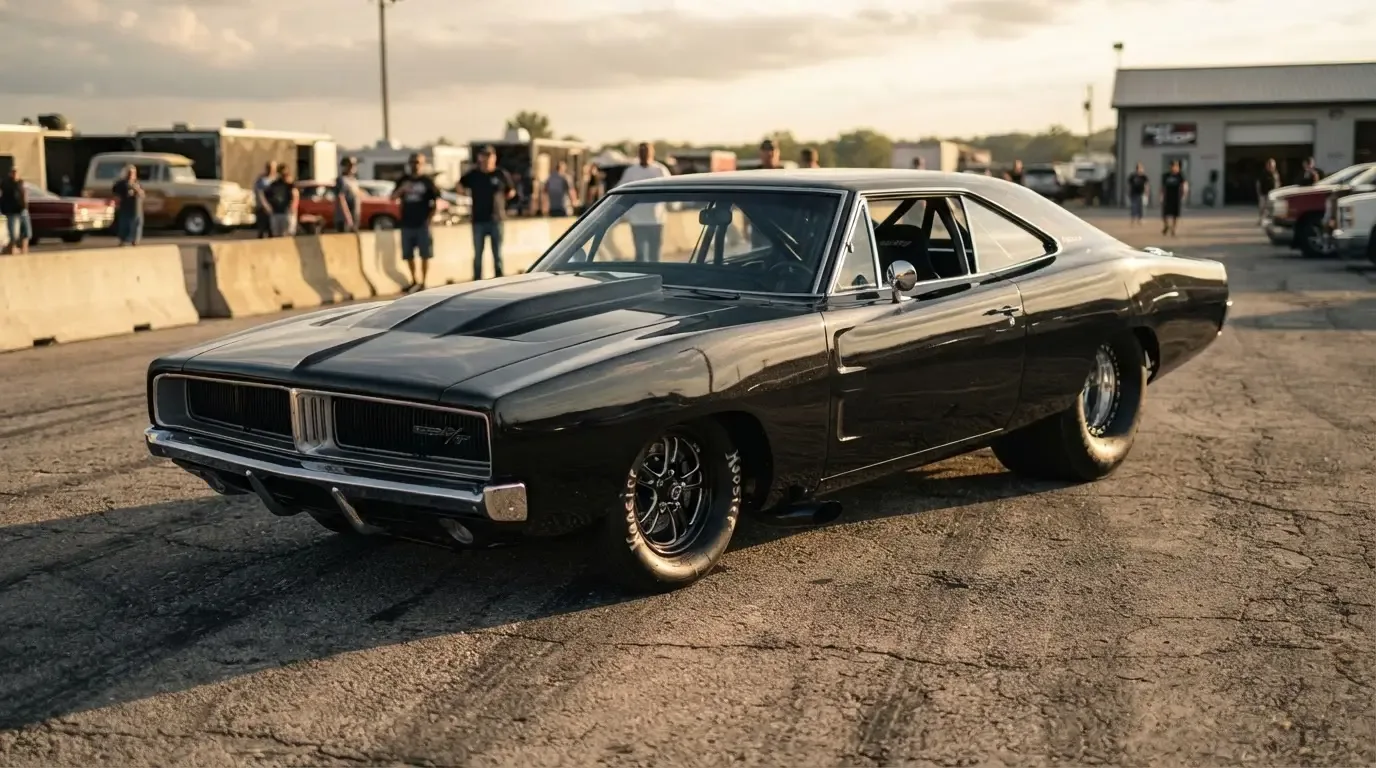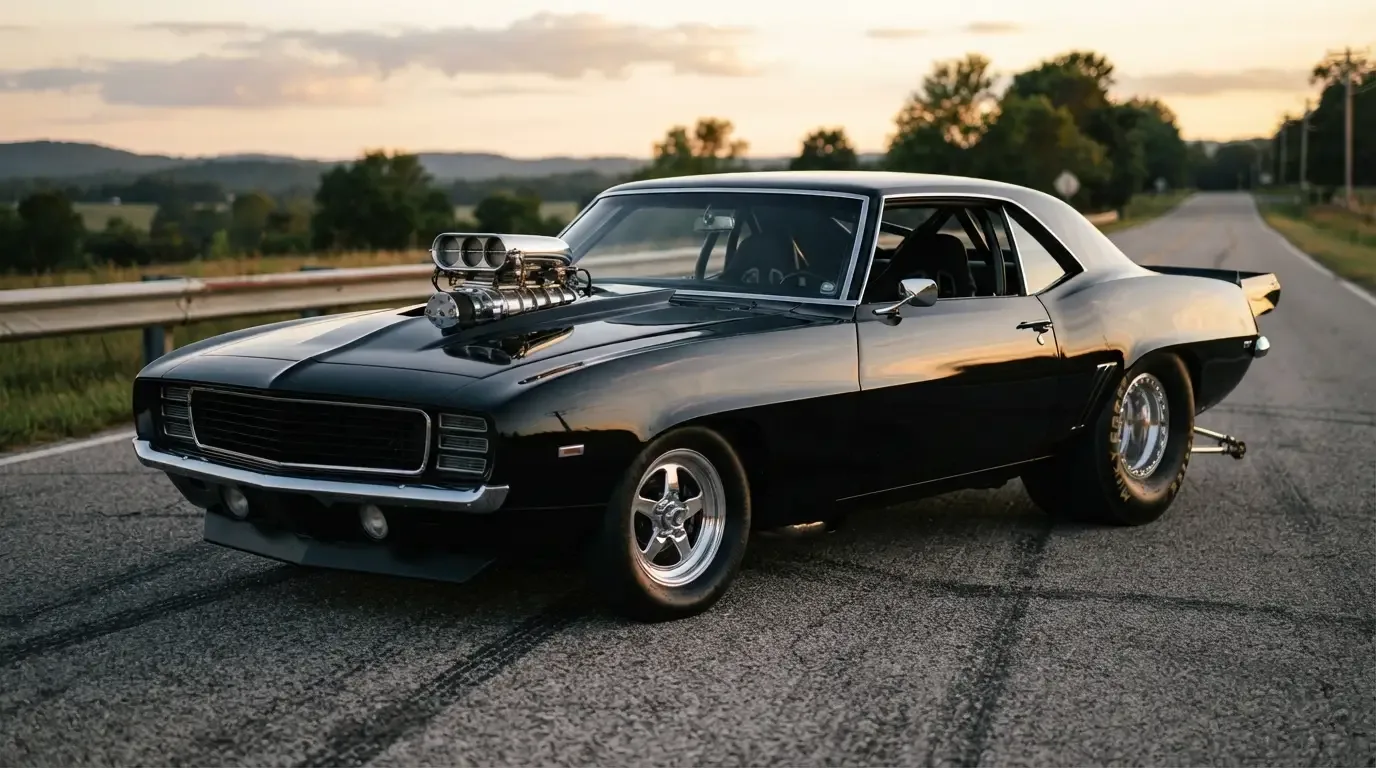
I get the same question every time somebody spots wheelie bars hanging off the back of a street-driven Pro Street car parked at a gas station. Do those actually work, or are they just there for the look, purely cosmetic hardware bolted on to complete the picture. The honest answer is that it depends entirely on the car, and figuring out which category a given set of wheelie bars falls into tells you a lot about how seriously that particular build was put together in the first place.
What wheelie bars are actually for
A car with enough power and enough rear grip can lift its front wheels off the ground under hard acceleration, especially with weight transferring backward the way it does on a drag strip launch. That is dramatic in a movie and dangerous in real life, since a car running blind on its rear wheels alone loses steering control at exactly the moment it needs it most. Wheelie bars solve that by extending rearward from the chassis with small wheels of their own, set to touch down and limit how high the front end can rise before things get out of hand. On a dedicated race car, they are a safety device as much as a performance one.
The reason wheelie bars became associated with the Pro Street look at all traces back to the same drag strip culture covered in the full story of how this whole movement got started.
Function on the strip, statement on the street
I have seen this play out plenty of times at local car shows. Somebody rolls up with a set of chrome wheelie bars glinting in the sun, and half the crowd assumes the car underneath must be putting down serious numbers at the strip. Sometimes that assumption holds up. Just as often the car has never seen a Christmas tree light up in front of it, and the bars are there purely because the owner liked the way they finished off the rear three-quarter view.
Here is where it gets complicated for a street-driven car. Most Pro Street builds running around town are not making enough power, or are not launching hard enough on street tires, to actually need a wheelie bar doing real work. On those cars, the bars are there because they read as part of the visual language of the whole style, signaling drag strip pedigree even if the car in question has never made a real pass. That is not automatically dishonest, plenty of legitimate builders run bars purely for the look while being upfront about it, but it does mean a buyer should not assume a set of wheelie bars proves anything about a car's actual performance history.
Reading the difference between real and cosmetic
You can usually tell the difference if you know what to look for. Functional wheelie bars are built from proper tubing, mounted to the chassis at structural points rather than bolted to sheet metal, and fitted with small wheels rated to actually spin at speed without failing. Cosmetic setups sometimes skip that engineering, using lighter material and simpler wheels because nobody expects them to touch the pavement under real load. Neither approach is wrong exactly, a car that never plans to launch hard does not need race-grade hardware back there, but it matters for anyone trying to understand what they are actually looking at on a particular build.
| Wheelie Bar Type | Typical Purpose |
|---|---|
| Functional, chassis-mounted | Prevents excessive front lift during hard launches |
| Cosmetic, lighter build | Signals drag strip style without heavy use expected |
| Adjustable height bars | Allows tuning for different tire and power combinations |
| Removable bars | Common on street cars that occasionally visit a track |
"A wheelie bar bolted to sheet metal is telling you something about the rest of the car before you even look at anything else."
- Mike Sullivan
The street-legal balancing act
Running wheelie bars on a car that also has to survive daily driving, speed bumps, steep driveways, and the occasional parking curb adds a layer most pure race cars never have to deal with. Builders serious about keeping a Pro Street car street legal and usable often go with adjustable or removable bar setups, letting them raise ground clearance for everyday driving and drop the bars down for a track day or a show where the aggressive stance matters more. It is a small detail, but it says something about a builder who thought through how the car would actually get used day to day rather than just chasing a look with no regard for practicality or the daily grind of driving it on real roads.
What I have seen go wrong firsthand
I have pulled more than one poorly mounted wheelie bar off a car brought into the shop for something unrelated, only to find the mounting points had cracked or bent from repeated use they were never designed to handle. The owners were usually surprised, since the bars looked fine from a casual glance and had never actually failed catastrophically. That is the trap with cosmetic hardware pressed into occasional real use. It can hold up for a while and then let go at exactly the wrong moment, which is why I tell people to have a welder look at the mounting brackets before assuming a set of bars will do the job just because they are bolted on and present.
The fix is not complicated, usually a matter of adding proper reinforcement plates and moving the mounting points to a structural part of the chassis instead of thinner sheet metal nearby. It is the kind of unglamorous work that never shows up in a photo but matters every single time the car actually gets driven hard, which is exactly the point of having wheelie bars there in the first place.
Why the detail still shows up on modern builds
Even with today's more predictable chassis components and better tire compounds reducing the real risk of an uncontrolled wheelie, builders working in this style still reach for wheelie bars regularly. Some of that is genuine function on cars making serious power. A lot of it is heritage, a nod to where the whole aesthetic came from and a way of tying a modern build back to the drag strip roots that started this style decades ago. Either reason is legitimate, as long as the buyer or spectator understands which one applies to the car in front of them before drawing conclusions about what it can actually do at the track.
Anyone shopping around can browse classic Pro Street car listings and take a close look at how different sellers describe their wheelie bar setups, since that description often hints at whether the car was built to run or built to look the part, long before anybody ever sees it launch in person.
Sources and notes
- Pro Street - Wikipedia
- Pro Street's Greatest Builds Honored at 2024 Grand National Roadster Show - Hagerty Media
- Defining muscle car terms: pro touring, pro street, and street freak - In The Garage Media
- The Legendary Street Machine Nationals Returns In 2013 - Dragzine
- Car Craft's Street Freaks - Magazine Covers 1976 to 1985
- Street Machine Nationals - Du Quoin, IL