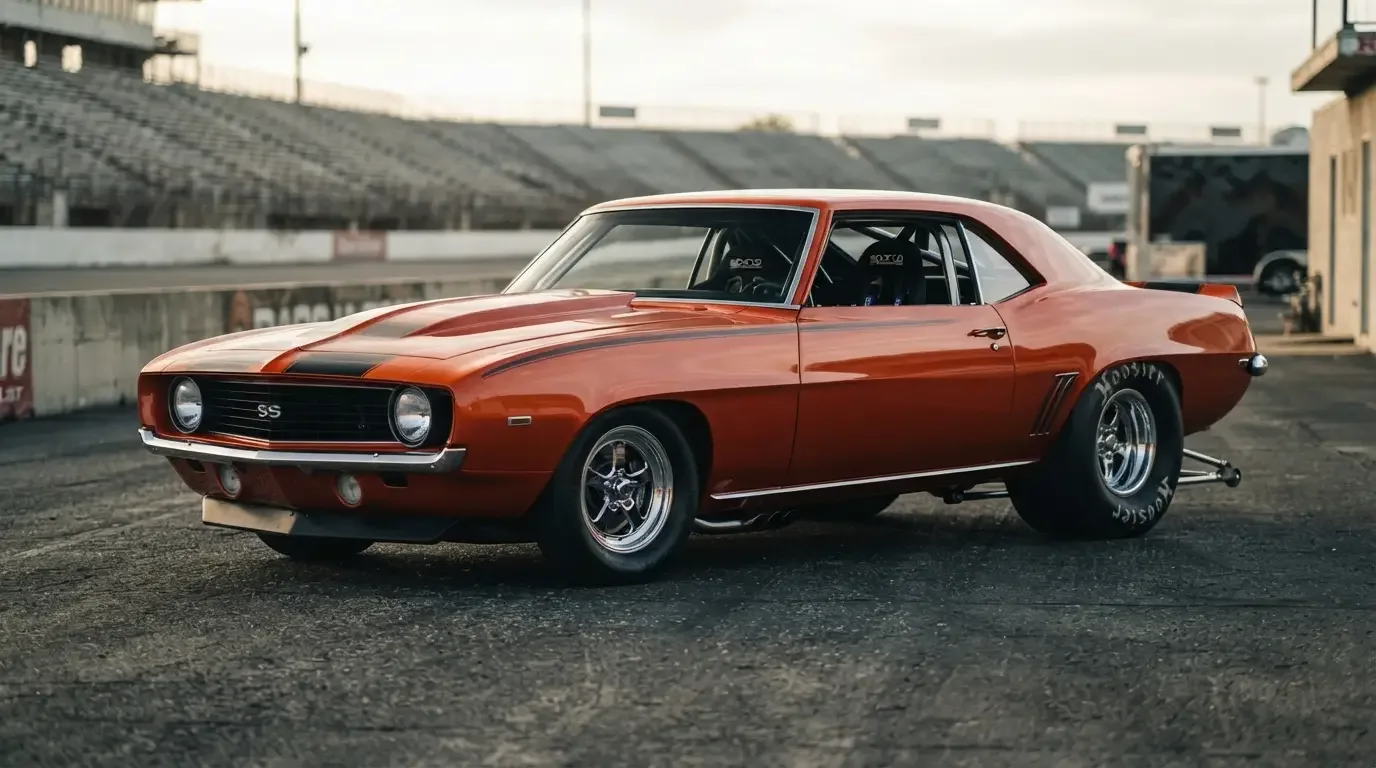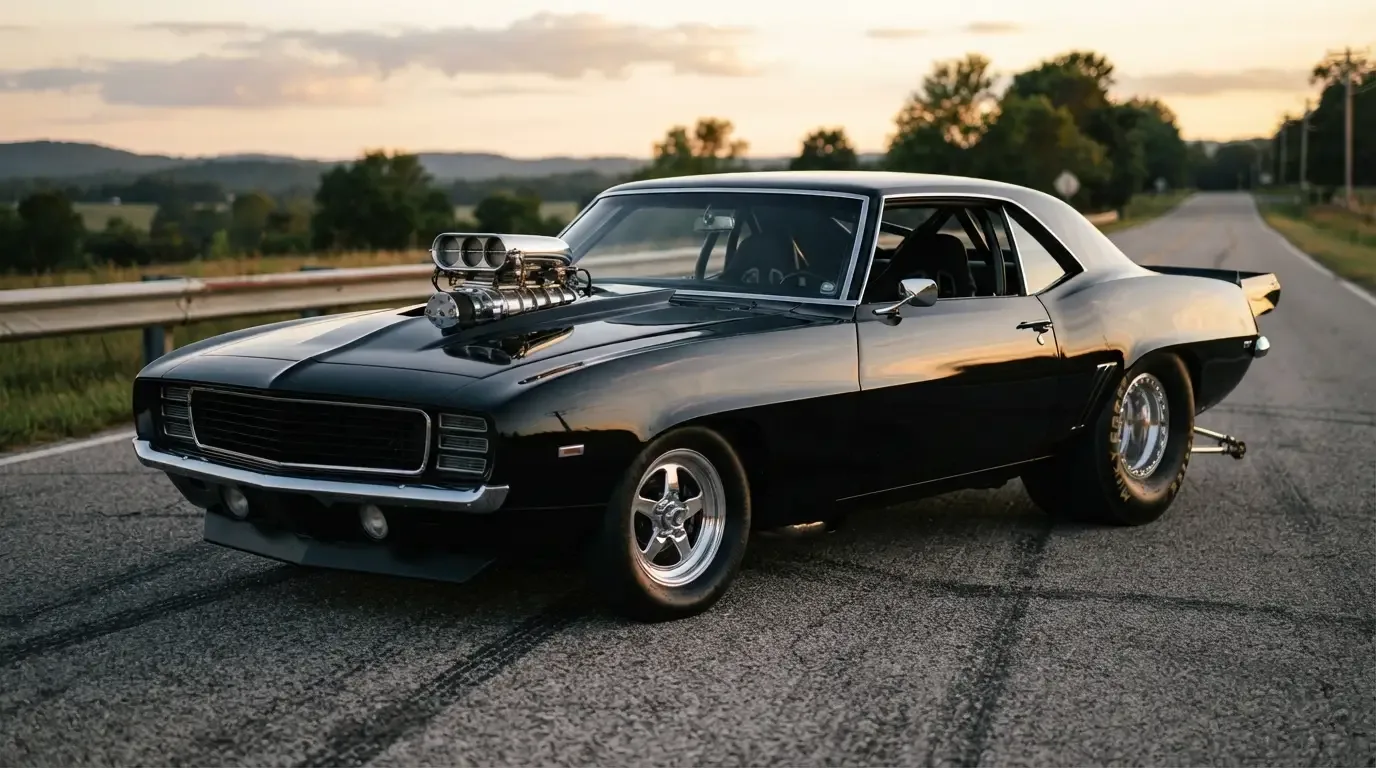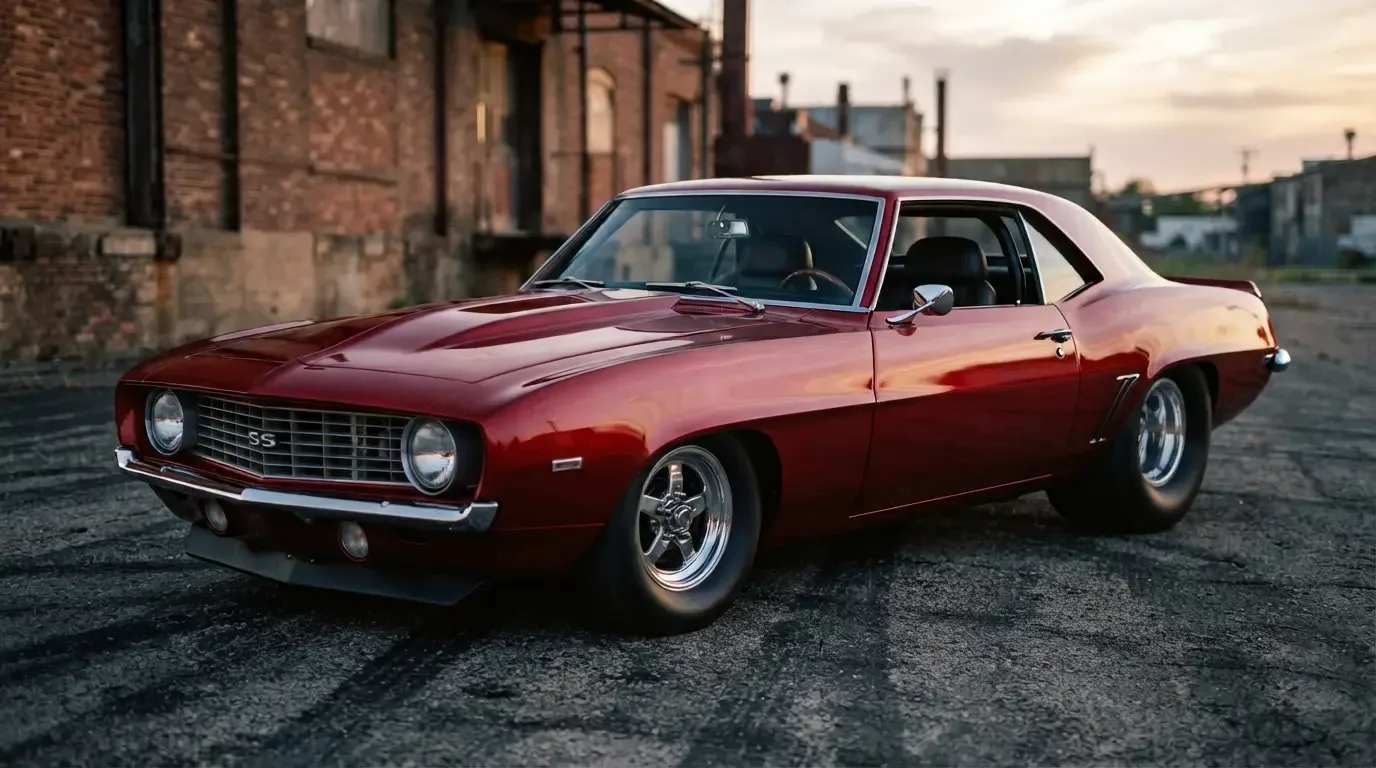
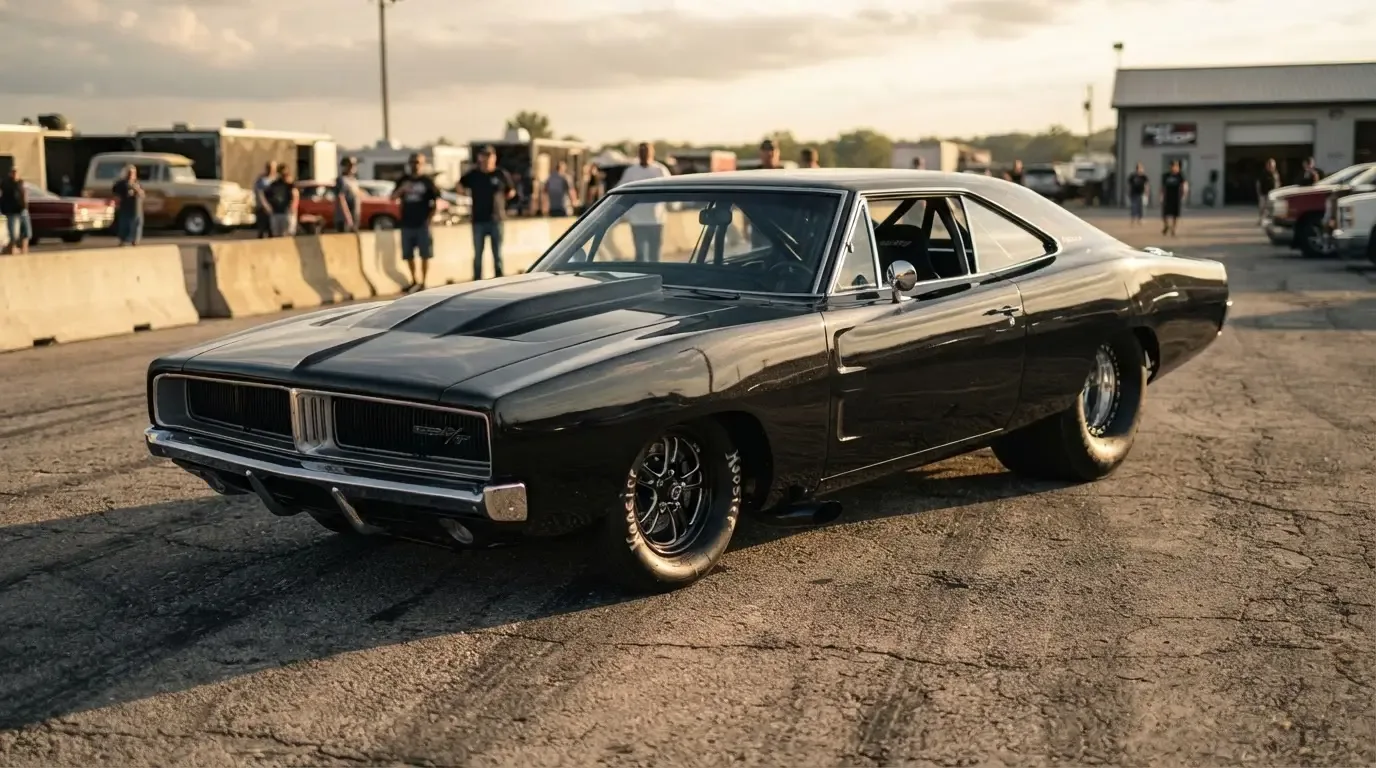
Thirty-some years of bodywork has taught me that stance is not something you bolt on at the end of a build, it is something you design for from the first cut you make in the sheet metal. Pro Street stance, that nose-down, rear-up rake with a tire filling the quarter panel, looks simple from the outside. It is anything but simple to get right, and I have seen plenty of expensive builds fall flat because somebody treated it as an afterthought instead of the foundation it actually is.
Where stance actually comes from
People assume stance is just ride height, drop the front, raise the rear, done. That is only part of it. Real Pro Street stance comes from the relationship between three things working together: the height difference between front and rear, the width of the rear tire relative to the front, and how the body sits on the frame once the suspension geometry is dialed in. Get any one of those out of proportion and the whole car looks off, even if each individual piece is technically correct on its own. I have straightened out more than one build where the owner could not figure out why it looked wrong until we measured the actual rake angle against the wheelbase and found it was fighting itself the whole time.
The background on how this whole visual language developed is worth a read in our what is a pro street car retrospective, which covers where the drag strip origins of this stance actually came from.
Bodywork has to support the stance, not fight it
This is the part younger builders coming up in the hobby get wrong more than anything else. A tub job and a back half conversion change the fundamental shape of the rear of the car, and the body panels around that new structure have to be massaged to match, not just bolted back on like nothing changed. Quarter panels need subtle reshaping where they meet the new tub line. Rear valances often need custom work to clear the tire and complement the new proportions. Skip that step and you end up with a car that has the right mechanical ingredients but still reads as wrong to anyone with a trained eye, because the body is still arguing with the chassis underneath it.
Period-correct versus poseur
I will get some pushback for this, but it needs saying. There is a real difference between a car built with period-correct proportions, the kind that respects how builders actually solved the stance problem in the 1980s and 1990s, and a modern build that slaps a big tire on and calls it Pro Street without understanding any of the geometry that made the original look work. The poseur version usually shows up in the details. Wrong ride height relationship, tires that look pasted on rather than integrated, a rake that was set by eye instead of measured against the car's actual proportions. Anybody who has spent real time under these cars can spot the difference in about ten seconds flat, no second look required.
| Stance Element | What a Trained Eye Checks |
|---|---|
| Front to rear rake | Height difference proportional to the car's wheelbase |
| Tire and body relationship | Tire fills the tub without looking bolted on |
| Panel fit around tubs | Quarter panels reshaped, not just cut and left rough |
| Overall proportion | Front and rear track width working together visually |
"Anybody can lower a nose and raise a rear. Getting the stance to actually look intentional takes measuring, not guessing."
- Jim Vasquez
Paint and finish work that reinforce the stance
Color choice and how a car is finished can either amplify a good stance or undercut it. Darker colors along the rocker panels and lower body sections tend to visually ground a car, making the rake read more intentional. Two-tone schemes that draw a line matching the natural rake angle can reinforce the aggressive look even further, something plenty of builders figured out by trial and error long before anybody wrote it down as a rule. I have watched a mediocre stance get talked up by a smart paint scheme, and I have watched a genuinely good stance get buried under a paint job that fought the car's own lines instead of working with them.
The stance conversation connects directly to how a car handles the rest of its trim and finish, which is covered in a related story about full street trim on cars built around a race-oriented chassis.
A story from the shop floor
Years back I had a customer bring in a car somebody else had built, convinced the stance was wrong but unable to say exactly why. We put it on the alignment rack and measured everything, rake angle, front and rear ride height, tire diameter front to back. On paper the numbers looked reasonable. What we eventually found was that the previous builder had set the rear ride height using the tire's unloaded diameter instead of accounting for how much that tire would settle under the car's actual weight. Once we corrected for that, the whole stance clicked into place in a way no amount of eyeballing had managed to fix.
That story sticks with me because it is a good reminder that stance is engineering dressed up as style. It looks like an artistic choice from the outside, and in some sense it is, but underneath that choice is measurable geometry that either works or does not. Builders who treat it purely as a feel thing, adjusting by eye until it looks close enough, end up with cars that almost look right but never quite settle into that intentional, purposeful look the best examples have. The difference between almost and exactly is usually a few measurements somebody skipped.
Why getting it right still matters today
Modern builders working in this style have better tools than we did decades ago, laser measuring, digital mockups, all of it. That has not made the fundamentals any less important. A Pro Street stance still comes down to the same relationship between rake, tire proportion, and body fit that it always did, and the builders producing genuinely respected work today are the ones who understand that history rather than skipping straight to buying a big tire and calling the job finished.
Anyone looking to see how these principles show up on real, currently available builds can check Pro Street cars for sale now and compare the stance across different examples with their own eyes, the same way we do it on the shop floor before ever recommending a build to a customer.
Sources and notes
- Pro Street - Wikipedia
- Pro Street's Greatest Builds Honored at 2024 Grand National Roadster Show - Hagerty Media
- Defining muscle car terms: pro touring, pro street, and street freak - In The Garage Media
- The Du Quoin Street Machine Nationals history - Holley Motor Life
- Car Craft's Street Freaks - Magazine Covers 1976 to 1985
- Street Machine Nationals - Du Quoin, IL