
A guy named Dale once told me he spent eighteen months welding his rat rod together in a barn and then two full Saturdays sitting in a DMV parking lot with a folder of receipts. The build was the fun part. The paperwork was the part nobody warned him about. That is the reality most first-time rat rod owners run into: the car comes together long before the title does, and the title is the thing that decides whether you ever legally drive it.
Car Features
8 min read
Registering and Insuring a Rat Rod
Titling a home-built rat rod, the street-rod title route, why inspection rules vary by state, and how agreed-value classic insurance protects your build.
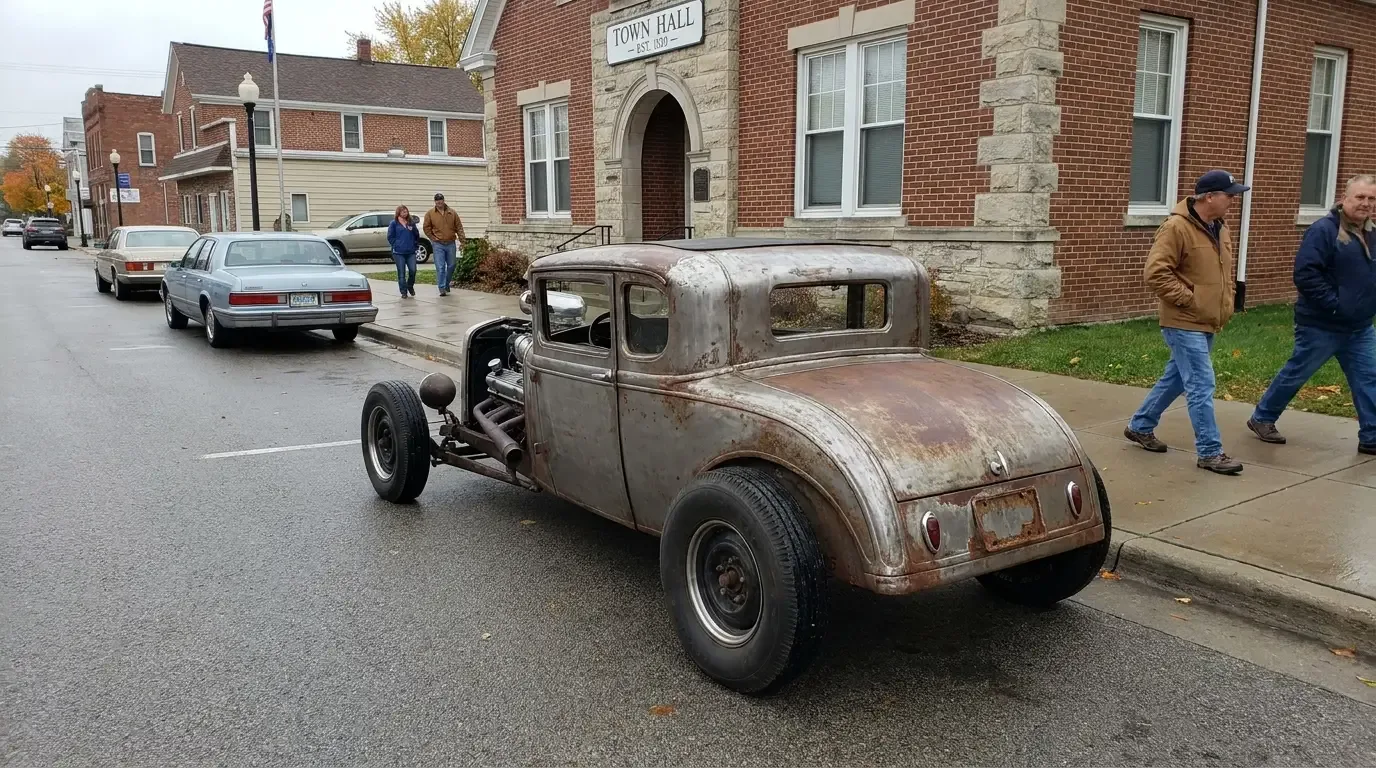
Rat rods sit in an awkward spot for any records clerk. They are often home-built from parts that came off five different vehicles, wearing rust that looks like neglect and a stance that looks like trouble. None of that is illegal on its own, but it does mean the ownership trail and the insurance conversation take more work than they would for a stock sedan. This guide walks through the general shape of that work. It is not legal advice, and the details change from state to state, so treat every specific here as a starting point and confirm it with your own state DMV before you commit to anything.
Titling a home-built or assembled car
The core problem with a scratch-built rat rod is simple. A title follows a vehicle identification number, and a car you welded together in a barn does not have one, or it has three or four conflicting ones from the donor parts. States handle this through a category usually called an assembled, specially constructed, or reconstructed vehicle. The label varies, and so does the process, but the goal is the same: the state wants to establish that you own the parts and assign a clean identity to the finished car.
In broad terms, you should expect to document where the major components came from. That means bills of sale or titles for the frame, the body, and the drivetrain, and it means keeping every receipt you can. A frame with a legible original VIN sometimes carries the title of the whole build; in other cases the state issues a new state-assigned VIN and a fresh title tied to it. This is exactly why builders who understand the process hoard paperwork from the first junkyard trip onward. That file pays off again on the day you sell, when the buyer will expect a clean handover of the paperwork.
A recurring theme in rat rod ownership is that the safety and legality questions never fully separate from the titling questions. Whether the state will title your car and whether the state considers it roadworthy are two different reviews, but they tend to happen close together, and a build that raises red flags on one can stall the other. If you want the wider picture on where the law draws its lines, our piece on whether are rat rods legal covers the ground this article only touches.
The street rod title route
Some states offer a separate title and registration class specifically for street rods and custom or replica vehicles, often written into law over the last couple of decades after lobbying by hobbyist groups. Where it exists, this route can be friendlier to a rat rod than the general assembled-vehicle path, because it was designed with hobby builds in mind rather than salvage rebuilds.
The tradeoffs are real, though, and worth reading before you pick a lane:
- Street rod classes frequently define the car by a model-year cutoff, commonly a pre-1949 body or a body that replicates one. A rat rod built on a newer cab may not qualify.
- Some programs assign a model year based on the body style rather than the year you built the car, which can affect what equipment rules apply.
- There may be limits on how the car can be used, such as restrictions aimed at occasional or hobby driving rather than daily commuting.
- Fees, plate styles, and renewal rules differ from standard registration and from classic or antique plates.
None of that is universal. A state-assigned VIN and a street rod title are two tools for the same job, and which one you end up with depends entirely on where you live and how your car is built. Call the DMV, ask which class an assembled pre-war-bodied hot rod falls under, and get the answer before you tow the car anywhere.
Inspection and the state-by-state reality
This is where rat rod owners feel the geography most. Some states run no periodic mechanical inspection at all. Others put an assembled vehicle through a detailed safety check covering brakes, lights, steering, glass, and mounting before it can be titled or plated. A car that sails through in one state can be parked in another over the same brake setup.
Rat rods draw scrutiny here because the culture has a genuine reputation for cut-corner brakes and steering, and inspectors know it. Being honest about that is the price of driving one on public roads. A chopped, channeled build with mystery-linkage steering and marginal drum brakes is a hazard to more than its owner, and no title makes that safe.
| Element | What varies by state | What to confirm with your DMV |
|---|---|---|
| VIN status | Original frame VIN vs state-assigned VIN | Whether a VIN verification appointment is required |
| Title class | Assembled, specially constructed, or street rod | Which class your body-year qualifies for |
| Safety inspection | None, one-time, or periodic | Brake, light, and steering standards applied |
| Emissions | Often waived by age or class | Whether your build year or body year sets the rule |
| Use limits | Daily use vs hobby-only | Mileage or occasion restrictions on the plate |
Every row in that table is a question, not an answer. The only reliable source for your car is your own state DMV, and increasingly the answer arrives faster if you call the assembled-vehicle or specialty desk directly rather than the general line.
Insurance and agreed value
Standard auto insurance is a poor fit for a rat rod, and the reason is how a normal policy calculates what your car is worth. A conventional insurer uses actual cash value, roughly the depreciated market price of a comparable vehicle. A one-off assembled car with no comparable market price confuses that formula, and you can end up underinsured against the real cost and hours you sank into the build.
Specialty or classic-car insurers solve this with an agreed value policy. You and the insurer settle on a figure up front, usually backed by photos, receipts, and sometimes an appraisal, and that agreed number is what pays out on a total loss. For a build where the value lives in fabrication rather than a factory badge, this is the mechanism that matters most.
"The build is the story people tell at cruise night. The title is the story you tell a records clerk, and both have to check out before you turn a wheel on a public road."
Patrick Walsh
There is a cultural undercurrent worth naming here too. Part of the rat rod ethos was always a shrug at the rules, a low-buck rejection of the polished, over-documented show car. Registering and insuring one honestly can feel like the opposite of that spirit, and plenty of owners have opinions about it. That tension is old and unresolved, and if it interests you, we dug into it in The Rat Rod Controversy and the Purist Backlash.
Sources and notes
- State DMV registration and titling guidance for assembled, specially constructed, and street rod vehicle classes (general, non-jurisdiction-specific).
- Specialty and classic-car insurance references on agreed-value versus actual-cash-value coverage.
- Hobbyist and builder community discussion on VIN verification and assembled-vehicle inspection experiences.
- Period and contemporary rat-rod and hot-rod press on the culture and its friction with regulation.
Related Reading
Have a
Classic Car
for Sale?
Reach thousands of serious classic car collectors across the US.
Sell It Here →
Are You a Classic Car Dealer?
List your full inventory and connect with targeted classic car buyers.
Join as a Dealer →

About the author
Patrick Walsh
Automotive journalist covering classic car shows, events, and the enthusiast community across North America.




Comments
Be the first to comment on this article.