
Ask ten people whether a rat rod is safe and you will get ten different answers, most of them wrong in one direction or the other. The internet is full of clips showing a channeled Model A with no seatbelts and drum brakes off a 1950s pickup, and it is full of people insisting every rat rod is a rolling deathtrap. The truth sits in the middle, and it depends entirely on who welded the thing together. A rat rod is a look and an attitude, not a level of engineering. You can build one that stops straight, tracks true and passes inspection, or you can build one that has no business on a public road. The difference is not the patina. It is the parts you can't see.
Car Features
9 min read
Rat Rod Safety, Legality and the Controversy
The honest reality of rat rod safety, brakes, steering and belts, plus registration, inspection, insurance and the purist controversy over unsafe builds.
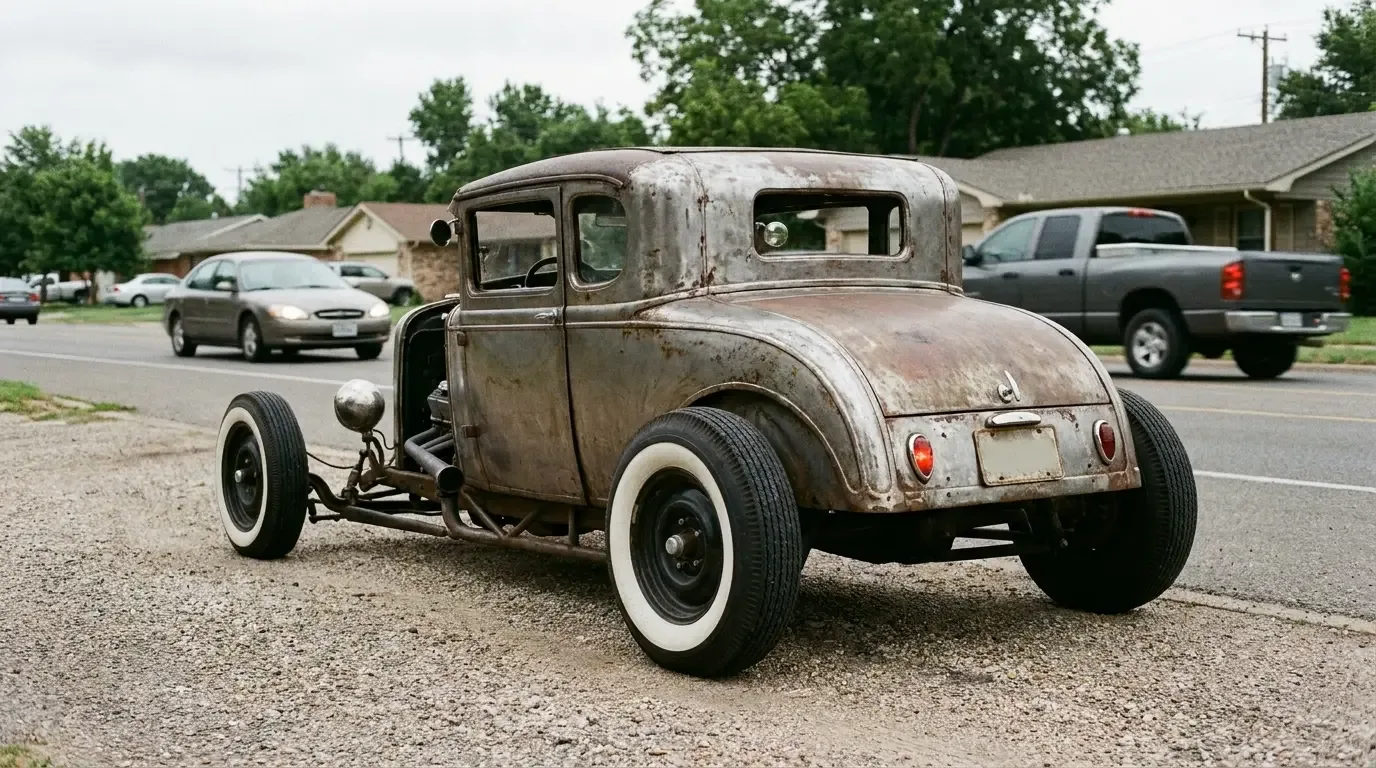
So when people ask whether rat rods are legal, the honest answer is: yes, when built and registered properly, and no, when someone cut every corner to save money and skipped the parts that keep you alive. Let's separate the two.
The safety reputation is earned, and here's why
The rat rod scene grew out of a rejection of big-money show cars, and that anti-establishment streak is the whole point. But cheap and raw sometimes slides into unsafe, and the worst builds give the whole hobby its bad name. The three systems that get shortchanged are always the same: brakes, steering and occupant restraint.
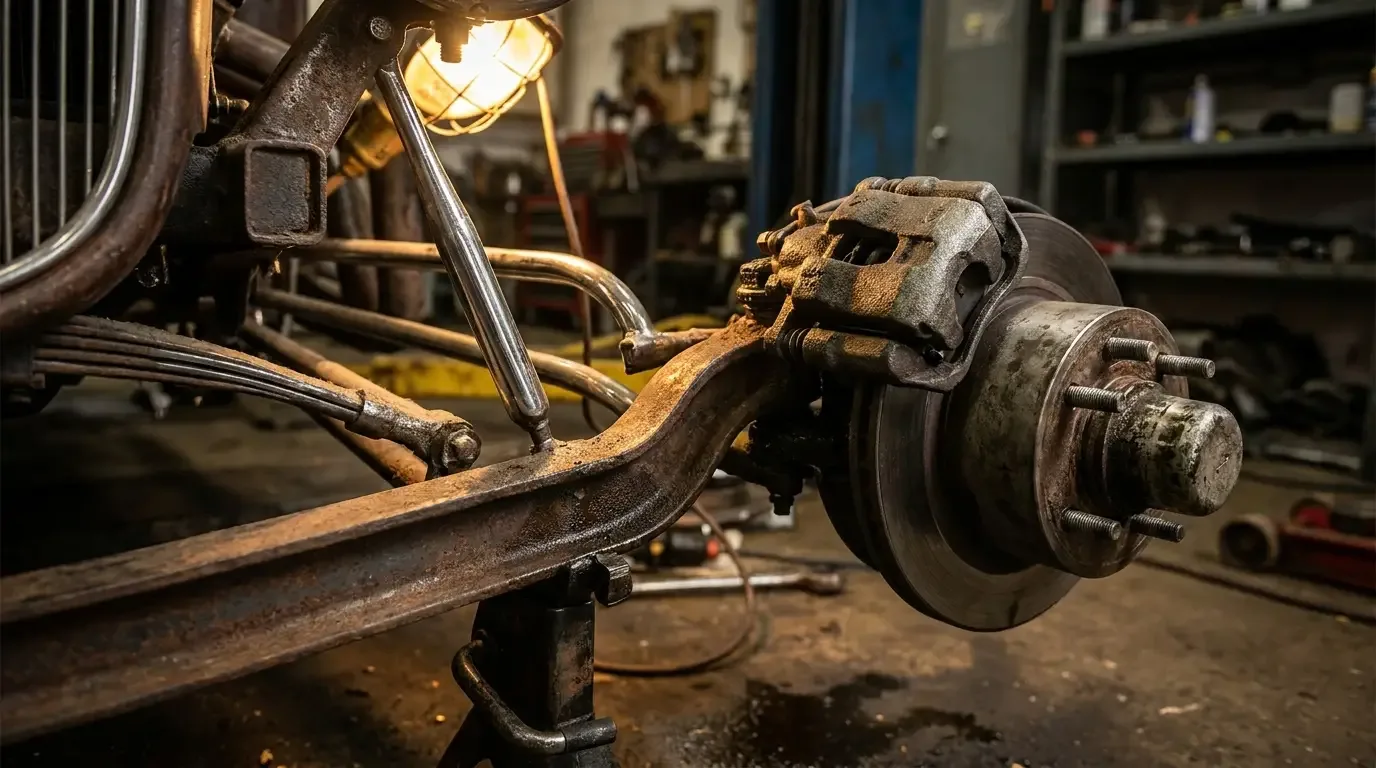
Brakes are the big one. A lot of early rat rods ran mechanical drum brakes off a 1930s or 40s donor, or a mismatched setup where the front and rear don't balance. Add a dropped axle, skinny front tires and a heavy junkyard V8, and you have a car that accelerates hard and stops poorly. That is a genuinely dangerous combination, and it is why so many builders now start with a disc-brake conversion before they touch the body.
Steering is the next problem. A "suicide front end" that hangs the axle out in front of the frame looks aggressive and it is a real traditional hot-rod technique, but done wrong, with weak mounts or worn steering boxes, it introduces bump steer and slop that will scare you at 55 mph. Then there is restraint. Plenty of period-look builds skip seatbelts entirely because the era they mimic didn't have them. On a street-driven car in 2026, that is a choice with consequences.
What a genuinely safe rat rod actually has
A rat rod can look like it was dragged out of a field and still be mechanically sound underneath. The rust and the raw finish are cosmetic. The safety lives in the chassis, the brakes and the drivetrain integration. Here is what separates a real driver from a liability.
| System | Cut-corner build | Roadworthy build |
|---|---|---|
| Brakes | Old mechanical drums, front/rear imbalance | Front disc conversion, dual-circuit master cylinder |
| Steering | Worn box, unbraced suicide mount | Rebuilt box, gusseted mounts, correct geometry |
| Restraint | No belts, no anchor points | Lap or 3-point belts anchored to frame or cage |
| Frame | Rusted or spliced without reinforcement | Boxed rails, properly welded splices |
| Fuel | Exposed tank, rubber-hose fuel lines | Mounted tank, proper hard lines, shielded |
| Lighting | Non-functional or missing signals | Working headlights, brake lights, turn signals |
None of that ruins the aesthetic. You can have a clear-coated rusty cab sitting over a chassis that is welded up properly and stops on a dime. The people who understand how rat rods began know the movement was always about DIY skill, not about being reckless. The best builders take pride in a car that looks like a wreck and drives like it means it.
Registration and the DMV reality
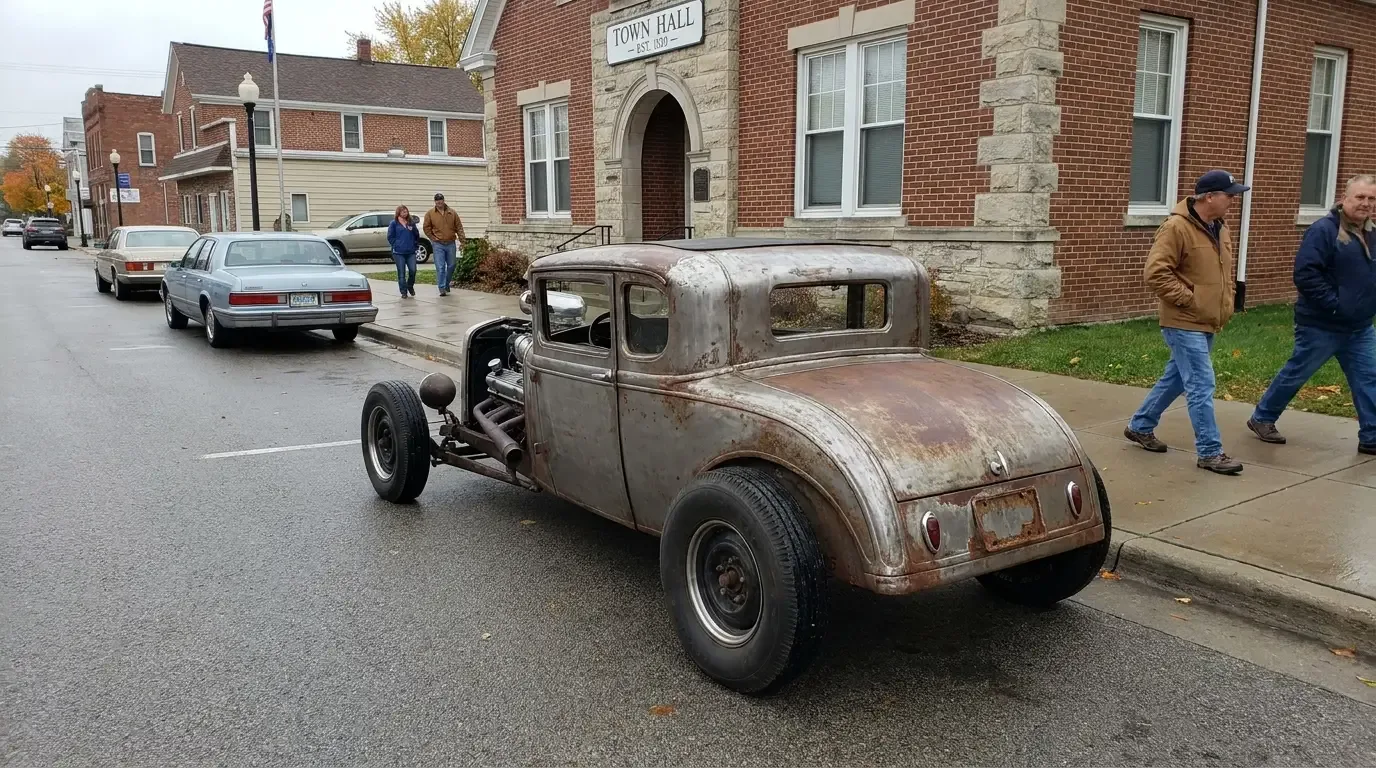
Getting a rat rod titled and plated is where the raw-and-cheap fantasy meets paperwork. Every state handles home-built and heavily modified cars differently, and the process is nothing like registering a stock used car. In most of the United States, a rat rod that started as a period car keeps its original VIN and title, which is the easy path. A scratch-built frame or a car assembled from multiple donors usually needs a special construction, assembled-vehicle or street-rod title, and that means an inspection.
That inspection is not about your paint. Inspectors look for the safety basics: working brakes on all wheels, functioning lights and signals, a horn, safety glass or an approved alternative, secure fuel system, and often seatbelts depending on the model year and your state's rules. Some states use a model-year cutoff, so a car titled as a 1931 gets held to 1931-era equipment standards, while a scratch-built assembled vehicle gets held to modern ones. This is exactly why a lot of builders keep an original title car as their starting point.
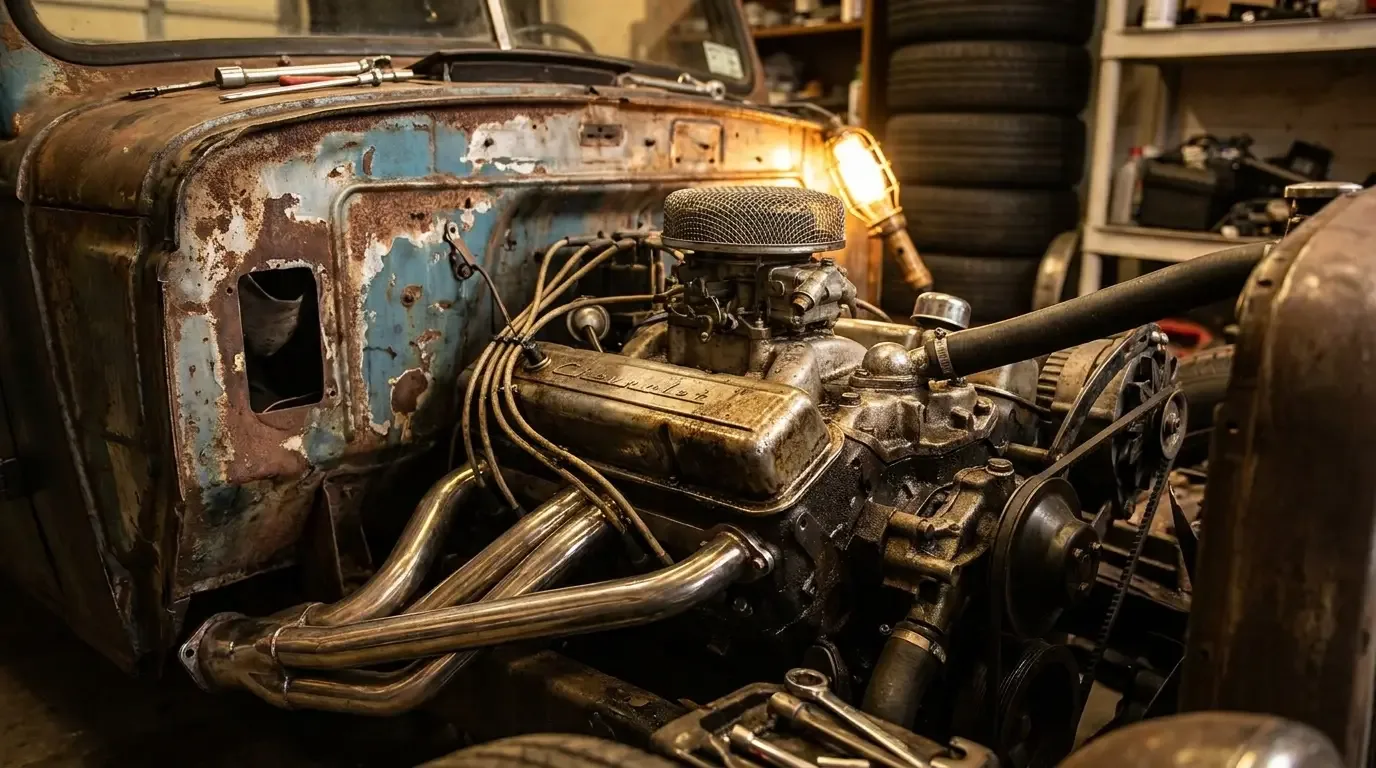
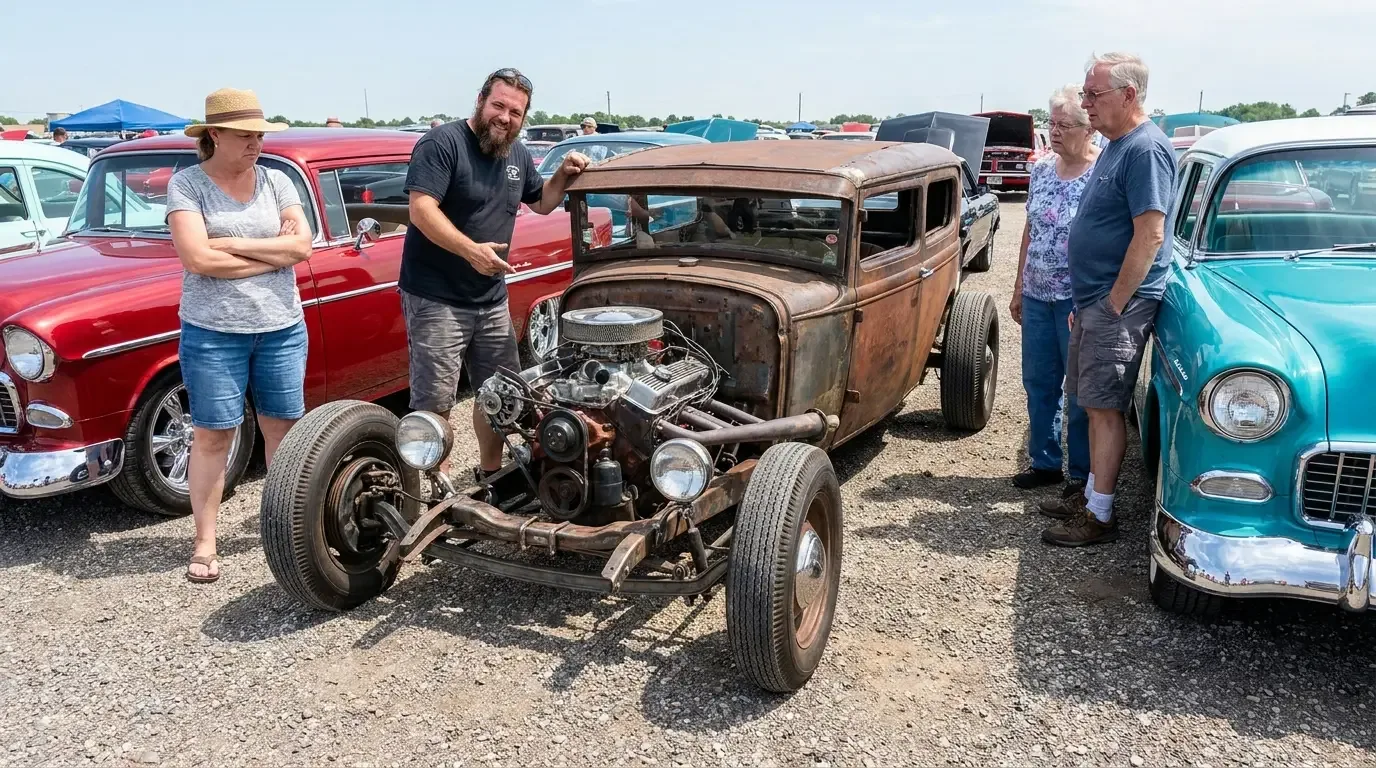
A safe, correctly built engine bay helps here too. Inspectors notice a tidy, properly plumbed drivetrain, and a sound rat rod engine with real fuel and cooling lines reads very differently from a nest of rubber hose and hose clamps.
Insurance: harder than you'd expect, easier than you'd fear
Standard daily-driver insurance companies do not know what to do with a home-built rat rod. Their systems want a stock VIN with a book value, and a one-off assembled car has neither. That is why most owners go through specialty collector-car insurers, which are set up for modified, custom and classic vehicles. These policies use an agreed-value model, meaning you and the insurer settle on the car's worth up front instead of arguing about depreciation after a claim.
The catch is that collector policies come with usage limits. They typically cap annual mileage and require the car to be a hobby vehicle, not your commute. They may ask for photos, a description of the build and sometimes proof it passed inspection. A car that clearly cut safety corners can be harder to insure, or the insurer may decline it outright. That is another practical reason the "cheap and unsafe" build path costs more in the end than doing the brakes and belts right the first time.
The purist controversy that won't die
Here is where the scene fights with itself. Traditional hot-rodders, the period-correct crowd, have long looked down on rat rods, and safety is one of their favorite sticks to beat the movement with. To a traditionalist, a rat rod is sloppy fabrication dressed up as authenticity, and the unsafe examples prove their point. To the rat rod builder, the traditionalist is a snob polishing a trailer queen that never gets driven.
There is a second, sharper split inside the rat rod world itself, and it matters more than the outside criticism. It is the fight over fake builds. A true rat rod is welded up in a driveway from junkyard parts because that is all the builder could afford. A "rat-look" build is an expensive shop car with bolt-on fake rust and a five-figure budget pretending to be cheap. The purists of the movement, the ones who actually built theirs, have no patience for that. A poseur build with fake patina and a checkbook is exactly the over-styled show-car mentality rat rods were invented to reject.
"A real rat rod scares people because it looks rough, not because it's going to fail. I've built cars that look like they crawled out of a swamp and stop straighter than half the show queens at the fairgrounds. The rust is the costume. The brakes and the welds are where you find out if the guy knew what he was doing."
Jim Vasquez
The honest bottom line
Rat rods are legal, insurable and inspectable when they are built like real cars underneath the grime. The problem was never the look. The problem is the small percentage of builds where someone treated "rat rod" as an excuse to skip brakes, steering and restraints to save a few hundred dollars, then put it on a public road with other people around. Those cars deserve the bad reputation, and they poison the well for everyone else.
If you are shopping instead of building, this is the single most important thing to check. A patina finish tells you nothing about the chassis. Get underneath, look at the brake system, the frame welds and the fuel lines, and buy on the engineering, not the attitude. There are plenty of honestly built, roadworthy examples among the cheap rat rods for sale if you know what to look for and you refuse to be charmed by rust alone.
Sources and notes
- Period hot-rod and rat-rod press coverage of the movement's origins and terminology.
- Builder interviews on brake, steering and chassis safety practices in home-built cars.
- State DMV and motor-vehicle guidance on assembled-vehicle, street-rod and historic titling and inspection.
- Specialty collector-car and classic-vehicle insurance guidance on agreed-value policies and usage limits.
- Car club and show records documenting the purist debate and the traditional-vs-rat-rod split.
Related Reading
Have a
Classic Car
for Sale?
Reach thousands of serious classic car collectors across the US.
Sell It Here →
Are You a Classic Car Dealer?
List your full inventory and connect with targeted classic car buyers.
Join as a Dealer →
#rat rod
#hot rod culture
#rat rod safety
#rat rod legality
#rat rod insurance
#rat rod registration

About the author
Jim Vasquez
Southern California hot rod and custom car builder with roots in the traditional kustom kulture scene.




Comments
Be the first to comment on this article.