
Walk the swap-meet aisles at a big traditional hot-rod show and you will eventually find the two camps standing a few feet apart, not talking. On one side, a man in a pressed club shirt who spent fifteen years and a second mortgage getting his roadster's paint to mirror-black perfection. On the other, a kid with a flat-black coupe wearing surface rust like it owes him money, welded together from a truck frame and a junkyard straight-six. They both love old cars. They cannot stand each other. That standoff, roughly, is the rat rod controversy, and it has been simmering since the term first showed up in print.
Car Features
8 min read
The Rat Rod Controversy and the Purist Backlash
Traditionalists loathe the label, safety critics have a point, and the fake-rust fight rages on. Here is the honest case on both sides of the rat rod feud.
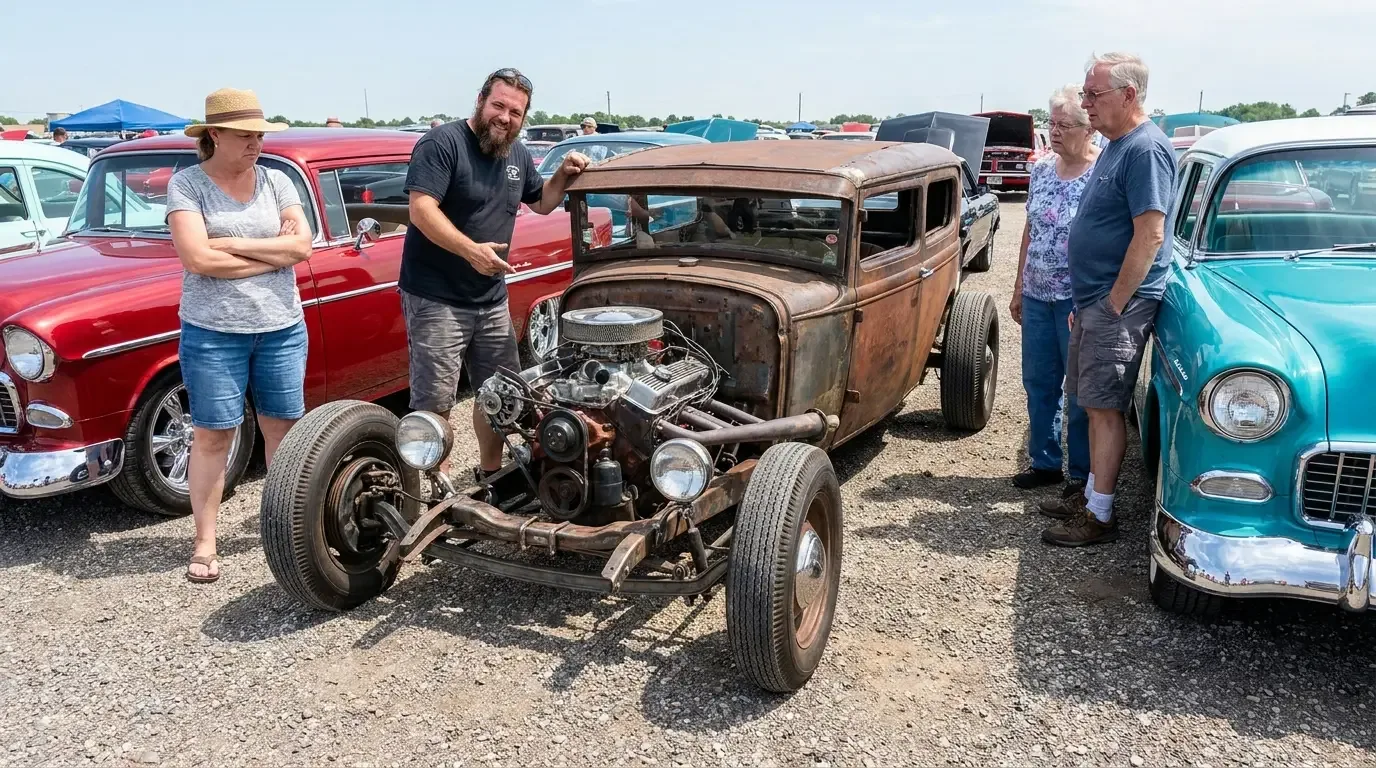
The fight is not really about metal. It is about who gets to define what a hot rod is, who gets to belong, and whether a car built cheap and left raw is an honest expression of the hobby or an insult to it. To understand why the backlash runs so hot, you have to take the critics seriously, because some of their complaints are fair and some of them are snobbery wearing a mechanic's shirt.
The word itself is an insult, and traditionalists know it
Start with the label, because that is where a lot of the anger lives. Plenty of builders who make raw, patina-heavy, period-correct cars hate being called rat rodders. To them the term is a slur that lumps their careful traditional work in with sloppy junk. The story most often repeated traces "rat rod" back to the early 1990s, sometimes credited to a writer describing a specific bare-bones roadster as the automotive equivalent of a rat bike, the stripped-down, unloved motorcycle. Whether that exact origin is airtight is hard to prove, and the honest answer is that the phrase spread faster than anyone documented it.
The traditionalists' objection is straightforward. A car built to 1950s specification, with the right flathead and the right stance and genuine age on the paint, is not a rat rod in their eyes. It is a hot rod, full stop. When a magazine or a spectator slaps the rat label on it, they feel their decades of study reduced to a costume. That resentment is real, and if you want the longer view on how these categories separated, the wider history in the rat rod story lays out where the split began.
The safety critics have a point you cannot wave away
The second line of attack is harder to dismiss, because it is about brakes and steering, not taste. Rat rods earned a reputation, some of it deserved, for cut corners in the places that matter most. A car with a chopped top and a welded frame and a straight axle is fine as sculpture. The trouble comes when the budget that produced the look also produced marginal drum brakes on a car making real power, or a steering setup improvised from parts that were never meant to work together.
Critics point to unsafe examples and argue the whole movement encourages people to drive death traps. That is an overstatement, but the underlying worry is legitimate. A cheap build is only as good as the person doing it, and not every backyard welder knows what a frame under load actually does. This is where the movement's own better voices agree with the critics, insisting that stopping and steering are the two systems you never fake. If you want the practical version of that argument, Rat Rod Brakes and Safety Basics walks through what a safe budget build actually needs. Whether these cars pass muster on the road is its own question, and the debate over are rat rods legal covers where inspectors and DMV rules draw the line.
🔧 Inspection Priorities
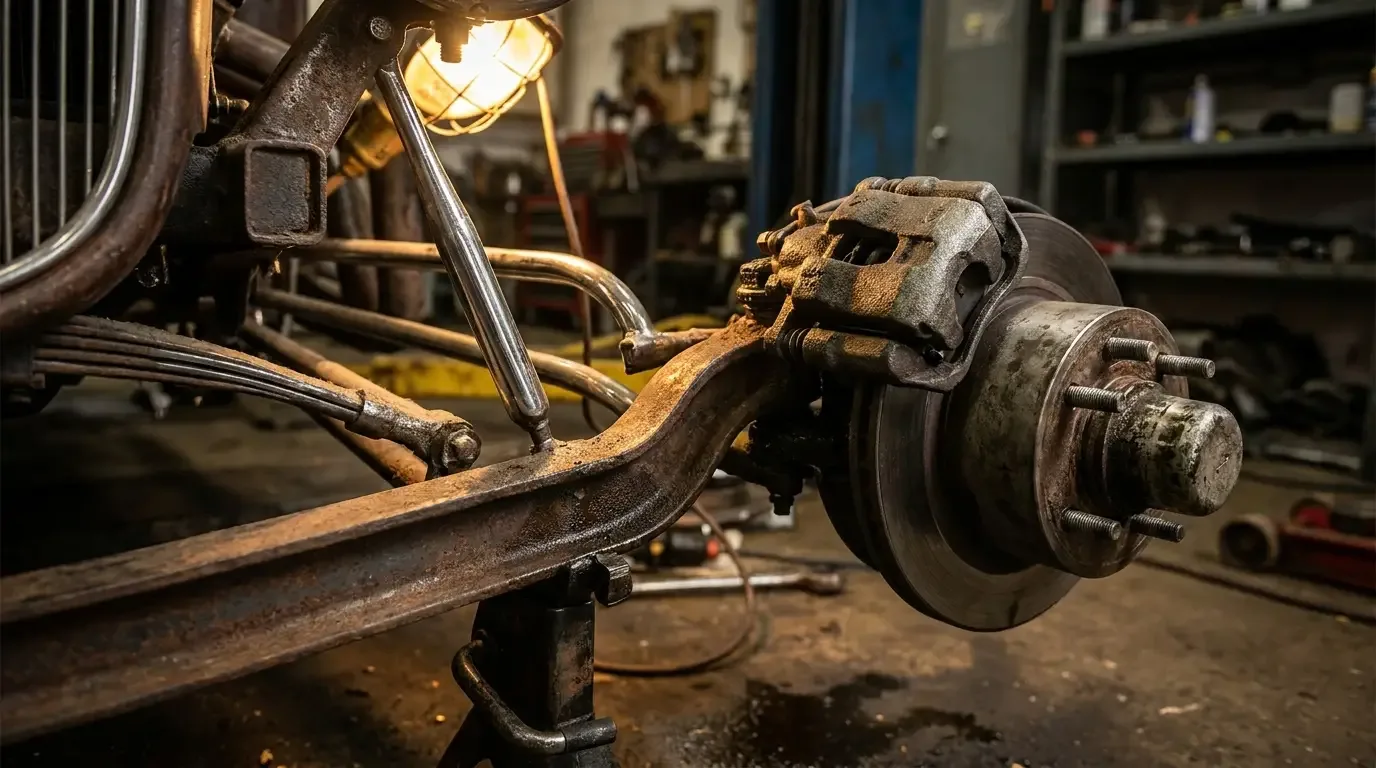
- Braking system. Confirm the car has brakes matched to its weight and power, not undersized drums scavenged to save money. Cost to correct varies, but a proper front disc conversion is money you spend before the first real drive.
- Steering linkage. Look for improvised or mismatched components. Play in the box or a homemade drag link is a walk-away problem.
- Frame welds. Structural welds done by an unknown hand deserve a second opinion. A cracked or cold weld under the seat is not patina, it is a hazard.
- Fuel and wiring. Found-object charm stops at the gas tank. Check for safe fuel routing and fused, insulated wiring.
Posers, fake rust and the "rat-look" money problem
Then there is the fight that gets the most heated inside the movement, the accusation of fakery. The original idea was cheap. You built a rat rod because you could not afford a fifty-thousand-dollar street rod, and you made virtue out of necessity. What galls purists now is the expensive build dressed up to look poor. A shop turns out a "rat-look" car with bolt-on rust panels, clear-coated to hold that just-pulled-from-a-field patina, on a modern chassis with a crate motor, and sells it for the price of the show cars it was supposed to rebel against.
To the people who started with a genuine junkyard budget, that is dishonest. The rust is a paint effect. The poverty is a pose. The car costs more than the trailer queen it pretends to mock. You can fake age on steel with acid and salt water and a lot of patience, and the fact that faking it has become a marketable service tells you how far the look has drifted from the original ethic.
"I have watched a guy spend a weekend and a bottle of chemicals aging a fender that a real barn would have taken forty years to make. Nobody's obligated to love that. But the kid who welded his first frame in a driveway and drove it home, rust and all, is closer to the point than the shop selling instant poverty at showroom prices."
Patrick Walsh
The catch is that the line between honest patina and applied costume is blurrier than either camp admits. Weathering a car on purpose is a genuine craft, and plenty of buyers simply like the look without pretending they earned it in a field. If you are trying to tell one from the other on a lot full of cheap rat rods for sale, the question is less about morality and more about whether the build underneath is sound.
The counter-argument: rat rods opened the door
Here is what the purists tend to skip. For a long stretch, hot rodding priced ordinary people out. Restoration standards climbed, judging got stricter, and the cost of a show-worthy car floated up past what a working person could touch. A movement that started in the 1940s as young people building fast cars from cheap parts had, by the 1980s, partly become a rich hobby with a velvet rope.
Rat rods kicked the rope over. The whole proposition was that you did not need a big budget, a paint booth, or anyone's approval. You needed a welder, a junkyard, some nerve, and a willingness to drive something unfinished. That brought a wave of younger and poorer builders back into a hobby that had started to feel closed. Measured by participation, the rat rod movement did more to democratize hot rodding than any concours class ever did.
Two camps, one hobby
The controversy will not resolve, and it probably should not. The traditionalists keep the standards honest and remind everyone that these cars have real history worth getting right. The rat rod crowd keeps the door open and reminds everyone that the hobby started cheap and rebellious, not polished and gated. A movement needs both the people guarding the craft and the people crashing the party.
What deserves to die is the bad faith on either side, the snob who calls every raw car junk and the poser who buys instant rebellion off a shelf. Strip those two out and what is left is a broad, argumentative, healthy hobby with room for a mirror-black roadster and a rusty welded coupe in the same parking lot. They can go on not talking. As long as both keep building and driving, the fight is a sign of life, not decay.
Sources and notes
- Period and contemporary hot-rod and rat-rod press coverage of the movement's origins and terminology debates.
- Builder and enthusiast interviews on the traditional-versus-rat-rod divide and objections to the label.
- General chassis, brake and steering references informing the safety discussion.
- DMV, state inspection and vehicle-registration guidance on roadworthiness standards for modified cars.
- Car-show and club records documenting judging standards and shifting participation in the hobby.
Related Reading
Have a
Classic Car
for Sale?
Reach thousands of serious classic car collectors across the US.
Sell It Here →
Are You a Classic Car Dealer?
List your full inventory and connect with targeted classic car buyers.
Join as a Dealer →

About the author
Patrick Walsh
Automotive journalist covering classic car shows, events, and the enthusiast community across North America.




Comments
Be the first to comment on this article.