
The 1968 Road Runner arrived at Plymouth dealers with a cartoon bird on the fender and a price tag that made sense to people who actually had to make a car payment. Plymouth had watched Pontiac's GTO print money for four years and concluded, correctly, that the real opportunity was not another loaded muscle car for the affluent buyer. It was a stripped, honest, fast car for the guy who wanted the speed without the trim levels he'd never use.
Car Features
7 min read
The 1968 Road Runner: Muscle for the Masses
Plymouth built the 1968 Road Runner around a price target first and a badge second, and the gamble turned a stripped-down muscle car into Motor Trend's Car of the Year.
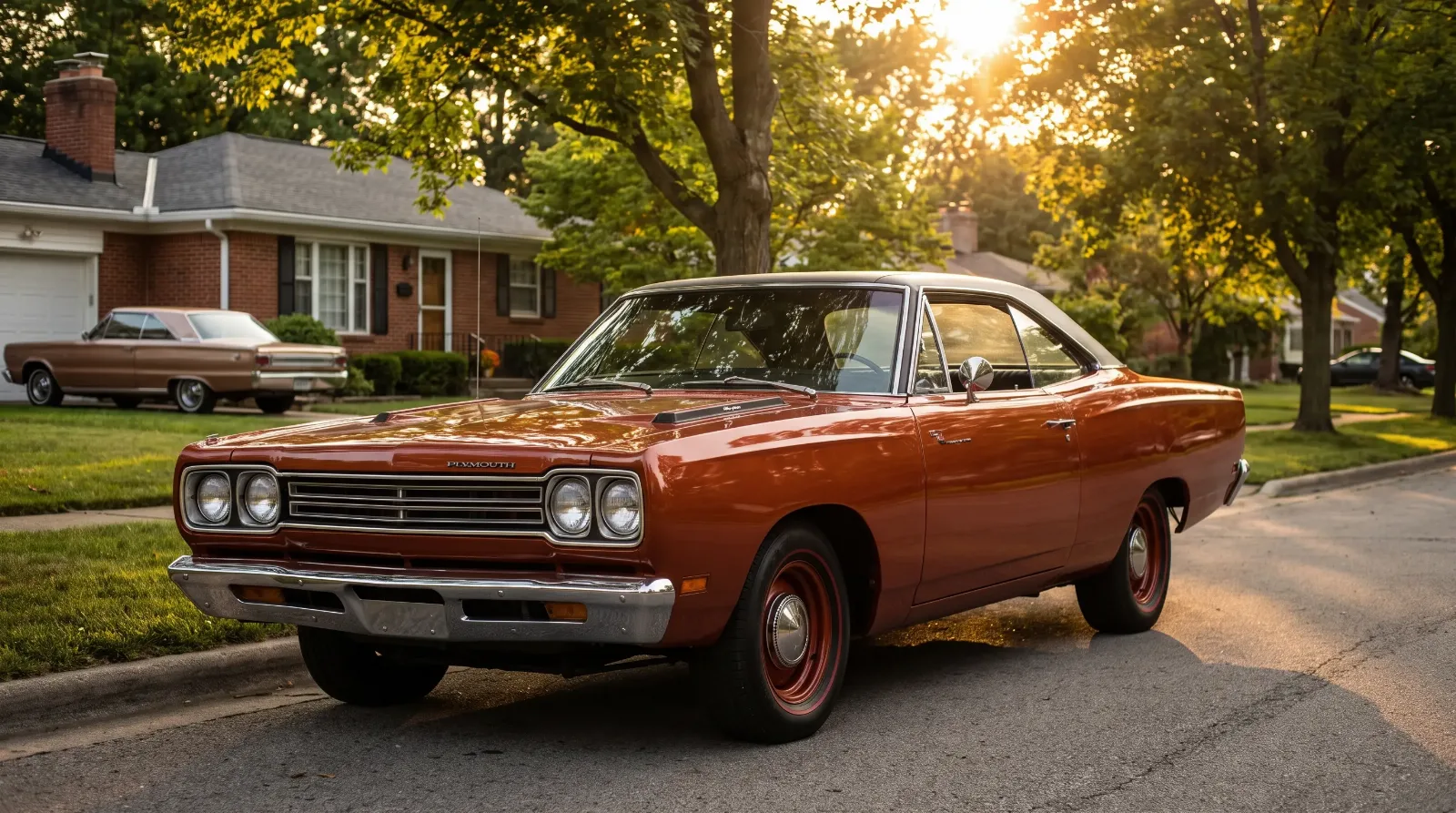
A car built around a number, not a name
Plymouth's product planners started with a price target near $2,896 and worked backward. Everything else, the engine, the trim, the badge, got fit around that number instead of the other way around. That is the opposite of how Detroit usually built cars in the 1960s, and it is why the Road Runner felt different the moment it hit a showroom floor. Bench seat, rubber floor mats, roll-up windows, and a heater. No woodgrain, no vinyl roof, no chrome wheel covers unless you paid extra for them.
What that stripped-down approach bought the customer was a 383 cubic inch V8 rated at 335 horsepower as the standard engine, backed by a heavy-duty suspension, larger brakes, and a four-speed manual as the base transmission. A TorqueFlite automatic was optional. The car was light because Plymouth left the luxury out, and light plus a big-block V8 is a formula that does not need explaining to anyone who has driven one.
The Beep Beep horn was not a gimmick, it was the whole pitch
Plymouth licensed the Road Runner name and likeness from Warner Bros for a reported sum in the low six figures, and then spent real engineering time getting a horn that mimicked the cartoon's "beep beep" onto the car. It sounds like a marketing footnote today. In 1968 it was the headline. Kids who grew up on Saturday morning cartoons could now buy, or beg their parents to buy, a car that made the exact sound of the character chasing Wile E. Coyote across the desert. That connection between a cheap fast car and a piece of pop culture everyone already loved did more for showroom traffic than any spec sheet.
How it undercut the establishment
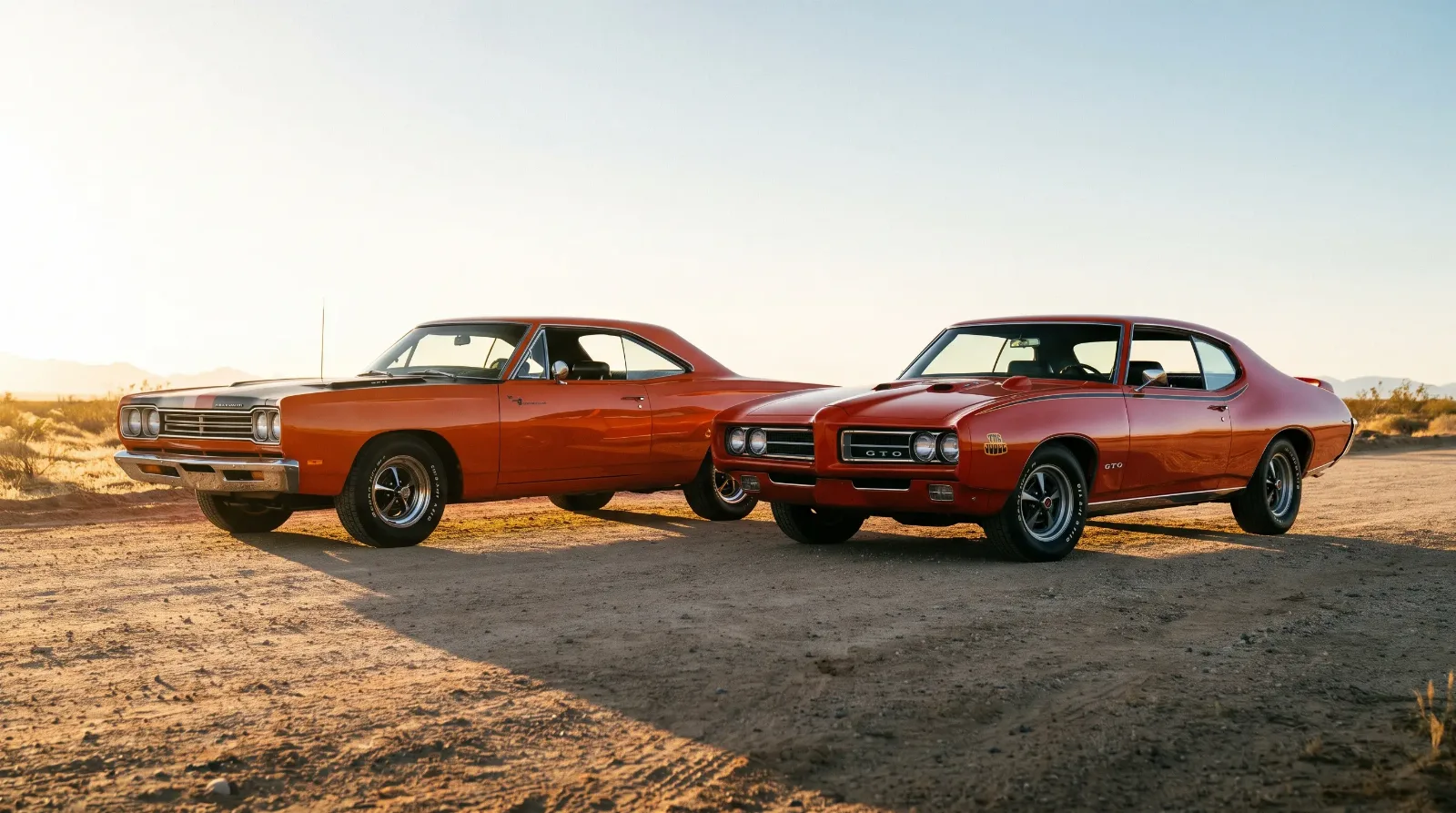
The Pontiac GTO in 1968 started well north of $3,000 once you added the options most buyers actually chose. The Road Runner started under $2,900 and still ran with cars costing hundreds more. That gap mattered enormously to a 24 year old buyer financing a car on a factory wage. Plymouth was not trying to beat the GTO on prestige. It was trying to beat it on the monthly payment, and it worked well enough that Motor Trend named the Road Runner its Car of the Year for 1969, a remarkable outcome for a car that was, by design, cheap.
Sales numbers backed up the magazine praise. Plymouth had projected selling around 20,000 Road Runners for the model year and instead moved 44,599 units, a number that startled Plymouth's own planners and forced the factory to scramble for parts supply through the back half of the year.
The dealer floor told the same story as the spec sheet
Walk a Plymouth showroom in the fall of 1967 and the Road Runner sat next to the Barracuda, the GTX, and the full-size Fury lineup, and it looked plain by comparison. No wide chrome wheel arch moldings, no simulated wood, none of the visual signals a salesman usually leaned on to justify a higher trim level. Salesmen had to learn a different pitch fast, one built around the engine and the price rather than the options sheet, and dealers who figured that out quickly tended to move Road Runners off the lot faster than dealers still trying to upsell trim packages nobody wanted on this particular car.
That shift in how the car got sold matters historically because it forced Plymouth's own sales network to change its habits. Commission structures built around option packages did not reward a stripped car the same way, and some dealers reportedly grumbled about smaller per-unit profit even as overall volume climbed. Plymouth's regional zone offices had to remind dealers repeatedly that volume, not per-car margin, was the whole point of the exercise, and the sales results by spring of 1968 made that argument for them.
What the badge meant to the guy paying for it
There is a reason the 1968 road runner still gets talked about at every cruise night with a Mopar section. It was not subtle. It did not pretend to be anything other than what it was, a fast car for people who wanted speed and did not want to pay for a vinyl top to get it. That honesty is part of why the car has aged so well in the collector world. Buyers today are not chasing luxury trim. They are chasing the same thing the original buyer chased, a big engine in a light body at a price that made sense.
For a full walkthrough of how the car came together from Plymouth's side of the ledger, our 1968 plymouth road runner history covers the debut in detail. There is also a related story on how the whole budget muscle car concept came to be, which is worth reading if you want the full context behind Plymouth's decision.
"Every factory record I have looked at points to the same thing. Plymouth did not build a halo car in 1968. They built a car for the guy who wanted the halo car's power without the halo car's price, and that distinction is the entire story."
- Tom Ramirez
Why the formula still works as a buying thesis
Collectors who understand the 1968 Road Runner's original mission tend to buy smarter than collectors chasing only horsepower numbers. The car's value has always come from that combination of light weight, a genuinely strong standard engine, and a production run large enough that parts and documentation are not impossible to find, unlike some of the more exotic Mopar packages of the era. It is muscle car ownership without the unicorn hunt.
If you are shopping the model today, Runners for sale now gives you a real sense of what condition and documentation are commanding in the current market. Prices vary widely depending on whether the car still carries its numbers-matching drivetrain, and that detail matters more with the Road Runner than with almost any other muscle car from the period, because the whole point of the car was always what sat under the hood, not what sat on the dash.
| Spec | 1968 Road Runner (base) |
|---|---|
| Starting price | Approximately $2,896 |
| Standard engine | 383 cubic inch V8, 335 hp |
| Optional engine | 426 Hemi, 425 hp (rated) |
| Base transmission | Four-speed manual |
| Model year production | 44,599 units |
None of that would have mattered if the car had been a marketing trick with nothing behind it. It was not. Plymouth backed the cheap price with a genuinely quick car, and that combination, more than the cartoon bird on the fender, is why the 1968 Road Runner still gets respect from people who know Detroit muscle car history cold.
Sources and notes
Related Reading
Have a
Plymouth Road Runner
for Sale?
Reach thousands of serious classic car collectors across the US.
Sell It Here →
Are You a Classic Car Dealer?
List your full inventory and connect with targeted classic car buyers.
Join as a Dealer →

About the author
Tom Ramirez
Corvette researcher and historian based in Bowling Green, Kentucky. Two decades documenting Corvette production history from original factory records.
Related Listings - Plymouth Road Runner

Comments
Be the first to comment on this article.