
Every car club has a guy who will tell you Pontiac invented the muscle car with the GTO, and he is not wrong about that part. But ask him who invented the budget muscle car, the stripped, cheap, fast car built for a factory worker's paycheck, and the answer is Plymouth, with the Road Runner, in 1968. I have heard this argument play out at three different swap meets this year alone, and it always ends the same way once somebody pulls up the original window sticker on their phone.
Car Features
6 min read
How Plymouth Invented the Budget Muscle Car
Plymouth flipped the muscle car formula in 1968, stripping the trim instead of the engine, and accidentally invented the budget muscle car category.
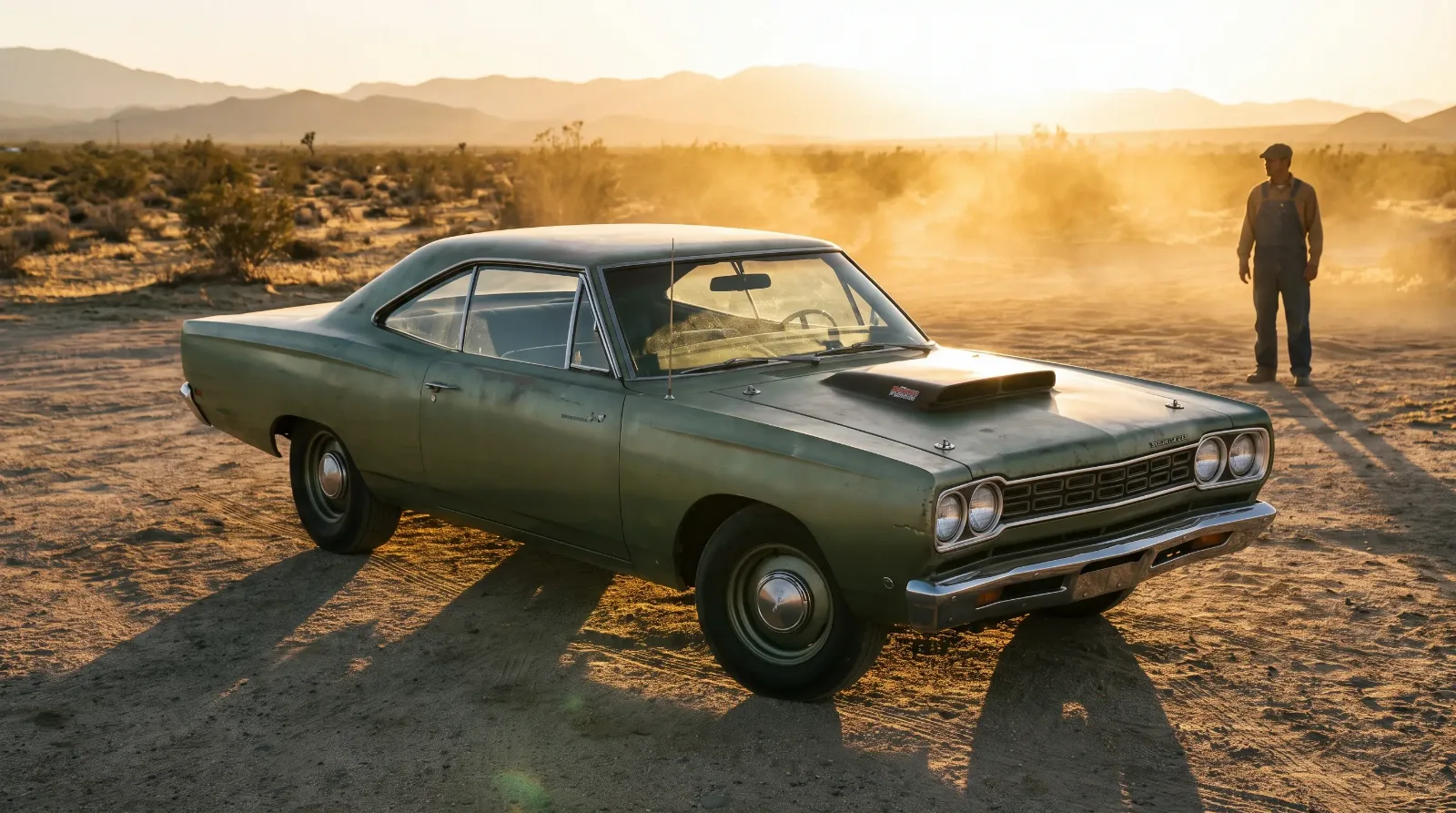
The idea nobody else wanted to try
By the mid 1960s, every manufacturer chasing the GTO's success was doing the same thing. Take a mid-size coupe, add a big engine, then load it with options and trim to push the price and the margin up. Buick had the GS. Oldsmobile had the 4-4-2. Even Plymouth's own GTX followed that formula. All good cars, all built for a buyer with real disposable income.
Plymouth product planner Jack Smith and his team looked at that landscape and asked a different question. What if you built the cheapest possible car that could still run with the GTO in a straight line? Not a car with the GTO's options stripped out as an afterthought, but a car designed from the ground up around a low price. That meant a bench seat instead of buckets, rubber floor mats instead of carpet, and a delete of nearly every convenience feature Detroit normally used to pad a sticker.
Borrowing a cartoon to sell the idea
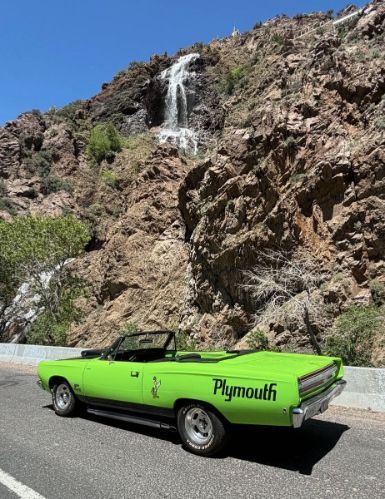
Here is the part that still makes people laugh at car shows. Plymouth licensed the name and image of the Road Runner cartoon character from Warner Bros for $50,000, and built a whole marketing identity on top of a car that otherwise had almost no marketing budget spent on trim. A cartoon roadrunner on the fender, a horn that beeped like the cartoon, and a name everyone under thirty already knew from Saturday mornings. It cost real money to license, but it was cheaper than building a luxury image from scratch, and it worked better than anyone at Plymouth expected.
What the buyer actually got for the money
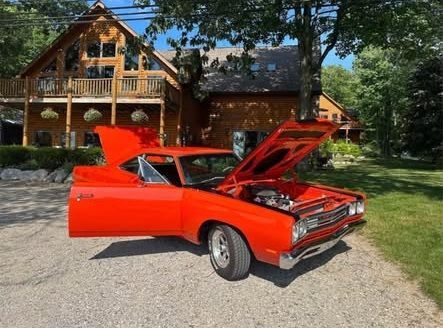
Under that plain sheet metal sat a 383 cubic inch V8 rated at 335 horsepower as the standard engine, a heavy-duty suspension package, and a four-speed manual transmission as the base gearbox. The 426 Hemi was available as an option for buyers who wanted to spend the extra money on the engine instead of the trim, which tells you everything about where Plymouth wanted the customer's dollars going.
The starting price landed under $2,900, hundreds less than a comparably equipped GTO. That gap was the entire sales pitch. Plymouth was not trying to out-luxury Pontiac. It was trying to out-value them, and the sales figures proved the bet correct almost immediately, with production running well past Plymouth's own conservative first-year projections.
Why the formula got copied everywhere
Once GM and Ford watched the Road Runner sell in numbers nobody at Plymouth had planned for, the budget muscle car concept spread across the industry fast. Pontiac answered with the GT-37. Chevrolet leaned on cheaper trim levels of the Chevelle. Ford pushed the Torino GT down toward a similar price point. None of them beat the Road Runner at its own game in 1968 or 1969, because none of them had the cartoon license and the cultural cachet that came with it, but all of them borrowed the underlying idea. Strip the car down, keep the engine strong, sell it cheap.
That is the piece that gets lost when people talk about muscle car history in broad strokes. The horsepower race gets all the attention, but the price war underneath it is arguably the more interesting story, because it is the part that actually determined who could afford to buy in.
"I've had guys tell me the GTO started the muscle car era and the Road Runner just copied it cheaper. That's backwards. The GTO started the horsepower race. The Road Runner started the price war, and the price war is what actually got these cars into regular people's driveways."
- Wayne Coburn
What the competition learned the hard way
Pontiac's own product planners reportedly studied the Road Runner's sales figures closely once the numbers started coming in through 1968, trying to figure out how a car with almost no marketing budget for trim could outsell some of their own well-established mid-size performance models. The lesson they took away, eventually applied through the GT-37 package, was that a meaningful chunk of the muscle car buying public cared far less about options and far more about the bottom line number on the window sticker than Detroit's marketing departments had assumed.
That is a harder lesson to learn than it sounds, because every manufacturer's dealer network and internal sales culture had spent years being trained to push option packages as the primary profit driver. Retooling that habit around a stripped, cheap, high-volume model required real organizational change, not just a new advertising campaign, and Plymouth had a head start simply because Jack Smith's team built the Road Runner around that philosophy from day one instead of retrofitting it after the fact.
The legacy that stuck around the club scene
Talk to anyone who has been showing up to a Mopar meet for twenty years and they will tell you the Road Runner crowd has always been a little different from the GTX or Hemi Cuda crowd. Less about pedigree, more about the fact that a regular guy could have bought this car new off the lot without stretching his budget past reason. That history sticks. It shapes who shows up to the club meetings and what stories get told over the hood of a parked car on a Saturday morning.
For the fuller account of how the car launched and what the factory record actually shows, our complete history lays it all out with the production numbers and the internal decisions behind them. And if you are ready to go looking for one of your own, you can find a classic Runner and see what condition and documentation are commanding right now.
What it means for buyers today
The budget muscle car idea did not just shape 1968 sales figures. It shaped what the collector market values today. Because Plymouth built so many Road Runners on that stripped formula, parts availability and club knowledge are both deep, which keeps ownership realistic in a way some rarer muscle cars simply are not. That accessibility was the whole point in 1968, and it is still the whole point now.
Sources and notes
Related Reading

Have a
Plymouth Road Runner
for Sale?
Reach thousands of serious classic car collectors across the US.
Sell It Here →
Are You a Classic Car Dealer?
List your full inventory and connect with targeted classic car buyers.
Join as a Dealer →

About the author
Wayne Coburn
Longtime Corvette owner, judge and club figure who knows the cars, the records and the people behind them.
Related Listings - Plymouth Road Runner


Comments
Be the first to comment on this article.