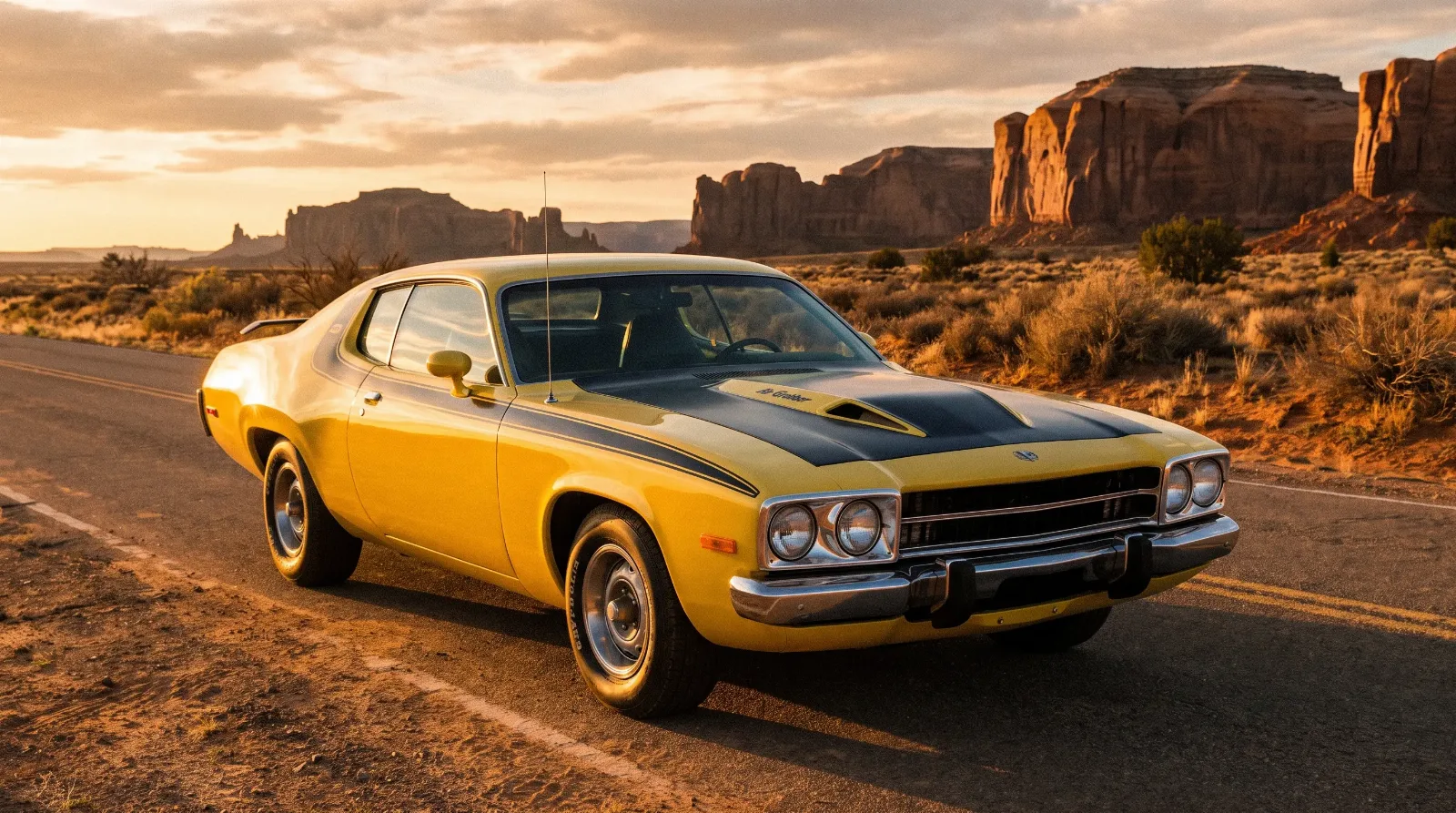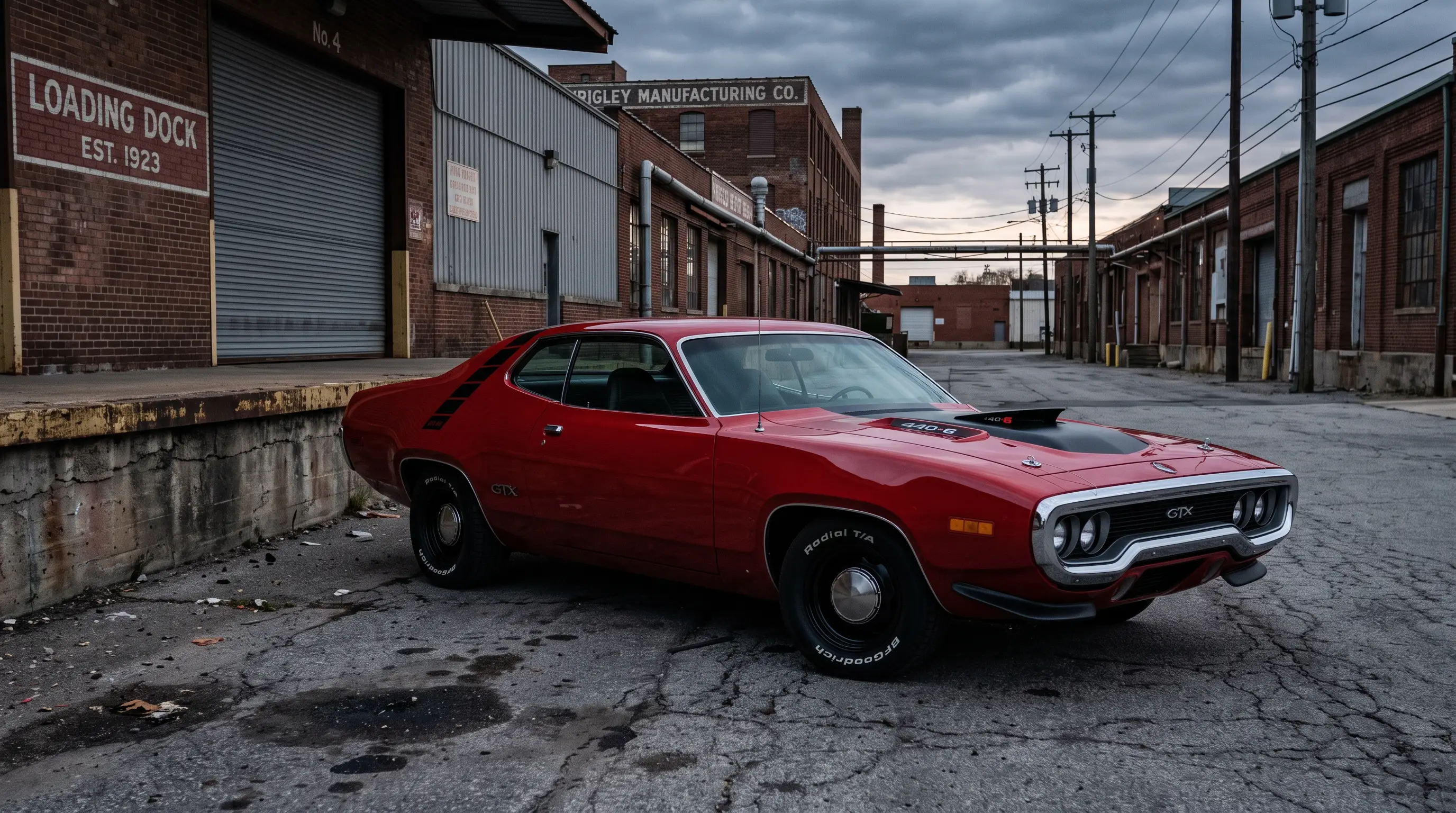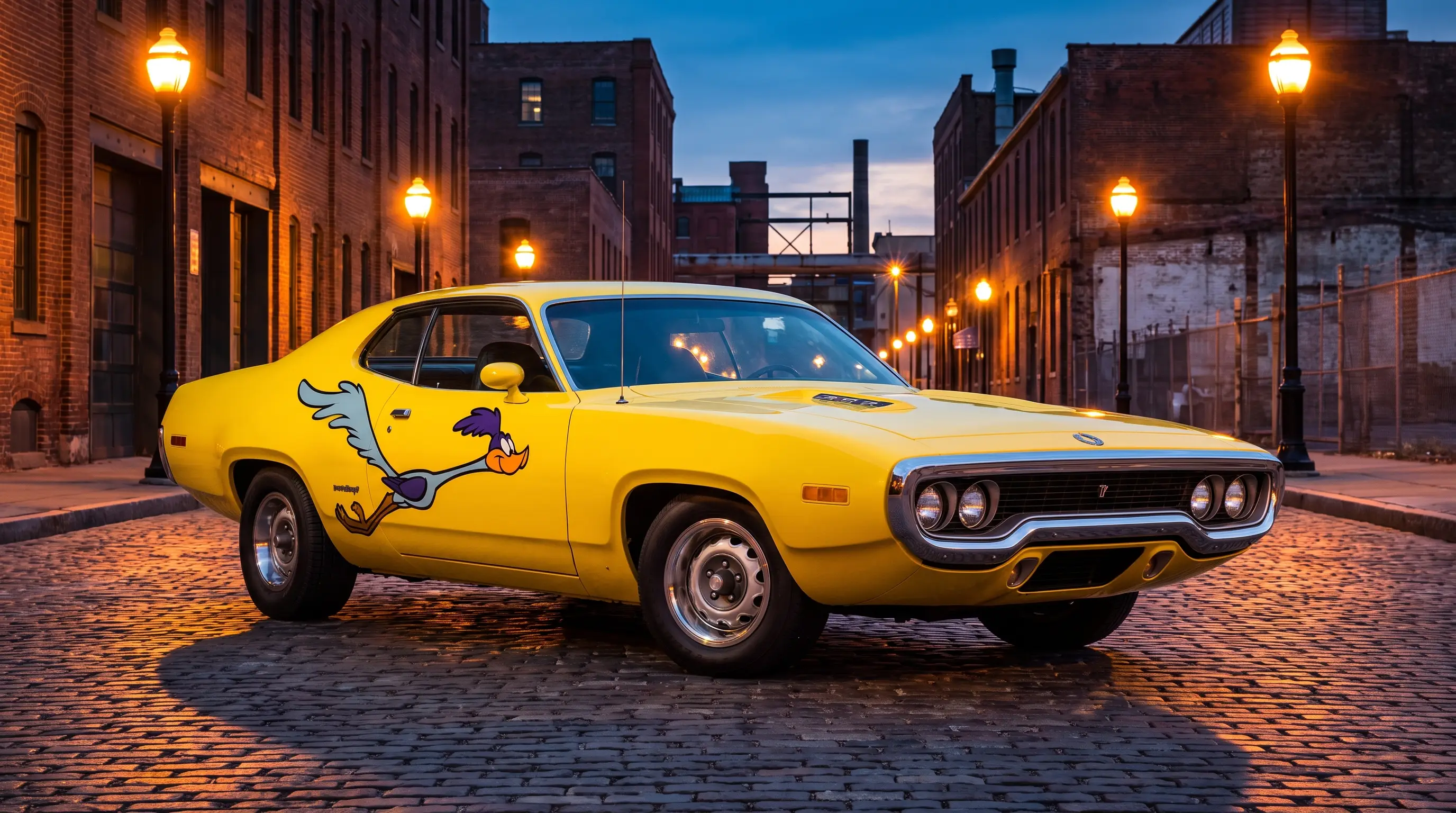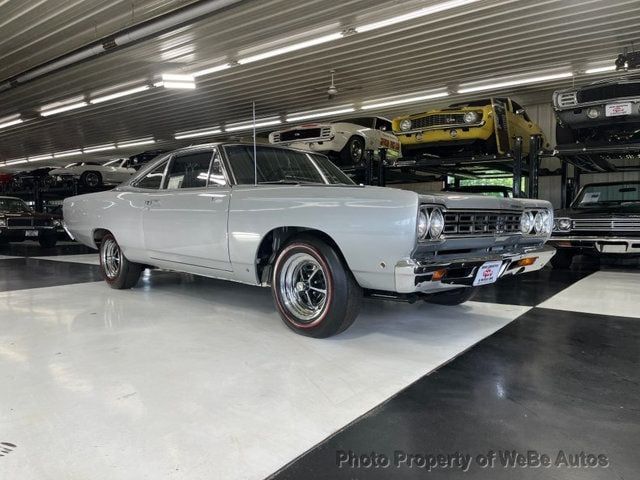
Ask ten Road Runner guys what the best engine option was and eight of them will say the 440 or the Hemi. The other two, the ones who actually drove their cars instead of trailering them to shows, will say the 340. The road runner 340 was never the headline engine on the order sheet, and that's exactly why it deserves more credit than it gets. It was the small block option, the one buyers picked when they wanted a Road Runner that handled like something other than a boat anchor with a back seat.
What the 340 actually was
Chrysler's LA series 340 cubic inch V8 had already proven itself in the Barracuda and the Dart before it finally showed up as a Road Runner option for the 1971 model year, and it stuck around through the fuselage generation into the mid seventies, offered alongside the base 383 and the big block options. On paper the numbers look modest next to a 440 Six Barrel or a Hemi. Factory ratings put the 340 at 275 horsepower SAE gross for 1971, a figure Chrysler also published as 235 horsepower under the newer net measurement standard that same year. By 1972, when net ratings became the only figure printed in the brochures, the 340 was rated at 240 net horsepower, reflecting a compression drop from 10.25:1 in 1971 down to 8.5:1 by 1972 as the engine was retuned for lower octane, lead reduced gasoline. That's a real distinction worth flagging, because Chrysler's own published figures shifted from gross to net ratings right in the middle of the Road Runner's 340 production run, so a 1972 or later 340 rated lower on paper wasn't necessarily a weaker running engine, just a more honestly measured one.
What the spec sheet doesn't capture is how the engine actually drove. The 340 used a forged crank, big valve heads borrowed from Chrysler's larger displacement engines, and a compact block that weighed considerably less than the wedge big blocks up front. That weight difference sat over the front wheels where it mattered most. A 340 car turned in, braked, and changed direction in a way a 440 car simply could not match, and anybody who has actually wrenched on both knows the small block also runs cooler and stays happier in traffic, which the big blocks were never built to tolerate gracefully.
Why buyers actually chose it
Insurance was the practical reason. By the early seventies, underwriters had started pricing muscle car premiums off cubic inch displacement, and a Road Runner with a 340 under the hood often slipped under the thresholds that triggered the worst surcharges on a 383 or 440 car. A buyer who wanted real performance without handing an insurance company a second car payment had a genuine reason to check the smaller box on the order form, and plenty did exactly that as the decade wore on.
There was also a simpler reason, and it has nothing to do with spreadsheets. The 340 revved. It liked being wound out, it responded to a shift the way the heavier engines never quite did, and drivers who cared about how a car felt on a back road rather than how it looked on a dragstrip time slip gravitated toward it. A well tuned 340 Road Runner with the right gearing could embarrass a stock 383 car in anything other than a straight line, and plenty of period road tests backed that up.
What to actually check on a 340 car
If you're looking at a car represented as an original 340 Road Runner, start with the fender tag and broadcast sheet before you get excited about anything under the hood. The 340 was a common enough swap into a plain 383 car back when parts were cheap and nobody cared, so plenty of "340 Road Runners" floating around today started life with something else between the shock towers. Match the block casting number and date code against the build sheet, confirm the transmission and rear axle codes line up with what a factory 340 car would have carried, and don't take a seller's word for it just because the valve covers say the right number.
Compression matters too. The 1971 340, the first year the engine was offered in a Road Runner, ran meaningfully higher compression than the versions that came after, and that early compression is part of what gave the engine its reputation for revving hard and pulling clean to redline. The 1972 and 1973 340s that followed, with their sharply lower compression ratios, still run fine and still handle better than their big block siblings, but they don't have quite the same snap, and a buyer comparing two cars should know which model year of engine they're actually looking at rather than assuming all 340 Road Runners behave identically. Only about 1,681 Road Runners left the factory with the 340 in that first 1971 season, which makes an original, documented example a genuinely uncommon find.
"Guys chase the big block numbers because that's what sells at auction, but if you actually want to drive the thing on a Sunday, the 340 is the engine that doesn't fight you the whole way there. Lighter nose, better brakes for the weight, and it still moves."
- Mike Sullivan
| Engine | Displacement | Approx. curb weight over front axle | Character |
|---|---|---|---|
| 340 LA V8 | 340 cubic inches | Lightest of the three | Revs hard, best balance |
| 383 wedge V8 | 383 cubic inches | Moderate | Standard torque, most common |
| 440 Six Barrel V8 | 440 cubic inches | Heaviest, nose heavy | Straight line power, softer handling |
Set side by side like that, the tradeoff is obvious. Every extra cubic inch under a Road Runner's hood added weight exactly where a car least needed it, over the front tires, and the 340 is the one engine on that chart that never asked the chassis to compensate for a decision the engine bay made. That's not opinion, that's just where the mass sits.
Parts availability has held up well for these engines too, which matters if you're planning to actually drive the car rather than park it. Reproduction and NOS pieces for the LA series small block are more plentiful and generally cheaper than equivalent big block components, partly because the same basic architecture powered so many other Mopar models across the same years. A rebuild on a 340 tends to run a builder less than a comparable big block rebuild, and that cost difference compounds over years of ownership in a way that's easy to overlook when you're standing in front of a shiny 440 car at a show.
How it fits the bigger fuselage picture
The 340 stuck around as a Road Runner option through the fuselage years covered in our broader look at the model, and if you want read the background on how the whole lineup changed shape and compression through 1971 to 1975, that history explains a lot of why the small block became more attractive as the decade wore on. The 1972 model year in particular saw the small block gain relative ground against the shrinking big block lineup, and that year's changes are worth a look too if you're trying to figure out exactly which model year 340 car fits what you're after.
For anyone shopping seriously, a documented 340 Road Runner tends to sell for less than an equivalent 440 or Hemi car while offering a genuinely different, and for plenty of buyers genuinely better, driving experience. If that sounds like the right car for your garage, you can shop classic Runner listings and see what's actually out there right now. Just bring a flashlight and a copy of the casting numbers before you hand over a deposit.