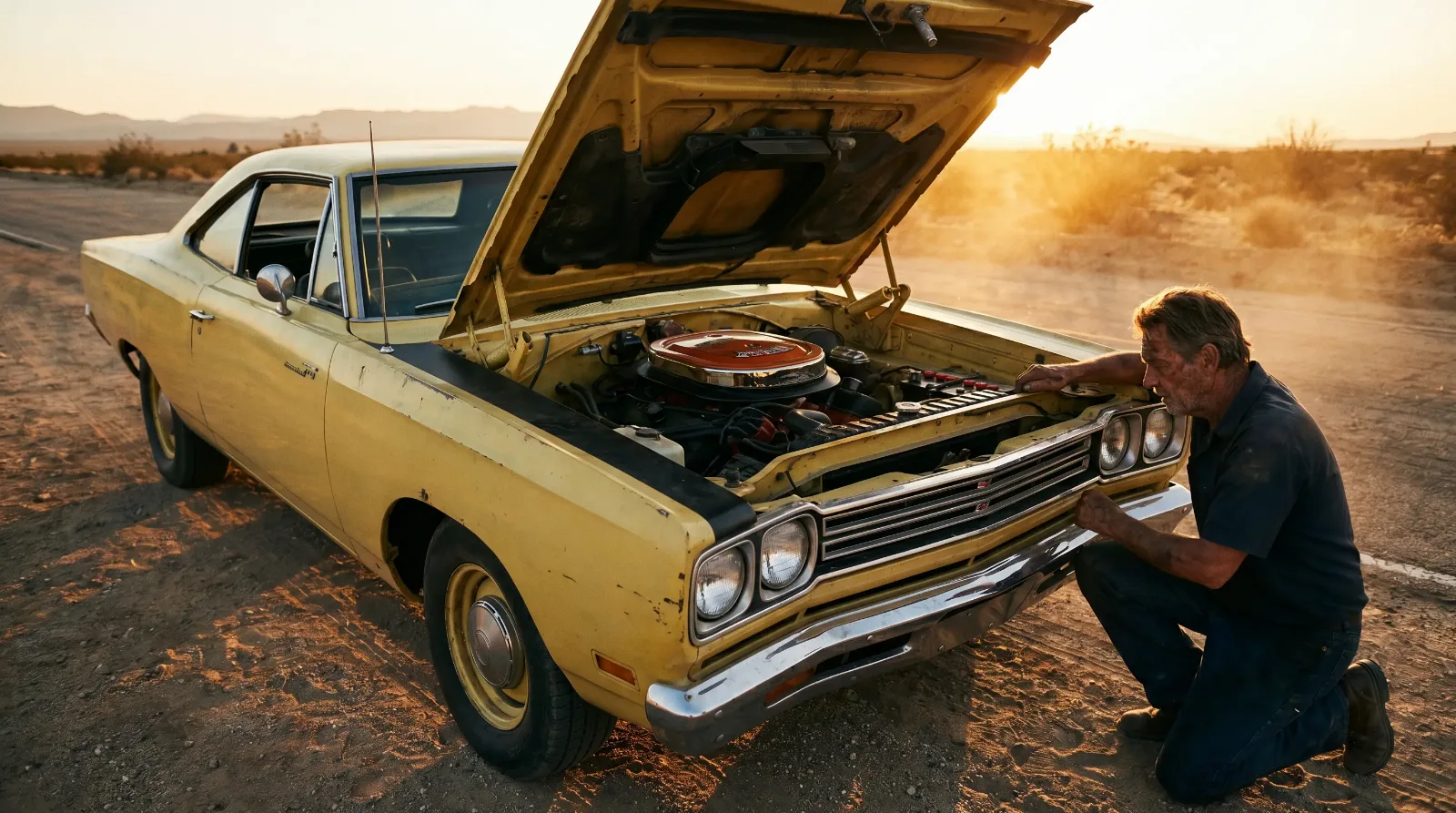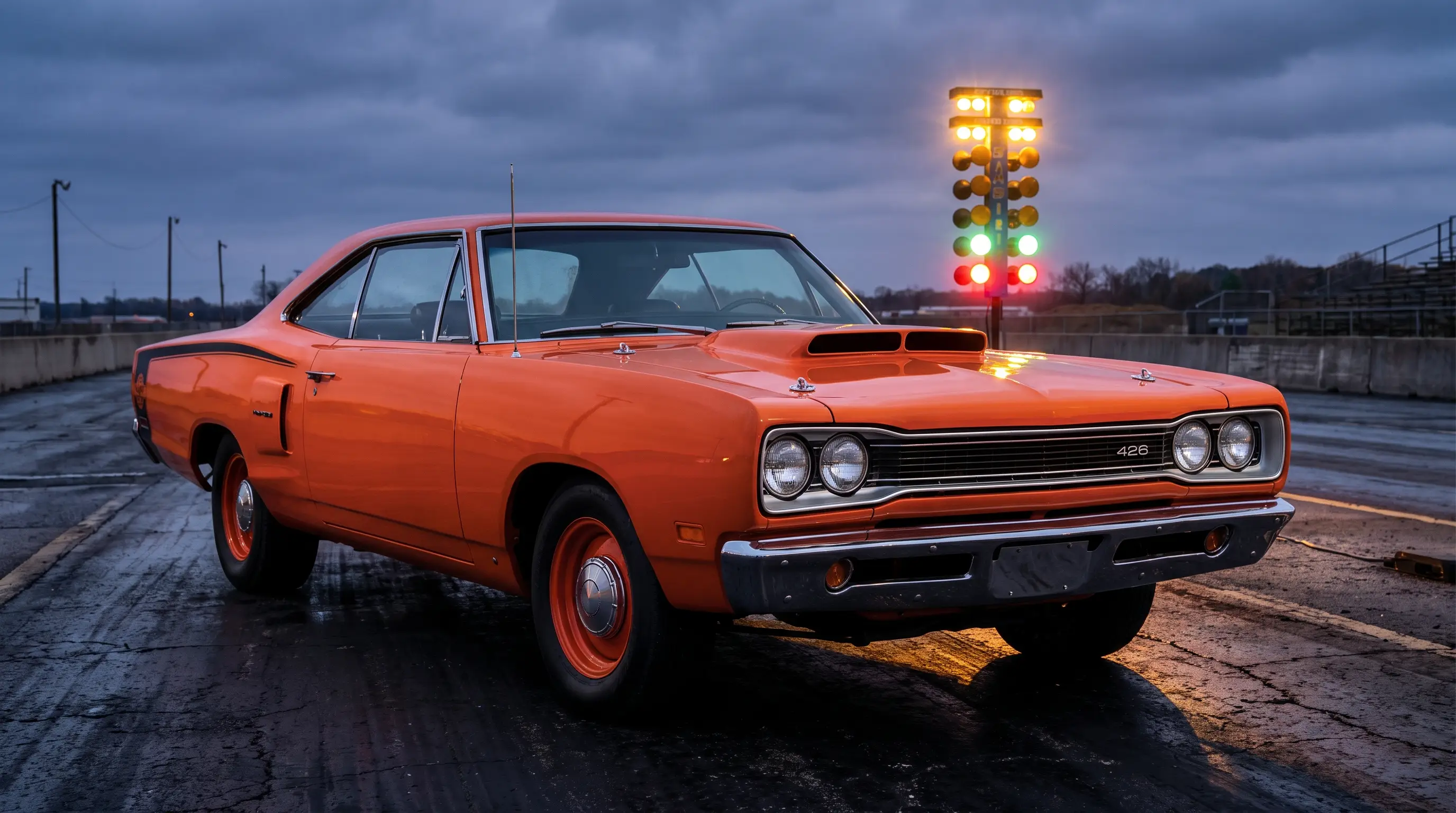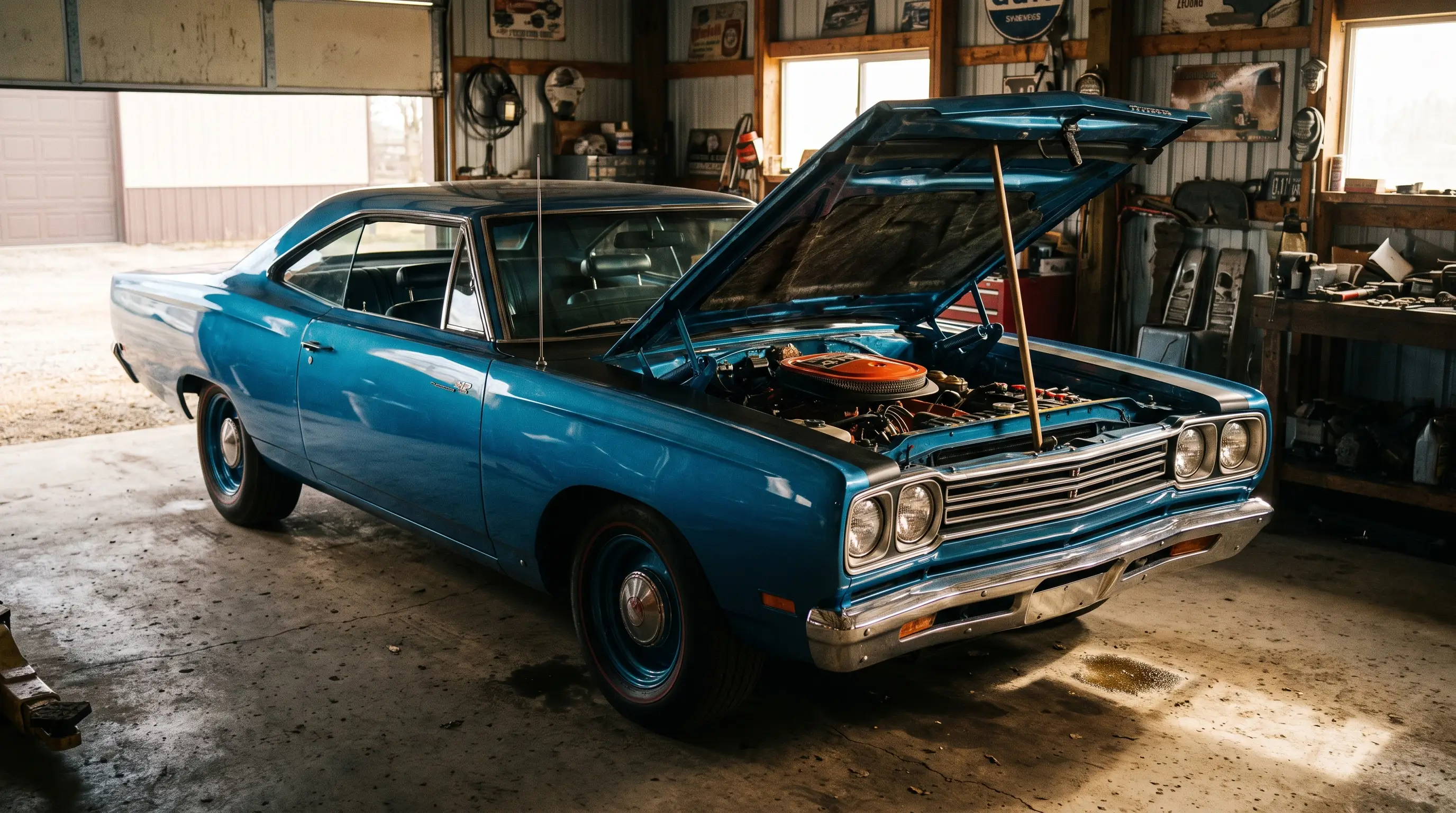
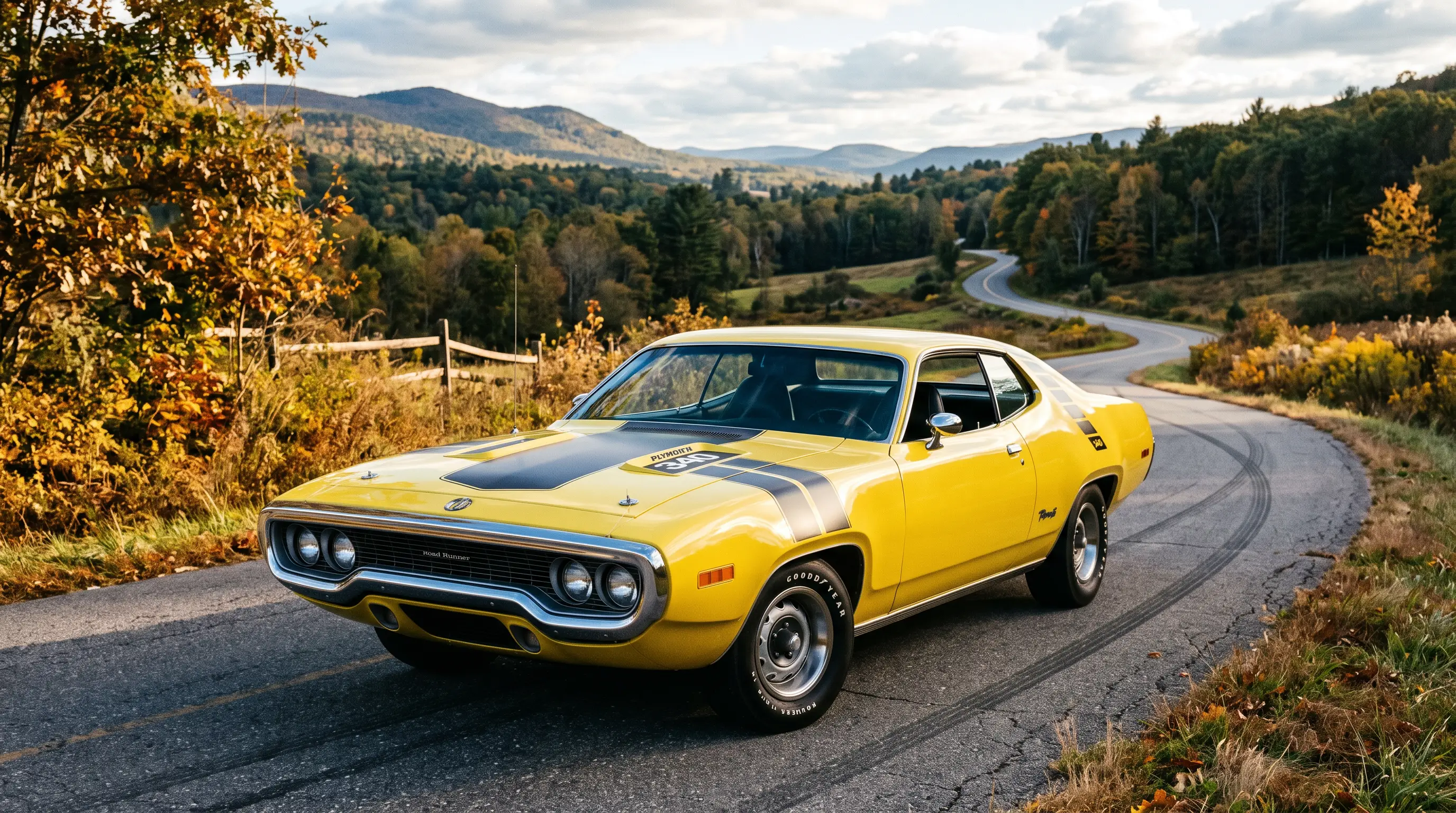
Not every performance story in the Road Runner lineup is about displacement. The road runner 340 engine made its case with revs instead of cubic inches, arriving as the lightest, best-balanced engine option the car ever offered, and building a following among drivers who cared more about how a car turned than how it launched.
A different kind of performance argument
The Chrysler LA-series 340 was never meant to compete on peak horsepower with the big-block wedges or the Hemi. At 340 cubic inches, it gave up substantial displacement to the 383, 440, and 426 engines sitting above it in the lineup. What it offered instead was a genuinely high-revving small-block built with better-flowing cylinder heads than its size would suggest, capable of pulling hard well past the rpm range where a typical big-block of the era started running out of breath.
That mattered most in the corners. A 340-equipped Road Runner carried noticeably less weight over the front axle than a 383 or 440 car, let alone a Hemi. The difference showed up in how the car turned in, how it responded to steering input, and how much less the front end pushed under hard cornering. For a segment of buyers, that balance mattered more than another fifty horsepower they would rarely use outside a drag strip.
When it arrived and where it fit
The 340 became a Road Runner engine option starting with the 1971 model year, positioned below the standard 383 as a lighter, more affordable alternative rather than a step up in outright power. Rated at 275 gross horsepower, it gave up raw output to the big-blocks but made up ground with a genuinely different driving character, quicker steering response and a willingness to rev that no wedge or Hemi engine in the lineup could match.
Its arrival in 1971 lines up with a broader shift happening across the whole Road Runner story that year. The fuselage-body redesign brought a new look to the car, and where this started back in 1968 with a stripped-down, value-first muscle car concept was already evolving into something with a wider spread of engine personalities to choose from, rather than the simpler big-block-or-Hemi decision buyers faced a few years earlier.
| Spec | Detail |
|---|---|
| Engine family | Chrysler LA-series small-block |
| Displacement | 340 cubic inches |
| First offered in Road Runner | 1971 model year |
| Positioning | Below standard 383, above base six-cylinder options in other Chrysler models |
Why it appealed to a specific kind of buyer
The 340's target buyer was not chasing bragging rights at a stoplight. This was the engine for someone who wanted a Road Runner that handled with some agility, cost less to insure than a big-block car, and still delivered genuinely quick acceleration by any reasonable standard outside the strict muscle car hierarchy. Insurance was a real factor by 1971. Underwriters were already applying steep surcharges to big-block and Hemi cars, and a smaller-displacement engine like the 340 sometimes qualified for meaningfully lower rates, which made it a practical choice as much as an enthusiast one.
It is worth putting the 340 in context against the car's other performance options. Anyone weighing a small-block Road Runner against the triple-carburetor big-block should look at more on the road runner 440 six barrel to see just how different these two engines' entire approach to performance really was, one built around high-rpm balance and light weight, the other around brute low-end torque and staged carburetion.
How it held up against the big-blocks in the real world
On paper, the horsepower gap between the 340 and the 383 or 440 was real and not small. In practice, the 340's power-to-weight advantage, since it was noticeably lighter than any of the big-block engines, closed part of that gap in actual driving conditions, particularly anywhere the road was not perfectly straight. Drag strip results still generally favored the bigger engines in a straight line, but the 340 built a loyal following among drivers who valued a more communicative, better-balanced car over outright quarter-mile numbers.
That reputation has aged well. Collectors and drivers today who want a Road Runner that is genuinely enjoyable to drive on a back road, not just quick from a stoplight, often gravitate toward the 340 cars specifically for that reason. It is a different kind of desirability than the Hemi or 440 Six Barrel commands, built on driving character rather than rarity or peak output.
"The 340 proves you don't need the biggest engine in the lineup to build the most satisfying one to actually drive. It's a small-block doing a big-block's job with less weight sitting over the front wheels."
- Emily Chen
Where it went after 1971
The 340 continued as a Road Runner engine option beyond its 1971 debut, remaining available even as the bigger engines above it started disappearing from the lineup through 1972 and beyond. That continuity says something about how Chrysler read the market shifting. As insurance costs and emissions rules squeezed big-block performance, the small-block's advantages, lighter weight, easier insurance qualification, and a driving character that did not depend on outright displacement, only became more relevant rather than less. By the time the Hemi and 440 Six Barrel were gone from the option sheet entirely, the 340's basic value proposition had barely changed.
Later in the decade, Chrysler eventually retired the 340 in favor of a larger-displacement small-block, part of a broader industry pattern of chasing torque through added displacement as compression ratios kept falling to meet emissions requirements. But within the Road Runner's classic era specifically, the 340 stands as the clearest example of the car's engine lineup broadening beyond a simple choice between standard big-block and exotic Hemi.
What it means for buyers today
A 340-equipped Road Runner typically costs less to acquire than a comparable big-block car, partly because the collector market still weighs peak horsepower and displacement heavily in its valuations, even where the driving experience tells a more nuanced story. That makes the 340 an accessible way into 1971-and-later Road Runner ownership for a buyer who prioritizes balance and drivability over outright numbers. Anyone comparing options should look at classic Runners on the market across engine choices before deciding, since a 340 car and a 383 car from the same model year can feel like genuinely different vehicles behind the wheel, not just different numbers on a spec sheet.
Verifying a genuine 340 Road Runner is generally more straightforward than chasing a documented Hemi or Six Barrel car, since the smaller engine never carried the same premium that invited fraud or unauthorized swaps. Buyers should still confirm the fender tag matches the engine on hand, particularly on cars that have changed ownership multiple times, but the stakes and the scrutiny required are proportionally lower. That relative simplicity is one more reason the 340 remains a sensible starting point for someone new to Road Runner ownership rather than a car chasing headline numbers.