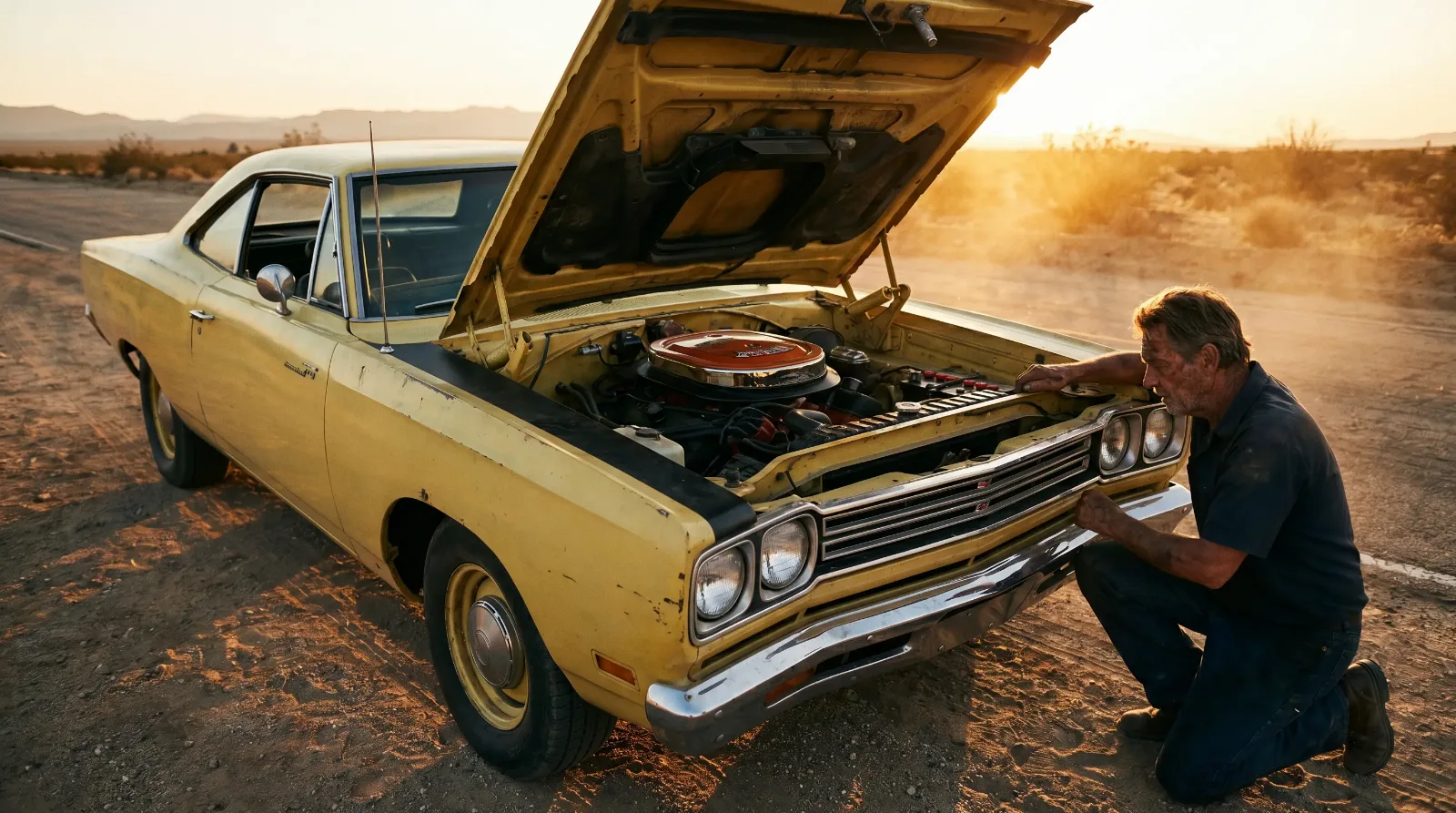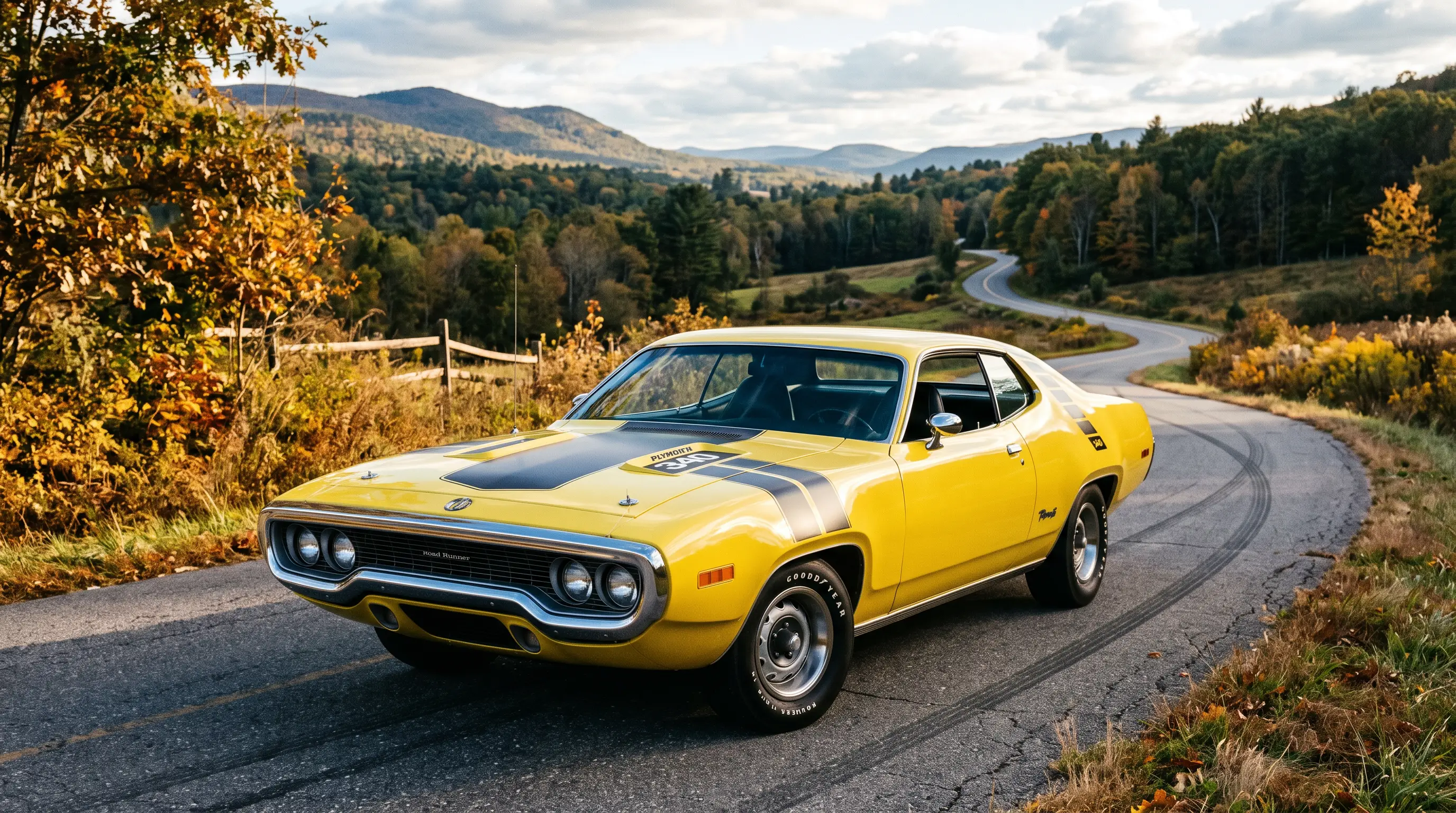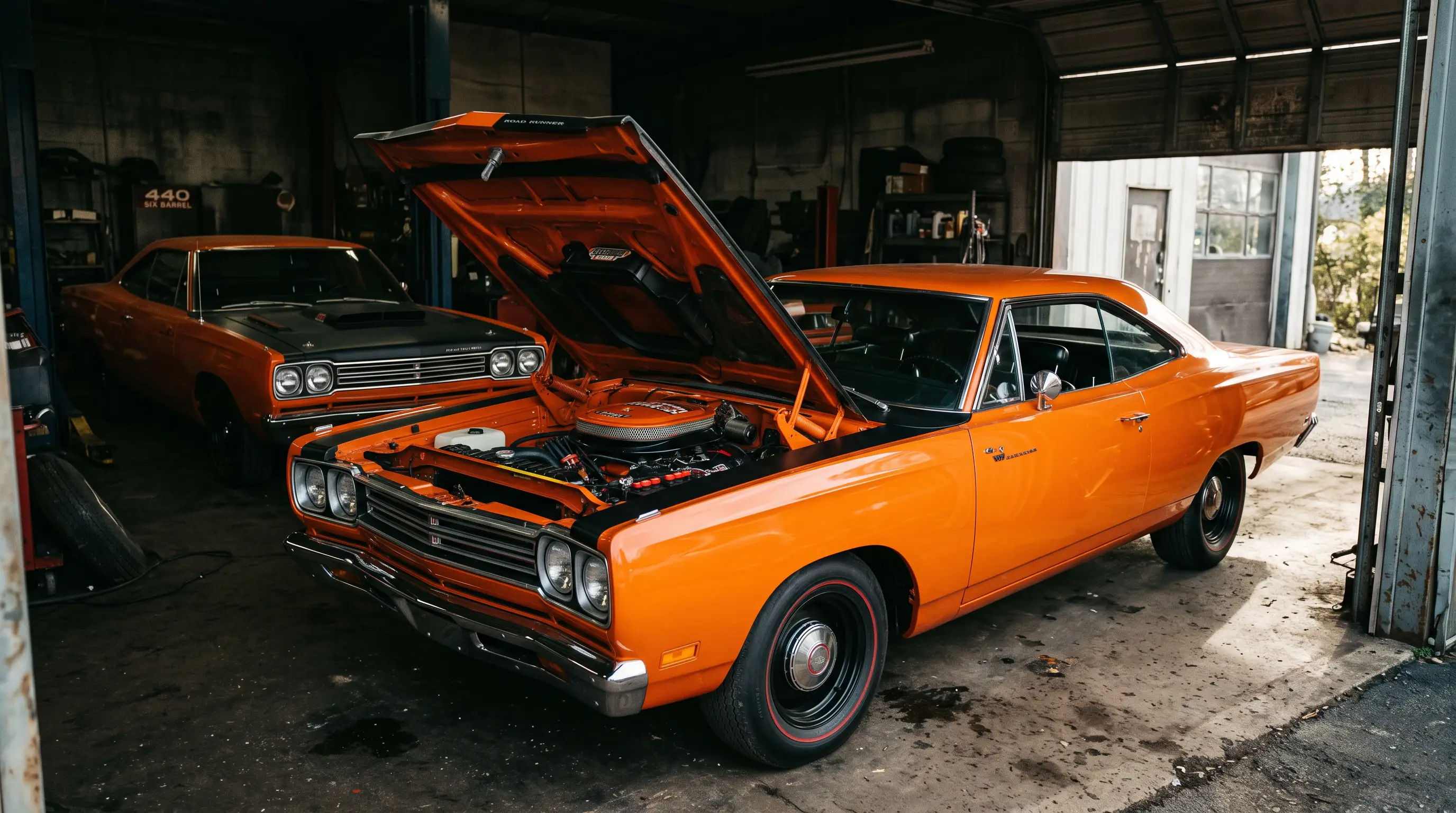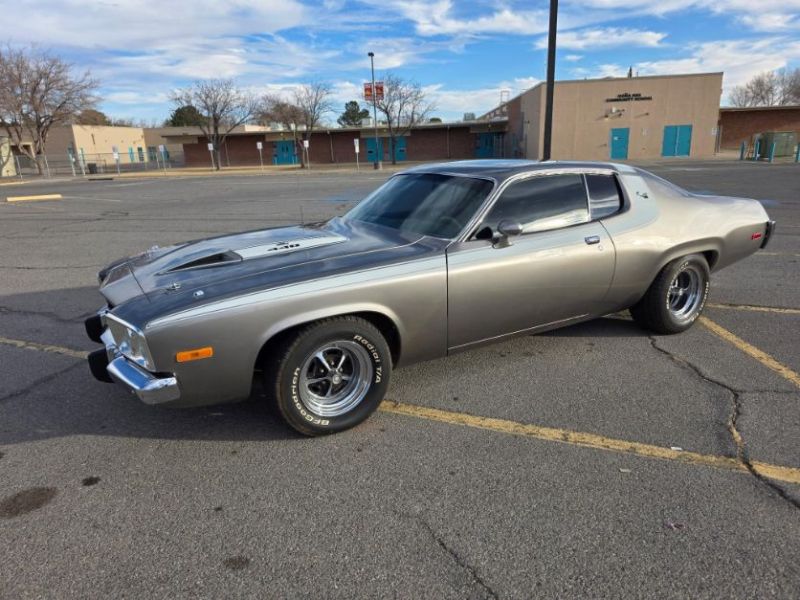
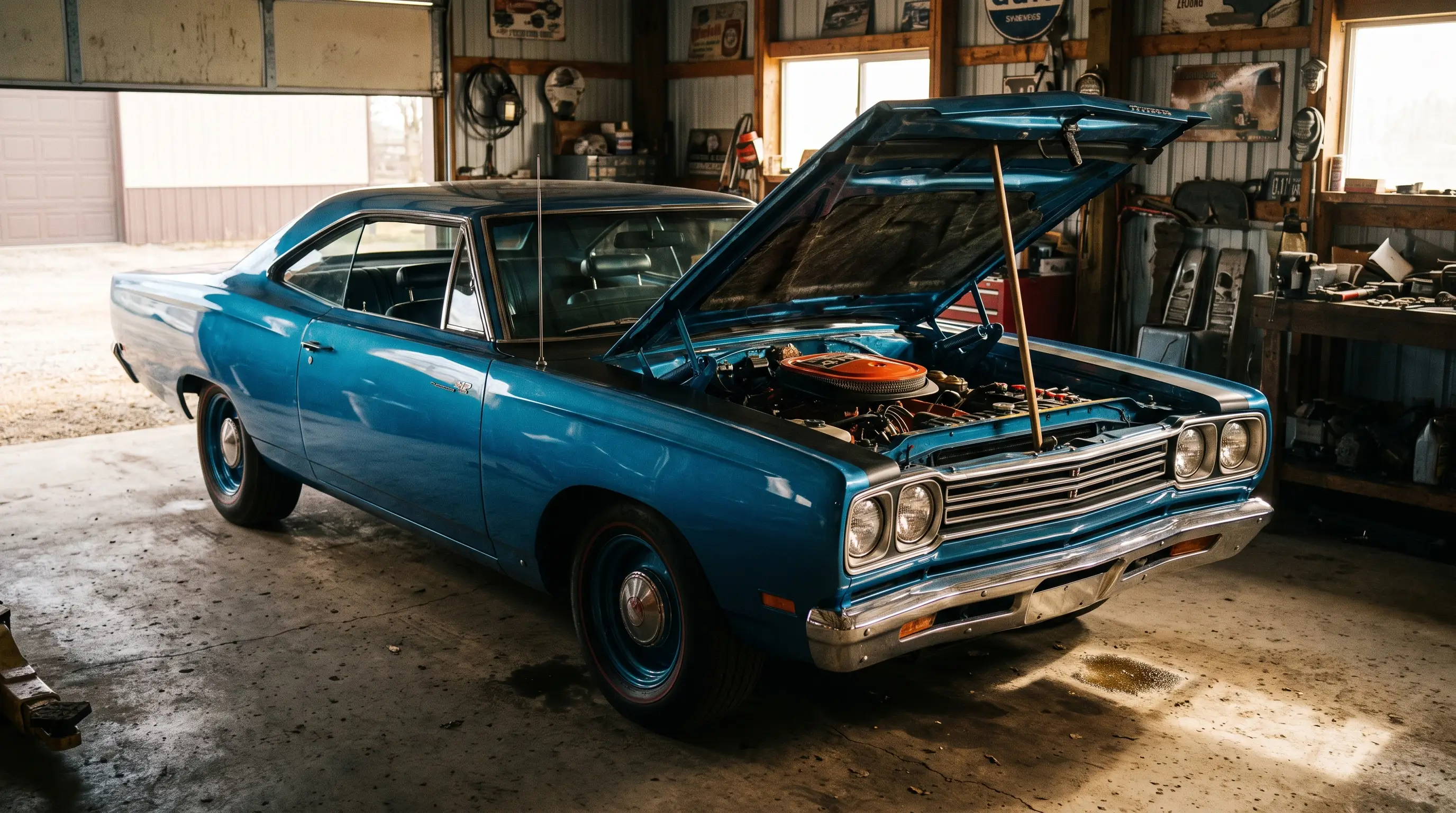
Halfway through the 1969 model year, Plymouth quietly released one of the strangest and most focused muscle car packages Detroit ever built for public sale. The a12 package 440-6 turned the Road Runner into something closer to a lightly disguised drag car, complete with a fiberglass hood that did not use hinges at all. It bolted down with pins and lifted straight off, which tells you most of what you need to know about the priorities behind this option.
What A12 actually meant
A12 was the internal Chrysler order code for a package that combined the new 440 Six Barrel engine with a lightweight fiberglass hood finished in flat black or primer, a matte, unpainted look that stood out sharply against the rest of a typical Road Runner's brighter factory colors. The hood itself was the signature piece. Rather than conventional hinges, it attached with racing-style pins, meaning it lifted completely off the car for engine access, exactly the kind of setup a drag racer would want and exactly the kind of setup most street buyers had never seen on a car they could order from a dealership.
Underneath that hood sat the 440 Six Barrel, Plymouth's triple two-barrel carburetor big-block that had just debuted for 1969, delivering serious performance without the cost and complexity of the Hemi. The A12 package essentially packaged the fastest non-Hemi engine option with the lightest, most race-oriented cosmetic treatment Plymouth was willing to sell over the counter.
Beyond the hood
A12 cars typically came with a stripped-down equipment list to match the hood's message. Dog-dish hubcaps replaced the fuller wheel covers seen on other Road Runners, keeping weight down and reinforcing the car's no-frills performance identity. Optional lightweight wheels were available for buyers who wanted to push the theme further. None of this was about luxury or even standard styling. It was about building a car that looked and felt like it had one job.
That single-minded focus is part of what makes A12 cars so distinct within the broader Road Runner lineage today. Most Road Runner options added convenience or comfort features. A12 subtracted weight and added attitude, a genuinely different philosophy from nearly everything else on the option sheet that year.
| Feature | Detail |
|---|---|
| Package code | A12 |
| Engine | 440 Six Barrel, triple two-barrel carburetion |
| Hood | Fiberglass, lift-off, pin-mounted, no hinges |
| Finish | Flat black or primer hood over standard body colors |
| Wheel covers | Dog-dish hubcaps standard, lightweight wheels optional |
Where it fit in the model year
A12 arrived as a mid-year release for 1969, meaning it was not part of the Road Runner lineup from the start of the model year but rather an addition once the 440 Six Barrel engine itself became available. That timing makes A12 cars a specific, identifiable subset within 1969 Road Runner production rather than a running option available across the full model year, which is part of why they carry particular significance among collectors focused on this generation.
For the fuller mechanical context behind why Plymouth built this package at all, and how it connects to the broader engine story across the Road Runner's history, where this started traces the full lineup from the standard 383 through the Hemi and the 440 Six Barrel that powered A12 cars specifically.
Why the hood mattered so much
The fiberglass lift-off hood was not purely cosmetic, even though its flat black or primer finish made it the most visually striking element of the whole package. Fiberglass weighs meaningfully less than the stamped steel hood used on standard Road Runners, and removing weight from the nose of a car built around a heavy big-block engine had real, measurable benefits for weight distribution and straight-line acceleration. Every A12 design decision traced back to the same goal, take weight out, put the biggest non-Hemi engine in, and worry less about polish than about results.
That philosophy is also why A12 cars read differently from other big-block Road Runners even at a glance. The unpainted hood was not an oversight or a cost-cutting measure. It was Plymouth signaling, deliberately, that this particular car was built with a different set of priorities than the rest of the lineup.
"A12 is Plymouth basically admitting the quiet part out loud. Take the paint off the hood, take the hinges off entirely, and put the 440 Six Barrel under it. That's a company building a drag car and calling it a trim package."
- Dan Reeves
A12 alongside the Super Bee
Plymouth was not alone in building this package. Dodge offered essentially the same combination, the 440 Six Barrel engine and the lift-off fiberglass hood, on the Super Bee that same model year, since both cars shared underlying corporate architecture and Chrysler frequently mirrored performance packages across its Plymouth and Dodge divisions. The two cars differ in badge, some trim, and marketing identity, but mechanically the A12 concept behind them is the same idea executed twice.
That parallel matters for buyers and researchers because it means A12-package documentation and parts knowledge, hood casting details, correct pin hardware, and factory paperwork conventions, apply usefully across both nameplates even though the collector markets for Road Runner and Super Bee versions have developed somewhat differently over the decades. A buyer researching one car's A12 details can often learn something relevant from the other's documented history, particularly when it comes to verifying correct hood casting numbers and hardware.
Collector significance today
Because A12 was a mid-year, specifically documented package rather than a standard running production option, genuine examples are scarcer than general 440 Six Barrel Road Runners from the same model year, and that scarcity shows clearly in collector demand. The combination of the lift-off hood, the correct dog-dish or lightweight wheel setup, and a verified 440 Six Barrel engine represents one of the more complete and recognizable factory performance packages of the entire muscle car era, distinct even from other big-block Road Runners built the same year.
Buyers chasing an A12 car specifically should expect to pay a real premium over a standard 440 Six Barrel Road Runner without the package, and should verify every element of the package together rather than assuming a car with the right engine automatically has the correct hood and equipment to match. For anyone starting that search, a classic Runner for sale listing that specifically documents the A12 package, hood, and correct equipment is worth far more attention than one relying on the engine alone to make the case.
Reproduction fiberglass hoods have been available for years, which is a practical benefit for restorers but also a reason to look closely before paying an A12 premium. A car wearing a correct-looking lift-off hood is not automatically a factory A12 car. The broadcast sheet and fender tag remain the only reliable way to confirm the package was actually ordered from the factory rather than assembled later from available parts, and that distinction is exactly where A12 values diverge most sharply between a documented original and a well-built tribute car.