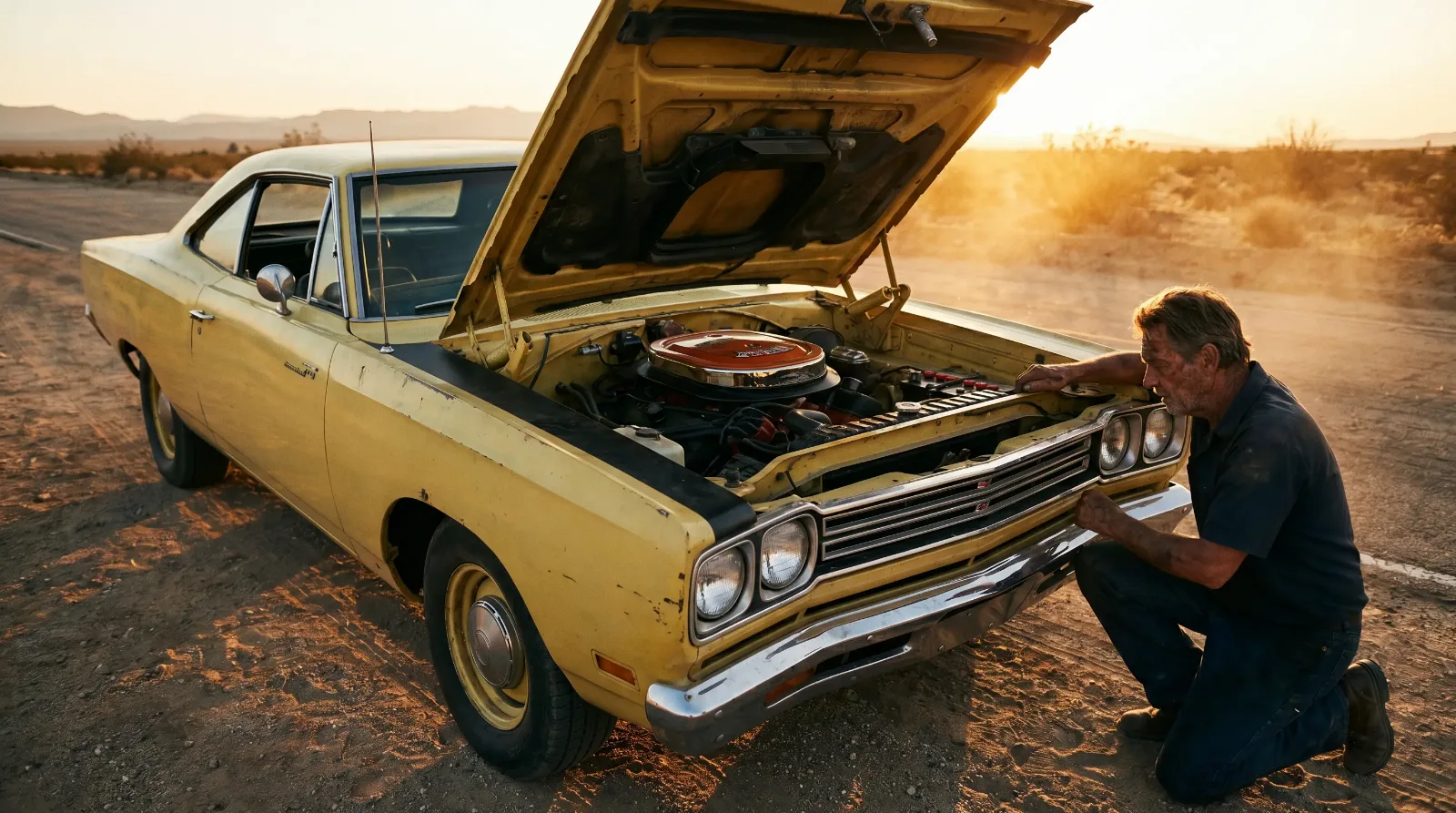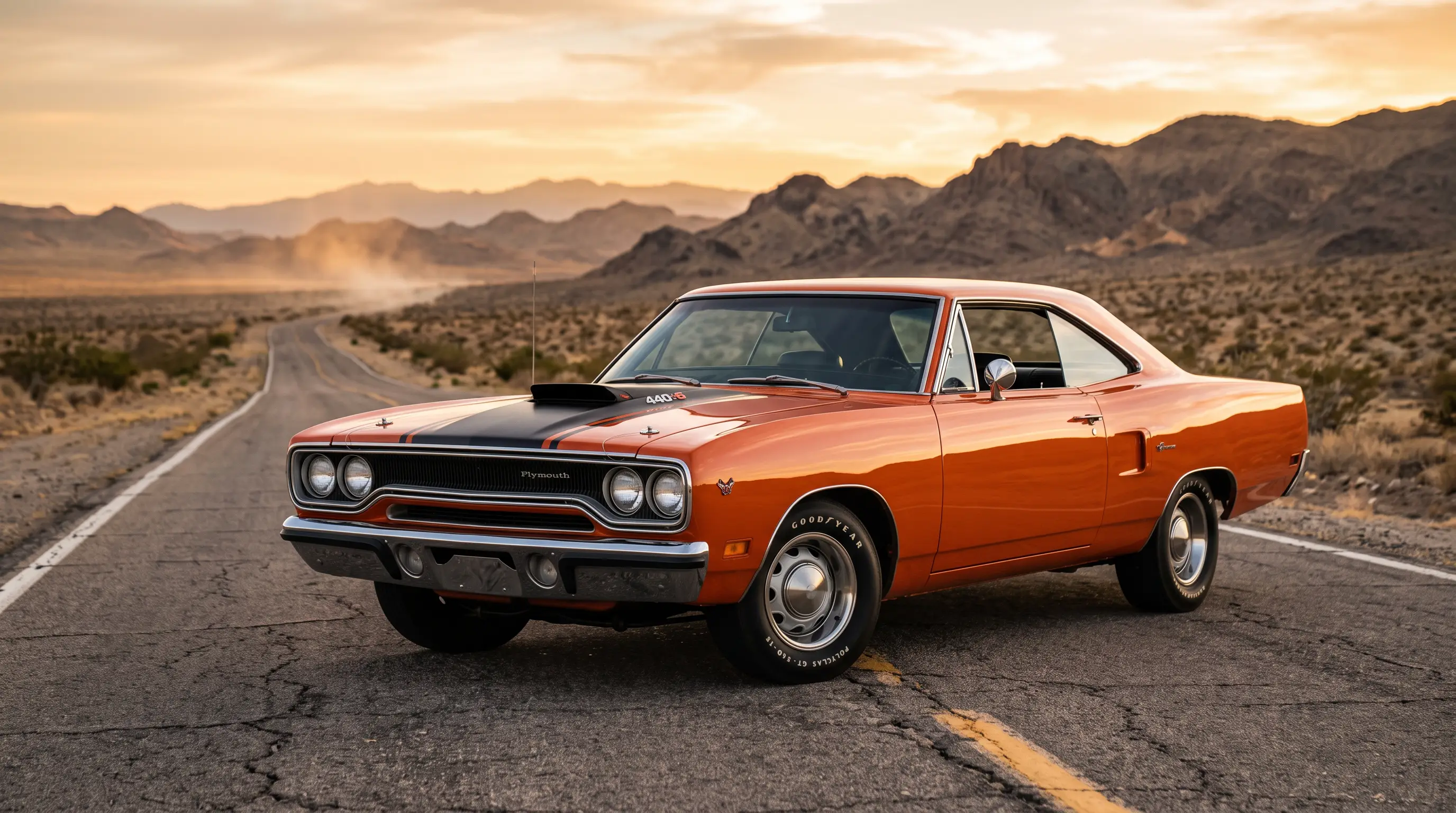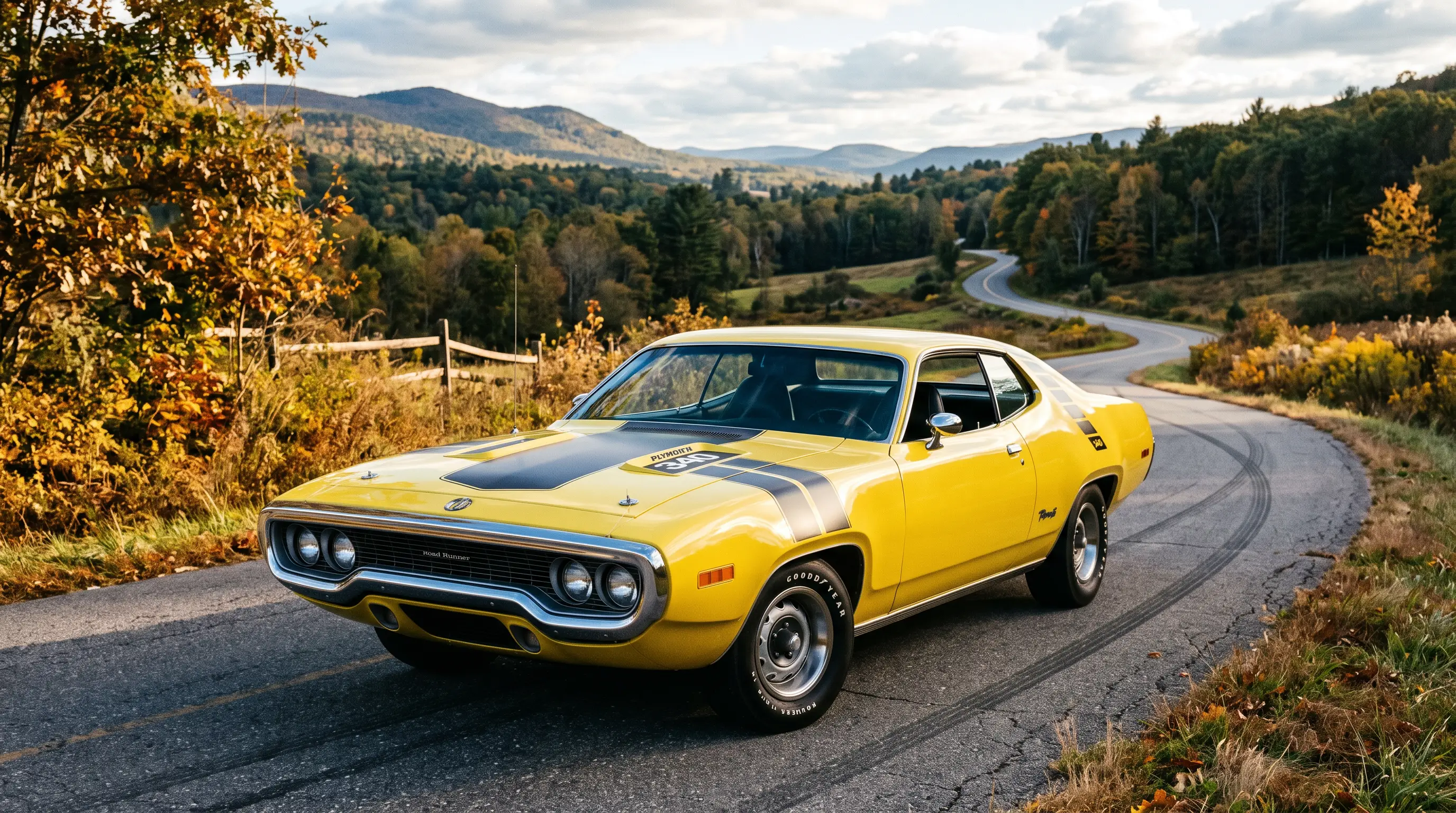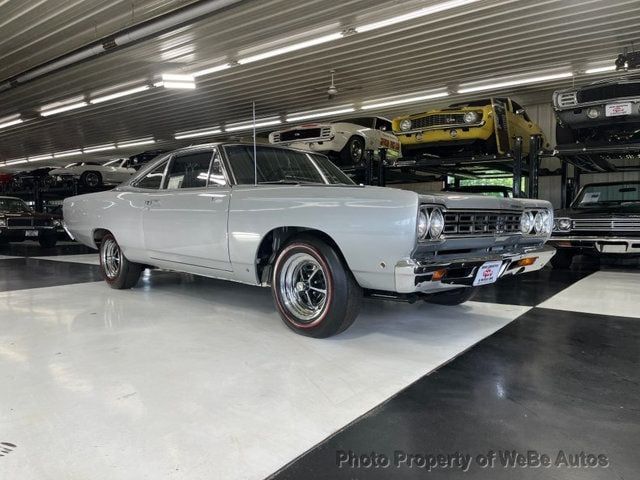
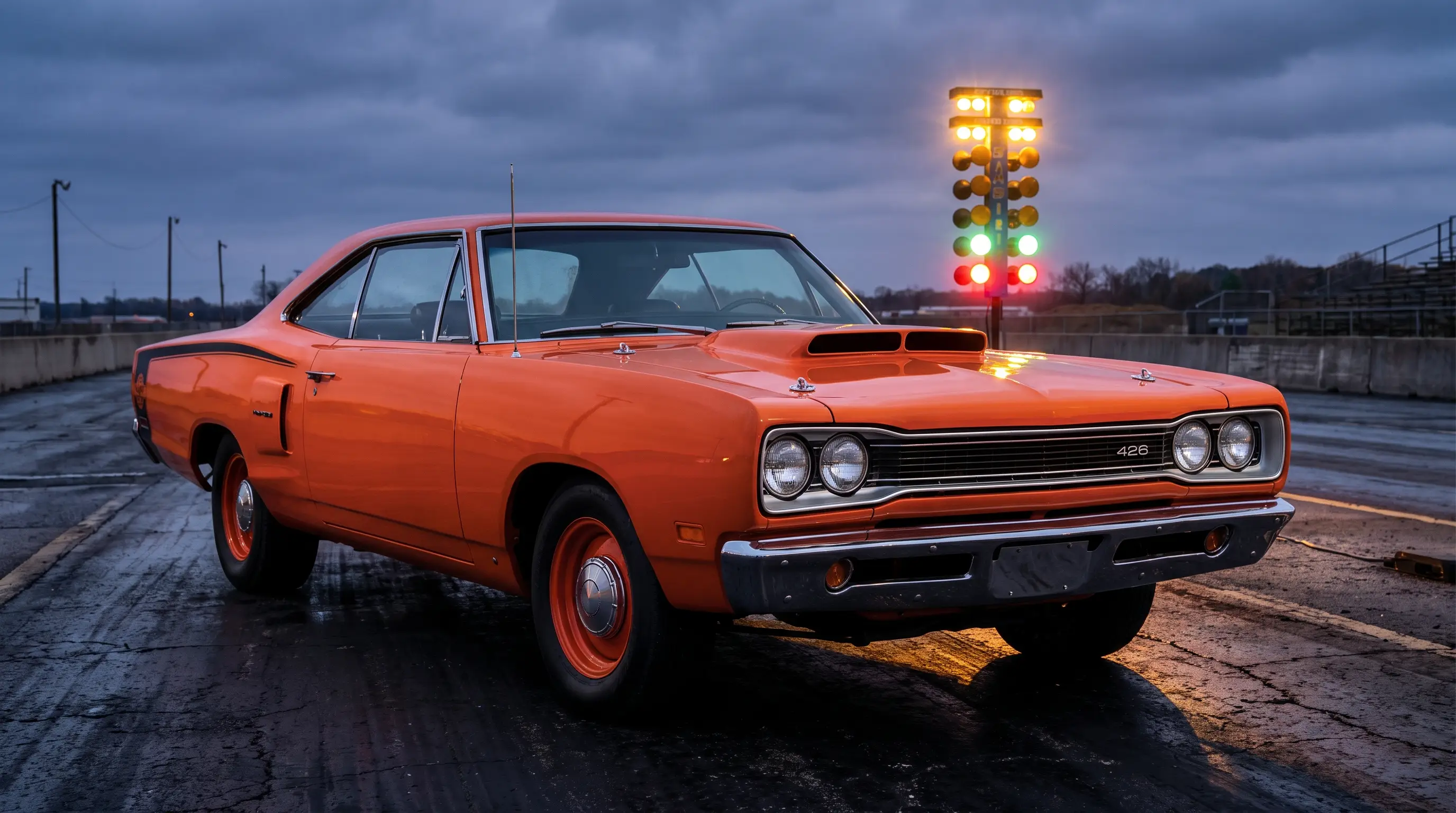
The 426 Hemi Road Runner is the option almost nobody bought and everybody remembers. Plymouth built the Road Runner to be cheap, honest performance for a working buyer, then let that same buyer check a box for the most expensive, most exotic engine in the entire corporate lineup. The result is a car that contradicts its own marketing pitch in the best possible way.
An expensive option on a budget car
When the Road Runner launched for 1968, its whole identity rested on value. Vinyl seats, rubber mats, minimal chrome, a horn that went "beep beep" as a licensed nod to the Warner Bros. cartoon, all in service of a low base price with real muscle underneath. Into that stripped-down package, Plymouth dropped the option to order the 426 Hemi, the same engine that had been dominating NASCAR and NHRA competition, for an added cost of $714.30. That was a serious sum on top of an already-equipped Road Runner, whose 1968 coupe started at roughly $2,896, and it meant most buyers who wanted the fastest car on the block simply could not, or would not, spend the extra money.
The math shows in the production numbers. Hemi-equipped Road Runners were a small fraction of total production in every year they were offered, dwarfed by 383 and later 440 Six Barrel cars. That rarity is exactly why Hemi Road Runners occupy the top tier of the collector market today, while at the time they represented Plymouth's willingness to let an economy muscle car carry its most uncompromising engine.
What made the Hemi different
The 426 Hemi's name comes from its hemispherical combustion chambers, a design that allows larger valves and more efficient airflow than the wedge-shaped chambers used in Chrysler's other big-block engines, including the 383 and 440. Fed by dual four-barrel carburetors rather than the 440 Six Barrel's staged triple-carb setup, the Hemi carried a factory gross rating of 425 horsepower, a figure widely understood at the time to be conservative relative to what the engine actually produced on a dyno.
That output came with real tradeoffs. The Hemi was heavier than the wedge engines, added weight over the front axle that affected handling, ran hotter and less happily in stop-and-go traffic, and demanded more careful tuning to run right. It was not a friendly daily-driver engine in the way the 383 or even the 440 Six Barrel could be. It was a race engine that Chrysler agreed to sell to the public, and it behaved like one.
| Spec | Detail |
|---|---|
| Combustion chamber | Hemispherical, larger valve area than wedge engines |
| Induction | Dual four-barrel carburetors |
| Gross rating | 425 horsepower (factory figure) |
| Years available in Road Runner | 1968 through 1971 |
The last year and what followed
1971 was the final model year the 426 Hemi could be ordered in a Road Runner. The engine's combination of high cost, high insurance surcharges, and incompatibility with the lower compression ratios required for the coming shift to unleaded fuel made it impossible to carry forward as emissions and fuel-quality regulations tightened. When the Road Runner lineup was reshuffled for 1972, the Hemi was gone entirely, leaving the 440 four-barrel as the top engine and the small-block 340 as a lighter, more affordable alternative below it. Anyone comparing that smaller engine option should worth a look too to understand how differently Plymouth's own engineers approached performance once the Hemi era closed.
For the full mechanical arc of how the Hemi fit alongside the Road Runner's other engines across its production run, read the background on the complete lineup, from the standard 383 through the 440 Six Barrel and finally the small-block 340 that carried the badge into the emissions era.
Living with a Hemi Road Runner today
The traits that made the Hemi demanding in period have not softened with age. It still runs hotter than the wedge engines, still carries more weight over the front wheels, and still rewards an owner who understands its tuning quirks rather than someone expecting a modern engine's forgiving nature. None of that has hurt its reputation. If anything, the Hemi's difficulty is part of its mystique, evidence that this was never meant to be an easy engine, only the fastest one Chrysler was willing to sell across a dealer counter.
Collectors chasing a Hemi Road Runner today are really chasing two things at once: the mechanical experience of the engine itself, and the rarity premium attached to a car that represented a small fraction of total production in every year it existed. Both are legitimate reasons to want one, and both explain why prices for genuine, documented Hemi Road Runners sit in a different world from every other engine option this car ever offered.
"The Hemi never made financial sense in a Road Runner, and that's the whole point. Somebody at Plymouth let a budget car carry the most expensive engine in the building, and that decision is why we're still talking about it."
- Dan Reeves
Verifying the real thing
Because a genuine Hemi Road Runner commands such a large premium over an otherwise identical wedge-engine car, verification matters more here than almost anywhere else in the hobby. The fender tag, broadcast sheet, and matching engine casting numbers all need to line up, and buyers should be wary of any Hemi car whose documentation trail has gaps, especially around ownership changes decades ago when the price gap between a Hemi and a standard big-block car was far smaller than it is now and less incentive existed to fabricate a history.
Clone cars, meaning a Road Runner originally built with a different engine and later fitted with a period-correct or reproduction Hemi, are a known part of this market and are not inherently dishonest as long as they are represented accurately. The trouble comes when a clone is sold without disclosure as an original car. A buyer paying Hemi-level money should insist on independent verification of the numbers before, not after, the deal closes.
The bottom line
The 426 Hemi Road Runner was never the practical choice, and it was never meant to be. It was the engine that let a stripped-down, value-priced muscle car claim the same performance credentials as Chrysler's most serious factory race hardware, and that contradiction is exactly why it remains the most sought-after engine option in the car's entire history. Buyers hoping to add one to a collection should expect to compete for a genuinely small pool of surviving, documented cars, and should shop classic Runner listings with realistic expectations about how tightly held and expensive the real thing has become.