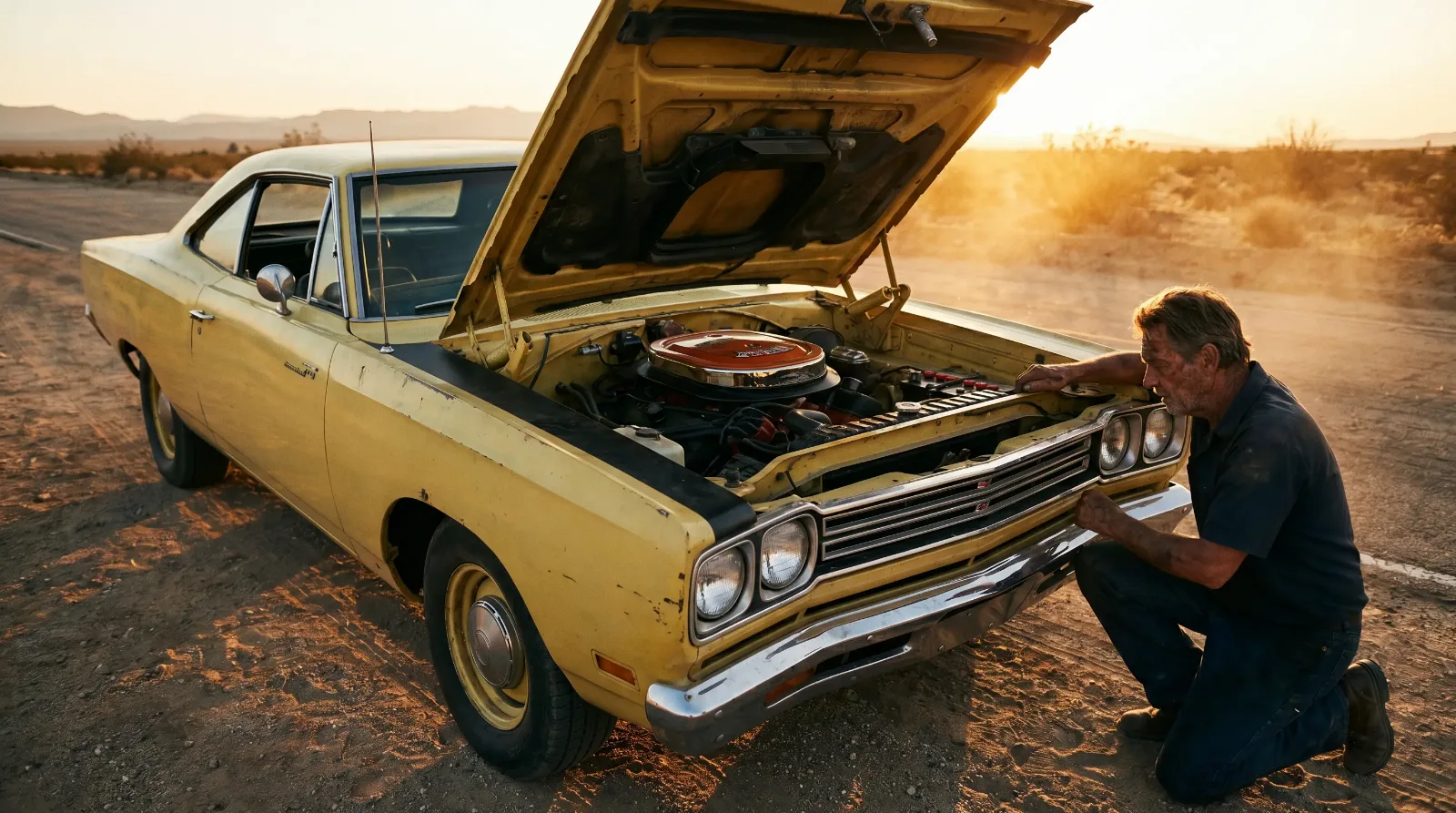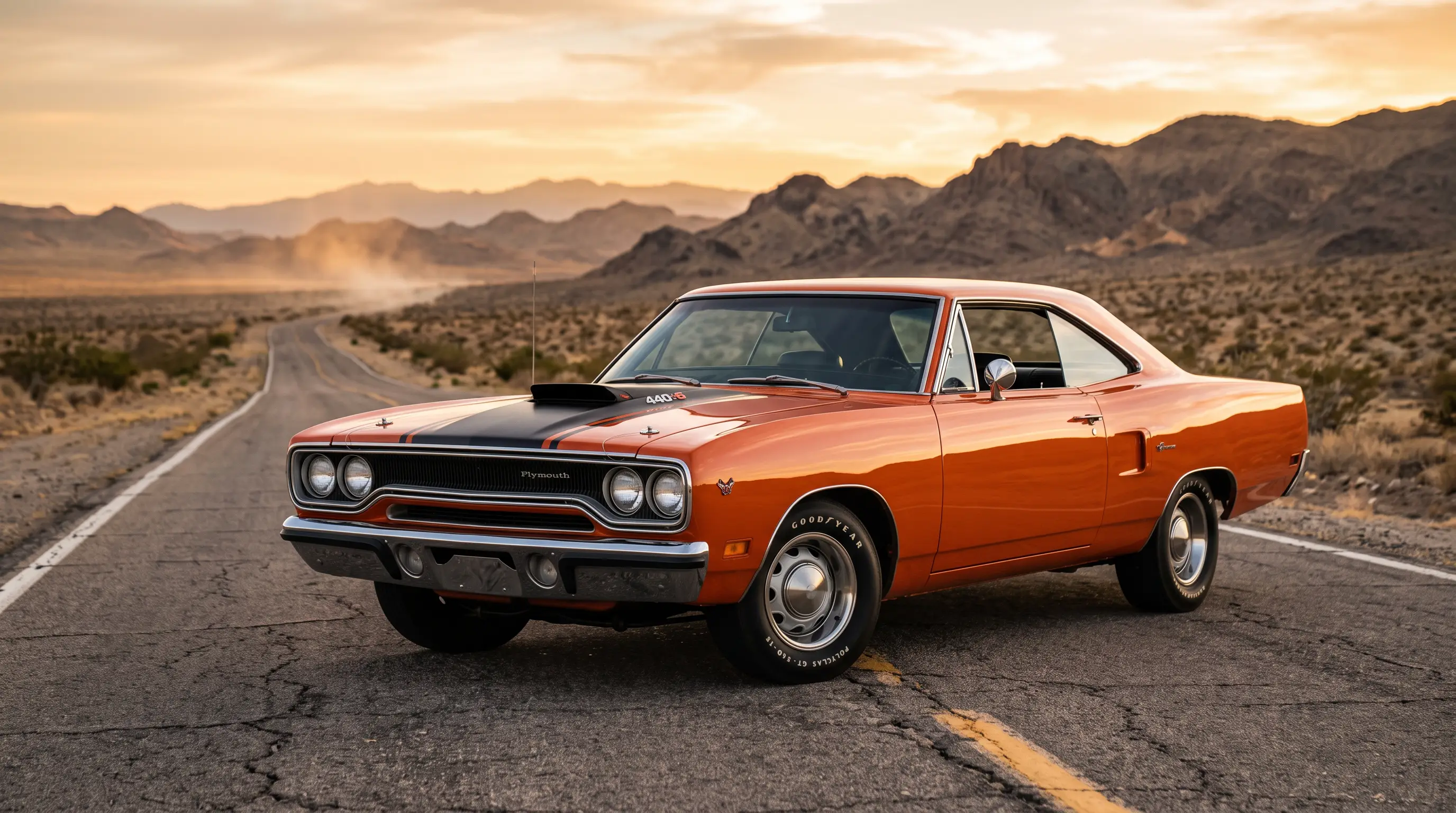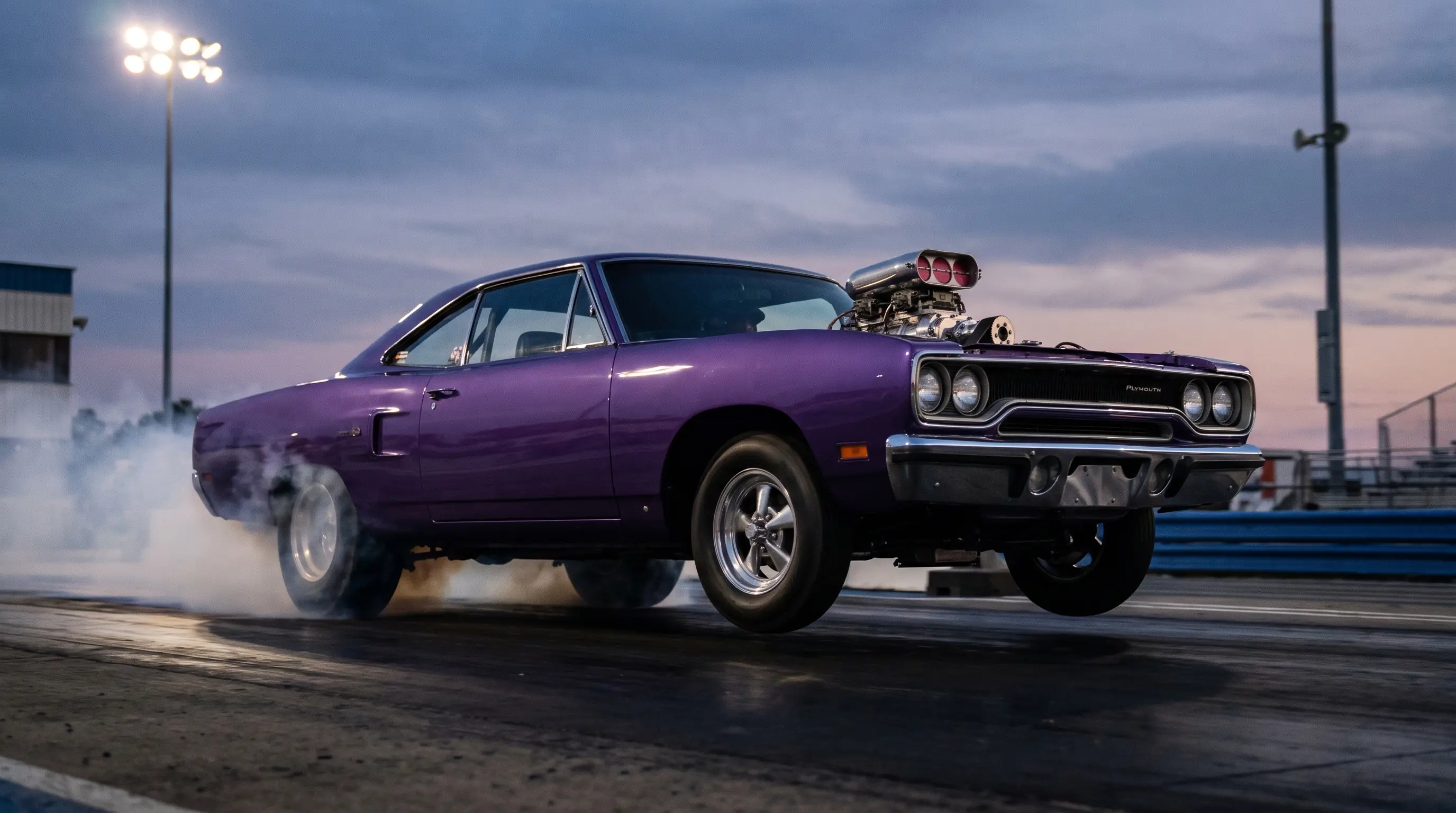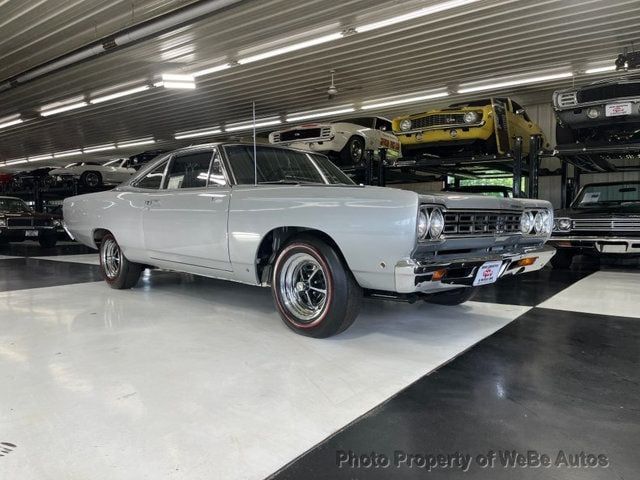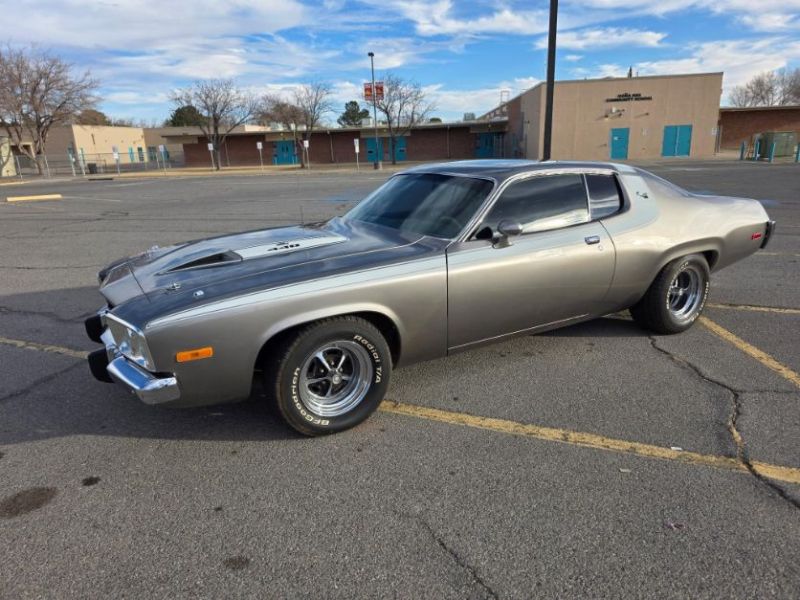
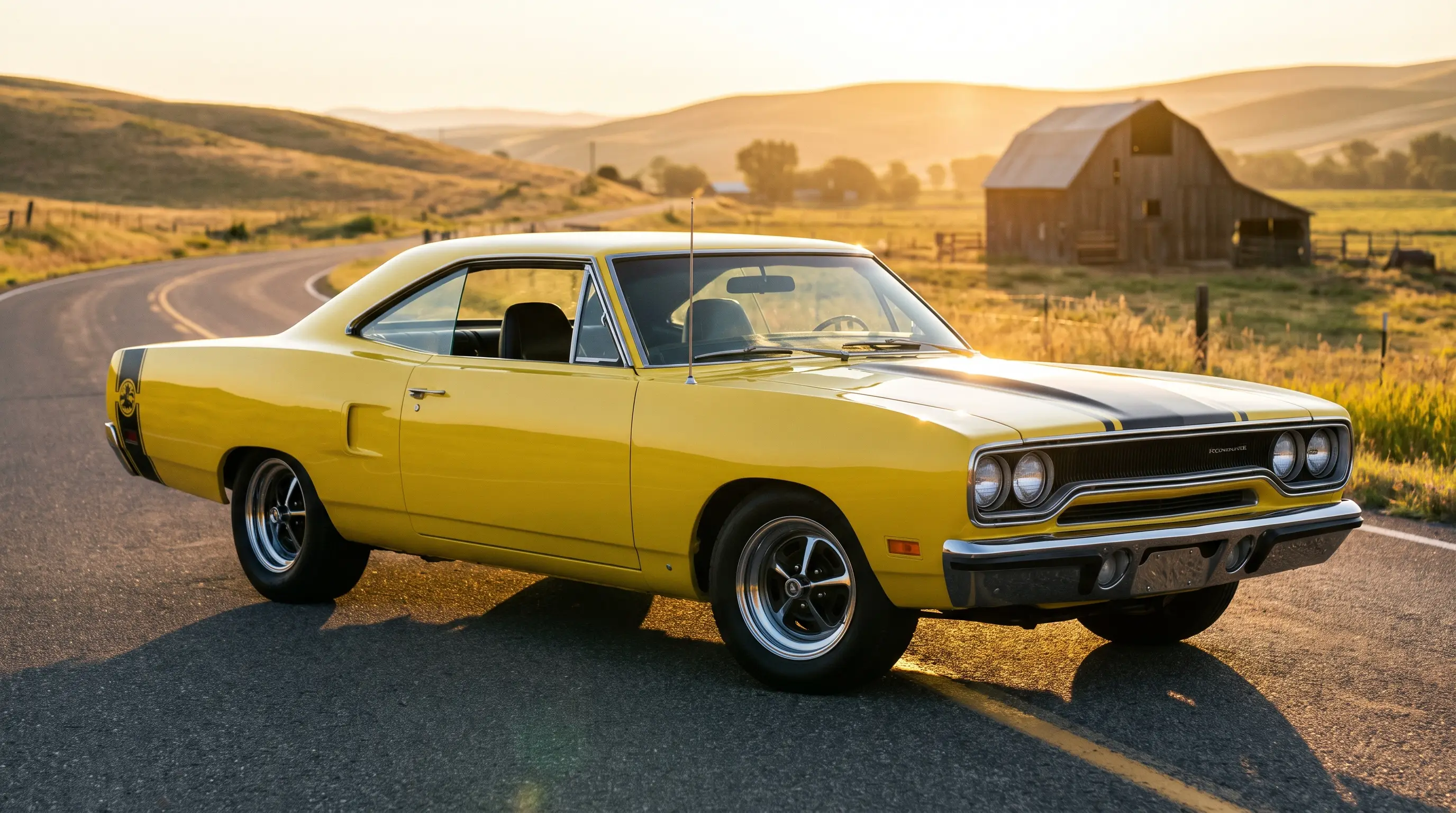
The Road Runner 383 is the engine most people forget when they talk about this car, and that is exactly backwards, because it is the engine that made the whole idea work. Plymouth built the Road Runner as a stripped-down, no-nonsense muscle car for a buyer who wanted speed without the luxury markup, and the standard 383 big-block under the hood was the reason the math added up for that buyer.
The engine everybody actually bought
When the Road Runner launched for 1968, the 426 Hemi got the magazine covers, but the 383 four-barrel was what came in the base price. Rated at 335 gross horsepower, it was a genuinely quick engine on its own, built from the same RB-adjacent B-block family that underpinned most of Chrysler's mid-size performance cars through the era. Most Road Runners built in 1968 and 1969 left the factory with this engine, not the Hemi, not even the 440. The 383 was the car.
That matters because the Road Runner's whole sales pitch was value. Plymouth deliberately built a car with vinyl bench seats, rubber floor mats, and few frills, then aimed it at a buyer who wanted big-block performance without paying for chrome trim they did not care about. The 383 was the engine that made that pitch honest. It cost less to insure than the Hemi, cost less to buy, and still delivered real quarter-mile numbers that embarrassed plenty of more expensive cars on the street.
What changed year to year
The 383's specification shifted gradually as the Road Runner evolved. Through 1970 it stayed close to its original 335 gross horsepower rating with a four-barrel carburetor. The 1971 redesign brought the fuselage body and a mild reshuffle of the engine lineup, with the 383 still available but increasingly positioned below the 340 small-block in some buyers' minds as compression ratios started easing down ahead of the coming emissions rules.
1972 closed the book on the 383 specifically. Chrysler retired the 383 in favor of a new 400 cubic-inch engine, built using much of the same tooling but with a larger bore, essentially the 383's successor rather than a clean-sheet design. Anyone researching the Road Runner 383 today is really researching a two-and-a-half generation engine story, from the original 1968 introduction through the 1971 model year, before the 400 took over the same role in the lineup.
| Model year | Standard Road Runner big-block | Notes |
|---|---|---|
| 1968-1970 | 383 four-barrel, 335 gross hp | Standard engine, most volume |
| 1971 | 383 four-barrel, revised rating | Last year of 383 availability |
| 1972 onward | 400 cubic-inch four-barrel | Bored-out successor built on 383 tooling |
Living in the shadow of the big options
Every Road Runner engine story eventually runs into the same problem: the Hemi and the 440 Six Barrel dominate the conversation because they were rare, dramatic, and expensive, which is exactly what makes for good collector-car legend. The 383 does not have that kind of story. It has a different one, about a car company that figured out how to sell serious performance to a buyer without a serious budget, and about how many actual Road Runners on the street in 1968 and 1969 were 383 cars rather than the more famous options.
Anyone digging deeper into how the 440 Six Barrel fit into this same lineup should look at road runner 440 six barrel history for the fuller picture, since the two engines effectively bookended the Road Runner's engine range for several years, the 383 as the everyman's choice and the 440-6 as the halo option most buyers never actually checked on the order form.
Driving impression and reputation
A properly tuned 383 Road Runner is not slow by any honest measure. It will not out-drag a Hemi car and it will not match a 440-6 in a straight line, but it responds quickly, revs cleanly for a big-block of its era, and does not punish the driver with the weight, heat, and finicky tune of the more exotic engines. That combination made it a favorite among people who actually wanted to drive their Road Runner regularly rather than trailer it, and that reputation has carried into the collector world today.
383 cars tend to be more affordable than 440 or Hemi Road Runners of the same model year, which makes them a realistic entry point for a buyer who wants an original big-block muscle car experience without competing at Hemi auction prices. The tradeoff is straightforward: less bragging rights, more usable, everyday muscle car character.
"The 383 is the engine that actually paid the bills for the Road Runner program. Everybody wants to talk about the Hemi, but the 383 is the car most people drove home."
- Dan Reeves
Parts, service, and long-term ownership
One practical advantage the 383 carries into the present is parts availability. Because the B-block family underpinned so many Chrysler products through the late 1960s and into the 1970s, not just the Road Runner, replacement internals, gaskets, and bolt-on components remain easier to source and generally cheaper than equivalent parts for a 426 Hemi or even a 440. That lowers the real cost of ownership over time, which matters for anyone planning to drive the car rather than store it.
The flip side is that the 383's ordinariness within Chrysler's broader lineup can make verifying originality harder rather than easier. A numbers-matching claim on a 383 Road Runner deserves the same scrutiny as any other muscle car claim, checking casting dates, casting numbers, and the fender tag together rather than assuming a period-correct-looking engine is automatically the one that left the factory in that specific car.
Where the 383 fits today
For a buyer weighing options, a well-sorted 383 Road Runner offers real period-correct performance, lower running costs than the big-block flagships, and a purchase price that leaves room in the budget for restoration or maintenance rather than eating the entire number just to get the car in the driveway. It is also, quietly, the most historically representative Road Runner there is, the engine that most closely matches what Plymouth actually built and sold in volume during the nameplate's best years. There is a related story worth reading on the six-pack option for anyone deciding between the everyman's big-block and the harder-edged alternative. For buyers ready to look, Runners for sale now is the place to start narrowing down a specific model year and engine combination.