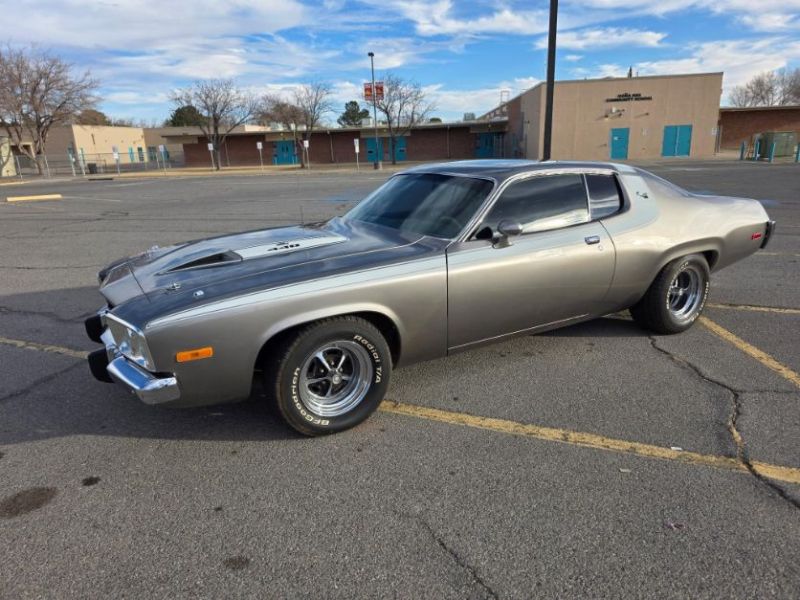
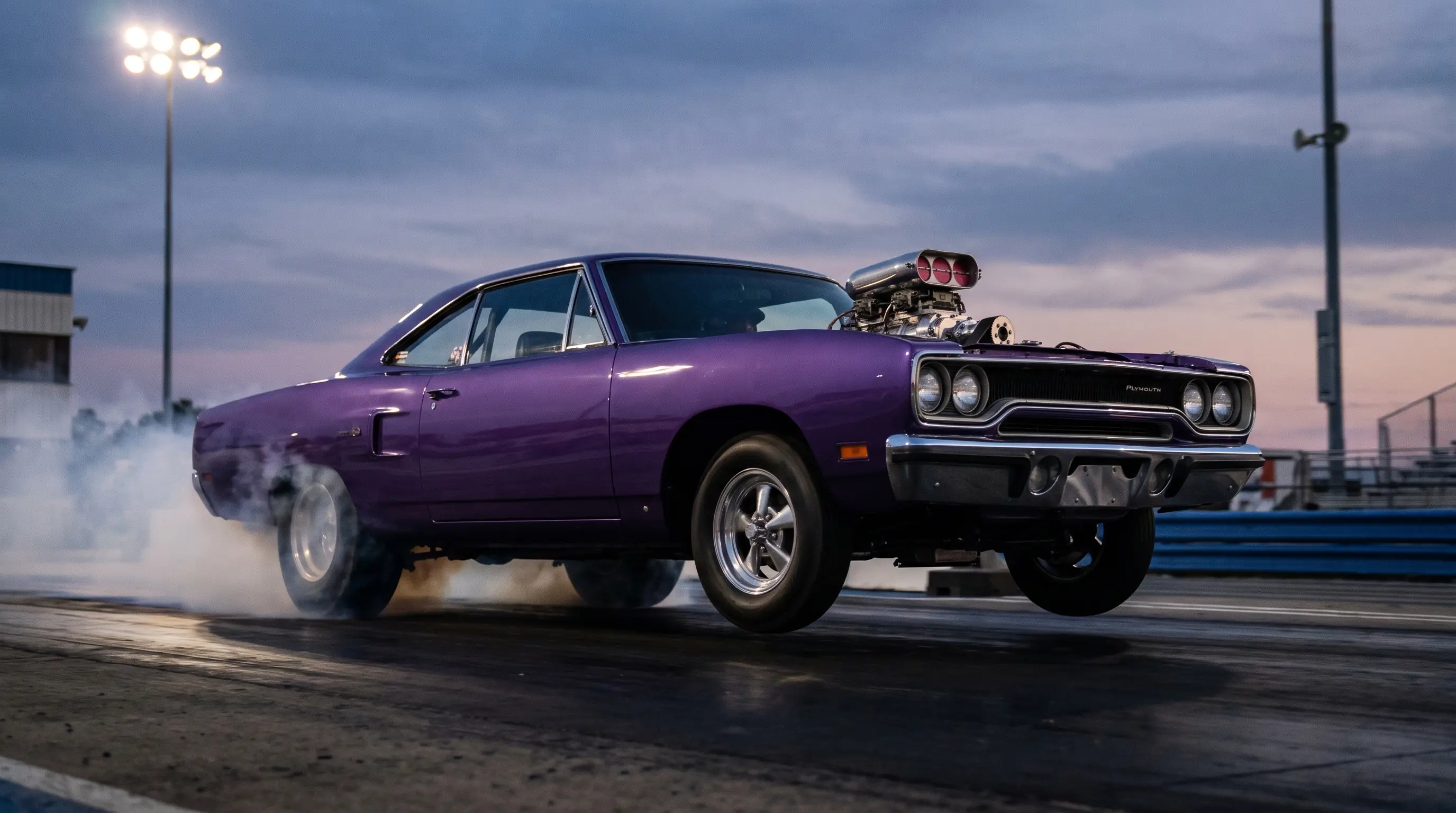
Road Runner horsepower numbers only make sense if you read them against the calendar. A 425 horsepower rating in 1968 and a 275 horsepower rating in 1972 were not measuring two different levels of engine competence. They were measuring two different eras of the same horsepower war, one still climbing and one already retreating under insurance premiums and emissions rules. Tracking that arc year by year tells you more about the muscle car market than any single spec sheet can.
The climb: 1968 to 1970
Plymouth entered the horsepower fight with a strategy other manufacturers were slower to copy: put a genuinely potent big block in an intentionally basic car and let the power to weight ratio do the talking. The base 383 at 335 horsepower already undercut most rivals' entry-level performance trims. The optional 426 Hemi, rated at 425 horsepower, sat at the top of the entire industry's output claims, tied with its sibling applications across Dodge and Plymouth's other muscle offerings.
1969 brought the move that actually reshaped the internal competition, the 440 Six Barrel. Officially rated at 390 horsepower, it sat between the base 383 and the Hemi on paper, but real-world performance told a more complicated story. Because the Six Barrel engine was noticeably lighter over the front axle than the Hemi and easier to launch consistently without bogging, it frequently matched or beat Hemi-equipped cars in the quarter mile despite the 35 horsepower deficit on the window sticker. For the full development story on that engine, the road runner 440 six barrel story covers how Plymouth engineered it and how period magazines reacted when the numbers came in.
What the numbers actually meant on the street
Advertised horsepower and real-world quarter-mile performance never lined up as neatly as a spec sheet suggests, and the Road Runner is a useful case study in why. Two cars carrying identical factory horsepower ratings could produce noticeably different elapsed times depending on axle ratio, tire compound, driver skill, and even the specific dyno a given engine happened to be tested on before its rating was published. Magazine testers of the period regularly noted this variance, sometimes recording a lower-rated engine outrunning a higher-rated one from a different manufacturer entirely, a reminder that the published number was always a starting point for comparison rather than a guarantee of finishing order at the strip.
That gap between paper numbers and street results is part of why enthusiasts still argue about which Road Runner year and engine combination was genuinely fastest, decades after the fact. Reliable, contemporaneous testing data exists for some combinations and not others, and where it exists it often contradicts the simple assumption that a higher horsepower rating automatically means a quicker car.
The peak nobody could sustain
1970 is generally treated as the high water mark for the horsepower war across the entire muscle car segment, not just the Road Runner. Insurance companies had started reacting to the previous two years of rising claims tied to high-horsepower cars, and the earliest wave of surcharges specifically targeting big-block and Hemi-equipped models began showing up on premium notices that year. Buyers were still ordering the top engines, but the economics of doing so were starting to bite in a way they had not in 1968.
The Road Runner's horsepower ratings held roughly steady into 1971, the Hemi's final year in the lineup, before the entire industry pivoted hard the following year.
| Model year | Top-rated horsepower | Measurement standard |
|---|---|---|
| 1968 | 425 hp (426 Hemi) | SAE gross |
| 1969 | 425 hp (426 Hemi), 390 hp (440 Six Barrel) | SAE gross |
| 1970 | 425 hp (426 Hemi) | SAE gross |
| 1971 | 425 hp (426 Hemi), final Hemi year | SAE gross |
| 1972 | 280 hp (440) | SAE net |
1972: the number that scared everyone
The industry-wide switch from SAE gross horsepower ratings to SAE net ratings in 1972 is the single event that makes casual comparisons across the Road Runner's run misleading. Gross ratings measured an engine on a test stand with no accessories, no exhaust restriction, and optimistic tuning. Net ratings measured the engine as installed, with the alternator, water pump, full exhaust, and emissions equipment attached and loaded, a far more honest number and a far smaller one. A 440 rated at 280 net horsepower in 1972 was not necessarily a weaker engine than a 440 rated higher under the old gross standard a few years earlier. It was a more accurately measured one. The actual performance drop was real too, driven by lower compression ratios mandated for unleaded fuel compatibility, but the number on paper overstates how much power actually disappeared.
Insurance rates rewrote the incentive structure
No discussion of the road runner horsepower story is complete without acknowledging what insurance companies did to buyer behavior starting around 1969 and accelerating through 1971. Underwriters began identifying specific engine and body combinations as high-risk, and premiums for Hemi and top big-block cars in that window climbed to a point where the sticker price of the engine option was no longer the only cost a buyer had to weigh. A young driver who could technically afford the extra cost of a 426 Hemi on the order form might find the annual insurance premium alone exceeded what the base 383 cost to insure by a wide margin.
That shift shows up directly in production numbers. Hemi take rates, already small in 1968 and 1969, declined further in the final two years the engine was offered, not because the engine got worse or less desirable, but because the total cost of ownership calculation had changed for a meaningful share of the buyer pool. Manufacturers across the industry felt this pressure simultaneously, which is part of why the horsepower war cooled off across every brand at roughly the same time rather than Plymouth alone backing away from big numbers.
Reading the ratings honestly today
For anyone shopping by horsepower figure alone, the road runner horsepower numbers require context before they mean anything. A 1968 or 1969 gross rating and a 1972 or later net rating are not directly comparable, and treating them as if they are will lead you to undervalue a genuinely strong late-run 440 next to an earlier Hemi that was never actually 100 horsepower stronger in practice. The broader story of how the model evolved across its full run, engines included, is covered in the full story, which puts the horsepower arc in context alongside the styling and market changes happening at the same time.
"Compare a gross-rated Hemi to a net-rated 440 and you'll draw the wrong conclusion every time. Read the measurement standard before you read the number. That's the whole trick."
- Emily Chen
The practical upshot for buyers is that the horsepower war years, roughly 1968 through 1971, remain the most collectible window for a reason beyond nostalgia, they represent genuinely the highest gross output the car ever carried, measured on the most flattering scale the industry ever used. Cars from that window, properly documented, continue to command the strongest prices among classic Runners on the market today, and understanding the rating standard behind each year's number is the difference between paying a fair price and overpaying for a headline figure that does not mean what it looks like it means.
Sources and notes
- Plymouth Road Runner - Wikipedia
- 1972 Plymouth Road Runner 440 Specs - Automobile Catalog
- 1972 Plymouth Road Runner Engine Options and Specifications - Ultimate Muscle Car
- 1968 Plymouth Road Runner Base - Hagerty Valuation Tools
- Match Race 1972 Road Runner/GTX 440 vs Buick GS 455 - For A Bodies Only Mopar Forum