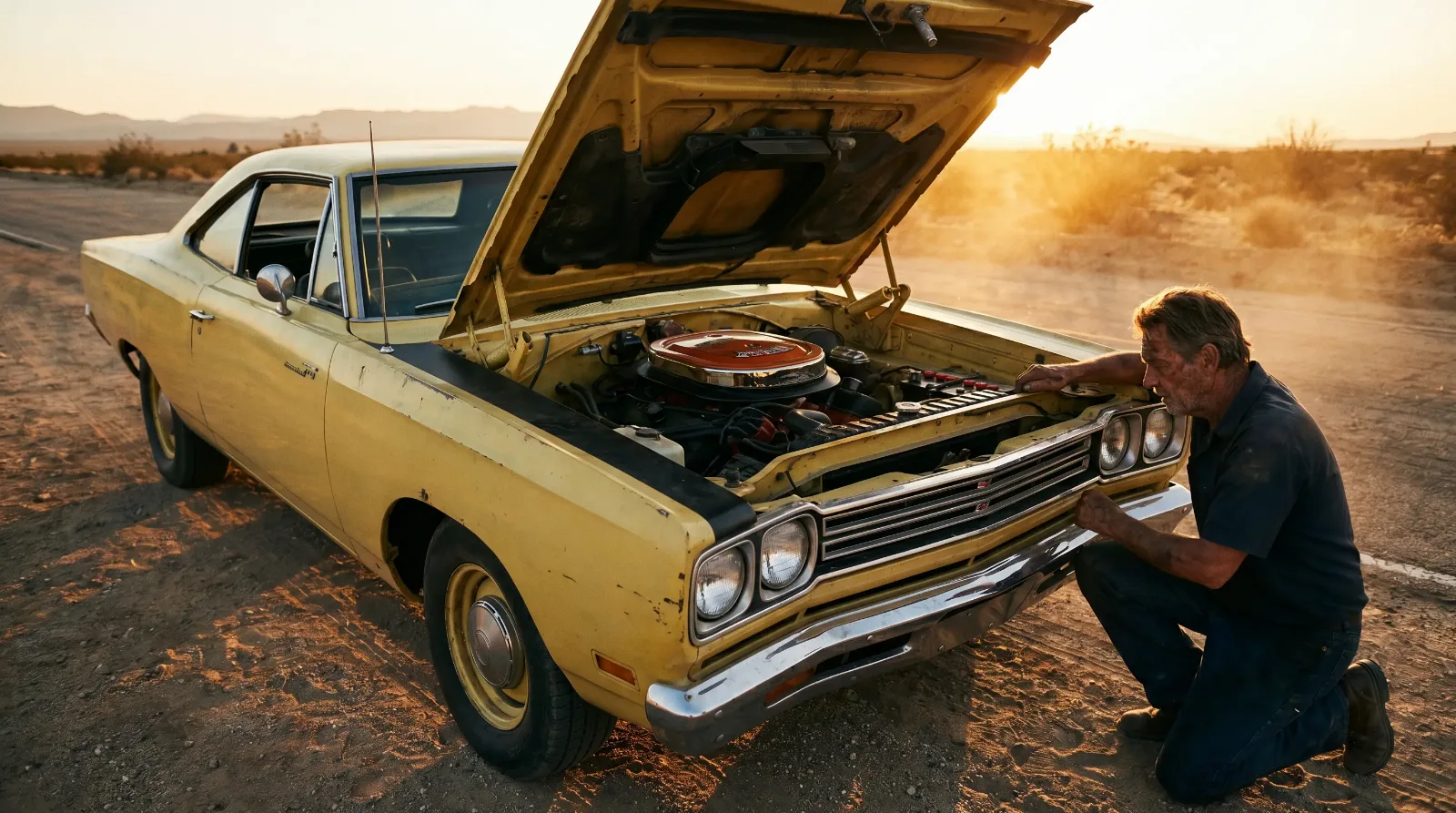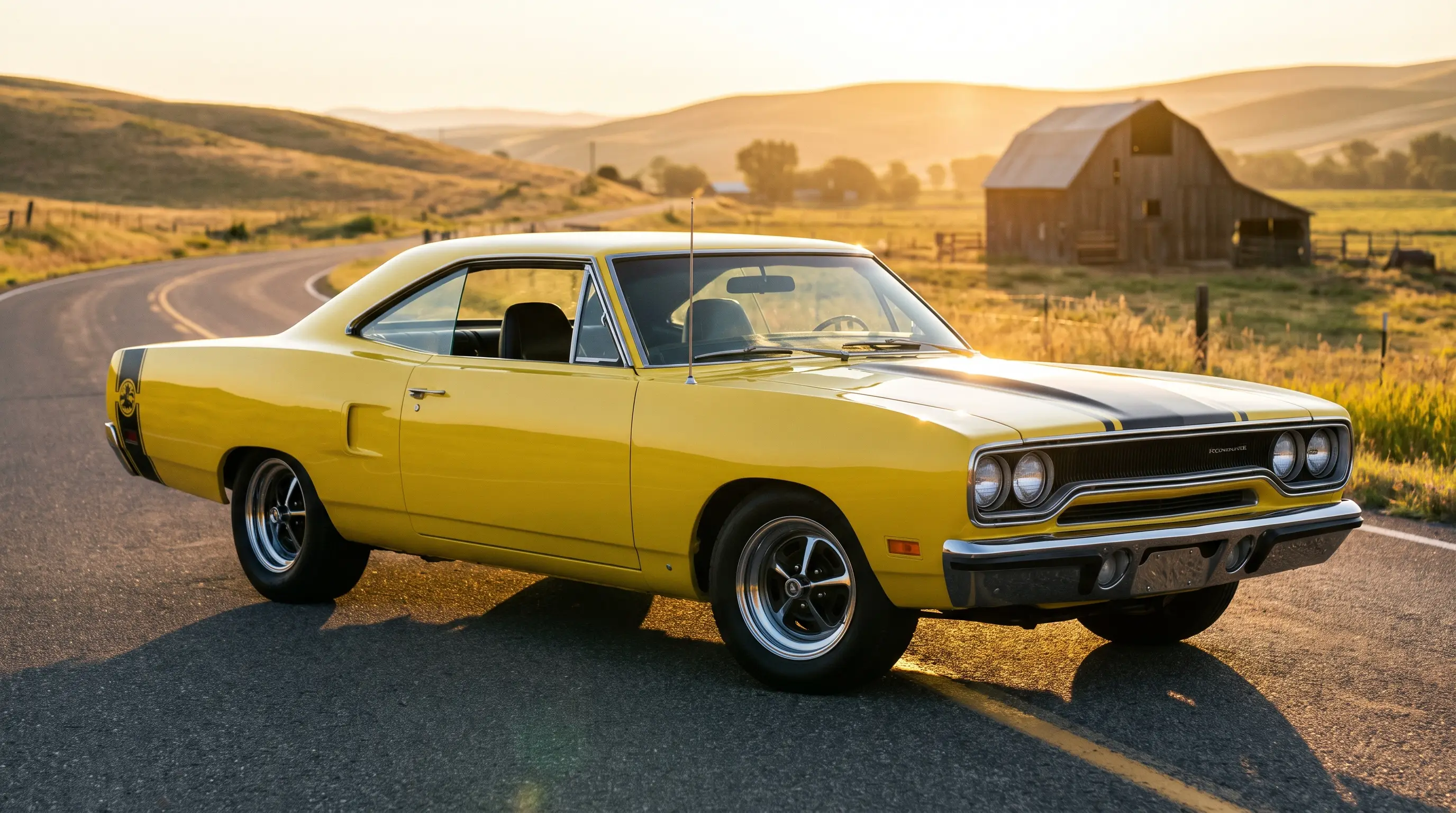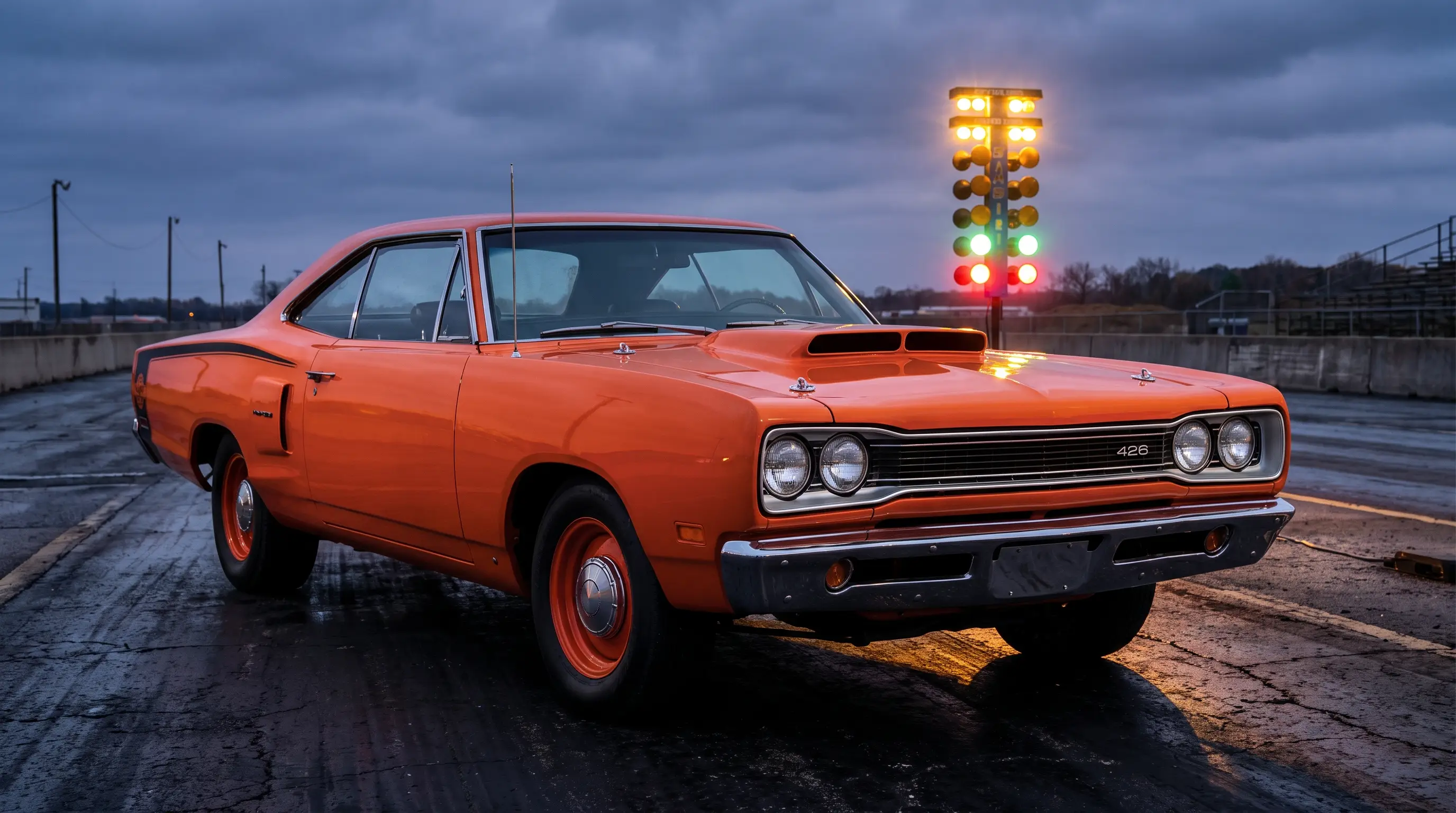
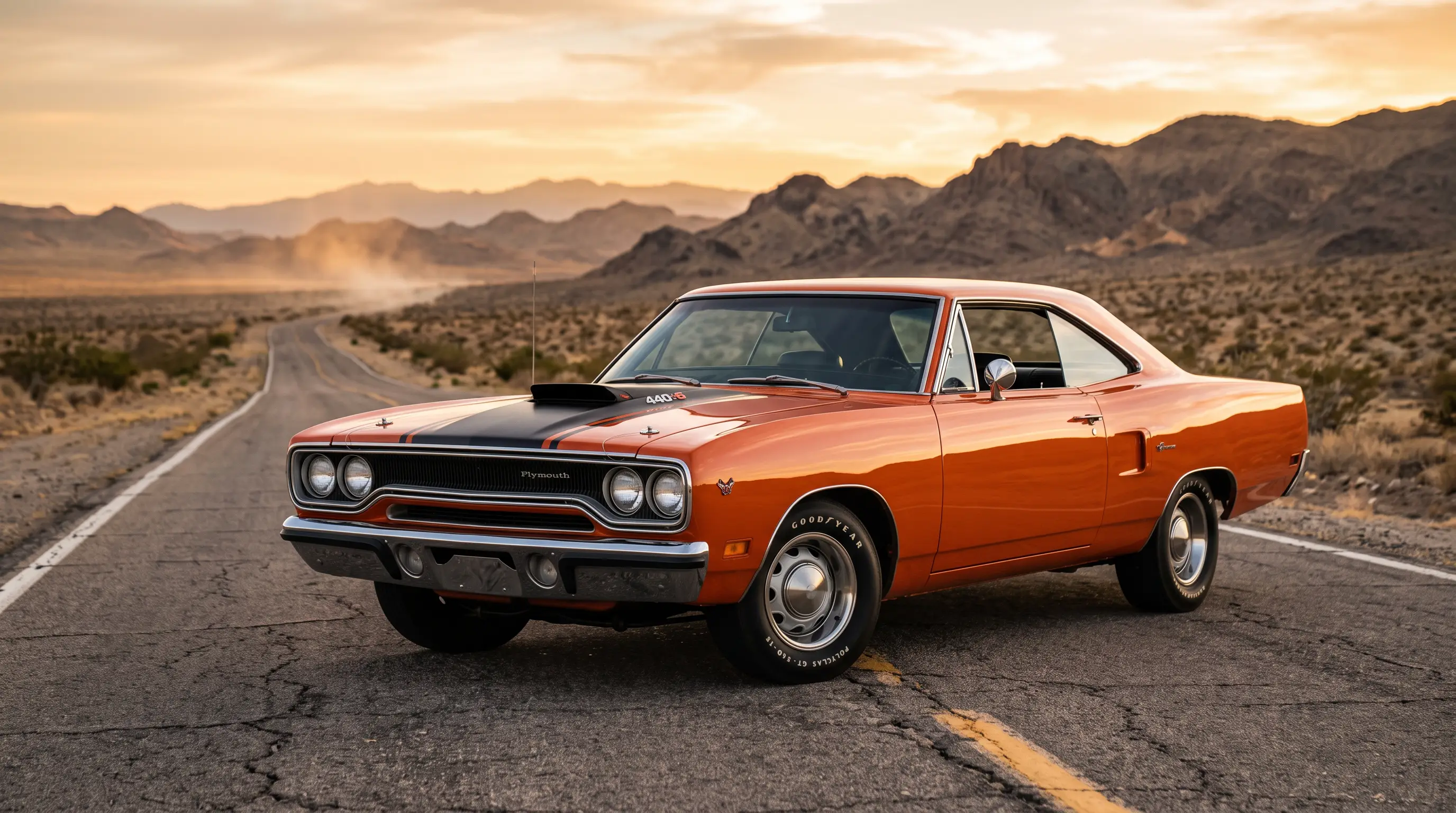
The 440 Six Barrel Road Runner is a good case study in how a relatively simple engineering decision can outperform its budget. Three two-barrel carburetors sitting on an aluminum intake, bolted to an otherwise ordinary iron-block 440 wedge, produced an engine that could hang with cars costing far more, and it did it with a parts bill that made Plymouth's accountants happy in a way the Hemi program never managed.
The engineering logic behind three carburetors
A standard four-barrel carburetor is a compromise by design. It has to deliver a smooth, drivable fuel curve at idle and part throttle while still flowing enough air at wide-open throttle to feed a big engine. The 440 Six Barrel setup sidestepped that compromise by splitting the job across three separate two-barrel Holley carburetors. The center carburetor handled everyday driving, cruising, idle, and light acceleration, tuned for reasonable fuel economy and drivability. The two outer carburetors stayed closed until the driver got well into the throttle, at which point vacuum-operated linkage opened them together, effectively adding a second stage of fuel and air on demand.
The result was an engine that idled and drove around town almost like a standard four-barrel car, then transformed under full throttle into something considerably closer to a race engine. It is a clean example of staged induction done with production-line parts rather than exotic machining, which is exactly why it was cheaper to build than the Hemi's dual-quad setup while still delivering genuinely serious output.
Where the numbers landed
The 440 Six Barrel arrived for the 1969 model year, initially as part of the A12 package shared with the Road Runner and the Dodge Super Bee, and carried a gross horsepower rating of 390, a figure that stayed consistent through the option's run from 1969 into 1971. That figure sat below the Hemi's 425 gross horsepower on paper, but the gap in real-world performance was narrower than the numbers suggested, since the 440-6 made its power lower in the rev range and needed less finesse to launch hard from a stop.
Torque output is really the story here. A big-inch wedge engine like the 440 produces substantial low-end torque even in mild form, and the Six Barrel's staged carburetion let that torque come on strong without the hesitation or bog that a poorly matched single carburetor can introduce on a big-displacement engine. For street use and stoplight-to-stoplight acceleration, that torque curve mattered as much as the peak horsepower number ever did.
| Spec | Detail |
|---|---|
| Displacement | 440 cubic inches, RB-series wedge block |
| Induction | Three two-barrel Holley carburetors, staged operation |
| Air cleaner | Unsilenced chrome triangular assembly, distinct visual signature |
| Years offered | 1969 through roughly 1971 |
Why it stopped being offered
By 1971 the writing was on the wall for high-compression, multi-carburetor engines. Rising insurance surcharges on cars with big-block performance options were already discouraging some buyers from checking that box, and the coming shift to lower-compression engines designed to run on unleaded, lower-octane fuel made a tuned-for-performance triple-carburetor setup increasingly hard to justify on a mainstream option sheet. The 440 Six Barrel faded from the lineup shortly after, replaced in practice by the 440 four-barrel as the top non-Hemi engine choice.
For anyone tracing how this engine fit into the Road Runner's broader mechanical story, our complete history lays out how the Six Barrel sat alongside the Hemi, the standard 383, and later the 340 and 400 across the full production run, rather than as an isolated option that appeared and vanished in a vacuum.
Reliability and ownership reality
From a pure engineering standpoint, the 440 Six Barrel setup is more mechanically complex than a standard four-barrel engine, with more linkage, more carburetors to keep synchronized, and more potential points of vacuum leak or misadjustment. Properly tuned, it is not an unreliable engine, the underlying 440 block is a genuinely tough piece of iron with a long service history across multiple Chrysler platforms. The complexity lives almost entirely in the induction system, not the bottom end.
That distinction matters for anyone evaluating a car today. An owner willing to learn the carburetor synchronization and vacuum routing, or willing to pay a shop that already understands it, gets an engine that is fundamentally as durable as any other big-block 440. An owner who lets the linkage drift out of adjustment gets an engine that idles rough, hesitates on tip-in, and never quite delivers the performance it is capable of. The engineering was sound. The tuning tolerance for error was simply smaller than on a single four-barrel car.
"Three carburetors sounds like a complication for its own sake until you understand what problem it's solving. It's a way to get race-engine breathing out of a production parts bin, and that's a genuinely elegant piece of period engineering."
- Emily Chen
Identifying a genuine car
Verifying a 440 Six Barrel Road Runner takes more than counting carburetors, since aftermarket triple-carb intakes have circulated for decades and can be bolted onto a standard 440 four-barrel car without much difficulty. The fender tag and broadcast sheet remain the most reliable references, cross-checked against the correct casting numbers for the intake manifold and the specific air cleaner assembly used on factory Six Barrel cars. Engine block casting dates should also predate the car's build date by a reasonable margin, consistent with normal production lead time, not follow it, which would suggest a later engine swap.
Beyond the paperwork, small details tend to separate a correctly restored car from an approximation: the specific Holley carburetor casting numbers used on the outer two units, the factory-correct linkage geometry, and the unsilenced chrome air cleaner shape all vary in ways that a generic reproduction triple-carb kit often gets close to but not exactly right. None of this is disqualifying on its own, reproduction parts are common and often necessary after fifty-plus years, but a buyer paying a premium for factory-original status should expect the seller to document the difference.
What it means for a buyer now
A documented 440 Six Barrel Road Runner sits in a tier below the Hemi cars in collector prestige but well above standard big-block cars in both output and rarity, since the option was only offered for a few model years before regulatory and insurance pressure ended it. For a buyer who wants an engine that is mechanically honest about its performance, no exotic heads, no unobtainable parts, just clever carburetion on a proven block, the 440 Six Barrel is arguably the most interesting engineering story in the entire Road Runner lineup. Buyers looking to find a classic Runner with this specific engine should confirm the triple-carburetor setup and its linkage are original or correctly restored, since that induction system is exactly the part most likely to have been altered, simplified, or lost over five decades of ownership.