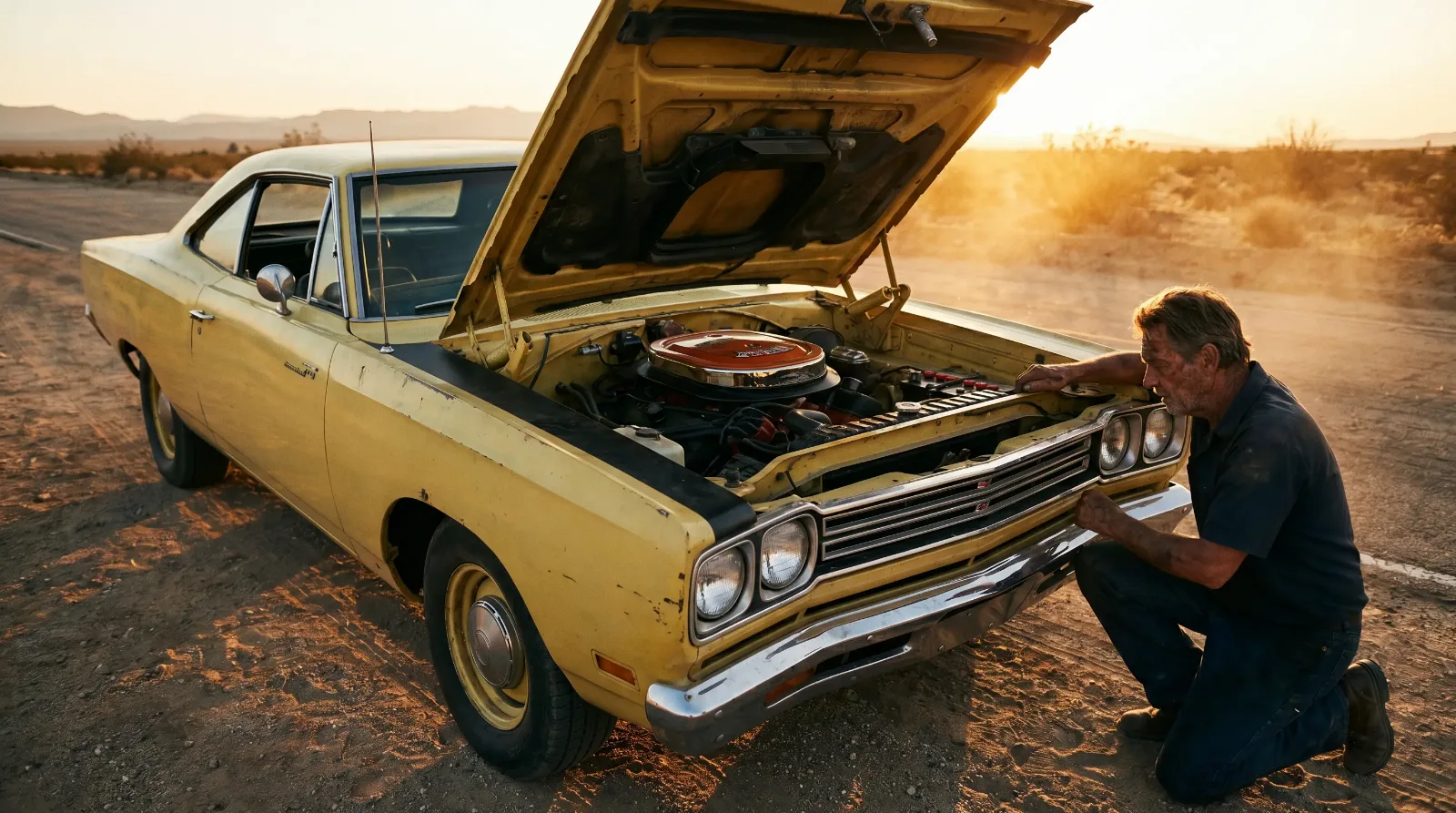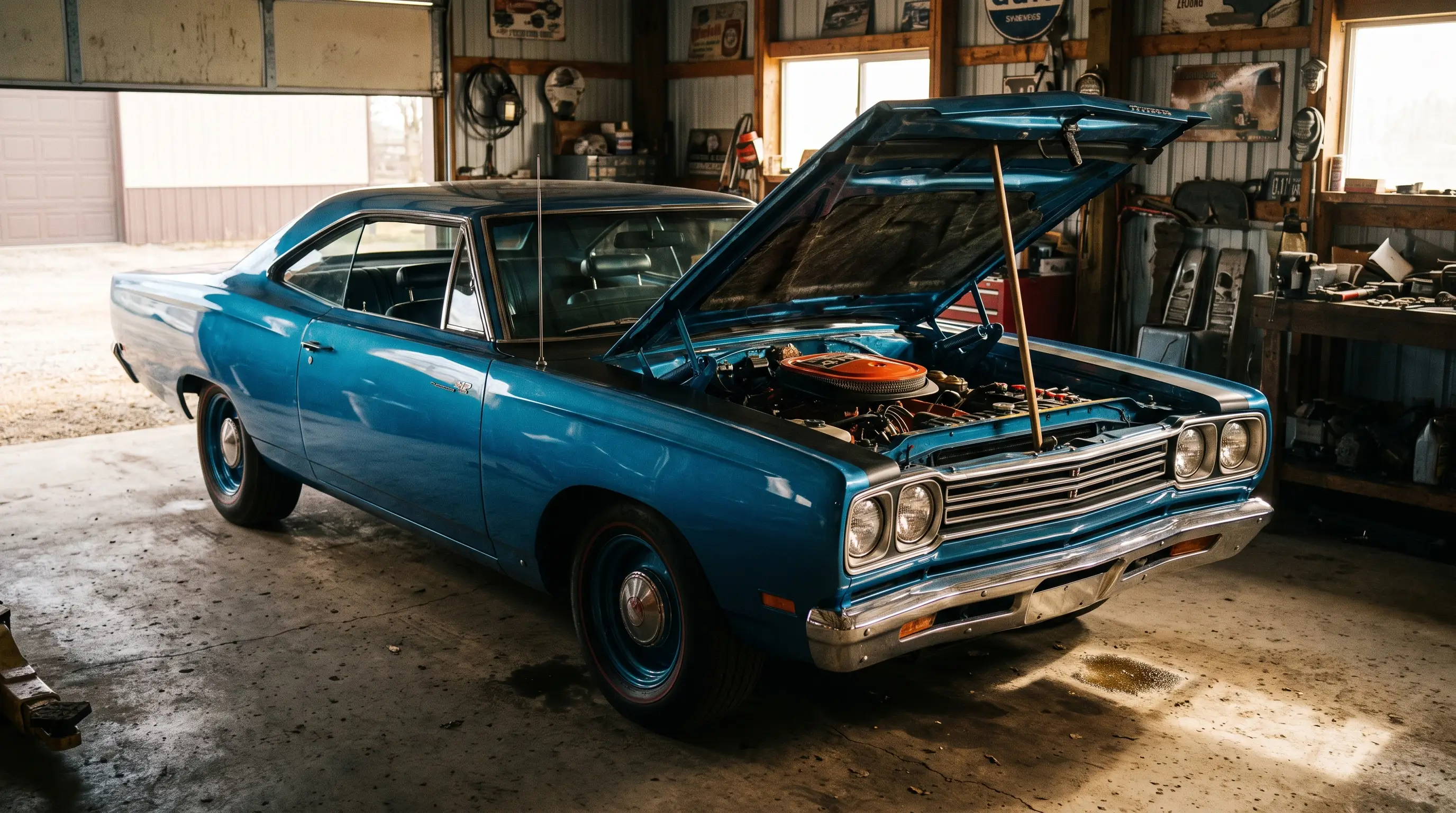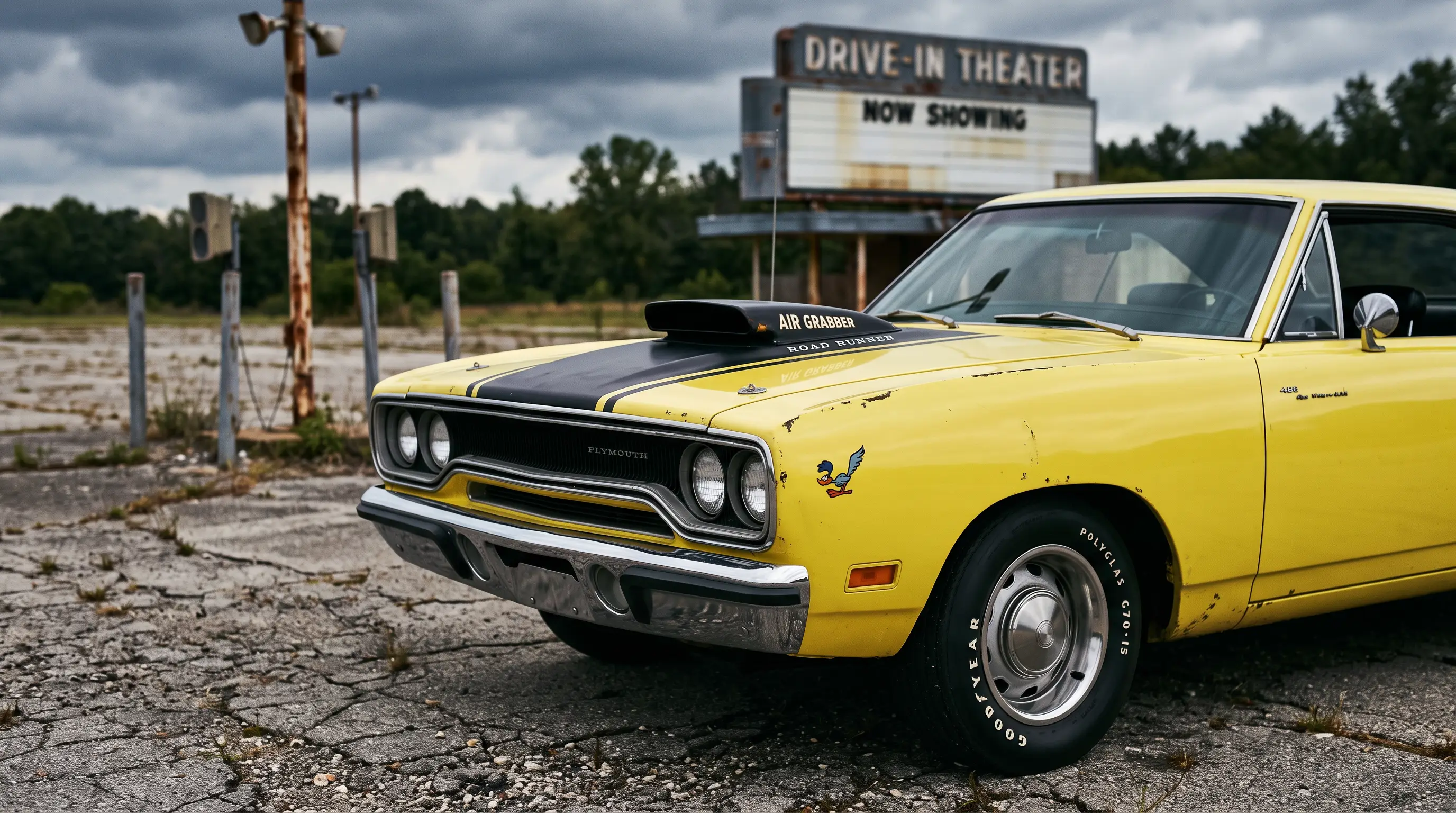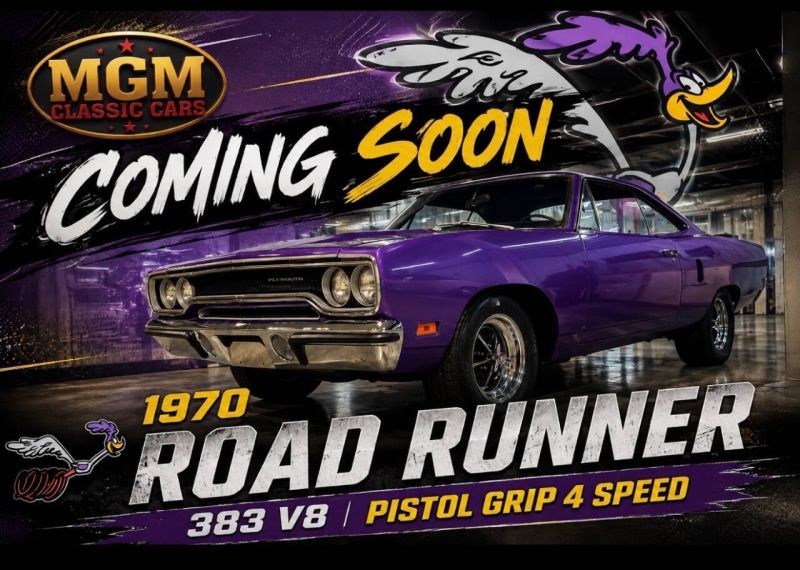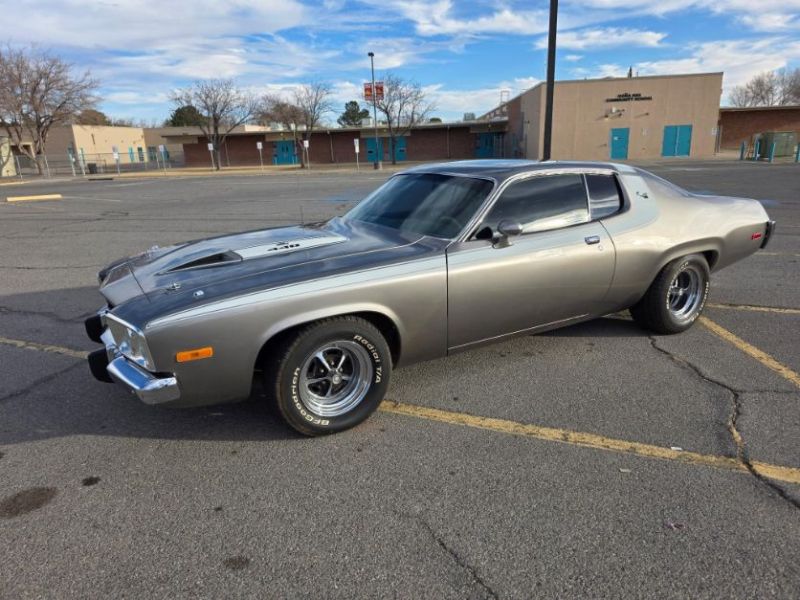
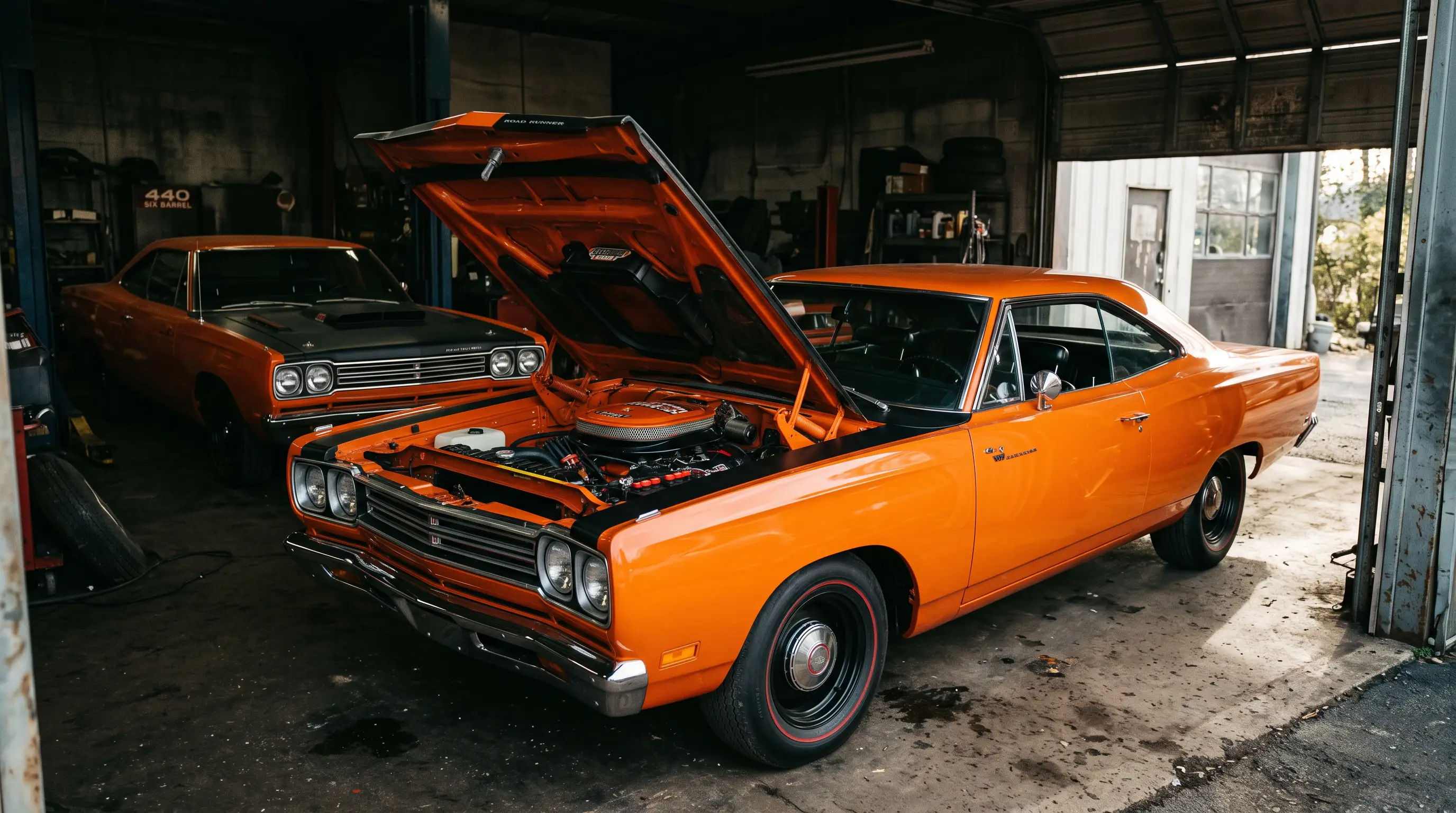
Ask a Road Runner owner from 1969 or 1970 which engine they should have ordered, and you will still get two different answers depending on who is talking. The hemi vs 440 six barrel question was never really about which engine made more power on paper. It was about two genuinely different engineering philosophies competing for the same buyer's money, and both had a defensible case.
Two different ways to solve the same problem
The 426 Hemi solved the airflow problem through combustion chamber geometry. Its hemispherical chambers allowed larger valves and more direct airflow paths than a conventional wedge design, fed by dual four-barrel carburetors that could move serious volumes of air and fuel once the engine got into its power band. It was rated at 425 gross horsepower and was, by any honest measure, the more exotic and more capable engine at high rpm.
The 440 Six Barrel took a completely different route. Rather than redesigning the combustion chamber, Plymouth kept the 440's conventional wedge architecture and instead staged three two-barrel carburetors, a center unit for everyday driving and two outer units that opened together under hard acceleration. The result leaned on the 440's inherent big-inch torque advantage rather than trying to match the Hemi's high-rpm breathing, and it did so at a fraction of the Hemi's cost and mechanical complexity.
Comparing the numbers honestly
On paper, the Hemi's 425 gross horsepower beat the 440 Six Barrel's 390 gross horsepower rating, a real gap that favored the Hemi in any straight power comparison. But peak horsepower numbers only tell part of the story for a street car. The 440 Six Barrel made strong torque lower in the rev range than the Hemi, which meant it often felt just as urgent off the line in normal street driving, where most drivers rarely explored the upper rpm range that let a properly tuned Hemi pull away.
Weight told a different part of the story. The Hemi was noticeably heavier than the wedge-based 440, and that weight sat over the front axle, affecting handling balance in a way the lighter 440 Six Barrel did not. A Road Runner ordered with the 440-6 handled with less front-end heaviness than an equivalent Hemi car, a real tradeoff that pure horsepower comparisons tend to ignore.
| Category | 426 Hemi | 440 Six Barrel |
|---|---|---|
| Combustion design | Hemispherical chambers, dual four-barrel | Wedge chambers, staged triple two-barrel |
| Gross horsepower | 425 | 390 |
| Relative cost | Significantly higher option price | Substantially cheaper than Hemi option |
| Everyday drivability | Demanding, heat and tune sensitive | More forgiving, easier to live with |
The cost gap that decided most real purchases
For most actual 1969 and 1970 buyers, this was less a performance debate than a budget decision. The Hemi option cost hundreds of dollars more than the 440 Six Barrel on top of an already-equipped Road Runner, and that gap was enough to steer the large majority of performance-minded buyers toward the 440-6 rather than the Hemi. Production numbers reflect that reality clearly. Hemi Road Runners were built in far smaller numbers than 440 Six Barrel cars, not because the Hemi was a worse engine but because fewer buyers were willing or able to pay the premium it demanded.
That price gap is also central to how the collector market values these two engines today. A documented Hemi Road Runner routinely commands a substantial premium over an equivalent 440 Six Barrel car, a direct continuation of the same rarity and cost dynamic that shaped the original sales numbers more than fifty years ago.
Which one actually made the better street car
This is where the debate gets genuinely interesting rather than just being a spec sheet comparison. The Hemi rewarded a driver who understood its tuning needs and was willing to work the rpm range to access its full potential, and it delivered a level of high-rpm performance the 440 Six Barrel could not fully match. The 440 Six Barrel rewarded a driver who wanted strong, accessible torque without the Hemi's heat management issues, tuning sensitivity, and added front-end weight. Neither answer is wrong. They represent genuinely different priorities.
For the full story on how these two engines fit into the Road Runner's complete engine lineup alongside the standard 383 and the smaller 340, the broader context makes clear that Plymouth was never trying to build one perfect performance engine. It was building a spread of options that let buyers choose their own tradeoff between cost, weight, drivability, and outright capability.
"The Hemi versus 440 Six Barrel argument isn't really about which engine is better. It's about which set of tradeoffs a buyer was willing to live with, and both were completely rational choices depending on the budget and the driving style."
- Emily Chen
Why the debate never really settled
Period road tests from the era generally acknowledged the Hemi's higher ceiling while noting how rarely a street driver could reach it without a well-prepared car and a driver who knew how to launch it correctly. The 440 Six Barrel, by contrast, tended to earn praise for feeling strong everywhere in the rev range without demanding the same level of preparation or driving skill to access its performance. That split in contemporary reviews mirrors almost exactly how the two engines are still discussed today, which suggests the core tradeoff was well understood from the very beginning rather than being a modern reinterpretation.
Maintenance reality reinforced the split further. Hemi owners needed to stay on top of valve lash adjustments and cooling system upkeep more diligently than 440 Six Barrel owners, whose bigger complexity lived in carburetor synchronization rather than the engine's internals. Neither engine was low-maintenance by modern standards, but the nature of that maintenance differed enough that an owner's mechanical comfort zone often mattered as much as their budget when choosing between them.
What the debate means for buyers now
The same tradeoffs that shaped the original purchase decision still apply to collectors today, just with the numbers scaled up considerably. A Hemi car costs substantially more to acquire and, in many cases, more to maintain given the engine's tuning demands and parts costs. A 440 Six Barrel car offers a more affordable entry into genuine, factory-documented big-block performance, with fewer of the Hemi's daily-driving complications. Neither choice is a mistake. Buyers deciding between the two should browse classic Runner listings with a clear sense of whether they are chasing maximum rarity and prestige or the most usable, most cost-effective version of genuine Road Runner performance, because both engines deliver on that promise in their own way.